Collection
Trees of the Brunca Region
201 species profiles
An in-progress guide to the 1,000+ tree species of Costa Rica's Brunca Region.
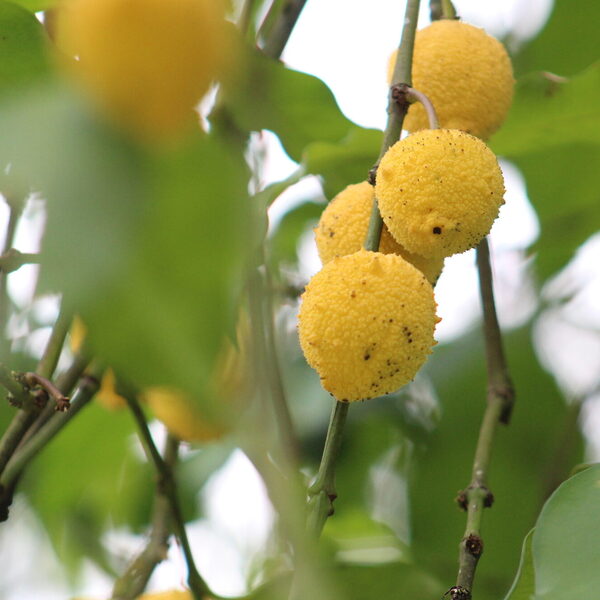
Lemon Drop Mangosteen
A tropical fruit tree whose spiny yellow fruits reminded Spanish colonists of Mediterranean strawberry trees, and whose biflavonoids are now being tested against Alzheimer's disease.

Browse the family tree
An interactive taxonomy of every species profiled here — orders, families, genera, and the relationships between them.
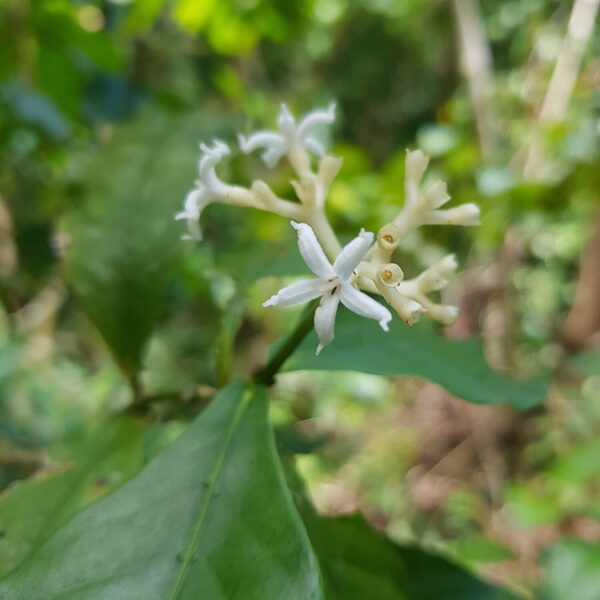
Dogwood-leaf Rudgea
Fragrant white flowers that may open at dusk for moths, leaves that house invisible armies of mites, and an alkaloid found nowhere else in the plant kingdom.
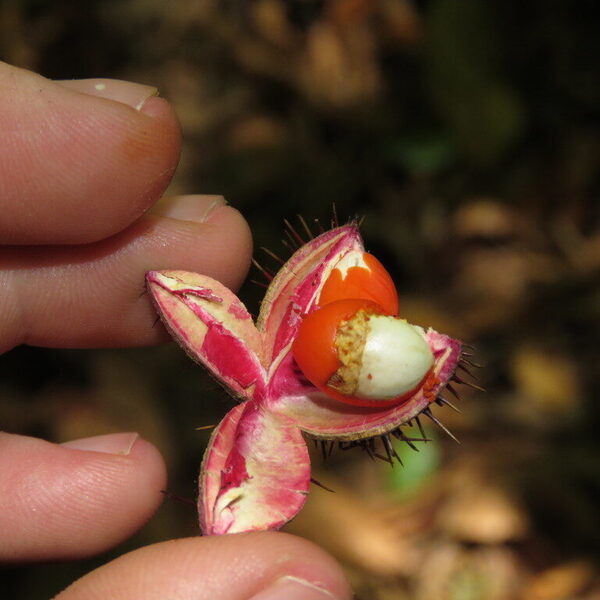
Ira Rosa
An emergent giant of the Osa rainforest whose tiny capsules bristle with purple spines and split to reveal a single orange-cloaked seed, sweet enough that spider monkeys break off branches to reach it.
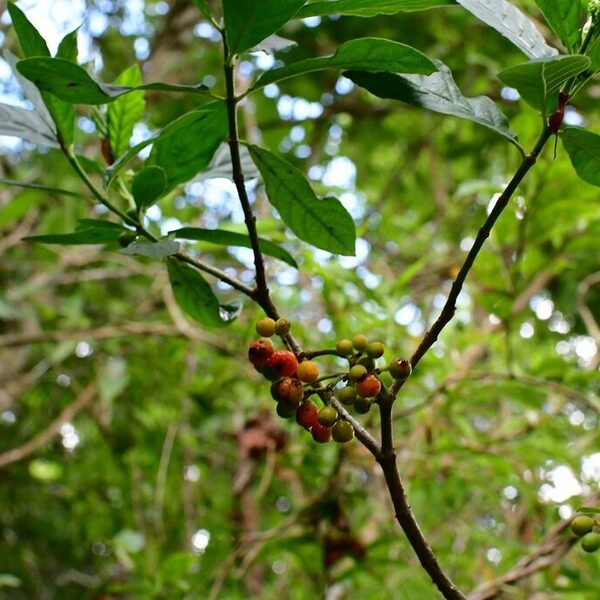
Rib-veined Wild Coffee
A modest understory shrub of the southern Pacific forests that draws nickel out of the soil and concentrates it in its leaves at levels that would poison almost any other plant.
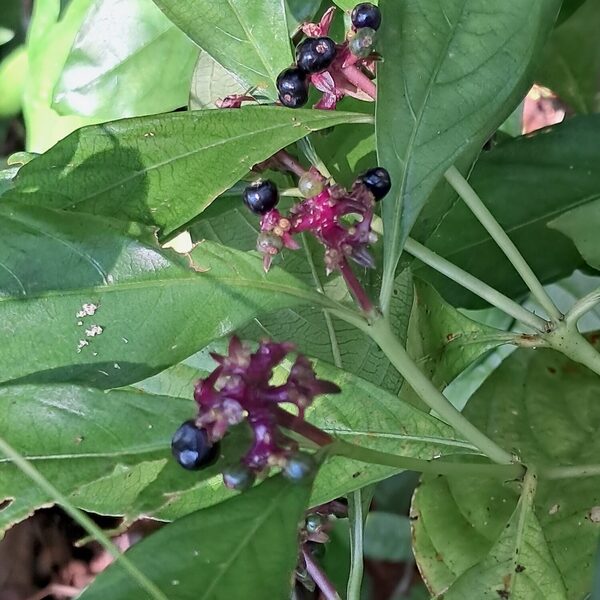
Slender Wild Coffee
Ribbed, blue-black berries hang from hot-pink stalks in the rainforest understory. DNA evidence recently carried this slender shrub out of one of the largest plant genera on Earth.
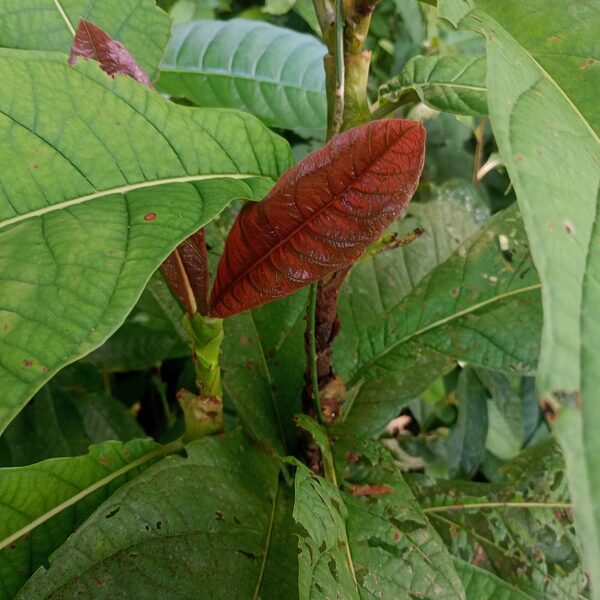
Türckheim's Wild Grape
A canopy tree of Central America's wet forests with leaves up to 70 cm long, grape-like edible fruits, and a singular relationship with tent-making bats that fold its enormous leaves into shelters.
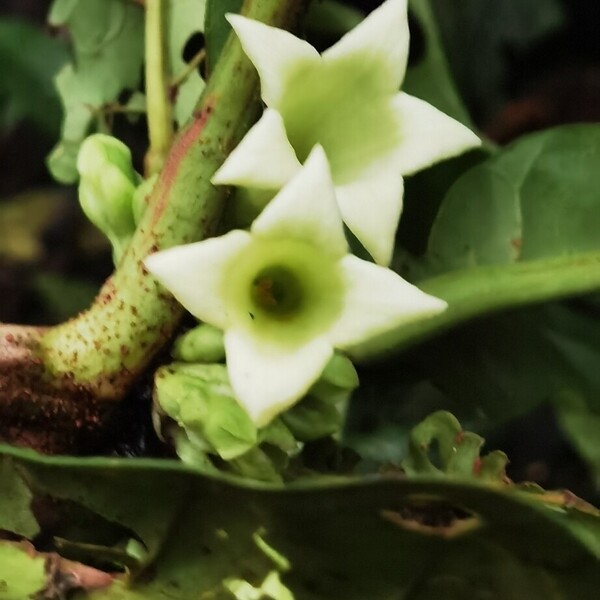
Lobed Pentagonia
Star-shaped flowers emerge from the trunk of this palm-like understory tree, whose lobed leaves break every rule in the coffee family. Possibly endemic to the rainforests of southern Costa Rica.
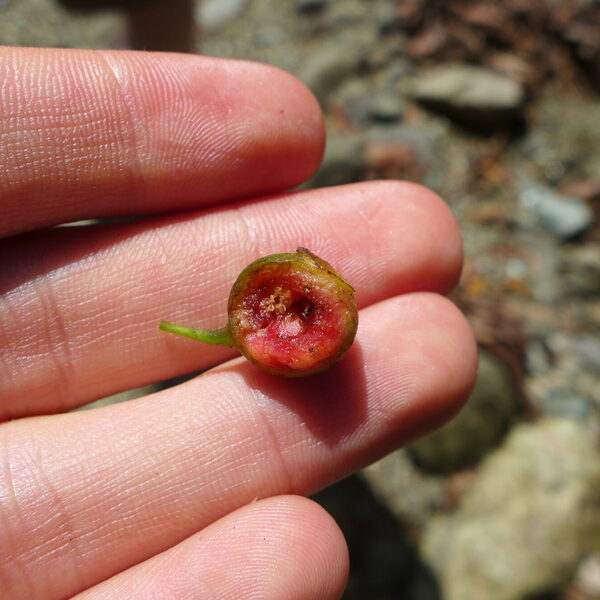
Manteco
A canopy tree with wood so hard a chainsaw cannot bite it, flowers that produce oils found nowhere else in its 5,800-species family, and a name that traces back to an 18th-century Carib word from the forests of French Guiana.
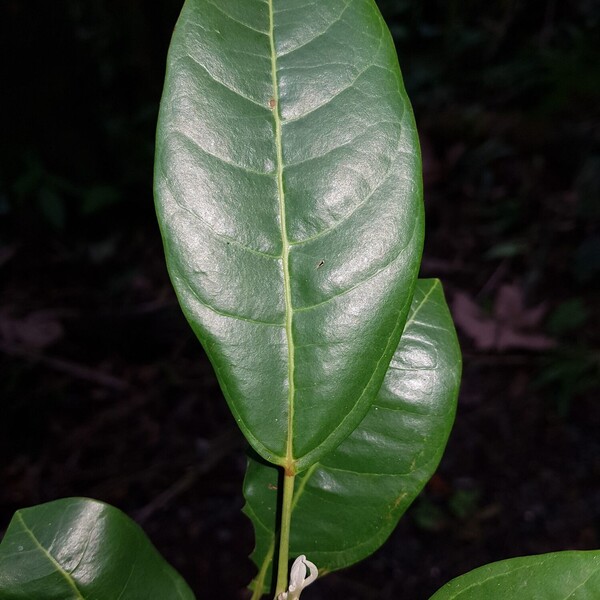
Twin-flowered Hernandia
A rare lowland rainforest tree whose fruits hide inside leathery cups, named for its paired flowers and collected by a Swiss geographer on Costa Rica's wild Caribbean coast.
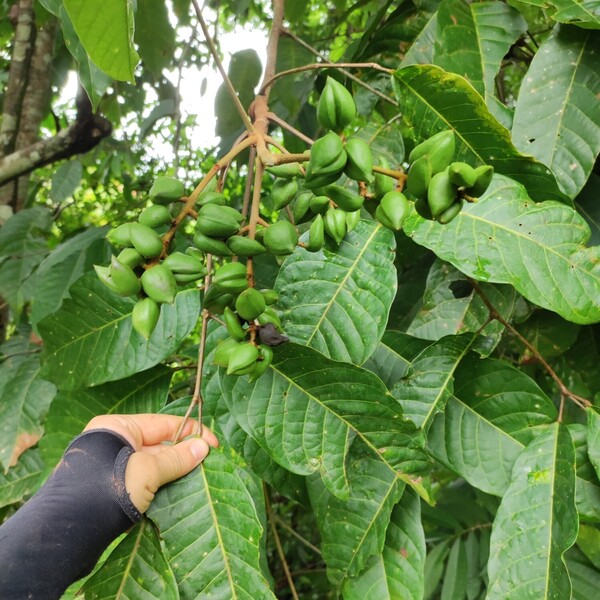
Canfin
A tree so flammable that even its green wood ignites. Costa Ricans named it after kerosene.
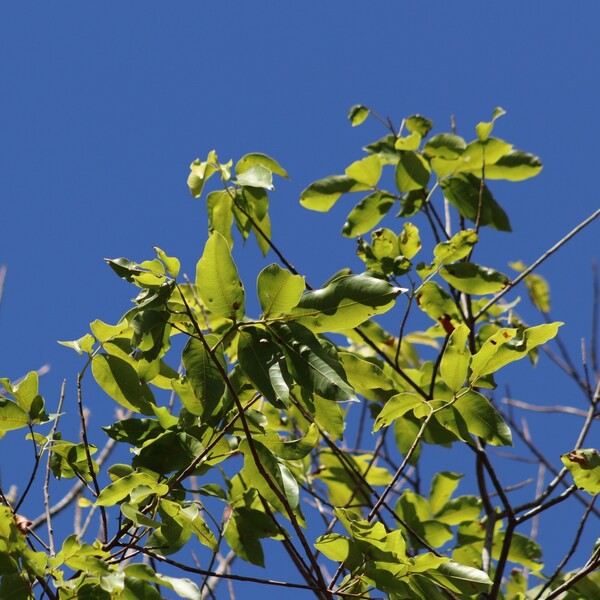
Pigeon Wood
Named by an 18th-century apothecary who honored indigenous knowledge, this tree feeds marmosets from its bark and pigeons from its fruit.
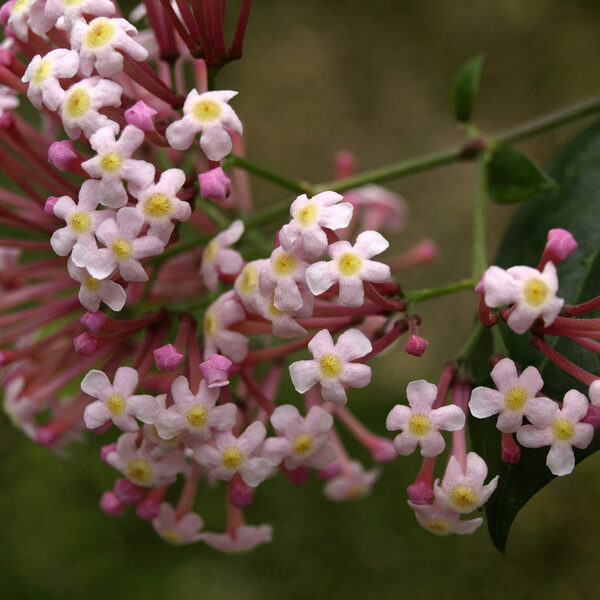
Quina Falsa
Pink flowers with a yellow-bearded throat, first cultivated in a Belgian nursery from Guatemalan seed. For 175 years, botanists have argued over whether this cloud forest shrub deserves its own genus.
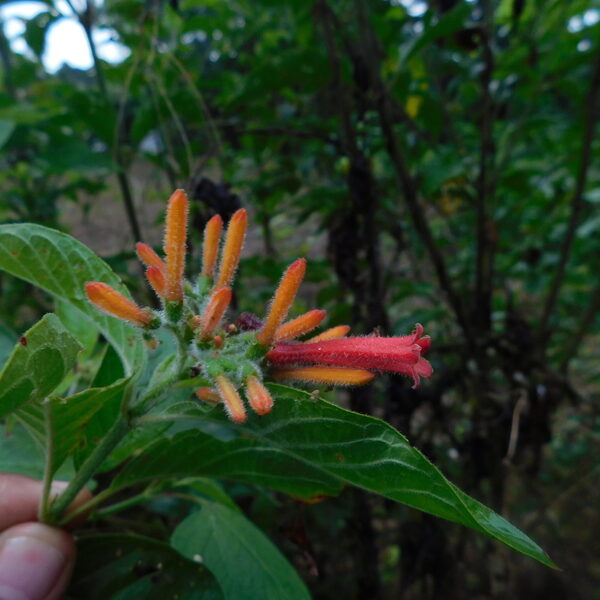
Rovirosa's Firebush
A slender treelet of Caribbean swamp forests whose red tubular flowers bristle with unusual crooked hairs. Named for the polymath naturalist of Tabasco whose monument once stood at the University of Berlin.
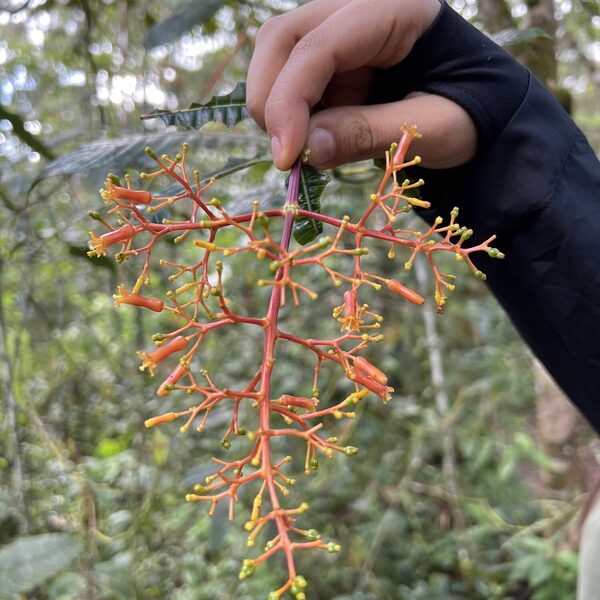
Cafecillo Amarillo
Yellow tubular flowers on coral-red branches make this cloud forest shrub a beacon for hummingbirds, and one of the most studied distylous plants in the Americas.
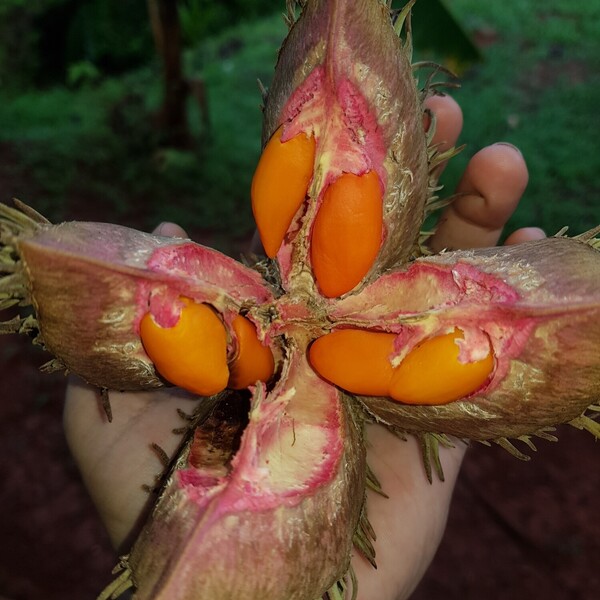
Peine de Mico
The largest leaves of any tree in Costa Rica and a spiny fruit capsule named for the head of Medusa.
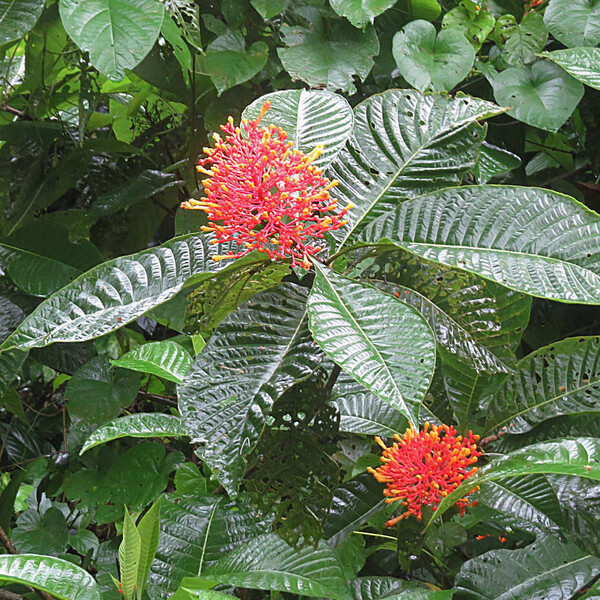
Firecracker Plant
Gaudy yellow-to-red flower clusters that shift color as they age, collected by a Czech botanist who swam ashore from a shipwreck.
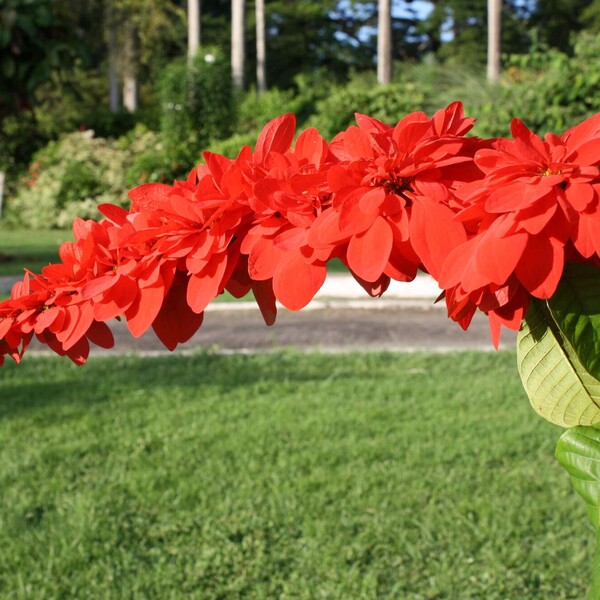
Mountain Poinsettia
A scarlet-bracted tree whose crimson inflorescences drape through the wet forests of the Neotropics. The national flower of Trinidad and Tobago, named for a Polish exile who collected orchids across Central America.
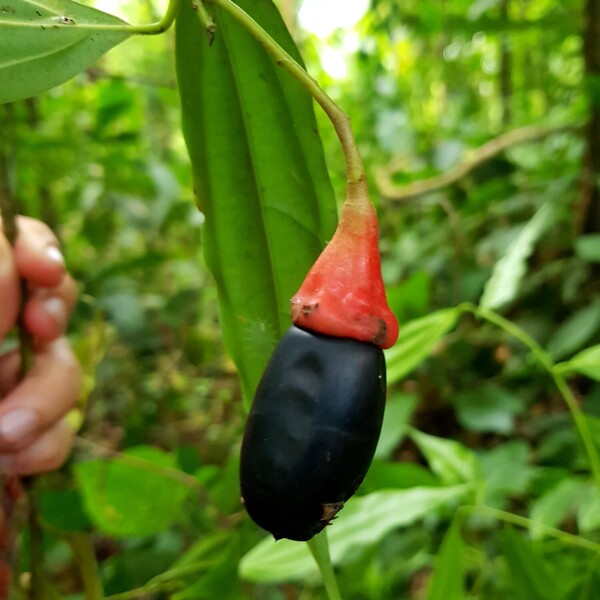
The Dark Laurel
A rare tree known from only one specimen when first described, with fruits so striking they seem designed to catch the eye of hungry birds.
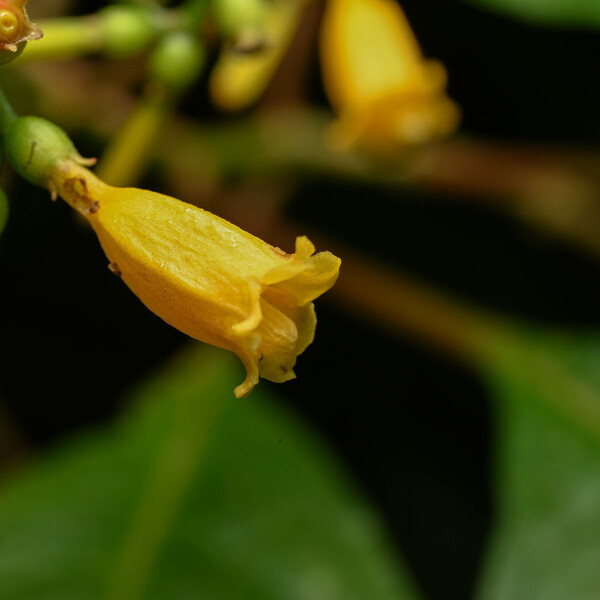
Canelito
A yellow-flowered understory tree of cloud forests, named twice for its large blooms
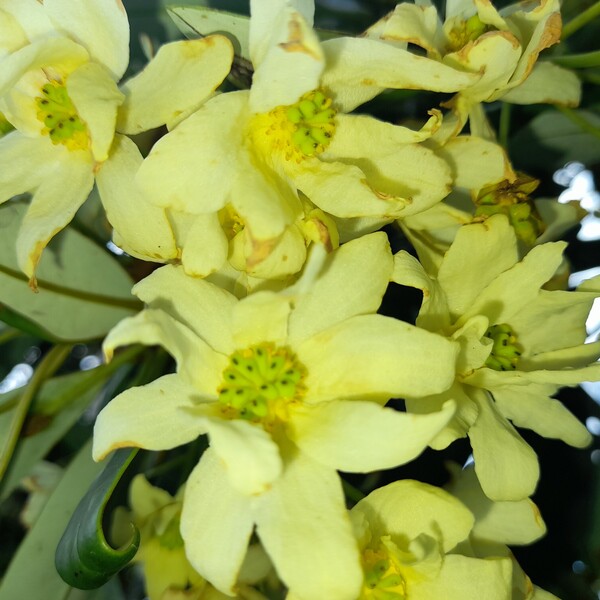
Chilillo
A cloud forest tree whose wood lacks vessels entirely. Its peppery bark earned it the name paramo pepper in Colombia.
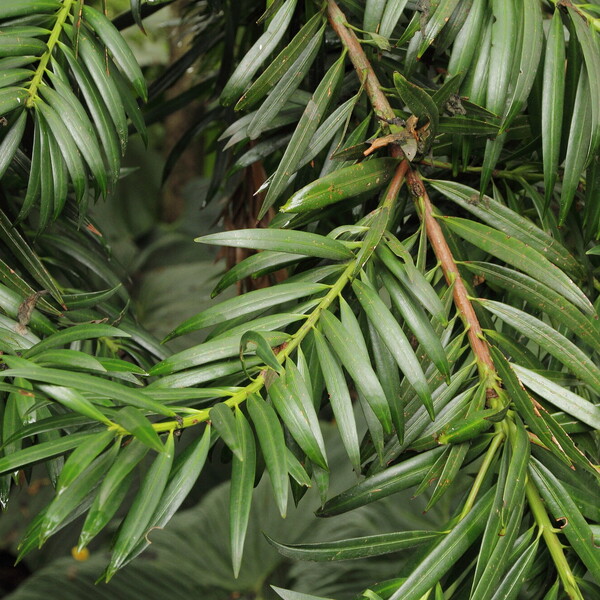
Ciprecillo
A Gondwanan conifer that has persisted in Neotropical cloud forests for tens of millions of years, with olive-shaped leaves that disguise its ancient lineage among the broadleaf trees it shares the canopy with.
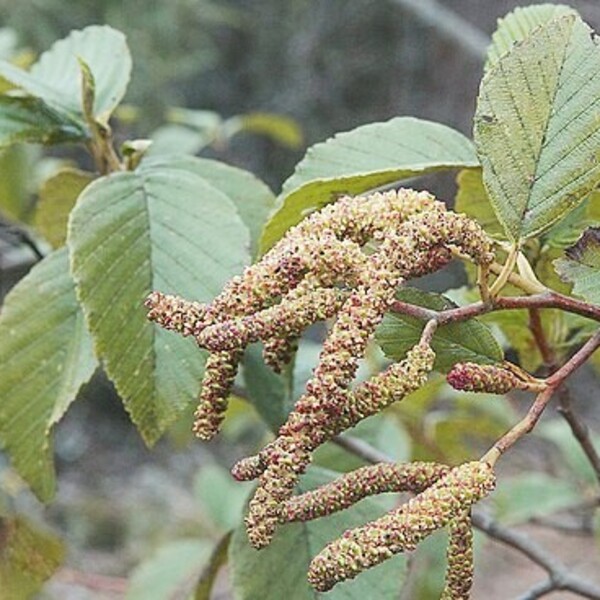
Jaul
Collected by Humboldt on his great American expedition, this highland alder feeds the soil beneath it, fuels Andean farms, and carries an ancient partnership with fungi across two continents.
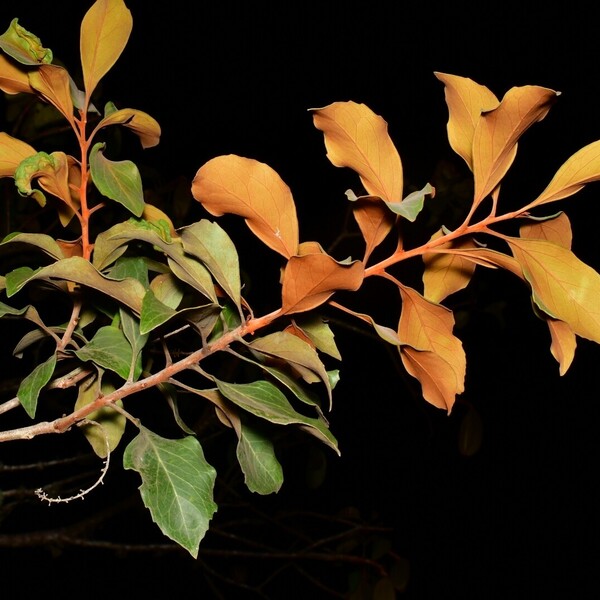
Carne Asada
A Gondwanan relic with 78 synonyms, leaves that change shape with age, and crushed foliage that smells like canned tuna. Botanists have spent two centuries trying to classify it. The tree has not cooperated.
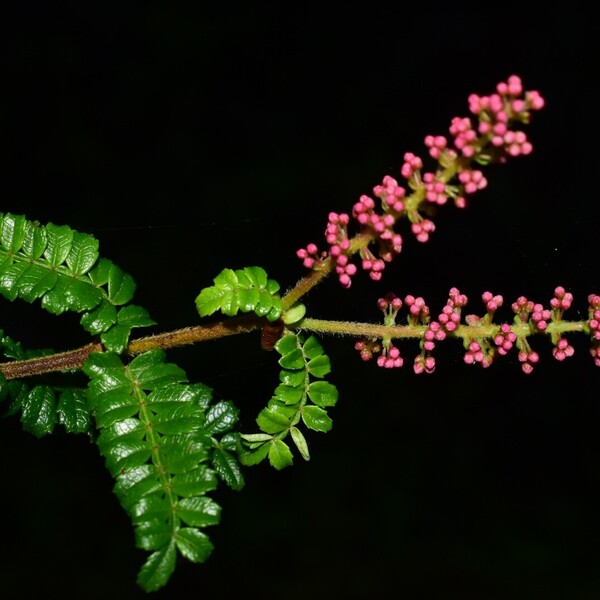
Lorito
Pink bottlebrush flowers against dark cloud forest. The bark of this high-altitude shrub was once used to adulterate quinine, earning it the name bastard briziletto.
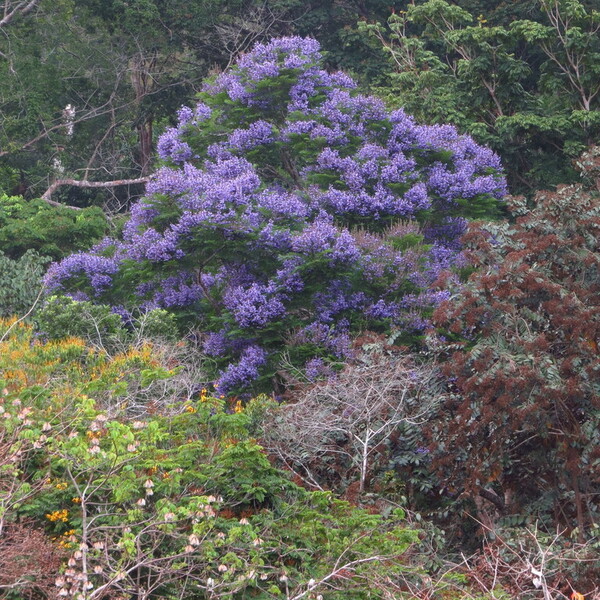
Gallinazo
A towering pioneer whose lavender crown bursts above the canopy like a signal flare. The Galibi people of French Guiana gave it the name copaia, and two centuries of European botanists tried to replace it with Latin.
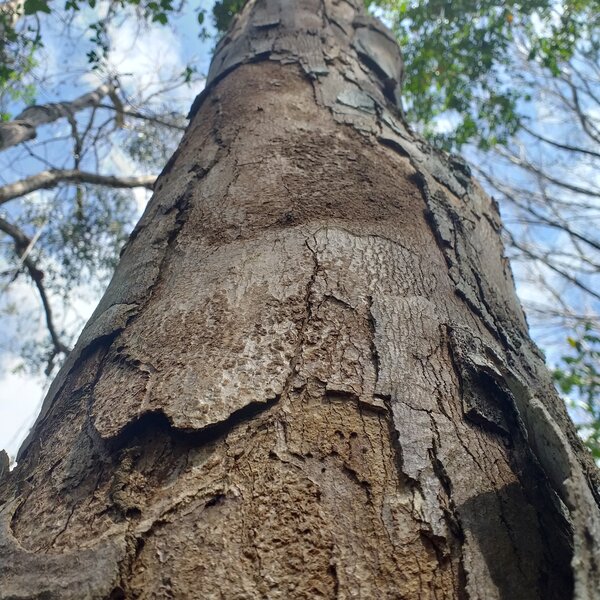
Sangrillo Colorado
A critically endangered giant of the Osa Peninsula whose bark exfoliates in distinctive rectangular plates and weeps blood-red sap when cut.
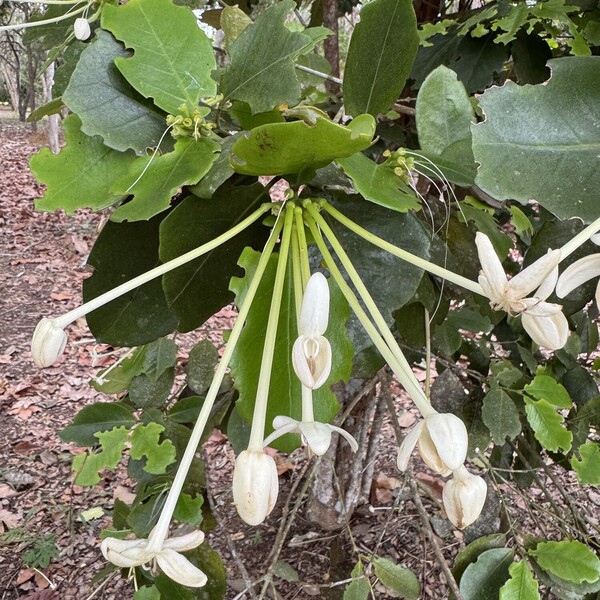
Needle Flower Tree
A lowland rain forest tree with a pollen catapult and flowers only sphinx moths can pollinate
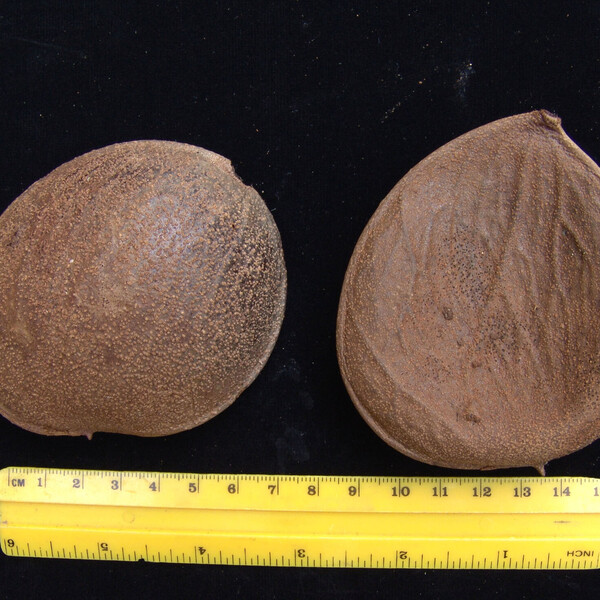
Cativo del Pacifico
A giant legume of the Osa Peninsula, hidden for decades under the name of its Caribbean sister species until a 2022 taxonomic revision recognized it as distinct.
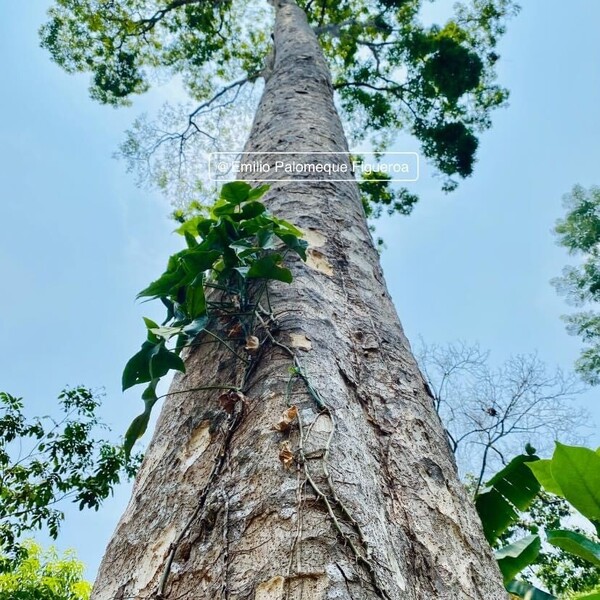
Ron-ron
A towering dry-forest canopy tree whose striped heartwood earned the international trade name Tigerwood. Its pockmarked bark and star-shaped fruits make it unmistakable in Costa Rica's Pacific lowlands.
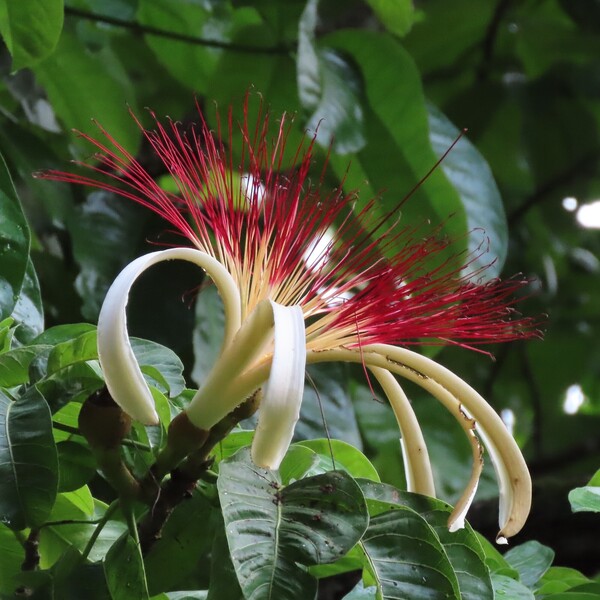
Guiana Chestnut
A swamp tree with spectacular crimson-tipped flowers that open at dusk for bats and moths. One of few scientific plant names borrowed directly from an indigenous South American language.
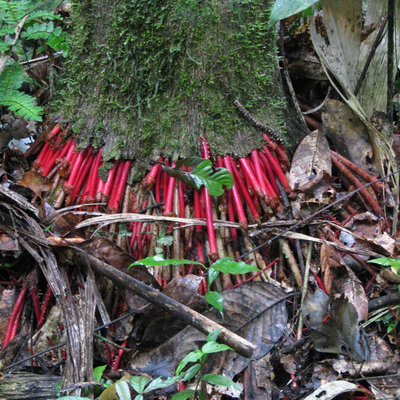
Açaí palm
The most common tree in the Amazon with 5.2 billion individuals, this single-stemmed palm produces the famous açaí fruit and is threatened by illegal palm heart harvesting in Costa Rica.
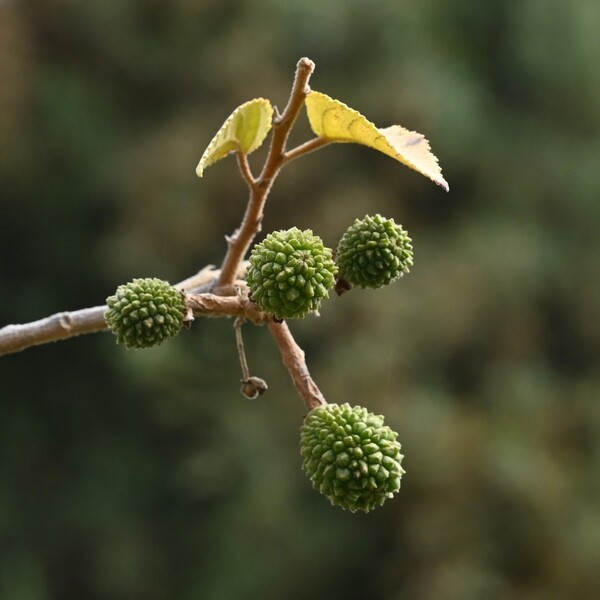
Guácimo
A tree with warty fruits designed for animals that went extinct 10,000 years ago. Horses now serve as surrogate dispersers.
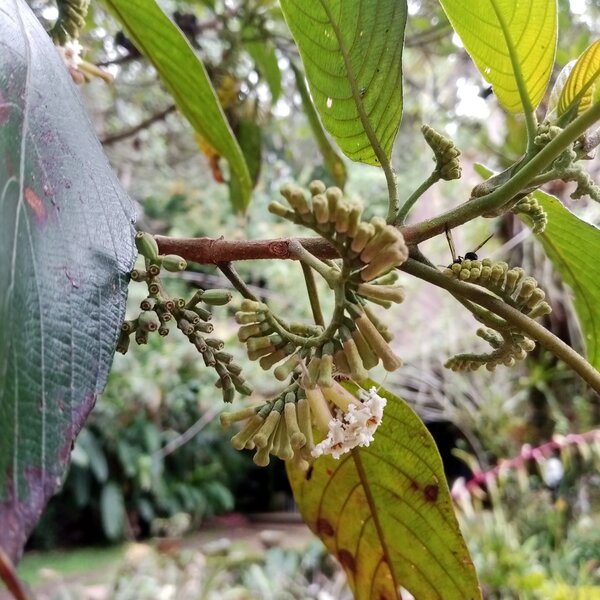
Crisped-flower Guettarda
A small tree of humid forests from Costa Rica to South America, distinguished by white tubular flowers with crisped corolla lobes adapted for hawkmoth pollination.
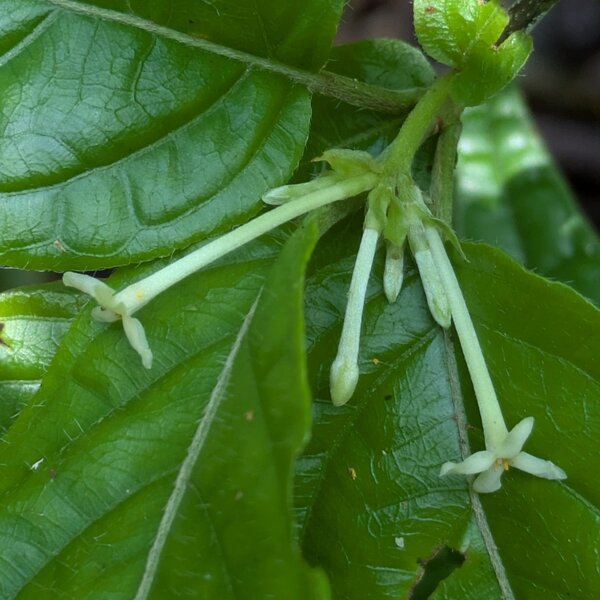
Espino Amarillo
A member of the Rubiaceae family found in Central American forests.
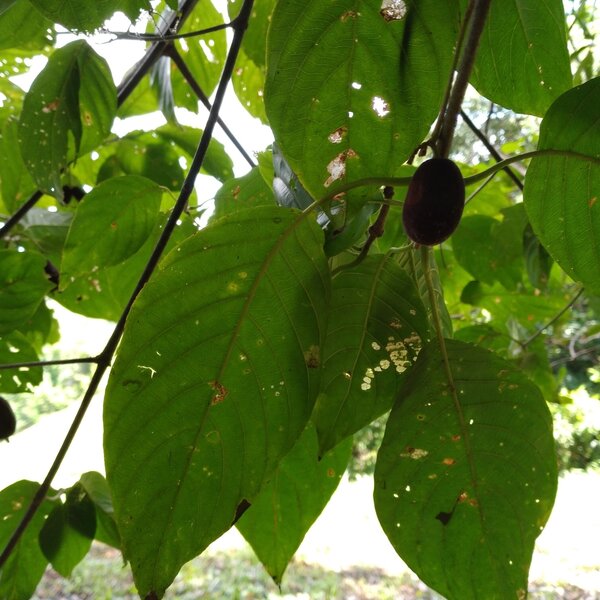
San Blas Velvetseed
A member of the Rubiaceae family found in Central American forests.
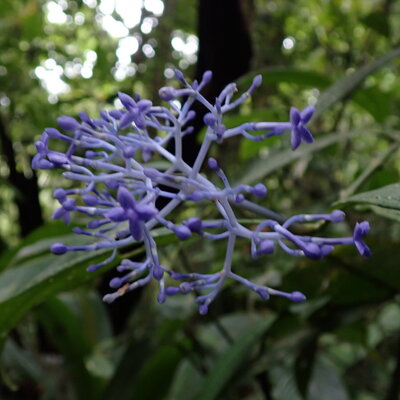
Suerre Faramea
Shade-tolerant understory shrub with striking blue inflorescences and distinctive melastome-like leaf venation, ranging from Nicaragua to Colombia through Costa Rica's lowland rainforests.
Wadara
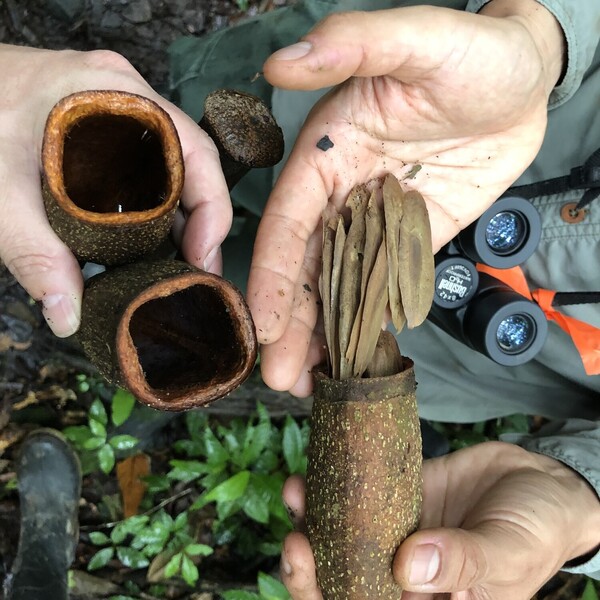
An emergent rainforest tree that drops its leaves before erupting in bright purple flowers. Macaws destroy up to 99% of the fruit crop in some populations.
Balsamillo
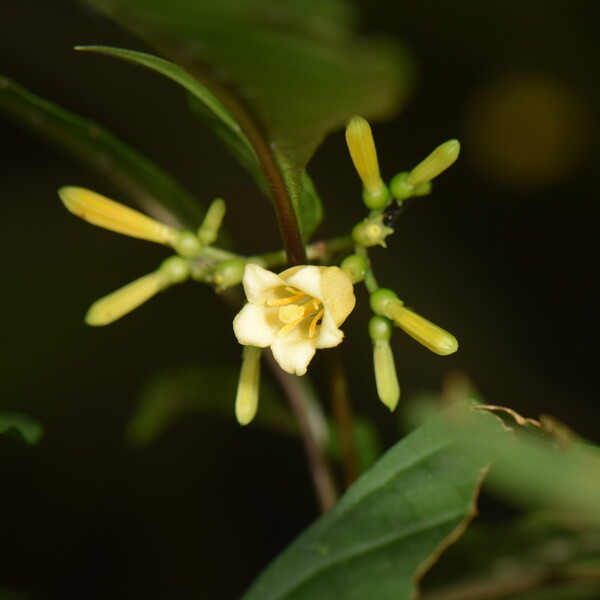
A member of the Rubiaceae family found in Central American forests.
Poeppig's Faramea
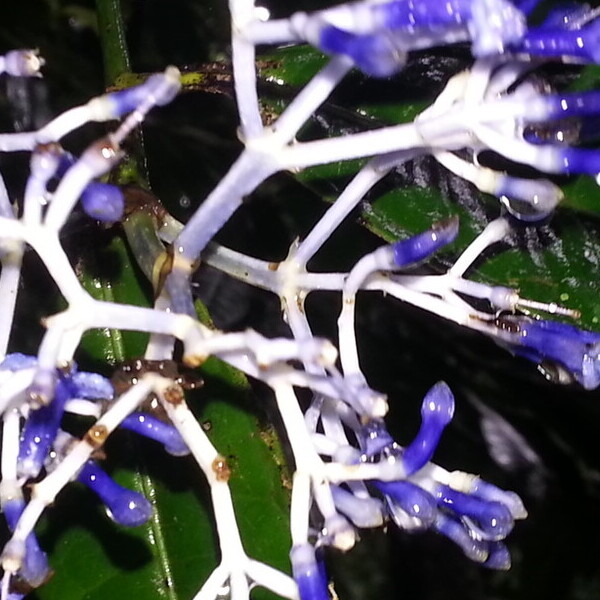
A shade-tolerant understory tree with striking blue flowers on white inflorescence branches, found in primary wet forests from Mexico to Brazil.
Costa Rican Duroia
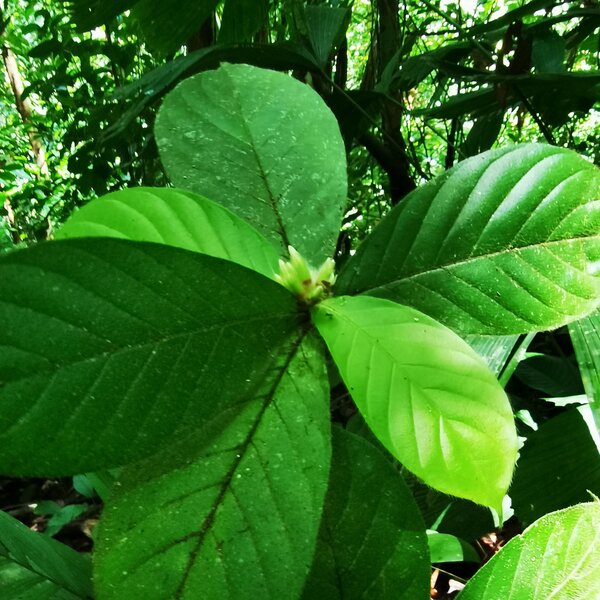
Endemic understory tree of the Golfo Dulce lowlands. Unlike its famous Amazonian relatives that cultivate devil's gardens through ant partnerships, this species lacks myrmecophytic associations.
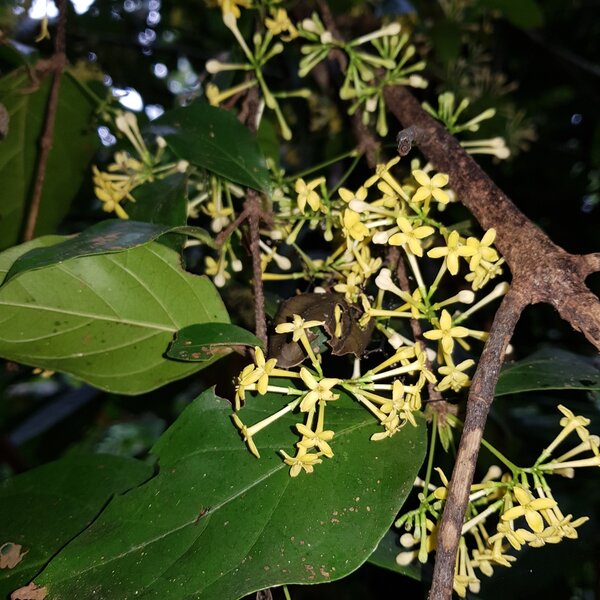
Guan's Fruit
A small understory tree of the coffee family bearing fleshy black fruits favored by guans and curassows, named for its characteristically small corolla lobes.
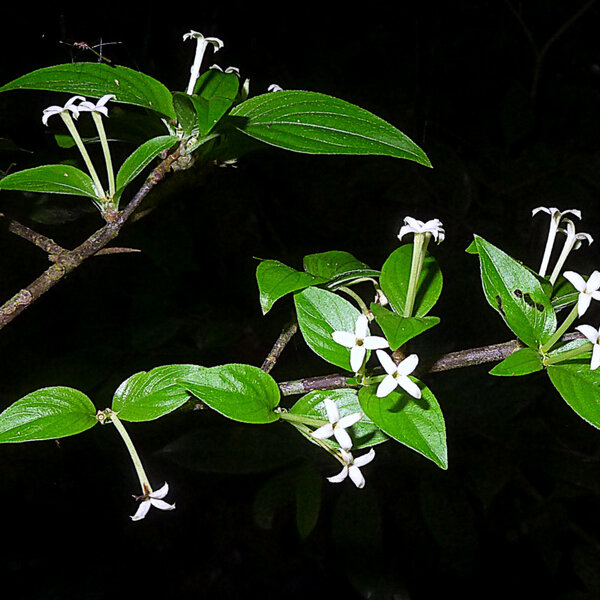
Malacagüite
A spiny understory shrub or small tree of the coffee family distinguished by its extremely slender white flowers, native to wet lowland forests from Costa Rica to Brazil.
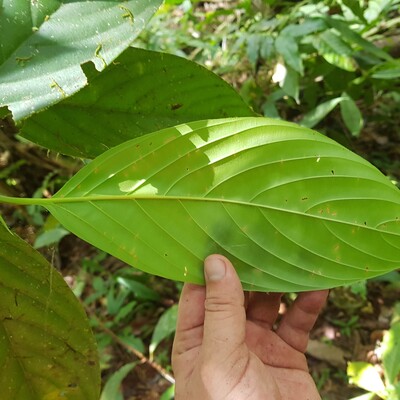
Chomelia venulosa
Silky flowers and a fine network of parallel leaf veins distinguish this tall forest tree of Costa Rica and Panama.
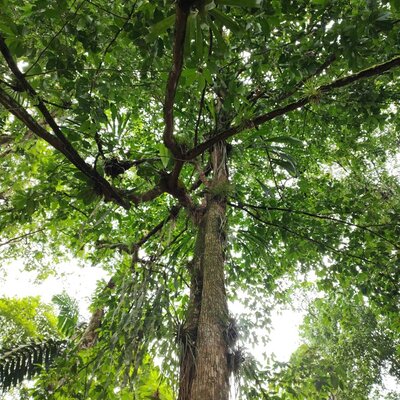
Ironwood
An emergent canopy tree of lowland wet forests from Nicaragua to the Amazon Basin. Among the most durable Neotropical timbers, it lives 300+ years, reaching over 70 meters in Costa Rica's Osa Peninsula. Its bark contains compounds with validated antimalarial and anti-HIV activity.
Fat Pork
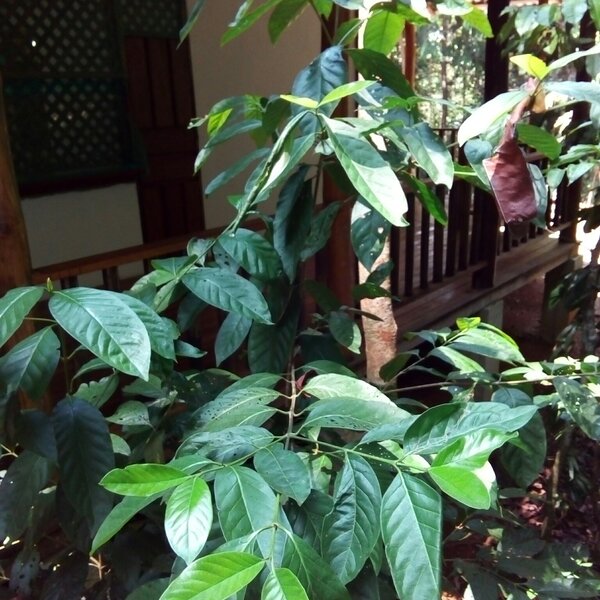
A widespread neotropical tree whose Caribbean nickname comes from the pale, greasy texture of its edible fruits, found from Mexico to Peru and encompassing what were once numerous separate Central American species.
Wine Palm
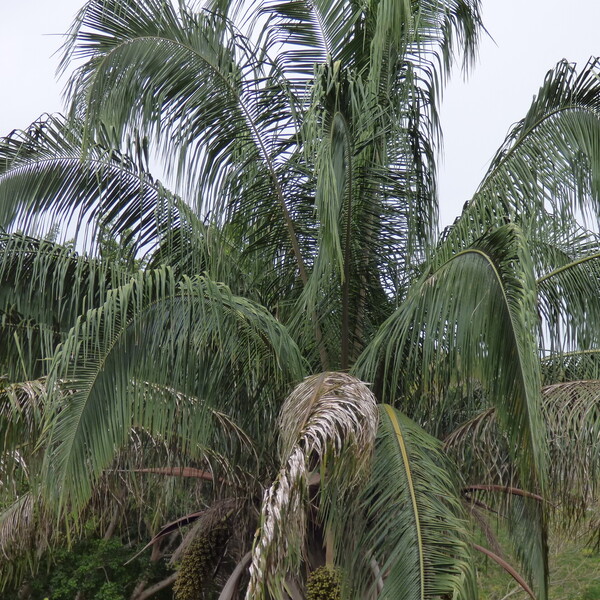
A towering palm with vertical rooster-tail fronds that hosts the primary vector of Chagas disease in the Orinoco region. Indigenous peoples extract wine from its sap and use its parts in 36 documented ways.
Panama Rubber Tree, Hule
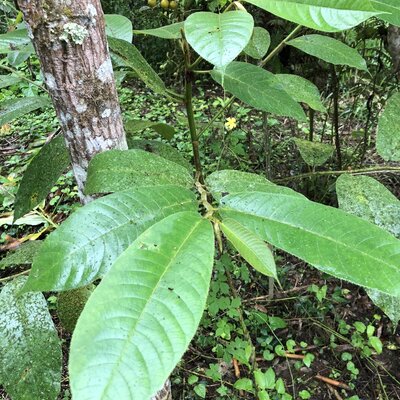
The Panama rubber tree fueled Mesoamerican civilizations for 3,000+ years. Ancient peoples perfected vulcanization millennia before Goodyear. But when the rubber boom arrived, the tree's anatomy doomed it: lacking connected latex vessels like Hevea brasiliensis, harvest required killing trees. Destructive exploitation decimated populations while Southeast Asian Hevea plantations captured the market.
Common Guava
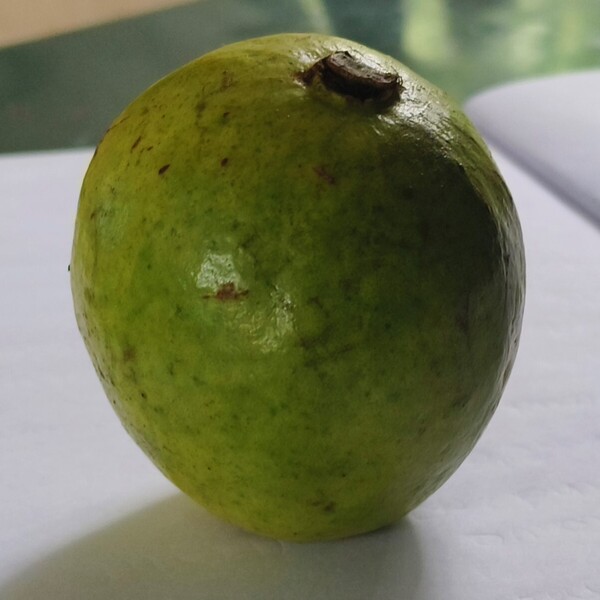
A small tree cultivated for millennia, bearing fragrant fruit with pink flesh and seeds as numerous as sand grains.
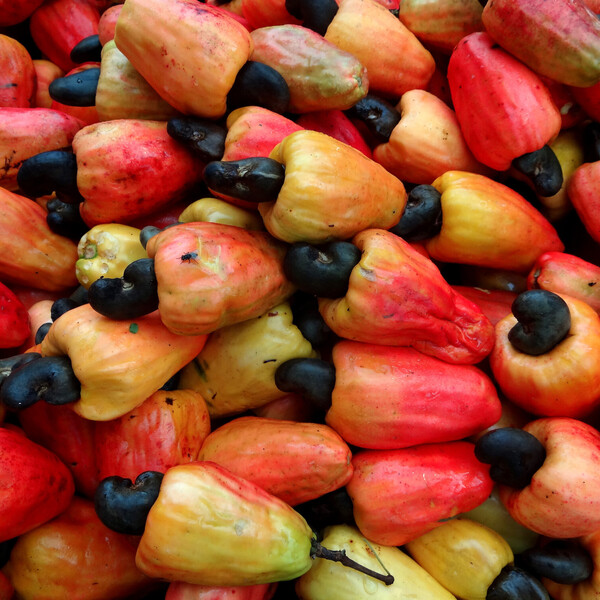
Cashew
A tree whose fruit grows backwards: the kidney-shaped nut perched atop a swollen, colorful pseudofruit.
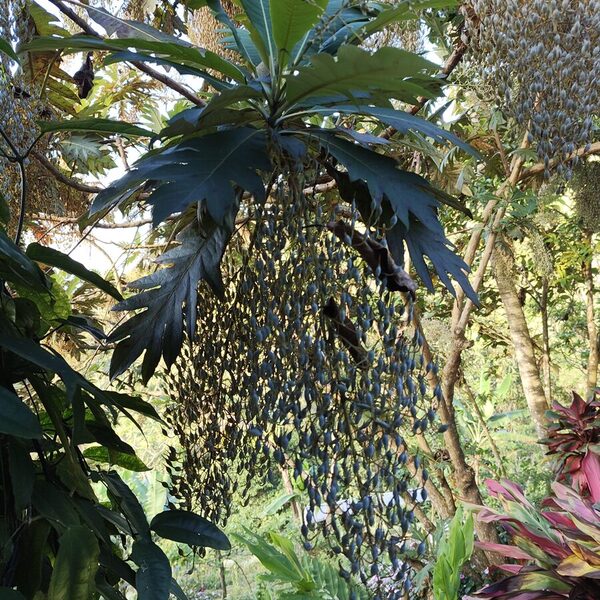
Tree Poppy
A poppy that bleeds yellow when cut, bearing dangling stamens that have abandoned petals for wind. The sole New World representative of an ancient lineage split from its Asian sister forty million years ago.
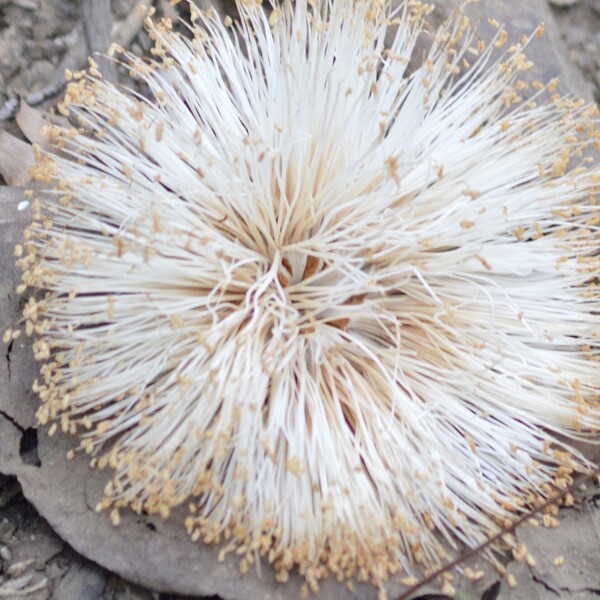
Barrigon
A potbellied tree with photosynthetic bark. Green stripes on the trunk contain chlorophyll, allowing it to photosynthesize even when leafless during the dry season.
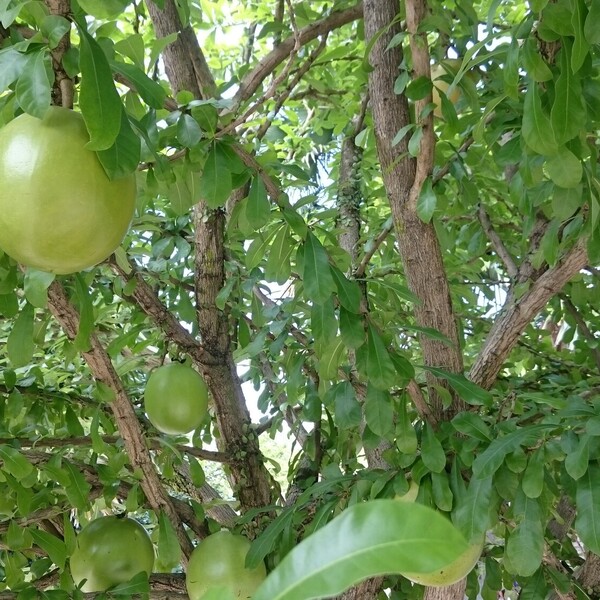
Calabash Tree
A tree with 5,000 years of human history, the calabash appears in Maya creation mythology and provides the sacred rattles of Vodou priests and the resonating gourds of Brazilian capoeira.
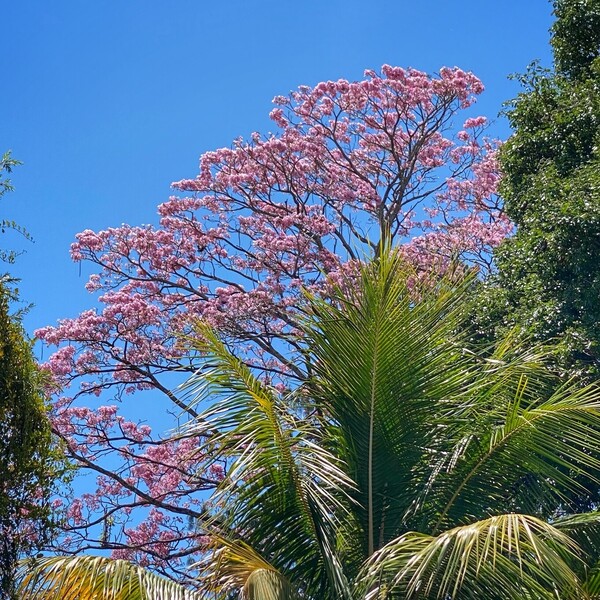
Pink Trumpet Tree
El Salvador's national tree, the maquilishuat erupts into spectacular pink blooms each dry season. One of Central America's most important timber trees, it ranges from Mexico to Ecuador.
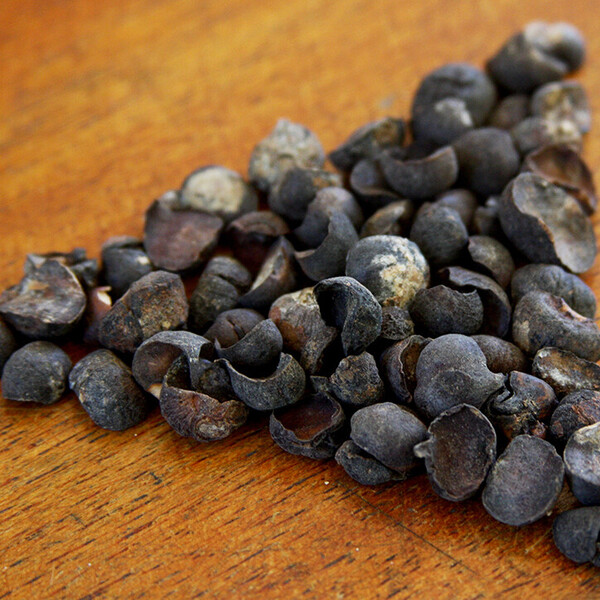
Breadnut
A keystone tree that may have fed Maya cities for centuries. When archaeologist Dennis Puleston tested ancient storage chambers at Tikal, ramon nuts lasted thirteen months while maize and beans were devoured by insects within weeks.
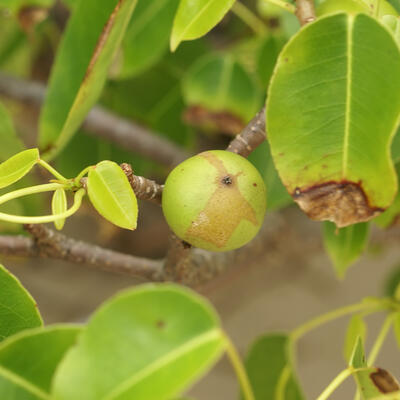
Manchineel
The Guinness World Record holder as the most dangerous tree in the world. Its caustic sap can blind, its apple-like fruits can kill, and even standing beneath it in rain burns the skin. Yet iguanas and tortoises eat the fruit safely.
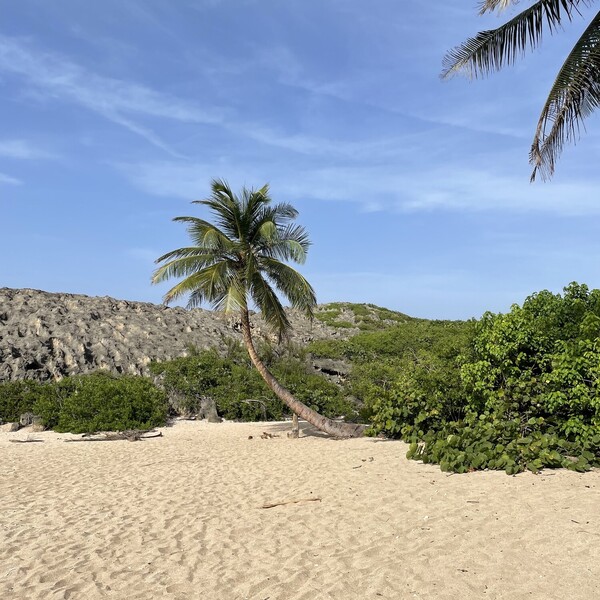
Coconut
Three dark pores on every coconut shell look like a grimacing face. Portuguese sailors in the 1500s called them coco — goblin. The coconut palm drifted across oceans for millennia before humans, colonizing remote tropical shores with seeds that float for months at sea.
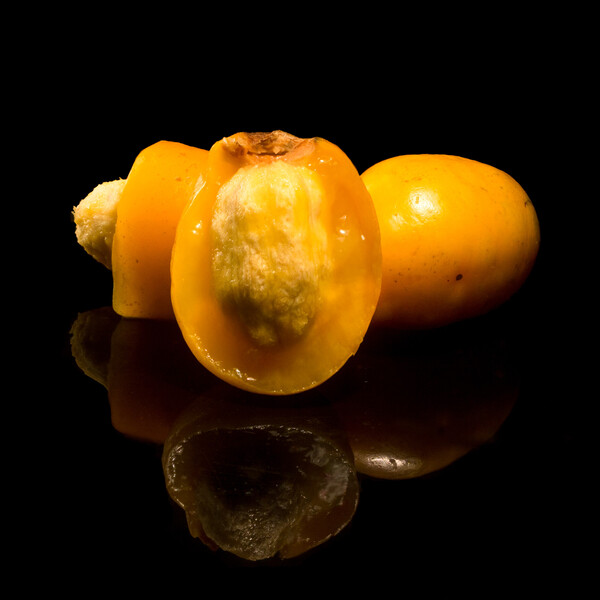
Jocote
A deciduous fruit tree cultivated across Mesoamerica for its sweet-tart plum-like fruits, with at least two independent domestication events and an unusual reliance on wasps rather than bees for pollination.
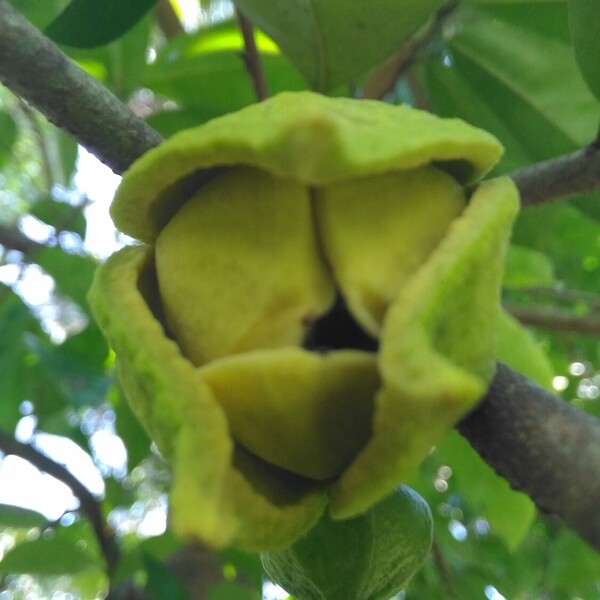
Soursop
Large spiny fruits emerging directly from tree trunks. Flowers that heat themselves to attract beetle pollinators. A crop with both healing promise and neurotoxic warning.
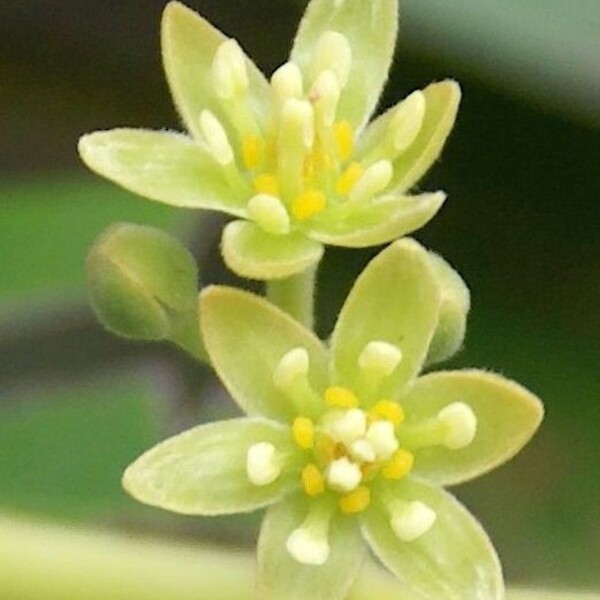
Avocado
A member of the Lauraceae family found in Central American forests.
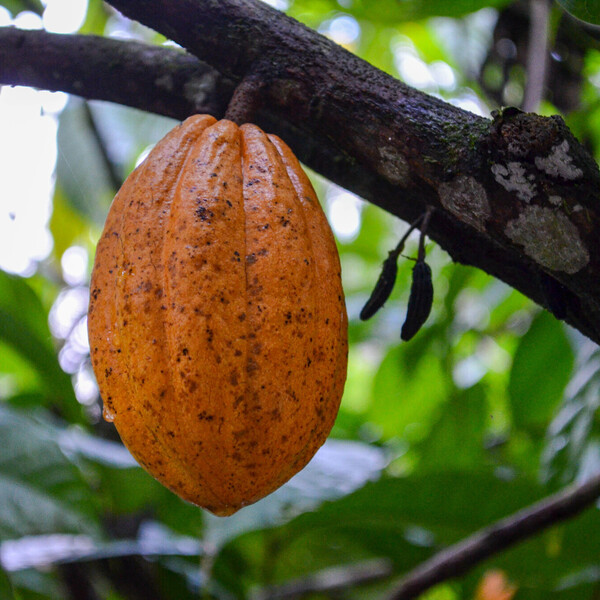
Cacao
An understory tree with a 5,300-year cultivation history, pollinated exclusively by midges no bigger than pinheads.
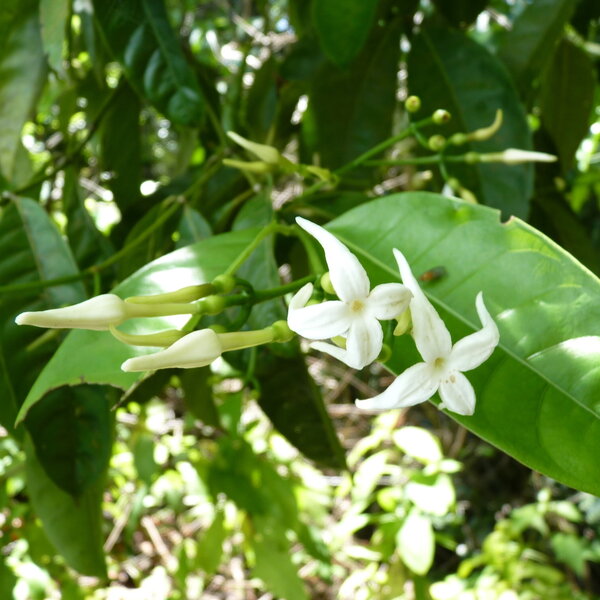
Huesito
Shade-loving understory tree of tropical wet forests from Mexico to Brazil. Its research history on Barro Colorado Island has made it one of the most intensively studied trees in the Neotropics.
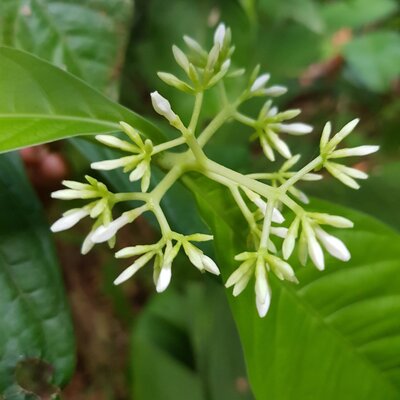
Loftonii
A member of the Rubiaceae family found in Central American forests.
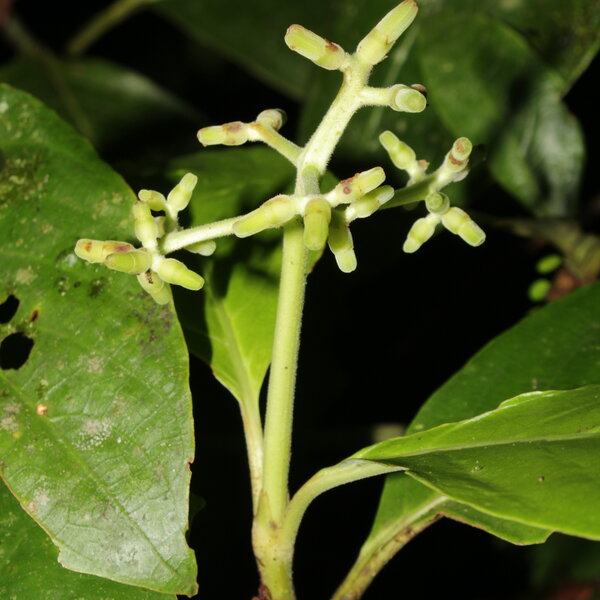
Rio Hondo Palicourea
A Central American understory shrub with nocturnal white flowers, unusual for a genus known for bright hummingbird-pollinated blooms. First collected by Henri Pittier in 1901, this species took over a century and two genus changes before finding its current taxonomic home.
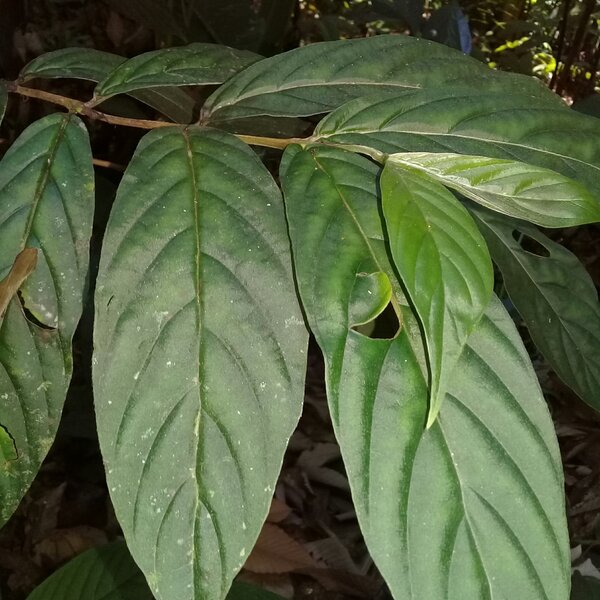
Cafetillo Bracteoso
An understory shrub or small tree of very wet lowland forests, distinguished by its connate stipules that form a sheath around the stem. This Rubiaceae species thrives from Nicaragua to Ecuador.
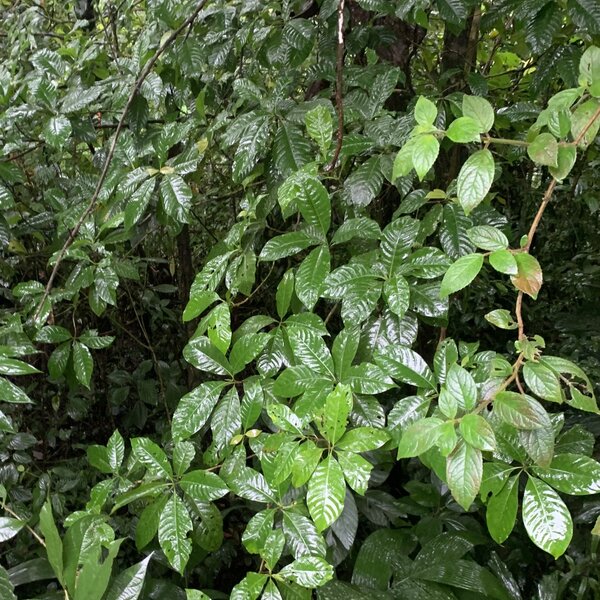
Egg Yolk Tree
A riparian tree of very wet lowland forests from Honduras to Colombia, its brilliant yellow-orange wood earning it the vernacular name 'yema de huevo' (egg yolk).
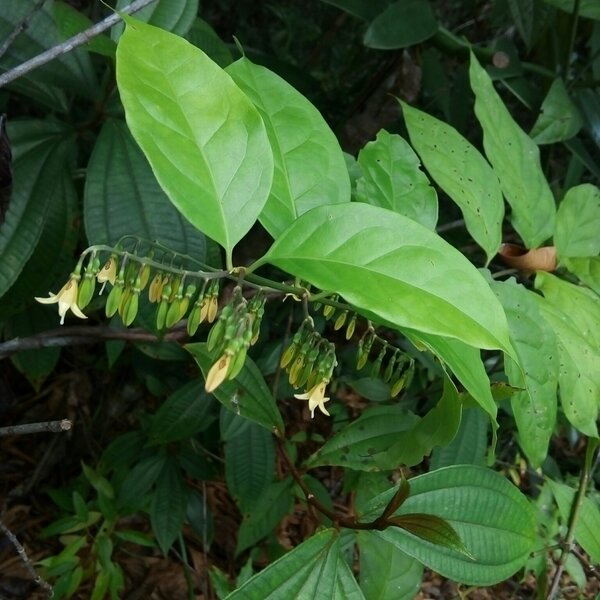
Belize Snowberry
A scrambling shrub or vine of wet lowland forests from Mexico to Peru, named for Belize where botanist Percy Gentle collected the type specimen.
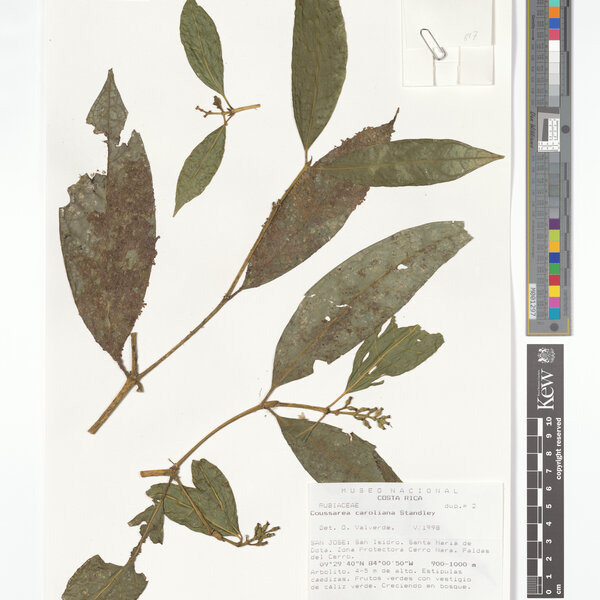
Carolina's Coussarea
An understory shrub or small tree of wet montane forests from Costa Rica to Colombia, bearing 4-merous white flowers typical of the genus Coussarea.
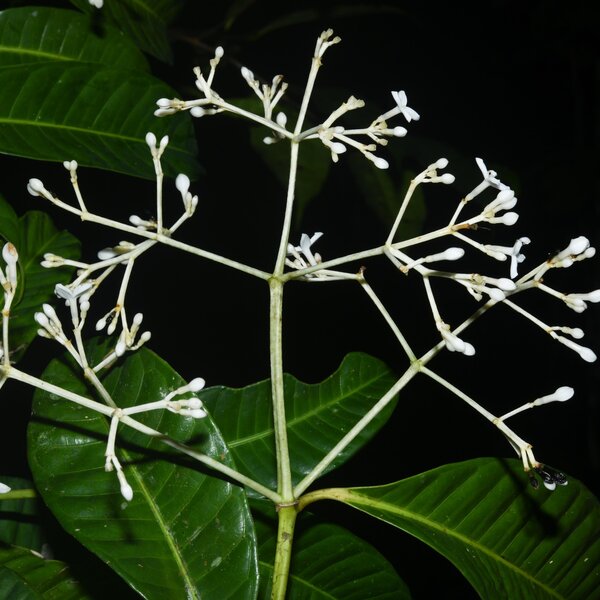
Panicled Coussarea
A widespread neotropical tree reaching 12 meters, bearing jasmine-scented white flowers that open at night and containing novel cytotoxic compounds discovered in 2003.
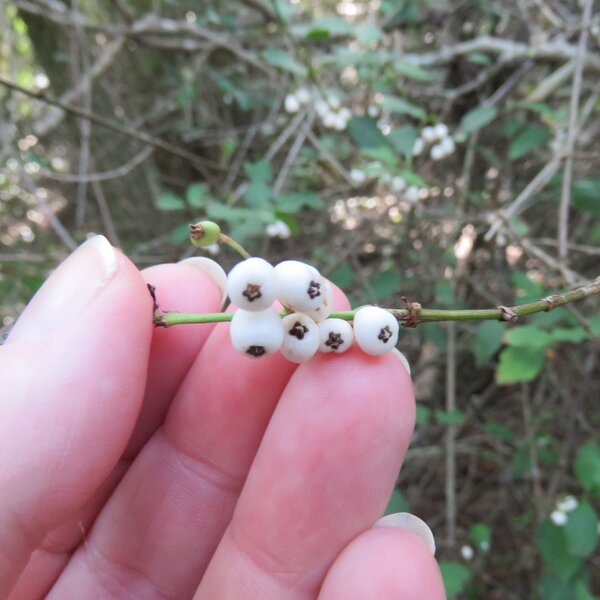
West Indian Milkberry
A scrambling shrub of coastal hammocks and forest edges whose translucent white berries give it the name snowberry, serving as a critical host for the endangered Miami blue butterfly.
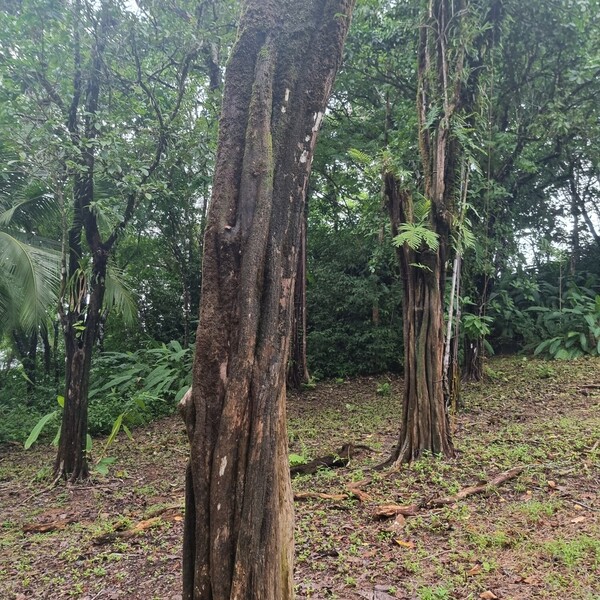
Pata de Yanqui
A Near Threatened canopy tree endemic to Nicaragua and Costa Rica, reaching 35 meters tall with spike-like inflorescences and wind-dispersed seeds in the wet lowland forests of the Osa Peninsula.
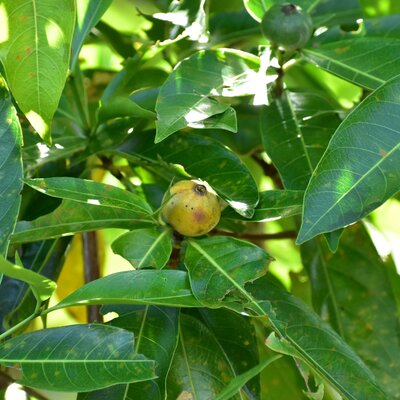
Madroño
A small understory tree prized for its sweet-sour fruits and medicinal leaves, found from Mexico to Brazil in wet lowland forests.
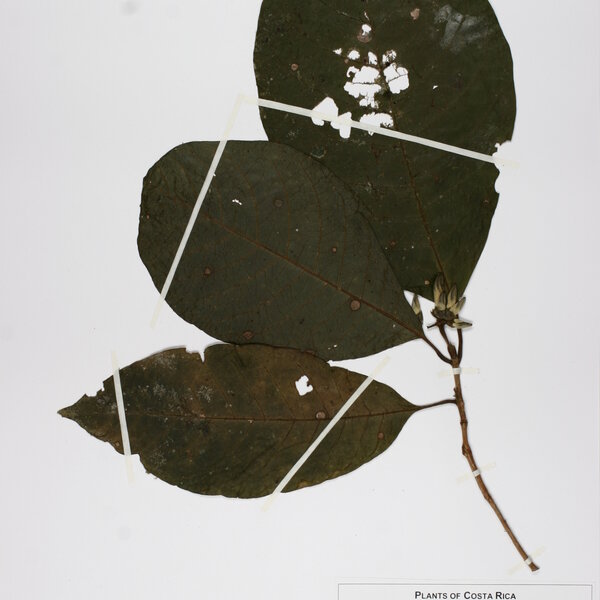
Mountain Borojó
A dioecious understory tree of lowland wet forests from Nicaragua to Colombia, bearing large globular fruits with edible mucilaginous pulp.
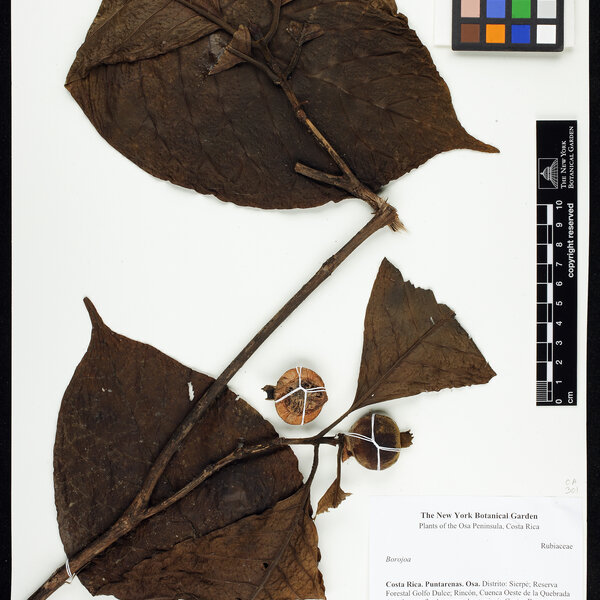
Utley's Borojó
A Vulnerable endemic from Costa Rica's Osa Peninsula wet forests, named for botanists John and Kathleen Utley. Little is known of its ecology.
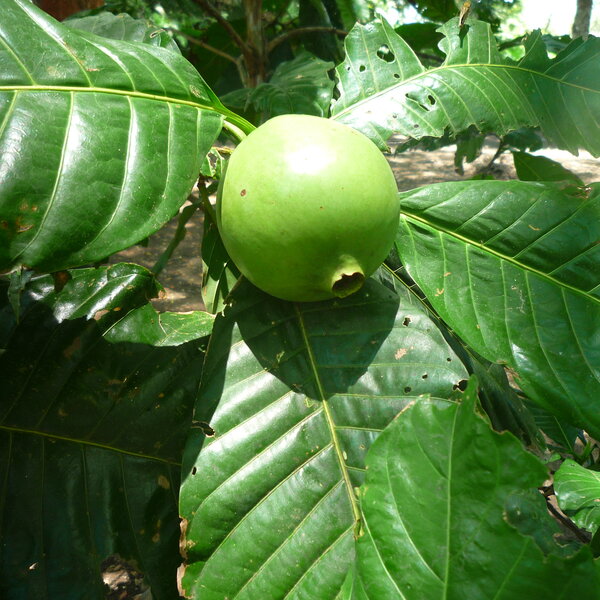
Borojó
A small rainforest tree famed for its large, pulpy fruits and legendary aphrodisiac reputation. The Emberá name means 'head-shaped fruit.'
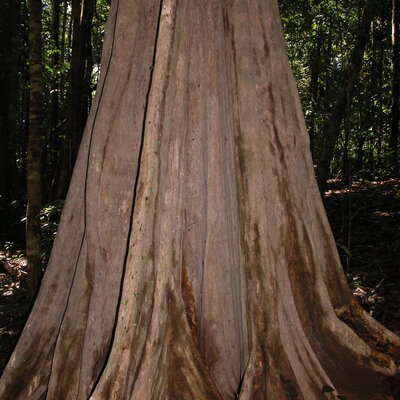
Yema de Huevo
A riparian giant of Costa Rica's Pacific lowlands with cream-colored bark and egg-yolk yellow wood, endemic to southwestern Costa Rica and western Panama.
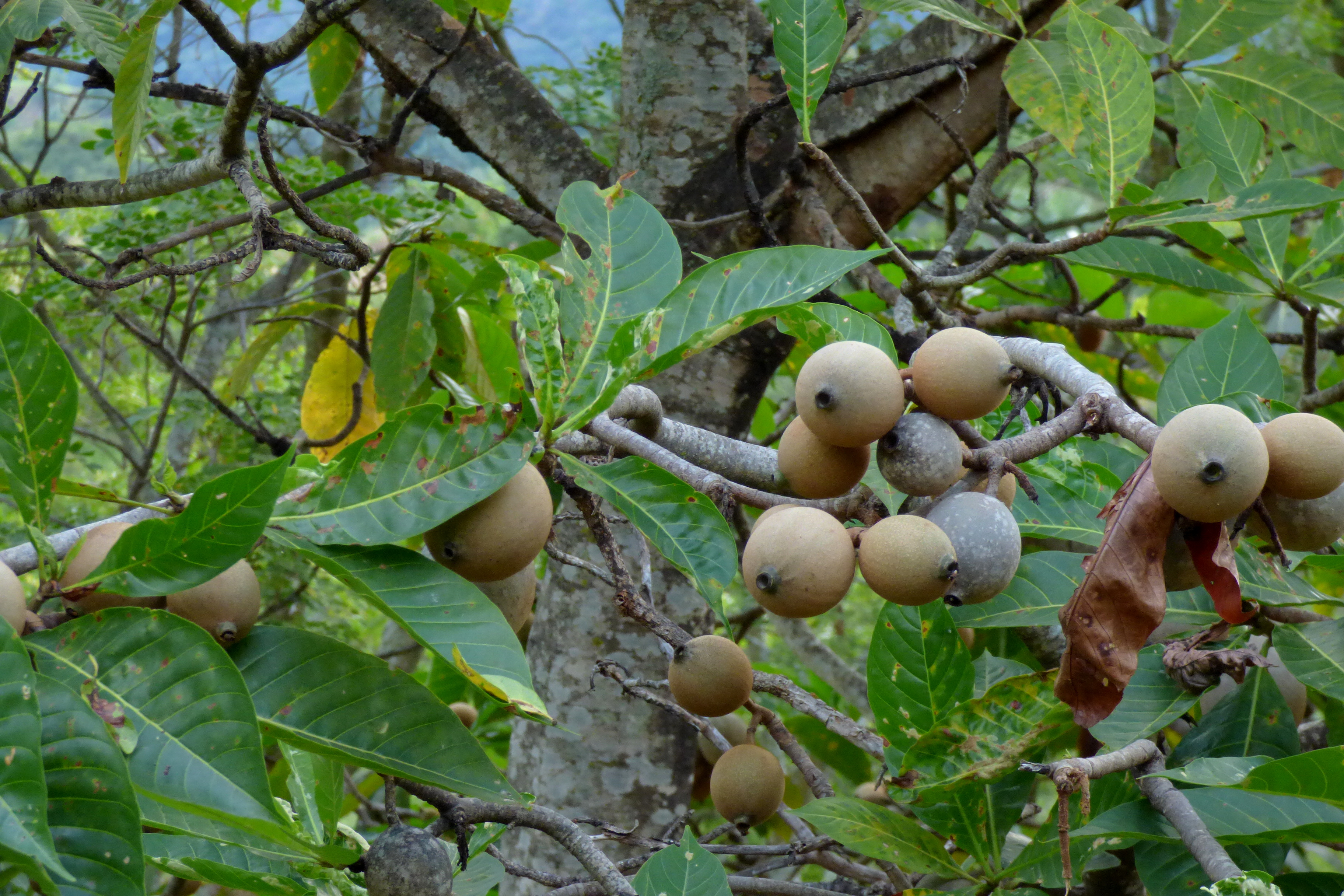
Guaitil
The jagua tree whose unripe fruits yield an indelible blue-black dye used for indigenous body painting across the Neotropics for millennia.
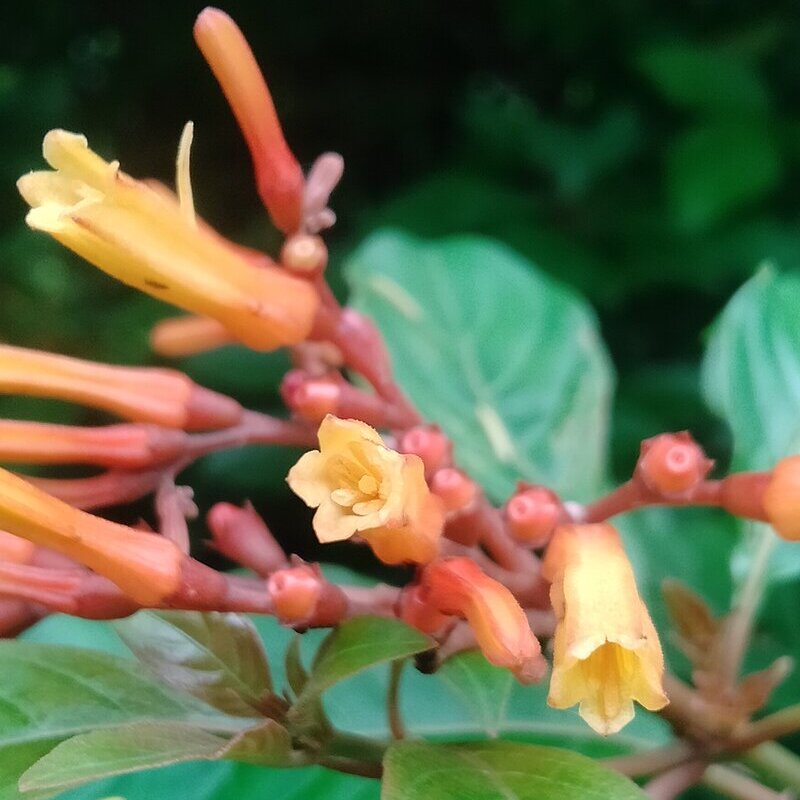
Coralillo
The firebush of forest edges, whose year-round tubular orange-red flowers draw more hummingbird species than any other native shrub in the Neotropics.
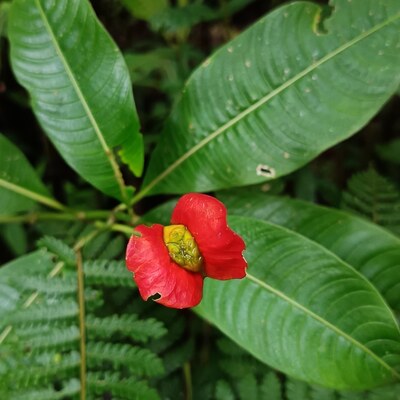
Hot Lips
The unmistakable 'kissing plant' whose brilliant red bracts open like painted lips to attract hummingbirds before revealing the true flowers within.
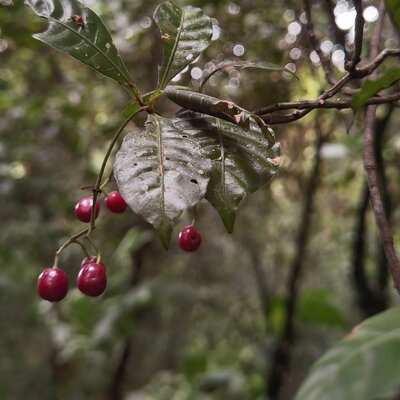
Escampa Gallina Psychotria
A tiered understory shrub with tiny leaves and cherry-red drupes that feed Brunca birds from Golfo Dulce to the Talamanca cloud forest.
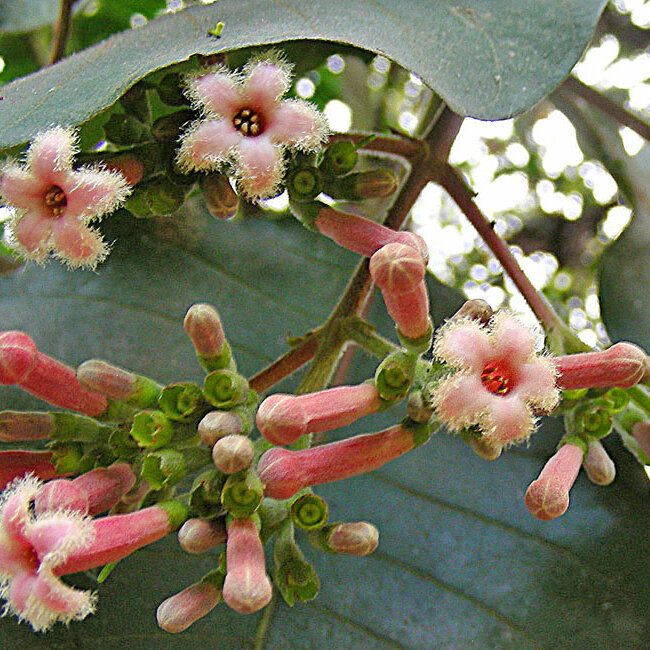
Quina
The tree that changed world history, its bark yielding quinine that conquered malaria and enabled European colonization of the tropics.
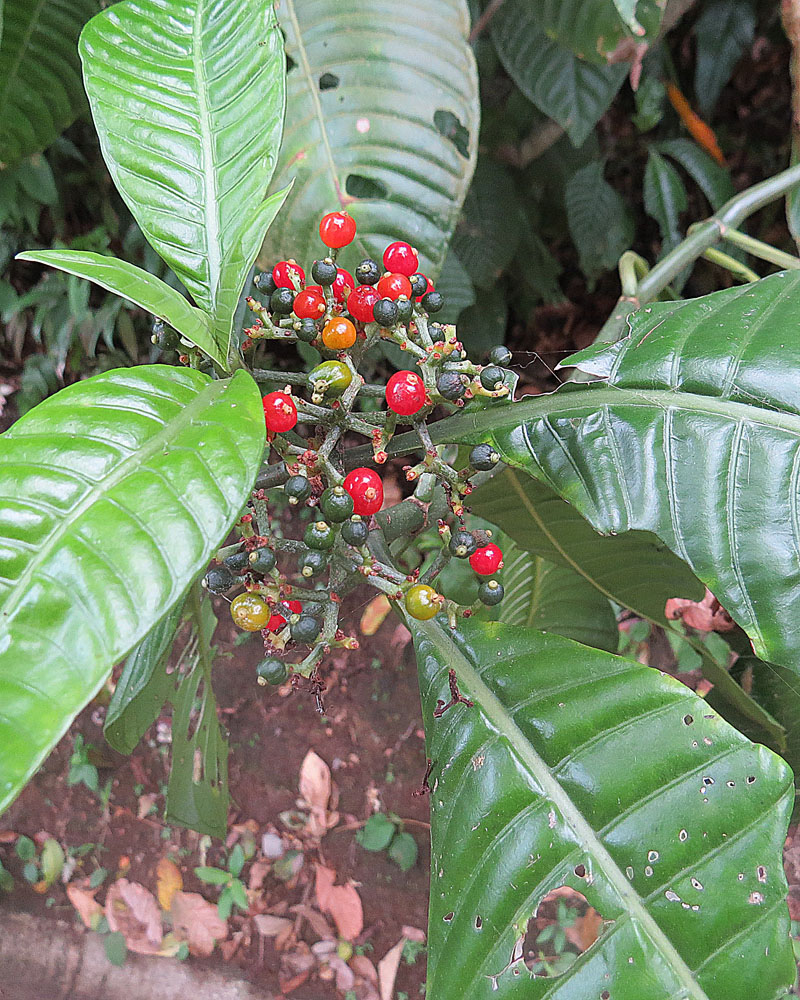
Monte Hiltún Cafecillo
An understory cafecillo whose domatia-laced leaves and airy panicles link La Selva’s successional strips with Monte Hiltún’s limestone valleys.
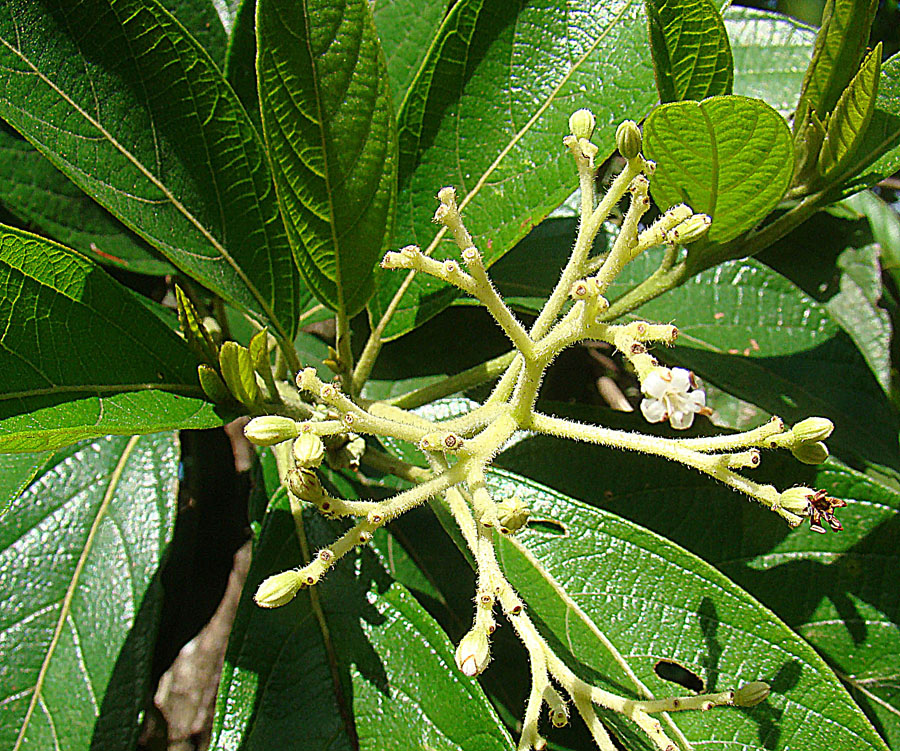
Chacruna de Brunca
A Brunca population of the iconic ayahuasca leaf whose glabrous crowns, glomerulate panicles, and DMT-rich chemistry anchor riparian understories across Costa Rica’s wet foothills.
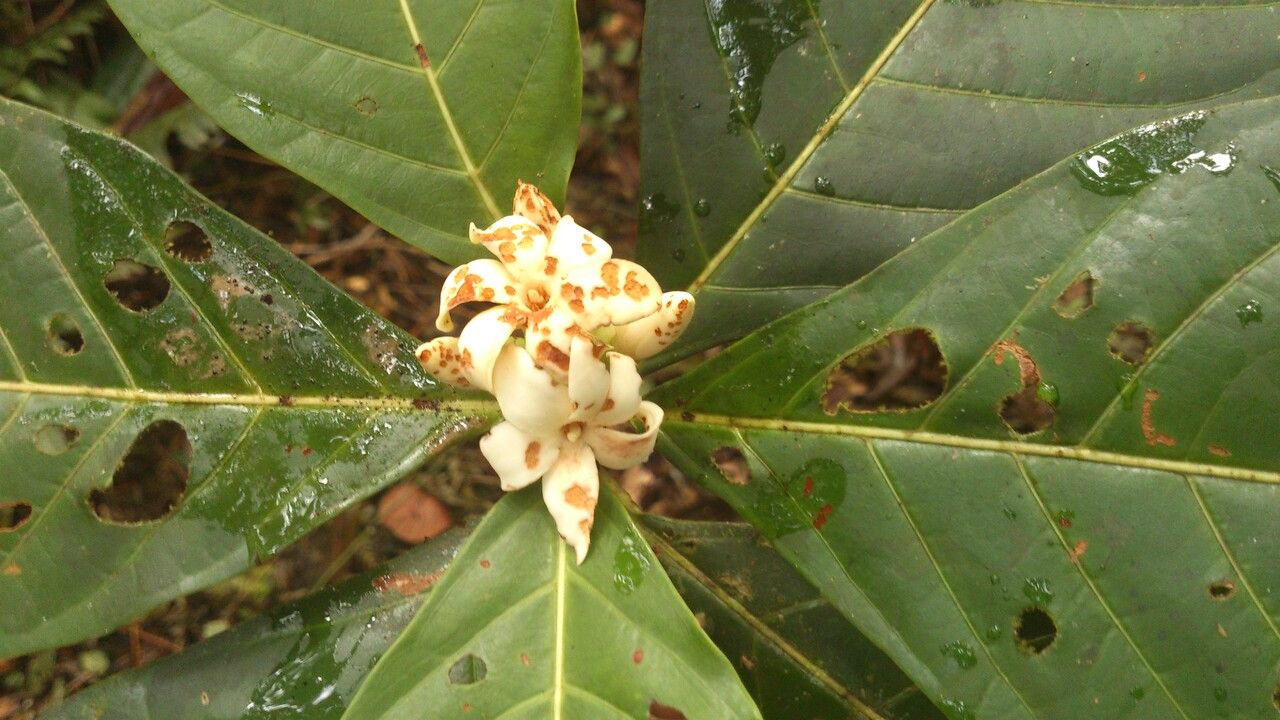
Atlantic Alibertia
A dioecious borojó relative from Sarapiquí’s ridges whose velvety-veined leaves and thick-walled berries link Costa Rica’s Caribbean slope with Colón, Panama.
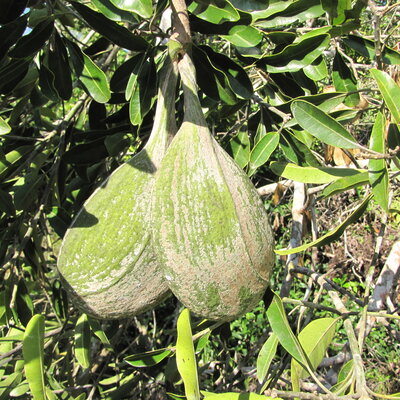
Aspidosperma cruentum
An amargo emergent with blood-red latex that links the Maya lowlands, Golfo Dulce foothills, and Amazonia through wind-dispersed, winged seeds and resin-slick buttresses.
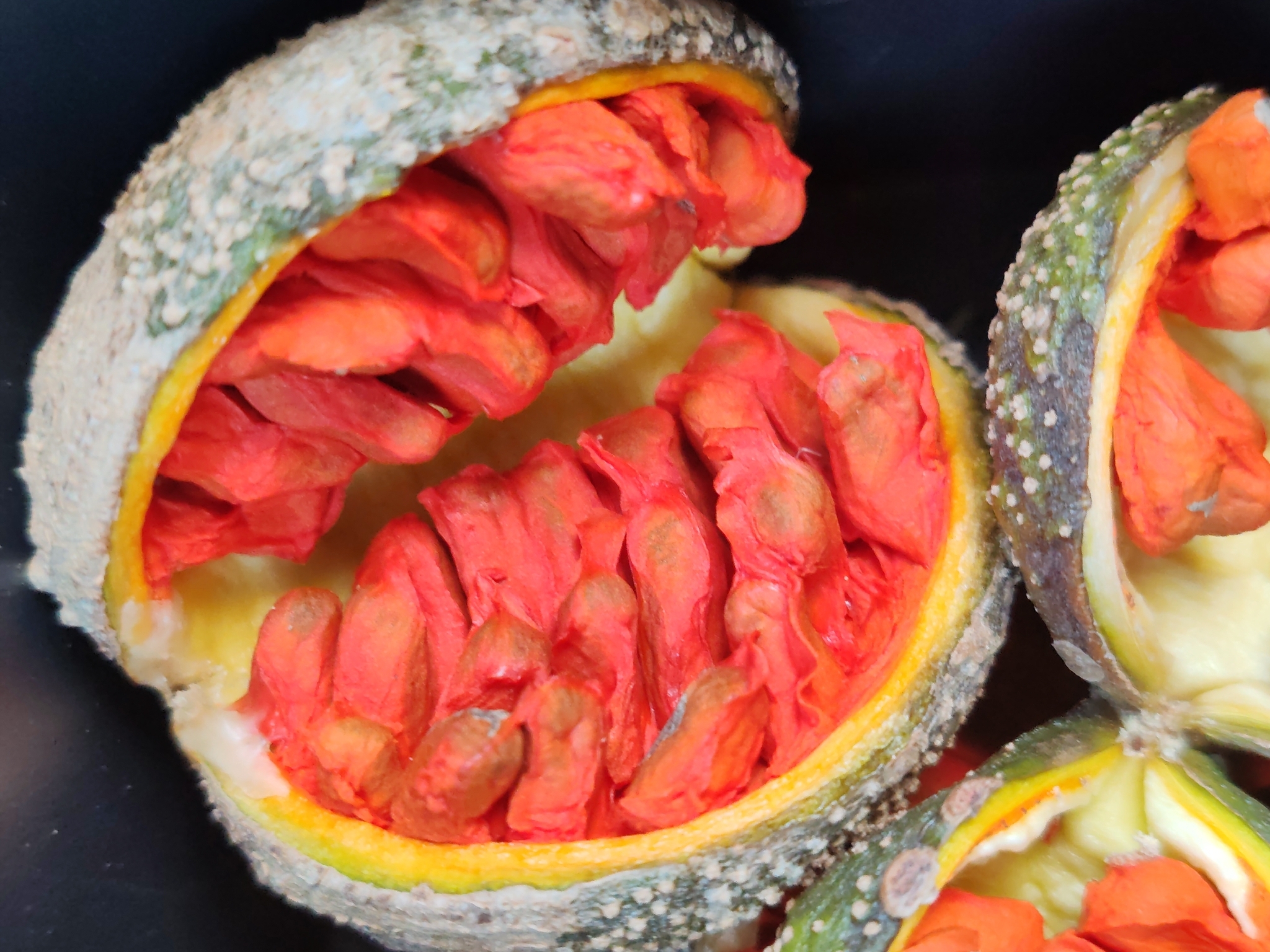
Huevos de Caballo
A living-fence favorite whose perfumed night flowers lure hawkmoths while paired orange fruits fuel tanagers, honeycreepers, and monkeys across Brunca hedgerows.
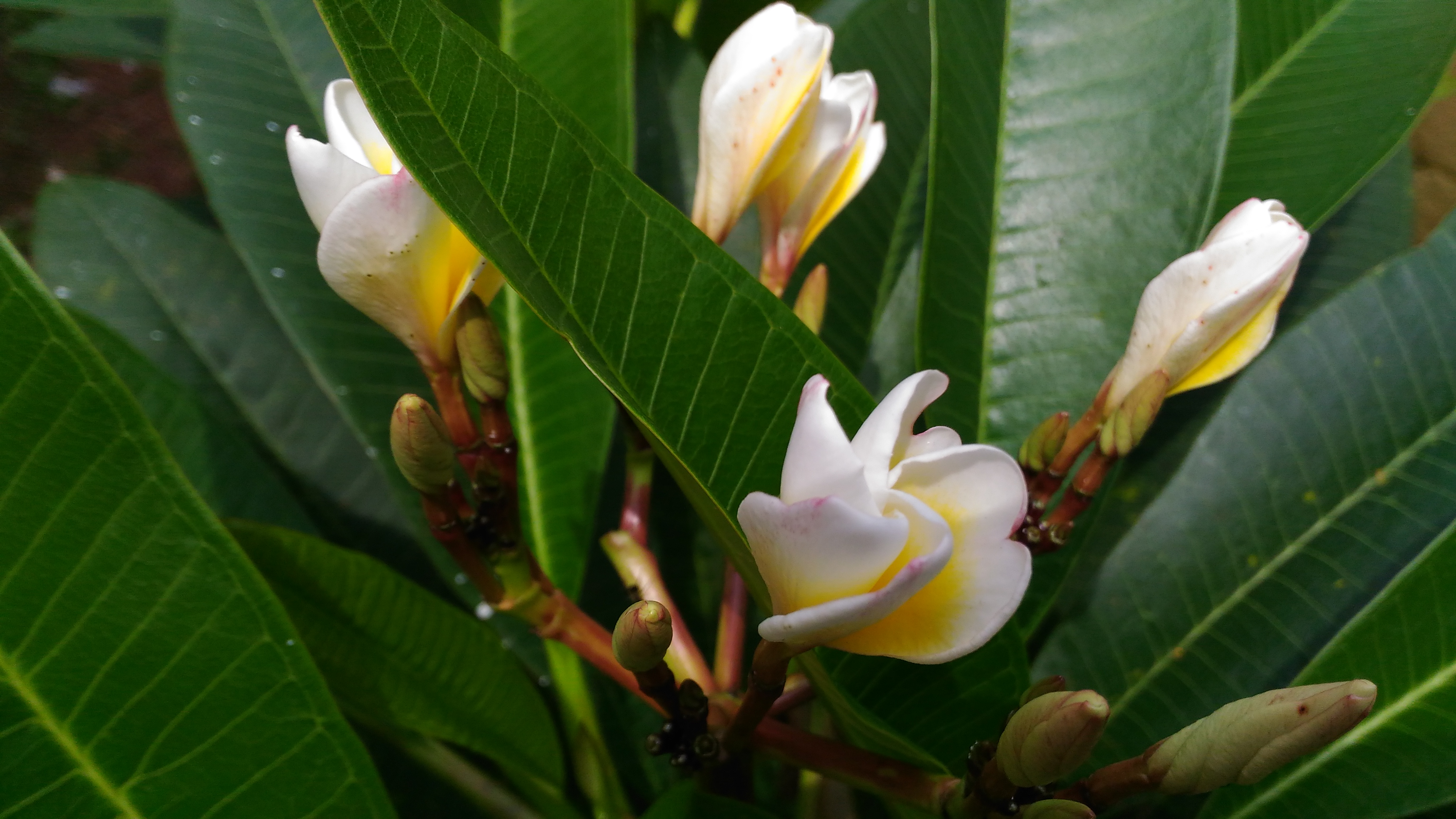
Plumeria rubra
The Brunca flor blanca whose night-scented pinwheels anchor living fences, feed hawkmoths, and host giant caterpillars that in turn sustain cuckoos.
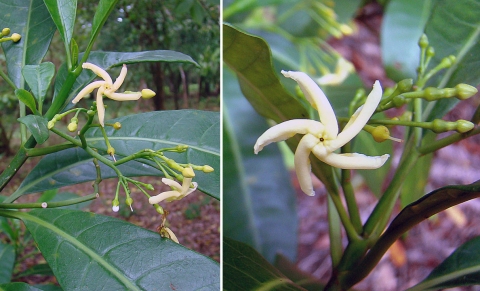
Tabernaemontana alba
The white milkwood of Brunca whose latex-rich hedges shelter beetles, hawkmoths, and stingless bees while supplying gum, posts, and riverine shade.
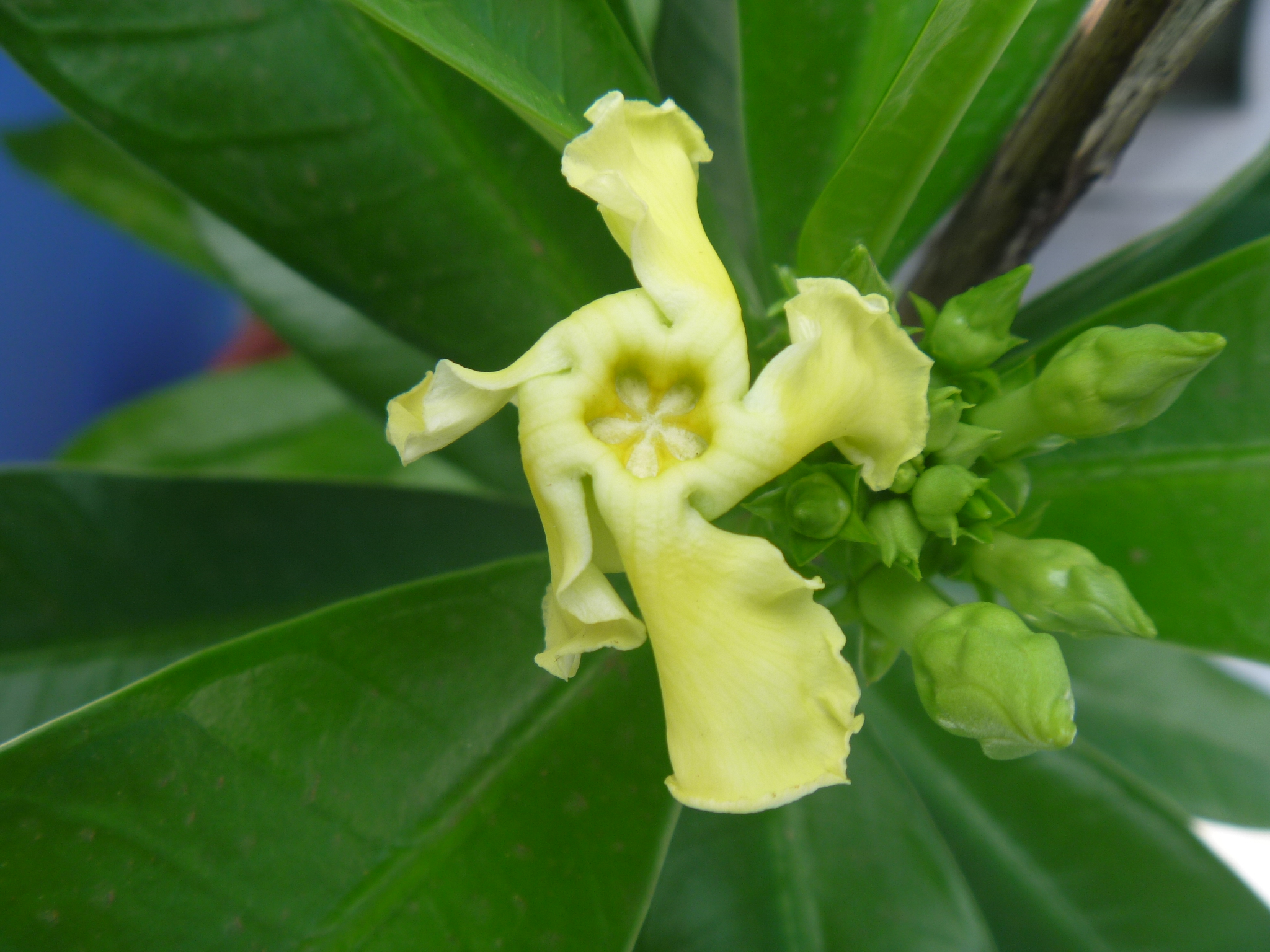
Thevetia ahouai
The Brunca "cojón de perro" whose latex posts knit living fences that host toucans, bees, and hawkmoths while deterring cattle and mites alike.
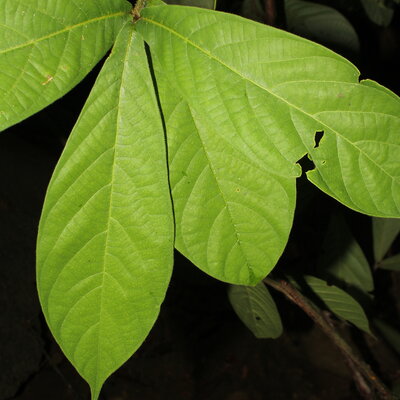
Ocotea macrophylla
A cloud-forest laurel with oversized, helically twisted leaves that links the sierras of southern Mexico with Costa Rica’s Talamancas and on to the Northern Andes.
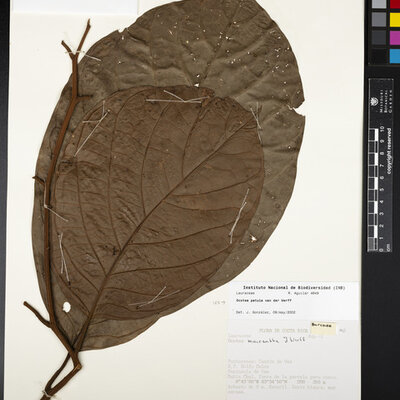
Ocotea macrantha
A large-flowered laurel endemic to the Golfo Dulce Forest Reserve, where fewer than two dozen trees survive on the Osa Peninsula's rain-soaked ridges.
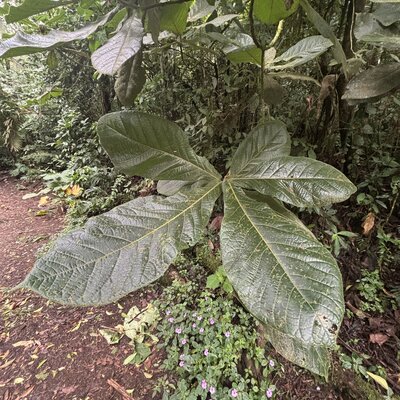
Ocotea lentii
A Roy Lent discovery that links Costa Rica's Caribbean lowlands with wet foothill forests up to 1,600 meters, now classed as Near Threatened by the IUCN.
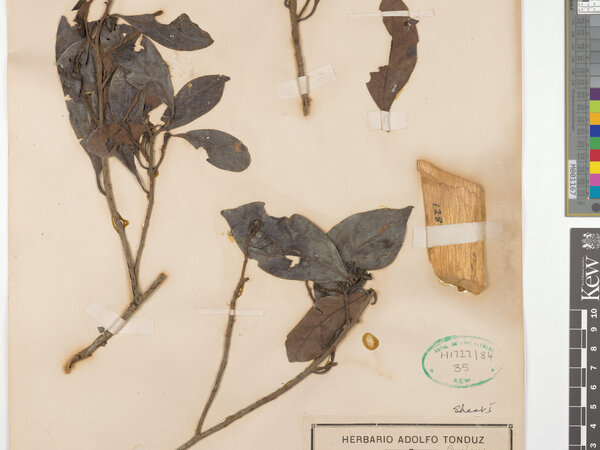
Aguacatillo Oblongo
A gynodioecious lowland laurel with pit-domatia leaves and tiny fruits that links Costa Rica's Caribbean forests to Belize, the Guianas, and Bolivia.
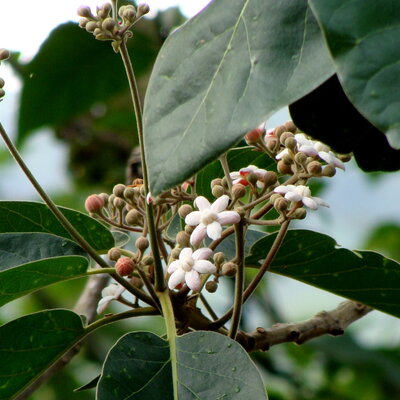
Ocotea sinuata
A velvety-leaved Pacific-slope laurel whose rosy flowers brighten seasonally dry foothill forests from Chiapas to the Valle del General.
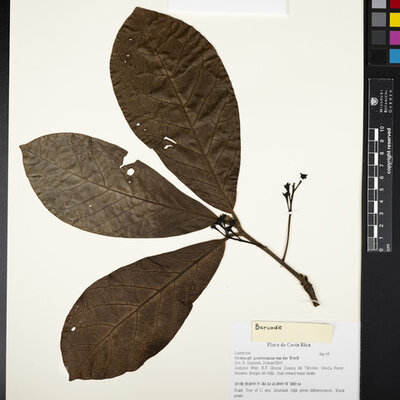
Ocotea praetermissa
A once-overlooked Irazu laurel with soft pubescent undersides and glabrous yellow flowers that trace the cloud-forest crest between Costa Rica and Panama.
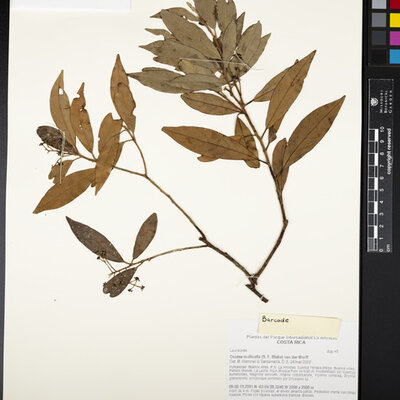
Ocotea mollicella
The quizarra amarillo of the Los Santos cloud belt, recognized by gray velvety leaves and racemose inflorescences that ripen fruits for tanagers at 1,400–2,300 meters.
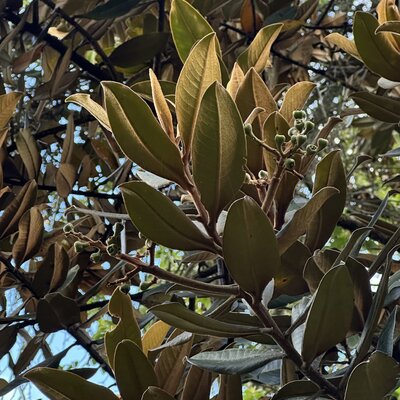
Ocotea calophylla
A páramo-edge laurel with silvery sericeous leaves that links Costa Rica’s Cerro de la Muerte to the high cordilleras of Colombia and Venezuela.
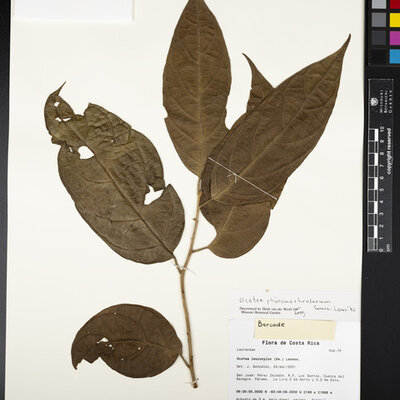
Ocotea pharomachrosorum
A Dota highland laurel dedicated to the resplendent quetzal, bearing long-petioled leaves and fruits that sustain the bird across the Talamanca–Chiriquí divide.
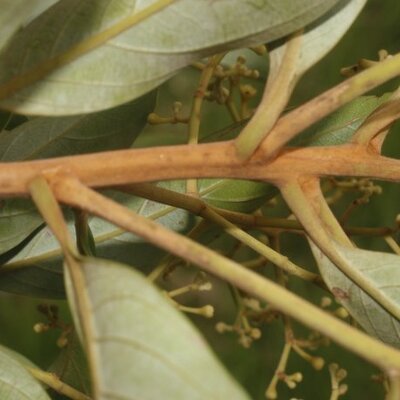
Ocotea monteverdensis
A narrow-leaved endemic of the Monteverde cloud forest corridor whose decurrent blades and ferruginous inflorescences mark mid-elevation ridges.
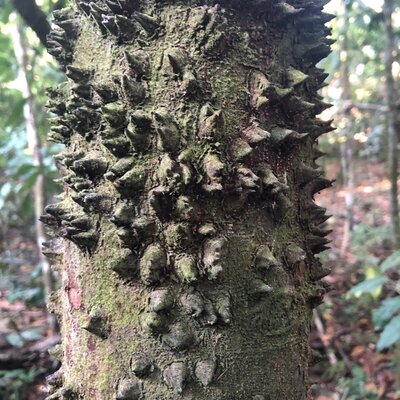
Cerillo
A distinctive understory tree armored with conical thorns, its trunk exuding thick white latex once used as a coffee sweetener throughout Costa Rica's Pacific slope rainforests.
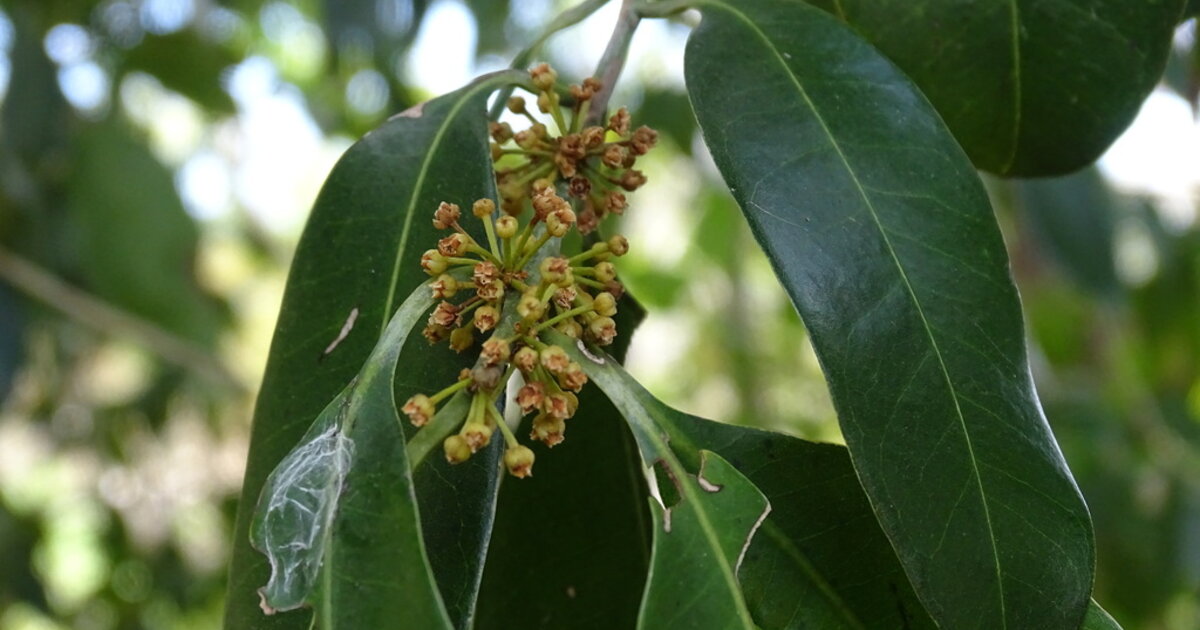
Zapotillo
A canopy tree with wood so dense it sinks in water, this member of the sapodilla family produces fleshy fruits favored by monkeys and birds across the Neotropics.
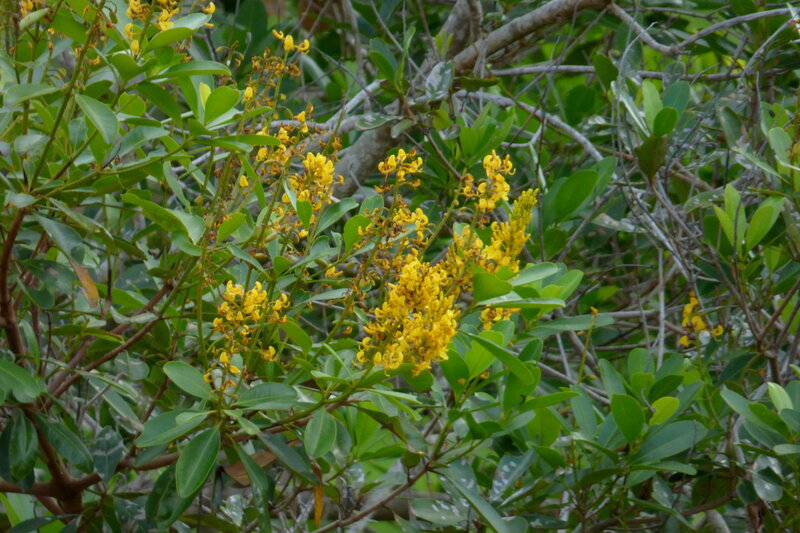
Chancho Colorado
A fast-growing pioneer tree that dominates secondary forests across Costa Rica's humid lowlands, its rusty-haired twigs and violet-scented yellow flowers making it unmistakable.
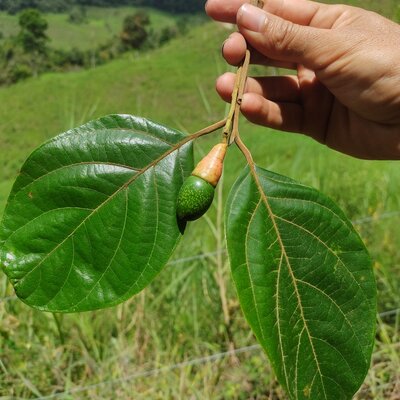
Ira de Valerio
A cloud forest laurel named for Costa Rican botanist Juvenal Valerio Rodríguez, this montane tree inhabits the misty highlands where quetzals and bellbirds feed on Lauraceae fruits.
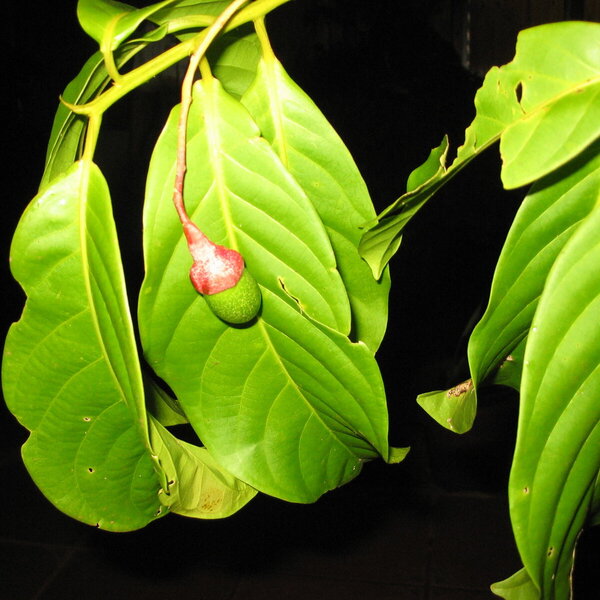
Pittier's Ocotea
An endangered laurel named for the Swiss botanist who founded Costa Rica's first herbarium, this rare tree persists in the montane forests of Costa Rica and Panama.
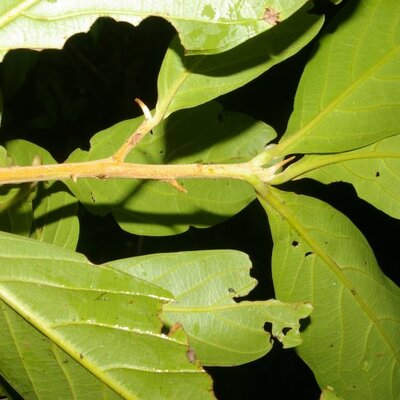
Sigua
A cloud forest laurel from Costa Rica's central highlands, this medium-sized tree with sulphur-yellow flowers inhabits the misty oak forests where resplendent quetzals feed on Lauraceae fruits.
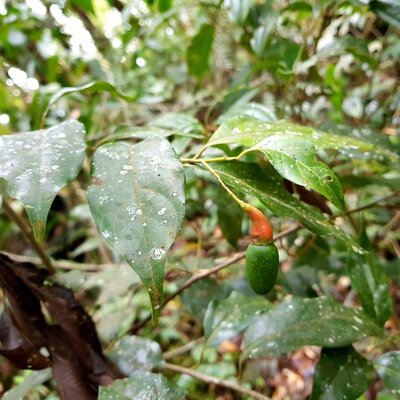
Ocotea brenesii
A cloud forest laurel named for Costa Rica's pioneering botanist Alberto Brenes, this rare tree grows in the misty highlands where Brenes himself once collected specimens.
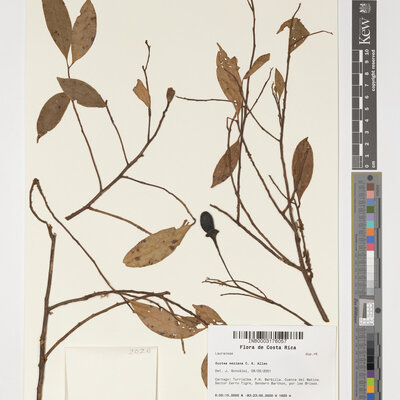
Aguacatillo de Mez
A cloud forest laurel from Costa Rica's Monteverde region, named in honor of the German botanist Carl Mez who revolutionized our understanding of the Lauraceae family.
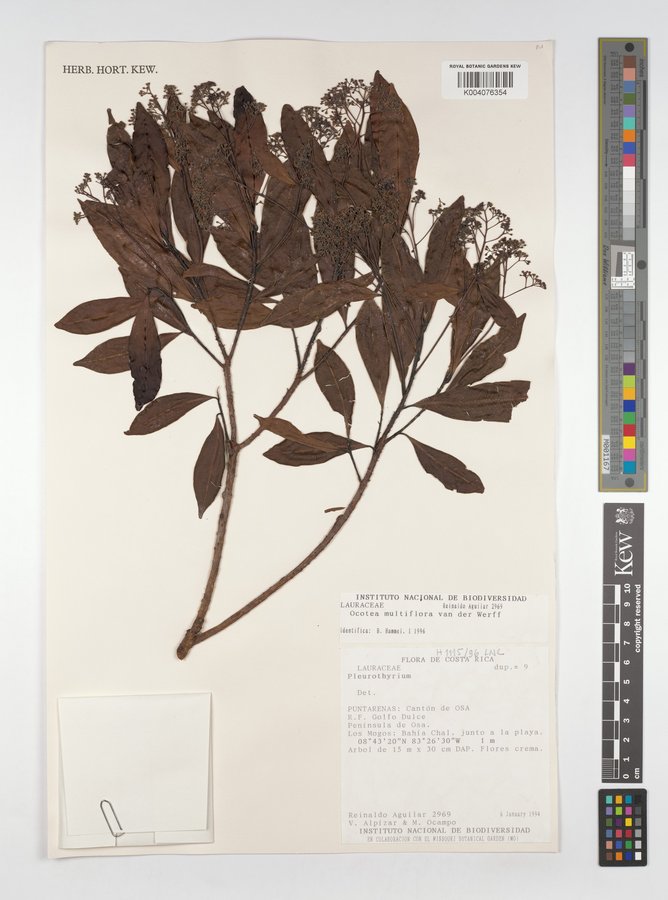
Aguacatillo de Osa
A Vulnerable lowland laurel endemic to Costa Rica's Golfo Dulce forests, where fine-veined coppery leaves and tiny cupules distinguish it from other canopy Ocoteas.
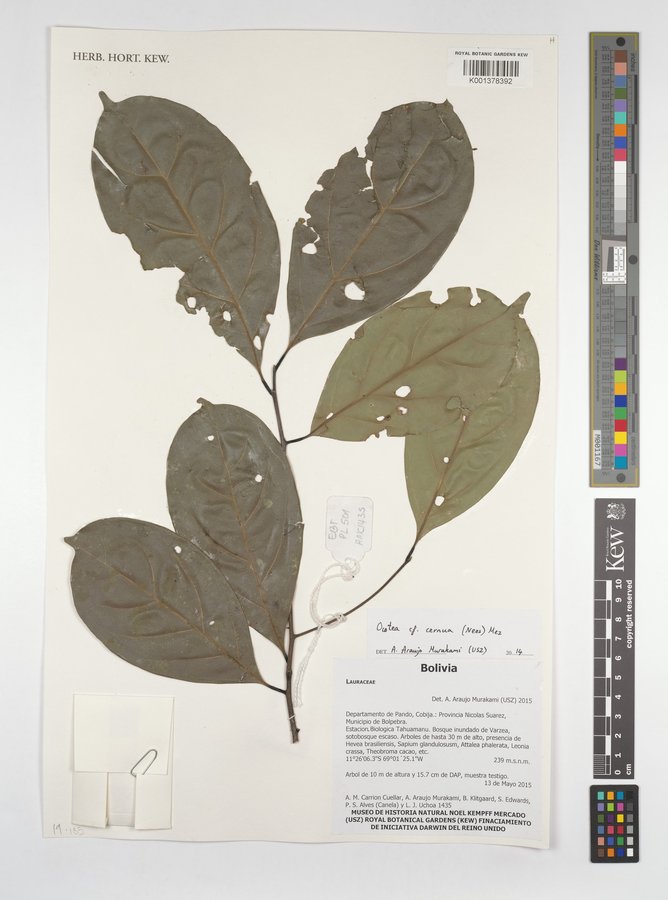
Sigua Amarillo
A dioecious lowland laurel that spans both Costa Rican slopes, offering fragrant flowers to pollinators and oily drupes to toucans, cotingas, and monkeys across humid forests.
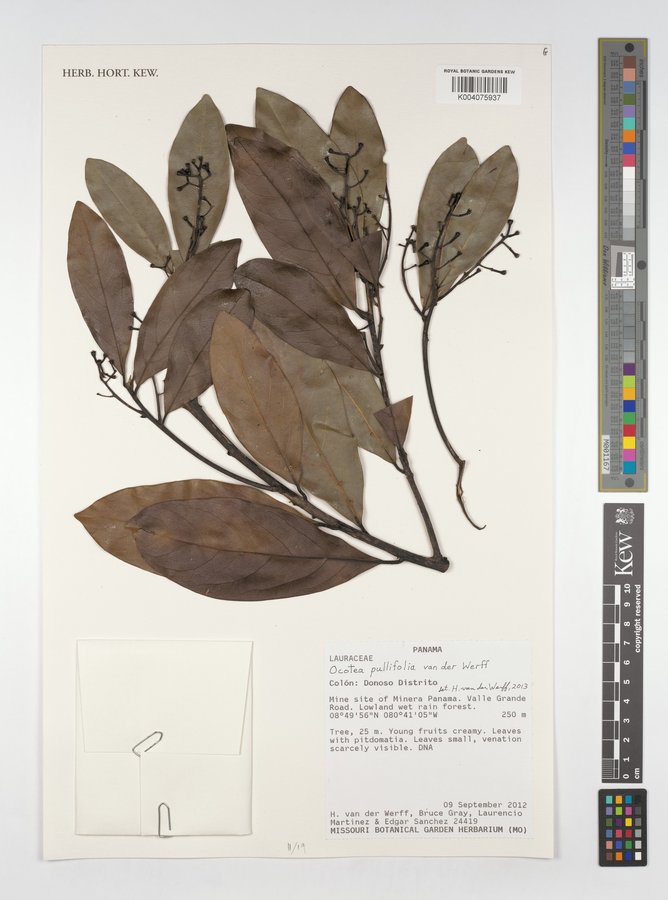
Quizarrá de Domacios
Glossy-leaved <em>Ocotea</em> of Costa Rica’s foothills whose perforated leaf domatia and flared cupules feed toucans, cotingas, and monkeys from Turrialba to the Osa Peninsula.
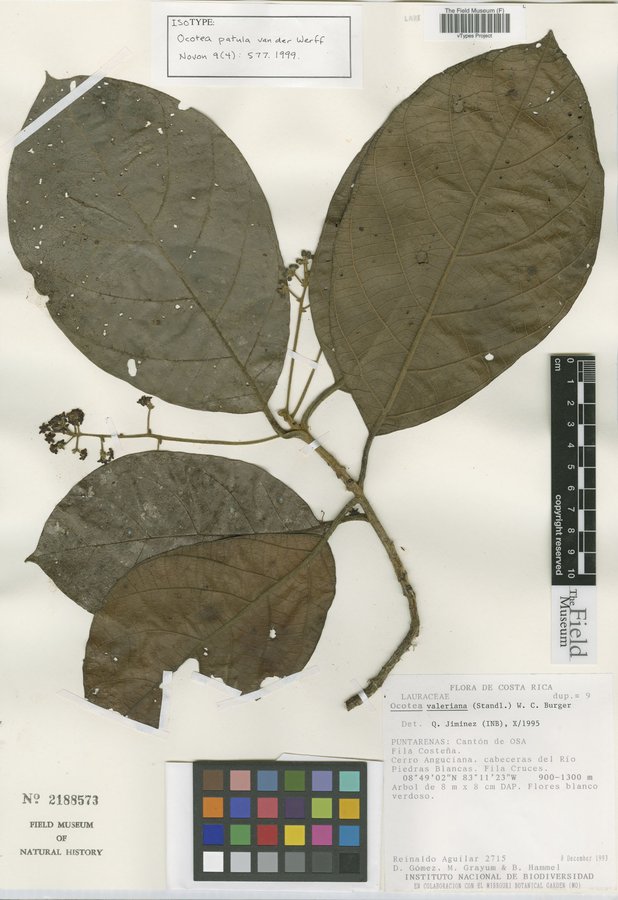
Quizarrá Patula
A golden-tomentose Lauraceae known only from Cerro Anguciana in the Fila Costeña, still awaiting its first documented fruits.
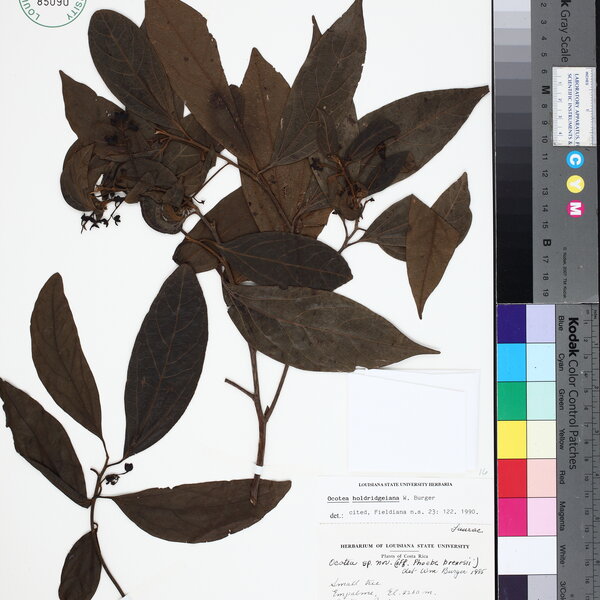
Aguacatillo de Holdridge
A cloud forest tree from Monteverde named after the American botanist Leslie Holdridge, who developed the life zones classification system.
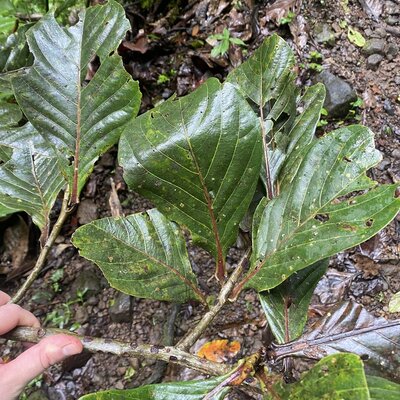
Ocotea endresiana
A cloud forest tree famous for demonstrating directed seed dispersal by three-wattled bellbirds. Seeds deposited at bellbird song perches are twice as likely to survive.
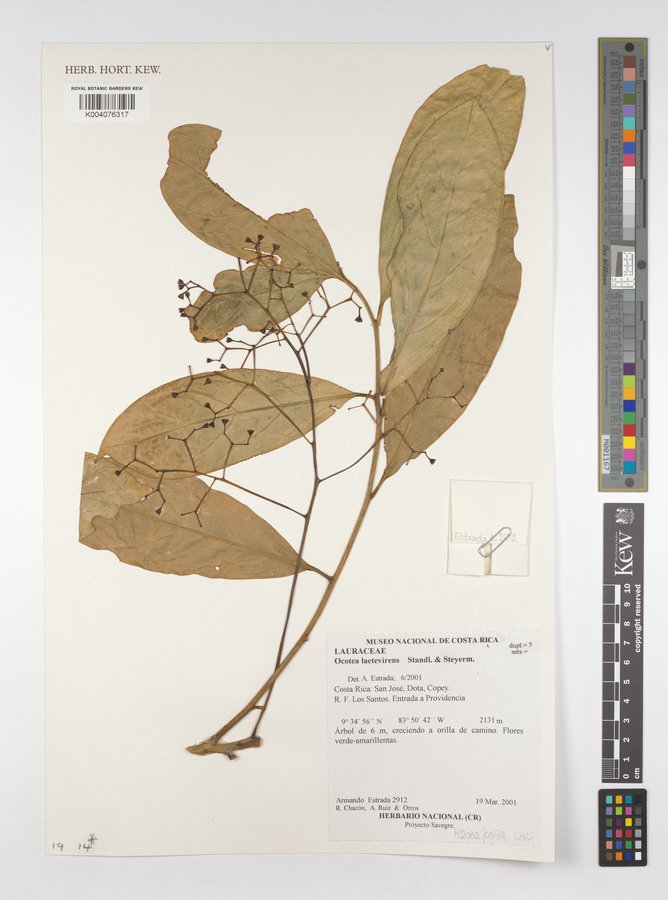
Ira Amarillo
A Pacific-slope laurel that threads Costa Rica's mangrove edges to oak ridges, distinguished by glabrous yellow-green leaves with hairy domatia and deep-cupped fruits.
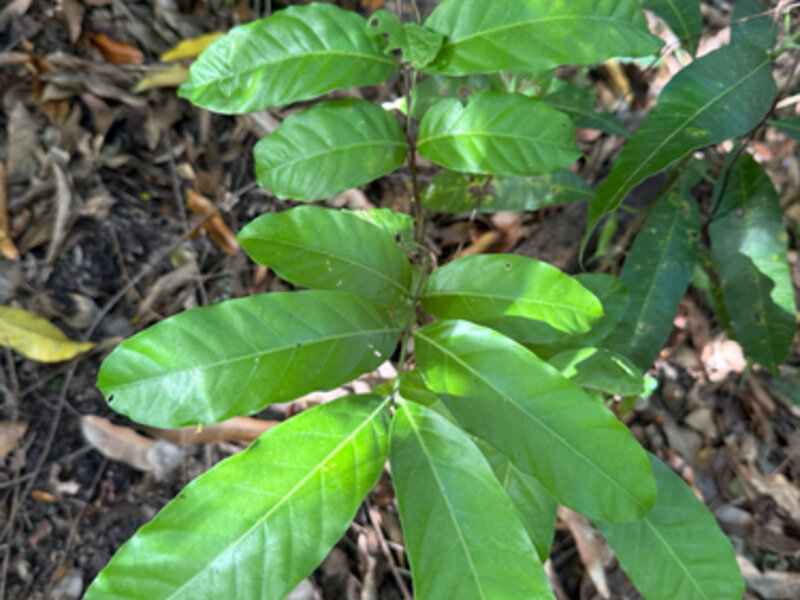
Carapa Blanca
A mahogany relative of lowland wet forests, valued for timber resembling true mahogany and as a critical food source for migratory birds whose seasonal journeys link temperate and tropical forests.
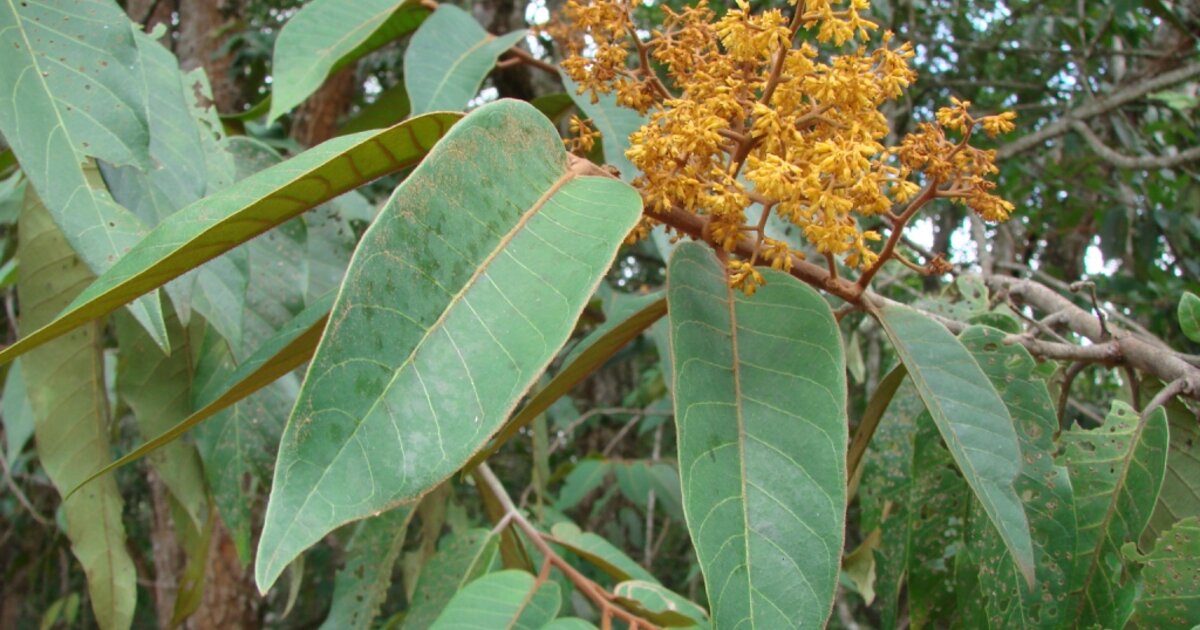
Sebo
The original Virola, this slender understory tree of the nutmeg family was the first species described in a genus central to Amazonian shamanism. Its fat-rich seeds once lit indigenous homes as natural candles.
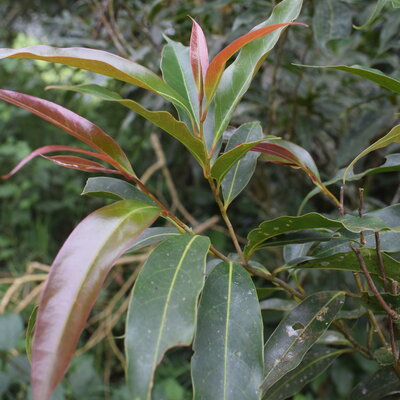
Sigua
A tall canopy tree of the laurel family whose scientific synonym honors Alexander Skutch, the legendary naturalist who documented Costa Rica's birds for over six decades from his farm Los Cusingos.
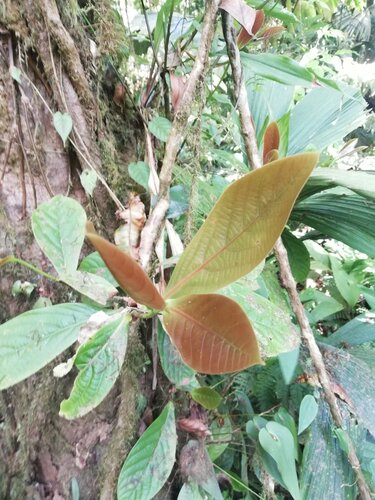
Aguacatillo de Tonduz
A cloud forest tree from Monteverde whose fruits sustain the Resplendent Quetzal and whose leaves contain compounds that interest cancer researchers.
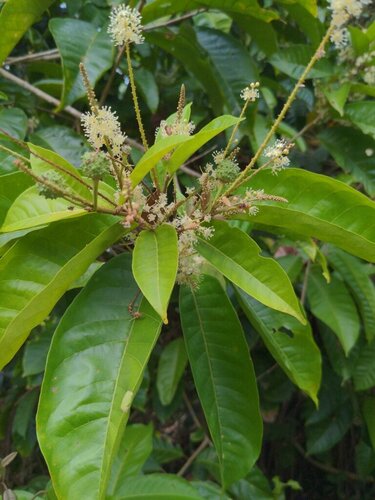
Colpachi
A medicinal tree whose menthol-scented bark has been used for centuries to treat wounds and high blood pressure, while serving as a host plant for leafwing butterflies.
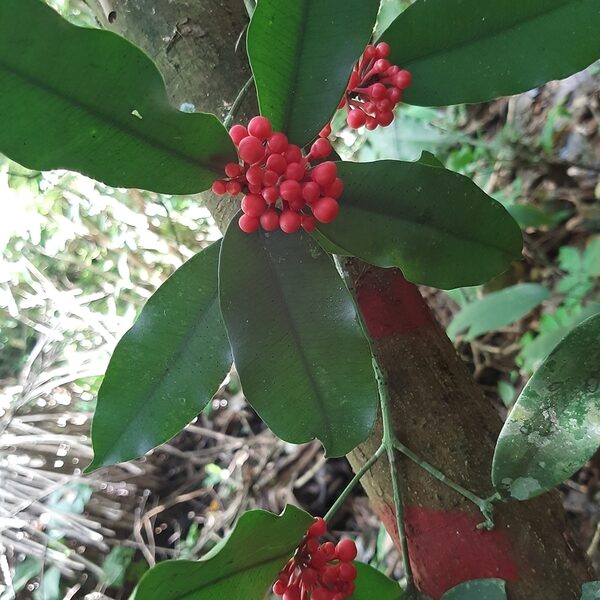
Manil
A pantropical swamp tree with stilt roots and yellow latex that originated in Africa and floated across the Atlantic three separate times. Its scarlet flowers attract tanagers, and its bark has been used to treat ailments from malaria to leishmaniasis.
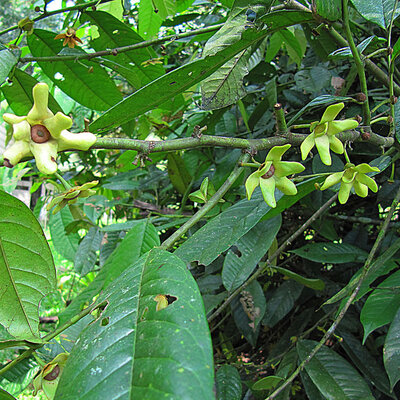
Malagueto
An understory tree of Costa Rica's lowland forests with banana-scented yellow flowers that attract pollinating beetles, and purple aggregate fruits dispersed by forest birds.
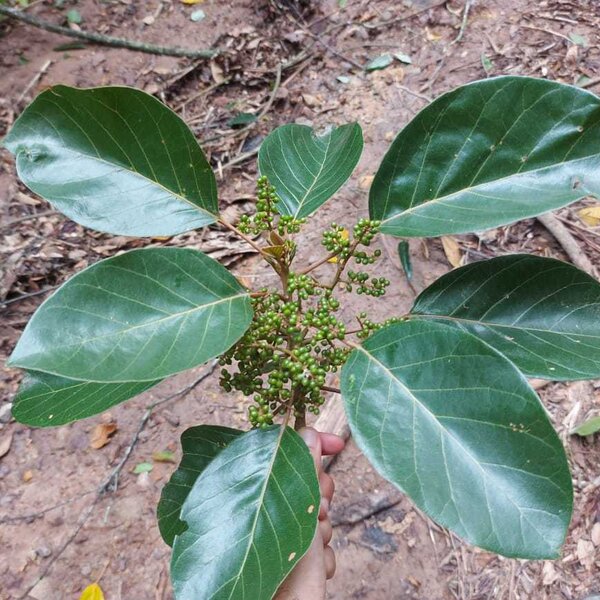
Pilón
The blood-sapped timber giant of Costa Rica's wet forests. Its crimson sap and dense marine-grade wood make it a prized construction timber, while its fruits sustain monkeys and birds.
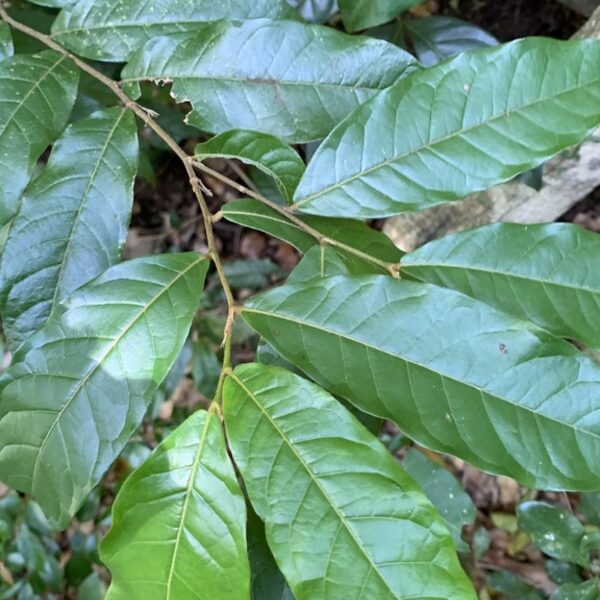
Garrocho
A graceful understory tree with brick-red inner bark and aromatic white flowers adorned with three purple stamens. Its purple-black fruits feed dozens of bird and monkey species.
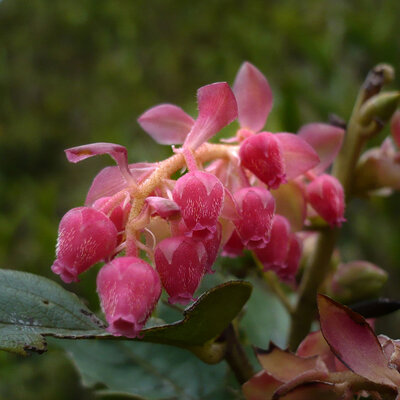
Arrayán
A cloud forest shrub of the heath family with edible berries and deep mycorrhizal connections to the acidic soils of Costa Rica's páramo.
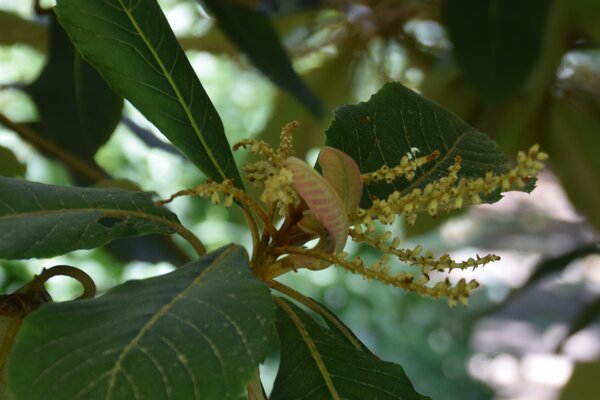
Nance Macho
A pioneer tree that colonizes disturbed lands and prepares the way for forest recovery, with fragrant white flowers that attract bees, butterflies, and hummingbirds.
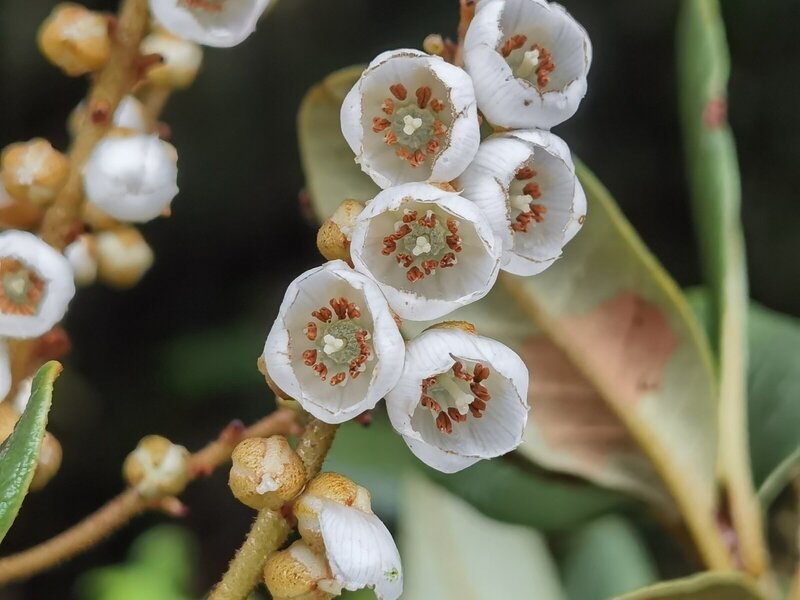
Clethra gelida
A Costa Rican endemic tree of the cold highlands, found only in the cloud forests and subpáramo of the Cordillera de Talamanca above 2,400 meters elevation.
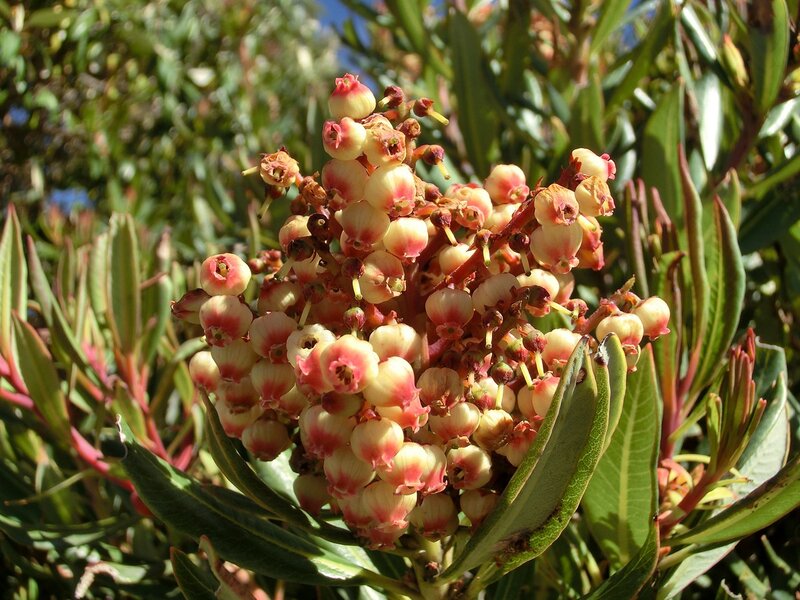
Madroño
A hardy shrub to small tree of Central American highlands, forming dense thickets in the páramo zone and serving as a refuge for ectomycorrhizal fungi that sustain forest regeneration.
Mangle Negro
The black mangrove sends pencil-like breathing roots up through oxygen-starved mud. Named for the medieval Persian polymath Ibn Sina, this species occupies the critical middle zone in Costa Rica's mangrove forests.
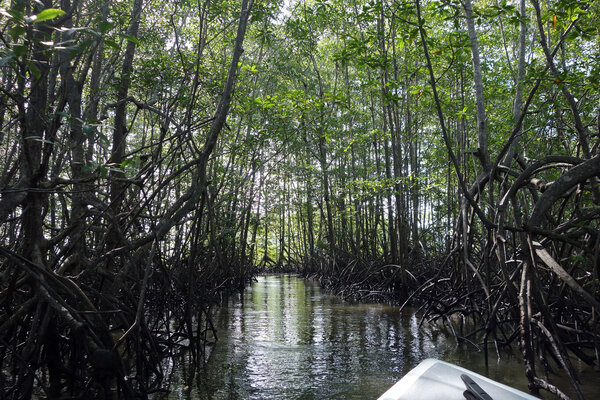
Mangle Racemosa
The dominant red mangrove of Térraba-Sierpe, this species prefers brackish waters where rivers dilute the sea. Its towering stilt roots create the underwater nurseries that sustain Costa Rica's coastal fisheries.
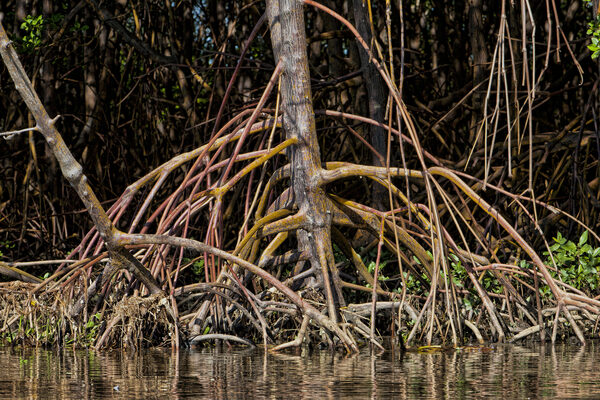
Mangle Rojo Híbrido
A natural hybrid red mangrove whose arching prop roots create underwater labyrinths where juvenile hammerhead sharks find refuge. This species bridges ocean and forest in Golfo Dulce and Térraba-Sierpe.
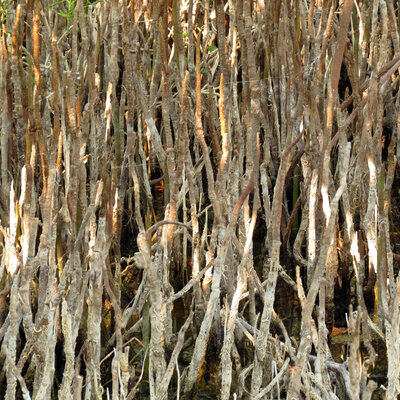
Mangle Salado
A Pacific coast endemic that thrives in hypersaline mudflats where other mangroves cannot survive. Its pencil-like breathing roots allow it to form some of the most productive mangrove forests in the Western Hemisphere.
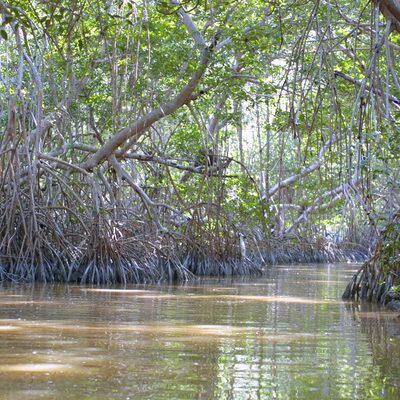
Red Mangrove
The iconic mangrove with arching prop roots that stride into the sea. This keystone species creates nursery habitat for countless fish species while protecting Costa Rica's coastlines from storms and erosion.
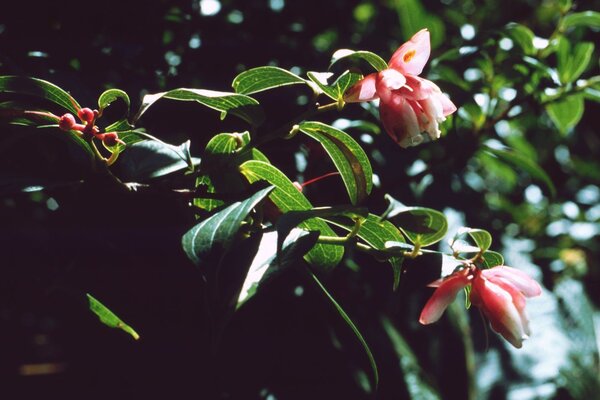
Colmillo
A cloud forest jewel with cascading clusters of coral-pink bracts and tubular red flowers that attract hummingbirds, bearing small edible berries prized as mountain grapes.
Mortiño del Poás
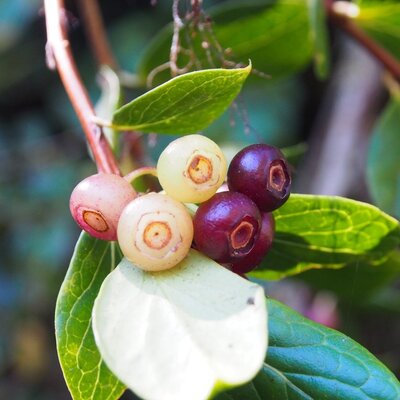
A cloud forest blueberry that grows both on the ground and as an epiphyte high in the canopy. First discovered on Volcán Poás in 1896, this species produces small bell-shaped flowers and colorful berries.
Mangle Piñuela
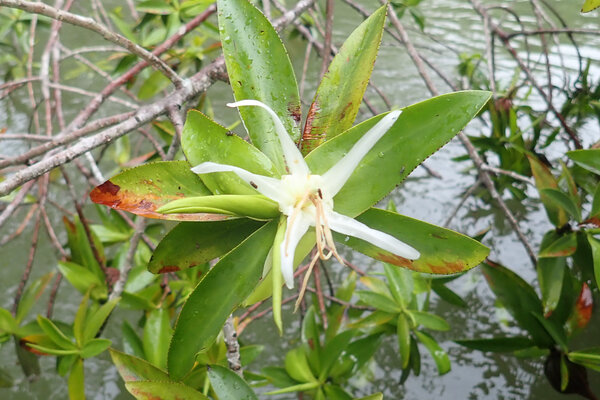
A living fossil and the sole survivor of Eocene mangroves, this species is the only mangrove pollinated by a vertebrate: the endangered Mangrove Hummingbird, found nowhere else but Costa Rica.
Mountain Arrayán
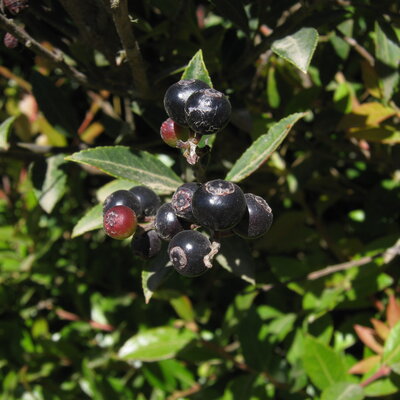
A fire-resilient blueberry shrub of Costa Rica's highest peaks, this páramo specialist resprouts from underground rhizomes after the flames that periodically sweep across the Talamanca highlands.
Encino Hojas de Zapote
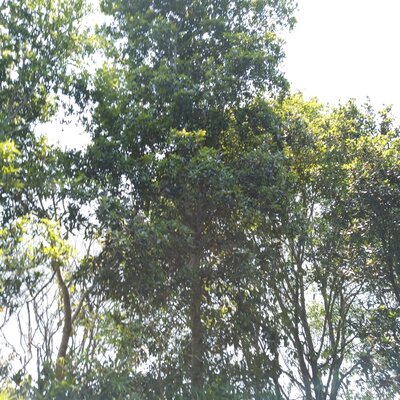
A montane oak of Central America's cloud forests, where its acorns feed wildlife and its dense wood has fueled charcoal production for generations.

Escobo
A Costa Rican endemic discovered only in 1990, this giant of the Pacific lowlands remained hidden in plain sight despite being one of the country's most massive trees.
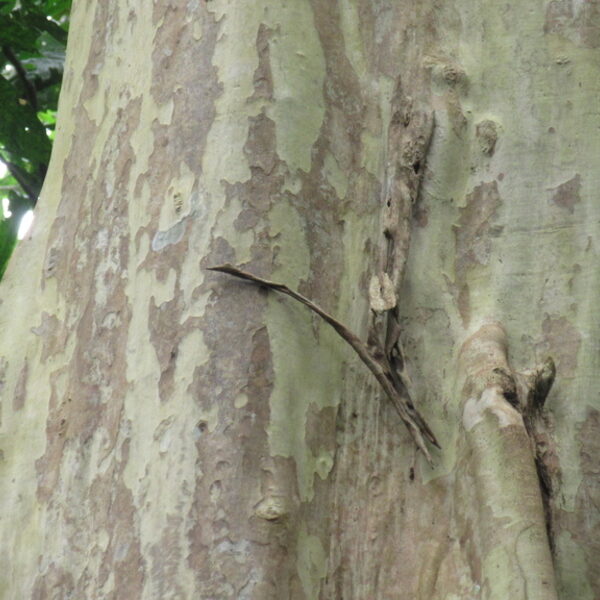
Surá
A towering rainforest emergent with silky, pale-orange bark that peels in paper-thin sheets, prized for its heavy 'dragonwood' timber with intricate grain patterns.
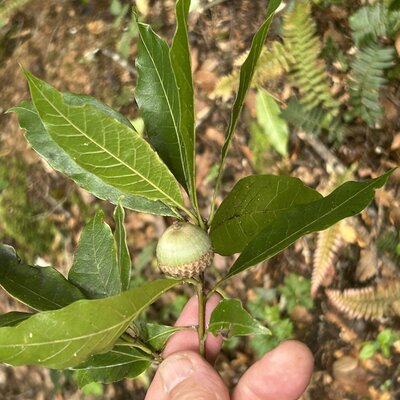
Roble Copey
The white oak giant of Costa Rica's cloud forests. Named for the village of Copey de Dota, this species was once described as forming "perhaps the largest single stand of oak timber in the world."
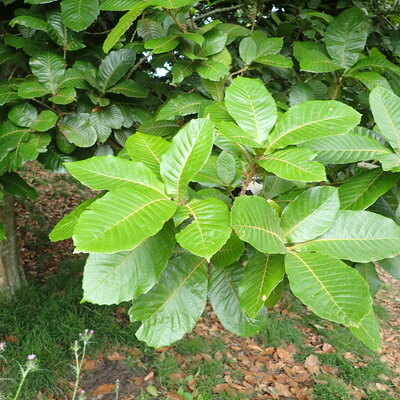
Encino
An endangered oak of Central American cloud forests, bearing some of the largest acorns in the world. Populations have declined by over 80% as coffee plantations replaced its misty mountain habitat.
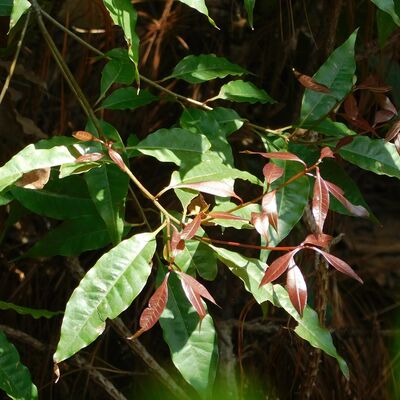
Roble Seemann
A red oak of Central American cloud forests ranging from Mexico to Panama, named for German botanist Berthold Seemann. Distinguished by its bronzy-red new growth that matures to glossy green.
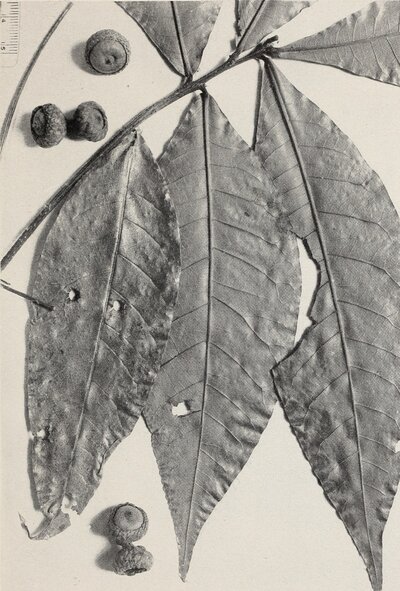
Roble de Trelease
A towering red oak of Costa Rica and Panama's wet montane forests, named for American botanist William Trelease. Can reach 50 meters in height and is part of the Q. seemannii complex.
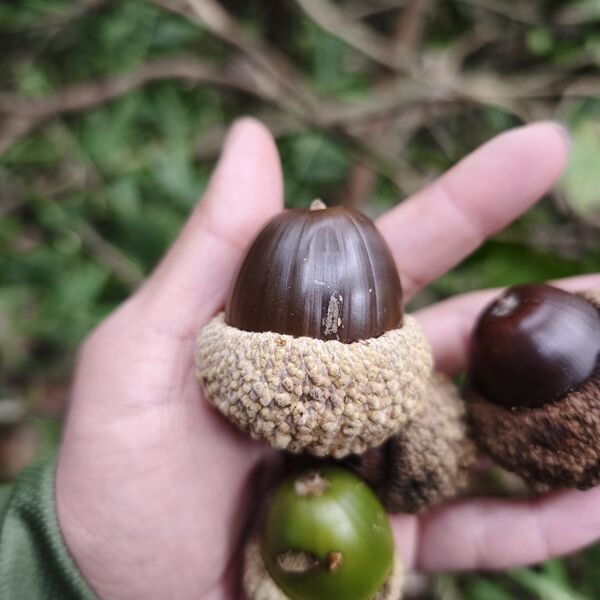
Roble Corrugata
A towering deciduous oak of Central American cloud forests, reaching 60 meters in height with distinctive wrinkled leaves that give it its name.
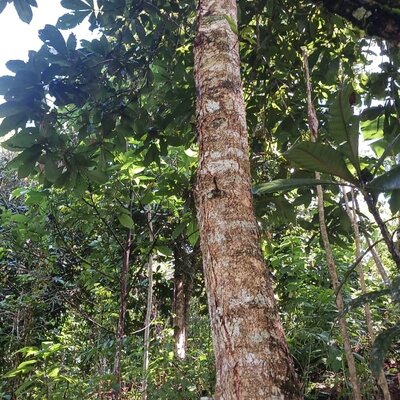
Roble Huevo
A large white oak of Central America's montane forests, named for its egg-shaped acorns and distinguished by enormous leaves that can reach nearly half a meter in length.
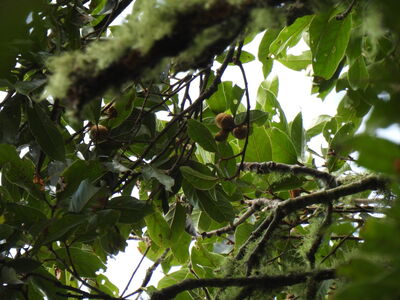
Bentham's Oak
A towering red oak of Central America's highest cloud forests, reaching up to 40 meters and known for its deeply lobed leaves that turn bronze before falling.
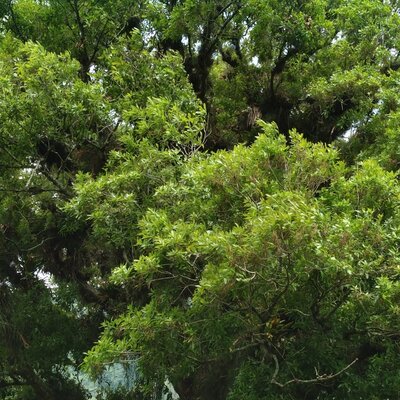
Encino Lanceolado
A large deciduous oak of Central American cloud forests, named for its distinctive lance-shaped leaves with their silvery-white undersides.
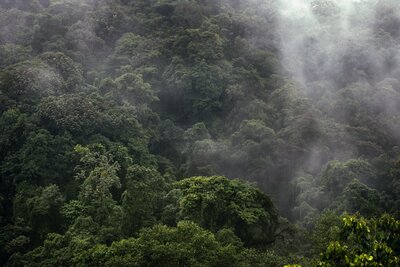
Roble de Cortés
A graceful cloud forest oak distinguished by its narrowly lanceolate leaves with spine-tipped teeth. Part of the Series Acutifoliae, it ranges from Mexico to Panama in mid-elevation forests.
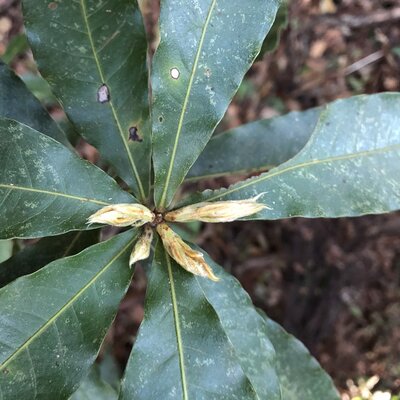
Roble de Brenes
A small red oak of Central American cloud forests (Mexico to Costa Rica), distinguished by aristate-toothed leaves. Named for Alberto Manuel Brenes, Costa Rica's pioneering botanist.
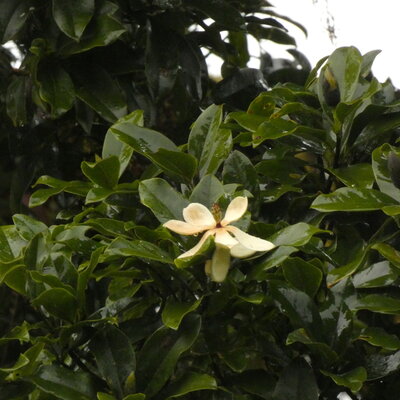
Candelilla
A magnolia of the cloud forests, named for the Poás Volcano where it was first collected. Produces large, fragrant white flowers and is classified as Near Threatened due to habitat loss.
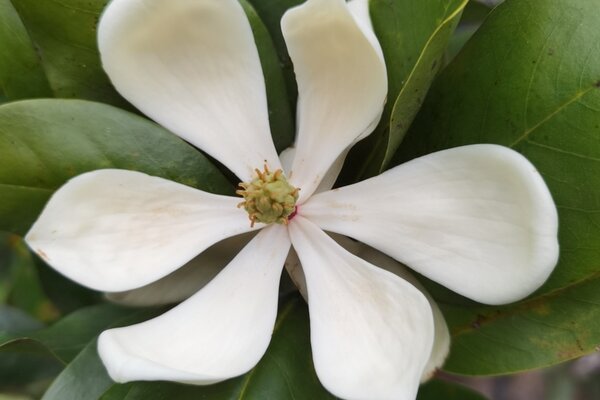
Magnolia del Savegre
A recently discovered cloud forest magnolia endemic to Costa Rica's Savegre Valley, where ancient oaks and resplendent quetzals share the misty highlands of the Talamanca Mountains.
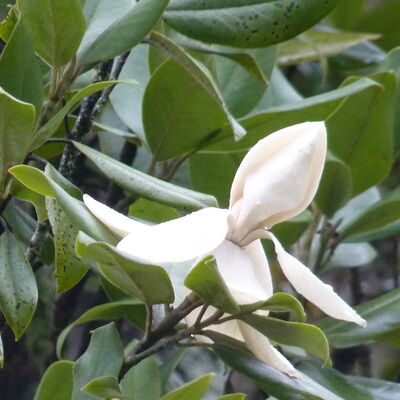
Vaco
A towering magnolia of Central American cloud forests, producing fragrant white flowers and distinctive aggregate fruits with bright pink seeds. This near-threatened species reaches the upper limits of the montane zone.
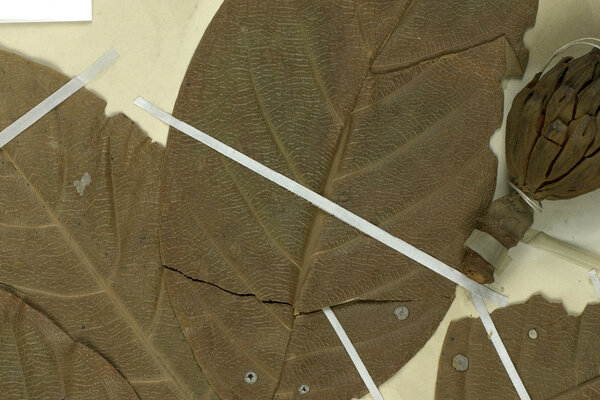
Magnolia
One of Central America's most primitive flowering trees, still pollinated by beetles as it has been for over 100 million years. First discovered in coffee plantations at La Gloria, Cartago.
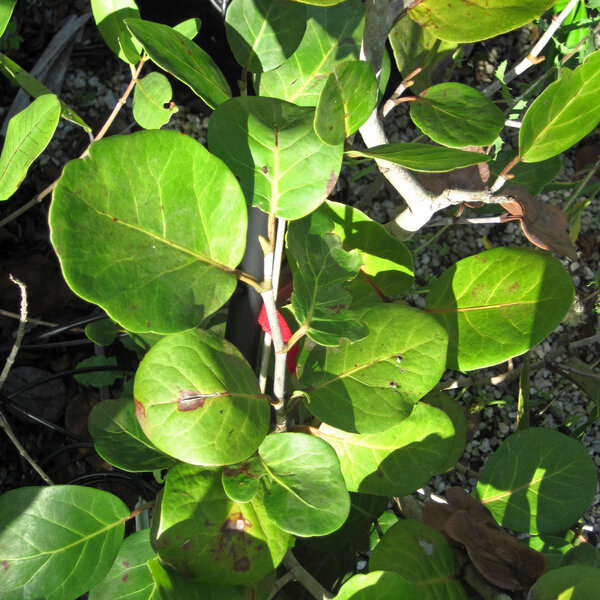
Mangle Blanco
The white mangrove excretes salt through specialized glands, thriving in coastal estuaries where it pioneers new mud banks and provides critical nursery habitat for marine life.
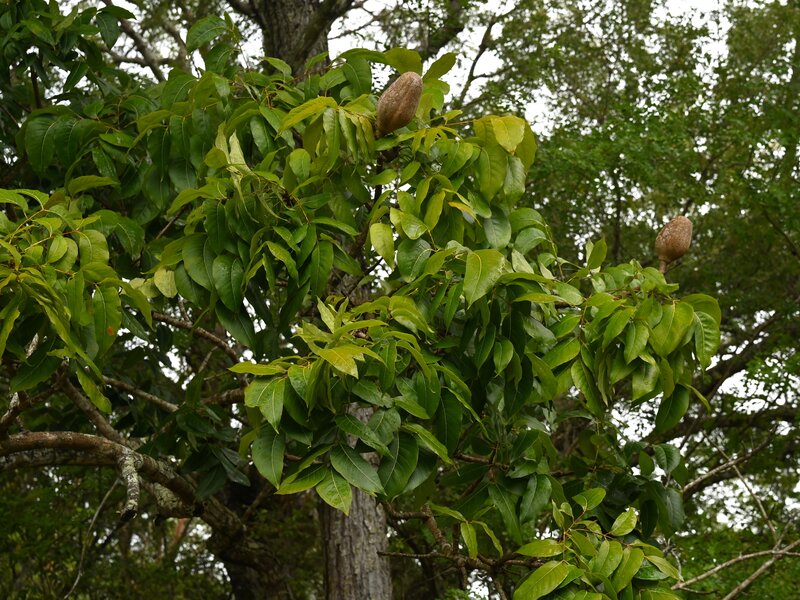
Caoba
The true mahogany, whose wood built the Age of Mahogany and furnished European palaces, now CITES-listed and commercially extinct in Costa Rica's wild forests after centuries of exploitation.
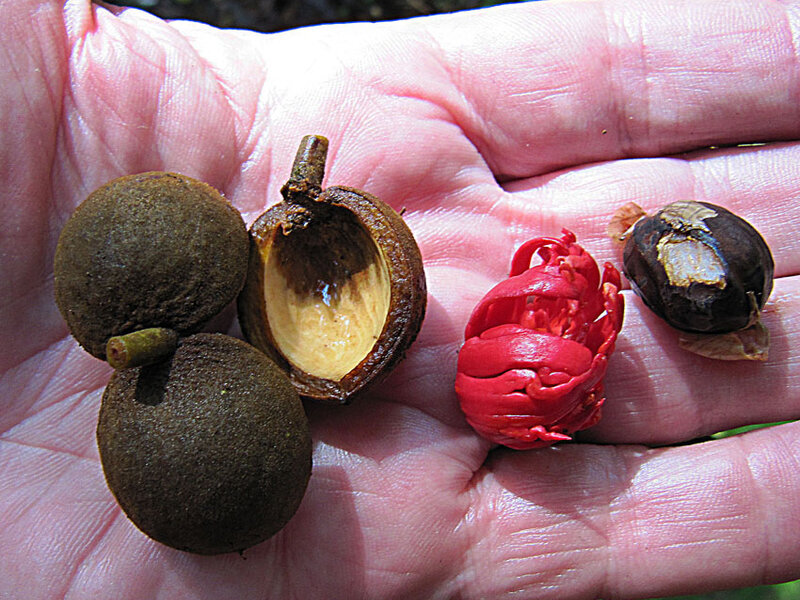
Fruta Dorada
A pillar of the primary rainforest, this nutmeg relative rises with an arrow-straight trunk through the understory, producing golden capsules with scarlet-wrapped seeds eagerly sought by toucans and guans.
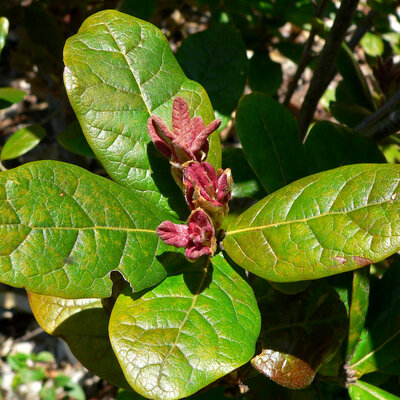
Roble Negro
The Costa Rican black oak dominates the cloud forests of the Talamanca range, where ancient specimens tower 50 meters above the mist. Endemic and vulnerable, these slow-growing giants can live over 500 years.
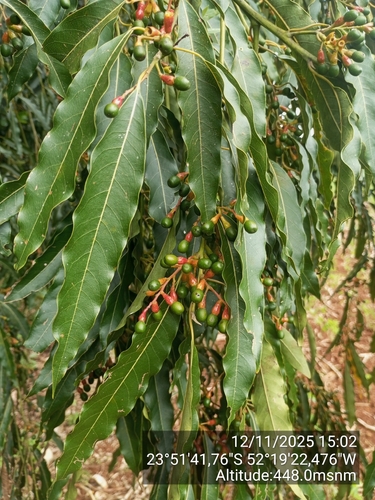
Aguacatillo Pubescente
A fast-growing pioneer of the avocado family, this tall forest tree produces the lipid-rich fruits that sustain quetzals, bellbirds, and toucans through lean seasons.
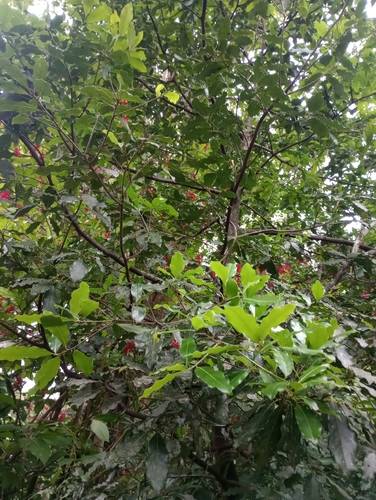
Canelo
A small understory tree with cinnamon-scented bark, producing olive-like fruits in pink cupules that attract forest birds.
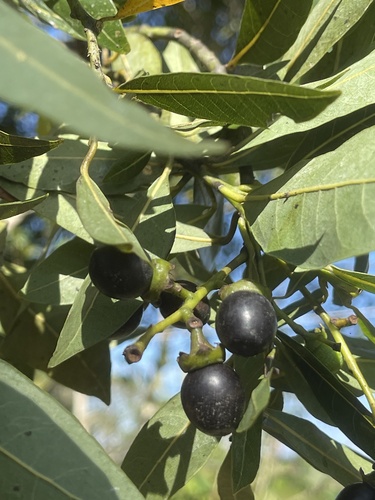
Aguacatillo Florido
One of the tallest aguacatillos, this 40-meter canopy giant produces spherical fruits nearly year-round, providing a reliable food source for forest frugivores.
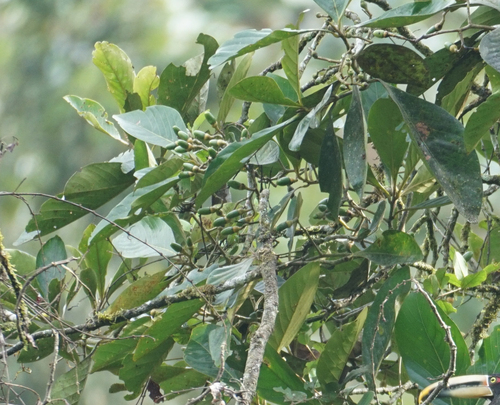
Ira
A versatile aguacatillo that thrives from sea level to cloud forest, spanning nearly 2,000 meters of elevation across Central America.
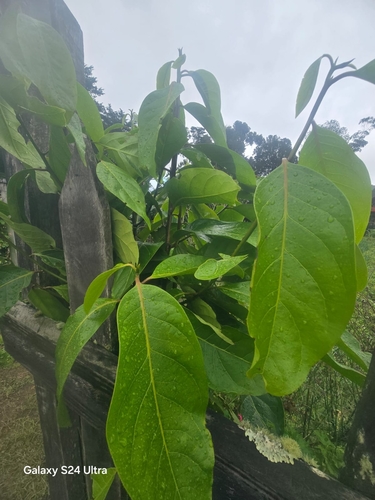
Laurel Geo
A widespread aguacatillo found from Mexico to Brazil, known for its light-colored wood and dense, rounded crown.
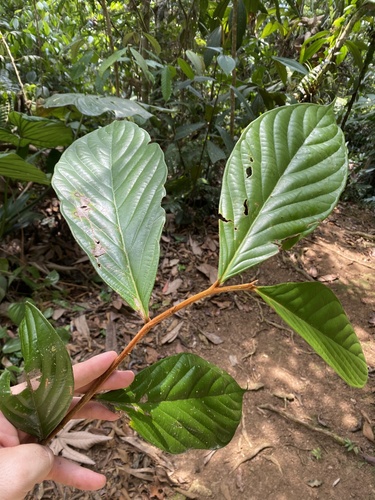
Aguacatillo de Hoja Suave
A regional endemic of humid lowland forests, found only in Costa Rica, Panama, and Ecuador.
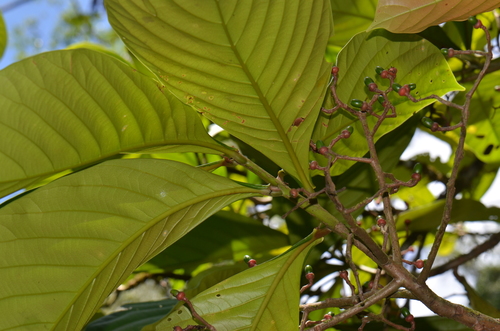
Aguacatillo de Río
Ocotea rivularis, a Costa Rican endemic of the Golfo Dulce lowlands, described in 1951 and barely studied since. Nobody has recorded how tall it grows or what eats its fruit.
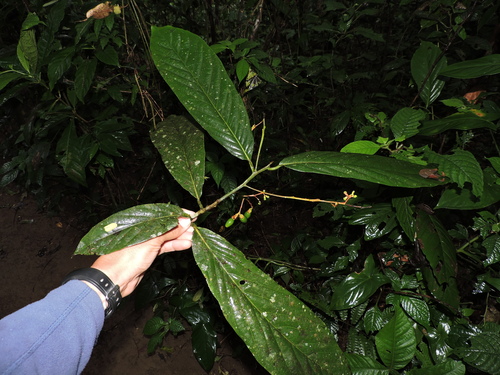
Quizarrá Macho
A small understory tree with hollow stems that house entire ant colonies, raising questions about whether the relationship benefits the tree or exploits it.
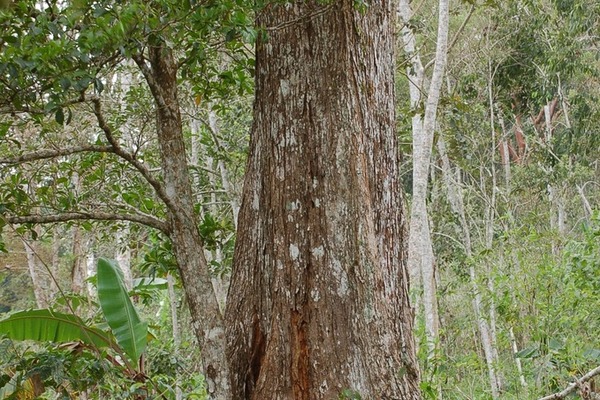
Amarillón
A forest giant reaching 70 meters, the amarillón is one of Costa Rica's most successful native reforestation species, prized for its golden timber and towering buttressed trunk.
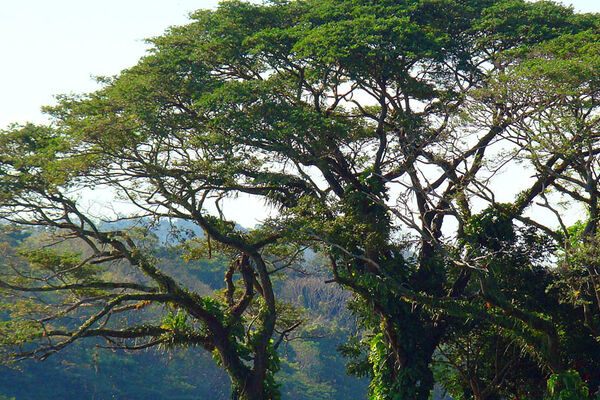
Cenízaro
The rain tree, whose massive umbrella crown can shelter an entire herd of cattle while its leaves fold at dusk and during storms, directing rainwater to the soil below.
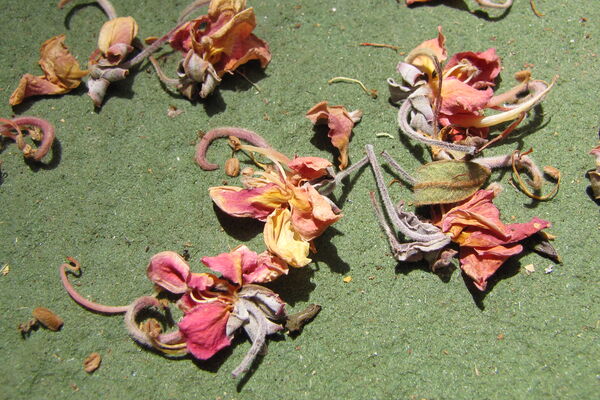
Carao
The pink shower tree bursts into spectacular bloom on bare branches each dry season, then produces pods filled with a sweet black pulp that Costa Ricans have used for centuries as a traditional remedy for anemia.
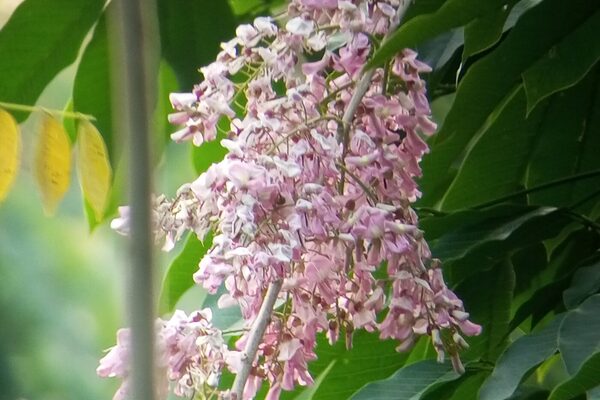
Mata Ratón
The "quick stick" that may be the most common living fence in the tropics, this nitrogen-fixing tree shapes Central America's agricultural landscape while its toxic seeds have killed rodents for centuries.
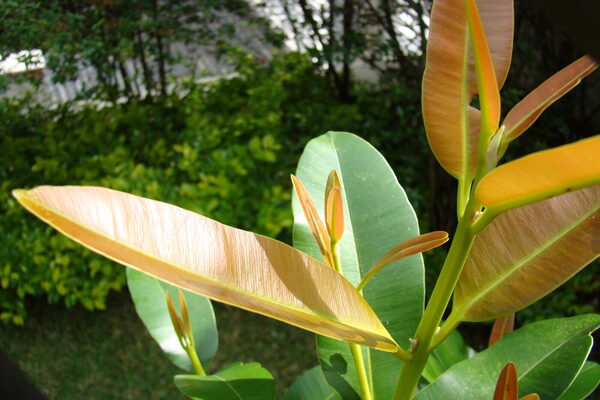
Costa Rica's Cedro María Trees
Two near-identical species of Calophyllum grow in Costa Rica's wet forests, producing mahogany-grade timber and a healing resin called "Bálsamo de María." Only their leaf and flower size tells them apart.
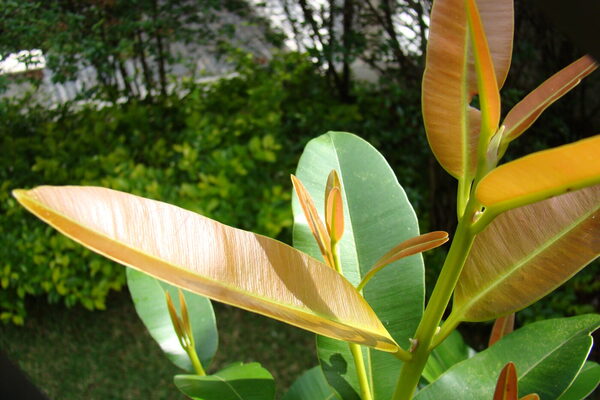
Cedro María Macho
Calophyllum longifolium is the larger-leaved, Pacific-slope twin of Costa Rica's Calophyllum pair, supplying bálsamo de María resin and mahogany-grade timber from plantations and coastal forests alike.
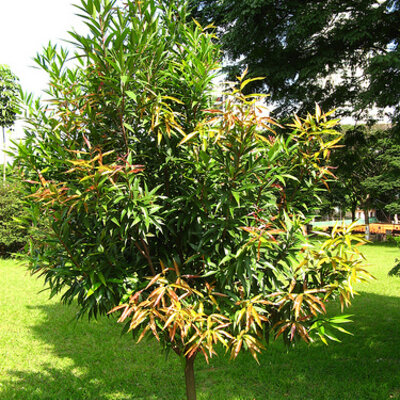
Caobilla
A mahogany relative of flooded forests, this buttressed swamp giant produces oil-rich seeds used for centuries as insect repellent and medicine throughout tropical America.
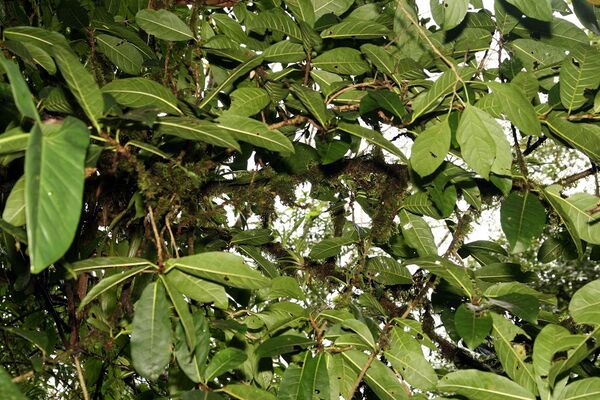
Muñeco
The dioecious pioneer of Costa Rica's dry Pacific forests. With sandpaper-textured leaves, a distinctive whitish folded trunk, and sweet red fruits, this drought-tolerant Cordia fills a niche its famous cousin the laurel cannot.
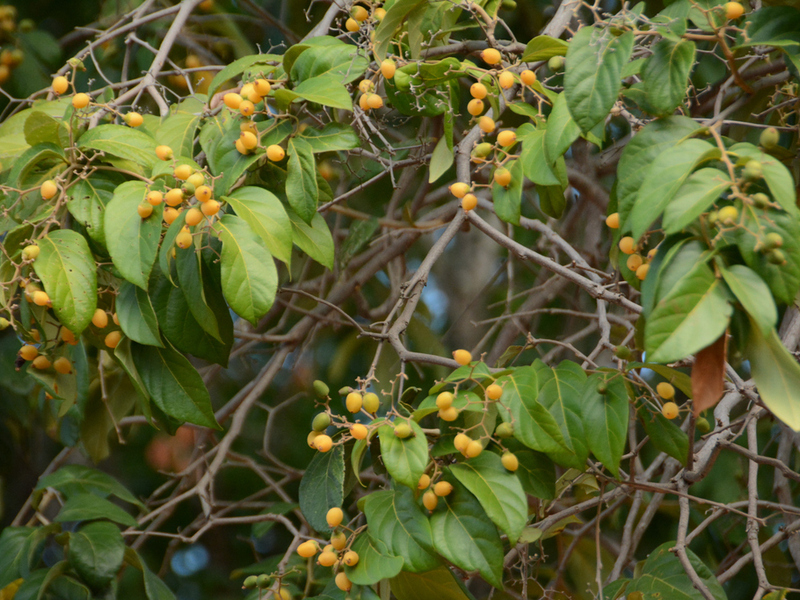
Muñeco Blanco
The two-toned Cordia of humid forests. Flip a leaf and the contrast is immediate: dark green above, rough white below. This fast-growing pioneer produces yellow fruits that feed forest birds from Mexico to Brazil.
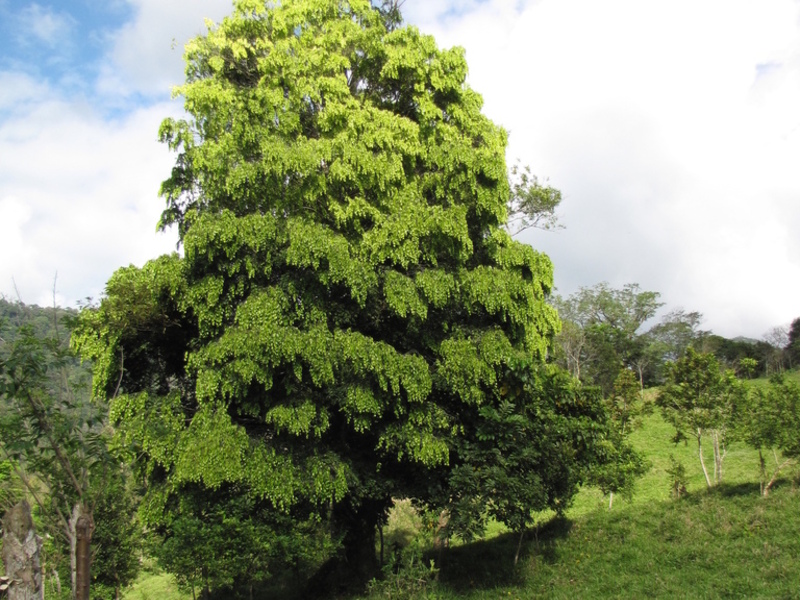
Laurel Negro
The giant of the Cordias. Growing up to 60 meters in the wet forests of Central America, this timber tree produces flowers so large they earned it the name megalantha. Its wood rivals the famous laurel in quality.
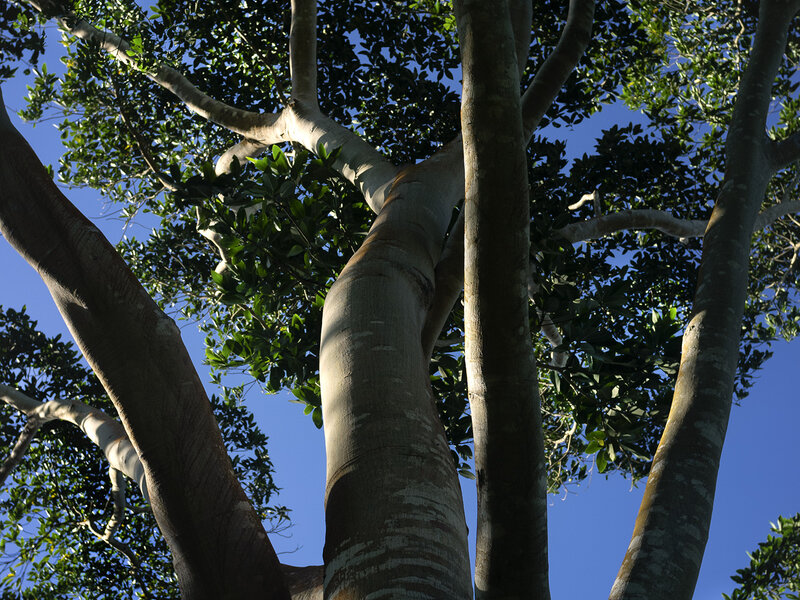
Hicatee Fig
A free-standing fig of riverbanks and disturbed forests, this species supports more insect diversity on a single tree than almost any other in the Neotropics.
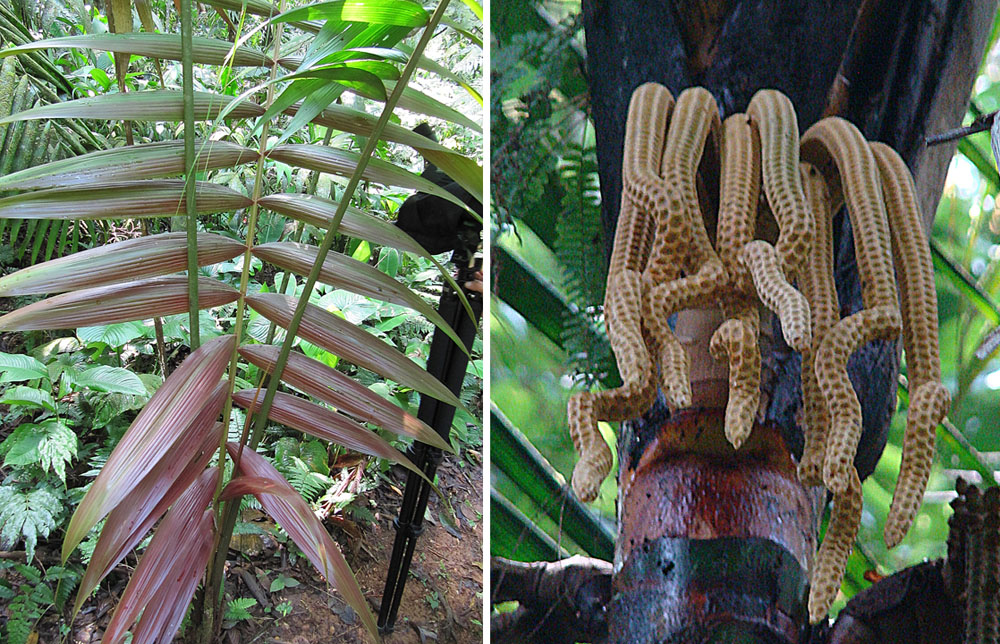
Welfia regia (Palmito)
The amargo palm dominates the wet forests of Costa Rica's Golfo Dulce region, its dramatic red new leaves unfurling like flames against the green canopy. Though its heart of palm was once prized, harvesting it kills the tree.
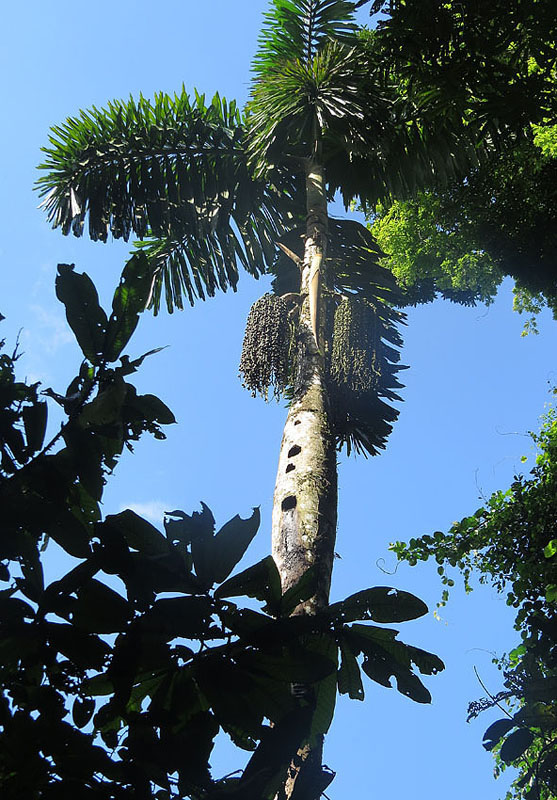
Iriartea deltoidea (Barrigona)
The pot-bellied palm rises on black stilt roots throughout tropical America, where it ranks as the most abundant canopy tree in many Amazonian forests. Indigenous communities prize its hard outer wood for flooring, canoes, and blowguns.
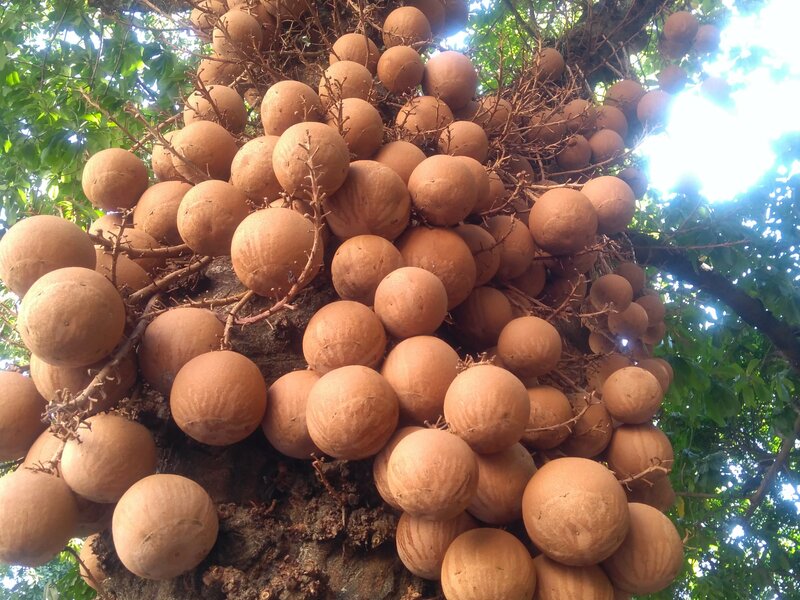
Cannonball Tree
A tree that flowers on its trunk, deceives its pollinators with fake pollen, and drops fruits heavy enough to kill. The cannonball tree is one of the most unusual members of the Brazil nut family.
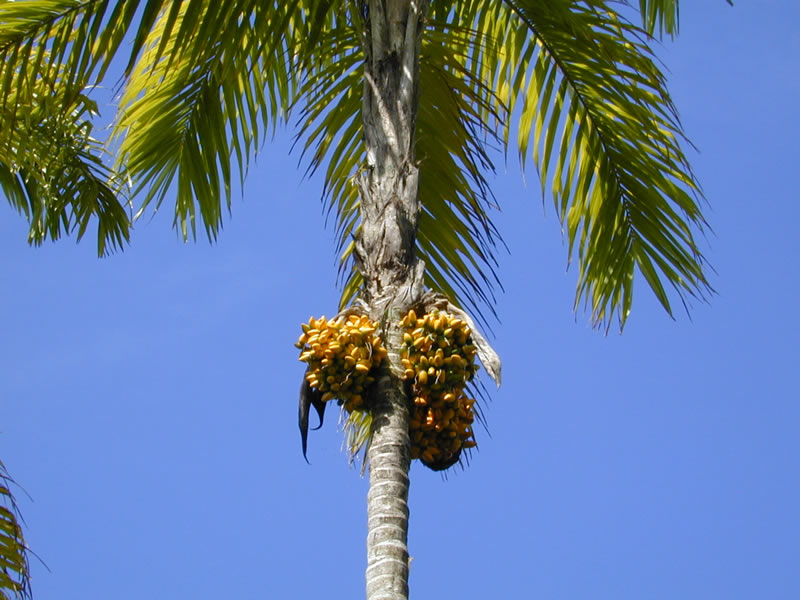
Pejibaye
The domesticated peach palm, cultivated for 10,000 years from Panama to Bolivia, whose clumping habit provides sustainable heart of palm while its orange fruits remain a staple food across Latin America.
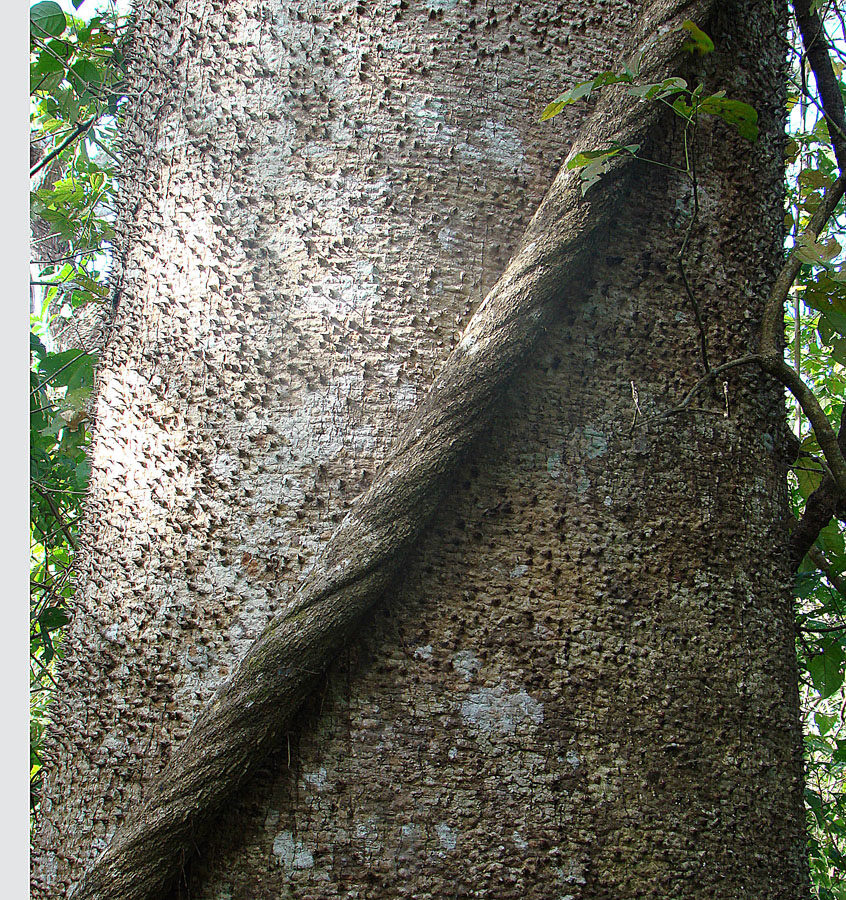
Sandbox Tree
The "dynamite tree" shoots its seeds like bullets, bleeds toxic sap used for poison arrows, and bristles with spines that earn it another name: monkey-no-climb.
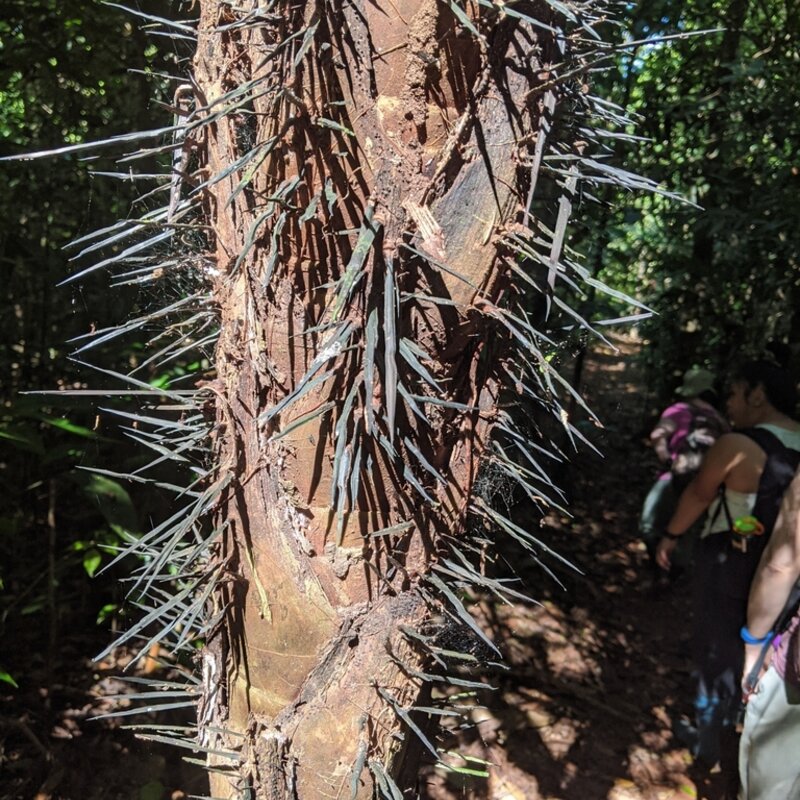
Chontadura
The most heavily armored palm in Costa Rica's forests, its trunk bristling with needle-sharp spines up to 17 centimeters long. This fortress of a tree guards its orange fruits until they fall to the forest floor.
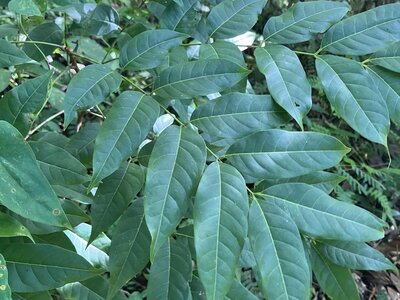
Cedro Amargo
The legendary "Spanish cedar" whose aromatic, insect-repelling wood has lined cigar boxes and crafted fine furniture for centuries, now threatened by overexploitation throughout its range.
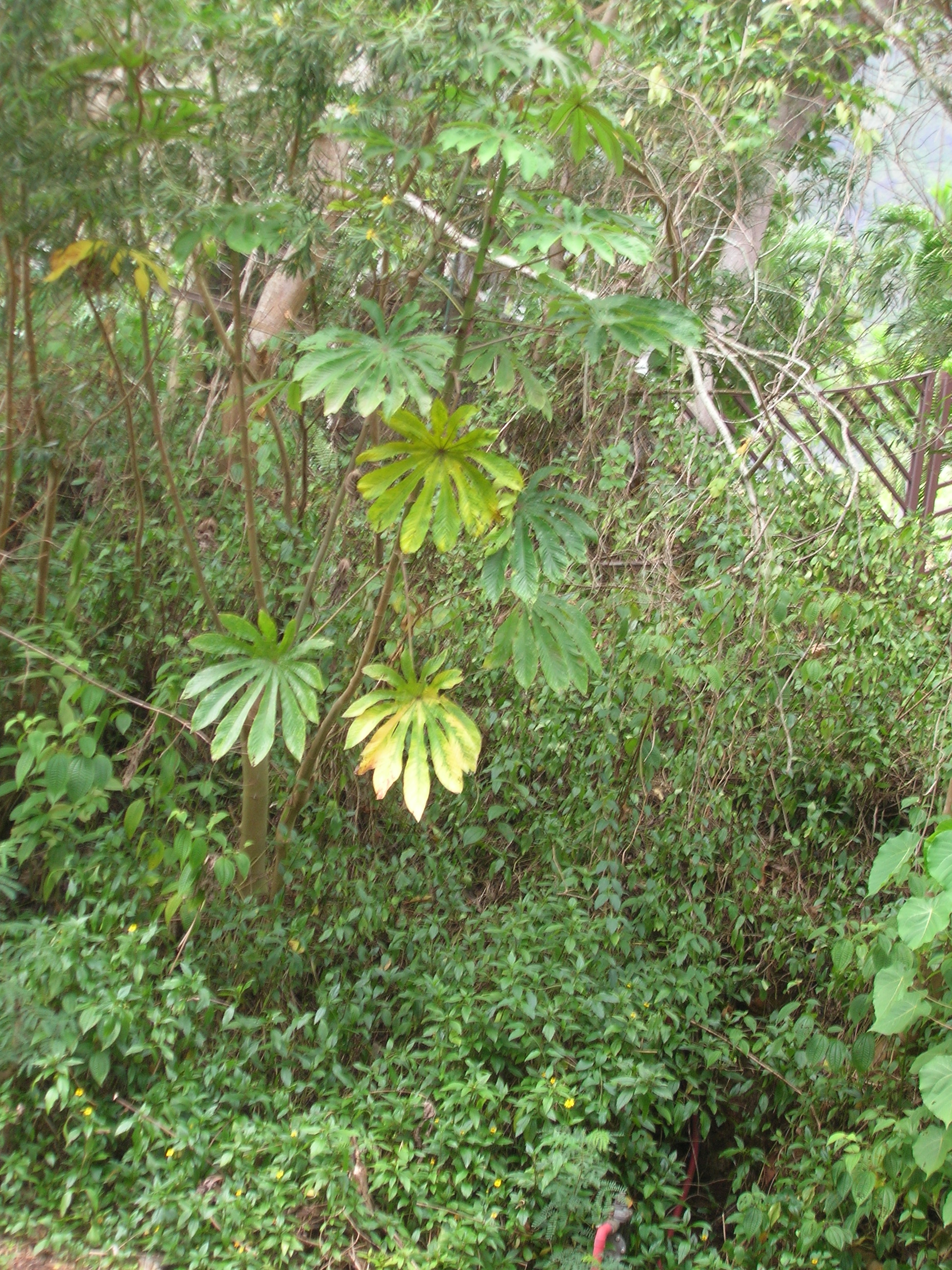
Guarumo (Cecropia)
The hollow-stemmed pioneer tree that feeds sloths and houses armies of Azteca ants in one of nature's oldest partnerships, stretching back eight million years.
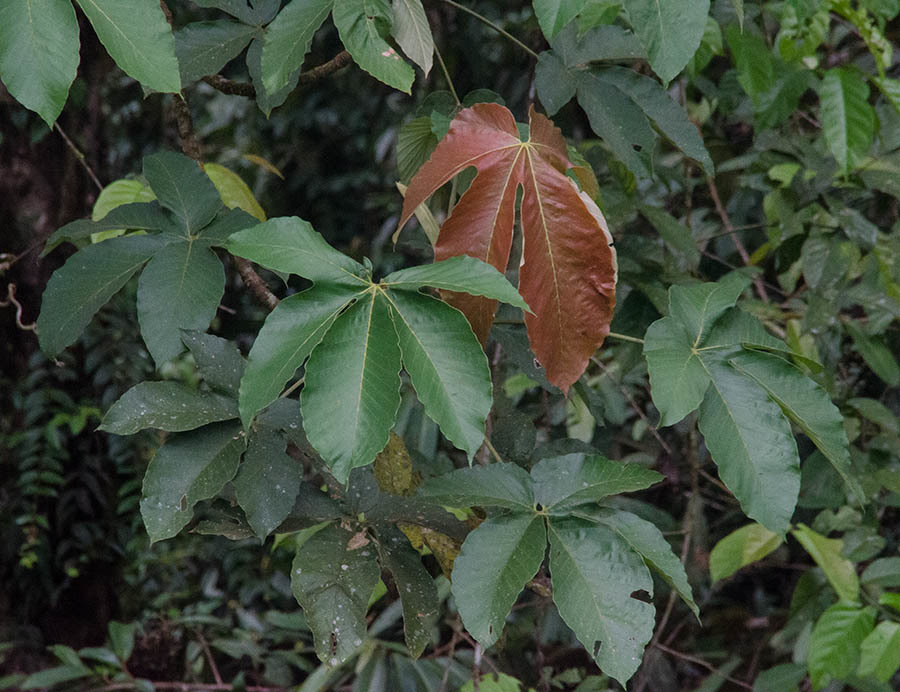
Chumico
The guarumo's larger cousin produces grape-like fruits that feed toucans and monkeys, while its rough leaves once served as the sandpaper of the rainforest.
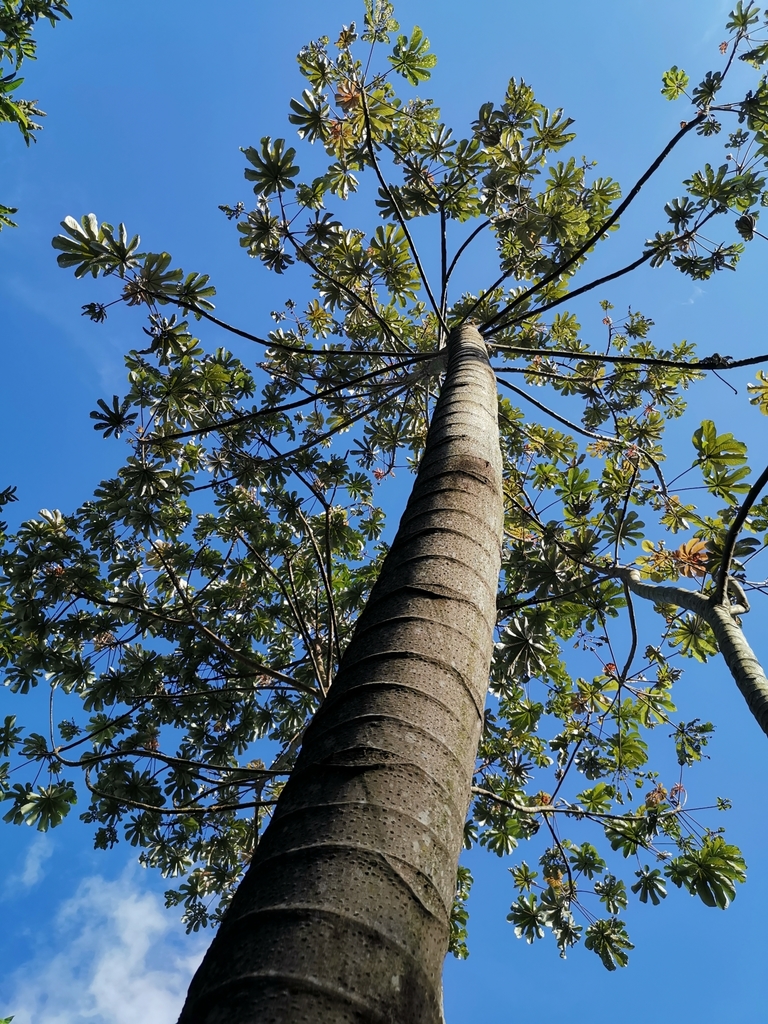
Trumpet Tree
The hollow-stemmed pioneer that gave indigenous peoples their trumpets, drums, and blowguns. More drought-tolerant than its rainforest cousin, it dominates Costa Rica's drier Pacific lowlands.
Laurel
The garlic-scented timber tree that transformed Costa Rican agriculture. Growing in coffee plantations across the country, this fast-growing pioneer provides shade and a savings account when coffee prices crash.
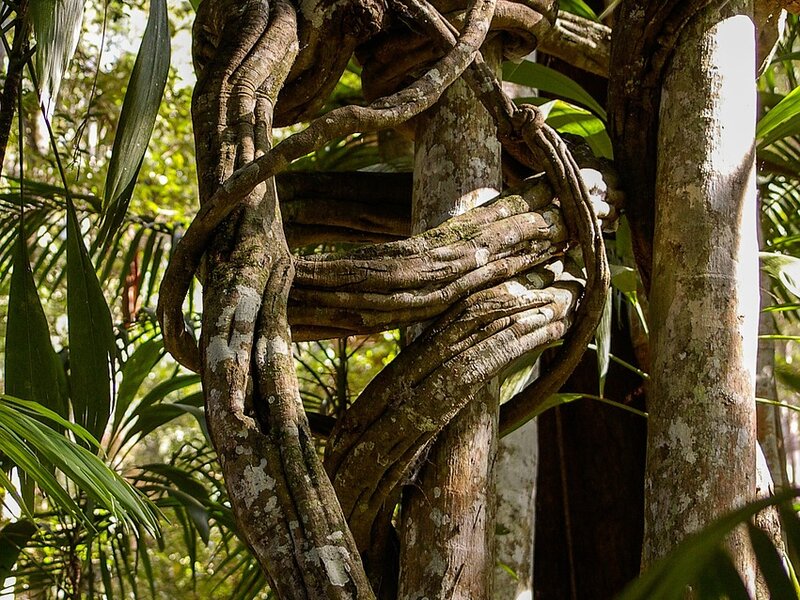
Strangler Figs of the Brunca Region
Six species of strangler figs inhabit Costa Rica's Brunca region, including two endemics found nowhere else on Earth. All share the same life strategy: germinate in the canopy, embrace the host, and outlive it by centuries.
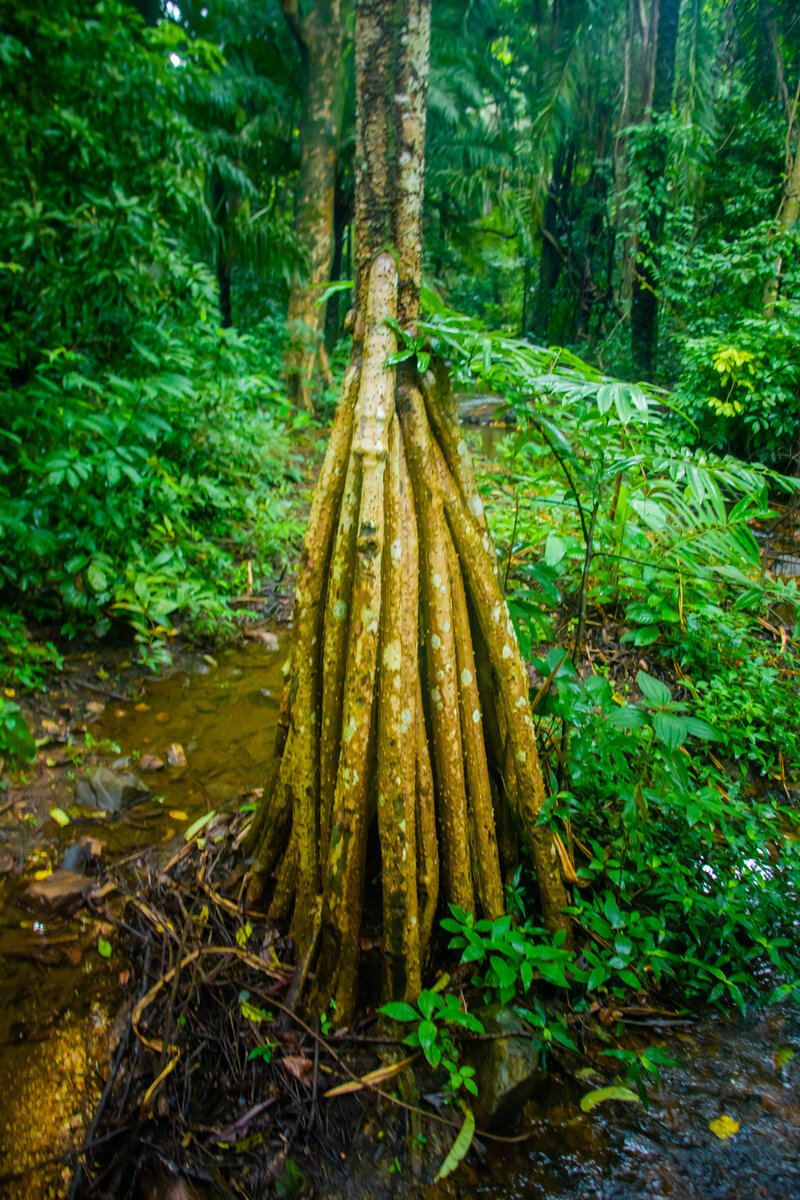
Walking Palm
The palm that supposedly walks through the forest on stilt roots. The legend is false, but the science behind this remarkable tree is even more interesting than the myth.
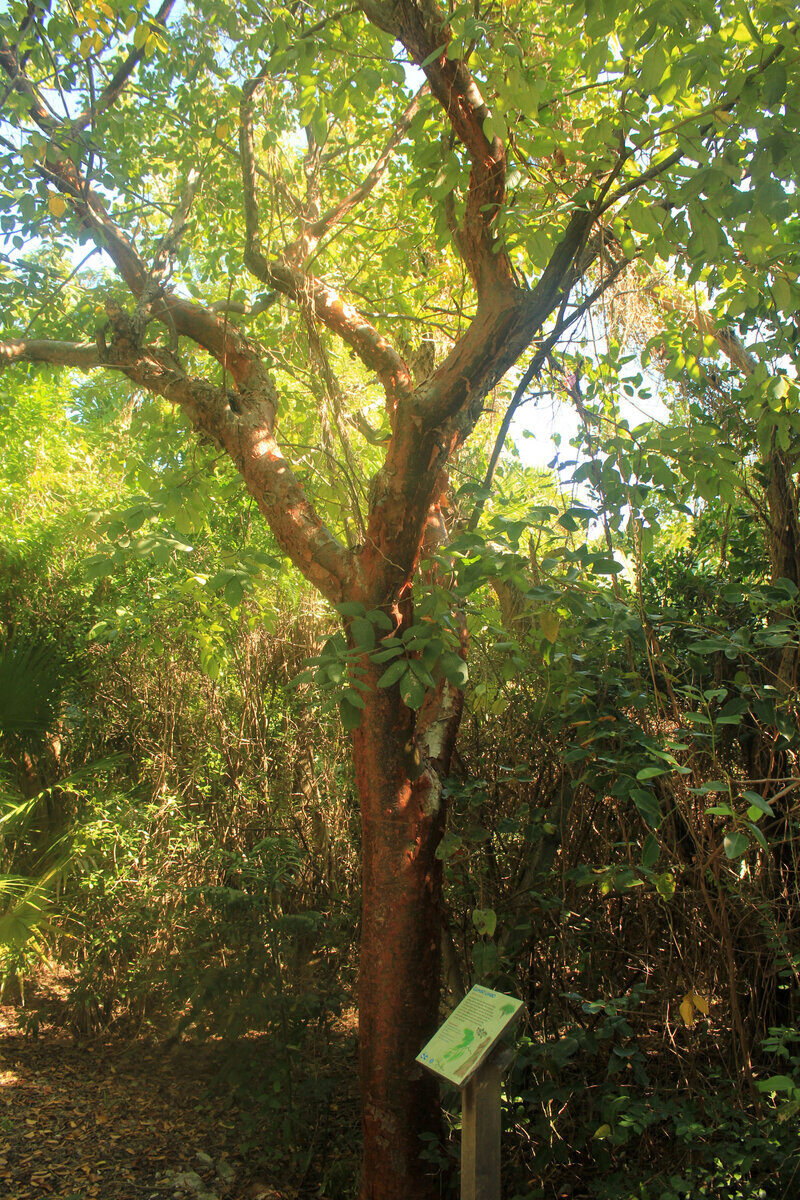
Indio Desnudo
The "naked Indian" tree, named for its peeling copper-red bark. A member of the frankincense family, it was sacred to the Maya and remains one of the most important pioneer species for dry forest restoration.
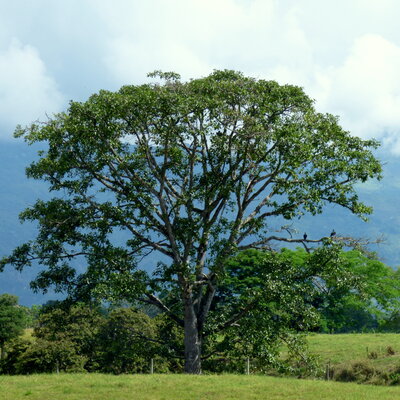
Espavel
The wild cashew, a massive riverside giant whose fruits feed monkeys, peccaries, and bats across the Neotropics. Its tolerance of diverse conditions makes it ideal for riparian restoration.
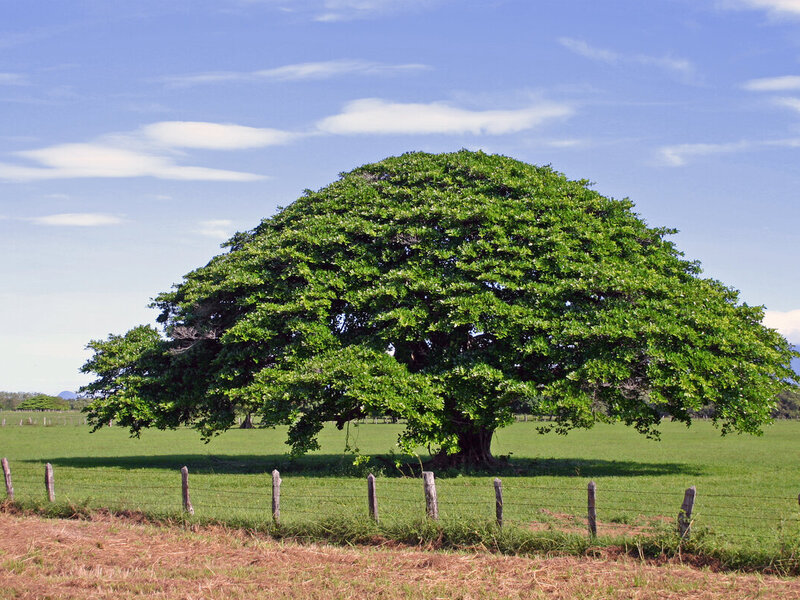
Guanacaste
Costa Rica's national tree, an iconic shade giant of the dry tropics whose ear-shaped pods once fed Pleistocene megafauna and now symbolize an entire province and nation.
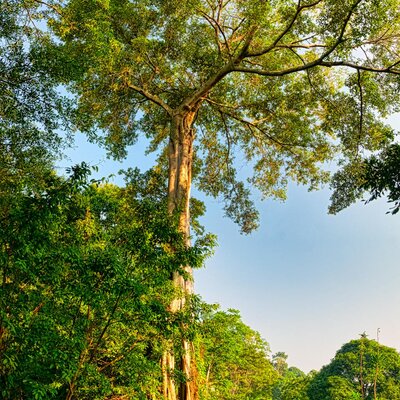
Ceiba
The sacred World Tree of Maya civilization, the ceiba towers above the rainforest canopy as one of the largest trees in the Americas. Its massive buttress roots and bat-pollinated flowers make it a keystone species across the Neotropics.
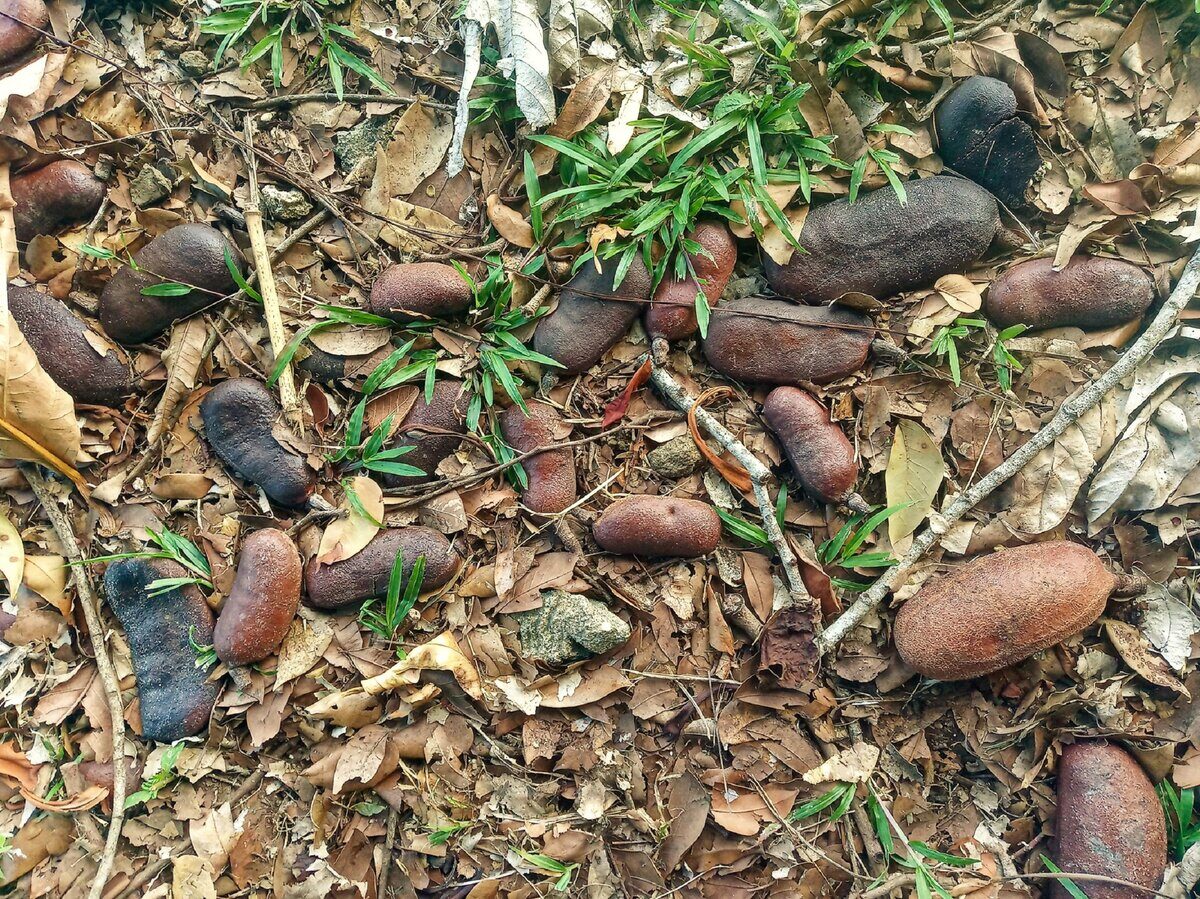
Guapinol
This bat-pollinated dry-forest tree produces the stinking-toe pod, amber's living resin analogue, and seeds that agoutis cache. A 2018 split also revealed that Costa Rica has two guapinoles.
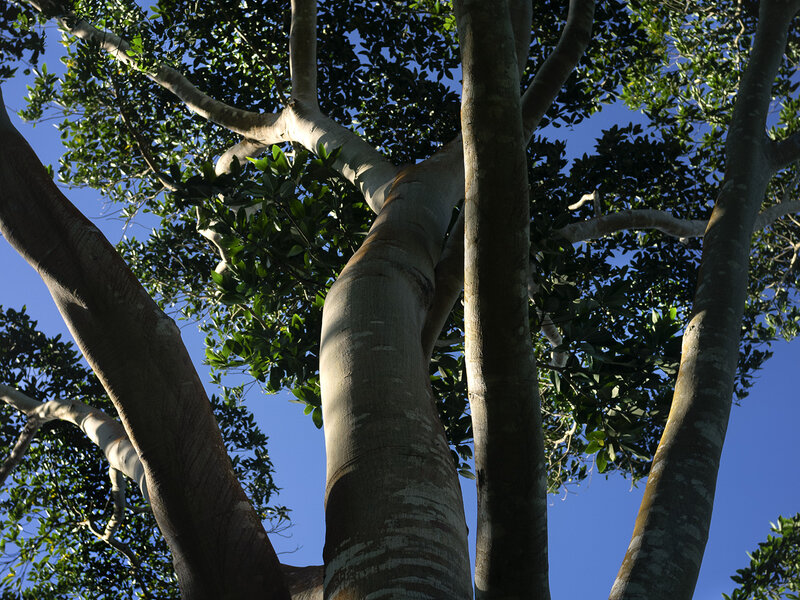
Chilamate
A keystone species of the rainforest, the chilamate sustains more wildlife than almost any other tree. Its survival depends on a wasp so small you could fit a dozen on your fingernail.
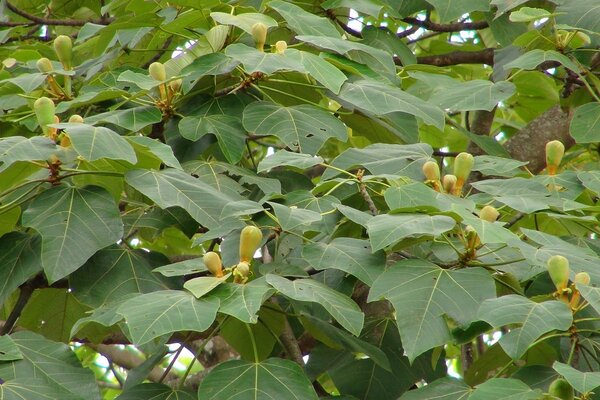
Balsa
The world's lightest commercial wood comes from this fast-growing pioneer tree. From Thor Heyerdahl's Kon-Tiki raft to modern wind turbine blades, balsa has shaped human history.
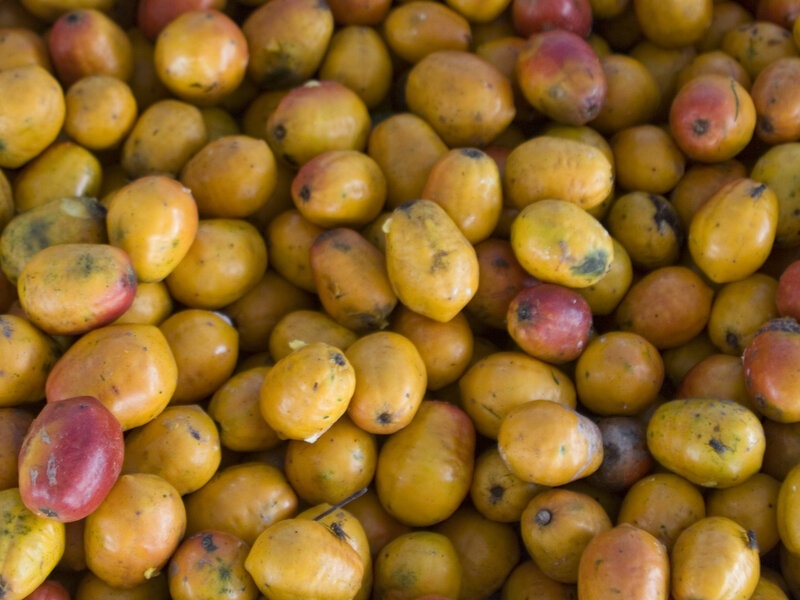
Jobo
The wild plum of the Neotropics, whose tangy yellow fruits feed spider monkeys and squirrel monkeys. One of the few deciduous trees in the rainforest, it drops all its leaves before bursting into fragrant white bloom.
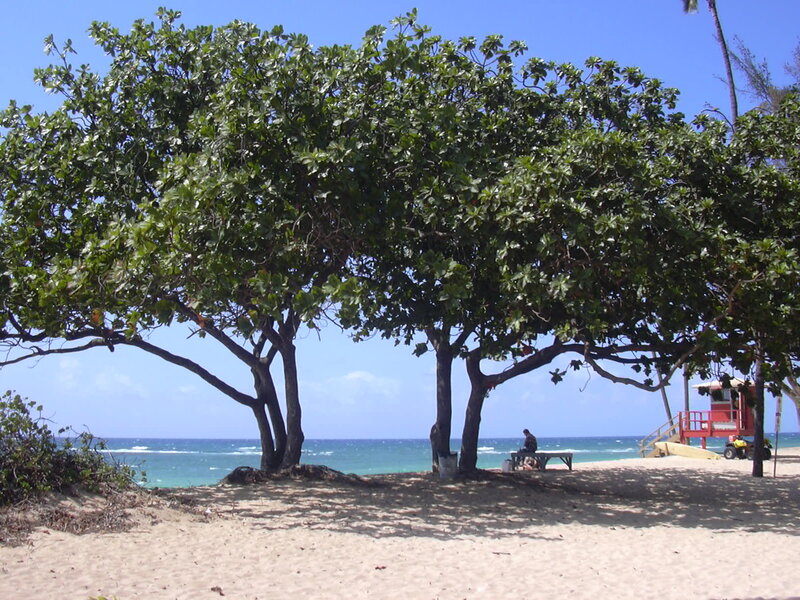
Almendro de Playa
The beach almond is an introduced coastal tree from Southeast Asia, now naturalized along Costa Rica's Pacific beaches where its fruits feed Scarlet Macaws.
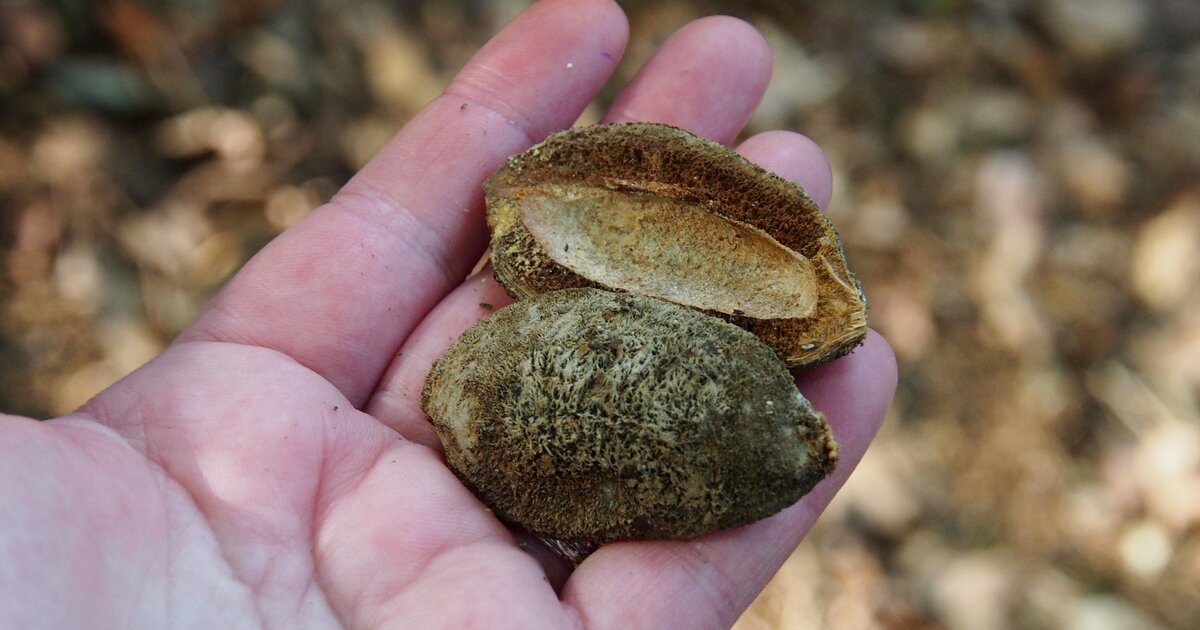
Almendro
A towering keystone species of Central American rainforests, the almendro provides critical nesting habitat for the Great Green Macaw. Now planted in the Brunca Region for habitat restoration.
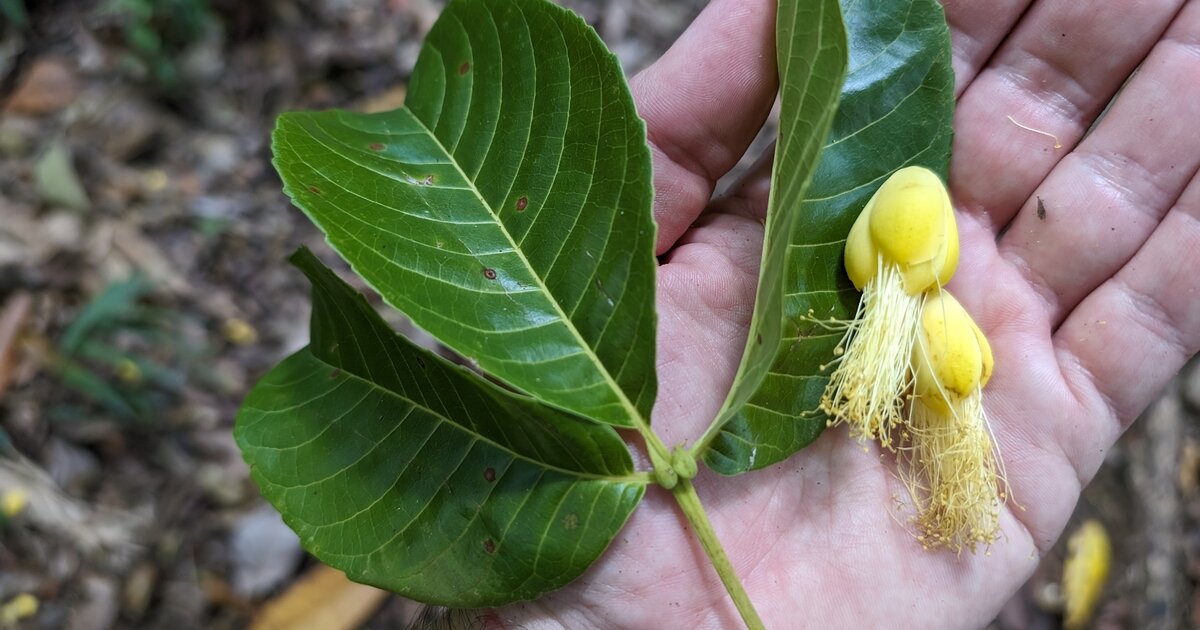
Ajo
Costa Rica's endemic garlic tree, named for the pungent scent of its yellow flowers that attract bat pollinators, and a critical nesting tree for Scarlet Macaws.
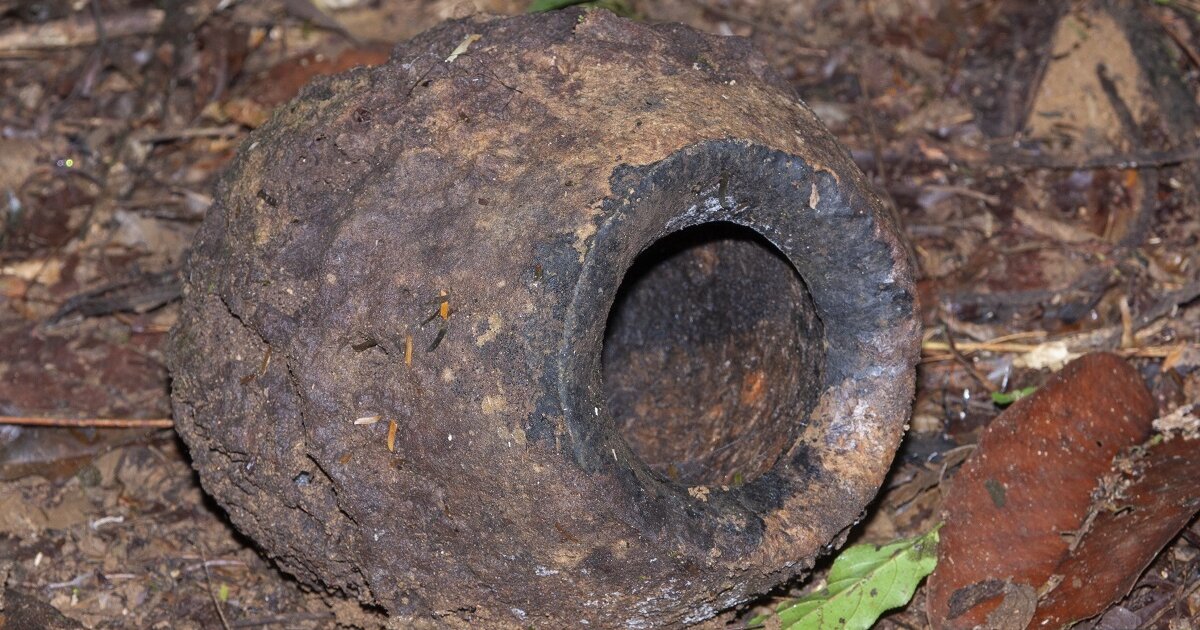
Olla de Mono
The monkey pot tree, named for its remarkable pot-shaped fruit that inspired centuries of folklore about trapping greedy monkeys.
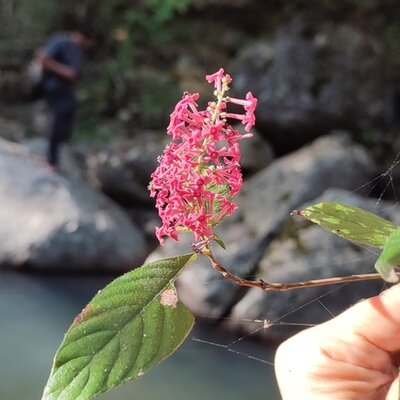
White-backed Cafecillo
A Brunca Rubiaceae with snowy leaf undersides, fragrant distylous flower spikes, and a range that links Coto Brus to Oaxaca.