Aguacatillo del Quetzal
Ocotea pharomachrosorum — An endangered cloud forest laurel named for the Resplendent Quetzal, whose oily drupes sustain the famous bird during nesting season in San Gerardo de Dota.
Jorge Gómez-Laurito described Ocotea pharomachrosorum in Novon 3:31–33 (1993) after finally obtaining enough fertile material from San Gerardo de Dota. The epithet honors Pharomachrus mocinno, the resplendent quetzal, because the new laurel’s oily drupes provide a critical food source during the bird’s nesting season.
The species inhabits the Pacific slope of the Cordillera de Talamanca in Costa Rica and adjacent Chiriquí highlands in Panama, mostly between 1,600 and 2,300 meters. GBIF lists only two dozen verified records, evenly split between San José province (Los Santos) and the cooler ravines above Boquete, illustrating how narrow its range really is.
Identification
Twigs & Bark
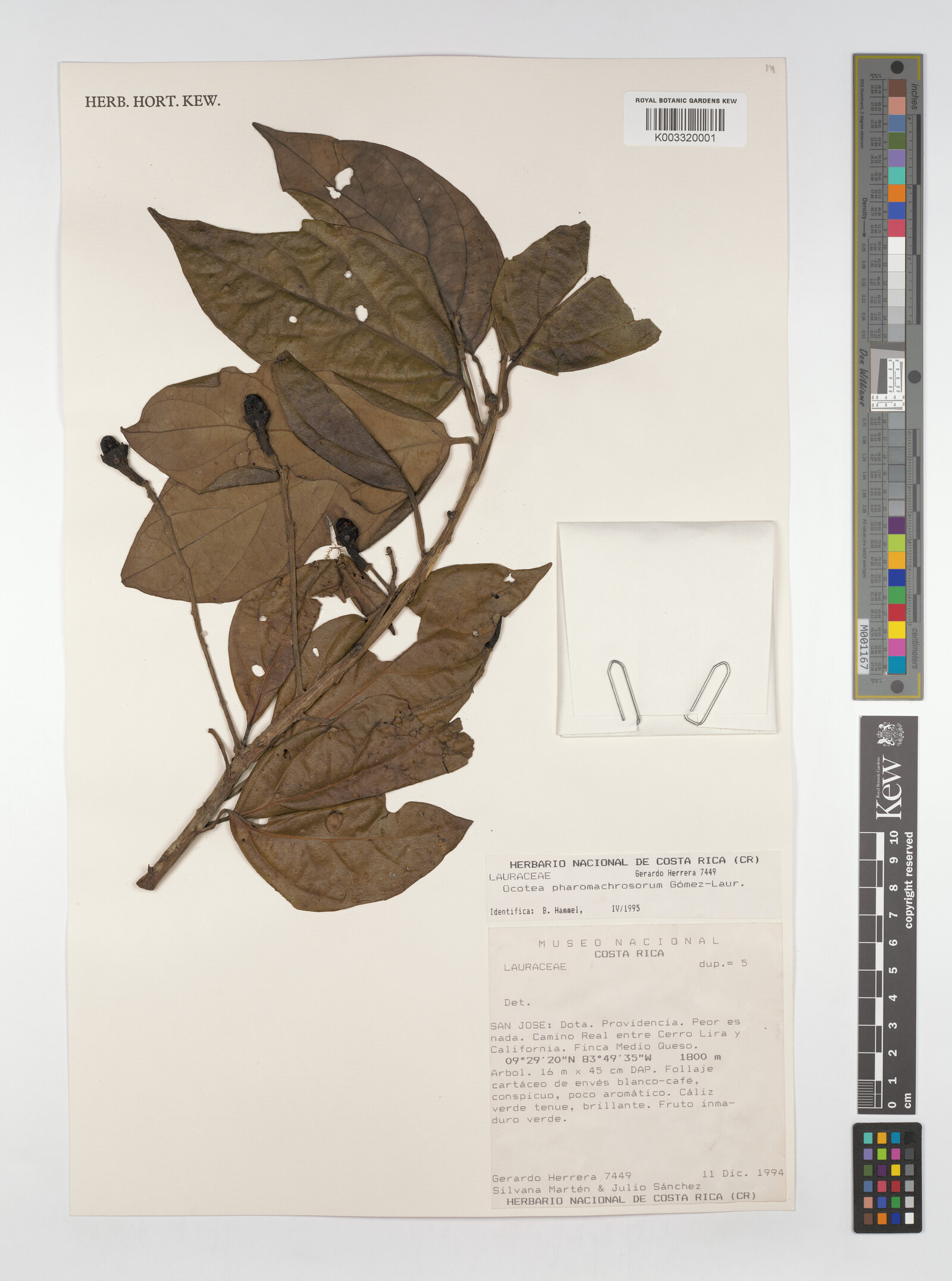
Young twigs, buds, and flower stalks are densely grayish-tomentulose (covered with fine, matted hairs), giving new shoots a distinctive frosted appearance. This pubescence distinguishes O. pharomachrosorum from the glabrous twigs of many other cloud forest laurels.
Leaves
Leaves measure 9–19 × 5–7.5 cm, narrowly ovate with unequal bases (the two sides often offset by several millimeters where they join the petiole). The upper surface is glossy and glabrous (hairless), while the underside is covered in minute, curved hairs and shows only three or four strong lateral veins per side.
Flowers
Inflorescences are axillary panicles (branched flower clusters arising from leaf axils) with short lateral branches subtended by conspicuous 4–7 mm bracts. Flowers are pale green, nearly 1 cm across, with both outer and inner tepals (petal-like structures) papillose (covered with tiny bumps) on the inner surface.
Fruits
Fruits are ellipsoid drupes up to 3.5 cm long, among the largest in the genus. They sit in obconic (cone-shaped, narrow end down) cupules tinged with red, 8–13 mm deep. These sturdy platforms allow quetzals to perch while plucking and swallowing the oily fruits whole.
Distribution and Habitat
Ocotea pharomachrosorum clings to a narrow strip of cloud forest along the Pacific slope of the Cordillera de Talamanca. Fewer than two dozen verified records exist, scattered from Costa Rica's Los Santos highlands to the cooler ravines above Boquete in Panama. Every tree stands between 1,600 and 2,300 meters, in the same misty oak forests where quetzals nest.
The type locality lies near Finca Chacón in San Gerardo de Dota, where ridges draped in oak and bamboo plunge toward the Río Savegre. Additional collections come from the Los Santos Forest Reserve, the upper Río Pacuare basin on the Caribbean divide, and across the border in Chiriquí. A lone record from Bocas del Toro hints that the species may cross to the Atlantic slope in Panama, though no one has confirmed a population there.
Every known occurrence sits inside or adjacent to protected areas: Los Quetzales National Park, Tapantí–Macizo de la Muerte, or the Palo Seco Protection Forest. Field crews in Los Santos still flag fruiting trees when staging quetzal-watching tours, ensuring branches remain untouched during nesting season.
Conservation Outlook
GBIF relays the IUCN assessment of Endangered, reflecting the species’ tiny extent of occurrence and dependence on intact quetzal habitat. Protecting shade-grown coffee buffers around San Gerardo de Dota and limiting road expansion into the Talamanca foothills are immediate priorities to keep fruiting trees standing.
Gómez-Laurito emphasized that the fruits “are an important food source of one of the most beautiful birds in Central America,” so community guides now track fruiting peaks to avoid collecting or pruning trees while quetzal pairs are feeding. Citizen-science alerts help coordinate watchers from Los Quetzales National Park to Boquete so that both countries can safeguard the same migratory corridor.
Wildlife Connections
Nathaniel Wheelwright's landmark 1983 study at Monteverde revealed that resplendent quetzals are not generalist frugivores but laurel specialists. Of the 41 fruit species quetzals consume annually, 18 belong to the Lauraceae, and these fat-rich drupes form the core of their diet. Quetzal movements through the year track Lauraceae fruiting phenology: when one species finishes, the birds shift elevation or aspect to find another coming into fruit. The relationship runs so deep that Wheelwright suggested mutual coevolution between the birds and the trees whose seeds they disperse.
Research at San Gerardo de Dota—the type locality for O. pharomachrosorum—confirms this pattern in the Talamanca highlands. A 2016 study monitoring quetzal nests found that during the first week after hatching, parents bring mostly lizards and beetles to fuel rapid growth. But from day six onward, Lauraceae fruits dominate the deliveries. Among these, Ocotea holdridgeiana provided the highest protein and lipid content of any fruit in the nestling diet. Parents sought out these nutrient-dense drupes even when they were scarcer than other available fruits.
Telemetry work by Powell and Bjork showed that Monteverde's quetzals migrate altitudinally to track Lauraceae fruiting, descending to Pacific slope forests when highland crops fail. The same pattern likely holds in the Talamanca range, where O. pharomachrosorum fruits during the February–April nesting peak. Protecting this single species matters less than protecting the full suite of laurels across the elevational gradient—but losing any link in that chain narrows the margin for quetzal survival in lean years.
Three-wattled bellbirds, northern emerald toucanets, and black guans also swallow the drupes whole, regurgitating seeds into forest gaps. This dispersal network means a single fruiting tree can seed new laurels across a wide area. When local guides in Los Santos mark fruiting O. pharomachrosorum trees during quetzal-watching tours, they are protecting not just a food source but a seed dispersal hub for the next generation of cloud forest.
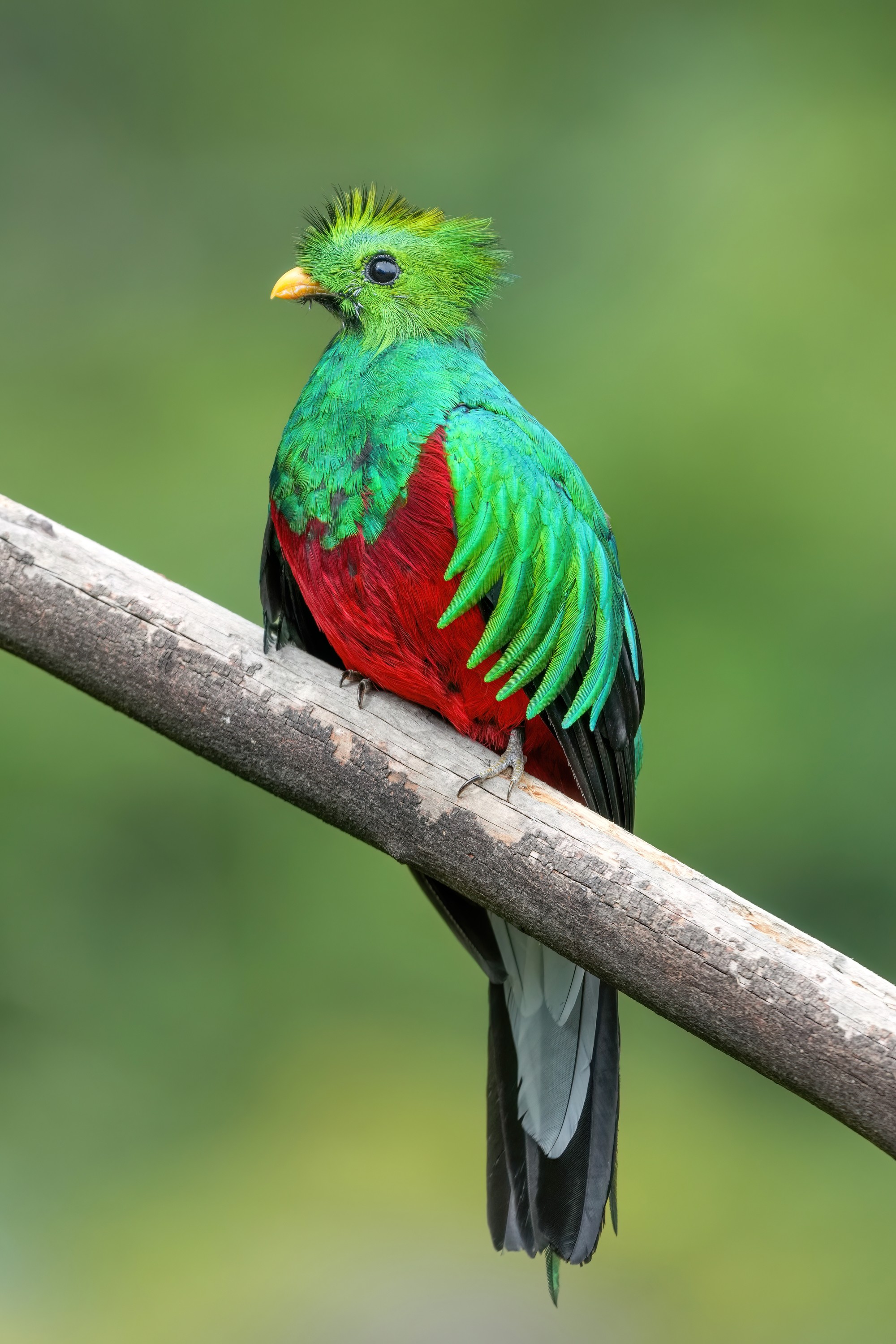
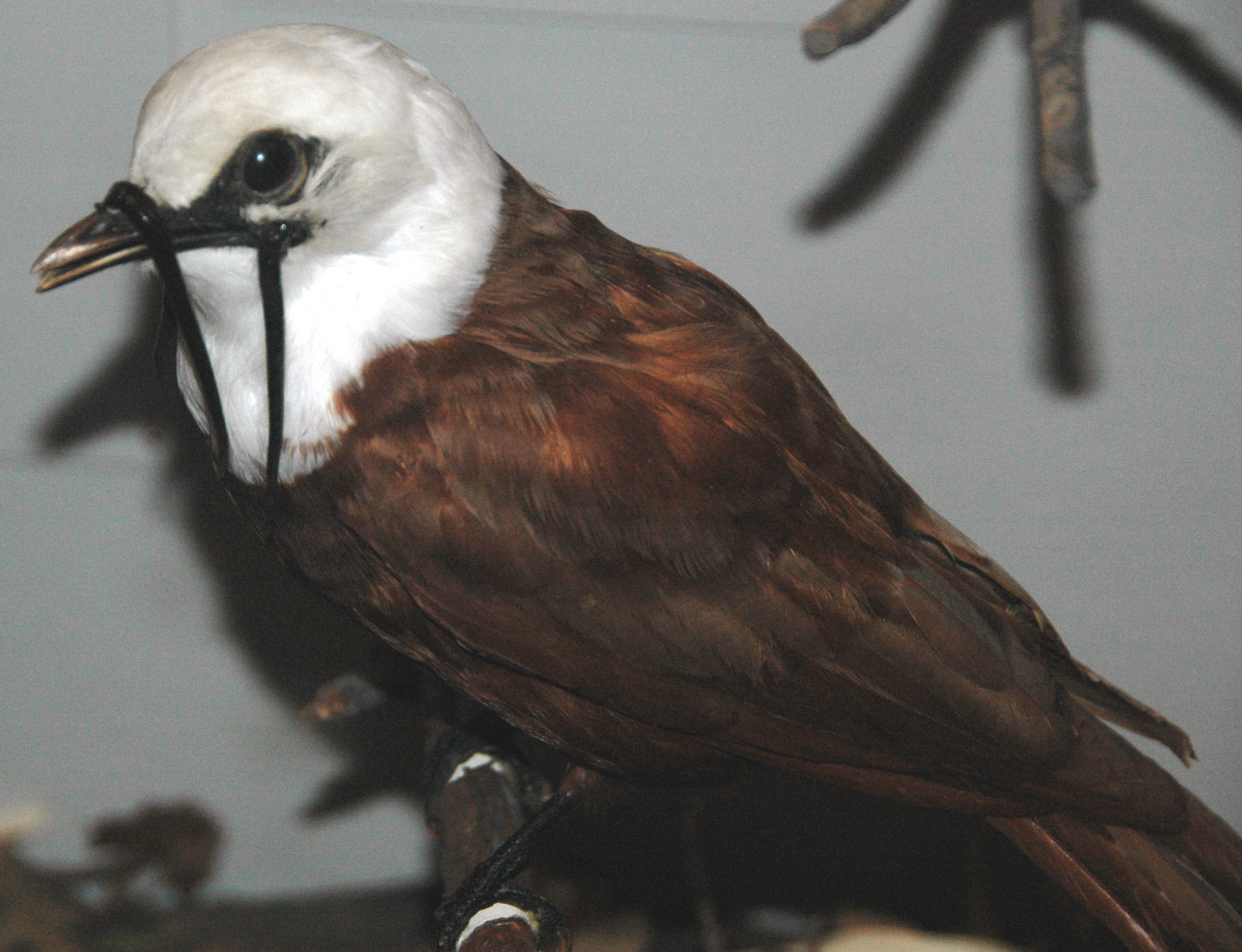
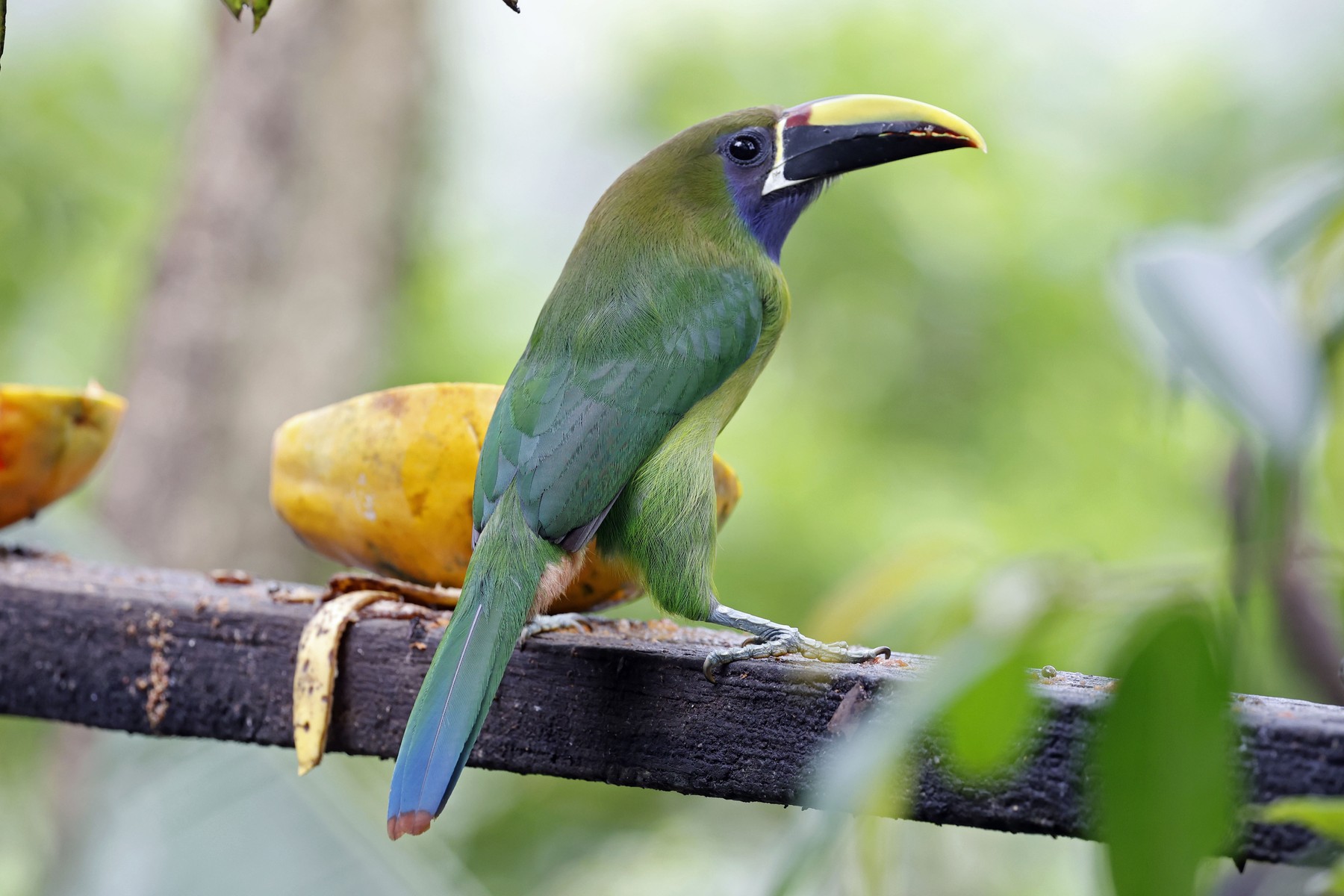
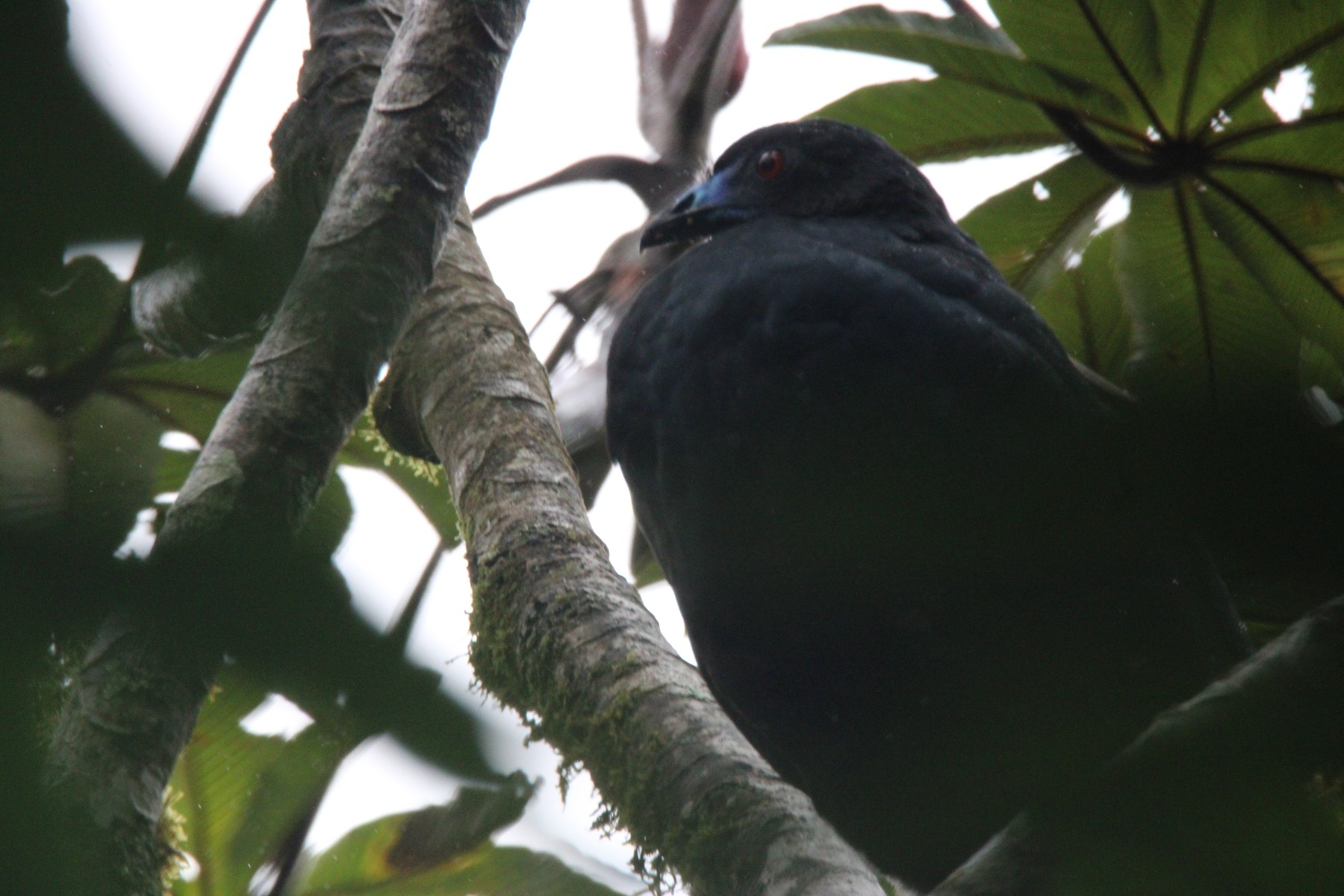
Photos (clockwise from top left): Resplendent Quetzal by Giles Laurent (CC BY-SA 4.0), Three-wattled Bellbird by James St. John (CC BY 2.0), Black Guan by Kelly Fretwell (CC BY 4.0), and Northern Emerald-Toucanet by Giles Laurent (CC BY-SA 4.0).
Taxonomic History
Jorge Gómez-Laurito, a Costa Rican botanist at the Universidad de Costa Rica, described Ocotea pharomachrosorum in 1993 after years of collecting in the Cordillera de Talamanca. The holotype came from Finca Chacón near San Gerardo de Dota, collected by Gómez-Laurito himself in February 1993. He chose the specific epithet to honor Pharomachrus mocinno, the Resplendent Quetzal, because he observed quetzals feeding on the tree's large fruits.
The species has no synonyms and remains taxonomically stable. The genus name Ocotea derives from an indigenous Guyanese name for aromatic trees. In his original description, Gómez-Laurito placed the species in Ocotea section Oreodaphne, noting its affinity with other highland laurels of Central America. The unusually large fruits and distinctive red cupules make it one of the most recognizable cloud forest laurels when in fruit.
Resources & Further Reading
Species Information
Taxonomic authority with nomenclatural history and distribution summary.
24 georeferenced records from Costa Rica and Panama; IUCN Endangered status.
Taxonomy & Nomenclature
Original description documenting morphology, habitat, and role as quetzal food source.
Conservation
Assessment documenting Endangered status based on restricted range and habitat dependence.
Quetzal-Lauraceae Ecology
Foundational study documenting quetzal dependence on Lauraceae drupes at Monteverde; identifies 18 laurel species as primary food sources.
San Gerardo de Dota study showing Lauraceae fruits dominate nestling diet after day six; Ocotea holdridgeiana provides highest protein and lipid content.
Telemetry study demonstrating that quetzals follow Lauraceae fruiting phenology across elevations; argues reserves must protect lowland forest to secure full habitat requirements.
Taxonomic revision including O. pharomachrosorum; keys, distributions, and morphological notes for all regional Ocotea species.