Aguacatillo de Hoja Suave
Ocotea mollifolia — A regional endemic with a puzzling distribution: found only in Costa Rica, Panama, and Ecuador, this soft-leaved aguacatillo hints at ancient forest connections along the Pacific lowlands.
Most Ocotea species range continuously across vast stretches of the Neotropics, from Mexico to Argentina. Ocotea mollifolia does not. This modest tree of humid lowland forests exists in only three countries: Costa Rica, Panama, and Ecuador. The gap between Panama and Ecuador spans the entire breadth of Colombia, raising questions that botanists have pondered for over a century. How did this species come to occupy such a fragmented range? The answer lies in the deep history of Pacific lowland forests and the ancient connections that once linked Central and South America.
A Name from the Pioneers
The species was first described in 1903 in the Bulletin de l'Herbier Boissier, a Swiss botanical journal that published many tropical plant discoveries of that era. The authors were Carl Christian Mez, a German botanist who specialized in the Lauraceae, and Henri Pittier, the Swiss-born naturalist who transformed Costa Rican botany.
Pittier arrived in Costa Rica in 1887 and founded the country's Physical Geographic Institute and its first herbarium. Over the following decades, he collected specimens throughout the country, from the Caribbean lowlands to the peaks of the Talamanca range. Many of these collections became the type specimens for new species, including Ocotea mollifolia. The specific epithet mollifolia, meaning "soft-leaved," refers to the characteristic texture of the foliage. Several plant genera bear Pittier's name, and Venezuela's first national park was named in his honor.
Identification
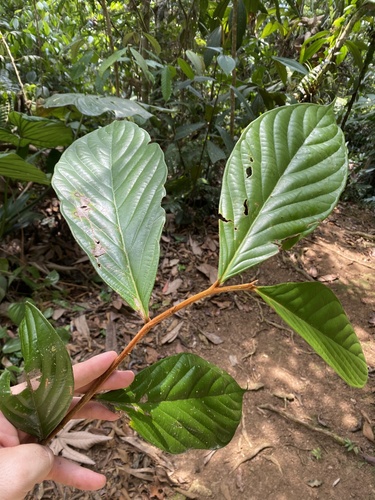
Among the hundred-odd Ocotea species in Costa Rica, O. mollifolia can be recognized by a combination of features. The most distinctive is the covering of reddish-brown hairs (trichomes) on young twigs and leaf undersides, which give the foliage its characteristic soft texture. The leaf bases are truncated and never decurrent (running down the stem), which helps distinguish it from similar species.
Physical Characteristics
Form: A small to medium-sized tree reaching 6-18 meters in height. In the forest understory it tends toward the smaller end of this range; in gaps and forest edges it can reach full stature.
Leaves: Simple, alternate, oblong to elliptic-obovate or obovate in shape. The leaf base is characteristically truncated. Young leaves and twigs are covered with reddish-brown trichomes that persist on the undersides. Like all Lauraceae, the leaves are aromatic when crushed, releasing the distinctive avocado-like scent of the family.
Flowers: White, small, arranged in inflorescences 4-27 cm long. The species produces both bisexual and unisexual flowers. Flowering occurs across an extended season from March through September, with additional flowering in December. The white flowers attract insects for pollination.
Fruits: Berries (drupes) 2-4.5 cm long, seated in a distinctive cupule 0.8-1.3 cm in size. The cupule is elongate-cylindrical in shape and typically retains remnants of the perianth (floral parts) at maturity, giving it a reddish, dome-like appearance. Fruits ripen across much of the year, from January through February and again from June through December, providing food resources to wildlife across multiple seasons.
A Disjunct Distribution
The geographic range of Ocotea mollifolia presents a biogeographic puzzle. The species occurs in Costa Rica and Panama, then reappears in Ecuador, with no known populations in between. This pattern, known as a disjunct distribution, is not unique to this species. Many plants and animals show similar gaps in their ranges along the Pacific coast of the Americas.
The Chocó biogeographic region, one of Earth's most biodiverse hotspots, extends along the Pacific coast from Panama to Ecuador. Studies of plant families including Annonaceae, Rubiaceae, and orchids have revealed striking resemblances between the floras of Central America and the Chocó, suggesting historical connections. Some botanists have proposed that a more expansive Chocó region once extended northward to the Costa Rican border.
In Costa Rica, O. mollifolia occurs on both the Atlantic and Pacific slopes, from near sea level up to 1,400 meters. It has been recorded in the Talamanca region, the Osa Peninsula, and around La Selva Biological Station. The Ecuadorian populations occur in the humid lowland forests of the northwestern provinces, in the heart of the Chocó. Whether the Colombian populations have been overlooked, have gone extinct, or never existed remains unknown.
Ecology
Seed Dispersal
Like other members of the Lauraceae, Ocotea mollifolia produces lipid-rich fruits that are consumed by birds and mammals. The fleshy drupe must be swallowed whole; the seed passes through the animal's digestive tract and is dispersed intact, often far from the parent tree. This strategy links the tree to a guild of large-gaped frugivores that includes toucans, quetzals, bellbirds, and guans.
Research in Monteverde has shown that different bird species disperse Ocotea seeds with varying effectiveness. Most species drop seeds within 20-25 meters of the parent tree. Bellbirds, however, carry seeds to favorite perching branches, often depositing them in forest gaps with more light and less competition, making them unusually effective dispersers. The extended fruiting season of O. mollifolia, spanning most of the year, makes it a particularly reliable food source.
Insect Associations
Ocotea mollifolia serves as a host plant for caterpillars of the skipper butterflies Venada daneva and Venada nevada (family Hesperiidae). These small, fast-flying butterflies belong to a genus long thought to be monotypic until 2005, when researchers at the Area de Conservación Guanacaste discovered that what had been considered a single widespread species was actually multiple species with strikingly different caterpillars.
The caterpillars of Venada species feed exclusively on Lauraceae, making them specialists tied to the avocado family. While the adult butterflies of different species look nearly identical, their caterpillars display dramatically different color patterns. V. daneva larvae are dark green with orange spots and a red neck, while V. nevada larvae are dark with yellow stripes. Both species have black heads with distinctive false eye spots.
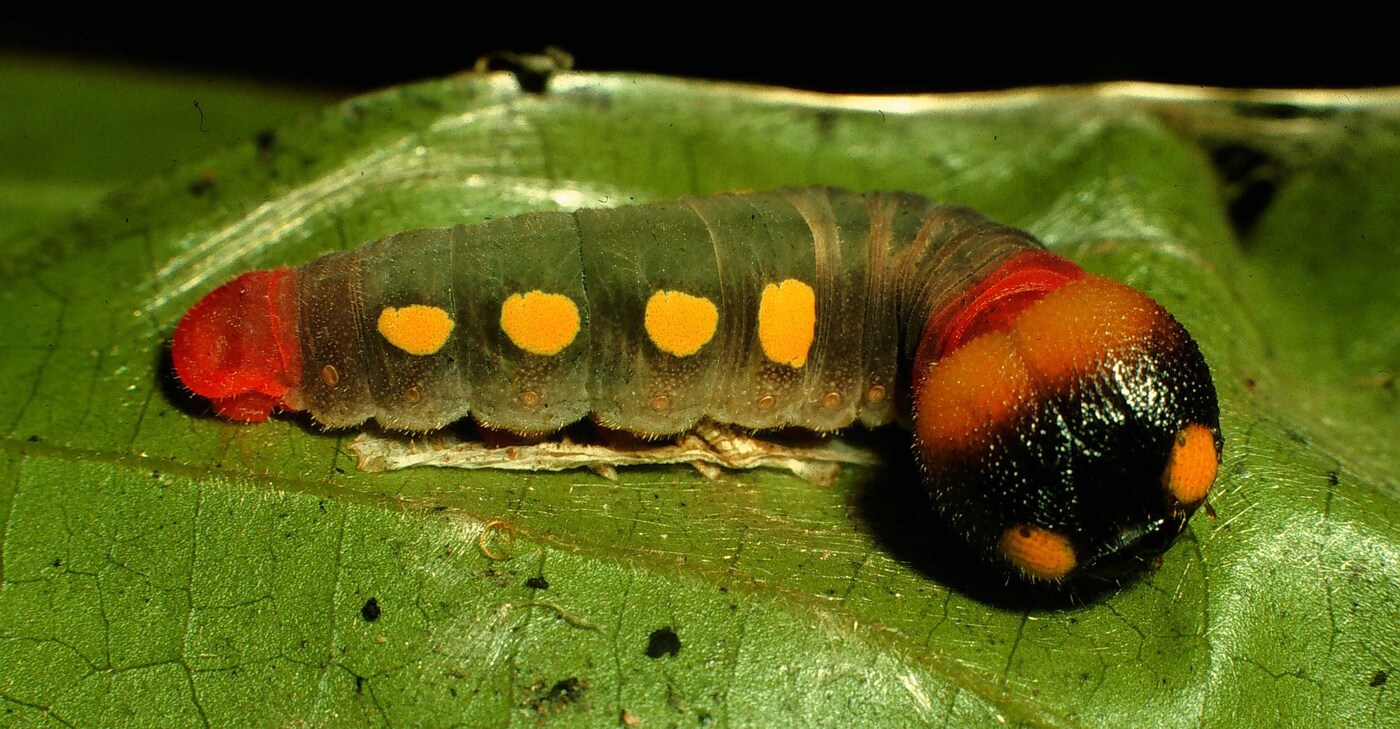
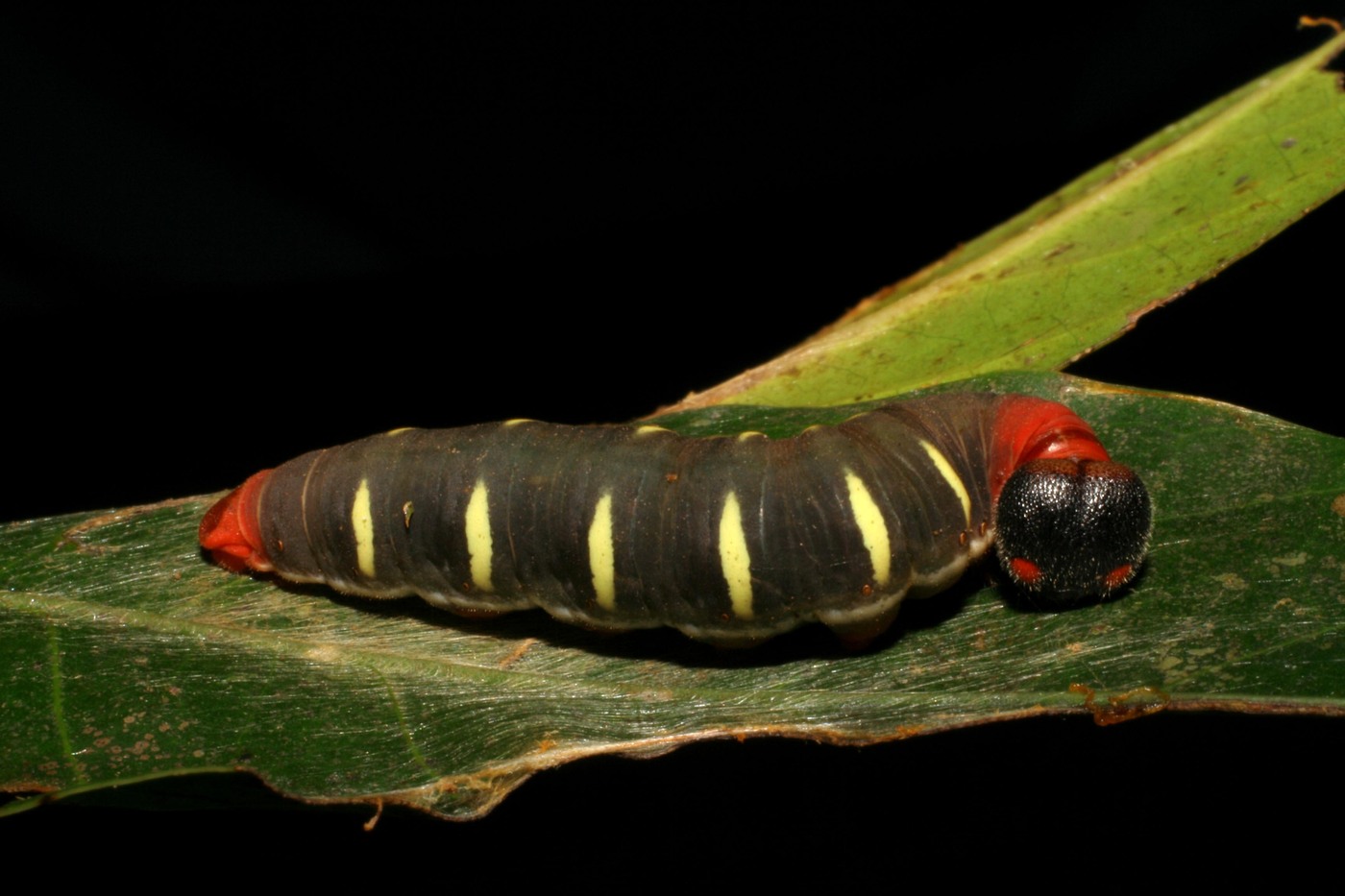
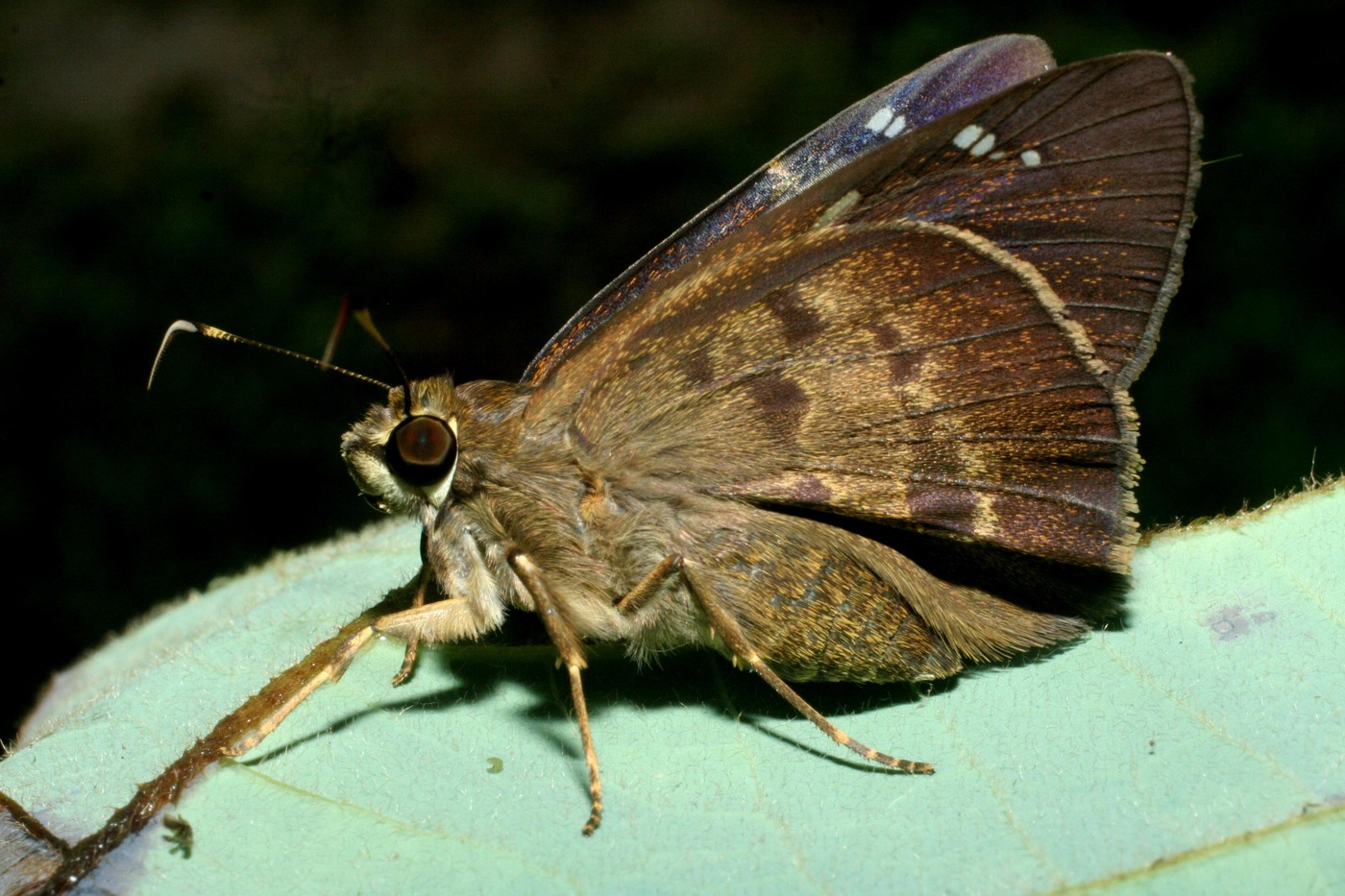
The discovery of multiple Venada species on Volcán Cacao in the ACG illustrates how much remains unknown about tropical insect diversity. DNA barcoding has since confirmed that these morphologically similar adults are genetically distinct species. Their dependence on Lauraceae host plants means their fate is linked to the persistence of trees like Ocotea mollifolia in the landscape.
Chemistry
The genus Ocotea is known as a source of benzylisoquinoline alkaloids, neolignans, and aromatic essential oils. Studies of Costa Rican Ocotea species have identified compounds including alpha-pinene, beta-pinene, beta-caryophyllene, and germacrene-D in leaf essential oils. Some species contain aporphine alkaloids with pharmacological activity. Whether O. mollifolia specifically has been chemically analyzed is unclear from available literature, though its aromatic foliage suggests it shares the family's characteristic secondary metabolites.
Conservation
The IUCN lists Ocotea mollifolia as Least Concern, and it is not protected under CITES. However, its restricted distribution and the ongoing deforestation in both Central America and Ecuador's Chocó region warrant attention. The species occurs in several protected areas in Costa Rica, including the Osa Peninsula's network of reserves and the La Selva Biological Station corridor. In Ecuador, populations likely occur within protected areas such as the Cotacachi-Cayapas and Mache-Chindul Ecological Reserves.
The apparent absence of populations in Colombia is curious. Either the species was never there, or it has been lost to deforestation in recent centuries. Colombia's Pacific coast has experienced significant forest loss, and it is possible that populations of O. mollifolia existed but were eliminated before they could be documented. Targeted surveys in remaining Colombian Pacific forests might yet reveal unknown populations.
Industrial uses for O. mollifolia are not well documented. Unlike some of its relatives that provide valuable timber (such as Ocotea bullata of South Africa or Ocotea porosa of Brazil), this species appears to have limited commercial exploitation, which may have contributed to its persistence in the wild.
Resources & Further Reading
Species Information
Species profile from the Osa Peninsula arboretum with local observations.
Detailed botanical description with diagnostic features, phenology, and distribution data.
Specimen records and photographs from Panama, supported by the Smithsonian Tropical Research Institute.
Citizen science observations and photographs from Costa Rica and Panama.
Biogeography
Scientific review of plant diversity patterns and historical connections in the Chocó region.
Ocotea Ecology
Key study on Ocotea seed dispersal by birds in Monteverde, Costa Rica.
Chemical analysis of Costa Rican Ocotea species, revealing characteristic terpene compounds.
Accessible overview of the Ocotea-frugivore relationship in Monteverde.
Historical Context
Biography of the Swiss-Costa Rican botanist who co-described Ocotea mollifolia in 1903.
Insect Associations
Species page with life history, host plants, and photographs of all life stages from the ACG caterpillar inventory.
Species page documenting this Lauraceae-feeding skipper and its relationship to Ocotea host plants.
Original scientific paper describing V. daneva, V. nevada, and two other new species from Volcán Cacao.