Coussarea loftonii
A shrub of Central American rainforests bearing delicate white flowers that may open at night to attract moths. Named for a mysterious "Lofton" whose identity has been lost to history.
Deep in the wet forests of southern Costa Rica, where annual rainfall exceeds 4,000 mm and the canopy drips year-round, Coussarea loftonii grows as an inconspicuous understory tree or shrub. This species, distributed across Colombia, Costa Rica, and Panama, plays a role in the diverse ecosystems of its range, contributing to the rich biodiversity. Its presence in the Brunca region of Costa Rica, with 65 recorded observations, highlights its importance in local conservation efforts, especially given its IUCN status as Near Threatened.
Identification
Leaves
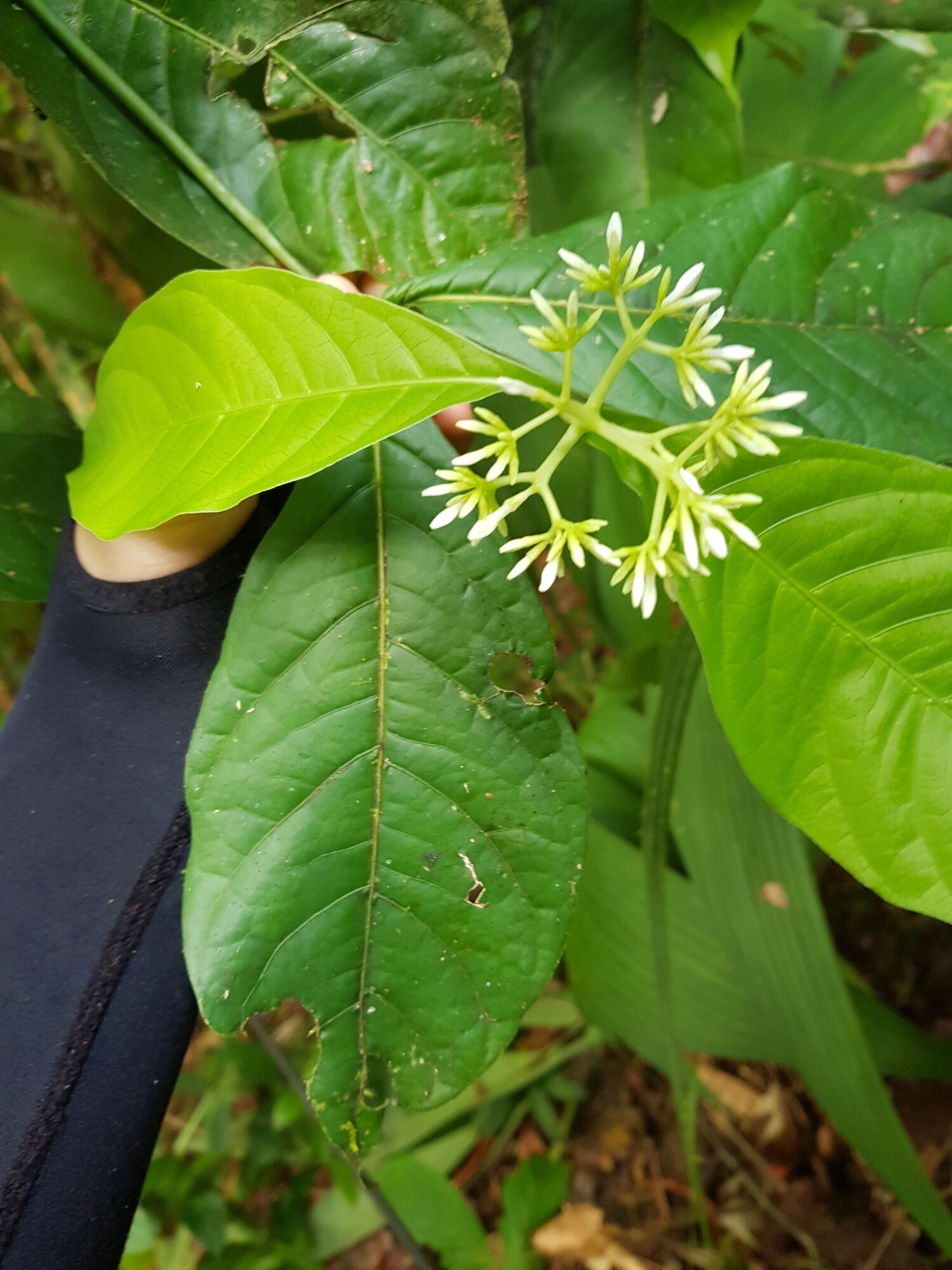
Leaves are simple, oppositely arranged, and leathery in texture, as in all Rubiaceae. Field photographs suggest the leaves are relatively large, appearing substantial when held in hand, though herbarium specimens show considerable size variation. The species bears interpetiolar stipules, a diagnostic feature of the coffee family. Leaf anatomy in Coussarea shows a distinctive flattened open arc system in the midrib, a character that helps distinguish the genus from the closely related Faramea.
Flowers
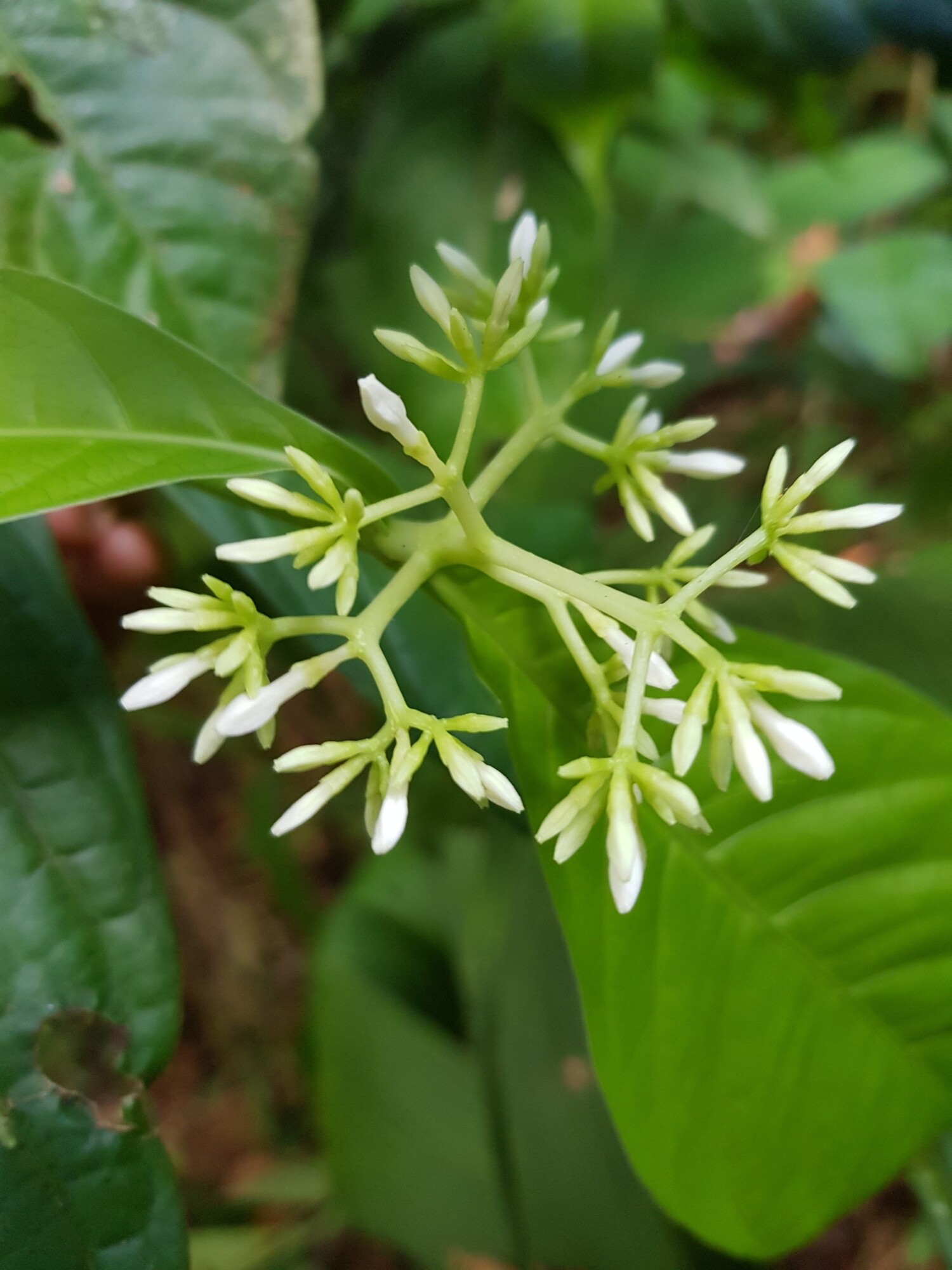
The flowers are white, fragrant, and four-lobed (tetramerous), a diagnostic character for the genus Coussarea following recent taxonomic revisions. Like other members of the Coussareeae tribe, the species is likely heterostylous, bearing two floral morphs with reciprocally positioned styles and stamens to promote outcrossing. Studies on related Coussarea species in Costa Rican wet forests found them to be self-incompatible, requiring pollen from a different morph for successful fertilization. The white fragrant flowers with elongated corolla tubes suggest pollination by moths or other nocturnal visitors, a pattern documented in several related species.
Fruits
The fruits are drupaceous with a single seed, a character now considered diagnostic for Coussarea in the strict sense. Blue fruits, while exceptional in most Rubiaceae, are common in the Coussareeae and related tribes. Birds, particularly tanagers, thrushes, and toucans, are the likely primary dispersers of Coussarea fruits in Neotropical forests, ensuring seed movement throughout the forest understory.
Herbarium Specimens
Distribution
Coussarea loftonii is distributed across Colombia, Costa Rica, and Panama, primarily found in humid to very humid lowland forests at elevations ranging from 20 to 1000 meters. GBIF records show 210 occurrences, with 65 specifically within the Brunca region of Costa Rica. Key localities include protected areas and biodiverse regions within its range.
Ecology
As an understory tree or shrub, Coussarea loftonii thrives in the shaded, humid conditions of its preferred lowland wet forest habitat.
Pollinators
While specific pollinators for Coussarea loftonii are not documented, other species within the genus Coussarea with similar floral characteristics are likely pollinated by hummingbirds or other nectar-feeding animals. The flowers are typically white and fragrant, which are common traits for attracting such pollinators.
Seed Dispersers
Seed dispersal for Coussarea loftonii is inferred to be primarily animal-mediated (endozoochory). This strategy is common among tropical forest species, where frugivorous birds and mammals consume the fruits and later disperse the seeds through their droppings.
Uses
Specific traditional or commercial uses for Coussarea loftonii are not well-documented. However, many species within the Rubiaceae family, to which it belongs, have various uses, including medicinal properties, timber, or edible fruits. Further research is needed to determine any specific uses for this particular species by local communities.
Taxonomic History
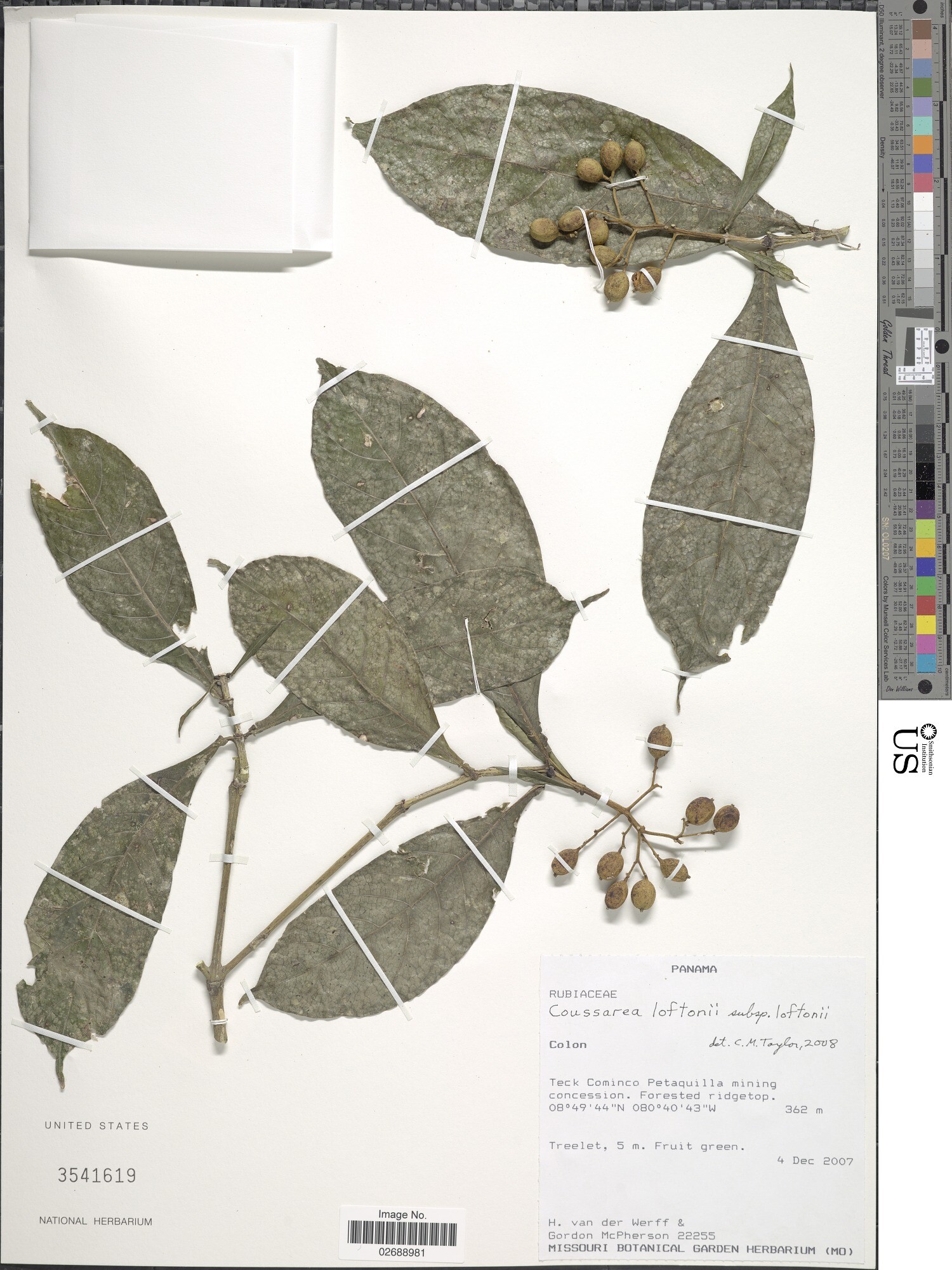
The species was originally described as Faramea loftonii Dwyer & M.V. Hayden in Phytologia 15: 56 (1967), from specimens collected at Cerro Jefe, Panama, a botanically rich cloud forest peak that has yielded type specimens for numerous species. Dwyer transferred it to Coussarea in 1980 as part of his comprehensive treatment of Rubiaceae for the Flora of Panama.
John Duncan Dwyer (1915-2005) was a professor at Saint Louis University and research associate of the Missouri Botanical Garden who specialized in Rubiaceae and other tropical plant families. His two-part treatment of Rubiaceae in the Annals of the Missouri Botanical Garden (1980) remains a foundational work for Central American botany. The epithet "loftonii" honors a person named Lofton, likely a plant collector, though specific biographical information remains elusive.
Three subspecies are currently recognized: subsp. loftonii (Central America), subsp. calimana C.M. Taylor (Colombia, Calima region), and subsp. occidentalis C.M. Taylor. Charlotte M. Taylor, who described these subspecies and authored the Flora Mesoamericana treatment (2012), has described more plant species than any living woman botanist and has been instrumental in modern Coussareeae taxonomy.
The genus Coussarea was established by Aublet in 1775, likely named for the Kusari (Coussari) tribe of French Guiana, reflecting his engagement with indigenous peoples during botanical work in South America. Coussarea and Faramea are sister genera within tribe Coussareeae, historically separated by ovary septum development and ovule number, though these characters are not entirely diagnostic. Modern phylogenetics supports their separation: Coussarea is now characterized by tetramerous flowers and single-seeded fruits, while Faramea has blue-black fruits with larger pyrenes.
Conservation Outlook
Coussarea loftonii has not been formally assessed by the IUCN Red List. However, with 94 documented records in Costa Rica alone, including 37 localities in the Brunca region, the species appears reasonably secure where suitable habitat persists. It has been documented in multiple protected areas including Corcovado National Park, Piedras Blancas National Park, and the La Gamba Field Station area. The species is also recorded from Cerro Jefe and other sites in Panama, and extends to western Colombia.
As an understory species dependent on intact forest interior, C. loftonii is edge-sensitive. Research on Rubiaceae in fragmented forests found that plots near forest edges consistently had fewer individuals and species than core forest plots, as harsh edge conditions (intense light, heat, wind) create suboptimal environments for understory seedlings. The species' long-term persistence therefore depends on maintaining large tracts of unfragmented lowland wet forest.
Resources & Further Reading
Species Information
Taxonomic and distributional data from Kew Royal Botanic Gardens.
Global occurrence records and distribution data.
Nomenclatural data and specimen records from Missouri Botanical Garden.
Field photographs and citizen science observations.
Scientific Literature
Phylogeny of Coussareeae (Rubioideae, Rubiaceae). Plant Systematics and Evolution.
Phylogenetic relationships, infrageneric classification, and species limits in the related genus Faramea. Botanical Journal of the Linnean Society.
The Psychotria domingensis-Coussarea hondensis group with nocturnal flowering. Novon 20(4): 481-492.
Historical Sources
Original description of Faramea loftonii from Cerro Jefe, Panama. Phytologia 15: 54-60.
Publications by John Duncan Dwyer, specialist in Rubiaceae taxonomy.
New York Botanical Garden project documenting flora of the Osa Peninsula, Costa Rica.