Madroño
Alibertia edulis (Rich.) A.Rich. ex DC. — A small understory tree of the coffee family whose sweet-sour fruits have fed Amazonian peoples for centuries, while its leaves have quietly regulated blood sugar long before modern medicine validated the claim.
In the wet lowland forests from Mexico to Brazil, wherever the canopy opens enough to let light filter through, a modest shrub or small tree produces globose fruits that ripen from green to deep purple-black. Alibertia edulis is one of those species that slips beneath notice until you taste its fruit or learn of its medicinal heritage. Known as madroño in Costa Rica, puruí in Brazil, and trompito across much of its range, this member of the coffee family rewards those who pay attention. Its flowers draw hummingbirds. Its fruits feed bats and primates. Its leaves contain compounds that indigenous Amazonian healers have long used to control blood sugar, a claim that pharmacological research has since confirmed.
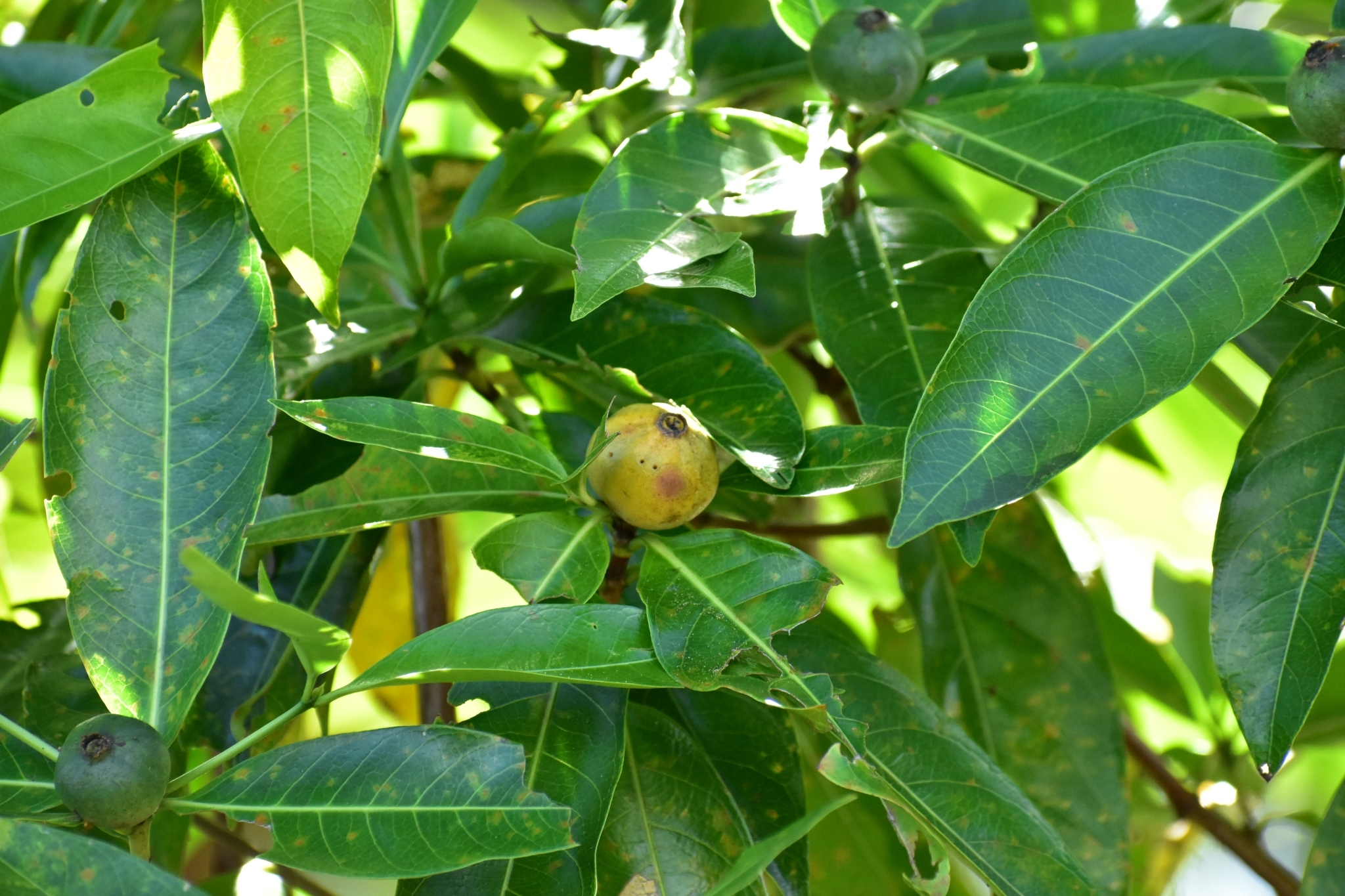
Unlike many tropical trees that demand primary forest conditions, madroño thrives in disturbed habitats. It colonizes forest edges, secondary growth, and even degraded agricultural land with equal enthusiasm. This pioneer spirit makes it valuable for reforestation: a fast-growing native that rapidly establishes on marginal soils while providing food for wildlife. In the Brazilian cerrado, it can form dense stands in favorable locations. In Costa Rica's Brunca region, it occurs scattered through wet forests and along their edges, rarely dominant but always present for those who know to look.
Identification
Growth Form
Madroño grows as a shrub or small tree with an irregular, sparse crown. Most individuals reach 2-4 meters in height, though exceptional specimens may attain 6 meters or slightly more. The trunk is often crooked, with light brownish bark. Young branchlets are glabrous (hairless) or sometimes finely hairy, stiffly ascending and becoming somewhat angular with age. The overall appearance is unremarkable in the understory, where it blends with dozens of similar small trees until flowering or fruiting draws the eye.
Leaves
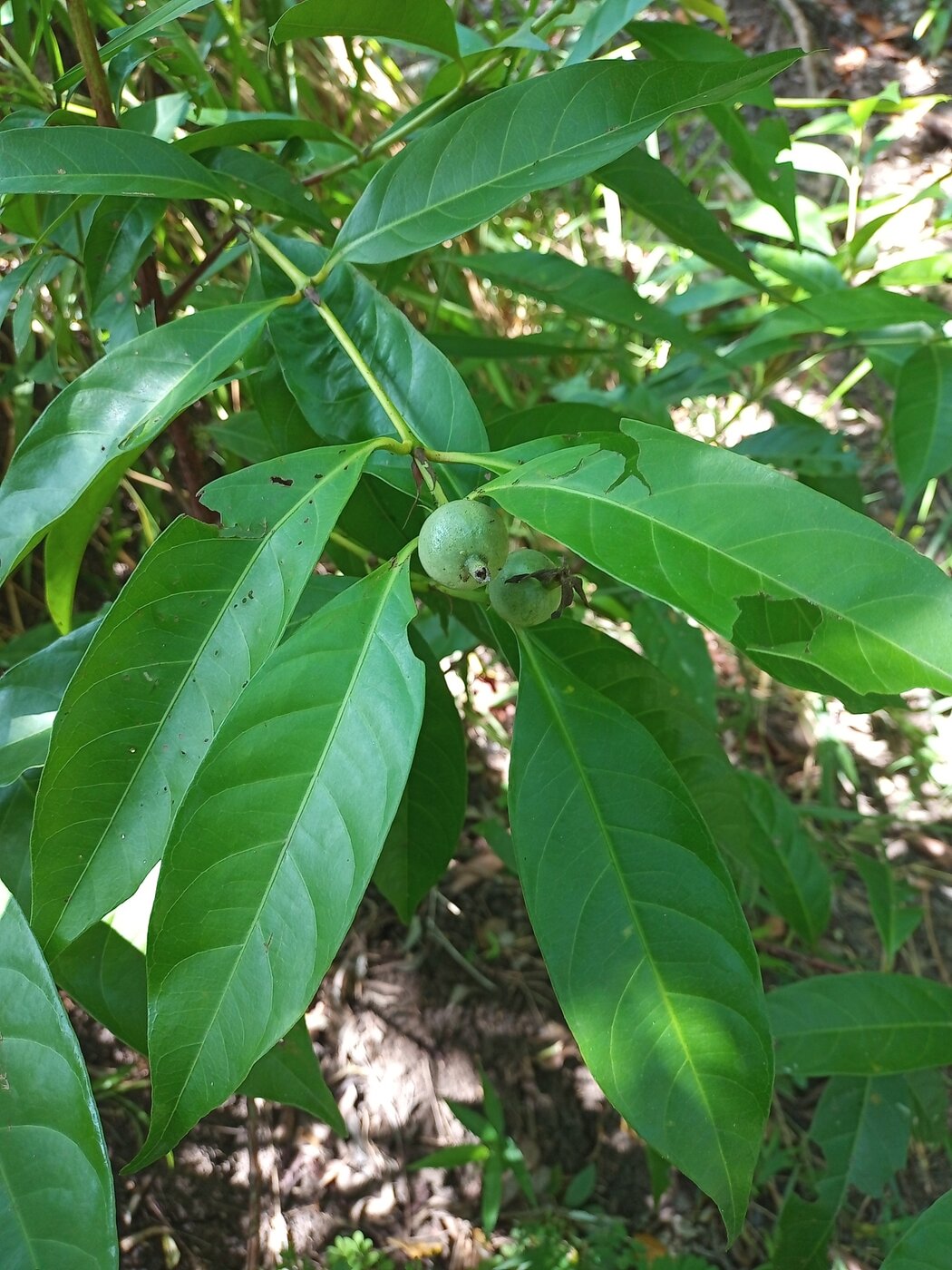
The leaves are arranged oppositely along the stems, ovate in shape, and distinctly dark green on the upper surface. They are relatively large for an understory shrub, contributing to the plant's ability to capture light in shaded conditions. The leaf margins are smooth (entire), and the texture is somewhat leathery. Venation is pinnate and clearly visible on the lower surface. When crushed, the leaves release a faintly bitter, herbaceous scent characteristic of the Rubiaceae.
Flowers
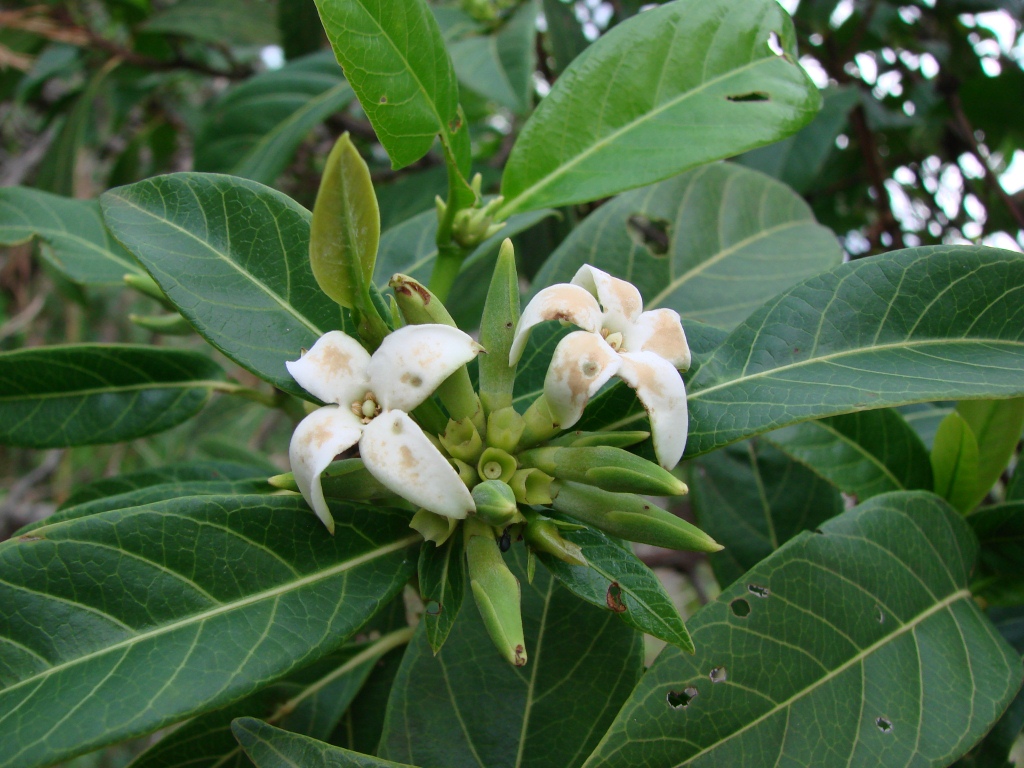
The flowers are white, tubular to trumpet-shaped, with four to five petals that flare at the mouth. They are borne in clusters and are visually striking against the dark foliage, though individually small. The species is dioecious, meaning male and female flowers occur on separate plants. Male flowers are typically borne in panicles 10-20 cm long, while female flowers tend to be solitary or in smaller clusters. Flowering can occur year-round in the wetter parts of its range, with hummingbirds and insects serving as the primary pollinators. The tubular flower shape is well-suited to hummingbird visitation.
Fruits
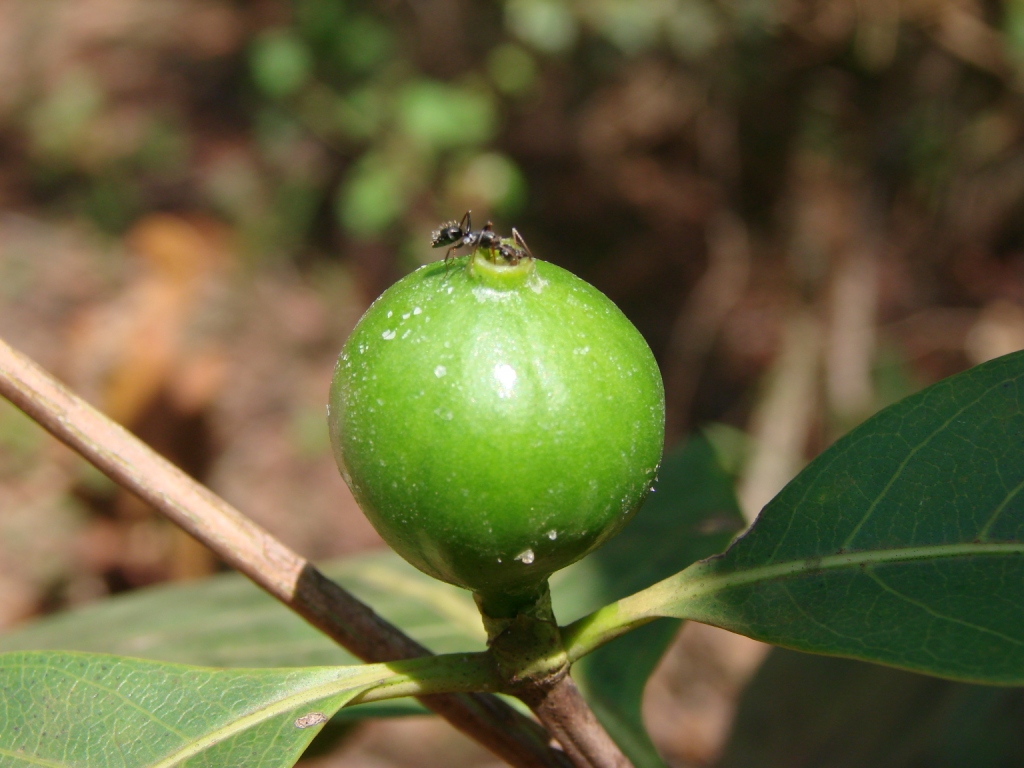
The fruits are the most distinctive feature of the species and the source of its culinary and economic value. They are globose berries, 3-5 cm in diameter (occasionally reaching 7 cm), weighing up to 40 grams each. Immature fruits are green and hard; as they ripen, they pass through yellowish stages before reaching their final dark purple-brown or nearly black coloration. The mesocarp (flesh) is soft and fleshy when ripe, with a sweet-sour flavor that has been compared to a subtle, pleasant tartness. Each fruit contains numerous small seeds embedded in the pulp. Fruiting, like flowering, can occur year-round in favorable conditions.
Distribution
Madroño has one of the broadest distributions of any Neotropical Rubiaceae, spanning from southern Mexico through all of Central America, the Caribbean (including Cuba and Trinidad), and southward through the Amazon basin to Paraguay and northern Argentina. It occurs in virtually every country in this vast range, adapting to wet lowland forests, seasonally dry forests, cerrado savannas, and secondary vegetation. This ecological flexibility reflects its nature as a pioneer species that tolerates disturbance and colonizes gaps.
In Costa Rica, the species is documented from multiple provinces. Records from the Área de Conservación Guanacaste confirm its presence in the northwestern dry forests. In the Brunca region and the broader southern Pacific slope, it occurs in the lowland wet forests of the Osa Peninsula, Golfo Dulce region, and adjacent areas. The species favors elevations from sea level to approximately 1,100 meters, preferring forest edges, secondary growth, and semi-open habitats where light penetrates. It is never a dominant component of the forest but maintains persistent populations wherever conditions permit.
Ecology
Pollination
The white, tubular flowers of madroño attract both hummingbirds and insects as pollinators. The flower morphology, with its narrow tube and flared corolla lobes, is typical of hummingbird-pollinated plants in the Rubiaceae. Hummingbirds insert their bills into the tube to access nectar at the base, contacting the reproductive structures in the process. Insects, particularly bees and butterflies, also visit the flowers and may contribute to pollination, especially for the more accessible male flowers borne in open panicles.
Seed Dispersal
The fleshy, aromatic fruits of madroño attract a diverse guild of frugivores. Bats are among the primary dispersers, consuming ripe fruits at night and depositing seeds in their guano as they move through the forest. Primates also eat the fruits eagerly; in South America, various monkey species include madroño in their diet. The sweet pulp rewards frugivores while the seeds pass through their digestive systems unharmed. Gravity (barochory) also plays a role: heavy ripe fruits fall beneath the parent tree, where some germinate directly. Ants provide secondary dispersal, moving fallen seeds short distances from the parent plant and sometimes caching them in nutrient-rich microsites that favor germination.
Pioneer Ecology
Madroño exemplifies the pioneer strategy in tropical forests. It germinates readily in light gaps and disturbed areas, grows rapidly once established, and tolerates poor, sandy, or degraded soils that challenge more demanding species. This makes it valuable for reforestation and ecological restoration. Unlike many pioneers that sacrifice longevity for rapid growth, madroño can persist for years once established, continuing to provide fruit and flowers for wildlife as surrounding vegetation matures. Its ability to thrive in sunny, open conditions while tolerating partial shade gives it flexibility across a range of successional stages.
Traditional Uses
Edible Fruit
The ripe fruits of madroño have been eaten by indigenous peoples across its range for centuries. The flesh is consumed raw when fully ripe, its sweet-sour flavor refreshing in the tropical heat. In Brazil, where the species is particularly abundant in the cerrado, the fruits are processed into juices, jellies, jams, and soft drinks. The modest yield per fruit means commercial cultivation remains rare; most fruits are still gathered from wild plants. Despite the pleasant taste, madroño fruits have never achieved the popularity of related species like the genipa (Genipa americana), perhaps because the pulp yield is modest relative to the fruit's size.
Medicinal Properties
The leaves of madroño hold the species' most significant ethnobotanical value. Indigenous Amazonian communities have long used leaf infusions to help control blood sugar levels, treating what would now be recognized as diabetes. This traditional use has attracted scientific attention, and pharmacological studies have validated the hypoglycemic (blood sugar-lowering) properties of leaf extracts. The leaves are also used as a diuretic, and some communities apply them to reduce fever and inflammation.
Modern research has identified specific compounds responsible for these effects. The leaves contain flavonoids including rutin, quercetin glycosides, and caffeic acid, along with ferulic acid and other phenolic compounds. Iridoids such as genipin and ixoside also occur in the plant tissues. These compounds work through multiple mechanisms: the hypoglycemic effect appears to involve enhanced activity of antioxidant enzymes (superoxide dismutase and catalase) and modulation of the IKK inflammatory pathway. Separately, leaf extracts show antiplatelet activity through inhibition of cyclooxygenase-1 (COX-1), suggesting potential cardiovascular benefits.
Toxicological studies provide reassurance about safety. In animal models, leaf extracts show an LD50 (median lethal dose) greater than 2,000 mg/kg body weight, classifying them as practically non-toxic. The extracts have also tested negative for genotoxicity and mutagenicity, suggesting they do not damage DNA or cause mutations. However, no human clinical trials have been conducted, and the traditional preparations vary widely. The convergence of ethnobotanical knowledge and laboratory evidence suggests that madroño merits rigorous clinical investigation, but until such trials occur, traditional use remains the primary guide to its therapeutic potential.
Other Uses
The wood of madroño is moderately heavy and hard, but the small size of most trees limits its utility for timber. Where larger specimens occur, the wood has been used for firewood, charcoal production, and small implements like tool handles. The species' primary economic value lies in its fruits and medicinal leaves rather than its wood.
Taxonomic History
The species was first described as Genipa edulis by Louis Claude Richard, the French botanist who explored French Guiana in the late 18th century. The specific epithet edulis means "edible" in Latin, referencing the palatable fruits. The species was later transferred to Alibertia by Achille Richard (Louis Claude's son) and published by Augustin Pyramus de Candolle in his Prodromus in 1830.
The genus Alibertia was named in honor of Jean-Louis Alibert (1768-1837), a French dermatologist who made contributions to medical science. The genus belongs to tribe Cordiereae within the Rubiaceae, a placement confirmed by molecular phylogenetic studies. Cordiereae species are characterized by fleshy fruits and dioecious flowers. The genus contains approximately 15 species distributed across tropical America, most producing edible fruits; the broader Alibertia group comprises about 50 species across six related genera. Some taxonomic treatments have merged Alibertia into Cordiera or recognized it as a subgenus, but the 2017 Flora Neotropica monograph maintains Alibertia as distinct. The wide distribution and morphological variability of A. edulis have led to numerous synonyms, including Gardenia edulis and Cordiera edulis.
Conservation Outlook
Madroño faces no conservation concerns. The IUCN lists it as Least Concern, a status supported by its vast distribution, ecological flexibility, and ability to thrive in disturbed habitats. Unlike forest-interior specialists that decline with habitat fragmentation, madroño often increases in abundance when forests are cleared or degraded. It colonizes secondary vegetation, forest edges, and even abandoned agricultural land. This resilience ensures stable to increasing populations across most of its range.
The conservation value of madroño lies in its utility for restoration rather than its need for protection. As a fast-growing native that establishes readily on poor soils, provides food for wildlife year-round, and tolerates full sun, it is an excellent candidate for reforestation projects. Including madroño in restoration plantings helps rebuild ecological networks by providing resources for pollinators and frugivores even before slower-growing canopy trees mature. In wildlife corridors and buffer zones, its presence supports the movement of bats, birds, and other animals between forest fragments.
Genetic studies using microsatellite markers have revealed significant differentiation between madroño populations across its range. This genetic structure suggests that despite the species' overall abundance, local populations may harbor unique genetic diversity worth preserving. For restoration projects, this finding argues for using locally sourced seeds rather than importing stock from distant populations. Maintaining genetic diversity across the species' range may prove important as climate change alters habitat suitability, allowing genetically distinct populations to adapt to changing conditions.
Resources & Further Reading
Species Information
Overview of distribution, characteristics, and traditional uses of madroño.
Global distribution records and specimen data from herbarium collections.
Comprehensive species account including edible and medicinal uses.
Conservation
Conservation status assessment (Least Concern) with population information.
Medicinal Research
Scientific validation of traditional medicinal uses for blood sugar control.
Research on the diuretic properties of leaf extracts.
Study demonstrating antiplatelet effects through cyclooxygenase-1 inhibition.
Safety studies showing LD50 >2,000 mg/kg and absence of genotoxicity.
Identification of rutin, quercetin glycosides, genipin, and ixoside compounds.
Taxonomy & Nomenclature
Nomenclatural data, synonyms, and type specimen information.
Phylogenetic study confirming placement of Alibertia within tribe Cordiereae.
Genetics & Population Studies
Conservation genetics study revealing population differentiation across the species' range.