Caobilla
Carapa guianensis — A giant of the flooded forests, the caobilla rises on massive buttresses along rivers and swamps throughout the Golfo Dulce region. For centuries, indigenous peoples have extracted its bitter seed oil to repel insects and heal wounds.
In the flooded forests of the Golfo Dulce lowlands, where rivers spill over their banks and tides push seawater into freshwater swamps, the caobilla thrives where few other large trees can. Rising 35 to 55 meters above the waterlogged soil, it anchors itself with massive buttress roots that spread like fins across the muddy ground. When floods come, its seeds float away on the current, dispersing through the estuary to colonize new stretches of riverbank. In the uplands, agoutis bury the seeds and sometimes forget them, planting future forests.
The tree belongs to the Meliaceae, the mahogany family, and shares that family's characteristic bitter compounds. But while its relatives the true mahoganies have been logged nearly to extinction for their fine wood, the caobilla has found protection in its bitterness. Its seed oil, called andiroba in Brazil, is so intensely bitter that indigenous peoples discovered it repels biting insects when applied to the skin. Mixed with annatto paste, it creates a body paint that keeps mosquitoes, ticks, and sand fleas at bay while giving the skin a reddish sheen.
Identification
Physical Characteristics
Crown: The caobilla develops a dense, rounded crown in the canopy or subcanopy layer. In flooded forests it sometimes occurs as a dominant tree or even in nearly pure stands. The tree can grow unbranched for 9 to 27 meters before the crown begins, creating the tall, straight bole prized by timber harvesters.
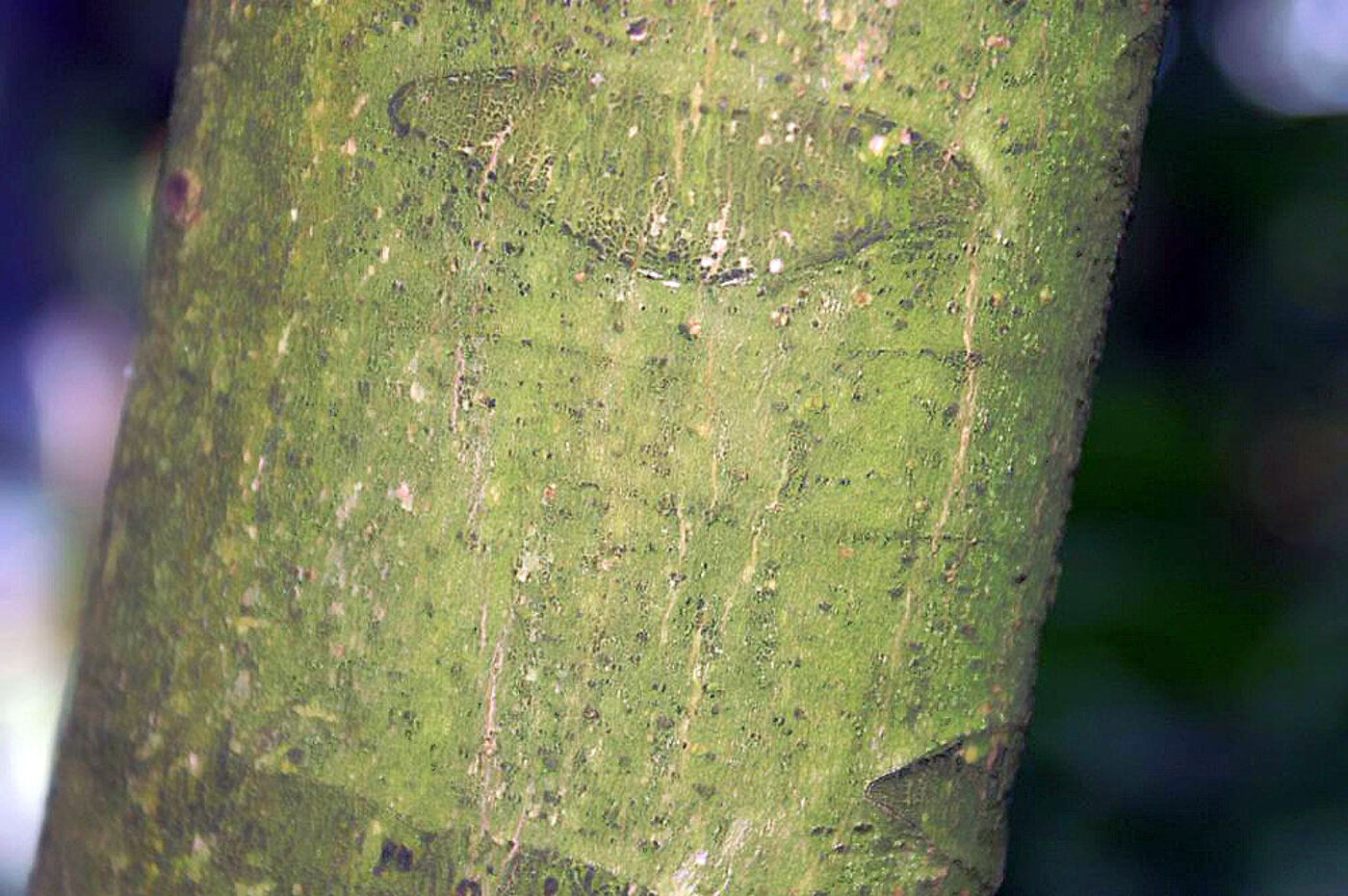
Trunk: Straight and cylindrical, usually buttressed or basally swollen for 60-90 cm above the ground. The bark varies considerably with age: young trees and branches show smooth, greenish bark with vertical fissures and lenticels, while mature trunks become gray to brown with shallow grooves and may shed outer bark in irregular plates.
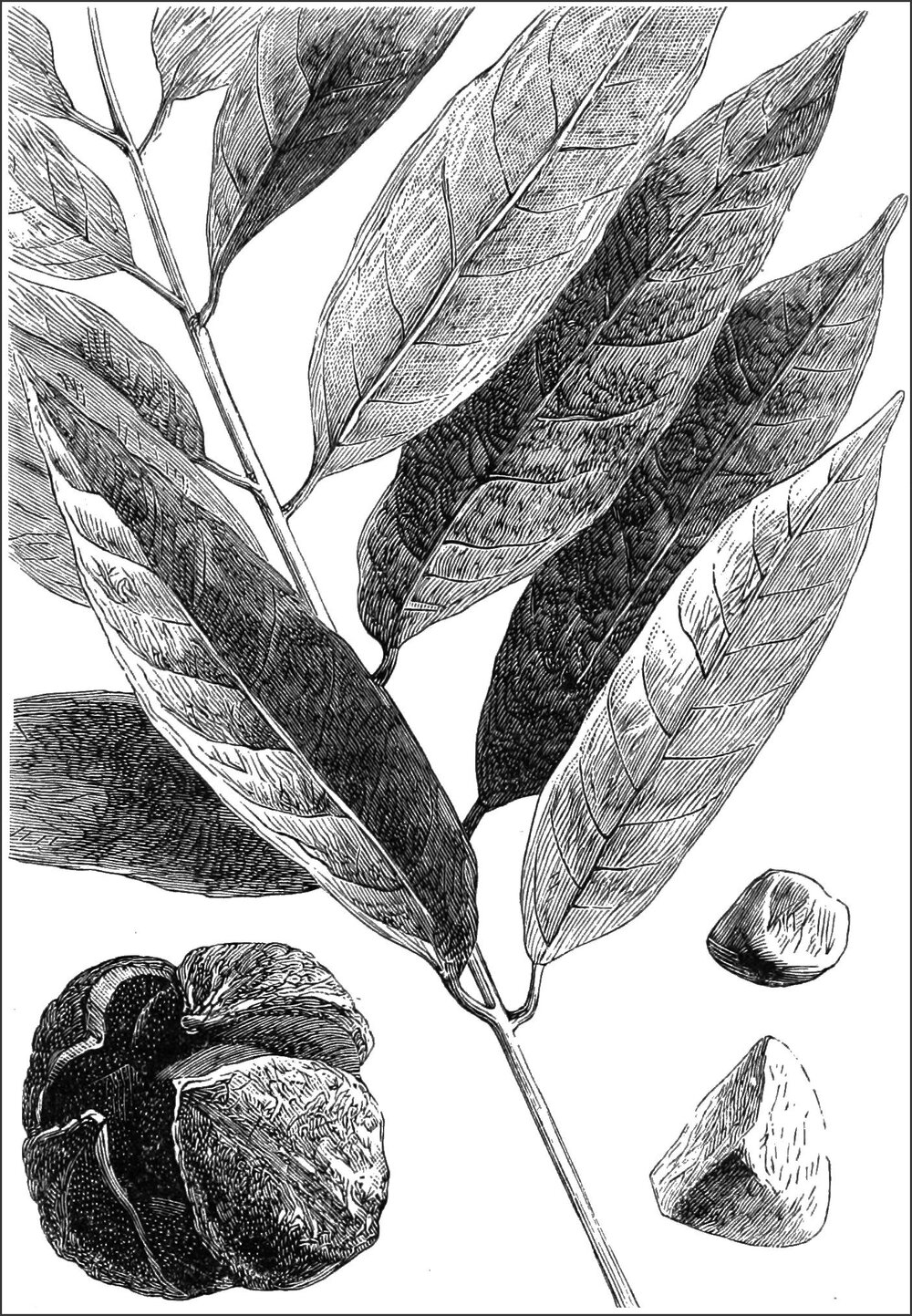
Leaves: Compound, with multiple leaflets arranged along a central stem. New leaves emerge with a distinctive red or coppery color before turning dark green, a feature visible from a distance and useful for spotting the tree in mixed forest. The leaflets are elliptical with pointed tips.
Flowers: Small, cream-colored, borne in clusters. The flowers attract ants to extrafloral nectaries and are pollinated by insects. Flowering is followed by a long fruit development period of 8-12 months, with usually only 1-2 fruits maturing per flower cluster.
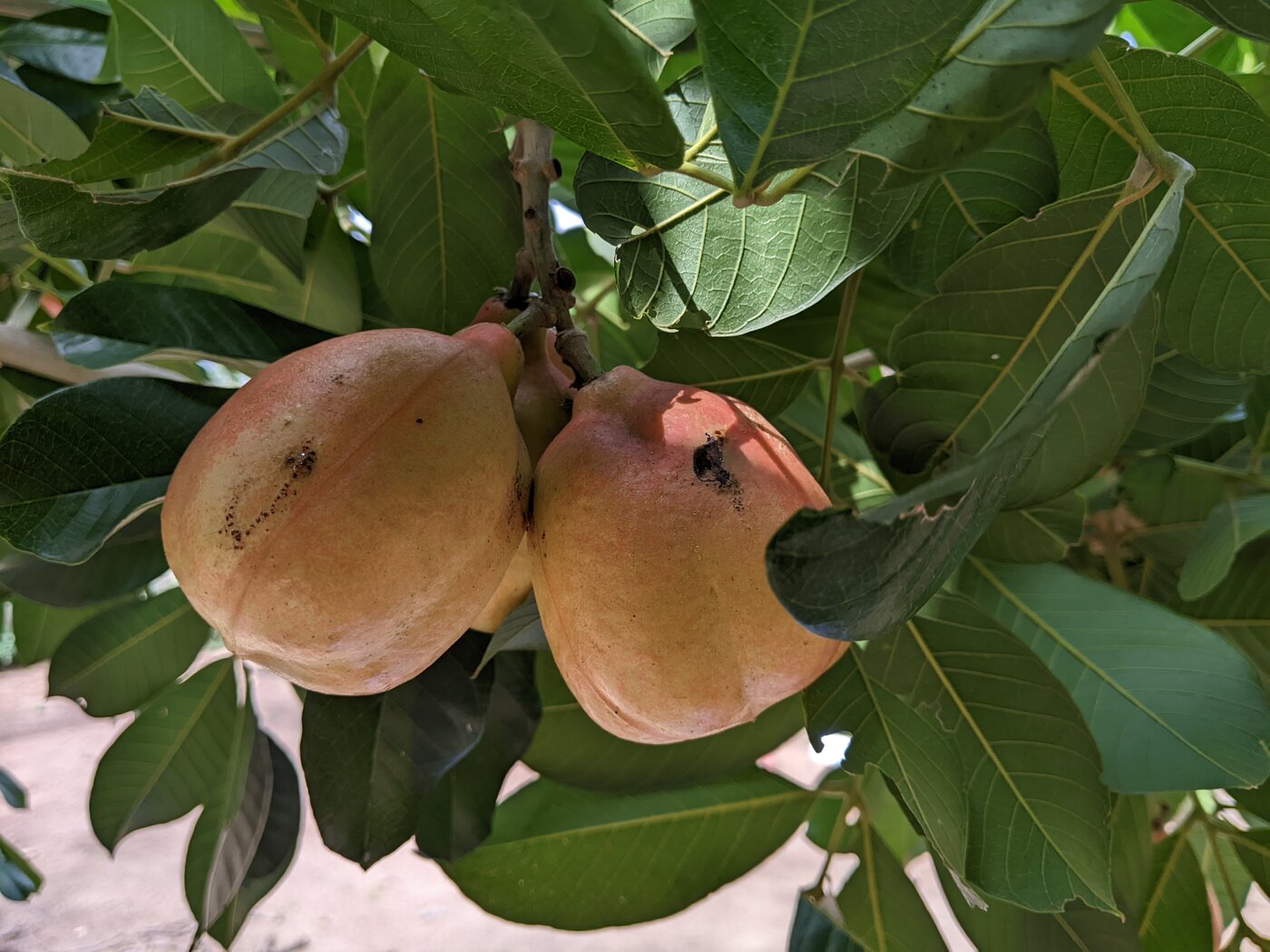
Fruit: A large, four-valved capsule about the size of a fist. When ripe, it splits open to release several large, angular seeds rich in oil. The seeds fall to the ground beneath the tree, where 54-98% are removed by animals. Those that escape predation can germinate rapidly, with fresh seeds achieving nearly 100% germination in 19-21 days.
Ecology
Habitat and Distribution
The caobilla shows a strong preference for wet environments. It thrives in marsh edges, swamp forests, alluvial riverbanks, and periodically flooded plains. In the Golfo Dulce region, it grows among the tallest trees in the moist lowland forests, alongside Anacardium excelsum, Brosimum utile, and Caryocar costaricense. The species tolerates periodic flooding and can survive in waterlogged soils that would kill many other trees.
The tree occurs at higher densities in floodplain areas than in uplands, though it grows in both habitats. It requires annual rainfall above 3,000 mm and temperatures between 20-35C, conditions met throughout the Osa Peninsula and Golfo Dulce lowlands. While it shows moderate shade tolerance as a seedling, it needs full overhead light for optimal growth as an adult.
Seed Dispersal
The caobilla employs two distinct dispersal strategies depending on its habitat. In flooded forests, seeds float and are carried by water currents through the estuary system. Remarkably, the seeds can germinate while still floating, sending out roots that anchor the seedling once it contacts soil. This adaptation allows colonization of seasonally flooded areas where seeds might otherwise rot before waters recede.
In upland forests, the tree depends entirely on scatter-hoarding rodents, particularly agoutis. Research has shown that this relationship is not merely helpful but essential: seeds left on the forest floor are quickly consumed or rot, while only seeds buried by agoutis successfully germinate. In one study, agoutis carried seeds up to 124 meters from the parent tree, though the average dispersal distance is much shorter. This dependence on agoutis makes the caobilla vulnerable to defaunation; where hunting has eliminated agoutis, seed dispersal and regeneration fail.
This dual dispersal system helps explain the species' wide distribution and its ability to colonize both flooded and upland habitats. Seeds germinate best in contact with moist soil. In well-drained soils, half-buried seeds show the highest germination rates, while in waterlogged swamp soils, seeds on the surface or half-embedded achieve 90% germination.
Traditional Uses
Andiroba Oil
The seeds of caobilla contain up to 70% oil, making them one of the richest sources of plant oil in the Neotropical forest. This cream-colored oil is known as andiroba in Brazil, a name derived from the Tupi word nhandyroba meaning "bitter oil." The intensely bitter taste comes from limonoids, the same class of compounds that makes the mahogany family's wood resistant to insects.
The traditional extraction method, still practiced in várzea communities of the Amazon estuary, begins by collecting seeds from rivers where they float after falling from trees. The seeds are boiled in large pots, then left for about two weeks until they begin to rot. Finally, they are pressed in a tipiti, a traditional woven press, to release the oil. This patient process yields a product that riverside communities have valued for generations.
Beyond everyday uses, andiroba oil held ritual significance for some Amazonian peoples. The Munduruku of the Tapajós River traditionally used the oil in the preparation of trophy heads taken in warfare, applying it as part of the mummification process. The Wayapi, Palikur, and Creole peoples used it to remove ticks from scalps and in tanning animal hides. These diverse applications reflect how deeply embedded this single tree species became in Amazonian material culture.
Medicinal Applications
Virtually all parts of the caobilla find use in traditional medicine throughout its range. The bark, which contains 1-10% tannins and the alkaloid carapine, is used internally for treating malaria, stomach ailments, diarrhea, dysentery, and rheumatism. Applied externally, bark preparations serve as a wash for skin conditions including chicken pox, measles, eczema, ulcers, burns, and wounds.
The leaves are boiled in water and used as a wash for itchy skin, wounds, and persistent ulcers. The oil preparation, applied externally, treats inflammation, hepatitis, skin conditions, hemorrhoids, and abscesses. Modern scientific research has begun to validate some of these traditional uses, finding that andiroba oil shows anti-inflammatory and wound-healing properties, with positive effects on immune modulation.
Timber
The wood of caobilla is reddish-brown with a medium texture and straight or interlocked grain. It serves for high-quality furniture and cabinetwork, stairs and flooring, veneers, and plywood. Additional uses include masts, building material, boxes, and pulp for paper. The wood is moderately durable, somewhat slow to season, and shows good resistance to fungi and termites. Two commercial grades exist: "Andiroba Vermelha," the heavier and superior quality wood from higher elevations, and "Andiroba Branca," a lighter wood from swamps that will float.
Conservation
The caobilla is currently classified as Least Concern by the IUCN, reflecting its wide distribution and relatively stable populations. Unlike its relatives in the genus Swietenia (true mahoganies), which have been commercially exhausted throughout much of their range, the caobilla has maintained healthy populations. Its preference for flooded habitats, which are difficult to log, has provided some protection, as has the tree's ability to regenerate vigorously from seed.
In Costa Rica, the species benefits from protection within Corcovado National Park, Piedras Blancas National Park, and the Reserva Forestal Golfo Dulce. These protected areas encompass some of the most important flooded forest habitat in the country. The growing market for sustainably harvested andiroba oil may provide additional incentive for conservation, as living trees producing seeds are more valuable than logged timber.
Research on sustainable harvesting has revealed a critical distinction between forest types. In flooded várzea forests, modeling studies suggest that modest seed collection (around 10% annually) can be combined with selective timber harvest without depleting populations. However, in upland terra firme forests, no tested level of combined seed and timber extraction proved sustainable. This finding has important implications for community management: seed harvesting should focus on flooded forest populations, while upland populations may need stricter protection to maintain their role as seed sources and genetic reservoirs.
The species also plays a role in agroforestry and soil restoration. Its nitrogen-fixing bacterial associations improve degraded soils, while its tolerance for flooding makes it suitable for reforestation of riparian zones. Trees coppice freely and show good fire resistance, characteristics that make them resilient in managed landscapes.
Key Sources & Resources
Species Information
Comprehensive database entry with detailed information on uses, cultivation, and ecology.
Technical information on propagation, growth, and agroforestry applications.
General overview of the species with distribution and uses.
Traditional Medicine & Oil
Detailed ethnobotanical information on traditional medicinal uses.
Scientific review of the species' medicinal properties.
Ecology & Seed Dispersal
Foundational 1983 paper by McHargue & Hartshorn on germination and the role of scatter-hoarding agoutis.
How caobilla seeds germinate while floating in floodwaters, a key adaptation for water dispersal.
Study showing only seeds buried by agoutis germinated successfully; demonstrates value of rewilding programs.
Sustainable Harvesting
Londres et al. 2017 on community-based management implications for andiroba in várzea forests.
Modeling study finding combined seed/timber harvest sustainable only in flooded forests, not terra firme.
Traditional Knowledge
Documents traditional oil production methods and beliefs among várzea communities, including taboos about who can participate.