Needle Flower Tree
A small tree of lowland rain forests whose flowers open in late afternoon, release a heavy perfume at nightfall, and are gone by morning. Only sphinx moths with tongues long enough to reach the nectar at the bottom of the 8-16 cm corolla tube can pollinate them.
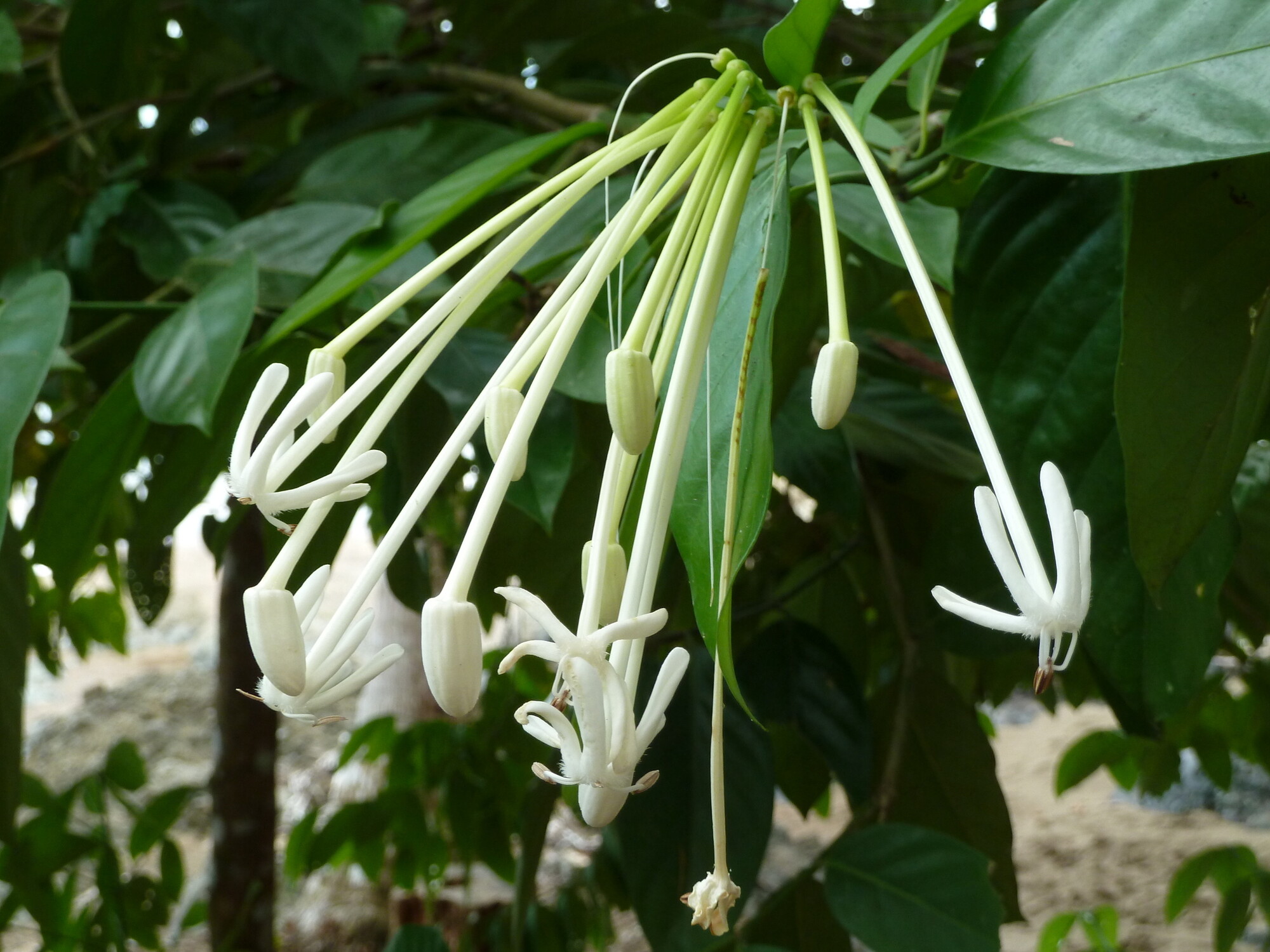
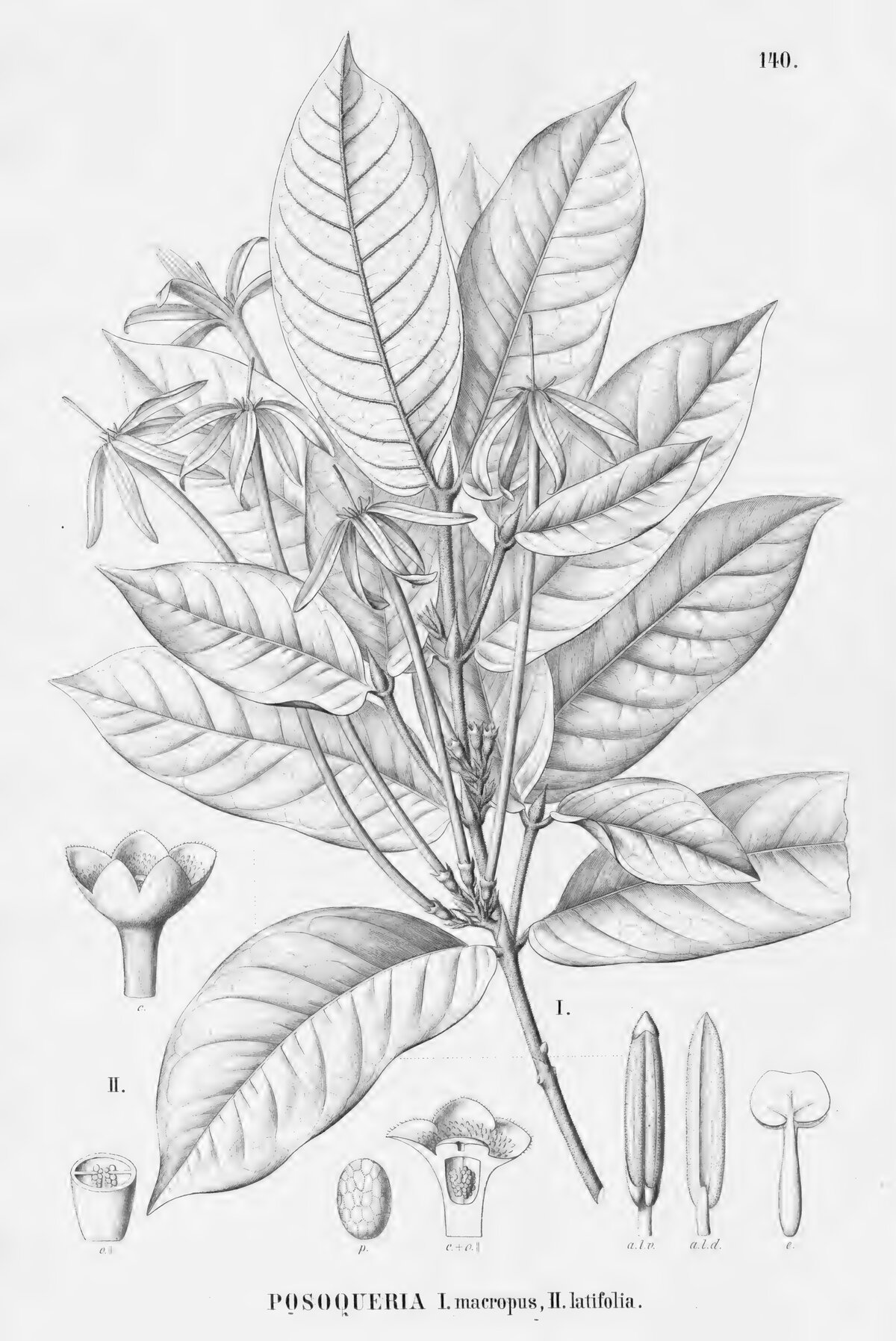
When the flowers of Posoqueria latifolia open in late afternoon, the five anthers are locked together in an ellipsoidal cluster along one side of the corolla tube, held under tension like a cocked spring. When a sphinx moth pushes its proboscis down the narrow tube to reach the nectar, it brushes the anthers, and they snap apart, catapulting a mass of pollen onto the moth's body. The mechanism is so distinctive that it placed Posoqueria and its relative Molopanthera in their own tribe, Posoquerieae, separated from the rest of the Rubiaceae. It may be unique among flowering plants.
The species is common across the Neotropical lowlands, from southern Mexico to the Amazon basin of Brazil and Bolivia. In Costa Rica it occurs in all the lowland evergreen areas, from sea level to about 700 m (occasionally reaching 1,200 m), and is well represented in the Brunca region on the Osa Peninsula, along the Golfo Dulce, and in the Sierpe wetlands. Its many Costa Rican common names reflect familiarity: boca de vieja, fruta de mono, guayaba de mono, manzana de mico, picarito, and querica. The fruits, globose and yellow-orange when ripe, contain a sweet edible pulp that monkeys and other mammals seek out.
Identification
Habit
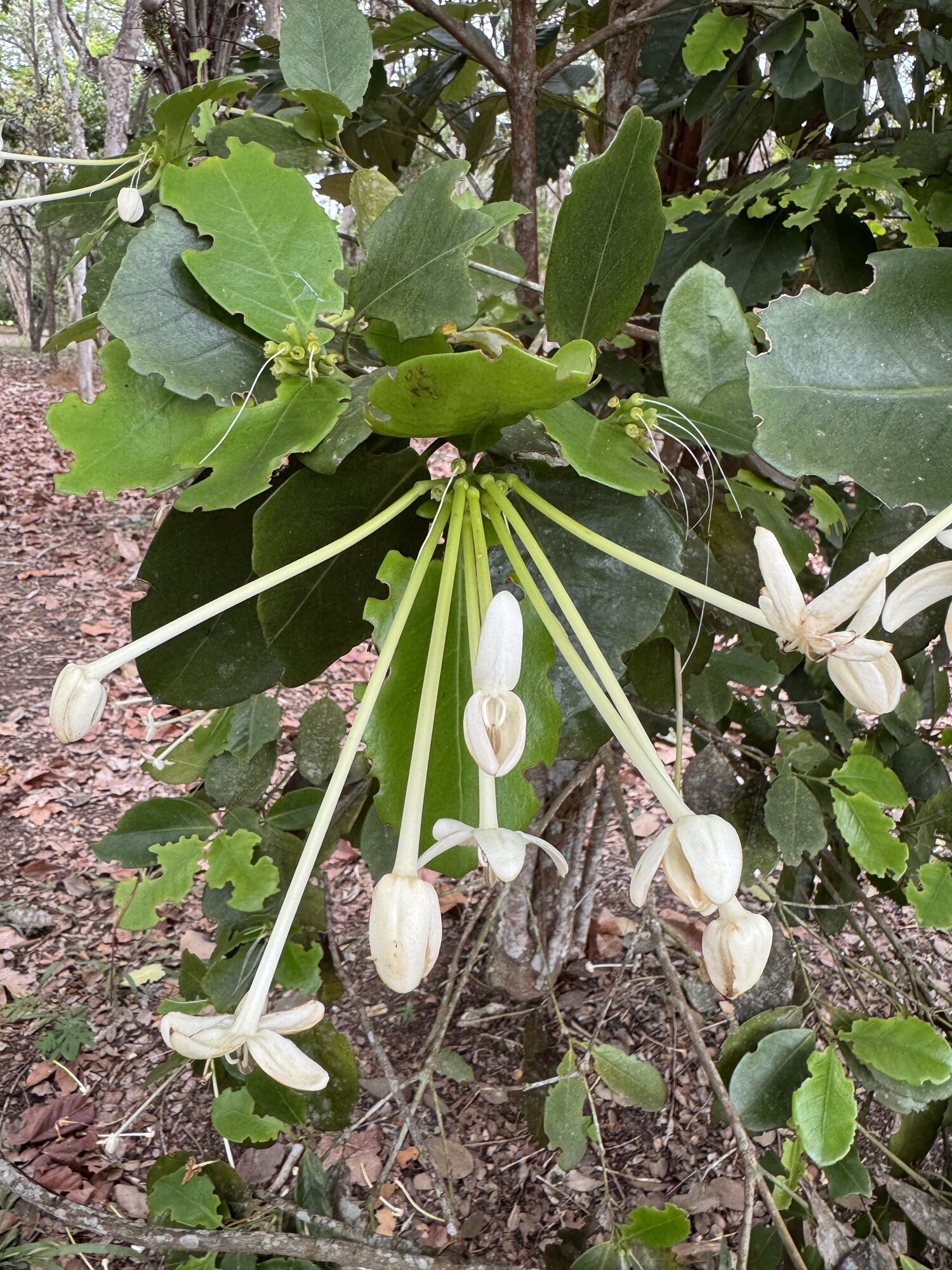
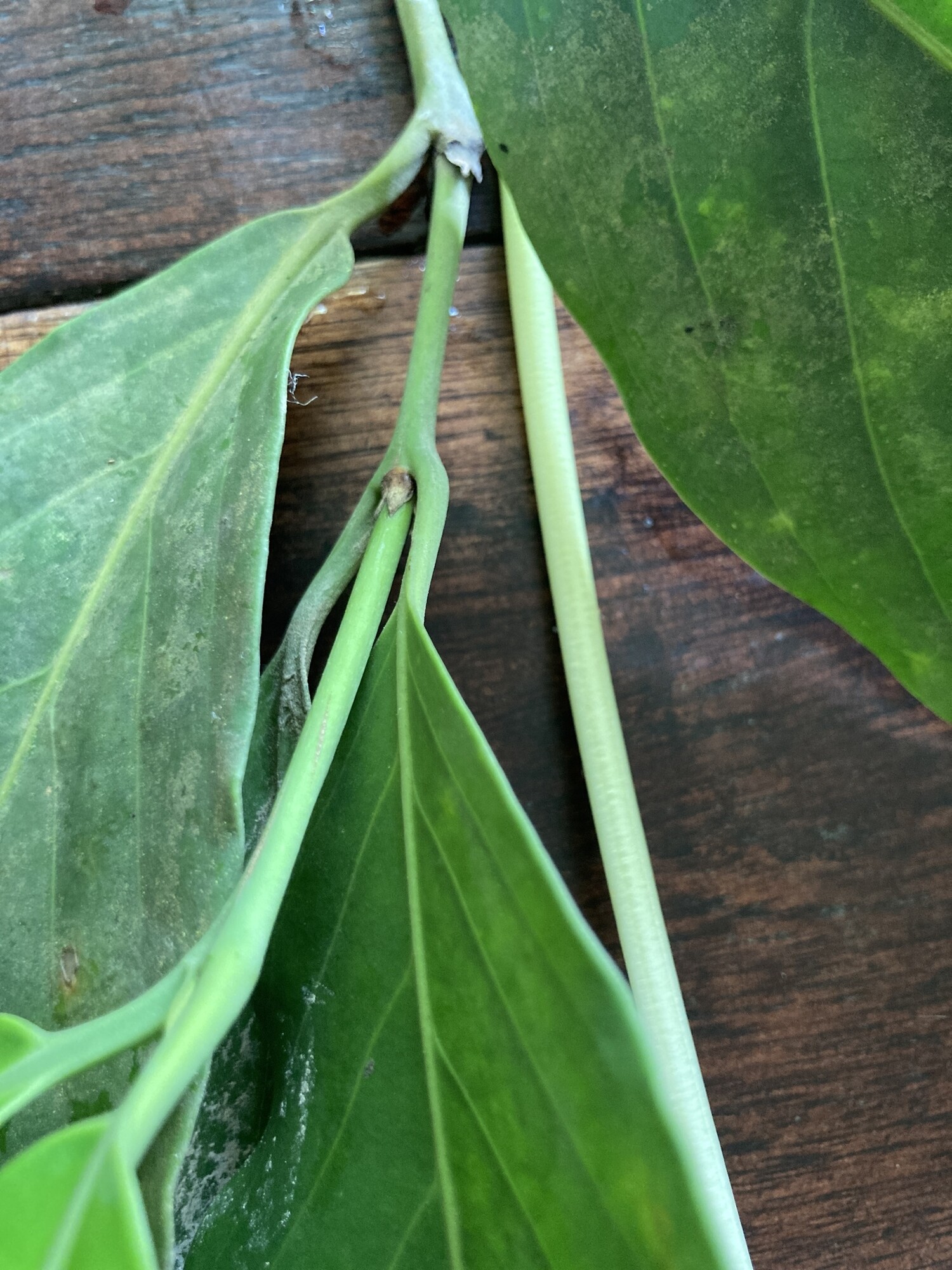
Posoqueria latifolia grows as a small tree or treelet, typically 5-9 m tall but occasionally reaching 20 m in favorable conditions. The trunk can attain 25-40 cm in diameter. The bark is gray and smooth, exfoliating in small sheets on older trees. The wood is hard, fine-grained, and reddish, dense enough that in the early 1900s it was exported to Britain for walking sticks and umbrella handles under the trade name "Brazilian Oak." The leafy stems are slender (2-6 mm thick) and glabrous (hairless). At each node, stiff triangular to ovate-oblong stipules (leaf-like appendages) 7-18 mm long clasp the stem, sometimes slightly fused above the petioles (leaf stalks).
Leaves
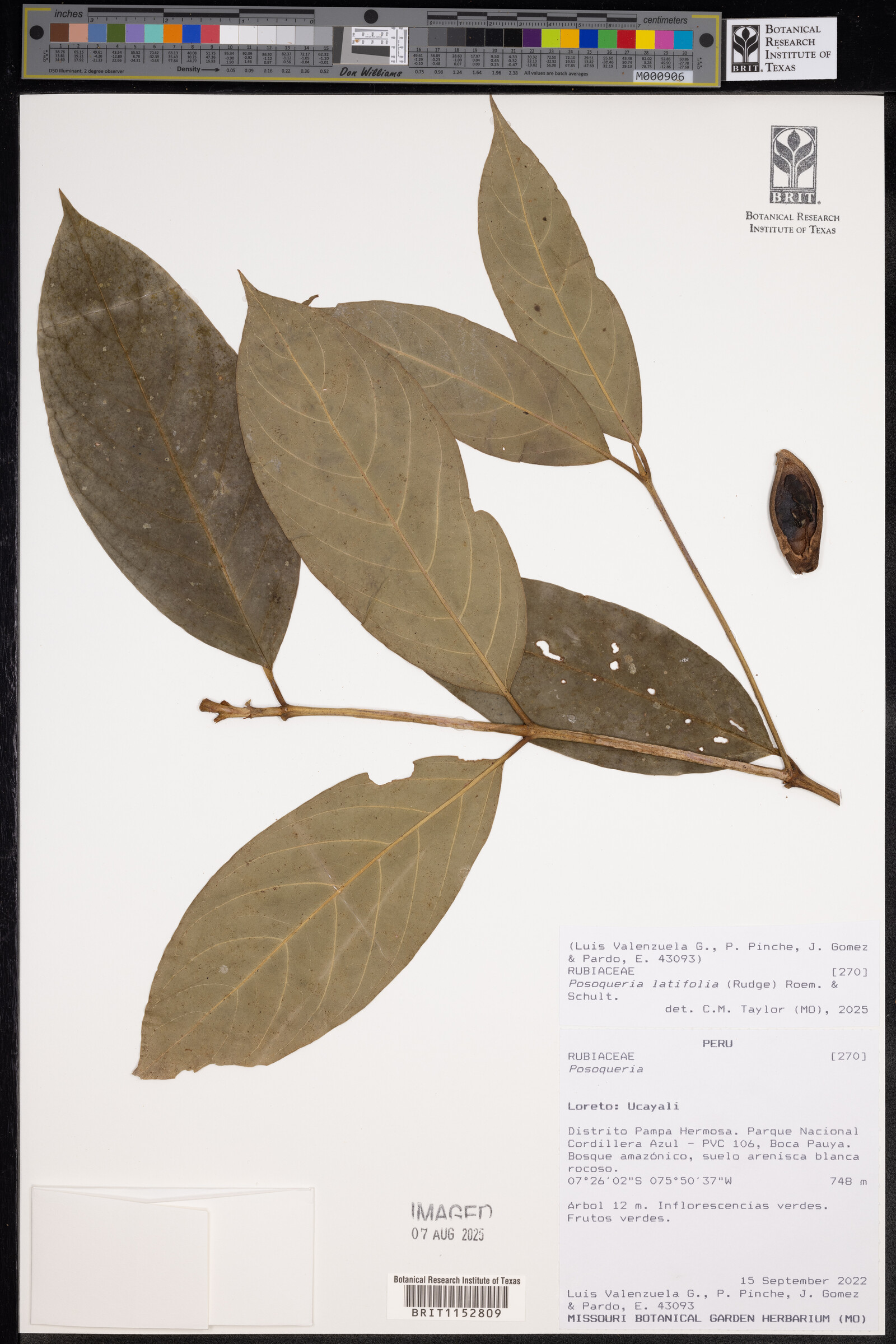
The leaves are opposite, well spaced along the stem, and borne on petioles 7-20 mm long. The blades measure 7-24 cm long and 3-14 cm wide, elliptic-oblong to elliptic-ovate (oval to egg-shaped), with an obtuse (blunt) or short-acuminate (tapering to a point) apex and a base that narrows abruptly. They dry stiffly chartaceous (papery) to subcoriaceous (slightly leathery) and are completely glabrous on both surfaces. The secondary veins (5-7 per side) and the minor tertiary and quaternary venation (finer vein networks) are visible on both surfaces, a feature that distinguishes P. latifolia from the co-occurring P. coriacea, whose finer venation is obscure. The species epithet latifolia, from the Latin for "broad leaf," refers to the generous blade width.
Flowers
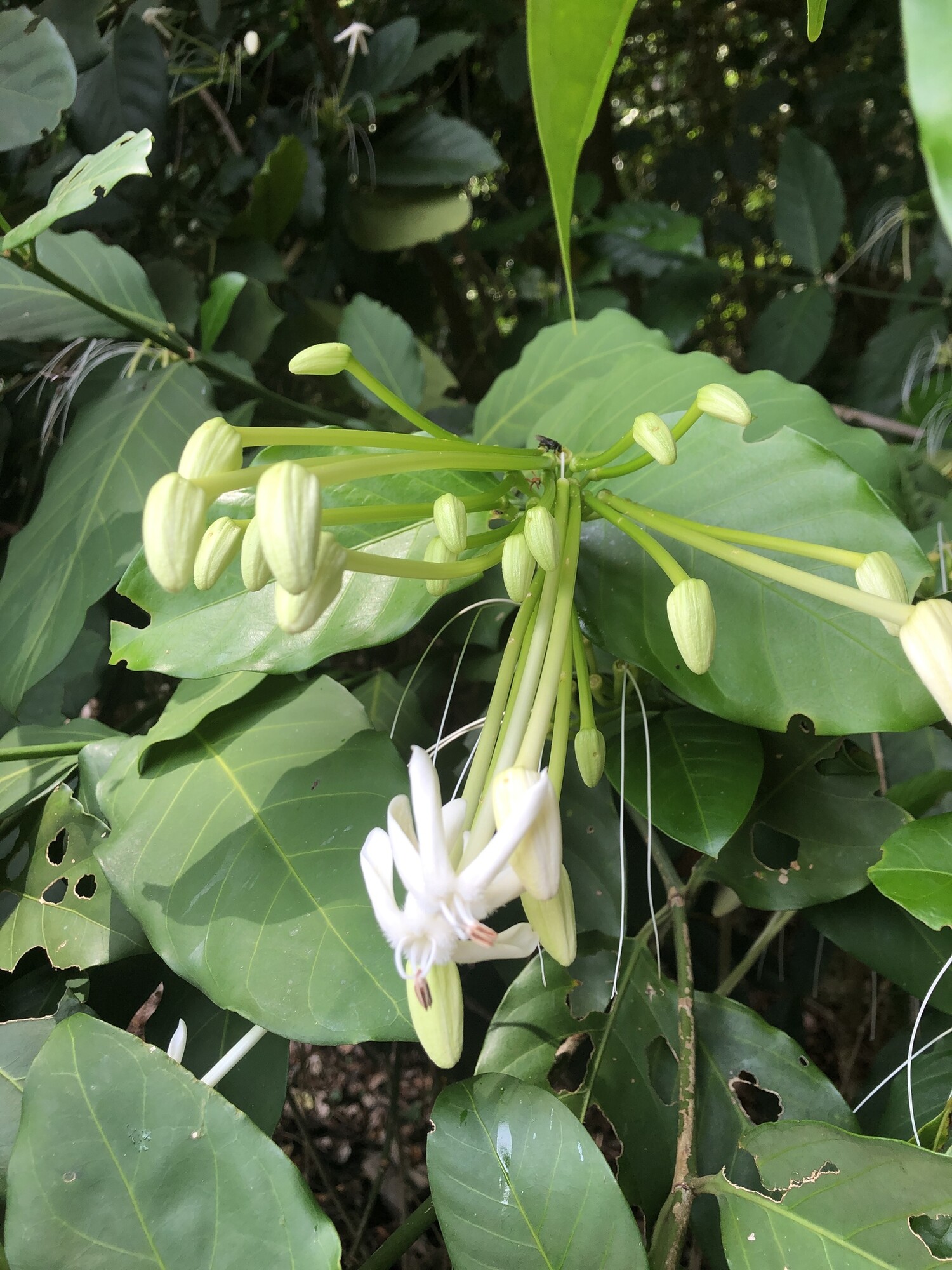
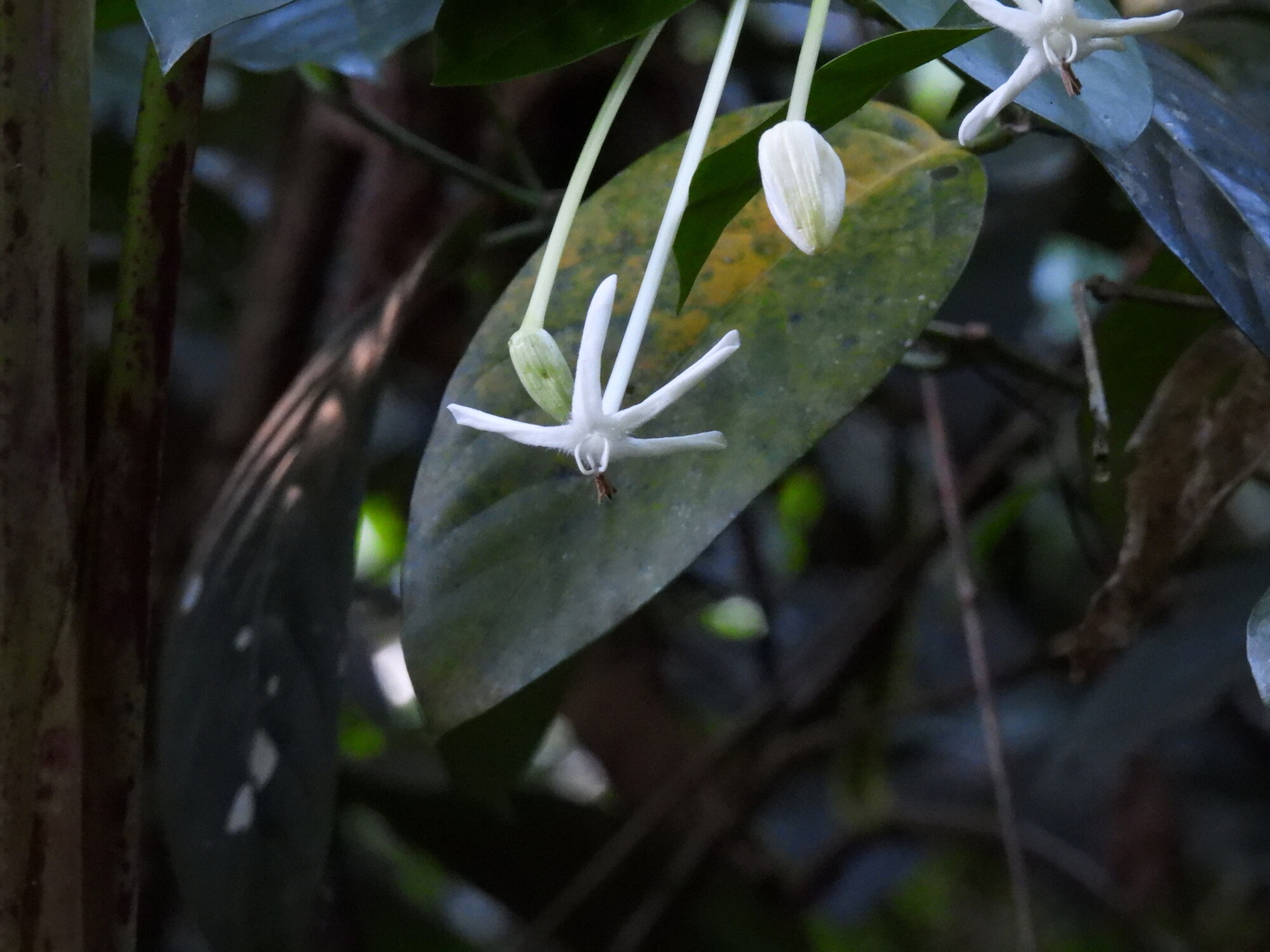
The flowers are the species' most striking feature. They are borne in small terminal corymbose (flat-topped) clusters of 7-18, on peduncles (flower stalks) 1-2 cm long. Each flower is white, powerfully and sweetly fragrant, and built around an extraordinarily long, narrow corolla tube (the fused petal tube): 8-16 cm long but only 2-3 mm in diameter. The five corolla lobes are narrowly oblong, 12-26 mm long, and usually reflexed (bent backward) at anthesis (when the flower opens). The flowers open in late afternoon, release their heavy perfume through the night to attract sphinx moths, and do not persist on the following day. Fritz Muller, the German-Brazilian naturalist and Darwin correspondent, published on this mechanism as early as 1866, describing the fertilization of "Martha (Posoqueria?) fragrans" in Botanische Zeitung. Thomas Croat independently noted the explosive anthers at Barro Colorado Island in Panama in 1978.
Fruits
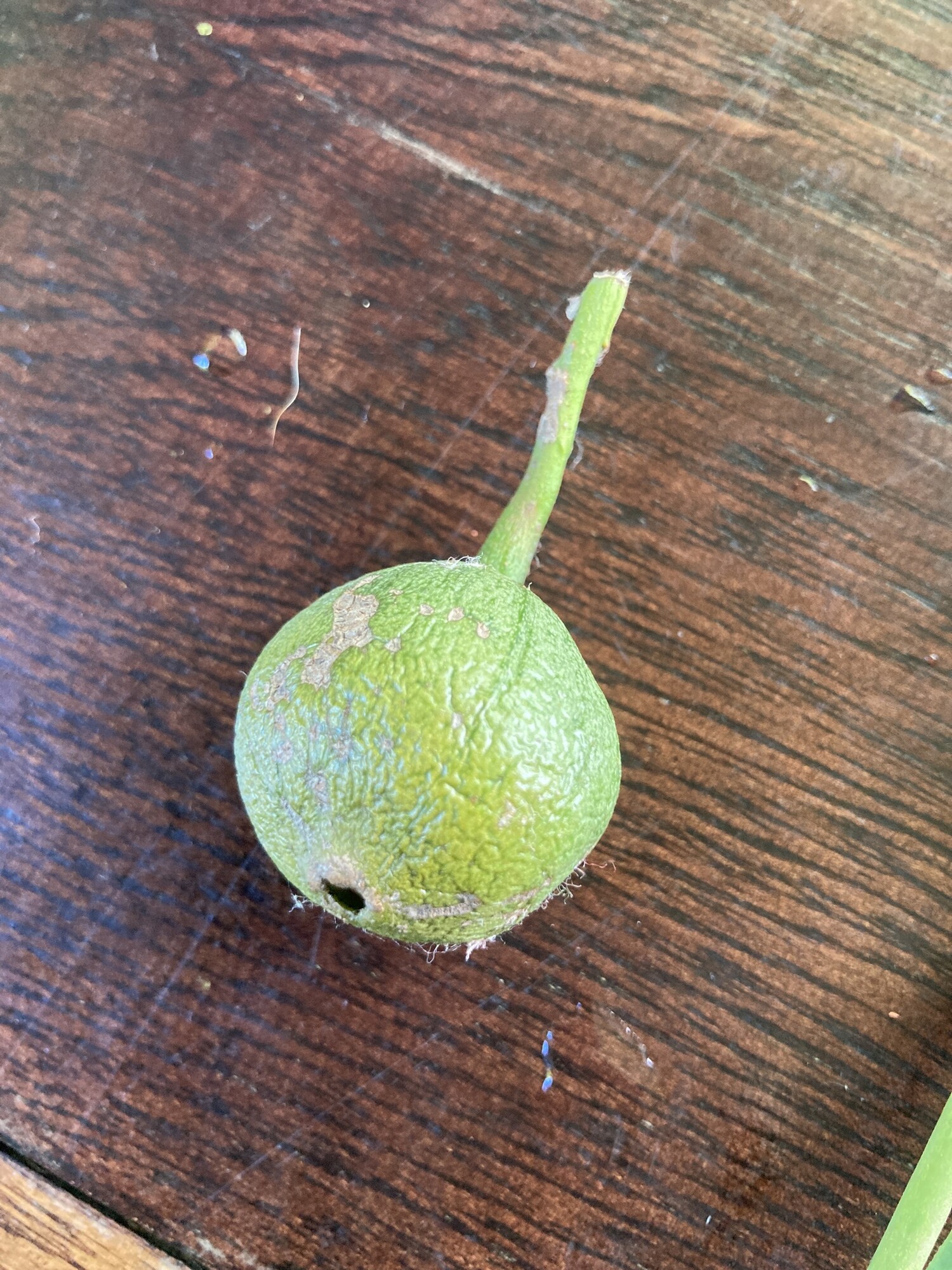
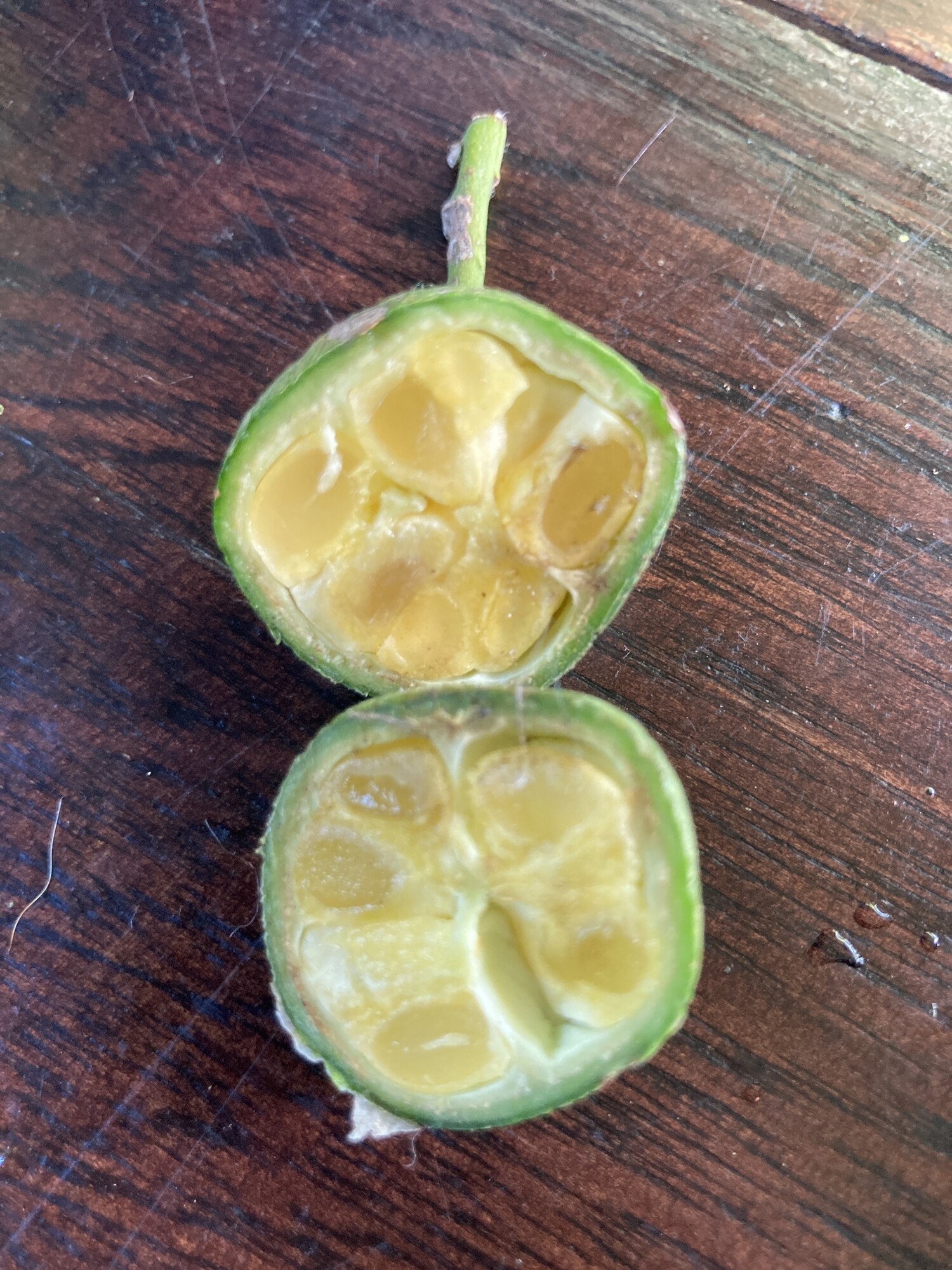
The fruit is a globose (spherical) to ovoid (egg-shaped) berry, 4-6 cm in diameter, turning yellow or orange at maturity. The pericarp (rind) is thin, only 1-3 mm thick, and the surface becomes wrinkled as the fruit ripens. Inside, the seeds are 6-12 mm long, often triangular and translucent when fresh, embedded in white to yellow-orange arils (fleshy seed coatings) and a fleshy, sweet pulp. The Flora Costaricensis records that the pulp is edible and sweet, and the many vernacular names involving "mono" (monkey) and "mico" (monkey) point to the fruit's importance for primates.
Distribution
Posoqueria latifolia has one of the broadest distributions in its genus. It ranges from southern Mexico through Central America (Nicaragua, Costa Rica, Panama) and across much of tropical South America (Colombia, Ecuador, Peru, Brazil, Guyana, French Guiana, Bolivia). Brazil holds the largest share of occurrence records (about 41%), followed by Colombia (11%) and Costa Rica (7%). The species grows in rain forests, partly deciduous forests, and moist pockets within deciduous forests, from near sea level to about 700 m, occasionally reaching 1,200 m.
In Costa Rica, the species is described as "common" in all the lowland evergreen areas and is represented by 662 GBIF records across eight provinces. It is particularly well collected in Puntarenas province (61 unique localities), Heredia (23 localities, many from La Selva Biological Station), and Limón (18 localities). In the Brunca region, 39 localities are recorded, concentrated around the Osa Peninsula (Parque Nacional Corcovado, Reserva Forestal Golfo Dulce, Bahía Drake), the Sierpe wetlands, and the La Gamba area near Piedras Blancas National Park. Collections extend from the coast at Playa Manuel Antonio and Playa La Leona to inland sites at Ujarrás near Buenos Aires (500 m) and Fila Chonta (1,100 m).
Ecology
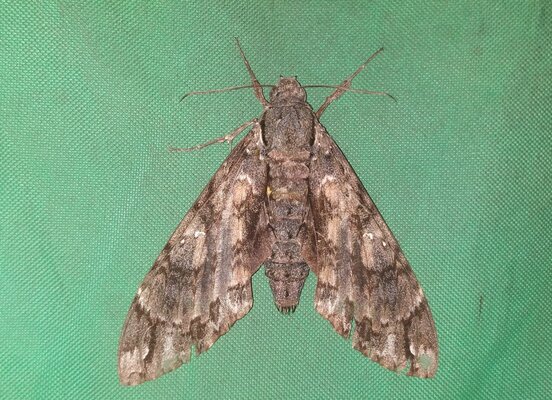
The pollination system of Posoqueria latifolia is built around sphinx moths (family Sphingidae). The long, narrow corolla tube, the white color, the nocturnal opening, and the powerful nighttime fragrance are a textbook syndrome of sphingophily. The scent has been characterized chemically and includes (Z)-3-hexenyl acetate as the main fragrance compound, along with indolic alkaloids and iridoids. The fragrance is detectable over many meters. Only a hawkmoth with a proboscis long enough to navigate the 8-16 cm tube can reach the nectar and trigger the pollen catapult. The five anthers, initially fused into an ellipsoidal cluster held under mechanical tension, snap forward on contact and deposit a cohesive pollen mass onto the moth. This pollen catapult mechanism, shared only with the South American genus Molopanthera, may be unique among angiosperms. The species is self-compatible, but studies in the Atlantic Forest of Brazil found that it is entirely dependent on hawkmoth visits to set fruit. Hawkmoth visitation is infrequent, and the moths do not depend exclusively on these flowers for nectar, creating an asymmetric relationship that results in chronic pollen limitation. Flowering lacks a defined season: synchronized bursts occur several times per year, triggered by rain events following dry spells.
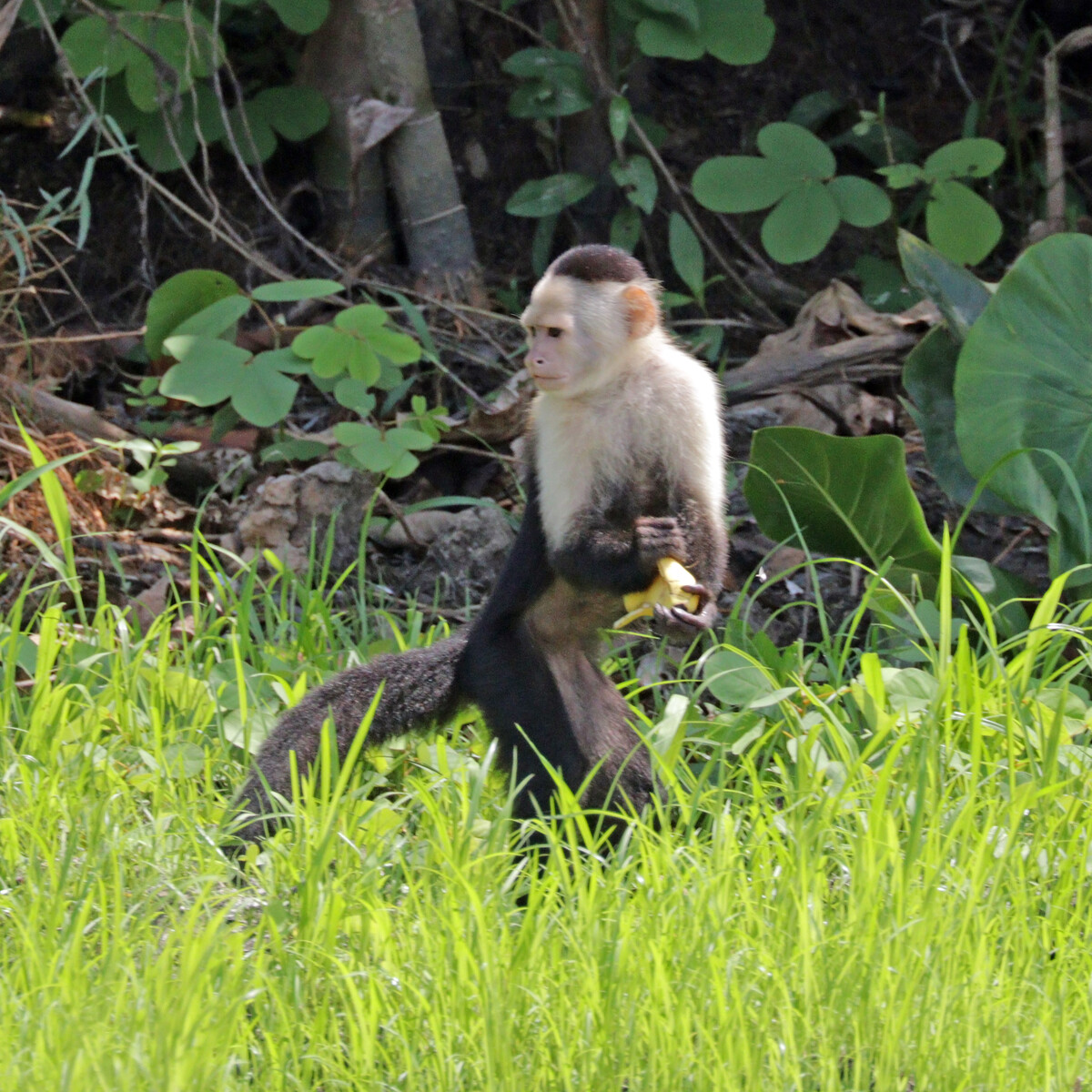
Seed dispersal is primarily by mammals. The common names fruta de mono, guayaba de mono, and manzana de mico all translate as "monkey fruit" or "monkey apple," and the sweet, fleshy pulp of the ripe fruit is attractive to primates, particularly white-faced capuchins, and other forest mammals. The thin pericarp and wrinkled skin of the mature fruit make it easy to open. Birds may also contribute to dispersal; the globose orange fruits are conspicuous in the understory.
Taxonomic History
The genus Posoqueria was established by Jean-Baptiste Christophe Fusée Aublet in his 1775 Histoire des plantes de la Guiane françoise, based on P. longiflora from French Guiana. The genus name is a Latinization of "aymara-posoqueri," the Galibi Carib name for the plant, in which "aymara" refers to a fish that eats the fruits. Aublet, who spent years working with indigenous collaborators in French Guiana during the 1760s, adopted many Galibi vernacular names as the basis for his Latin genera, a practice that reflected what later scholars called "a high regard for the botanical sophistication of his indigenous colleagues."
The species itself was first described as Solena latifolia by Edward Rudge in 1805, in his Plantarum Guianae rariorum icones et descriptiones, from material collected in British Guiana. In 1819, Johann Jacob Roemer and Josef August Schultes transferred it to Posoqueria in volume 5 of their edition of the Systema Vegetabilium, the standard Linnaean reference work they were updating. Roemer died that same year, and Schultes continued the work with his son Julius Hermann. The long list of synonyms (over 20) reflects the species' wide range: botanists working in Mexico, Panama, Colombia, and Brazil each described what they believed were new species, which later proved to be the same widely distributed plant. Stannia panamensis (1850) from Panama, Posoqueria decora from Cuba, and several Tocoyena species described by Kunth from Humboldt and Bonpland's collections are all now placed in synonymy.
Modern molecular phylogenetics placed Posoqueria in the tribe Posoquerieae (subfamily Ixoroideae), alongside Molopanthera. The two genera share the pollen catapult mechanism, and together they form a clade sister to the Henriquezieae, a group of Guianan-centered Rubiaceae. Aublet (1775) had originally differentiated Posoqueria from Tocoyena by the number of ovary locules and seed shape, a distinction that molecular data later confirmed.
Similar Species
At least five species of Posoqueria occur in Costa Rica, following a 2011 revision by Taylor, Hammel, and Gereau that described P. costaricensis and P. grandifructa as new. P. latifolia is distinguished from P. coriacea by its lustrous upper leaf surface with visible tertiary venation (dull and obscure in P. coriacea), its thinner fruit pericarp (1-3 mm versus 4-10 mm), and its globose, orange fruit (versus ellipsoid to ovoid, brown fruit with a thick leathery rind). P. grandiflora, the least common congener (member of the same genus), has much larger leaves (18-46 cm long), longer corolla tubes (20-38 cm), and leaf surfaces that are slightly rough to the touch due to minute pubescence (fine hairs). Compare also Tocoyena, which shares similar long-tubed white flowers but differs in ovary structure and lacks the pollen catapult mechanism.
Uses
The fruit pulp is edible and gathered from the wild throughout the species' range. Described as sweet and aromatic, with flavors reminiscent of peach and mango, it is consumed fresh. The many vernacular names involving "mono" (monkey) and "mico" (monkey) reflect both its importance to primates and its traditional use as a gathered forest fruit. In Brazil, the fruits are known as baga-de-macaco (monkey berry) and fruta-de-mico.
The wood is heavy, hard, and fine-grained, with an attractive oak-like grain pattern. In the early 1900s, it was exported to Britain for walking sticks and umbrella handles under the trade name "Brazilian Oak," valued for its rigidity and strength. The wood has also been used locally for tool handles, fence posts, and turnery. Traditional medicine in the Amazon uses the bark, which contains a blood-clotting agent, to treat wounds. Dried, powdered flowers have reportedly been used as a flea repellent.
The species is cultivated as an ornamental in tropical gardens for its shapely evergreen form, glossy foliage, and intensely fragrant nocturnal flowers. It has been described as "one of the best fragrant trees for the tropical garden" and is grown in botanical collections from Singapore to Hawaii. Seeds are available from specialist nurseries for cultivation in USDA zones 10 and above.
Conservation Outlook
Posoqueria latifolia is assessed as Least Concern on the IUCN Red List. The species is described as "common" in Costa Rica's lowland evergreen areas by the Flora Costaricensis, and with over 9,000 GBIF records spanning 10 countries and an elevation range from sea level to 1,200 m, its population appears large and well connected. It occurs in numerous protected areas in Costa Rica, including Parque Nacional Corcovado, Parque Nacional Tortuguero, Parque Nacional Cahuita, Parque Nacional Manuel Antonio, Parque Nacional Carara, Reserva Biológica Hitoy Cerere, Reserva Biológica Monteverde, and La Selva Biological Station.
The primary concern for this and other lowland forest species in Central America remains deforestation and habitat fragmentation. Its dependence on sphinx moths for pollination makes it vulnerable to disruptions in moth populations, which can be affected by light pollution and pesticide use in agricultural areas adjacent to forests. However, the species' ability to occupy partly deciduous forests and moist microsites within drier landscapes provides some resilience. It is also found at forest edges and in secondary growth, suggesting moderate tolerance of disturbance.
Resources & Further Reading
Species Information
Plants of the World Online entry with distribution and synonymy.
Global occurrence records and specimen data (9,035 records across 10 countries).
Community observations and photographs.
Taxonomy & Nomenclature
Nomenclatural data and specimen records from Missouri Botanical Garden.
Species account with habitat and identification notes.
Related Reading
Molecular phylogeny of the Guayanan-centered Rubiaceae clade containing Posoqueria, with implications for the evolution of the pollen catapult.
In vitro and in vivo protective effects of a P. latifolia flower extract against UVB-induced radiation damage.
Phytochemical isolation of novel iridoid compounds from the species.
Comprehensive taxonomic revision of the genus with new species descriptions.