Colmillo
Cavendishia bracteata — A cloud forest jewel with cascading clusters of coral-pink bracts and tubular red flowers that attract hummingbirds, bearing small edible berries prized as "mountain grapes."
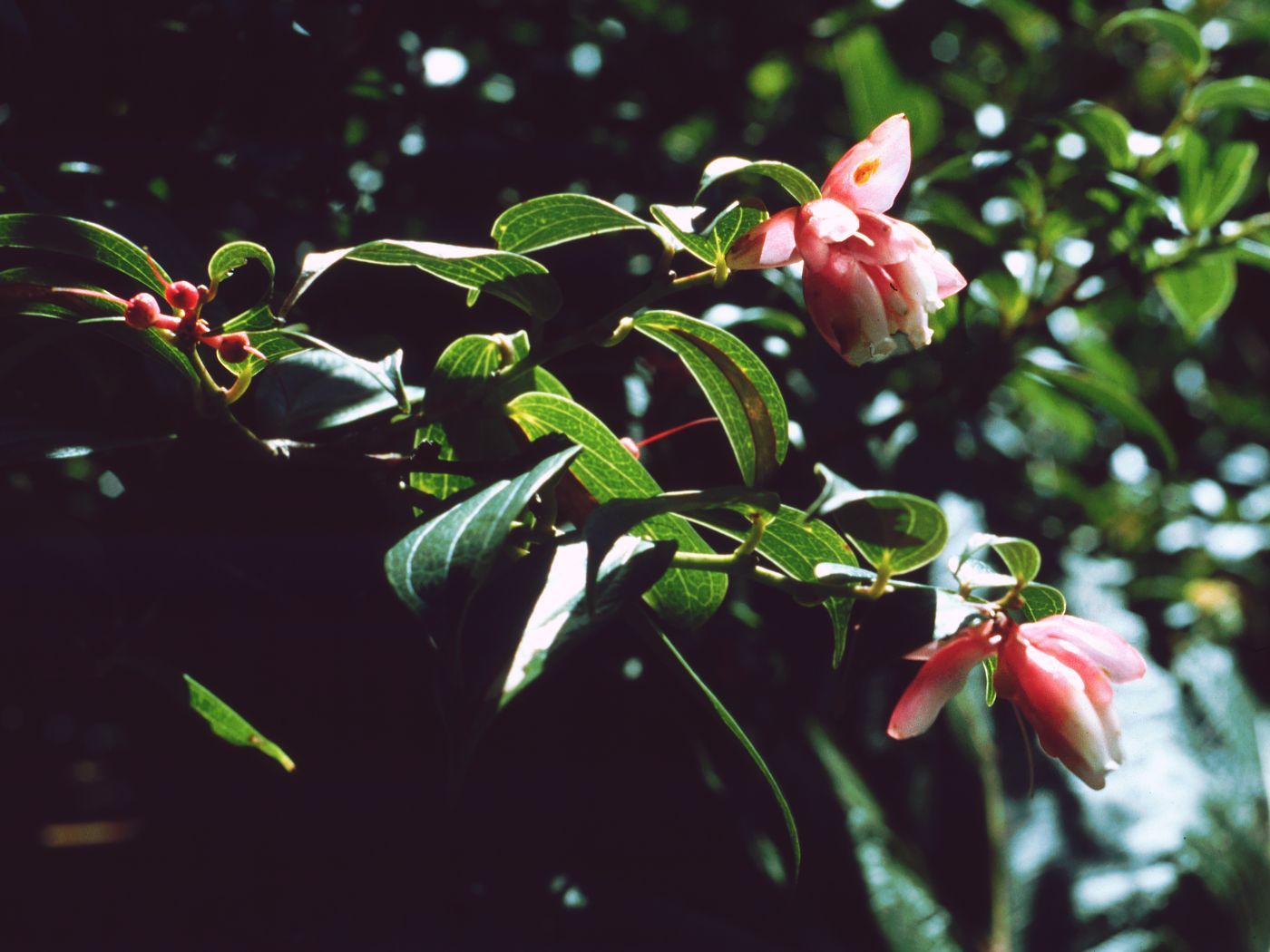
In the mist-shrouded cloud forests of Costa Rica's highlands, where mosses drape every branch and orchids cling to ancient trunks, Cavendishia bracteata stands out as one of the most visually striking plants in the understory. Known locally as colmillo (fang) for its elongated tubular flowers, this member of the heath family can grow as an epiphyte perched high in the canopy or as a terrestrial shrub along forest trails. Either way, its showy inflorescences command attention: clusters of waxy, coral-pink to brilliant red bracts surround the true flowers like protective hands, creating a display that can persist for weeks in the cool mountain air.
The species ranges from southern Mexico through Central America to Bolivia, making it one of the most widespread members of its genus. In Costa Rica, it thrives in the country's famous cloud forest reserves, including Monteverde, where it forms part of the intricate pollination networks that sustain dozens of hummingbird species. The relationship between Cavendishia and its hummingbird pollinators represents one of the classic examples of coevolution in tropical montane ecosystems.
Identification
Physical Characteristics
Size and Form: Cavendishia bracteata typically grows as a shrub reaching 1 to 4 meters in height, though arborescent forms may occasionally reach 10 to 15 meters. The growth form varies considerably depending on whether the plant is epiphytic or terrestrial. Epiphytic individuals often develop pendulous branches that cascade downward from their host trees, while terrestrial specimens tend to be more upright. Young growth emerges in attractive coppery-red tones before maturing to glossy bright green.
Leaves: The leaves are simple, alternate, and elliptical to lanceolate in shape, measuring 2 to 15 centimeters long by 1.5 to 8 centimeters wide. A distinctive feature is the plinerved venation, typically with 5-7 (range 3-9) prominent veins that arise from near the leaf base and run toward the tip. The leaves are leathery, smooth, and glossy bright green, with margins that may be entire or finely toothed. The leaf arrangement often appears whorled at branch tips, as is characteristic of many Ericaceae.
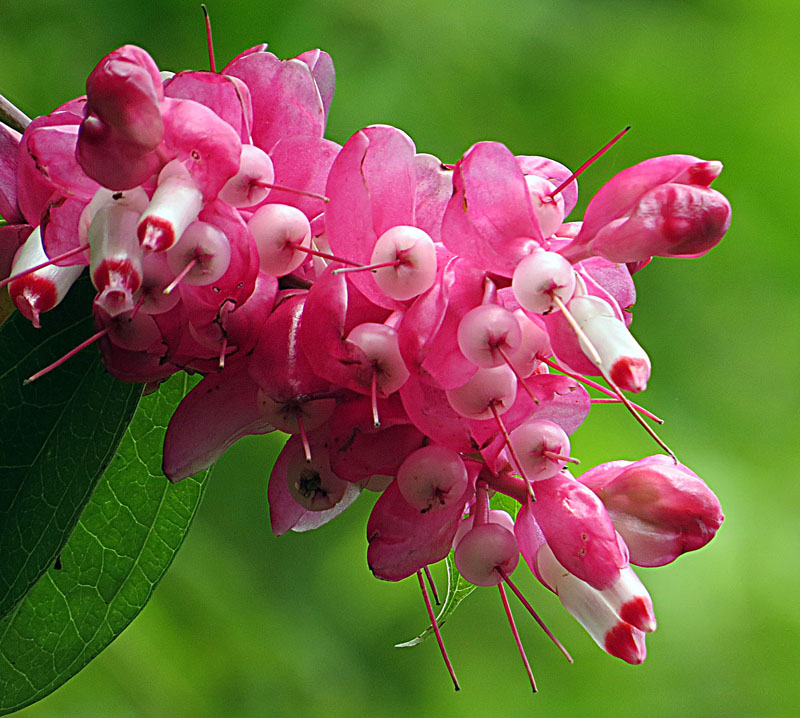
Flowers: The flowers are borne in terminal or axillary clusters (racemes) and are surrounded at their base by a series of showy, brightly colored bracts that range from coral-pink to brilliant red. These bracts are often the most eye-catching part of the plant and persist long after the flowers have faded. The true flowers are tubular, waxy, and typically bright red with cream, green, or white tips on the five corolla lobes. Individual flowers measure about 1.5 to 2.5 centimeters long and contain ten stamens, as is typical of the genus.
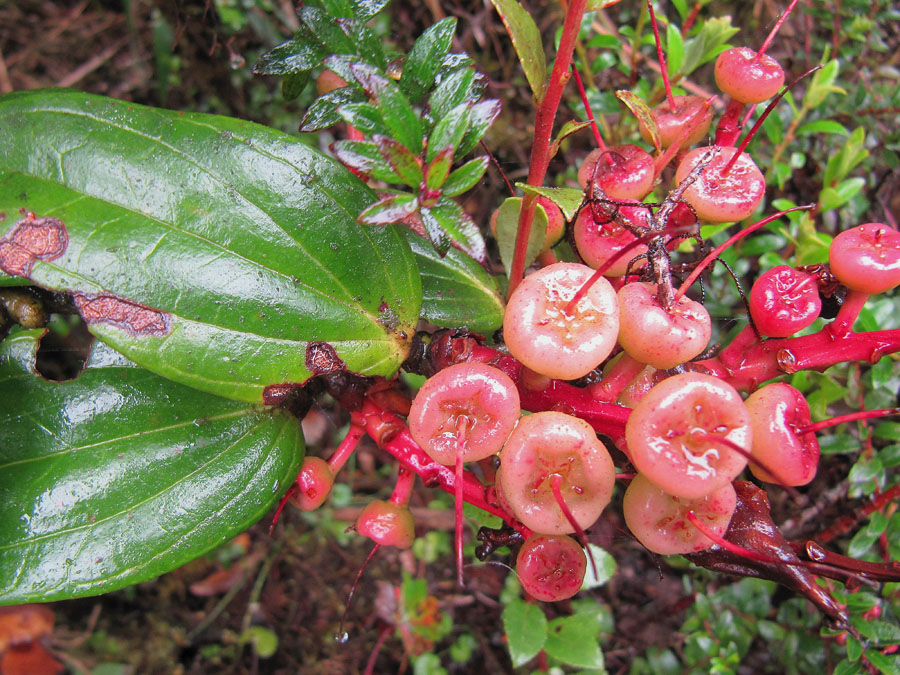
Fruits: The fruits are small, juicy, spherical berries measuring 8 to 14 millimeters in diameter. They mature to a dark blue-black color and are edible, with a flavor reminiscent of blueberries. This is not surprising given that Cavendishia is closely related to true blueberries (Vaccinium) within the Ericaceae family. The common name "uvito de monte" (little mountain grape) and the trade name "mountain grape" both refer to these palatable fruits.
Taxonomy
Discovery and the Duke's Garden
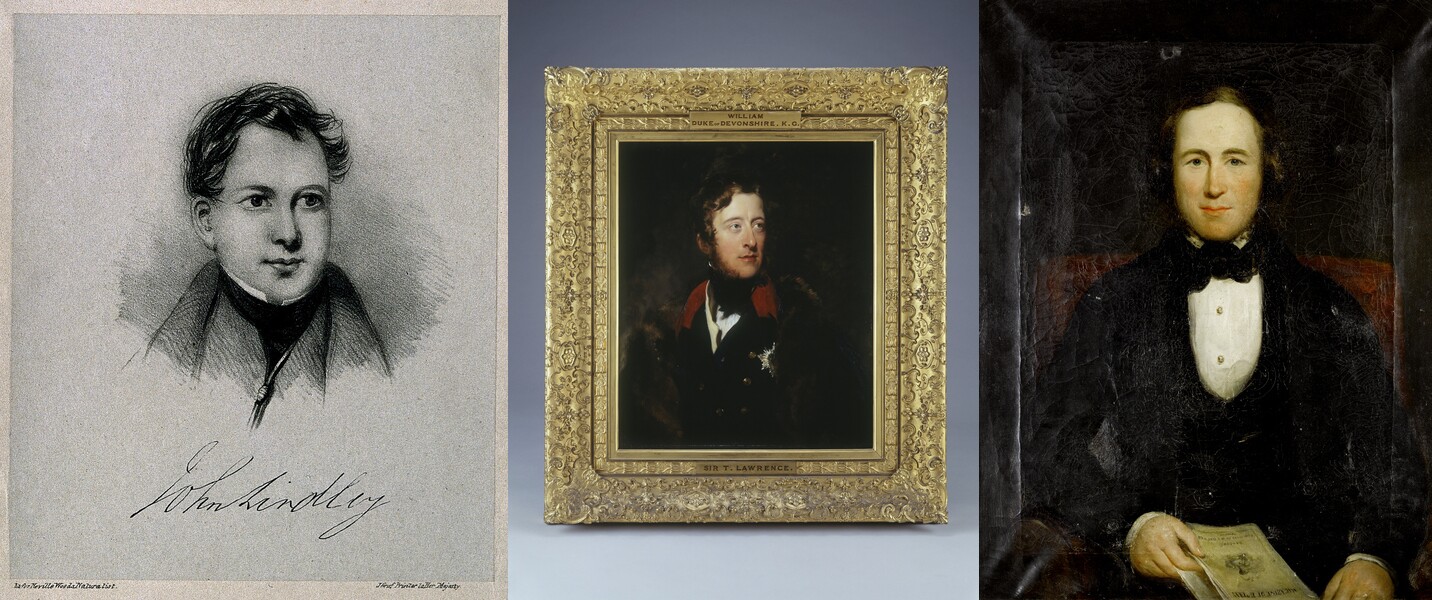
The genus Cavendishia was established by the English botanist John Lindley FRS (1799-1865) in 1836, published in the Botanical Register (volume 21, plate 1791). Lindley was one of the most influential botanists of his era, serving as assistant secretary to the Royal Horticultural Society, professor of botany at University College London, and the world's leading authority on orchids, ultimately describing more than 120 orchid genera. He named Cavendishia in honor of William Cavendish, the 6th Duke of Devonshire (1790-1858), who would later serve as President of the Royal Horticultural Society for twenty years (1838-1858). The Duke was famous for his extraordinary gardens at Chatsworth House, where his head gardener Joseph Paxton cultivated exotic plants from around the world. In 1830, Paxton obtained a banana specimen that had been sent from Mauritius to England; he successfully cultivated it at Chatsworth, where it flowered in 1835 and fruited in 1836. These became the Cavendish bananas, also named after the Duke. When Paxton won a medal at the 1835 Royal Horticultural Society show for successfully flowering the plant, the Cavendishia genus would be published the following year.
The Royal Expedition to Peru
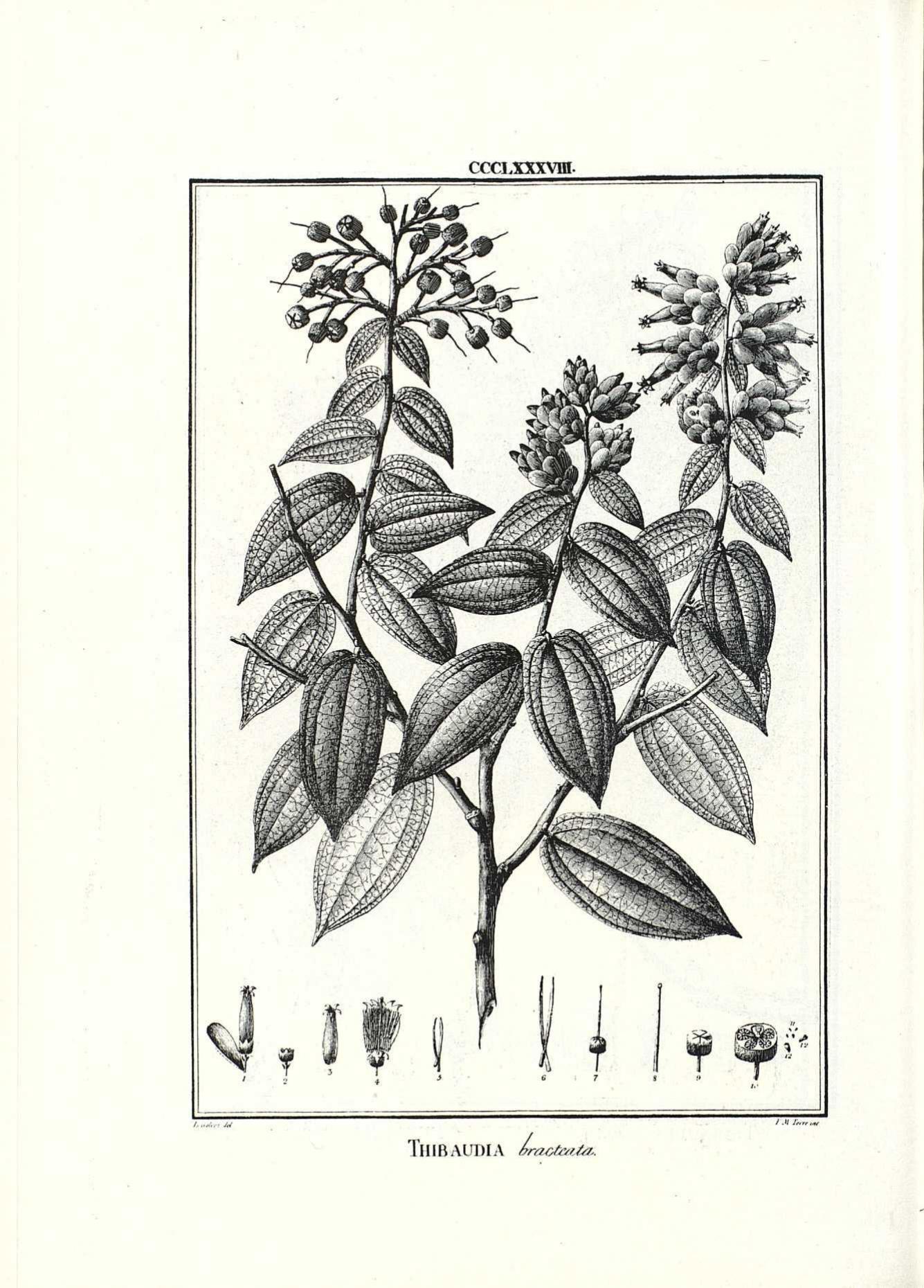
The species C. bracteata itself was originally described as Thibaudia bracteata by the Spanish botanists Hipólito Ruiz López (1754-1816) and José Antonio Pavón Jiménez (1754-1840), based on specimens collected during one of the most important botanical expeditions of the 18th century. In 1777, the Spanish Crown sent Ruiz, Pavón, and French botanist Joseph Dombey to the Viceroyalty of Peru on what was initially planned as a four-year effort to produce a comprehensive flora of the territory. The expedition, which ultimately continued for 38 years, collected approximately 3,000 specimens and produced over 2,200 botanical illustrations.
The type specimen of C. bracteata was collected between 1778 and 1788 in the Department of Huánuco, Peru, specifically from the high, cold mountains near Pillao, "among rocks and clay soils." This region, in the hyperhumid mesotropical belt of the eastern Andes, is rich in endemic plants, including the famous fever-bark trees (Cinchona) that were a primary target of the expedition. The lectotype is housed at the Royal Botanical Garden of Madrid (MA-15/54), with photographs at the New York Botanical Garden. The German botanist Hans Karl Albert Hoerold transferred the species to Cavendishia in 1909, published in Botanische Jahrbücher für Systematik. The specific epithet "bracteata" refers to the conspicuous bracts that surround the flower clusters.
Classification and Related Species
Cavendishia bracteata belongs to the family Ericaceae (the heath family), which includes familiar plants such as blueberries, cranberries, rhododendrons, and azaleas. Within Ericaceae, it is placed in the subfamily Vaccinioideae, tribe Vaccinieae, the same group that contains the true blueberries (Vaccinium). In the Neotropics, Ericaceae are a keystone family, with approximately 46 genera and 800 species, of which 70% of the genera and approximately 94% of the species are endemic, with 28 of the endemic genera belonging to the tribe Vaccinieae. The genus Cavendishia itself contains approximately 150 species, all native to the Neotropics, making it one of the largest genera of tropical Ericaceae. The genus ranges from Mexico (Veracruz) southward through montane Central America to Bolivia, with the greatest diversity in the Andes of Colombia and Ecuador.
The definitive taxonomic treatment of Cavendishia is the 1983 Flora Neotropica monograph by James L. Luteyn, Senior Curator of Botany at the New York Botanical Garden. Luteyn recognized C. bracteata as a highly variable "species complex" encompassing tremendous morphological variation in leaf pubescence, size, shape, venation, corolla length, and hypanthium characteristics. Due to this variability across its extensive range, the species has accumulated approximately 90 synonyms, including Thibaudia bracteata, Proclesia bracteata, Proclesia cordifolia, Cavendishia crassifolia, Cavendishia strobilifera, and Chupalon bracteatum. Luteyn's principle was that such "sporadic" character variation across "a widespread and ecologically diverse species" reflects populational rather than taxonomic significance. The monograph remains the authoritative reference, with Luteyn having continued to describe new Cavendishia species from Central America, including four new species from Costa Rica in 1996.

Ecology
Cloud Forest Habitat
Cavendishia bracteata is a characteristic element of tropical montane cloud forests, those misty realms found on mountain slopes where clouds and fog provide moisture year-round. In Costa Rica, it occurs commonly in the famous cloud forest reserves of Monteverde and the Cordillera de Talamanca, typically between 1,000 and 3,500 meters elevation. The species tolerates a wide range of conditions within this zone, growing both as an epiphyte on large forest trees and as a terrestrial shrub in forest gaps, along trails, and at forest edges.
Cloud forests represent one of the world's most endangered ecosystems, and Ericaceae like Cavendishia are particularly dependent on the consistent moisture these forests provide. A 2021 global assessment published in Nature Ecology & Evolution found that tropical cloud forests have declined by approximately 2.4% since 2001, with losses of up to 8% in some regions, much of this occurring despite formal protection. Research has shown that climate change and deforestation at lower elevations can disrupt cloud formation patterns, potentially threatening cloud forest species even in protected areas. The epiphyte community, of which Cavendishia is a part, is especially vulnerable because epiphytes depend on atmospheric moisture captured from fog and mist.
In Costa Rica, Cavendishia bracteata is found in both the Monteverde cloud forests and the Cordillera de Talamanca, one of the four areas with greatest levels of endemism in the country. The Talamancan montane forests, where ericoid shrubs including C. bracteata are characteristic elements of the shrub layer, may have 30-40% of their flora endemic to the region. The genus Cavendishia itself is one of the most species-rich in these forests, with 8 species represented in the Cordillera de Talamanca. The La Amistad Biosphere Reserve, which spans the border between Costa Rica and Panama, protects critical habitat for these species. In 1996, Luteyn described Cavendishia osaënsis from Costa Rica's Osa Peninsula, demonstrating that new Ericaceae species continue to be discovered in the country's protected areas.
Hummingbird Pollination
The bright red, tubular flowers of Cavendishia bracteata are classic examples of the "hummingbird syndrome" in flower evolution. Research in Costa Rica's Monteverde Cloud Forest Preserve has documented the species as part of a complex pollination network involving at least 43 hummingbird-pollinated plant species and their avian pollinators. Studies found that Purple-throated Mountain-gems (Lampornis calolaema) act as "super generalist" pollinators, visiting Cavendishia along with many other nectar sources.
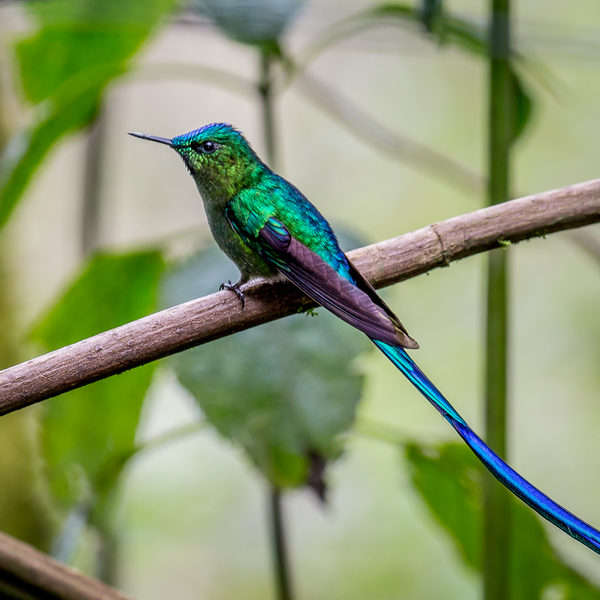
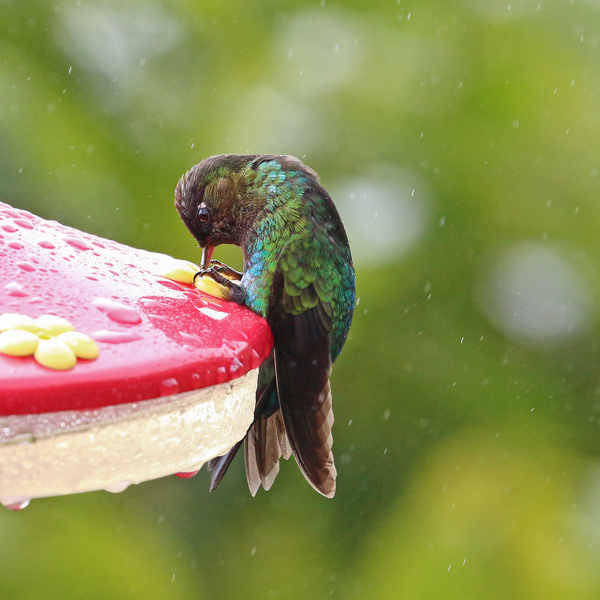
Other hummingbird species recorded visiting Cavendishia flowers include the Long-tailed Sylph, Bronzy Inca, Lesser Violetear, and Fiery-throated Hummingbird. The flower's tubular shape matches the curved bills of many cloud forest hummingbirds, and the red coloration is highly visible to birds while being less attractive to bees. The waxy texture of both the bracts and flowers may help shed excess moisture in the constantly wet cloud forest environment.


Mycorrhizal Associations
Like other members of the Ericaceae, Cavendishia species form specialized mycorrhizal associations with fungi in the order Sebacinales (Basidiomycota). A seminal 2006 study by Setaro and colleagues in Ecuador's San Francisco Biological Reserve documented these associations in Cavendishia nobilis, finding that all investigated fine roots were colonized by fungi forming a hyphal sheath as well as intercellular and intracellular colonization. The researchers identified seven distinct groups of mycorrhizal fungi belonging to the Sebacinales, concluding that the interaction represents a mutualistic symbiosis. These fungal partnerships help the plants acquire nutrients, particularly nitrogen and phosphorus, in the nutrient-poor, acidic soils typical of cloud forest environments.
This type of association has been termed "cavendishioid mycorrhizae" by researchers and appears to be unique to the Neotropics. Studies have found that approximately 74% of Sebacinales fungi associated with Ericaceae in the tropical Andes are endemic to the region, suggesting long coevolutionary relationships. The same fungal groups also form mycorrhizas with orchids in these forests, indicating that Cavendishia and orchids may share a common pool of mycobionts. The dependence of neotropical Vaccinioideae on their mycorrhizal symbionts underscores the importance of intact soil ecosystems for the conservation of these plants.
Seed Dispersal and Wildlife
The small, fleshy berries of Cavendishia bracteata attract a variety of fruit-eating birds that serve as seed dispersers. In cloud forest ecosystems, tanagers are particularly important dispersers of small-seeded berries like those of Cavendishia. Unlike larger frugivores that swallow fruits whole ("gulpers"), tanagers are "mashers" that crush the fruit in their bills, consuming the pulp and often discarding the seeds nearby. This feeding behavior patterns species richness in Neotropical forests, with masher-type frugivores such as tanagers being most diverse in wet forests at middle elevations, precisely the habitat where Cavendishia thrives. Toucans, honeycreepers, and other canopy birds also consume the fruits, contributing to seed dispersal throughout the forest.
Uses
Edible Fruit
The small, dark berries of Cavendishia bracteata are edible and have been consumed by local people throughout the species' range for centuries. The flavor is described as similar to blueberries, which is fitting given the close relationship between Cavendishia and the true blueberry genus Vaccinium. The fruits are eaten fresh or used in traditional beverages and preparations. Commercial interest in the species as a potential berry crop has been limited, likely due to the small fruit size and the difficulty of cultivating cloud forest species at lower elevations.
Medicinal and Research Applications
Traditional medicine in various Andean and Central American communities has employed Cavendishia bracteata for treating a range of conditions. In Colombia, both the fruits and leaves contain tannic acid and have been used as antirheumatic and astringent substances. Leaf decoctions are prepared to treat arthritis in some communities. The species is known by over 35 vernacular names across its range, including arrayán, clavel georgino, flor de montaña, gaulicón, zagala, sagalita, siete cueros, uva de camarona, and quemadero, many of which hint at traditional uses or cultural significance.
Modern phytochemical research has identified a rich array of bioactive compounds in C. bracteata. The leaves contain phenols, flavonoids, anthocyanins, tannins, quinones, saponins, coumarins, and triterpenoids. A 2015 study published in the Research Journal of Medicinal Plants found that leaf extracts display broad-spectrum UVB/UVA absorption correlated with antioxidant capacity, with total polyphenol content of 15.29 mg GAE per gram and total anthocyanin content of 0.36 mg per gram. These findings suggest potential applications in photoprotective dermatological formulations. The accumulation of anthocyanins and phenolic compounds in Andean Ericaceae is believed to be a chemical adaptation to the intense UV radiation at high elevations, representing a natural sunscreen evolved over millions of years. Triterpenoids found in Cavendishia species have also attracted interest as potential anti-inflammatory agents.
Ornamental and Agroforestry Uses
The striking appearance of Cavendishia bracteata has made it popular as an ornamental plant in botanical gardens and among collectors of unusual plants. The combination of glossy evergreen foliage, showy pink-red bracts, and pendulous flowering clusters makes it an attractive specimen for cool, humid conservatories. Seeds are available through specialty nurseries under the trade name "mountain grape."
In the Colombian Andes, the species has been incorporated into shade-grown coffee agroforestry systems, where it provides habitat diversity, supports pollinators, aids in soil conservation, and offers an additional harvest in the form of its edible fruits. This integration of native cloud forest species into agricultural systems represents an important strategy for maintaining biodiversity in montane landscapes.
Resources & Further Reading
Species Information
Authoritative taxonomic information including synonyms, native range, and nomenclatural details.
Comprehensive genus treatment with species descriptions and taxonomic history.
Species account with distribution, phenology, and habitat information for Panama.
Community observations and photographs from across the species' range.
Scientific Literature
The definitive taxonomic monograph of the genus by James L. Luteyn, New York Botanical Garden.
Seminal research by Setaro et al. documenting mycorrhizal associations in Andean Ericaceae.
Research on hummingbird pollination networks including Cavendishia bracteata in Costa Rica.
Scientific study examining the potential of C. bracteata leaf extracts for UV protection and antioxidant properties.
Global assessment of cloud forest conservation status and threats.
Historical collection including 2,200+ botanical illustrations from the 1777-1788 expedition that first documented the species.
Agroforestry
Information on the use of C. bracteata in shade-grown coffee agroforestry in Colombia.