Sangrillo Colorado
A critically endangered giant of the Osa Peninsula whose bark exfoliates in distinctive rectangular plates and weeps blood-red sap when cut. Fewer than 250 mature trees remain in the wild.
In 2007, researchers from Costa Rica's Instituto Tecnológico surveyed 76 hectares of lowland forest on the Osa Peninsula, systematically searching for timber species. Among the thousands of trees they documented, they found only twelve individuals of Paramachaerium gruberi. This species, known locally as sangrillo colorado for the blood-red sap that seeps from its wounded bark, has become one of Central America's rarest trees. The IUCN estimates fewer than 250 mature individuals survive across its entire range, which spans just 338 square kilometers bridging Costa Rica and Panama.
Yet hope persists. At the Osa Conservation nursery, over 500 saplings of sangrillo colorado are germinating from collected seeds. The Lapa Rios Reserve, which harbors ancient specimens estimated at 500 to 600 years old, runs a "Plant a Tree" program allowing visitors to help restore this species to regenerating forest. These efforts form part of the AmistOsa biological corridor connecting Corcovado National Park to La Amistad International Peace Park, where sangrillo colorado seedlings are being planted alongside other threatened Osa endemics.
Identification
Habit
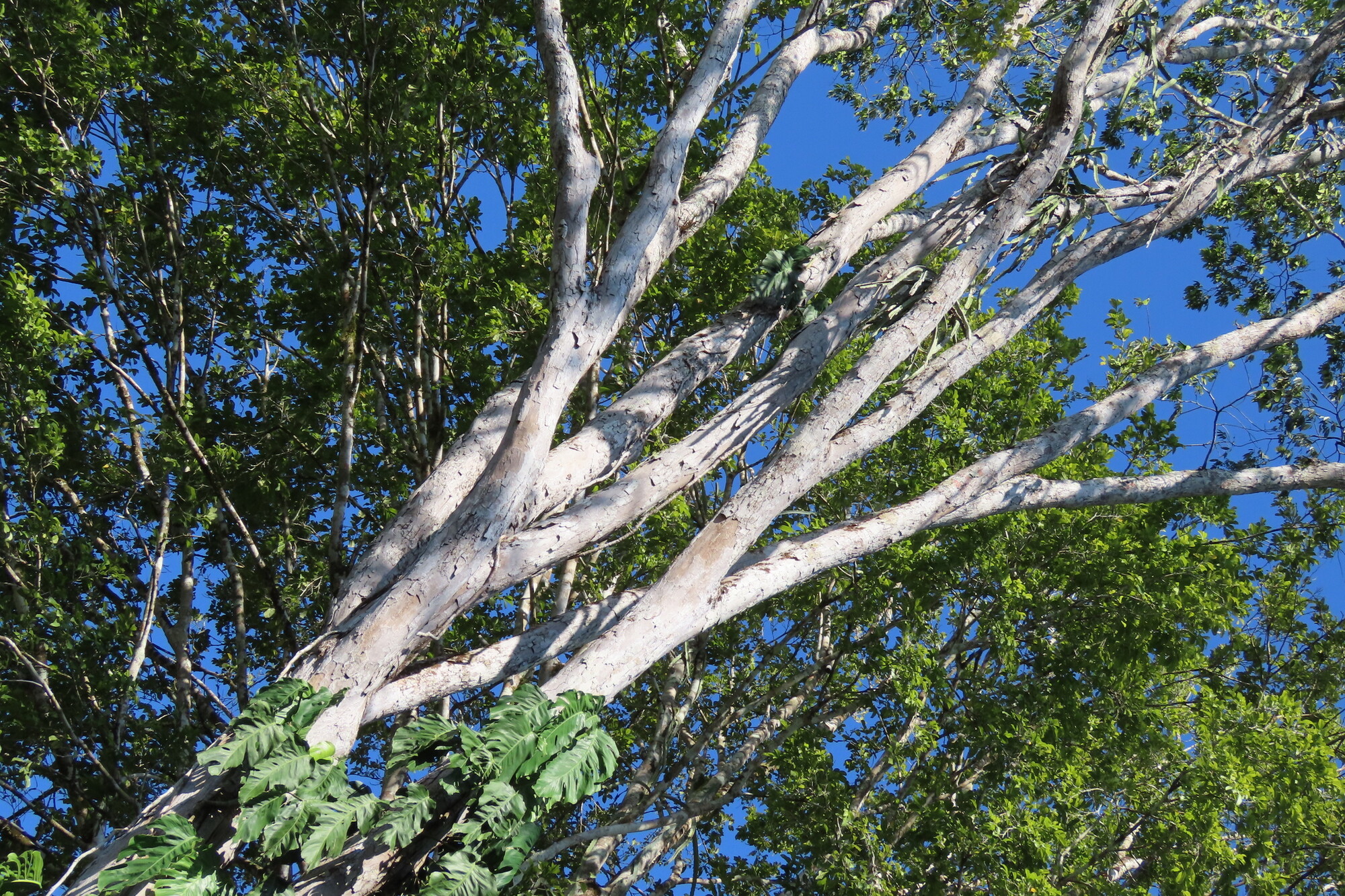
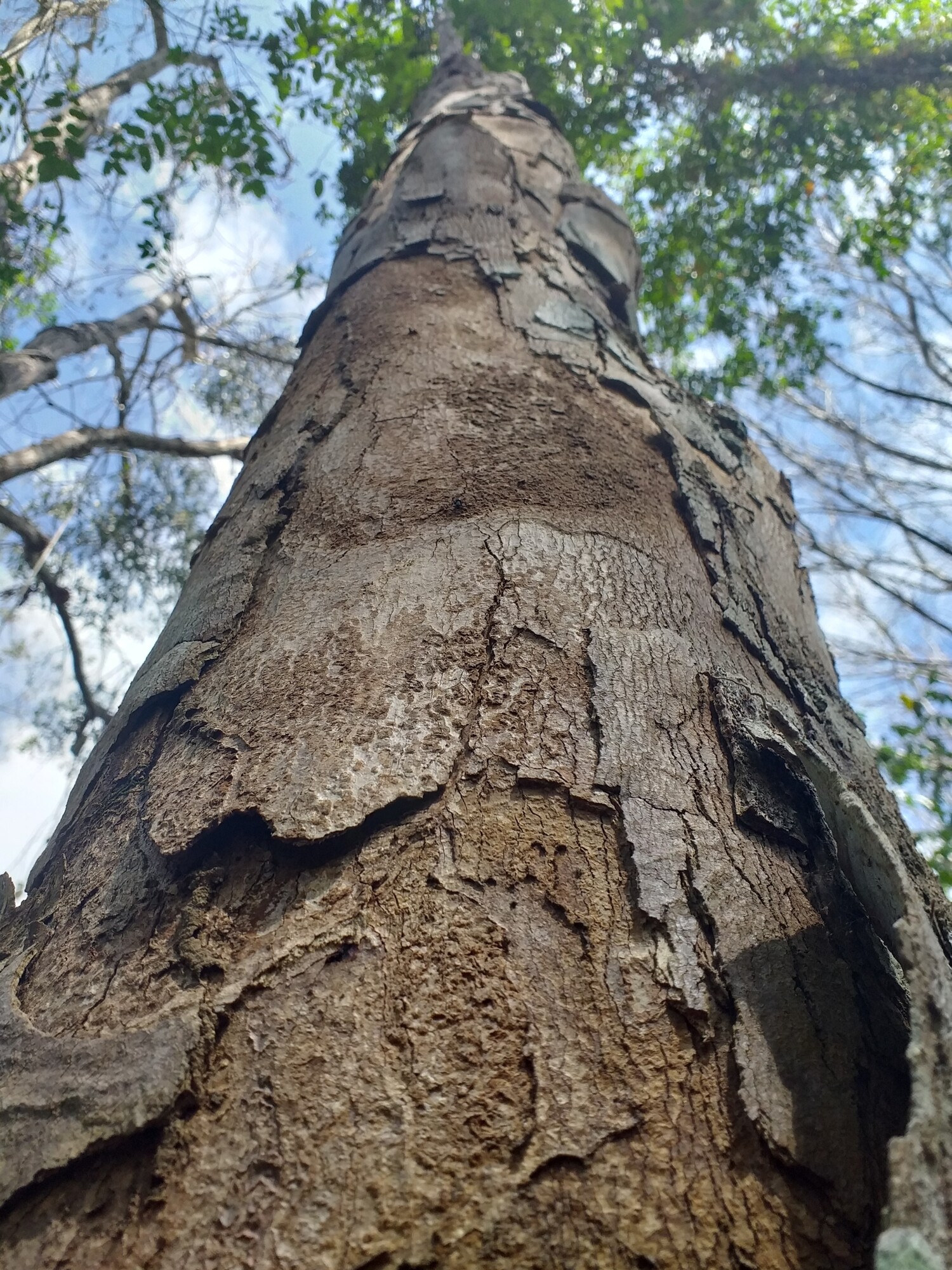
Paramachaerium gruberi is a large canopy to emergent tree, typically reaching 20 to 45 meters in height with trunk diameters of 0.9 to 1.5 meters. The trunk grows straight and develops medium buttresses at the base. The crown spreads above the surrounding forest canopy, supported by smooth, pale upper branches that contrast markedly with the darker, fissured bark of the main trunk. Ancient specimens at Lapa Rios Reserve, estimated to be 500 to 600 years old, serve as important feeding trees for parrots and monkeys.
Bark
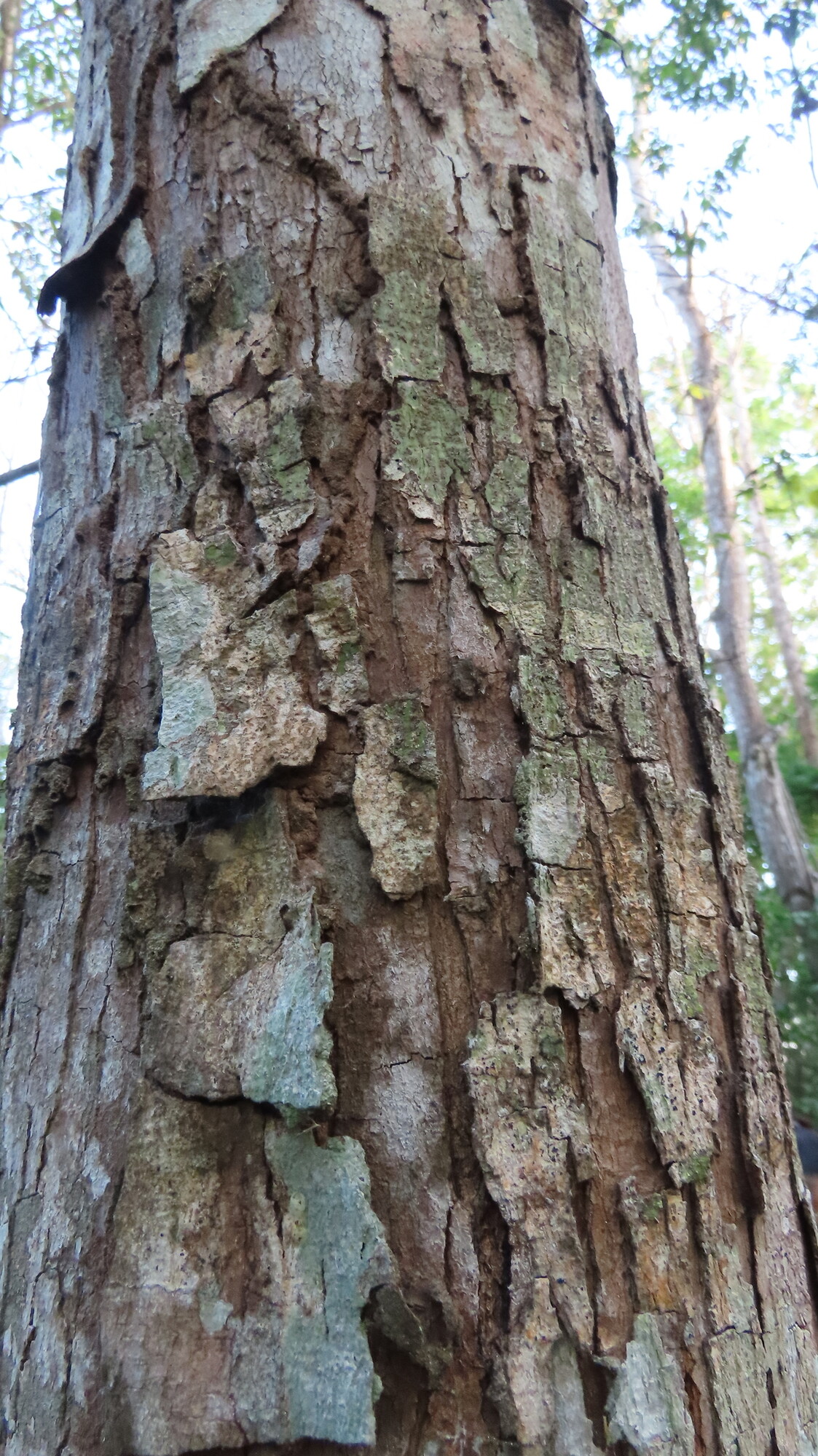
The bark provides one of the most reliable diagnostic features for identifying this species. It exfoliates in distinctive rectangular plates that peel away from the trunk in a pattern unlike any other tree in its habitat. When the bark is cut or wounded, the tree exudes a blood-red sap, which gives rise to its Spanish common name "sangrillo colorado," meaning "little blood, red." Despite the species being noted as a timber tree, no phytochemical studies of this red sap have been conducted, leaving its chemical composition unknown.
Leaves
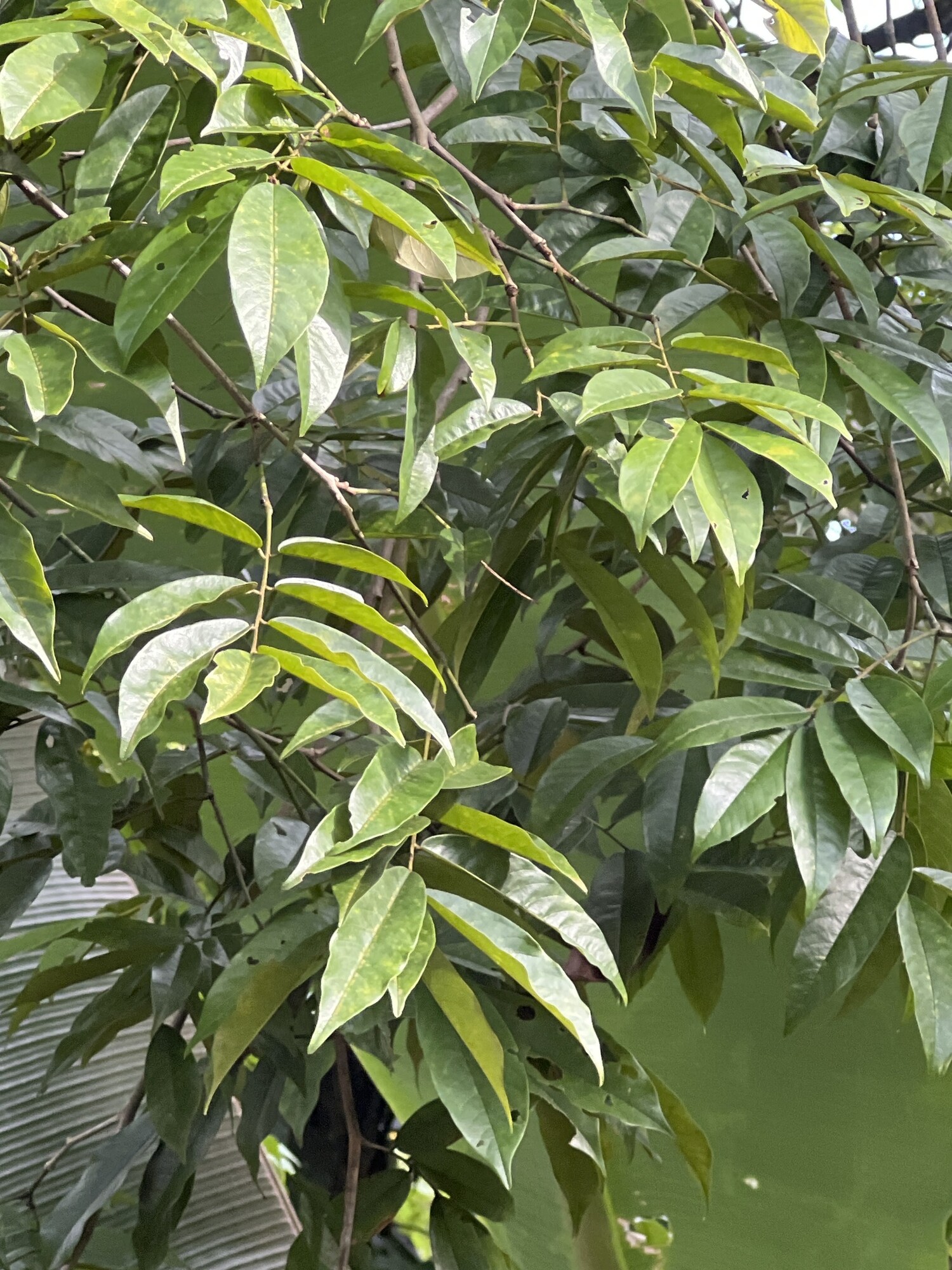
The leaves are pinnately compound with 9 to 13 alternate leaflets arranged along a central rachis. Individual leaflets measure 5 to 13 centimeters long and 2 to 5 centimeters wide, with pointed tips, entire margins, and rounded bases. This leaflet arrangement is typical of Dalbergieae, the tribe within Fabaceae to which Paramachaerium belongs. Crucially, the leaflets lack the translucent lines and dots (oil glands) found in the similar-looking Myroxylon balsamum, providing a key character for distinguishing the two species in the field.
Flowers
The flowers are reddish-purple to violet in color and arranged in terminal panicles at the branch tips. No photographs of the flowers are available in citizen science databases, reflecting the species' extreme rarity. The flowering season differs between populations: trees in Costa Rica bloom from December to January, while those in Panama flower earlier, from October to November. This two-month offset suggests some degree of phenological isolation between the northern and southern populations. Based on floral morphology in the related genus Machaerium, pollination is likely performed by bees, including both diurnal and nocturnal species.
Fruits
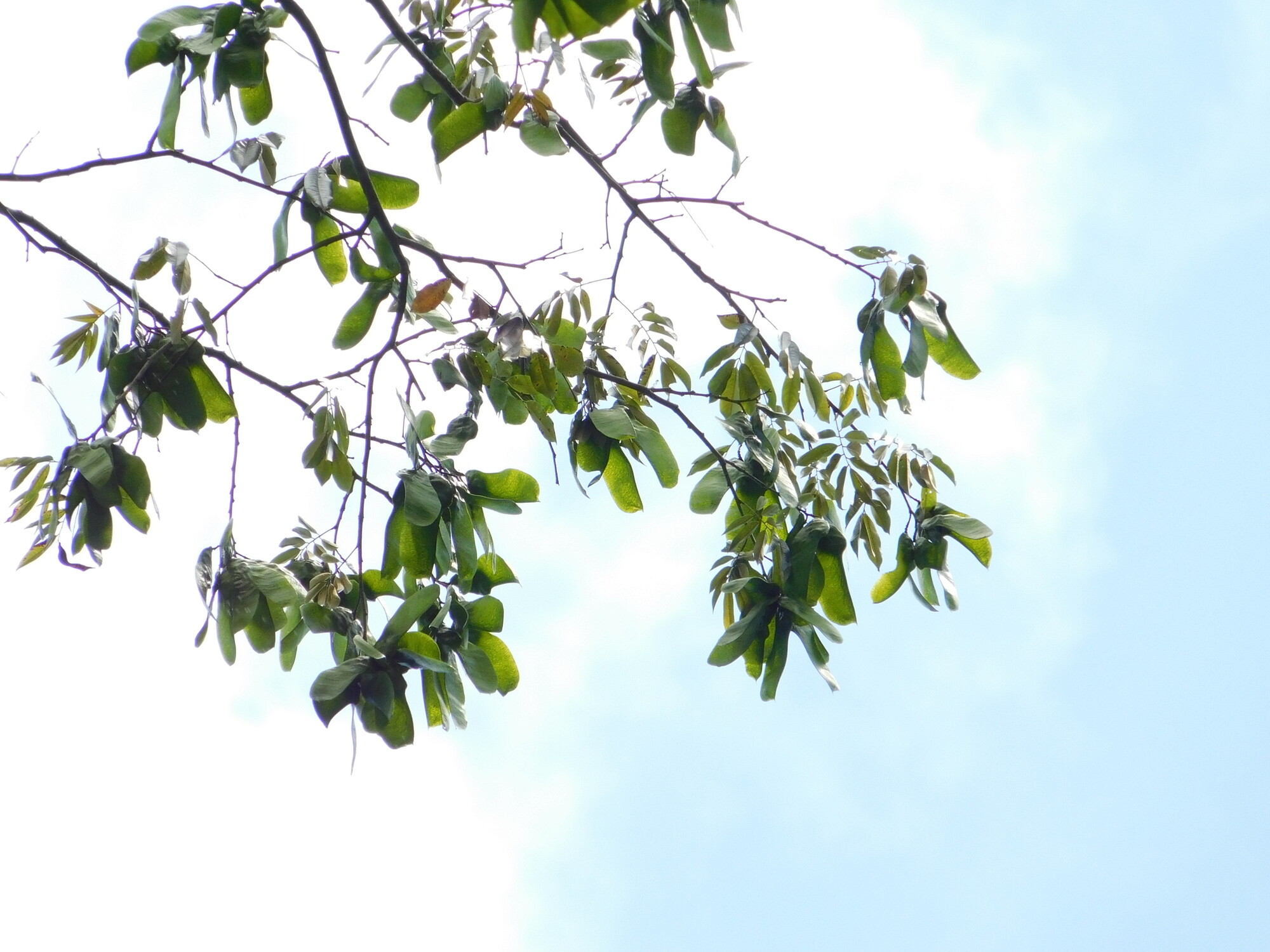
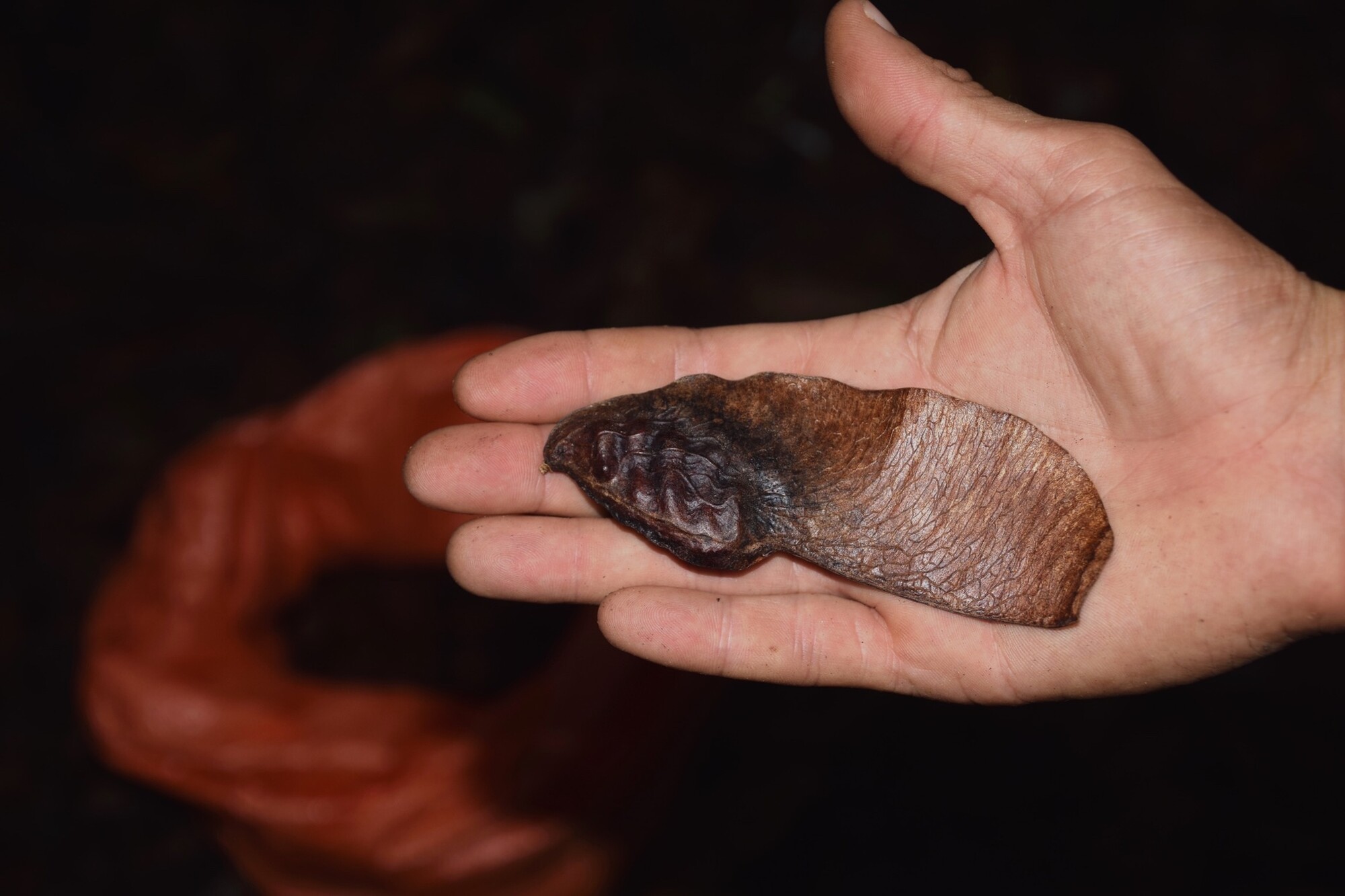
The fruits are winged legumes called samaras, measuring 7 to 13 centimeters long and 3 to 5 centimeters wide. They are asymmetrically winged, with a single wing extending from the basal portion of the fruit along one suture. As the fruits mature, they change from green to brownish-red and develop a conspicuous reticulation pattern on the surface. The fruiting season follows flowering: February to March in Costa Rica, April to May in Panama. Botanist Velva Rudd noted in 1981 that P. gruberi has more "conspicuous wing development" than its Amazonian relatives P. schomburgkii and P. ormosioides, which have reduced wings adapted for water dispersal in flooded forests. The well-developed wing of P. gruberi indicates adaptation for wind dispersal in the seasonally dry forests of southern Central America.
Herbarium Specimens
Distribution
Paramachaerium gruberi has an extremely restricted distribution, endemic to just two areas in southern Central America. In Costa Rica, all known populations occur on the Fila Carbonera, a ridge on the southern Osa Peninsula within the Golfo Dulce Forest Reserve. Collection records from 1987 to 1999 document 28 occurrences across 17 localities, nearly all concentrated near Puerto Jiménez and Playa Carbonera in Puntarenas Province. The species has not been found within Corcovado National Park itself, making the populations on Fila Carbonera particularly important as they lie outside the strictest protected areas.
In Panama, the species occurs west of Puerto Armuelles in Chiriquí Province, in the Burica Peninsula region also known as the Comarca del Barú. This is the type locality where Fred Gruber collected the original specimens in the late 1950s. The total extent of occurrence for both populations combined is estimated at only 338 square kilometers. The species grows in tropical wet forest receiving over 4,000 mm of annual precipitation, corresponding to the Holdridge Tropical Wet Forest life zone. It favors well-drained hills with slopes of 15 to 40 percent, at elevations from sea level to 412 meters.
Ecology
As an emergent tree reaching 45 meters, Paramachaerium gruberi occupies the highest stratum of the forest canopy. The ancient trees at Lapa Rios Reserve, some approaching six centuries old, serve as critical resources for forest wildlife. Parrots and monkeys have been observed feeding in these trees, though no detailed studies have documented which species or what parts of the tree they consume. The species likely provides food during its fruiting season, when the large samaras develop and ripen.
Seed dispersal occurs primarily by wind. The conspicuous wing on each samara allows the fruit to spin and glide away from the parent tree, potentially traveling considerable distances in the strong winds that precede dry season storms. As a member of tribe Dalbergieae, Paramachaerium gruberi may be capable of nitrogen fixation through root nodules harboring Bradyrhizobium bacteria, though this has not been confirmed for this species. If present, this symbiosis would contribute nitrogen to the nutrient-poor soils of the Osa Peninsula's wet forests.
Paramachaerium gruberi co-occurs with other rare and threatened trees of the Osa Peninsula's wet forests, including Magnolia wetteri, Caryocar costaricense (ajo amarillo), Anthodiscus chocoensis (ajo negro), Pleodendron costaricense (canelillo), Inga golfodulcensis, and Pouteria triplarifolia. This assemblage represents one of the most endangered tree communities in Central America, concentrated in the lowland forests between Corcovado National Park and the Golfo Dulce.
Taxonomic History
Paramachaerium gruberi was described in 1960 by George Konstantin Brizicky in the journal Tropical Woods (112: 58-64). Brizicky worked first at Yale University and later at the Smithsonian Institution, where he died in 1968. His work on Paramachaerium grew from Yale and Smithsonian expeditions to Panama between 1958 and 1960, which focused on investigating Panamanian hardwoods for their resistance to teredo shipworms. The collecting areas included Puerto Armuelles in the Comarca del Barú, precisely where the species is still found today.
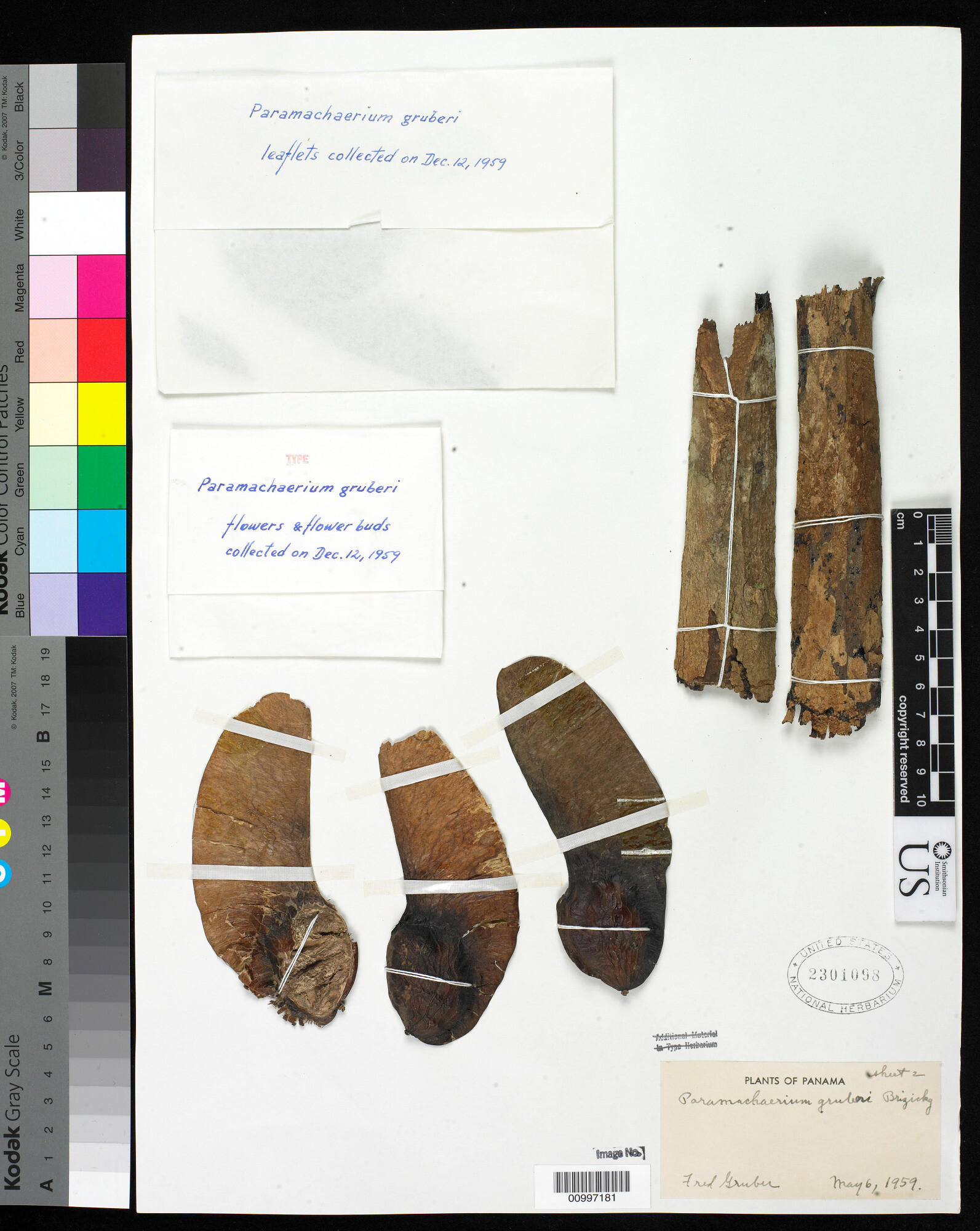
The species epithet "gruberi" honors Fred Gruber, who collected the type specimen. Gruber's collection from May 6, 1959 became the syntype, with isotypes deposited at the Missouri Botanical Garden (MO), Harvard's Gray Herbarium (GH), the New York Botanical Garden (NY), and the University of Wisconsin (WIS). The syntype specimen label at the US National Herbarium also notes that "flowers & flower buds" were "collected on Dec. 12, 1957," indicating Gruber made multiple visits to document the species across its phenological cycle.
The genus name Paramachaerium means "resembling Machaerium" in Greek, from "para" (near, beside) and Machaerium, a related genus of legumes whose name derives from Greek "machaira" meaning short sword or dagger, referring to the shape of their seed pods. Paramachaerium was established by the German-born Amazonian botanist Adolpho Ducke in 1925, based on species from Brazil. Ducke (1876-1959) was one of the most prolific describers of Amazonian plants, naming over 900 species and 50 new genera during his career at the Museu Paraense Emílio Goeldi. P. gruberi is the only species in the genus found outside South America, representing a remarkable biogeographic outlier. The four Amazonian species (P. ormosioides, P. schomburgkii, P. krukovii, and P. schunkei) have their center of diversity in the western Amazon basin.
Similar Species
Paramachaerium gruberi is often confused with Myroxylon balsamum, another large Fabaceae tree of Central American wet forests, commercially known as balsamo. Both produce compound leaves with numerous leaflets and develop winged, samara-type fruits. Two key characters distinguish them. First, the leaflets of Myroxylon have translucent lines and dots visible when held to light, caused by oil glands in the leaf tissue; these are absent in Paramachaerium. Second, the orientation of the fruit wing is reversed: in Myroxylon, the wing develops from the base of the fruit with the seed chamber at the terminal end, while in Paramachaerium, the wing extends from the terminal end with the seed chamber at the base. No other Paramachaerium species occur in Central America, making confusion with congeners impossible in this region.
Conservation Outlook
Paramachaerium gruberi was assessed as Critically Endangered (CR) by the IUCN in 2020 under criterion C1, based on population estimates of fewer than 250 mature individuals with ongoing decline. The assessment team, led by Pillco Huarcaya, Lobo, and Zamora, documented that each known subpopulation contains fewer than 50 mature trees. The 2007 TEC survey that found only 12 individuals in 76 hectares represents the most systematic population data available for Costa Rica. Panama's populations, while documented, have been studied less intensively and show similarly restricted distribution west of Puerto Armuelles.
The primary threat is timber exploitation and illegal logging. Despite legal protection in both countries, the species' valuable wood continues to attract poachers. Costa Rica prohibits all harvest under Decreto Ejecutivo N° 25700-MINAE (1996), while Panama bans timber harvesting under La Gaceta Oficial 26013 (2008). Agricultural and livestock conversion further fragments the species' already restricted habitat. The IUCN assessment notes that at least 50% of the species' native habitat has been lost over the past two generations, implying a generation length of approximately 75 years for this long-lived tree.
Conservation efforts offer cautious optimism. The Osa Conservation nursery has successfully germinated over 500 saplings from collected seeds, with approximately one-third of their nursery production dedicated to rare species like sangrillo colorado. The Lapa Rios Reserve's "Plant a Tree" program engages ecotourists in planting seedlings of threatened species in regenerating forest areas. Most significantly, these saplings are being planted within the AmistOsa biological corridor, which aims to restore connectivity between Corcovado National Park and La Amistad International Peace Park. This corridor work could eventually expand the species' range beyond its current concentration on Fila Carbonera, potentially securing its long-term survival if the planted individuals mature and reproduce.
Resources & Further Reading
Species Information
Species account from Costa Rica's Osa Arboretum with morphology, phenology, and conservation notes.
Smithsonian Tropical Research Institute account with Panamanian distribution and diagnostic characters.
Critically Endangered assessment (2020) with population estimates, threats, and conservation actions.
Plants of the World Online entry with accepted name, distribution, and literature citations.
Costa Rican flora database entry with taxonomic details and distribution notes.
Taxonomy & Nomenclature
Nomenclatural data, type information, and specimen records from Missouri Botanical Garden.
Global occurrence records with 67 documented specimens from Costa Rica and Panama.
Velva Rudd's taxonomic treatment in Brittonia discussing fruit morphology and genus circumscription.
Biography of the German-Amazonian botanist who established the genus Paramachaerium in 1925.
Conservation
Commentary discussing Osa Conservation's nursery work with P. gruberi and other rare species.
Account of ancient P. gruberi trees at Lapa Rios Reserve and the "Plant a Tree" restoration program.
Overview of the protected area containing most Costa Rican populations of P. gruberi.
Related Reading
Comprehensive Spanish-language review of the species' biology and conservation status.
Analysis of Osa Peninsula tree flora showing biogeographic connections with northwestern South America.
Overview of the legume tribe to which Paramachaerium belongs, including phylogenetic relationships.
Detailed fruit and seed morphology for genus-level identification.
Center for Tropical Forest Science species account with Panamanian distribution data.
Citizen science observations with photographs from Costa Rica and Panama.