Nance Macho
Clethra costaricensis — A pioneer tree that colonizes disturbed lands and prepares the way for forest recovery. Its fragrant white flowers attract a parade of pollinators from bees to hummingbirds.
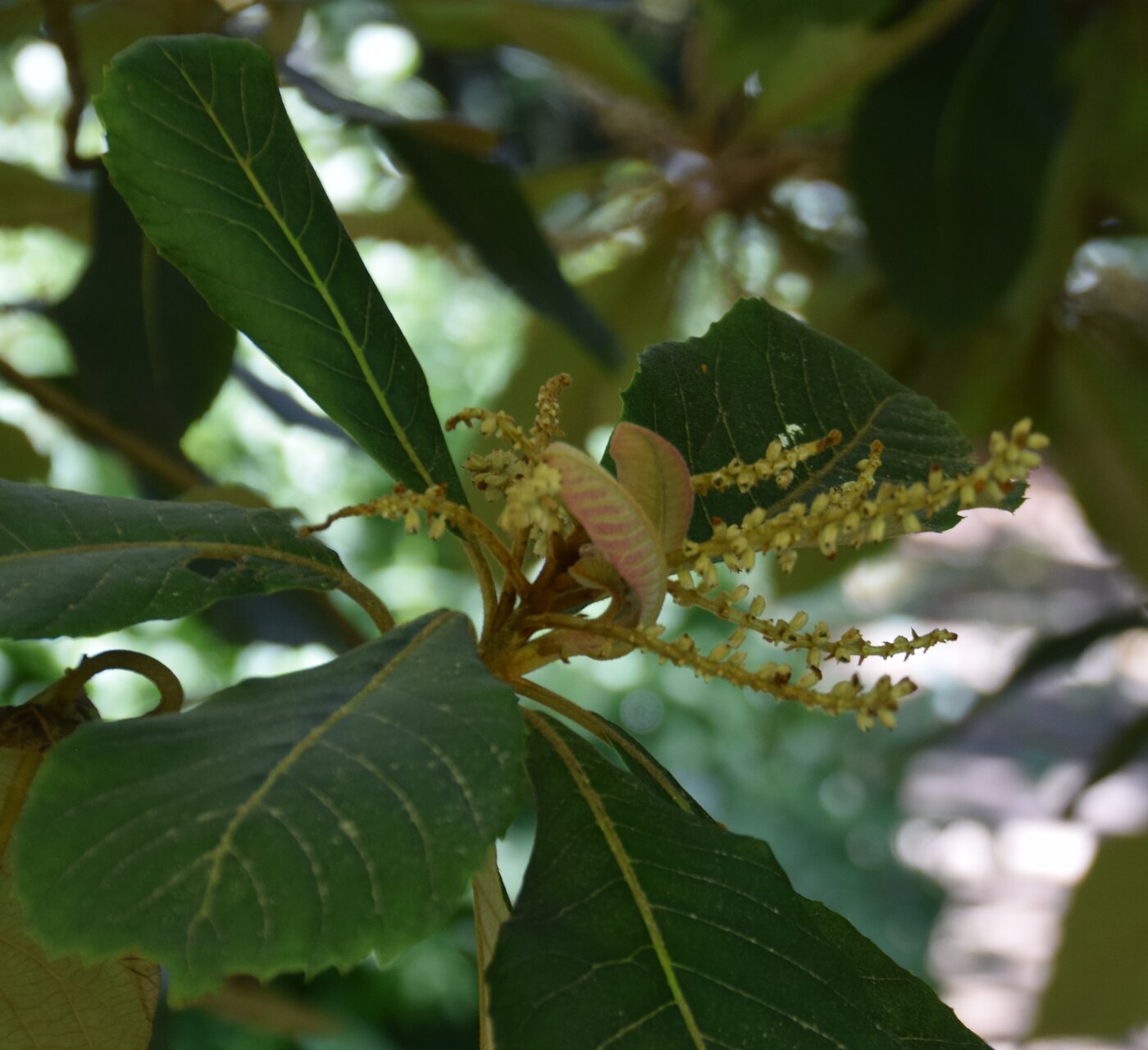
Walk along a forest edge in Costa Rica and you may notice a tree with distinctive yellowish-white flower spikes rising from its branches like candles. This is the nance macho, one of the first trees to arrive when abandoned pastures begin their slow transformation back to forest. In a landscape shaped by centuries of deforestation, the nance macho represents something hopeful: the forest's capacity to heal itself.
Pioneer species like the nance macho play a critical role in forest succession. They arrive first in disturbed areas, growing quickly in full sunlight where shade-loving species cannot yet survive. As they mature, they create canopy cover and enrich the soil, gradually preparing conditions for the next wave of trees. Without pioneers, degraded lands would remain grasslands indefinitely.
Identification
The nance macho belongs to the Clethraceae, a small family in the order Ericales that includes only two genera. In Costa Rica, it grows throughout the country on both the Pacific and Caribbean slopes, though it is more frequent on the Pacific side. You will typically find it in secondary forests, along forest edges, roadsides, and in clearings where sunlight penetrates to the ground.
Physical Characteristics
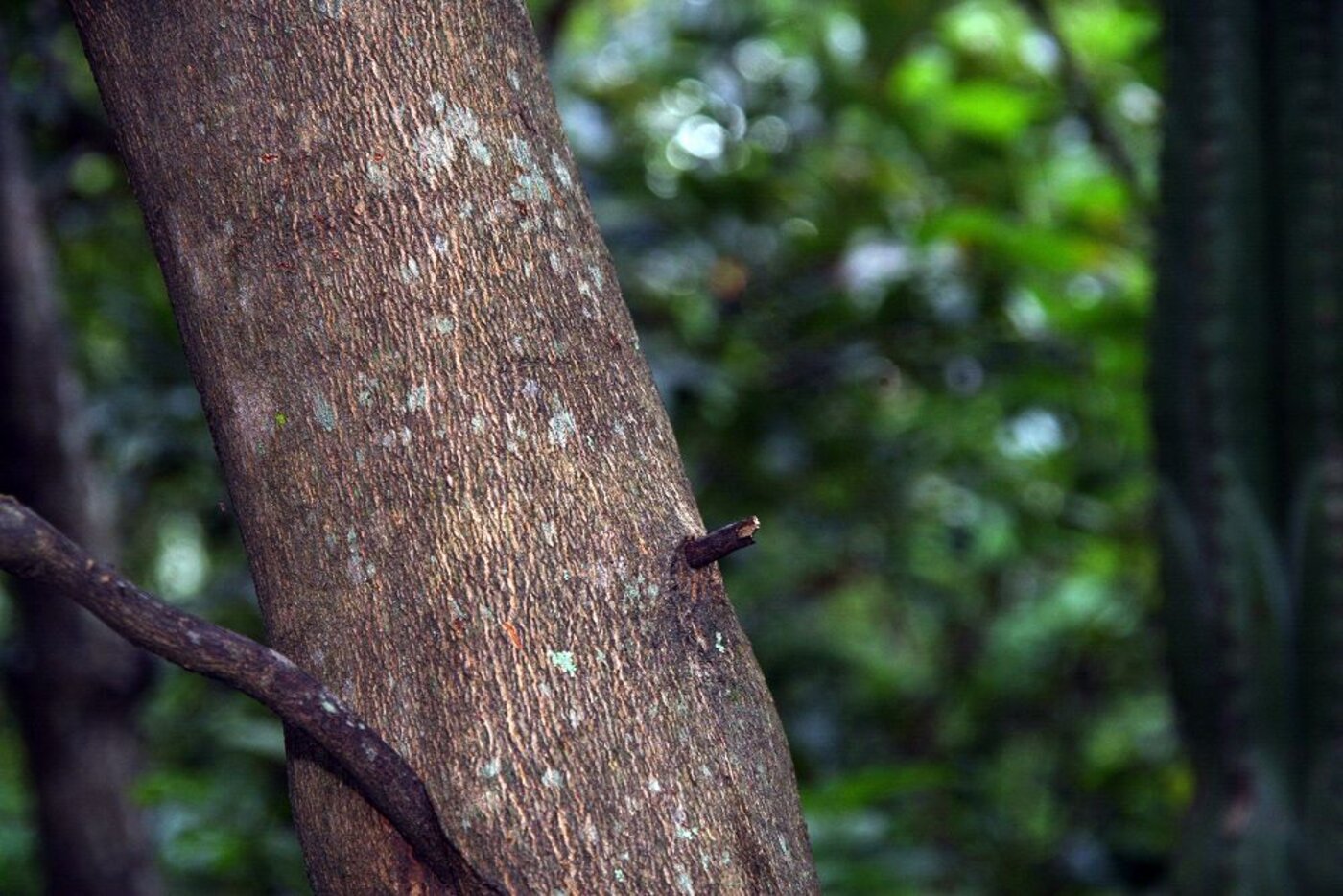
Trunk: The bark is brownish with a slightly rough texture. One of the most distinctive features is the covering of brown hairs on young branches, twigs, and leaf undersides, which gives the tree a velvety appearance.
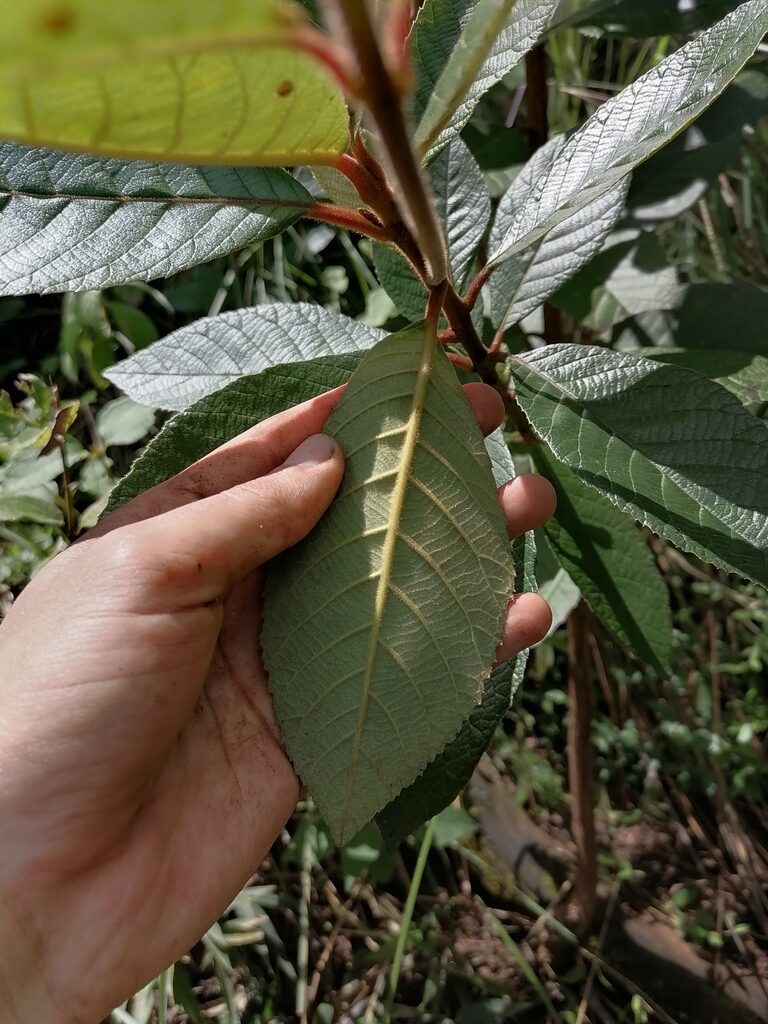
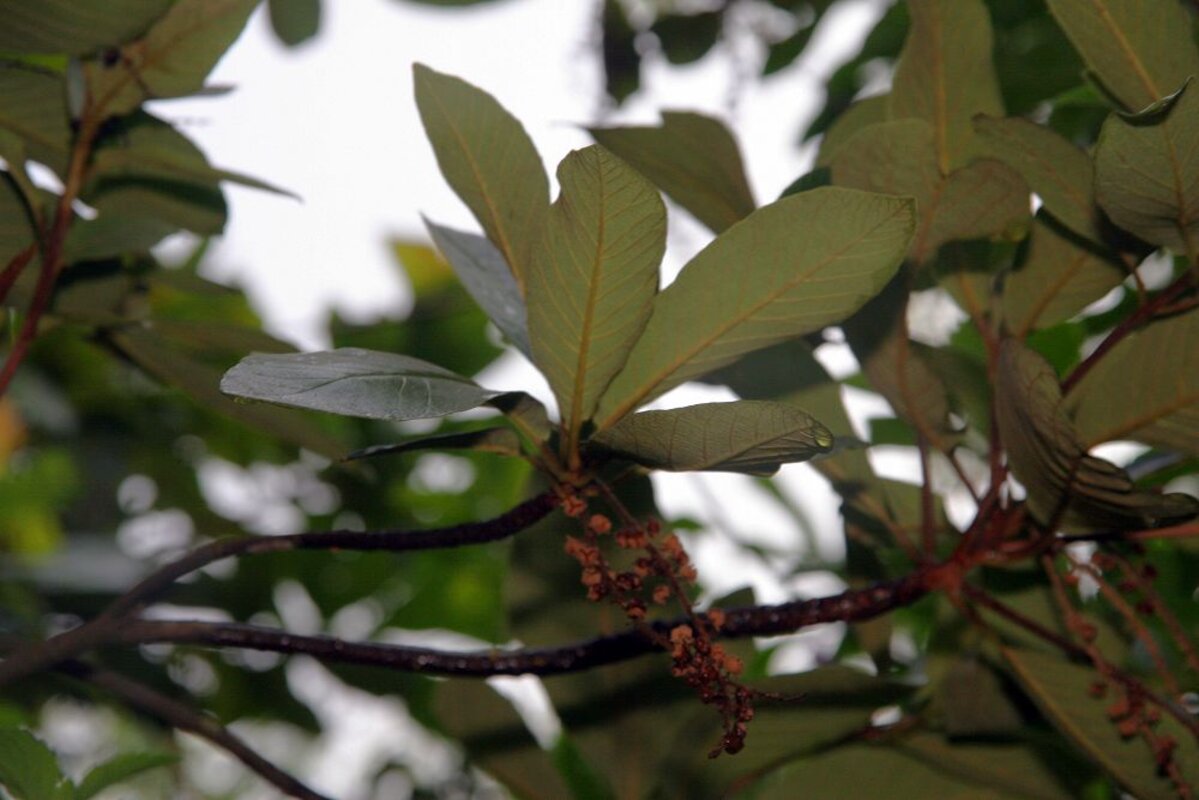
Leaves: Obovate to narrowly elliptical, 8-15 cm long, leathery, and crowded toward the ends of the branches rather than spread evenly along them. Above they are dark green; below they are pale and densely woolly with soft hairs, the veins often standing out bright yellow against the felt. That bunched, velvety, yellow-veined underside is what fools the eye into seeing a true nance (Byrsonima crassifolia), and it is exactly where the name "nance macho," the false nance, comes from. The wool also gave the tree one of its older scientific names, lanata ("woolly").
Flowers: Small, white, and highly fragrant, arranged in dense terminal racemes measuring 10-20 cm long. The tree may produce 4-12 racemes at a time, creating a striking display that attracts pollinators from considerable distances. Each flower has five white petals, numerous stamens, and a three-chambered ovary.
Fruits: Small, dry capsules about 5-6 mm in diameter that split along three valves to release numerous tiny seeds. There is no fleshy pulp and no reward for an animal: the light seeds spill from the open capsules and travel passively on wind and gravity, the dry, wind-dispersed strategy typical of the whole genus and one more trait that separates the false nance from the fleshy-fruited true nance.
Taxonomy and History
The nance macho was formally described by American botanist Nathaniel Lord Britton in 1914 in the publication North American Flora. Britton named the species Clethra costaricensis to reflect its occurrence in Costa Rica, though the tree's range extends throughout Mesoamerica.
The taxonomy of this species has been debated for a century and remains unsettled. Some authorities, following the World Flora Online, treat Clethra costaricensis as a synonym of Clethra mexicana DC., a broadly distributed species described earlier in 1839. Mexican botanist Luz María González-Villarreal, in her 1996 treatment of the genus, argues instead that the Central American populations represent distinct species: she restricts C. mexicana to Mexico (from Querétaro to Oaxaca) and recognizes C. costaricensis, C. lanata, C. nicaraguensis, and C. salvadorensis as separate species. The contest is not historical: the major databases still disagree today, and a 2023 revision rearranges the names again.
The genus name Clethra comes from the Greek word for alder, referring to the similarity of the leaves to those of alder trees, though the two are entirely unrelated. The Clethraceae family sits in the order Ericales near the large Ericaceae (heath family), which includes blueberries and rhododendrons. The genus holds roughly 64 species (counts vary as the contested complexes are split and lumped), scattered in a striking disjunct pattern between eastern and southeastern Asia, the Americas, and a single lonely outlier, Clethra arborea, on the Atlantic island of Madeira.
Distribution and Habitat
The nance macho ranges from southern Mexico through Guatemala, Honduras, El Salvador, Nicaragua, Costa Rica, and into Panama. In Costa Rica, it occurs throughout the country but is more common on the Pacific slope. It has been documented from locations including the Guanacaste Cordillera, the Central Volcanic Range, the San Carlos plains, the Talamanca ridge system, and the Osa Peninsula.
Elevation: Sea level to 1,850 meters. Most common in the lowlands and premontane zones.
Ecosystem: Very humid and pluvial forests, both primary and secondary. Typically found in secondary vegetation, forest edges, roadsides, and clearings. Tolerates diverse conditions and is particularly adapted to disturbed habitats where other trees struggle to establish.
Pioneer ecology: The nance macho is a light-demanding pioneer species that requires high light levels to establish and grow. It cannot regenerate in shade. This is a common strategy among pioneer trees: they sacrifice longevity for rapid colonization of open areas. As a secondary forest matures and the canopy closes, pioneer species like the nance macho are gradually replaced by slower-growing, shade-tolerant trees.
Ecological Importance
Pioneer trees like the nance macho are essential architects of forest recovery. Studies in Costa Rica have documented how secondary forests can recover remarkably quickly when pioneer species are present. Research in abandoned pastures found that tree species richness increased very rapidly during secondary succession, with 80% recovery of old-growth values after only 20 years. Much of this recovery depends on pioneers creating the conditions for later arrivals.
The nance macho is among the fastest-growing trees in Costa Rican secondary forests. Research in cloud forests of Mexico found that Clethra mexicana (which includes our species) had an average diameter growth rate of 0.53 cm per year, the highest among four species studied. This rapid growth allows the tree to quickly establish canopy cover over disturbed areas.
Wildlife Relationships
The fragrant white flowers of the nance macho attract a diverse community of pollinators. Bees are the primary visitors, drawn by the abundant nectar and pollen. Butterflies frequent the flowers as well, attracted by the sweet scent. Some hummingbird species also visit, particularly in areas where the trees grow at higher elevations. The relationship between Clethra flowers and their pollinators represents a generalist strategy: rather than depending on a single pollinator species, the tree welcomes any visitor capable of transferring pollen.
Seed dispersal, by contrast, asks nothing of animals. The dry capsules split open and shed many minute seeds that travel on wind and gravity, with no fleshy fruit to recruit a bird or mammal. That passive strategy suits a pioneer: tiny, abundant, easily scattered seeds are well placed to reach the next sunny gap, which is how the nance macho keeps arriving along forest edges, roadsides, and regenerating pastures.
Co-occurring Species
In secondary forests, the nance macho grows alongside other pioneer species. Common associates include Cecropia species (guarumo), Vismia species, and Simarouba amara (aceituno). Land-use history influences which pioneers dominate: research has shown that sites that were active pasture for more than four years tend to develop Vismia-dominated forests, while less intensively used sites are dominated by Cecropia. The nance macho can occur in both types of secondary forest.
As secondary forests mature, shade-tolerant species begin to establish beneath the pioneer canopy. In Costa Rica, this transition often involves the gradual replacement of pioneers by species such as laurels (Lauraceae), oaks (Quercus), and various understory trees. Over time, the forest composition shifts as pioneers give way to later-successional species.
Conservation
The nance macho is classified as Least Concern by the IUCN Red List. Its abundance in disturbed habitats and its wide distribution across Mesoamerica mean that the species faces no immediate threat of extinction. In fact, the tree is thriving in the landscapes shaped by human activity: secondary forests, forest edges, and regenerating pastures provide ideal habitat.
However, the ecosystems that support the nance macho and its associated species have experienced severe historical degradation. Costa Rica lost approximately 80% of its forests between the end of World War II and the late 1980s, driven largely by cattle ranching and agricultural expansion. At the peak of deforestation, the country was losing forests at nearly 4% per year.
Costa Rica has since become a global leader in forest conservation and recovery. The country was the first tropical nation to reverse deforestation, with forest cover increasing from approximately 21% in 1987 to nearly 60% today. Programs like Payments for Environmental Services (PES), established in 1996, pay landowners to protect and restore forests. In 2021, Costa Rica won the inaugural Earthshot Prize for its conservation efforts.
Uses
The nance macho is increasingly valued for ecological restoration. Its ability to colonize degraded areas, rapid growth rate, and adaptability to disturbed conditions make it an excellent species for reforestation projects. Restoration practitioners often include the nance macho in mixed plantings designed to accelerate secondary succession on abandoned agricultural land.
The wood is occasionally used in rustic constructions and for firewood or charcoal production. However, the tree's greatest value lies not in its timber but in its ecological services: carbon sequestration, soil stabilization, habitat creation, and facilitation of forest succession. As Costa Rica and other tropical countries work to restore degraded landscapes, pioneer species like the nance macho will play an increasingly important role.
A Tree of Recovery
The nance macho may lack the grandeur of a giant ceiba or the ancient presence of a forest oak. But in landscapes scarred by deforestation, this modest pioneer tree carries a message of resilience. Where humans cleared the forest, the nance macho returns. Where cattle compacted the soil, its roots begin the slow work of restoration. Where sunlight once beat down on bare earth, its canopy creates shade for the next generation of trees.
When you see a nance macho flowering along a forest edge, with bees buzzing among its fragrant white racemes, you are witnessing the first chapter of forest recovery. The pioneers arrive, grow quickly, attract pollinators and seed dispersers, modify the microclimate, and prepare the way for the forest yet to come. In an era of ecological restoration, few trees better represent hope for the future.
Key Sources & Resources
Species Information
Species account from the Osa Peninsula region with information on distribution and conservation status.
Detailed species profile with distribution, habitat, and ecological information for Costa Rica.
Authoritative taxonomic information on the genus Clethra from the Royal Botanic Gardens, Kew.
Taxonomy
Original publication details and nomenclatural information for the species name.
Discussion of synonymy and taxonomic status of the C. mexicana species complex.
Ecology & Restoration
Research on growth rates of Clethra mexicana in secondary cloud forests of Mexico.
Comprehensive review of secondary forest recovery in the Neotropics, including the role of pioneer species.
Overview of Costa Rica's successful forest recovery and payment for environmental services programs.