Costa Rica's Cedro María Trees
Two near-identical species of Calophyllum grow in Costa Rica's wet forests, producing mahogany-grade timber and a healing resin called "Bálsamo de María." Only their leaf and flower size tells them apart.
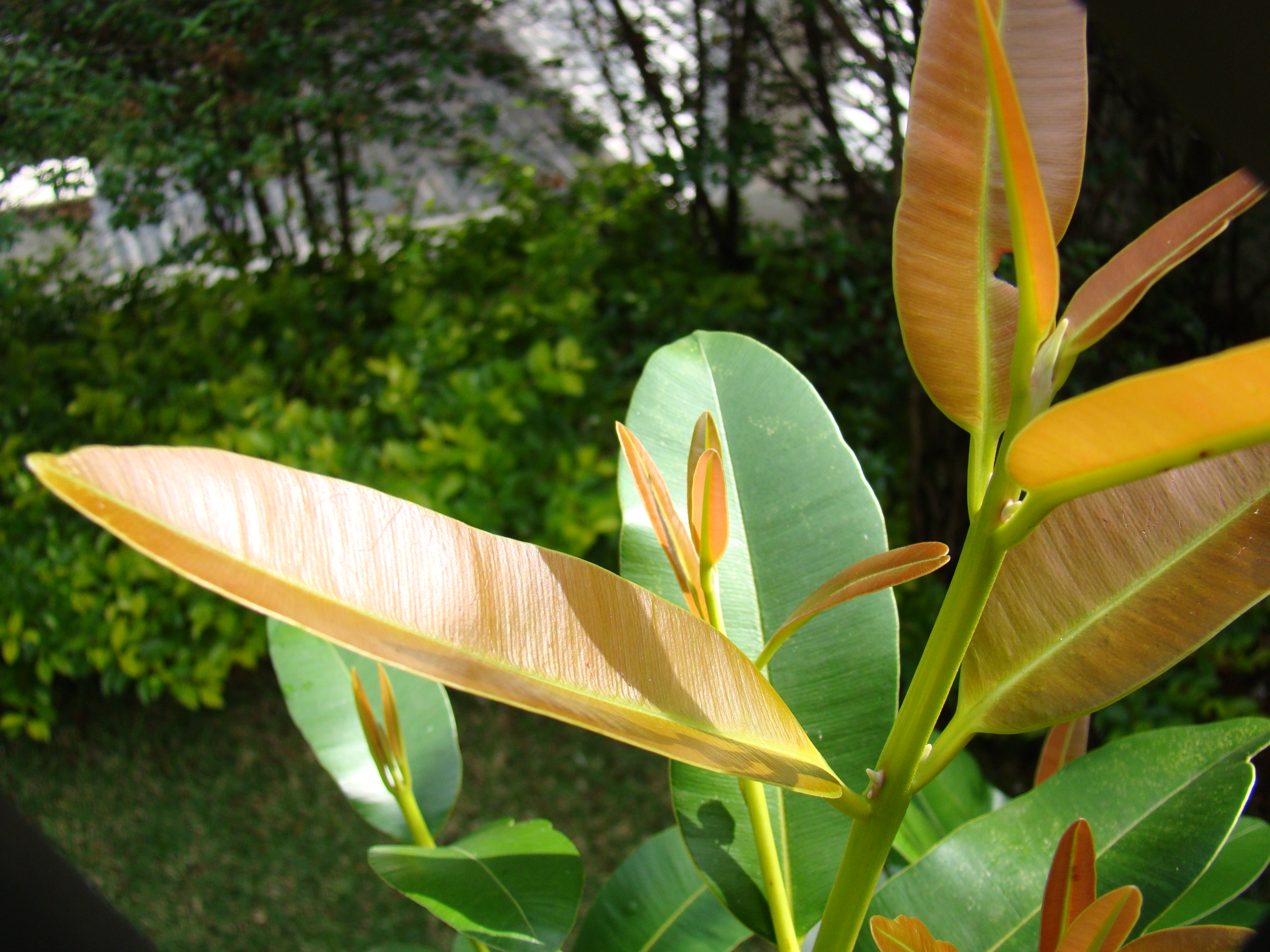
Pick up a fallen leaf of a cedro maría and hold it to the light. You will see something unusual: instead of the branching network typical of most broadleaf trees, the veins run parallel from midrib to margin, like the lines on ruled paper. This monocot-like venation in a dicot tree is the genus signature, shared by both of Costa Rica's Calophyllum species. Whether you are looking at Calophyllum brasiliense (cedro maría) or Calophyllum longifolium (cedro maría macho), this distinctive leaf pattern makes identification immediate.
The genus Calophyllum contains over 200 species, but only two are native to the Americas, and both grow in Costa Rica. Their Old World relatives across the Pacific and Indian Ocean produce the famous tamanu oil used in cosmetics worldwide. The American species yield their own healing resin, called "bálsamo de María" or "aceite de María," that Central American healers have used for centuries to treat wounds, skin conditions, and internal ailments. Both species produce excellent timber comparable to mahogany.
Identification
Shared Physical Characteristics
Both Costa Rican Calophyllum species share the same basic form and features. Only careful measurement of leaves and flowers reliably distinguishes them.
Crown: Dense and rounded, forming part of the forest canopy. Both species typically develop a long, straight, unbranched bole for approximately two-thirds of total height before the crown begins. The evergreen foliage creates deep shade beneath.
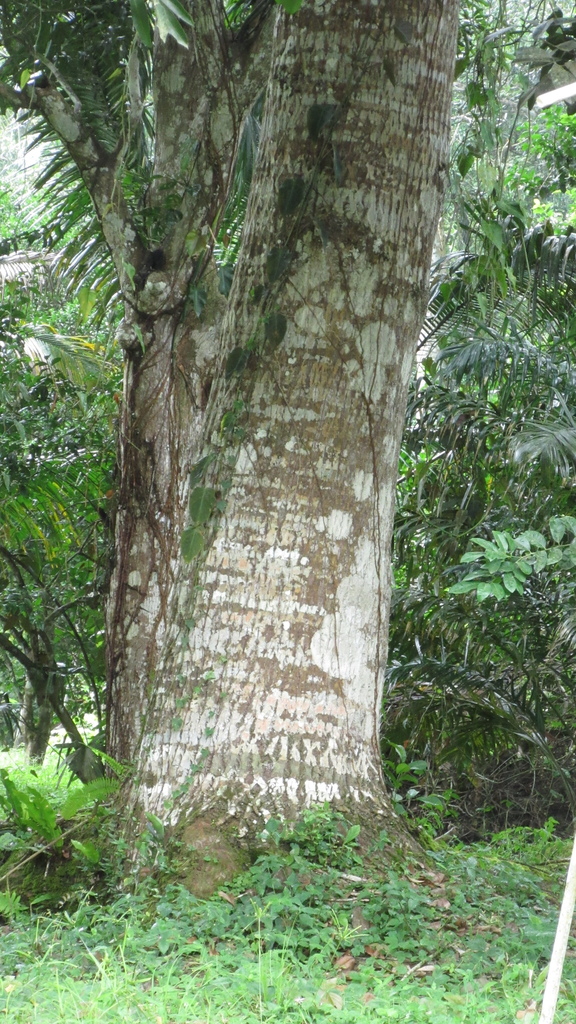
Trunk: Cylindrical and straight, often buttress-free, with tan-brown bark profoundly grooved by darker, discontinuous vertical fissures. When cut, the bark exudes a thick, yellowish-green latex known as "bálsamo de María" (or "maina" in C. longifolium). This resin has a pleasant aromatic scent and has been used medicinally for centuries.
Leaves: Elliptical with a smooth, waxy, leathery texture. The parallel venation is the key identification feature for both species: numerous fine veins run perpendicular to the midrib, creating a distinctive striped pattern when backlit. New leaves emerge copper or bronze-colored before turning deep green. Leaves are remarkably durable, persisting for months after falling. The difference is size: C. brasiliense leaves measure 8-15 cm long, while C. longifolium leaves reach 15-30 cm.
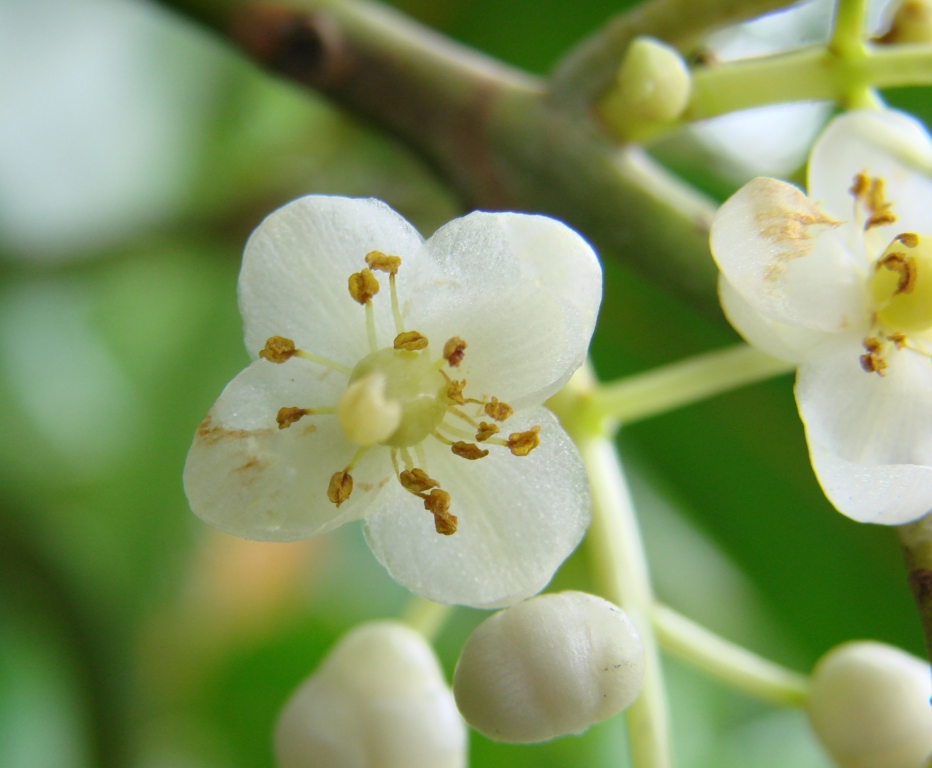
Flowers: White, fragrant, with four petals and numerous yellow stamens. The flowers are unisexual, with male and female flowers on separate trees (dioecious). They appear in axillary racemes and are described as "deliciously scented." Flower size is the other distinguishing feature: C. brasiliense flowers measure about 1 cm diameter, while C. longifolium flowers are roughly twice as large.
Fruit: Both species produce globular drupes, 2-3 cm in diameter, dull blue-green when mature, with a thin flesh layer covering a hard, woody seed. The fruit is attractive but toxic and should not be consumed. Seeds contain oil that can be extracted, though the American species are less commercially exploited for oil than their Pacific relatives.
Habitat & Distribution
Both Costa Rican Calophyllum species grow throughout the Neotropics, from southern Mexico through Central America to South America. C. brasiliense has the broader range, extending to Brazil and the Caribbean islands. Remarkably, research has shown that a single fruit of C. brasiliense can cross the Atlantic Ocean and germinate perfectly in African soil, demonstrating the genus's extraordinary dispersal capability.
In Costa Rica, both species are found in the Central Pacific, Southern Zone, Northern Zone, and Caribbean regions. They grow in lowland evergreen rainforests and lower montane rainforests, typically at elevations up to 1,500 meters. Both are particularly abundant in seasonally flooded forests and along riverbanks, where their tolerance for waterlogged soils gives them an advantage.
Soil tolerance: Both species are remarkably adaptable to different soil types, thriving in sandy soils, rocky sandstone, deep clays, serpentine soils, and shallow limestone. They demonstrate excellent salt tolerance and, once established, show strong drought resistance despite their preference for humid conditions.
A Premier Timber Tree
Both Calophyllum species produce some of the most extensively used woods in the American tropics. The heartwood ranges from pink to reddish-brown with fine darker striping, while the sapwood forms a lighter band 5-7 cm thick. The wood has a medium texture with interlocked grain, is moderately heavy, and ranges from soft to moderately hard. It works easily with tools despite its density.
The timber quality has been compared to mahogany, and it serves similar applications: general construction, bridgework, railway ties, shipbuilding, furniture, and flooring. The wood is fairly durable against fungi and dry wood borers, making it suitable for exterior use. In Brazil, an essential oil extracted from C. brasiliense wood is called "Sándalo Inglés" (English Sandalwood) and used in perfumery.
Bálsamo de María: The Healing Resin
Cut into the bark of either Calophyllum species and a thick, yellowish-green resin oozes from the wound. This aromatic substance, known as "bálsamo de María" or "aceite de María" (and "maina" for C. longifolium), has been used in traditional medicine throughout both species' ranges for centuries. The resin contains bioactive compounds including xanthones such as guanandine and jacareubine.
Traditional healers apply the resin to treat wounds, sores, and skin conditions. A decoction combining trunk bark with root-bark of other medicinal plants serves as an antidiabetic remedy and vermifuge. The bark and leaves are used to treat ulcers, dermatitis, and prostatitis. Modern research has identified potential anti-tumor properties and AIDS-inhibiting compounds in plant extracts, though clinical applications remain under investigation.
The Pacific relatives of these American Calophyllum species produce the commercially important tamanu oil, widely used in cosmetics for its skin-healing properties. While the American species are less commercially exploited, they share many of the same bioactive compounds and traditional applications.
Telling the Two Species Apart
The two Costa Rican Calophyllum species are so similar that even experienced botanists can struggle to tell them apart without flowers or careful measurement. Both have the same trunk form, bark texture, parallel leaf venation, fruit shape, resin chemistry, and timber quality. The differences are subtle but consistent.
| Feature | C. brasiliense (cedro maría) | C. longifolium (cedro maría macho) |
|---|---|---|
| Leaf size | 8-15 cm long, 3-6 cm wide | 15-30 cm long, 6-10 cm wide |
| Flower size | ~1 cm diameter | ~2 cm diameter |
| Resin name | Bálsamo de María | Maina (yellow) |
| Distribution | Mexico to Brazil, Caribbean | Mexico to Peru |
In practice, the easiest distinction is leaf size: if the leaves are clearly over 20 cm long, you are almost certainly looking at C. longifolium. At Manuel Antonio National Park on the central Pacific coast, C. longifolium is substantially more abundant than C. brasiliense. For practical purposes, both species can be treated identically: same timber uses, same medicinal resin, same cultivation requirements.
Conservation & Cultivation
Both Calophyllum species are rated Least Concern by the IUCN, maintaining healthy populations throughout their extensive ranges. Their tolerance for diverse soil types, including degraded and waterlogged soils, makes them valuable for reforestation and land restoration projects. Calophyllum brasiliense was introduced to Hawaii in the 1950s and has been planted throughout the Caribbean for both reforestation and ornamental purposes.
Seeds of both species germinate at approximately 70% success rate. The tough seed coat benefits from cracking with a hammer before sowing. Fresh seeds can be sown directly in soil or seedbeds, and seedlings transplant successfully when moved with soil balls during the rainy season. Seeds stored for one year in dry conditions still germinate reasonably well.
Key Sources & Resources
Species Information
Comprehensive botanical and ethnobotanical information including uses, cultivation, and ecology.
Detailed botanical information on cedro maría macho, including the "Maina" resin.
Field-focused account with comparative notes on both Calophyllum species in Costa Rica.
Biodiversity Databases
Community-contributed observations and photographs from Costa Rica.
Observations and photographs of cedro maría macho in Costa Rica.