Ron-ron
A towering dry-forest canopy tree whose striped heartwood earned the international trade name Tigerwood. Its pockmarked bark and star-shaped fruits make it unmistakable in Costa Rica's Pacific lowlands.
When Nikolaus Joseph von Jacquin sailed from Europe to the Caribbean in 1755, he carried a commission from Habsburg Emperor Francis I: collect living plants for the imperial gardens at Schönbrunn. Over four years, the Dutch-born botanist ranged from Martinique to Jamaica to the Colombian coast around Cartagena, pressing specimens and sketching species unknown to European science. Among them was a tall, aromatic tree whose crushed leaves released an acrid resin and whose bark shed in circular plates, leaving a trunk mottled like the hide of a jaguar. Jacquin named it Astronium graveolens, the "strong-smelling star tree," and published it hastily in 1760 among hundreds of new species. He could not have known that the wood concealed beneath that pockmarked bark would one day command premium prices on the international timber market, or that the same volatile chemistry giving the tree its pungent odor would prove to be a sophisticated defense against one of the Neotropics' most voracious herbivores.
In Costa Rica, Astronium graveolens is known as ron-ron, a name that echoes through the dry forests of Guanacaste where the species reaches its greatest abundance. From the sunbaked lowlands of Santa Rosa and Palo Verde national parks, its range extends southward along the Pacific slope, growing progressively rarer until it reaches the Osa Peninsula at the limit of its Central American distribution. Botanist Paul Allen counted it among Costa Rica's most important timber trees in 1956. Today, the Instituto Nacional de Biodiversidad lists it among timber species in danger of extinction, a reflection of the paradox facing many Neotropical hardwoods: the same qualities that make them ecologically valuable make them commercially irresistible.
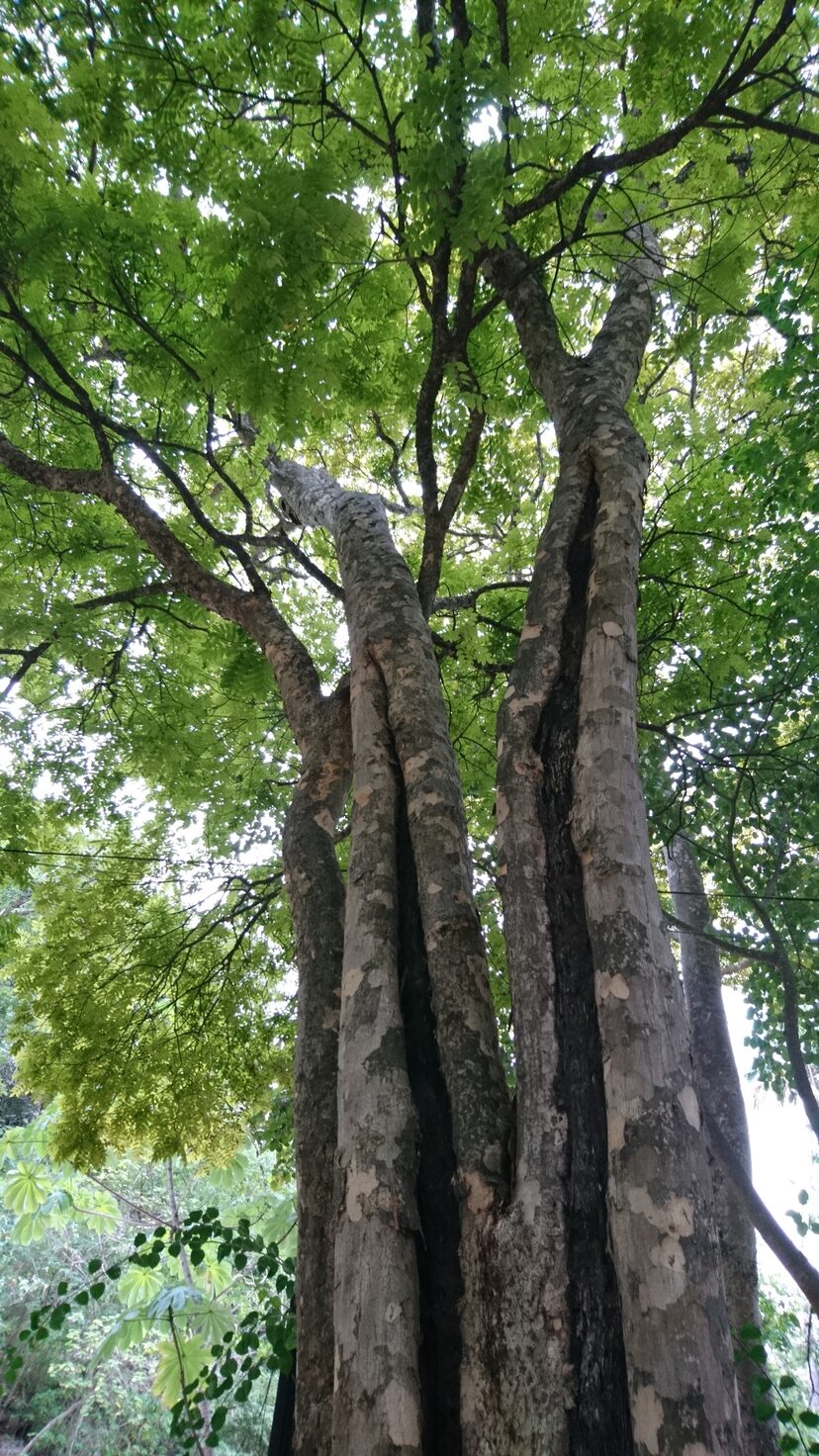
Identification
Habit
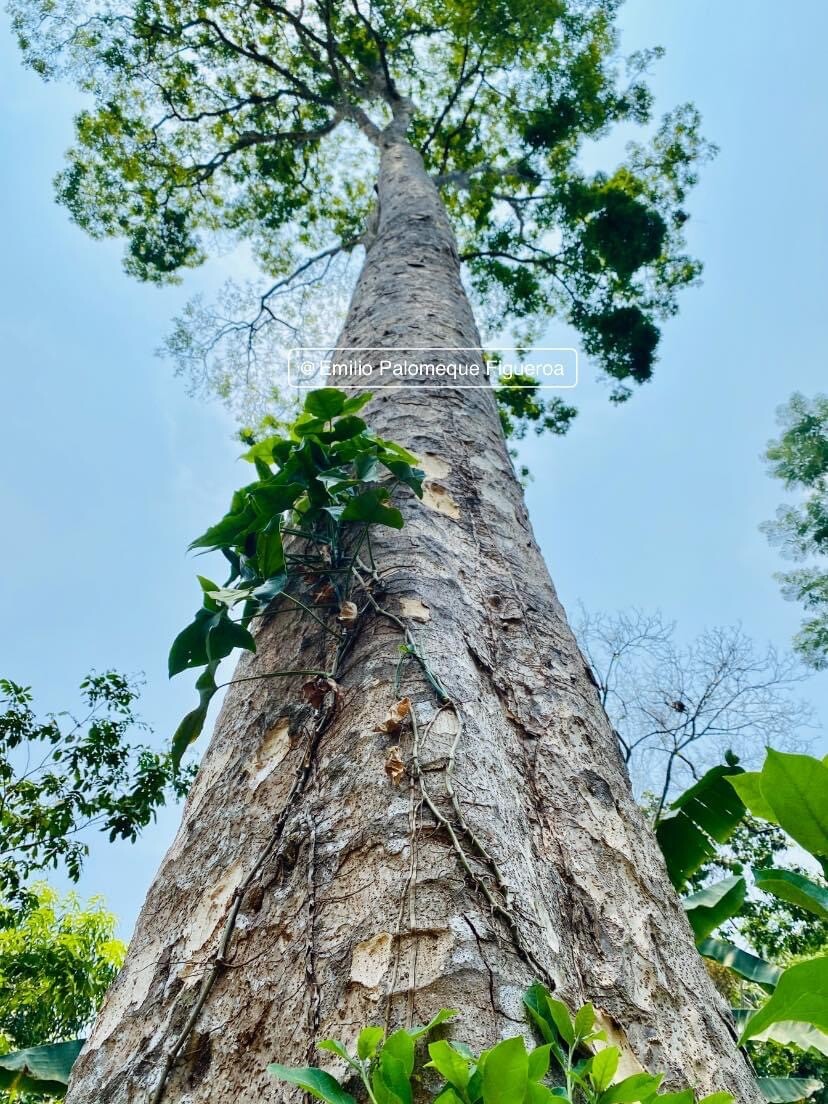
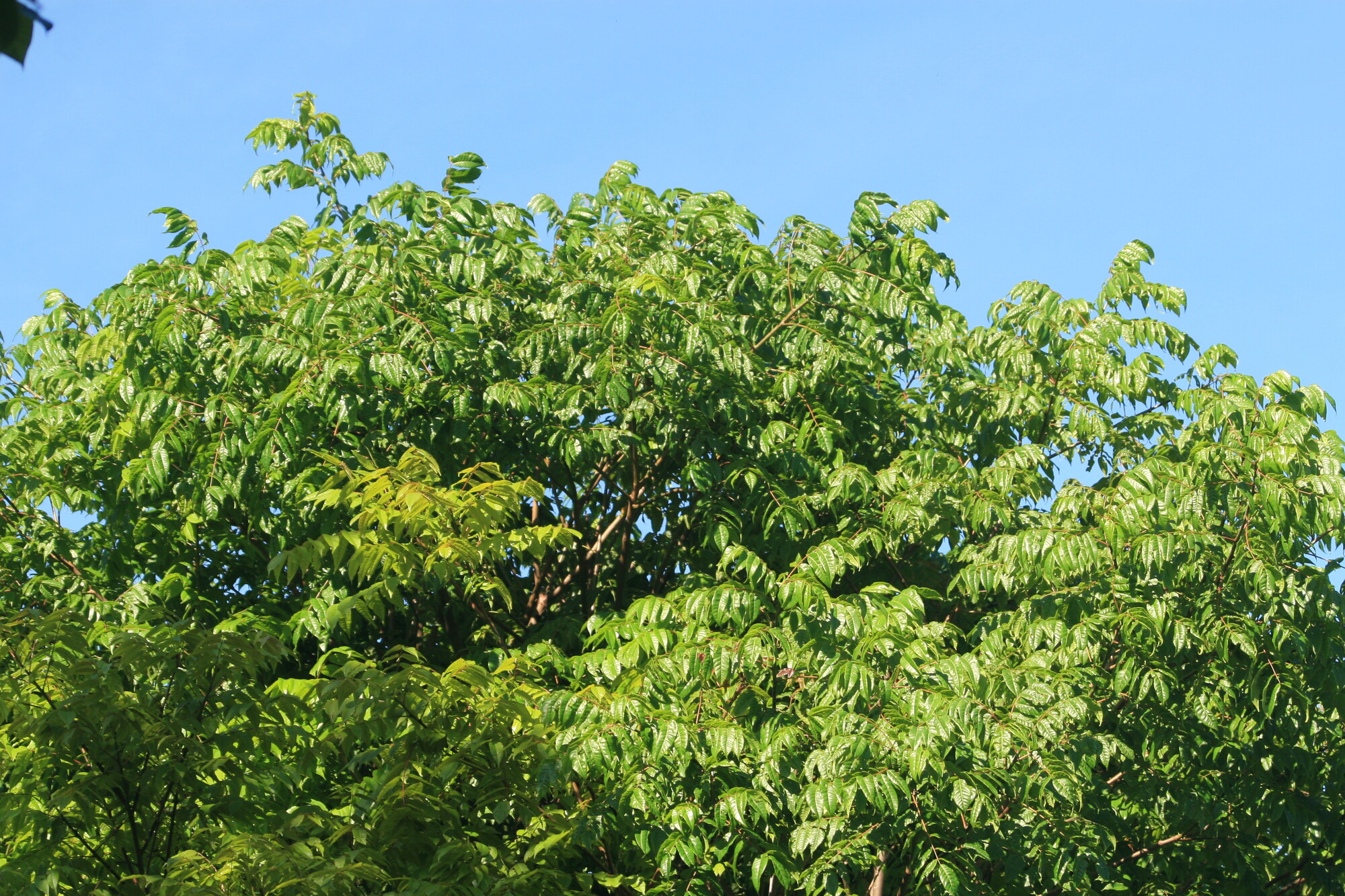
Astronium graveolens is a large canopy tree reaching 25–35 m in height, with exceptional individuals approaching 50 m in well-developed forest. The trunk grows moderately straight, 60–100 cm in diameter at breast height, supported by buttresses up to 2 m tall at the base. The crown is rounded and open, with branching that is sparse enough to admit dappled light. In the dry forests of Guanacaste, it is among the tallest species in the canopy, and its silhouette is visible from considerable distances. The species is associated with old-growth forest and is largely eliminated when dry forest is cleared, taking decades to centuries to reestablish.
Bark
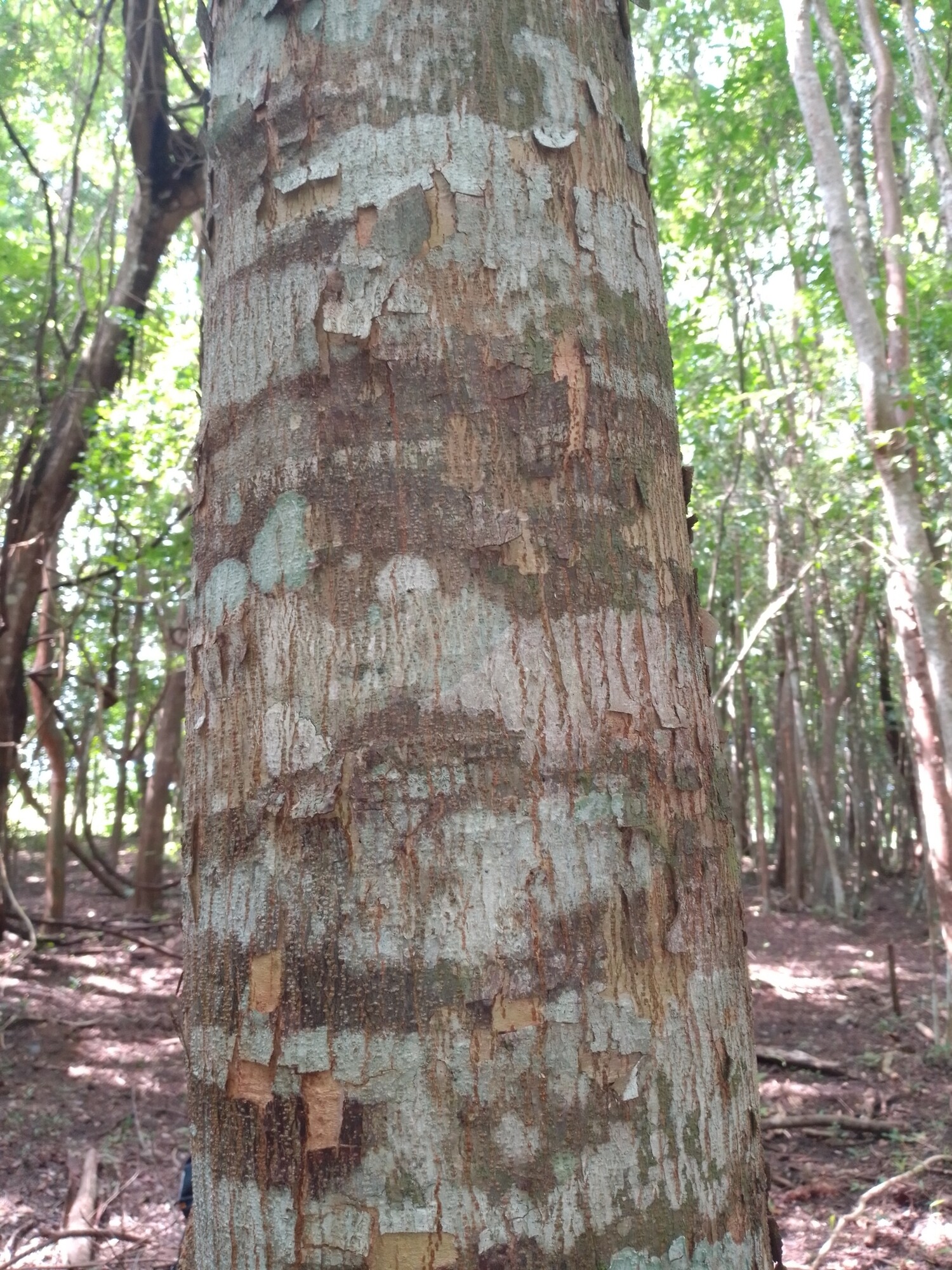
The bark is the most reliable field identification character. It is gray and smooth, but the bole is mottled and contoured by tan pockmarks formed as older bark is shed in roundish pieces. These circular exfoliation scars give the trunk a distinctive appearance visible from a distance, quite unlike any other tree in Costa Rican dry forest. Grey lenticels (pores for gas exchange) are scattered across the bark surface. The inner bark is cream to pale yellow. When cut or broken, twigs and bark exude a clear, resinous, acrid-smelling sap characteristic of the Anacardiaceae, a scent described as similar to mango (Mangifera indica) or jocote (Spondias purpurea), both close relatives in the cashew family.
Leaves
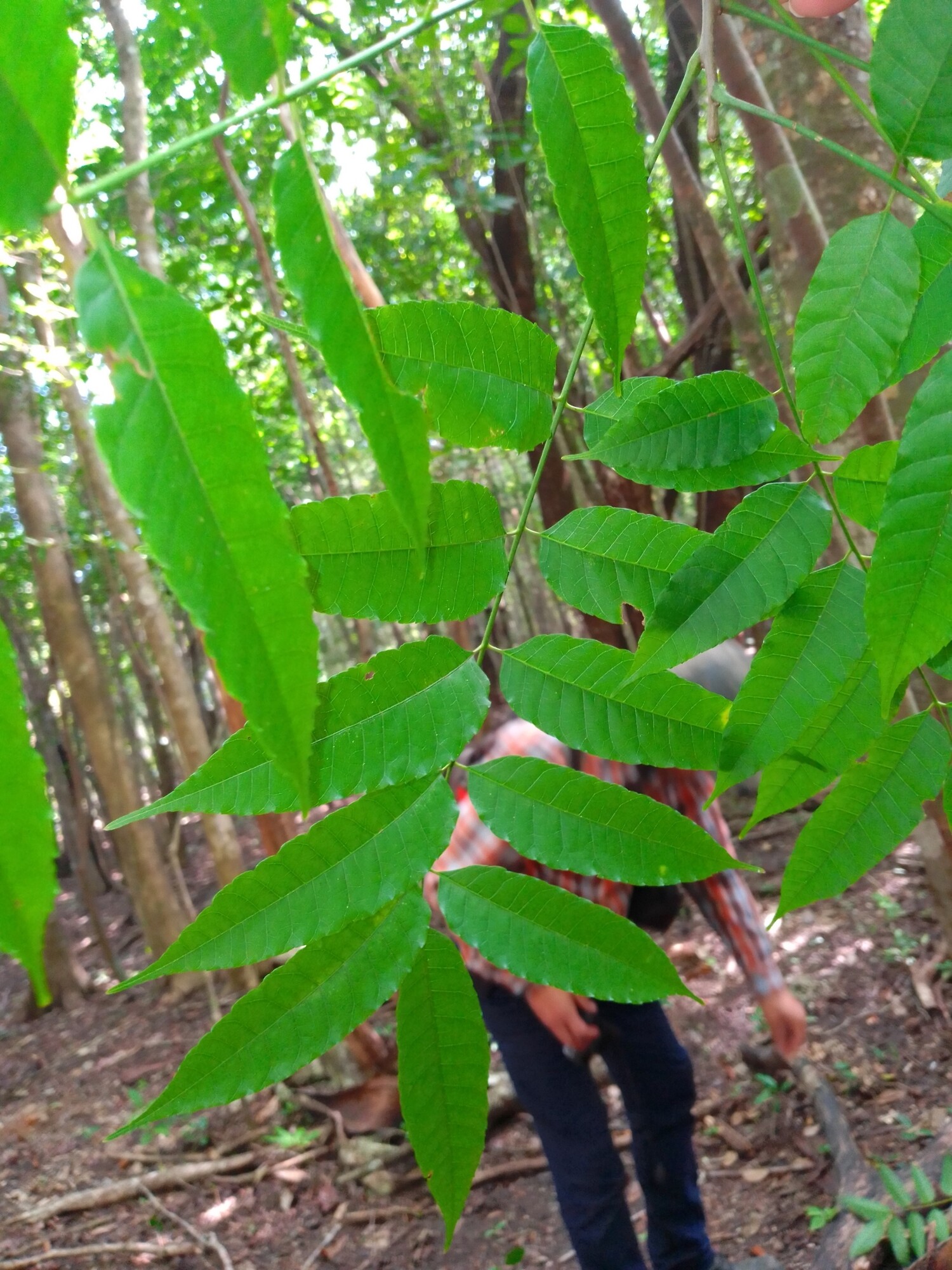
The leaves are imparipinnately compound (divided into leaflets with one at the tip), alternately arranged along the branches, and approximately 25 cm long by 12 cm wide overall. Each leaf bears 7–11 lance-shaped to oblong leaflets with slightly serrate (saw-toothed) margins and pointed tips. Tertiary veins are conspicuous across the leaflet surface. The species is deciduous, shedding its leaves annually in January or February at the start of the dry season. Before falling, the foliage turns bright red, creating a conspicuous display across the canopy. New leaves flush shortly afterward or at the onset of the wet season, so the leafless period is brief. Crushed leaves release a strongly aromatic, acrid resin. Among its synonyms is var. inodorum (meaning "odorless"), hints that the intensity of this scent varies across the species' range.
Flowers
Astronium graveolens is dioecious (individual trees are either male or female), making it an obligate outcrosser dependent on insect-mediated pollen transfer. The flowers are small, approximately 4 mm across, light yellow to lavender, with five petals and five short stamens, borne in branched panicles (loosely branched clusters) at the tips or axils of branches. A five-lobed annular disc sits at the base of the flower. In female flowers, the sepals are 1–3 mm long; the ovary is unilocular (single-chambered) with a solitary subapical ovule and three separate short styles. Flowering occurs during the dry season, typically in March in Costa Rica, often while the tree is still leafless or just flushing new leaves. Because flowers develop very high in the canopy, they are difficult to observe without telescopic equipment.
Fruits
The fruit is the feature that gives the genus its name. It is fusiform (spindle-shaped), approximately 1.5 cm long, containing a single narrow, thin, wrinkled seed at the center. After pollination, the five calyx sepals enlarge dramatically, growing to 0.8–4.5 cm long and radiating outward like a five-pointed star. These persistent, papery wings give the ripe fruit a golden-brown, star-shaped appearance and serve as sails for wind dispersal. Fruits mature by late April in Costa Rica, and seeds are released during the late dry season when strong trade winds carry them away from the parent tree. Seeds require no pre-treatment and germinate rapidly when they contact moist soil with the first rains of April or May, reaching planting size (35–40 cm) within five weeks.
Distribution
Astronium graveolens ranges from the Yucatan Peninsula of Mexico through Central America (Guatemala, Belize, Honduras, El Salvador, Nicaragua, Costa Rica, Panama) to South America (Colombia, Venezuela, Ecuador, Peru, Brazil, Bolivia, Paraguay). Its distribution follows the seasonally dry tropical forest biome across the Neotropics. Colombia holds 94% of the species' 51,000+ GBIF occurrence records, reflecting both the country's extensive dry forests and intensive botanical collecting along the Caribbean coast and inter-Andean valleys.
In Costa Rica, the species occurs exclusively along the Pacific slope. It is most abundant in the dry forests of Guanacaste, where it is a characteristic element of old-growth canopy at Santa Rosa National Park, Palo Verde National Park, and throughout the Area de Conservación Guanacaste, including Isla San José. From Guanacaste, its range extends southward through the Central Pacific to Punta Leona, growing progressively rarer. Records from the San José area include Escazú (995 m), Turrubares (1,178 m), and the Pirrís watershed. The species reaches its southern Costa Rican limit in the Brunca region, where 12 documented localities include Boruca along the Interamerican Highway, Carbonera on the road to Carate in the Jiménez district, Aguabuena within the Reserva Forestal Golfo Dulce on the Osa Peninsula, and Rey Curré along the margins of the Río Grande de Térraba. The species is rare in these southern populations, which occupy the wetter end of its habitat tolerance. Its elevation range in Costa Rica spans from 5 m at coastal Guanacaste sites to 1,187 m in the Central Valley.
The species grows best where mean annual temperatures are 24–27.5°C and rainfall falls between 1,200–3,000 mm, with a pronounced dry season of up to six months. It prefers lighter soils with less than 40% clay, neutral pH, and good drainage, and does not tolerate waterlogging. Most commonly found at 500–600 m elevation, it thrives in the seasonal climates that characterize the Pacific lowlands of Central America.
Ecology
The dioecious breeding system of Astronium graveolens means that every seed requires pollen to travel between separate male and female trees. This transfer is accomplished primarily by small stingless bees of the genus Plebeia (Meliponini), which visit the inconspicuous flowers high in the canopy during March. Once fertilized, the fruits develop their star-shaped calyx wings and are dispersed by wind during the late dry season, when trade winds are strongest and the canopy is still open from leaf fall. Research in fragmented Atlantic Forest in Brazil found that wind dispersal was actually facilitated by forest depletion: populations in fragmented landscapes showed reduced inbreeding compared to continuous forest, suggesting that gaps between forest fragments may create wind corridors that promote long-distance pollen and seed movement.
Among the species' most consequential ecological interactions is its relationship with parrots. In a study of tropical dry forest in Mexico, the lilac-crowned parrot (Amazona finschi) destroyed 43% of Astronium seeds before dispersal, making it the dominant pre-dispersal seed predator; insects accounted for only 1.3%. Seed predation was concentrated in patches with many fruiting trees rather than in isolated individuals, a pattern suggesting that parrots forage in areas of high fruit density. The authors noted that the ongoing decline of parrot populations across the Neotropics could alter canopy tree recruitment patterns in ways that are difficult to predict.
The tree's aromatic chemistry also plays an ecological role. In 1984, T.K. Chen, D.F. Wiemer, and J.J. Howard at the University of Iowa identified trans-beta-ocimene from the leaves of Astronium graveolens collected in Costa Rica. This volatile terpene acts as a repellent against leafcutter ants (Atta spp.), deterring foraging in both laboratory and field experiments. The compound was present at a minimum concentration of 0.012% by weight in fresh leaves. Leafcutter ants are among the most destructive herbivores in Neotropical forests, harvesting leaf tissue to cultivate their fungal gardens, so a chemical defense that deters them represents a significant ecological advantage.
Uses and Chemistry
The wood of Astronium graveolens is among the most valued tropical hardwoods in the Americas. Known in the international timber trade as Goncalo Alves or Tigerwood, it has a basic specific gravity of 0.75–0.84, a Janka hardness of 2,160 pounds-force (dry), and heartwood that is reddish-brown to orange-brown with irregular stripes of medium to very dark brown, becoming nearly black with air exposure. The sapwood is whitish or dull grey, up to 10 cm thick. The grain is fine, the texture dense, and the wood takes an excellent polish. It is highly resistant to moisture absorption, wood-rotting fungi, termites, and dry-wood insects, making it one of the most durable Neotropical timbers.
These properties have driven centuries of exploitation. The wood has been used for heavy construction (bridges, beams, joists, crossties, flooring), fine furniture and cabinetry, decorative veneers, knife handles, archery bows, billiard cue butts, turnery, and guitar bodies, where its density and resonance are prized. In Costa Rica, it has also been planted as shade for coffee and used in agroforestry systems where its deep roots stabilize soil and its leaf litter enriches the ground.
Beyond timber, the tree's chemistry has attracted pharmacological research. In 2014, Hernández-Malafronte and colleagues found that a methanol extract of the leaves showed significant free radical-scavenging activity and inhibited the interaction between placental growth factor and its receptor, a pathway relevant to cancer and macular degeneration. The most active compound was 1,2,3,4,6-penta-O-galloyl-D-glucopyranose (PGG), a polyphenol with potent antioxidant and antiangiogenic properties. In 2024, da Silva and colleagues isolated chalcone dimers from the stems for the first time in the genus, finding that three of these compounds inhibited acetylcholinesterase by 62–84%, a mechanism of interest for Alzheimer's disease research. In Brazilian folk medicine, the bark and leaves of Astronium species have long been used to treat allergies, inflammation, diarrhea, and ulcers.
Taxonomic History
Nikolaus Joseph Freiherr von Jacquin (1727–1817) was a Dutch-born Austrian botanist who became the first Linnaean taxonomist to work in the New World. His Caribbean expedition of 1755–1759, commissioned by Emperor Francis I to collect plants for the imperial gardens at Schönbrunn Palace in Vienna, took him across the Caribbean islands and the northern coast of South America, including the port city of Cartagena de Indias in present-day Colombia. Few dried herbarium specimens from Jacquin's expedition survive; his material is distributed across several European herbaria including the Natural History Museum in London (BM) and the Naturhistorisches Museum Wien (W). He published Astronium graveolens in 1760 in Enumeratio Systematica Plantarum (page 33), a work he admitted was somewhat hastily compiled. A more detailed description with an illustration (tab. 181, fig. 96) appeared three years later in his Selectarum Stirpium Americanarum Historia (1763).
The genus name Astronium derives from the Greek astron ("star"), referring to the five persistent calyx sepals that enlarge dramatically around the fruit, radiating outward like a five-pointed star. The specific epithet graveolens combines the Latin gravis ("heavy") and olens ("smelling"), meaning "emitting a heavy odor," a reference to the acrid resinous sap released by broken twigs and leaves.
The species has accumulated more than a dozen synonyms, reflecting the taxonomic confusion that arises when a wide-ranging, morphologically variable tree is described independently from different parts of its range. F.A. Barkley published a revision of the genus in Phytologia 16: 107–152 (1968), and D.A. Santin completed a subsequent revision as a Master's dissertation at the Universidade Estadual de Campinas in 1989, which also revalidated the related genus Myracrodruon. Key synonyms include A. conzattii from Mexico, A. planchonianum from Colombia (based on a José Jerónimo Triana collection from the Magdalena Valley in 1851), and A. gracile. Molecular phylogenetic studies indicate that Astronium and Myracrodruon form a monophyletic clade, and fruit morphoanatomical evidence supports treating them as sections of a single genus, though no formal taxonomic revision has yet merged them. Astronium graveolens is the most widespread of the approximately 8–12 species in the genus, and the only one extending into Central America and Mexico. The center of diversity for the genus is Brazil, where several species are endemic to the cerrado and Atlantic Forest.
Similar Species
In Costa Rican dry forest, Astronium graveolens can be confused with other trees bearing compound leaves and turpentine-scented sap. Spondias purpurea (jocote) has 5–12 pairs of leaflets compared to 7–11 total leaflets in Astronium, and produces fleshy, edible fruits rather than winged ones. Bursera simaruba (indio desnudo), while in the related family Burseraceae rather than Anacardiaceae, shares the aromatic resinous sap but is immediately distinguished by its thin, papery, orange outer bark that peels away to reveal photosynthetic green bark beneath. No other Astronium species occurs in Costa Rica or anywhere in Central America, so within the genus there is no risk of confusion.
Conservation Outlook
The global conservation picture for Astronium graveolens is complicated by a mismatch between its broad geographic range and the intensity of localized threats. With populations spanning from Mexico to Paraguay across ten or more countries, it has been assessed as Least Concern at the global level. At the national scale, the situation is different. In Costa Rica, the Instituto Nacional de Biodiversidad has listed it among timber species in danger of extinction. In Panama, natural populations of precious timber species including A. graveolens are described as overexploited. The wood's exceptional durability and aesthetic appeal ensure continued demand even as populations decline.
The deeper conservation concern is habitat loss. The seasonally dry tropical forest, which is the primary habitat of A. graveolens, is one of the most threatened ecosystems worldwide. Less than 2% of Central American dry tropical forest remains intact. In Colombia, the seasonally dry tropical forest is considered critically endangered, with only 8% of its original 9 million hectares remaining, mainly in the Caribbean region and inter-Andean valleys of the Magdalena and Cauca rivers. A 2021 genetic study of Colombian populations by Bocanegra-González and colleagues found that A. graveolens maintains relatively high genetic diversity organized into three genetic clusters, supporting the dry forest refugia hypothesis: during the last glacial maximum, dry forests were more extensive and connected, facilitating gene flow, but Holocene warming fragmented them into today's isolated remnants. Climate change modeling suggests that some populations holding unique genetic diversity may be imperiled by further habitat shifts.
In Costa Rica, the species' stronghold is the protected dry forest of Guanacaste, particularly Santa Rosa and Palo Verde national parks within the Area de Conservación Guanacaste. These protected areas safeguard the largest remaining dry forest populations. The species' ease of propagation (seeds germinate rapidly and seedlings grow fast) makes it a good candidate for reforestation and restoration projects. Its rarity in the Brunca region, where only 12 localities are documented along the southern edge of its range, underscores the importance of protecting dry-forest fragments in southern Costa Rica's Pacific lowlands.
Resources & Further Reading
Taxonomy & Nomenclature
Plants of the World Online entry with accepted name, distribution, and full synonymy.
Nomenclatural data, type specimens, and literature references from Missouri Botanical Garden.
Taxonomic notes including a new dwarf species from the Brazilian Shield and genus-level phylogenetic context (2017).
Brazilian Journal of Botany (2021). Morphological evidence supporting monophyly of the two genera.
Species Information
Global occurrence records (51,000+) and specimen data across the species' range.
Detailed species account for Costa Rica's Pacific slope, including ecology, identification, and timber properties.
Comprehensive entry on habitat, propagation, and uses.
Species listing for the Osa Peninsula, the southern limit of its Costa Rican range.
General overview of the species including distribution, uses, and common names.
Species page from the Area de Conservación Guanacaste.
Scientific Literature
Identification of trans-beta-ocimene as a volatile leafcutter ant repellent. Naturwissenschaften 71: 97–98.
Lilac-crowned parrots destroy 43% of seeds pre-dispersal. Journal of Tropical Ecology.
Genetic structure of Colombian populations supports the dry forest refugia hypothesis.
Antioxidant polyphenols and antiangiogenic compounds from the leaves. Natural Product Research 28(12).
Novel chalcone dimers isolated from stems, with implications for Alzheimer's research. Phytochemistry Letters.
Wind-dispersed A. graveolens shows reduced inbreeding in fragmented Atlantic Forest.
Conservation & Restoration
Overview of the dry forest ecosystem and conservation challenges in Guanacaste.
Tropical restoration library entry with propagation and planting guidance.
Timber Properties
Technical wood data from Chudnoff (1984), Tropical Timbers of the World.
International Tropical Timber Organization species profile with physical and mechanical properties.
Historical Context
Biography of the species' author, the first Linnaean botanist to work in the New World.