Quizarra Olvidada
Ocotea praetermissa — "The overlooked one": a cloud-forest laurel hidden for decades in herbarium folders under the wrong name, until Henk van der Werff rescued it in 1996.
During his revision of Costa Rican Lauraceae, Henk van der Werff noticed that numerous herbarium sheets filed as Ocotea pittieri shared glabrous inflorescences and a fuzz of erect hairs on the leaf undersides. The misfit material, collected from Cerro de la Muerte to the Caribbean face of Irazú, became the type series of Ocotea praetermissa in Novon 6:482 (1996). The species name is a gentle nod to how long these specimens had been “overlooked” in the country’s collections.
Today the species marks the upper-montane reaches of Costa Rica’s Central and Talamanca cordilleras and spills across the border into the cloud forests of Chiriquí and Bocas del Toro, Panama. GBIF currently lists 176 georeferenced records, with San José, Limón, Cartago, and Puntarenas provinces providing the bulk of the observations and a handful of vouchers from western Panama.
Identification
Leaves
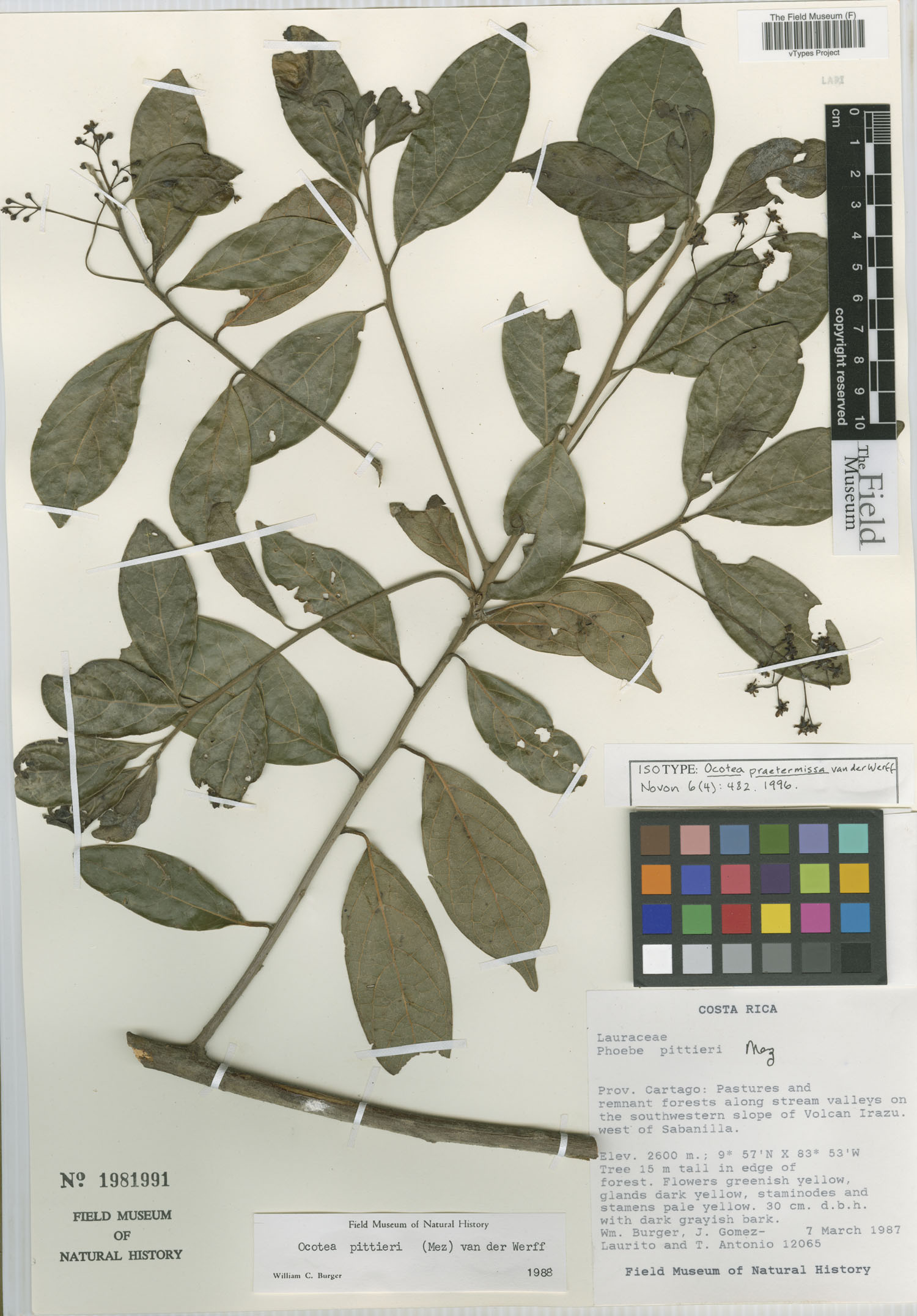
Leaves are small for the genus, only 3–10 × 1.5–4 cm, chartaceous (papery-thin) in texture. Viewed against the light they appear nearly glabrous (hairless) above, but the lower surface shows an even coat of erect hairs, densest along the midrib and secondary veins. Many blades hide axillary tufts of whitish hairs (domatia, small pockets at vein junctions) that shelter beneficial mites. Lateral veins number three to six pairs, and the petiole is stubby, only 5–12 mm long.
Flowers
Inflorescences are axillary racemes or narrow panicles up to 12 cm long, almost completely glabrous (the key character that separates this species from O. pittieri). Flowers are yellowish, 5–7 mm wide, with six equal tepals (petal-like structures) that are only lightly hairy near their bases on the inside.
Fruits
Fruits are ellipsoid drupes about 2.5 × 1.8 cm that sit in shallow cupules (cup-like receptacles) 1.3 cm across. The cupule rim rarely rises more than a few millimeters, distinguishing the species from relatives with deeper, more prominent cups.
Distribution and Habitat
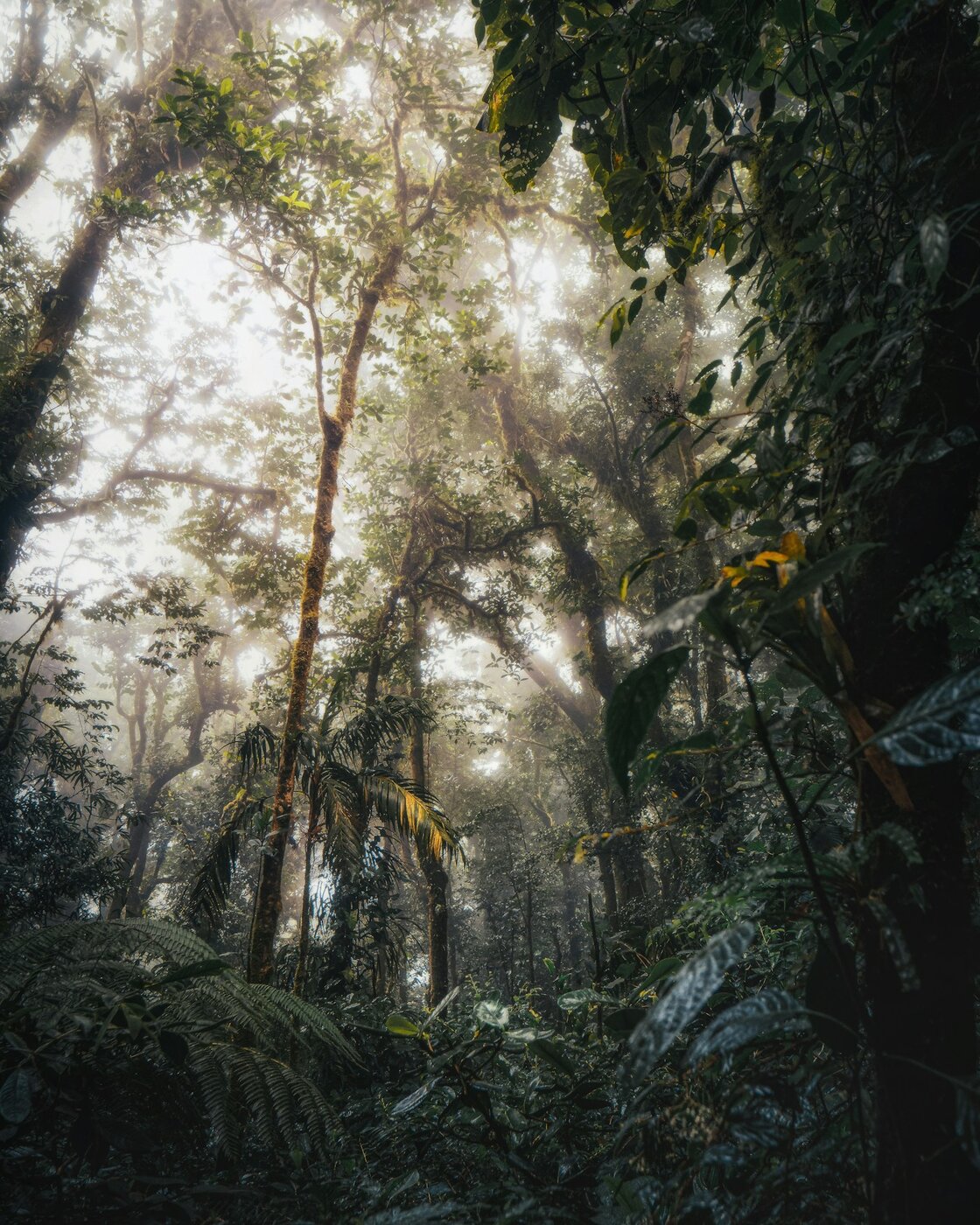
Ocotea praetermissa lives in the cloud forests of Costa Rica's central and southern highlands, typically between 2,000 and 3,200 meters elevation. The species was first collected on the southwest slopes of Volcán Irazú and has since turned up across the Cordillera Central, the Los Santos highlands, Cerro de la Muerte, and the headwaters of the Río Savegre. A few trees also grow on the Caribbean slopes of the Talamanca range and in western Panama's Chiriquí highlands.
For decades, herbarium specimens of this species were misfiled under Ocotea pittieri, a close relative with hairy flower stalks. When Henk van der Werff described O. praetermissa in 1996, he noted that its smooth, hairless inflorescences had been consistently overlooked. Field crews in Los Santos still double-check the tiny hair tufts in the leaf vein axils before deciding which species they are looking at.
Conservation Outlook
The IUCN category reported via GBIF remains Least Concern because O. praetermissa straddles several national parks and reserves, from Tapantí-Macizo de la Muerte to La Amistad. Nevertheless, its home lies in a climate-sensitive cloud-forest belt that has limited room to shift upslope, so long-term security depends on keeping contiguous canopy across the cordilleras.
Because the species was routinely confused with O. pittieri, van der Werff (1996) urged botanists to document pubescence patterns carefully. That recommendation still guides restoration projects: nurseries supplying the Los Santos Biological Corridor prefer to raise seedlings from documented mother trees so that future quetzal food sources truly match the forests being restored.
The Oak-Laurel Partnership
At 2,650 meters on Cerro de la Muerte, Quercus costaricensis dominates the canopy—a near-monoculture of gnarled, epiphyte-laden oaks that defines Costa Rica's upper montane forest. But in the understory and subcanopy, laurels hold their own. Ocotea praetermissa is one of roughly a dozen Ocotea species documented in this zone, threading through gaps in the oak canopy where filtered light reaches the forest floor. The species tolerates the constant fog immersion that would rot the leaves of lowland relatives, thanks in part to an unlikely partner: predatory mites.
The tiny hair tufts in the leaf vein axils—the domatia that helped van der Werff separate this species from O. pittieri—are not incidental. These pockets shelter mites that consume fungal spores and herbivore eggs, keeping the leaf surface clean. In perpetually damp cloud forest, where fungal pathogens thrive, the mutualism may spell the difference between a healthy tree and one slowly consumed by rot. The relationship is ancient: fossil evidence suggests plant-mite mutualisms date back 75 million years, and Lauraceae show some of the earliest documented domatia structures.
Chemistry of the Cloud Forest
In the 2000s, chemist William Setzer and botanist William Haber began systematically profiling the essential oils of Monteverde's laurels. When they steam-distilled leaves of O. praetermissa, the dominant compounds were α-pinene and β-pinene—the same sharp-scented monoterpenes that give pine forests their resinous smell. These volatile oils are not just fragrance: β-pinene shows pronounced antibacterial activity against Bacillus cereus, and the mixture tested positive in brine-shrimp toxicity assays, a standard screen for bioactive compounds.
Setzer's team went further. They screened 23 Lauraceae species from Monteverde for inhibition of cruzain, a protease essential to Trypanosoma cruzi, the parasite that causes Chagas disease. Chagas kills over 10,000 people yearly across Latin America, and Costa Rica lies within the endemic zone of its kissing-bug vector. Nine of the tested laurels showed promising cruzain inhibition, the active compounds traced to sesquiterpenes like β-caryophyllene and germacrene D. The research remains preliminary—no one is brewing Chagas cures from cloud-forest leaves—but it underscores how little we know about the chemical ecology of highland laurels. Every overlooked species may carry overlooked compounds.
Frugivores of the High Forest
Quetzals, bellbirds, and black guans feed on O. praetermissa drupes when they ripen between February and June, but the cast of dispersers at these elevations differs from lower cloud forest. Azure-hooded jays—secretive corvids that forage high in the canopy—cache seeds in bark crevices and forest-floor litter, inadvertently planting the next generation. Many of the bird species on Cerro de la Muerte are endemic to the Talamanca range and depend on the oak-laurel mosaic for food and nest sites. Protecting the laurel understory means protecting the birds that cannot survive anywhere else.

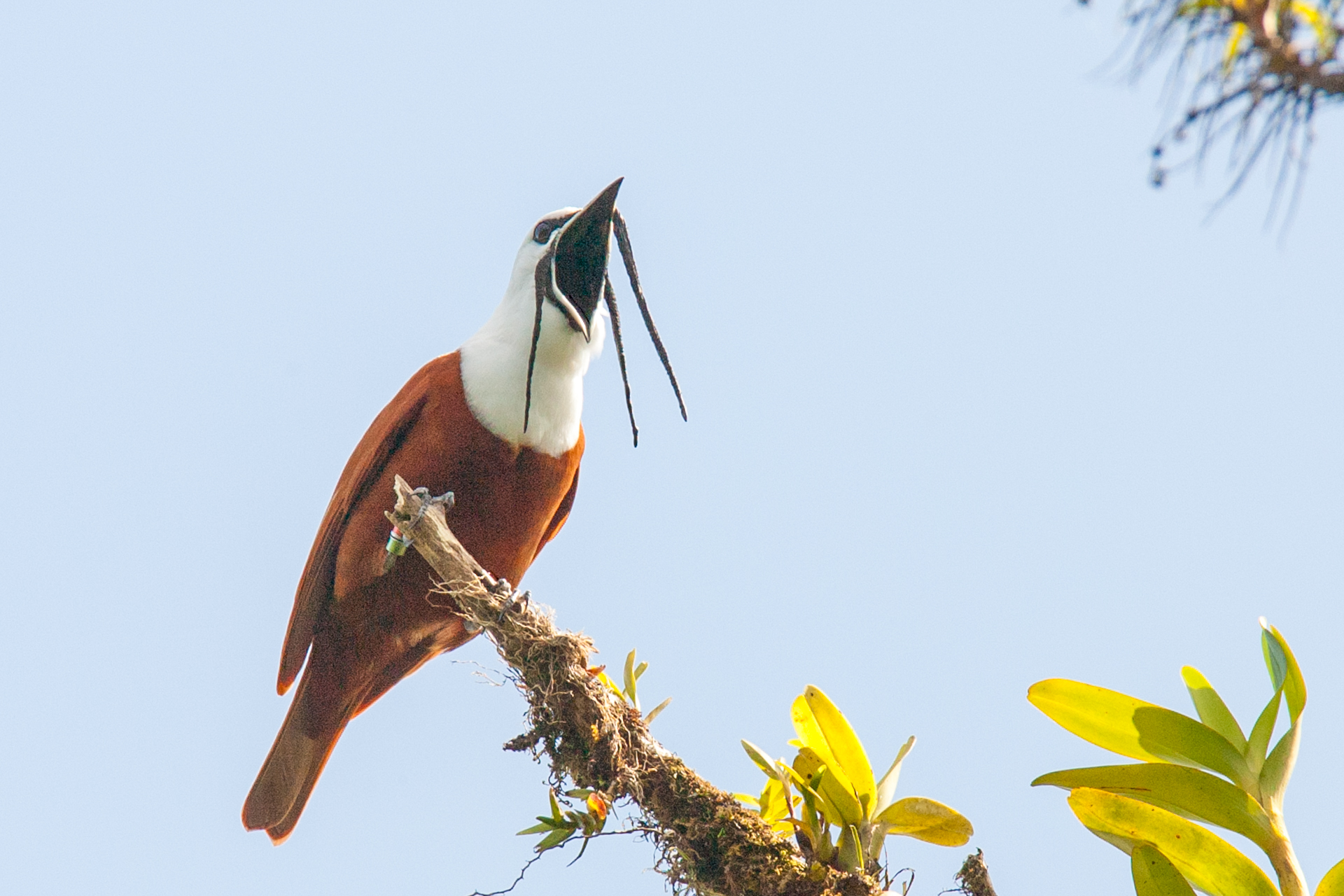
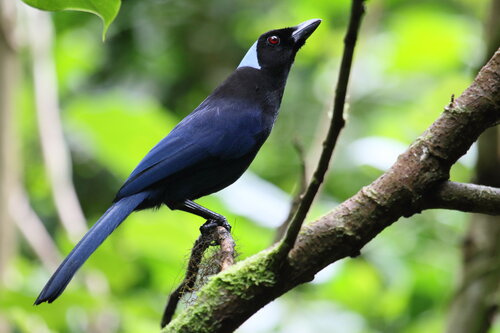
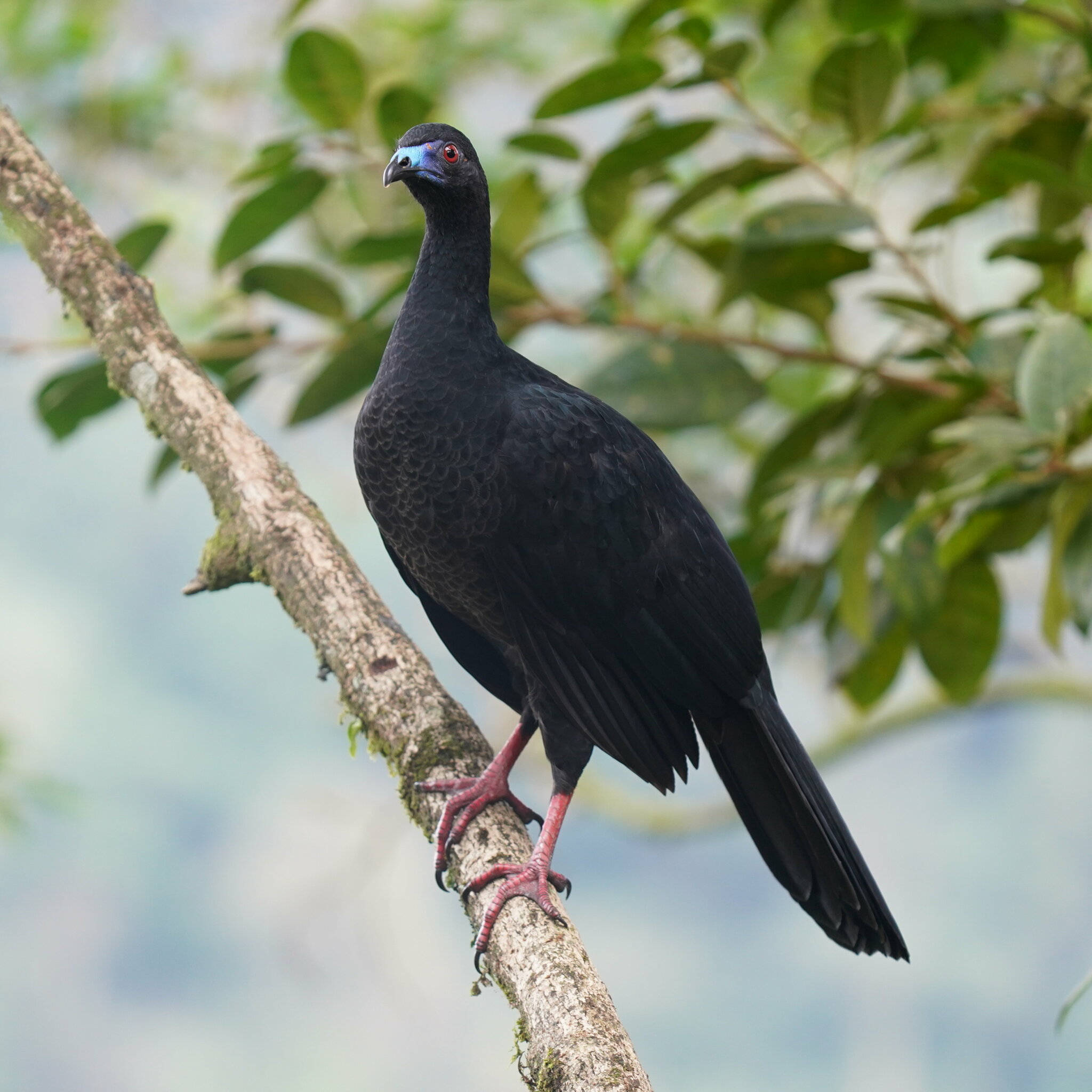
Photos (clockwise from top left): Resplendent Quetzal by Diego Cancino (Pexels), Three-wattled Bellbird by egorbirder (CC BY), Black Guan by Daniel S. Katz (CC BY 4.0), and Azure-hooded Jay (CC BY-SA 4.0).
Taxonomic History
Henk van der Werff, a Lauraceae specialist at the Missouri Botanical Garden, described Ocotea praetermissa in 1996 after noticing that numerous herbarium sheets filed under O. pittieri shared two distinctive features: glabrous inflorescences and erect hairs on the leaf undersides. The specific epithet "praetermissa" means "overlooked" in Latin, a wry acknowledgment that these specimens had been misfiled for decades.
The holotype came from 2,600-meter ridges on the southwest slope of Volcán Irazú, collected in 1987. The species has no synonyms and remains taxonomically stable. Van der Werff placed it in Ocotea section Dendrodaphne, noting its affinity with other highland laurels characterized by small leaves and glabrous flower clusters.
Resources & Further Reading
Species Information
Taxonomic authority with nomenclatural history and distribution summary.
176 georeferenced records from Costa Rica and western Panama.
Taxonomy & Nomenclature
Original description with morphology, altitudinal range, and explanation of the "overlooked" epithet.
Conservation
Assessment listing the species as Least Concern due to presence in multiple protected areas.
Essential Oil Chemistry & Bioactivity
Essential oil profiling and bioactivity screening; O. praetermissa oils dominated by pinenes with antibacterial activity against Bacillus cereus.
Screening of 23 Monteverde Lauraceae for anti-Chagas activity; nine species showed promising cruzain inhibition via sesquiterpenes like β-caryophyllene.
Forest Structure & Ecology
Overview of the oak-laurel forest zone where Quercus costaricensis dominates 80% of the canopy and Ocotea species form the understory.
Fossil evidence showing plant-mite mutualisms date back 75 million years; Lauraceae among the earliest families with documented domatia structures.