Euterpe precatoria (Açaí)
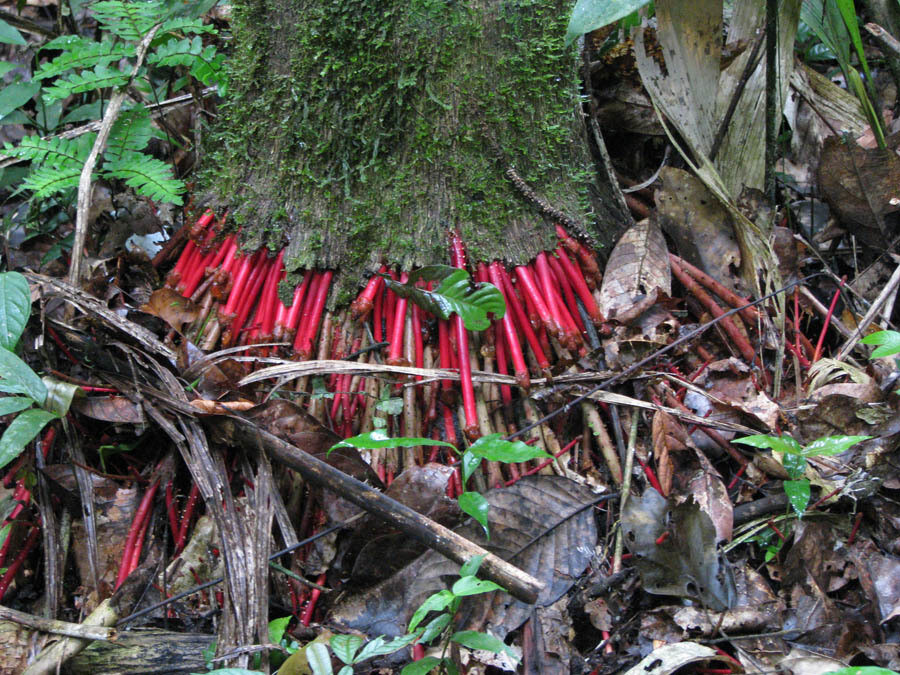
Euterpe precatoria — The most common tree in the Amazon, with an estimated 5.2 billion individuals. In Costa Rica, this single-stemmed palm with bright red stilt roots is a major target of illegal palm heart harvesting in national parks.
In 2013, a consortium of ecologists released a startling finding: among the roughly 390 billion trees in the Amazon basin, one species stood above all others in sheer abundance. Euterpe precatoria, the solitary açaí palm, numbers an estimated 5.2 billion individuals, representing about 1.3% of all Amazonian trees. This makes it one of the 227 "hyperdominant" species that together constitute half of all Amazon trees. In some forest plots, researchers counted 168 individuals per hectare.
Paradoxically, this superabundant palm faces serious harvesting pressure in Costa Rica, where poachers extract palm hearts from protected areas. Unlike its multi-stemmed relative E. oleracea, which can regenerate after cutting, E. precatoria grows as a single stem. Harvesting the palm heart kills the tree outright. In Costa Rican national parks, poachers remove up to 300 palms in two-to-three-day extraction bouts, targeting the largest reproductive individuals. The population consequences extend beyond simple removal: eliminating adult trees releases juveniles from competition, increasing local density but delaying forest regeneration and undermining genetic diversity.
Identification
Habit and Stilt Roots
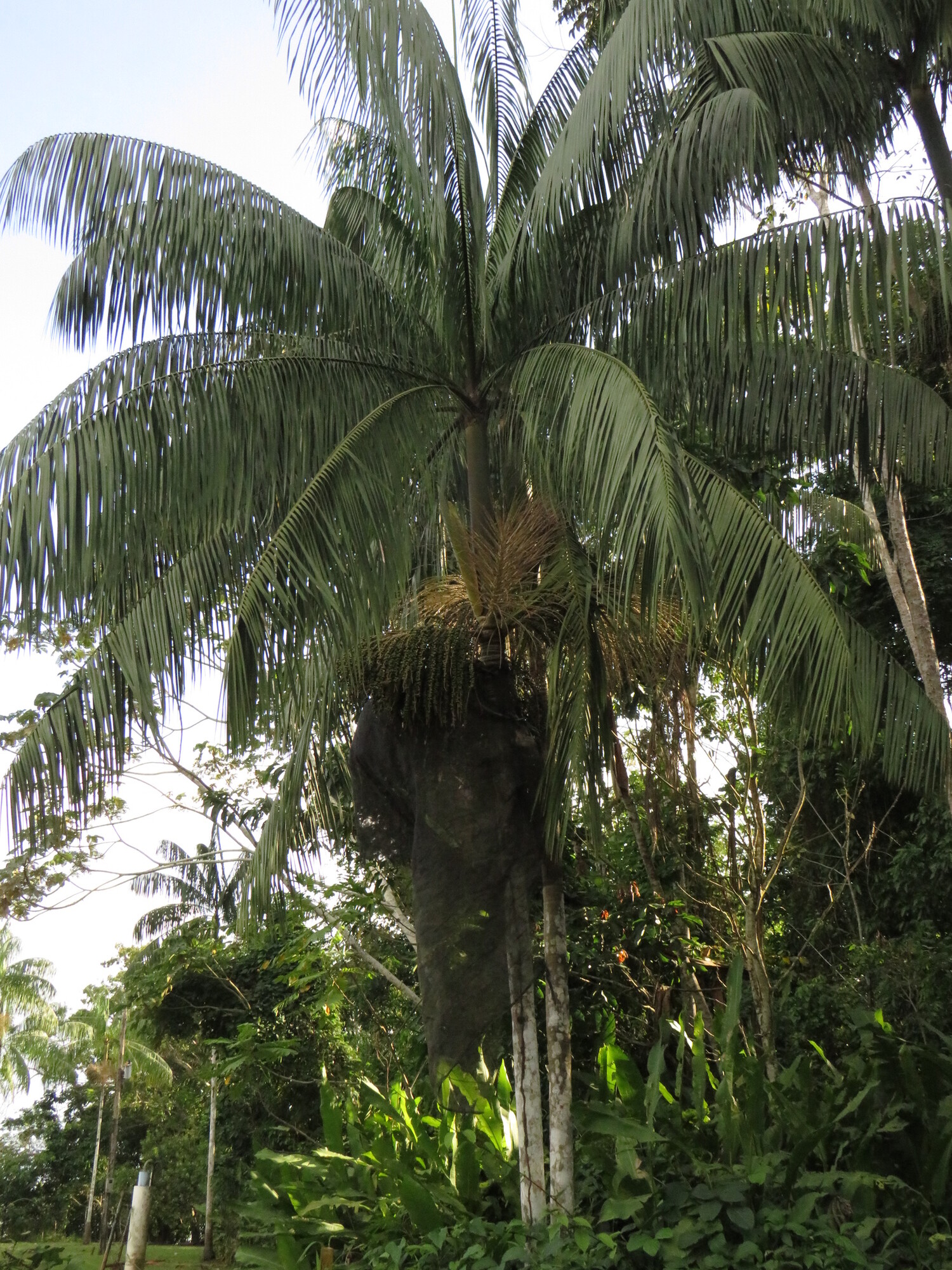
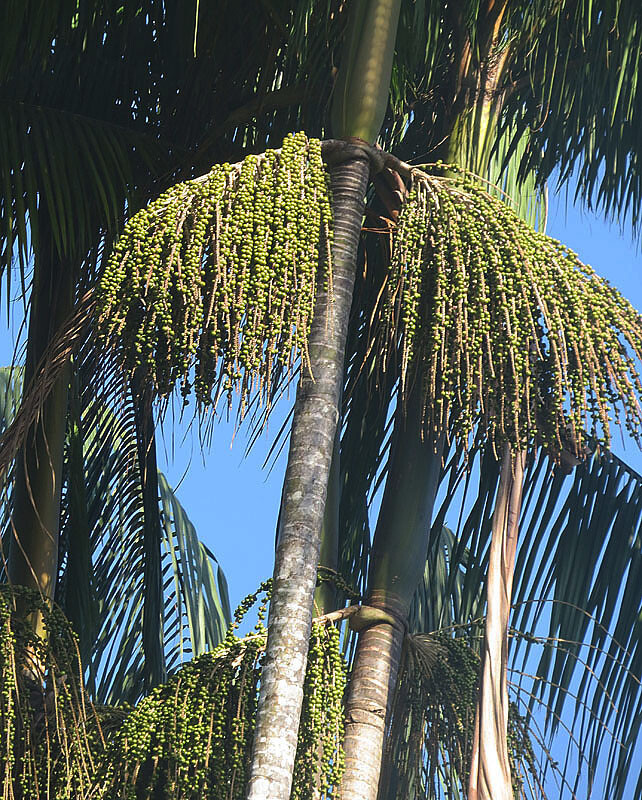
Euterpe precatoria grows as a solitary, single-stemmed palm reaching 3 to 20 meters in height. The stem, gray and smooth with prominent leaf scars, measures 4 to 23 centimeters in diameter. What immediately distinguishes this species is its conical mass of stilt roots at the base. These adventitious roots emerge bright red when young, darkening to orange and eventually brown or gray with age. On level ground, the stilt cone rarely exceeds one meter, but when the palm germinates on decomposing logs or tree buttresses, roots can extend over two meters before reaching the soil.
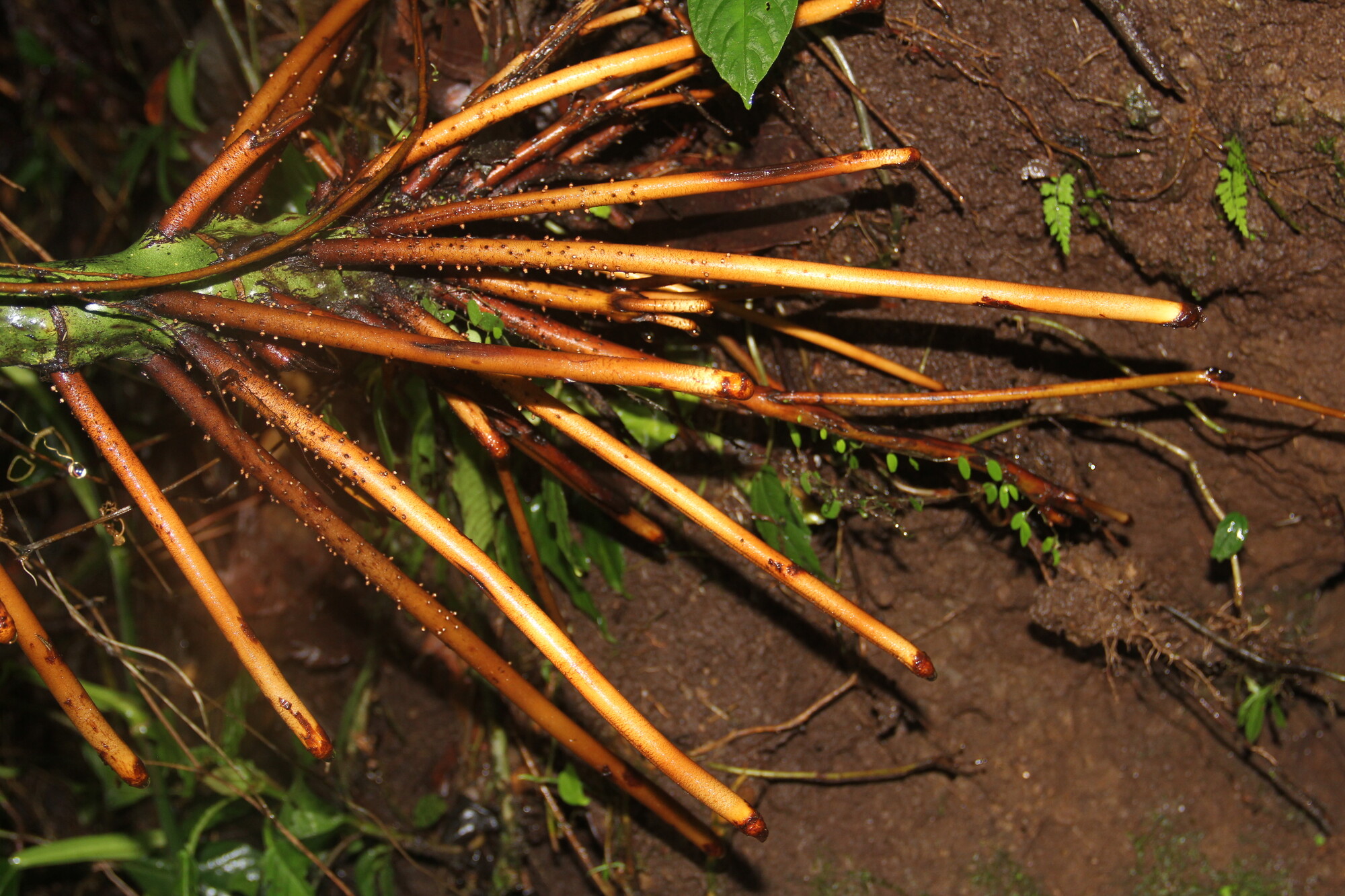
The stilt root system serves multiple functions: mechanical support on steep hillsides, improved root aeration under waterlogged conditions, and the ability to re-sprout after mechanical damage. Studies have shown that the roots also facilitate rapid stem elongation and faster canopy colonization, particularly important for a species that may take 93 to 158 years to reach reproductive age under dense shade.
Crownshaft and Leaves
The crownshaft, formed by overlapping leaf bases, is cylindrical, smooth, and measures 0.5 to 1.6 meters in length. It ranges from yellowish-green to glaucous-green in color. The crown typically bears 5 to 20 spreading, somewhat arched leaves, each reaching up to 4 meters in total length. The petiole measures 12 to 57 cm, transitioning to a rachis of 1.6 to 3.6 meters. Each leaf carries 43 to 91 pinnae per side, narrow and strongly pendulous, with middle pinnae measuring 60 to 88 cm long by 1 to 3 cm wide.
Flowers and Inflorescence
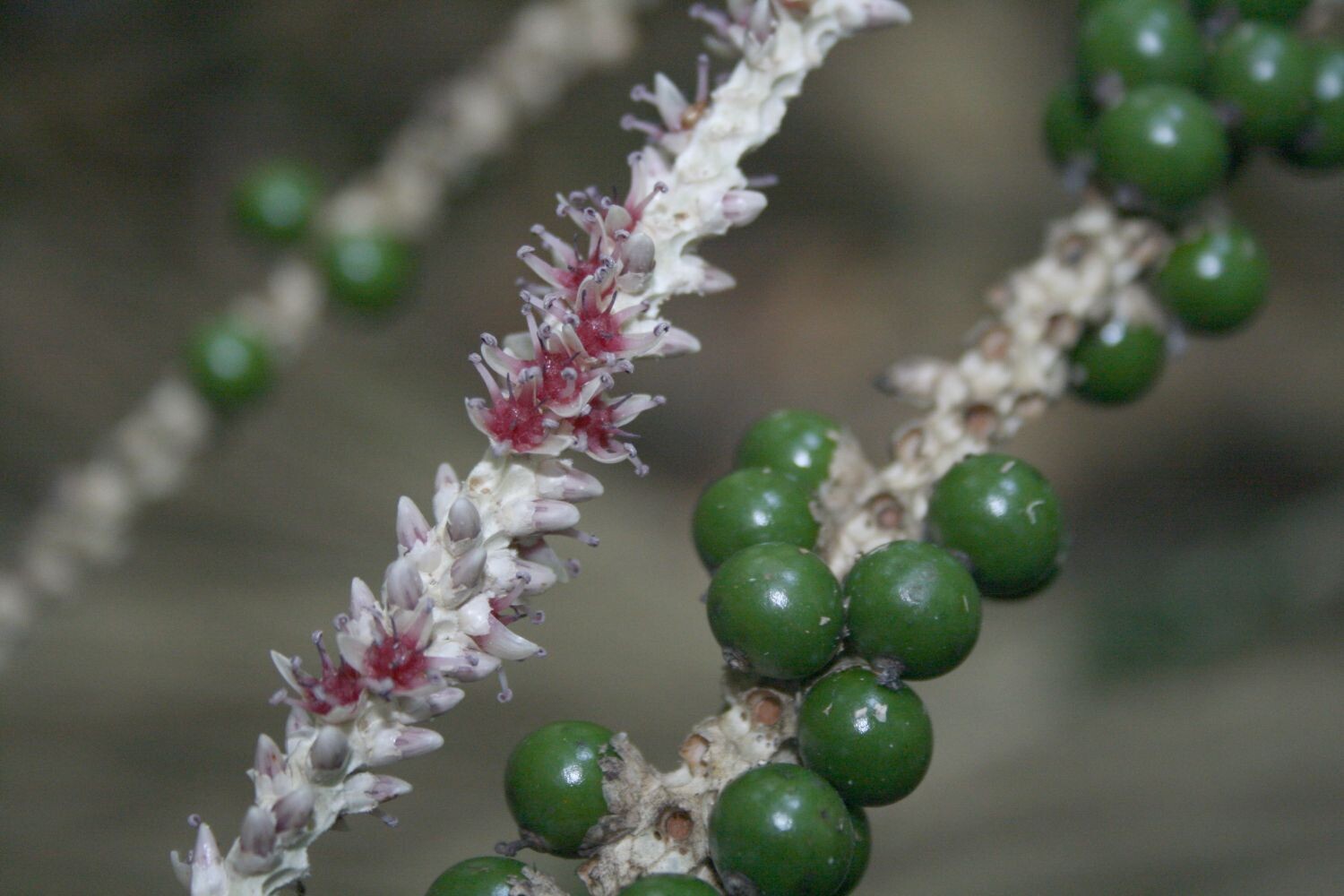
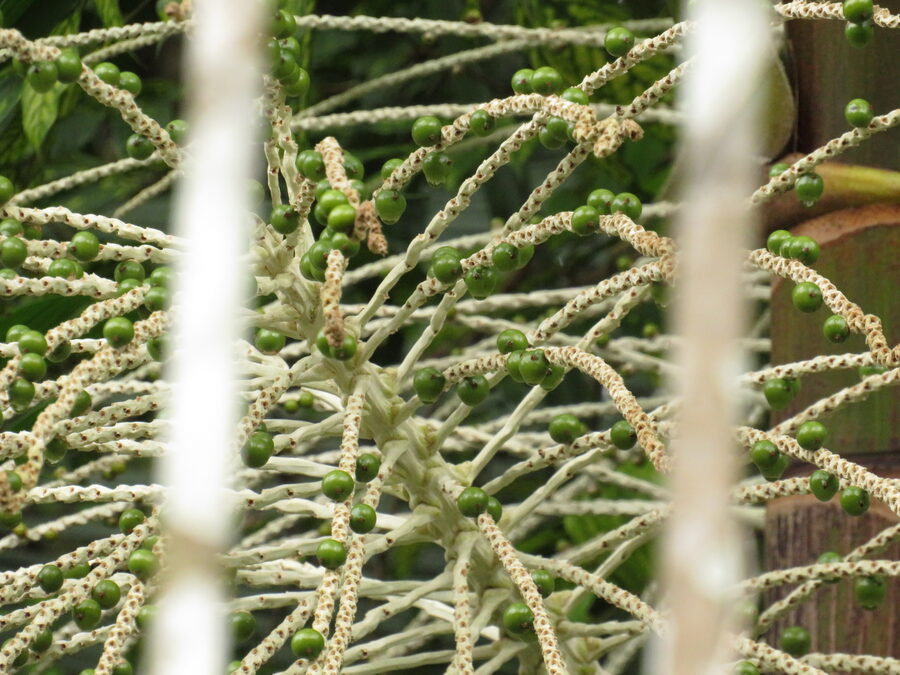
Each palm produces 1 to 4 bisexual inflorescences per flowering period. The inflorescence emerges approximately horizontal and becomes pendulous as fruits develop. Flowering follows a strict pattern of dichogamy: the male phase lasts about 17 days, followed by 6 days with no open flowers, then a female phase of just 3 days. This temporal separation makes E. precatoria an obligate outcrosser, requiring pollen from other individuals. Both male and female flowers emit an almond oil-like scent and produce nectar in septal nectaries, attracting beetles (Curculionidae, Chrysomelidae, Staphylinidae) and halictid bees as pollinators.
Fruits
Fruits develop over approximately four months from flowering. The globose drupes measure 0.9 to 1.5 cm in diameter and weigh about 1 gram. They ripen to a purplish-black color with a minutely tuberculate surface. The thin pulp is fibrous and rather dry compared to the juicier fruits of E. oleracea. Toucans, particularly the Channel-billed Toucan (Ramphastos vitellinus), are important seed dispersers, along with at least 58 bird species and over 20 mammal species documented consuming Euterpe fruits across the genus's range.
Distribution
Euterpe precatoria ranges from Trinidad through Central America (Belize, Guatemala, Honduras, Nicaragua, Costa Rica, Panama) and across northern South America (Colombia, Venezuela, Guyana, Suriname, French Guiana, Ecuador, Peru, Bolivia, Brazil). Peru and Colombia hold the largest documented populations, with 13,591 and 10,827 GBIF occurrence records respectively. The species occurs from 5 to 1,825 meters elevation, inhabiting both terra firme (unflooded upland) and várzea (seasonally flooded) forests.
In Costa Rica, the variety longevaginata occurs on the Caribbean slope of the Cordillera Central, the Llanura de Tortuguero, the Pacific slope, the Fila Costeña, the Golfo Dulce region, and Isla del Coco. The earliest Costa Rican collection dates to 1847, when Anders Sandøe Ørsted collected it at Turrialba. In the Brunca region, documented localities include the Reserva Forestal Golfo Dulce at Los Mogos, Bahía Chal, the Osa Peninsula (Aguabuena, 3.5 km west of Rincón), La Gamba ("Bosque de los Austriacos"), Los Planes, and Cañas Gordas near the Panamanian border.
Ecology
Hyperdominance and Population Structure
The hyperdominance of E. precatoria in Amazon forests has generated scientific debate. Some researchers attribute it to pre-Columbian indigenous cultivation, arguing that the palm's abundance reflects millennia of human management. Others contend these trees were dominant before modern humans arrived in the Americas. Whatever the cause, the result is striking: in some regions, E. precatoria accounts for more individual trees than any other species.
Population structure differs dramatically between habitats. In terra firme forests, populations are dominated by juveniles, with the palm being twice as common and more widespread than in várzea. In seasonally flooded várzea forests, populations are dominated by reproductive palms, suggesting that flood disturbance may promote faster development. This difference may explain the species' remarkable life history plasticity: under closed canopy shade, individuals may take 93 to 158 years to reach reproductive age, while in open conditions such as forest edges and clearings, palms can mature in just 4 years.
Mycorrhizal Associations
Studies in the Ecuadorian Amazon have documented extensive arbuscular mycorrhizal fungi (AMF) colonization in E. precatoria roots, exceeding 56% even in contaminated soils near weathered oil ponds. The fungal community includes Glomus (31%), Acaulospora (25%), Archaeospora (22%), and Rhizophagus (22%). These symbiotic relationships likely contribute to the palm's ability to thrive across such a wide range of soil conditions.
Ethnobotany: The Açaí Palm

The Legend of Iaçá
The name "açaí" derives from Tupi and means "weeping fruit." According to legend, an Amazonian chief named Itaqui faced a terrible famine that forced him to order all newborns killed, including his own daughter Iaçá's baby. Overcome with grief, Iaçá prayed to the gods and saw a vision of her child beneath a palm tree. She died embracing the tree, and the next day Itaqui found dark purple berries where her gaze was fixed. He reversed his daughter's name, calling the fruit "açaí," and it ended the famine.
Phytochemistry and Nutrition
Euterpe precatoria produces fruits with significantly higher antioxidant activity than the commercially dominant E. oleracea. Measured by ORAC (Oxygen Radical Absorbance Capacity), E. precatoria scores 1,824 μmol TE/g compared to 1,027 for E. oleracea. The fruit contains high levels of anthocyanins (including cyanidin-3-O-glucoside and cyanidin-3-O-rutinoside), flavonoids (quercetin, rutin), tannins (catechin, gallic acid), and carotenoids. Research has demonstrated neuroprotective effects in laboratory studies, with anthocyanin-rich extracts increasing stress resistance and retarding aging-related markers.
Traditional Uses
The fruit is the foundation. Across the Amazon, indigenous and ribeirinho communities have relied on açaí as a dietary staple for centuries, soaking the ripe drupes in water for about 45 minutes, then macerating the thin layer of pulp to produce a thick, purple drink. Mixed with tapioca flour, cassava, or fish, this preparation can supply a third or more of daily calories. In Belém, the capital of Pará state, per capita household consumption averages over 30 liters per year. Unlike the sweetened açaí bowls marketed globally, the traditional drink is savory and filling, closer to a meal than a snack.
The palm heart, or palmito, is the other major product. In Costa Rica, where the species is known locally as "palmito mantequilla" for its sweet, buttery flavor, it is the primary target of illegal palmito extraction in national parks. Harvesting the palm heart means cutting through the crownshaft to reach the unexpanded apical meristem, which kills the tree outright. With E. oleracea, the multi-stemmed species, cutting one stem allows others to regenerate. E. precatoria has no such resilience: one harvest, one dead palm. This fundamental difference between the two species has shaped entire economies and conservation strategies across the Neotropics.
Ethnobotanical surveys across the Amazon document over a dozen medicinal applications. Root decoctions are widely used as antimalarial remedies in Brazil, Peru, Bolivia, and French Guiana, though laboratory studies have found only moderate antiplasmodial activity in the isolated lignans, leaving a gap between the breadth of traditional use and scientific confirmation. Other recorded preparations include crushed seed infusions for fevers and root-based treatments for kidney and liver ailments. Beyond medicine, the straight, durable stems serve as construction poles and house rafters, and during the colonial period indigenous peoples used the hard seeds to craft rosaries, a practice that gave the species its name: precatoria, from the Latin precari, to pray.
Comparison with Euterpe oleracea
Commercial açaí production centers on Euterpe oleracea, which differs fundamentally in growth habit: while E. precatoria produces a single stem, E. oleracea forms clumps of up to 25 stems. This makes E. oleracea more suitable for sustainable palm heart harvesting, since cutting one stem does not kill the plant. However, E. precatoria produces nutritionally superior fruit with higher antioxidant content.
| Feature | E. precatoria | E. oleracea |
|---|---|---|
| Common names | Açaí-solitário, açaí-do-amazonas | Açaí-de-touceira, açaí-do-pará |
| Stems | Single (rarely clustered) | Multi-stemmed (up to 25) |
| Height | 3-25 m | 8-33 m |
| Primary habitat | Terra firme and várzea | Mainly floodplains/estuary |
| Antioxidant (ORAC) | 1,824 μmol TE/g | 1,027 μmol TE/g |
| Sustainable harvest | Fruit only (heart kills) | Heart and fruit |
Taxonomic History
Carl Friedrich Philipp von Martius described Euterpe precatoria in 1842, publishing the species in Alcide d'Orbigny's monumental "Voyage dans l'Amérique Méridionale." The type specimen (d'Orbigny 27) was collected by d'Orbigny during his seven-year South American expedition (1826-1833) and is housed at the Munich Herbarium.
Martius (1794-1868) is known as "the Father of Palms." He traveled 10,000 kilometers through Brazil from 1817 to 1820, collecting 6,500 botanical specimens and later authoring Historia Naturalis Palmarum (1823-1850), describing all known palm genera with over 240 chromolithographs. He described 85 new palm species, of which 54 retain his names today. His birthday, April 17, is celebrated as International Palm Day, and his gravestone bears the Latin inscription "In palmis semper virens resurgo" (In palms I rise again, ever green).
The genus name Euterpe honors the Greek muse of music and lyric poetry, from eu (well) and terpein (to please), meaning "well-pleasing" or "giver of delight." The species epithet precatoria derives from Latin precari (to pray), referring to the traditional use of the palm's hard seeds as prayer beads or rosary beads.
Two varieties are currently recognized: var. precatoria (solitary stems, South American lowlands and Trinidad) and var. longevaginata (shorter, sometimes clustered, Central America and Andes). However, molecular phylogeny studies suggest var. longevaginata may be more closely related to other species than to var. precatoria, indicating the current taxonomy may require revision.
Conservation
Despite its global abundance (classified as Least Concern by the IUCN), Euterpe precatoria faces significant local threats from palm heart extraction. In Costa Rica, it constitutes the major source of illegally harvested palmito. Poachers target the largest, tallest individuals, which are precisely the reproductive trees most important for population maintenance. Heavy harvesting in Peru and Bolivia during the 1990s caused production collapse by the early 2000s.
The ecological impacts extend beyond simple removal. Eliminating adults releases juveniles from competition, temporarily increasing local density but delaying natural forest regeneration and undermining genetic diversity. Research suggests anthropogenic pressure may be impacting genomic diversity, with high genetic structuring found among Brazilian Amazonian populations. A sustainable alternative exists: shifting from palm heart extraction (which kills the tree) to fruit harvesting (which does not). In agroforestry systems studied in Costa Rica, sun-grown palms grew 92 cm/year compared to 32 cm/year under shade, suggesting that cultivation could reduce pressure on wild populations.
Key Sources & Resources
Species Information
Official taxonomic information, distribution, and accepted synonyms.
Comprehensive information on cultivation, uses, and characteristics.
Detailed morphological description and cultivation notes.
Scientific Literature
Detailed study of reproductive biology at Reserva Ducke, Brazil.
Mycorrhizal associations in contaminated Ecuadorian Amazon soils.
Research on population dynamics in terra firme vs. várzea forests.
Review of phytochemistry and neuroprotective effects.
Conservation and Ethnobotany
Documentation of illegal harvesting impacts in Costa Rica.
Population structure research at Costa Rican study sites.
Agroforestry cultivation potential as conservation alternative.
Traditional uses in Peru and Bolivia.
Isolation of lignans with moderate antiplasmodial activity from roots.
Per capita açaí consumption data for Belém, Brazil.
Amazon Hyperdominance
News coverage of the hyperdominance discovery.
Comprehensive publication on açaí value chain and genetic diversity (in Spanish).
Cultural Context
The Tupi origin story of açaí.