Egg Yolk Tree
Chimarrhis parviflora favors the streamside margins of very wet lowland forests from Honduras to Colombia, its brilliant yellow-orange wood earning it the vernacular name "yema de huevo" (egg yolk) across Costa Rica's Caribbean slope and Osa Peninsula.
The genus name Chimarrhis comes from the Greek cheimarros, meaning "winter torrent," a reference to the seasonal streams whose banks these trees favor. Where the canopy opens above rocky quebradas, the pale yellowish bark of C. parviflora stands out against the dark understory, exfoliating in thin sheets that reveal its distinctive color from a distance.
The species epithet parviflora ("small-flowered") describes the tiny white blooms: corolla tubes measuring just 1 to 1.5 millimeters, far smaller than those of the related C. latifolia. Despite their diminutive size, the flowers are highly fragrant, attracting insect pollinators to the riparian canopy during the wet season.
Identification
Habit and Bark
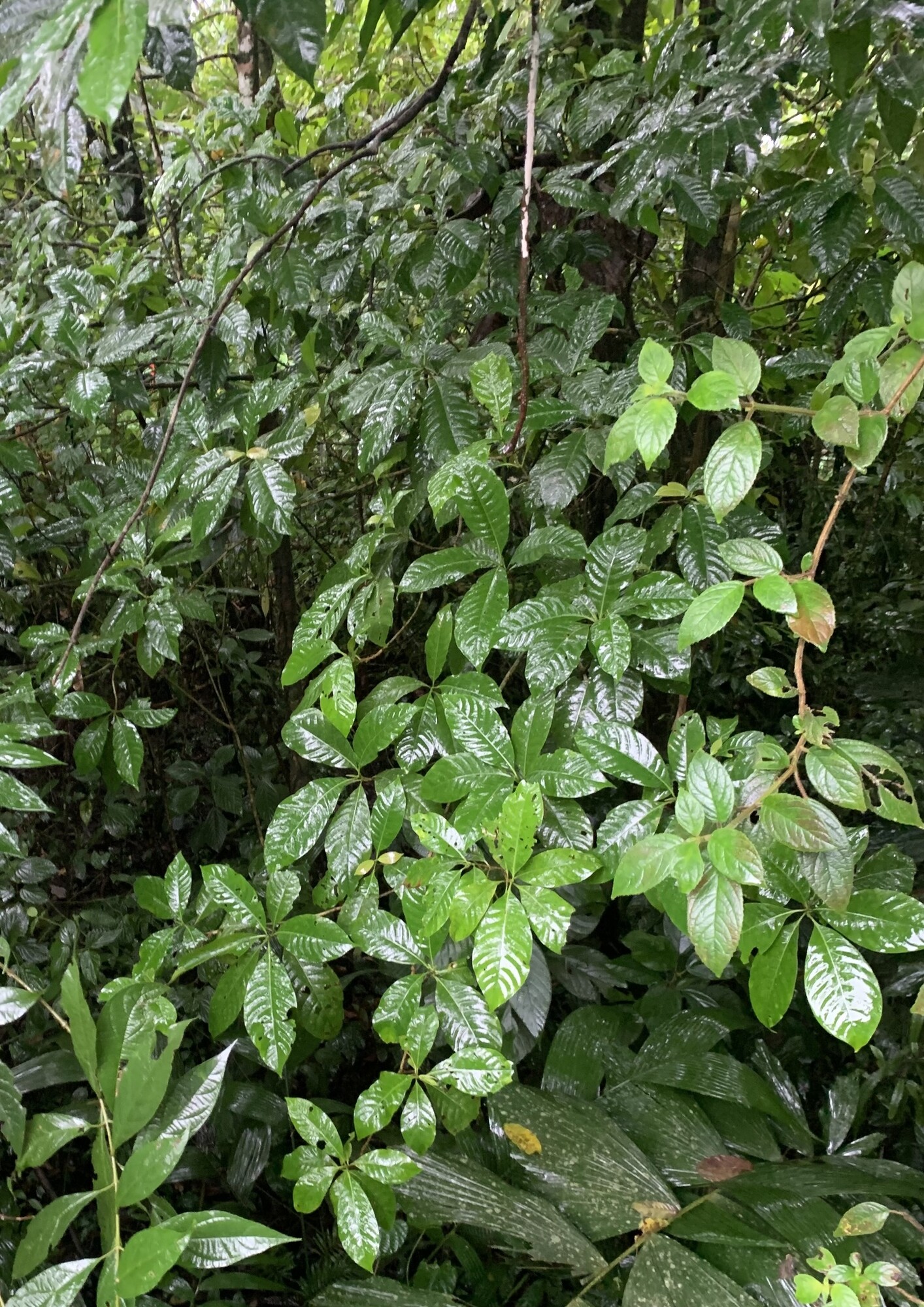
Chimarrhis parviflora grows as an evergreen tree reaching 5 to 30 meters tall, depending on site conditions. Along stream margins where light is abundant, it may develop a broad, spreading crown; in closed forest it tends to remain smaller, reaching toward canopy gaps with tiered horizontal branches.
The bark is one of the tree's most distinctive features. Cream-yellow to tan in color, it develops fine vertical striations and exfoliates in thin, irregularly shaped sheets. This pale coloring is the source of the common name "yema de huevo" (egg yolk), though the color intensifies in the heartwood. The sapwood and inner bark share this striking yellow-orange hue that sets the species apart from other lowland trees.
Leaves
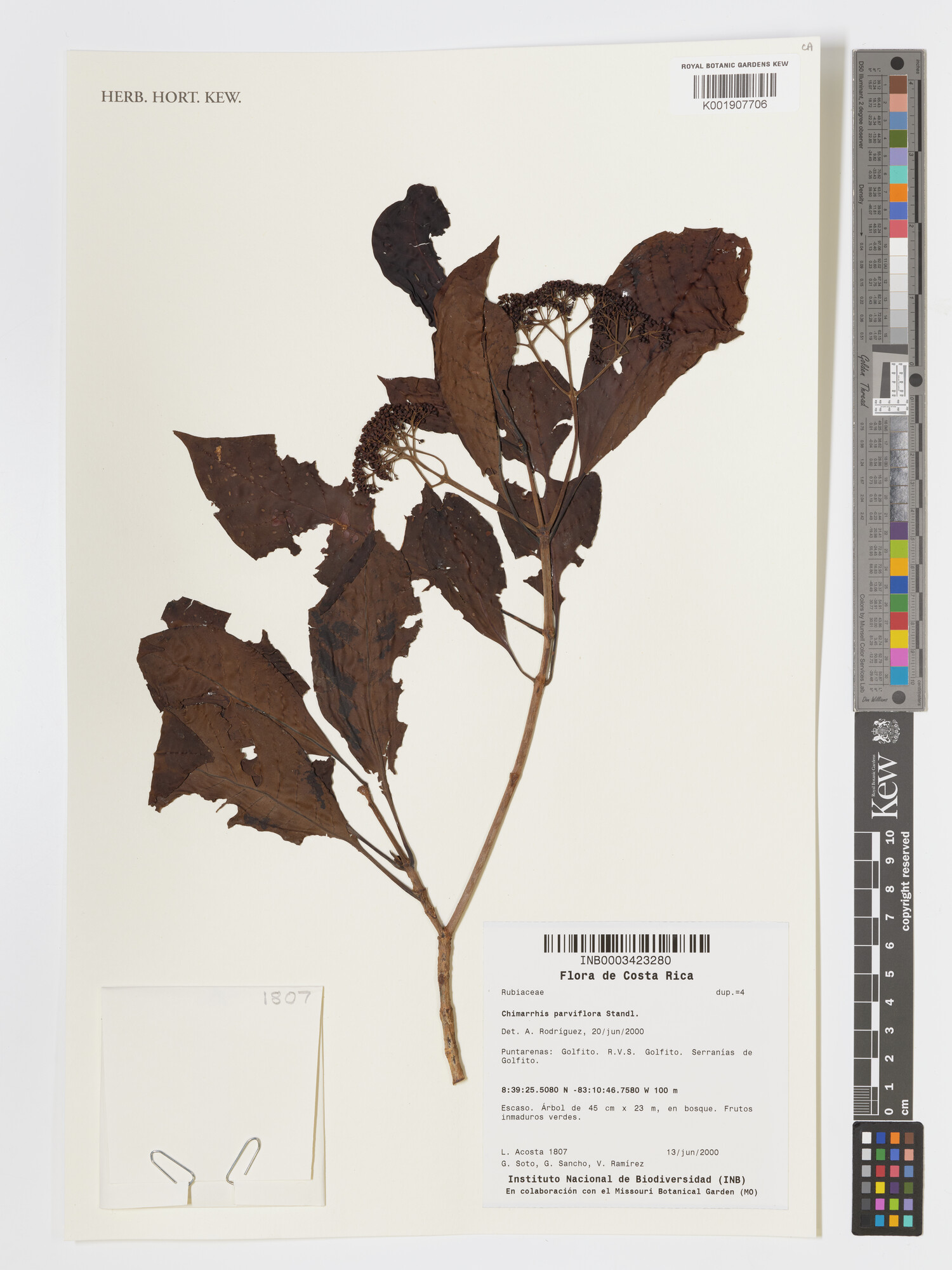
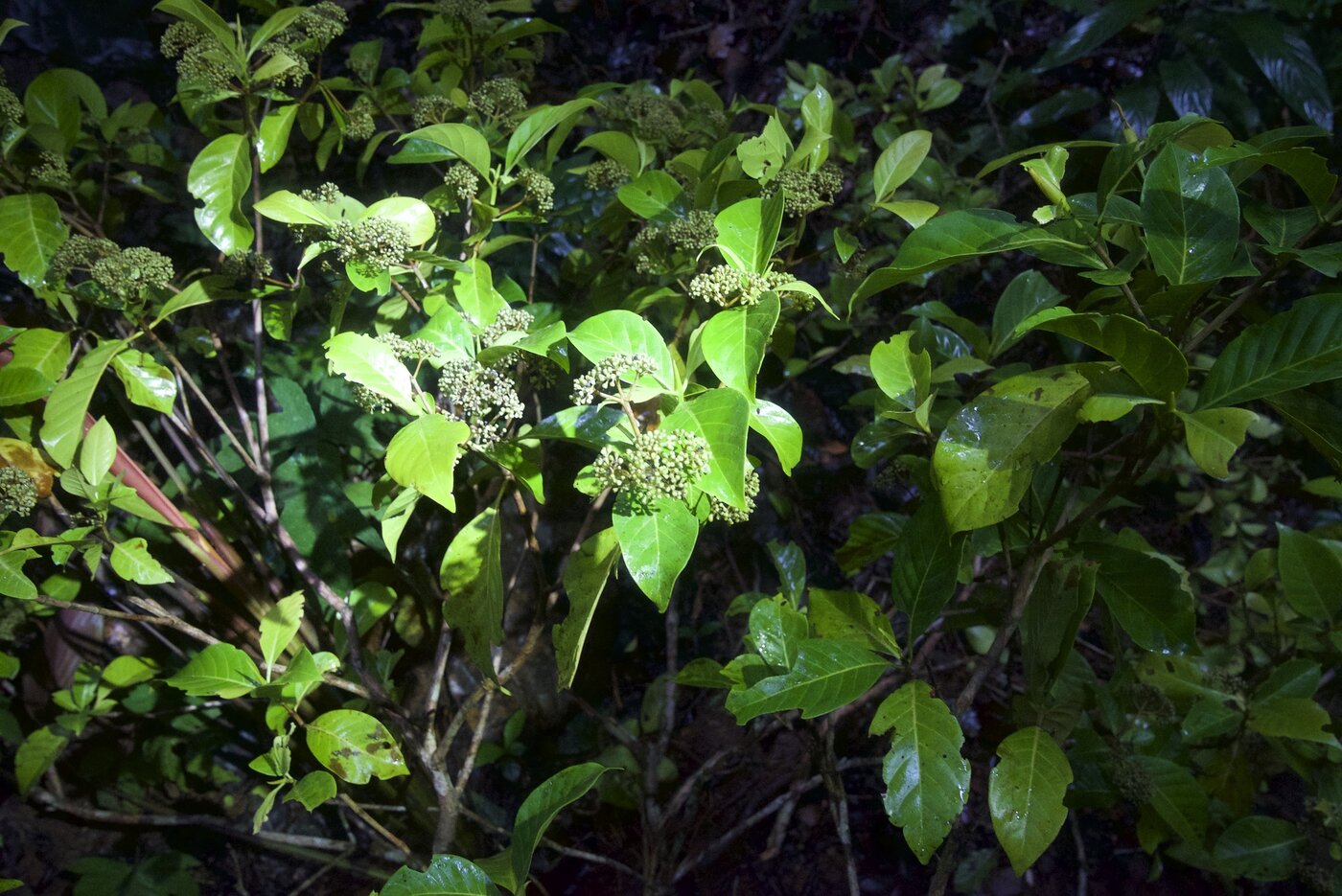
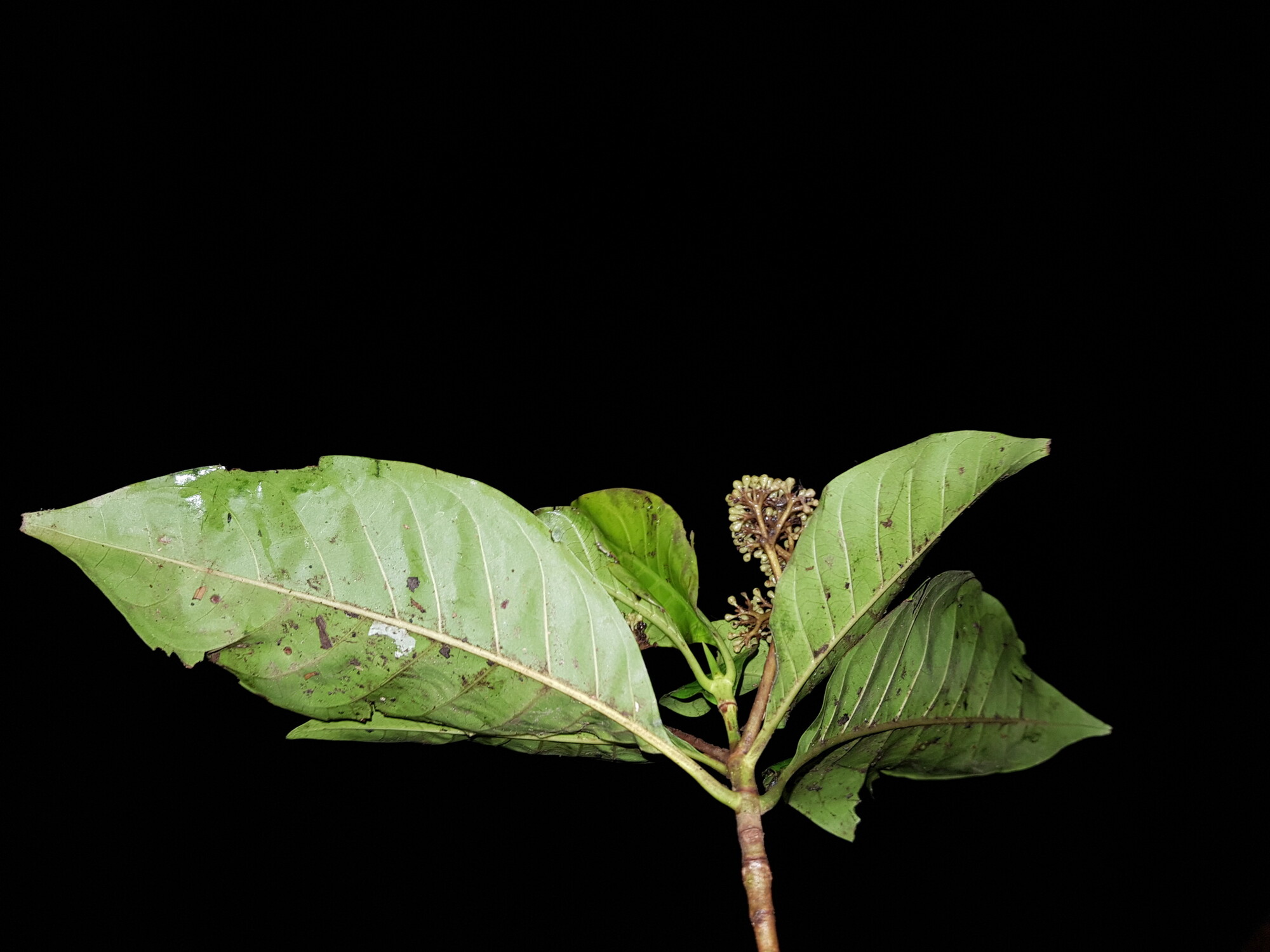
The leaves are opposite, simple, and elliptic to oblong-obovate in outline. The upper surface (adaxial) is glabrous and somewhat glossy, while the lower surface (abaxial) varies from sparsely to densely strigose (covered with appressed hairs) or occasionally subpilose, particularly along the midrib and major veins. Each leaf blade carries 5 to 10 secondary veins per side that arc toward the margin.
A diagnostic feature separating this species from some congeners: the leaves lack domatia (small pockets in vein axils that house beneficial mites). The absence of domatia, combined with the specific hair type on the lower surface, helps distinguish C. parviflora from the larger-flowered C. latifolia.
Flowers
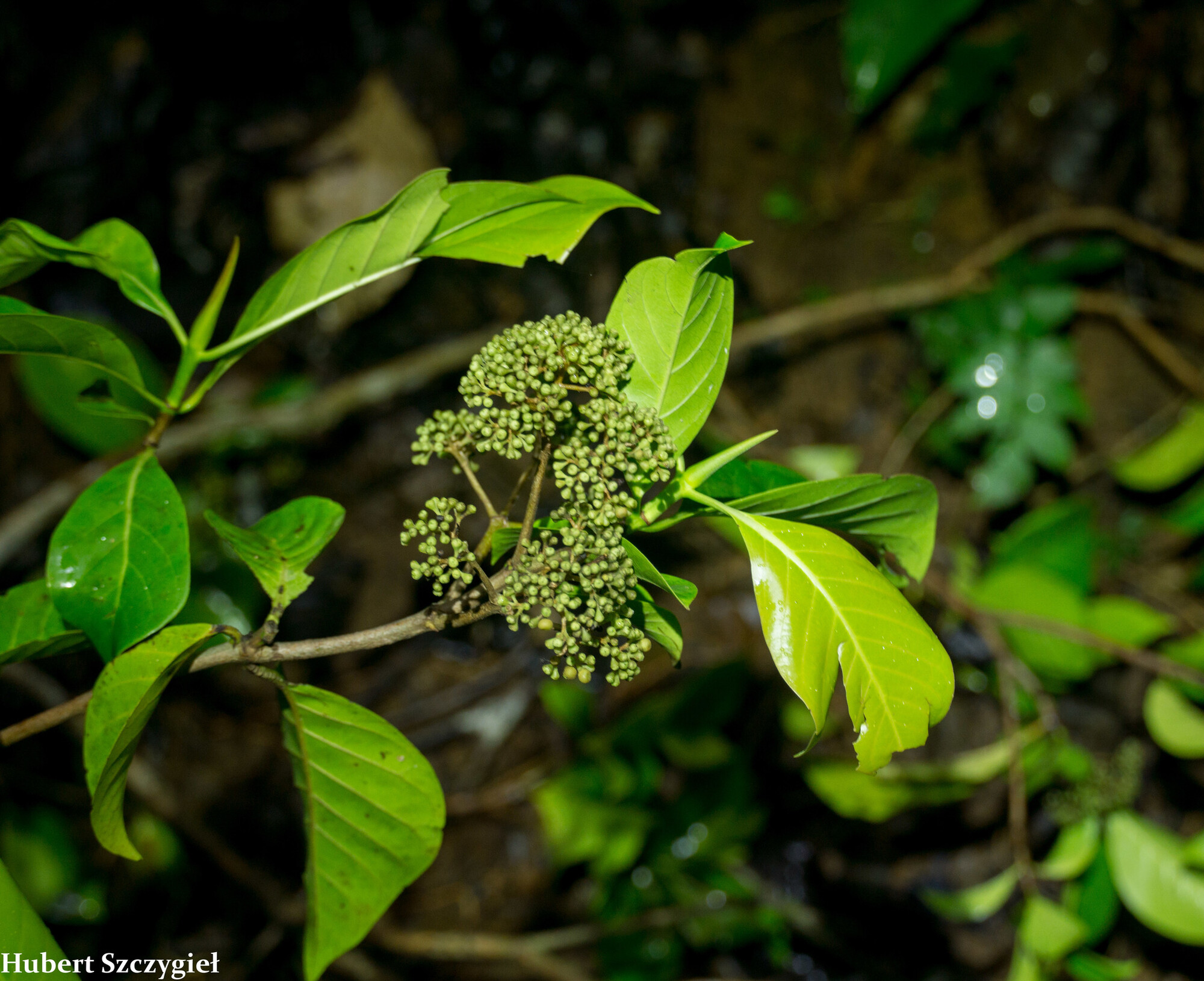
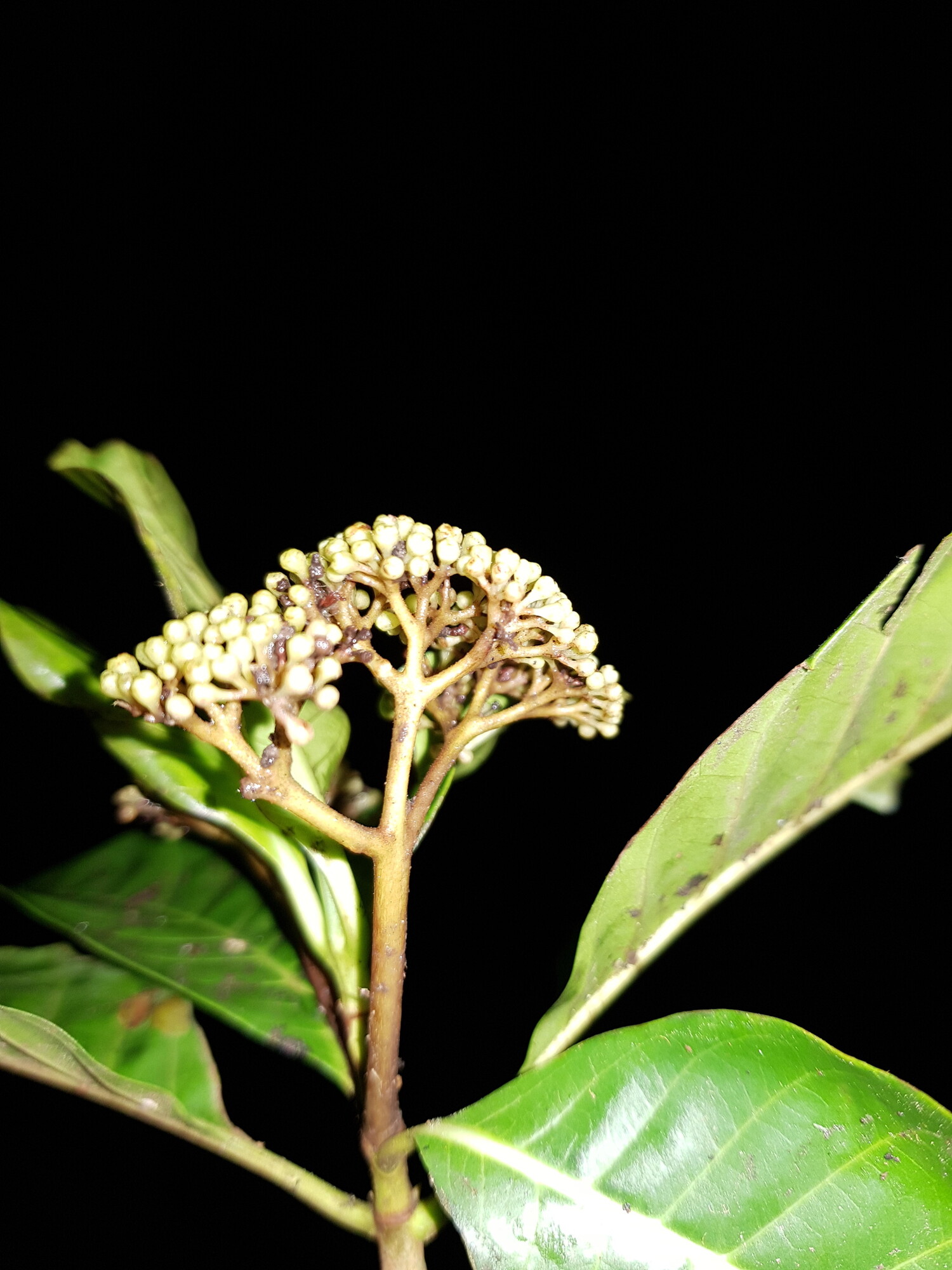
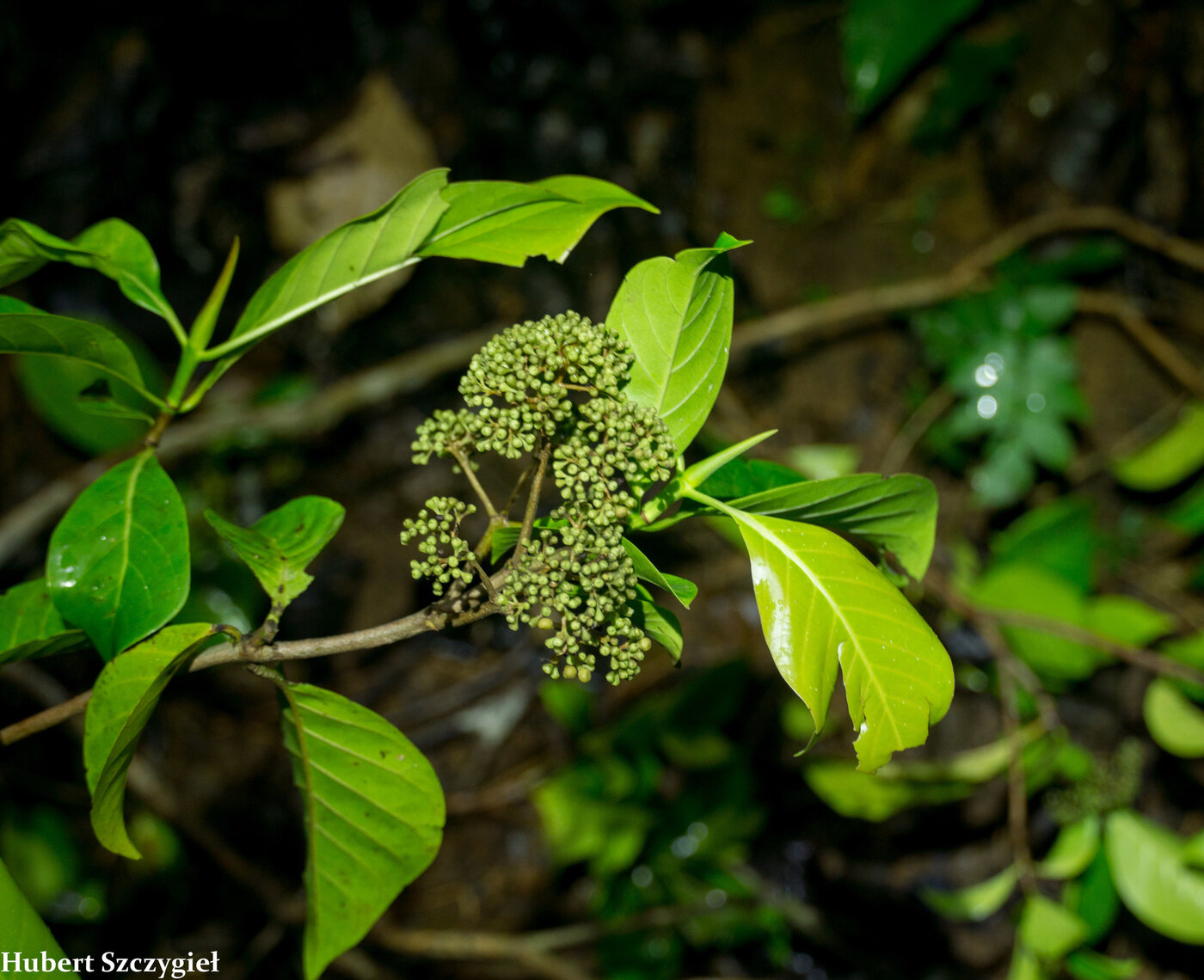
The inflorescences are terminal or axillary cymes borne on peduncles 2 to 9 centimeters long. The flowers themselves are remarkably small, with corolla tubes measuring just 1 to 1.5 millimeters and lobes of 1.5 to 2 millimeters, hence the species epithet "parviflora." Despite their modest size, the blooms are highly fragrant, producing a sweet scent that attracts insect pollinators.
Flowering phenology remains poorly documented for this species specifically, but congeners in Costa Rica flower during the late wet season (October-November). The fragrant blooms suggest bee pollination, though specific pollinator studies have not been conducted.
Fruits
The fruits are tiny capsules measuring 1.5 to 2.5 millimeters long by approximately 1.5 millimeters wide. Upon maturity, these capsules split longitudinally to release minute, flaky seeds less than 1 millimeter in size. The small, lightweight seeds are likely dispersed by wind or water, consistent with the species' streamside habitat.
Distribution
Chimarrhis parviflora ranges from southeastern Honduras through Nicaragua, across Costa Rica and Panama to northwestern Colombia, spanning approximately 1,500 kilometers of Central American wet lowlands. The species is predominantly a Caribbean-slope tree, following the humid Atlantic rim where rainfall exceeds 3,000 millimeters annually.
In Costa Rica, the species occurs on the Caribbean slope of the Cordilleras de Guanacaste, Tilarán, and Central, the northern Cordillera de Talamanca, and the plains of San Carlos, Tortuguero, and Santa Clara. On the Pacific slope, it extends to the Osa Peninsula and Golfo Dulce region. GBIF records show 71 occurrences within the Brunca region bounding box, with documented localities including Reserva Forestal Golfo Dulce near Rincón.
Ecology
True to its generic name ("winter torrent"), Chimarrhis parviflora favors riparian habitats: stream margins, seasonally flooded benches, and wet valley bottoms where the soil remains saturated for much of the year. It grows on poorly drained soils in "bosque muy húmedo" (very wet tropical forest), typically at elevations from sea level to 850 meters.
The species serves as a larval host plant for Therinia transversaria, a silkmoth in the family Saturniidae (subfamily Oxyteninae). This moth is widespread from Mexico to South America, and its caterpillars feed on the foliage of several Chimarrhis species. The relationship underscores how the tree, though not abundant, plays a role in supporting forest invertebrate diversity.
Timber & Uses
The wood of Chimarrhis parviflora is valued for its strength, durability, and distinctive appearance. When freshly cut or sanded, it displays a bright yellow, yellow-orange, or pale yellowish-brown color with reddish veins. The wood sands smoothly and takes a waxy finish, making it suitable for flooring, sheathing, and other construction applications where durability is prized.
The timber is classified as moderately hard with fair elasticity. It is resistant to rot and termite damage, properties that make it valuable for outdoor use. However, it may split when nailed unless pre-bored. The common name "yema de huevo" (egg yolk) refers directly to this characteristic yellow coloring that intensifies with exposure.
Taxonomic History
The species was described by American botanist Paul Carpenter Standley in 1927, published in the journal Tropical Woods (volume 11, page 26). Standley (1884-1963) was a leading authority on Central American Rubiaceae who worked at the United States National Museum and later the Field Museum of Natural History. He authored major works including Flora of Costa Rica (1937) and contributed extensively to The Flora of Guatemala.
The holotype was collected by George P. Cooper (collection number 120) and is deposited at the United States National Herbarium (US-1315890). Isotypes exist at the Arnold Arboretum (A), Field Museum (F), Geneva (G), Gray Herbarium (GH), and New York Botanical Garden (NY). The species has remained nomenclaturally stable since its original publication, with no recorded synonyms.
The genus Chimarrhis was established by Nikolaus Joseph von Jacquin in 1763, with the type species Chimarrhis cymosa from the Caribbean. The genus contains 15 accepted species distributed across the Neotropics, all sharing an affinity for wet, riparian habitats.
Conservation Outlook
Chimarrhis parviflora is assessed as Least Concern on the IUCN Red List, reflecting its broad geographic range from Honduras to Colombia and its presence across multiple protected areas. In Costa Rica, the species occurs within Braulio Carrillo National Park, La Selva Biological Station, Tortuguero National Park, and Corcovado National Park, among other reserves.
However, its dependence on riparian habitats makes it vulnerable to localized threats. Stream channelization, agricultural runoff, and forest clearing along waterways can eliminate suitable habitat even where surrounding forest remains. Maintaining vegetated buffer zones along streams and rivers throughout its range will be essential for long-term conservation of this riparian specialist.
Resources & Further Reading
Species Information
Comprehensive species account with morphological details, wood uses, and distribution data for Costa Rica.
Detailed account of the congener C. latifolia useful for comparing distinguishing features between the two "yema de huevo" species.
Taxonomy & Nomenclature
Genus-level taxonomy, accepted species list, and synonymy from Kew's global plant database.
Type specimen data, publication details, and nomenclatural history from the Missouri Botanical Garden.
Data Portals
Occurrence records, specimen data, and distribution maps from the Global Biodiversity Information Facility.
Community observations and photographs from across the species' range.