Roble Corrugata
Quercus corrugata — A towering deciduous oak of Central American cloud forests, reaching 60 meters in height with distinctive wrinkled leaves that give it its name.
In the cloud forests of Monteverde and the mountains of the Cordillera de Talamanca, one oak species stands above most others. Quercus corrugata can reach 60 meters in height with trunks exceeding two meters in diameter, making it one of the largest oaks in the Neotropics. The species name corrugata refers to the wrinkled or corrugated appearance of mature leaves, a texture that becomes more pronounced as leaves age.
William Jackson Hooker described this species in 1842 from specimens collected in Guatemala. Since then, botanists have named and renamed populations across Central America, generating over a dozen synonyms including Quercus excelsa, Q. pilarius, and Q. yousei. Today these names are consolidated under Q. corrugata, reflecting the species' considerable variation across its broad range from southern Mexico to Panama.
Identification
Physical Characteristics
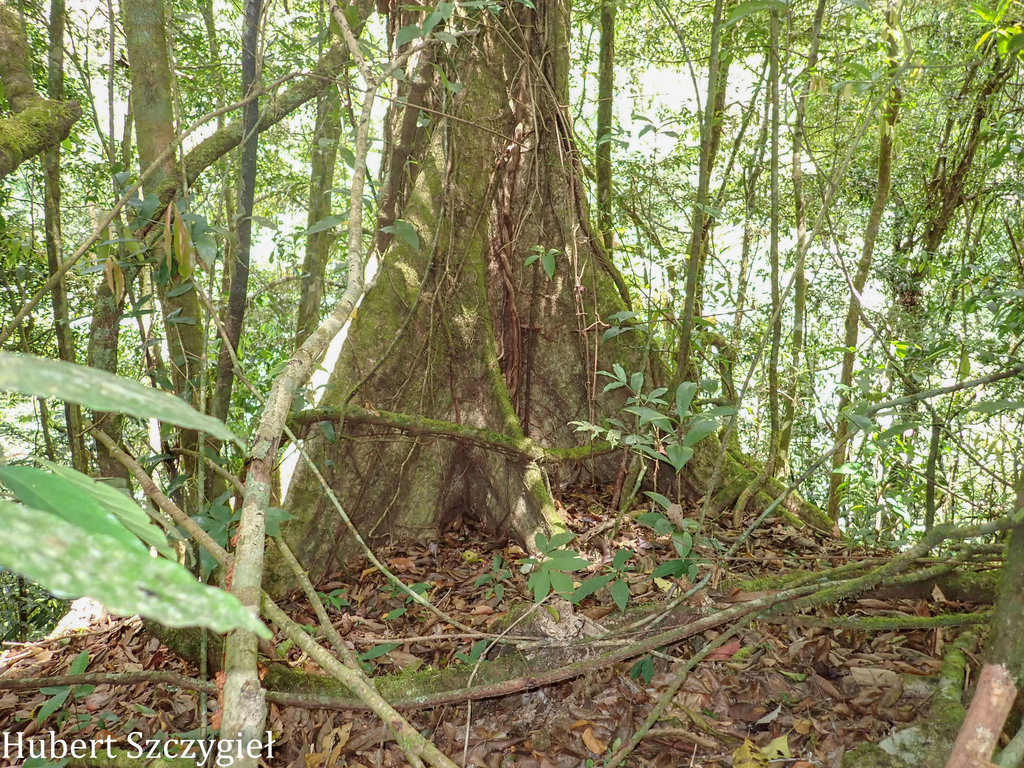
Form: Quercus corrugata is among the largest oaks in Central America, capable of reaching 60 meters in height with a long, straight trunk up to 2.5 meters in diameter. Young trees develop a pyramidal crown that becomes broad and spreading with age. The trunk often rises high into the canopy before branching, a form typical of forest-grown specimens competing for light.
Bark: The bark is gray to dark brown, developing deep furrows and thick, scaly plates on mature trees. Like other large oaks, the bark provides habitat for numerous epiphytes including mosses, ferns, orchids, and bromeliads that festoon the trunk and branches in the humid cloud forest environment.
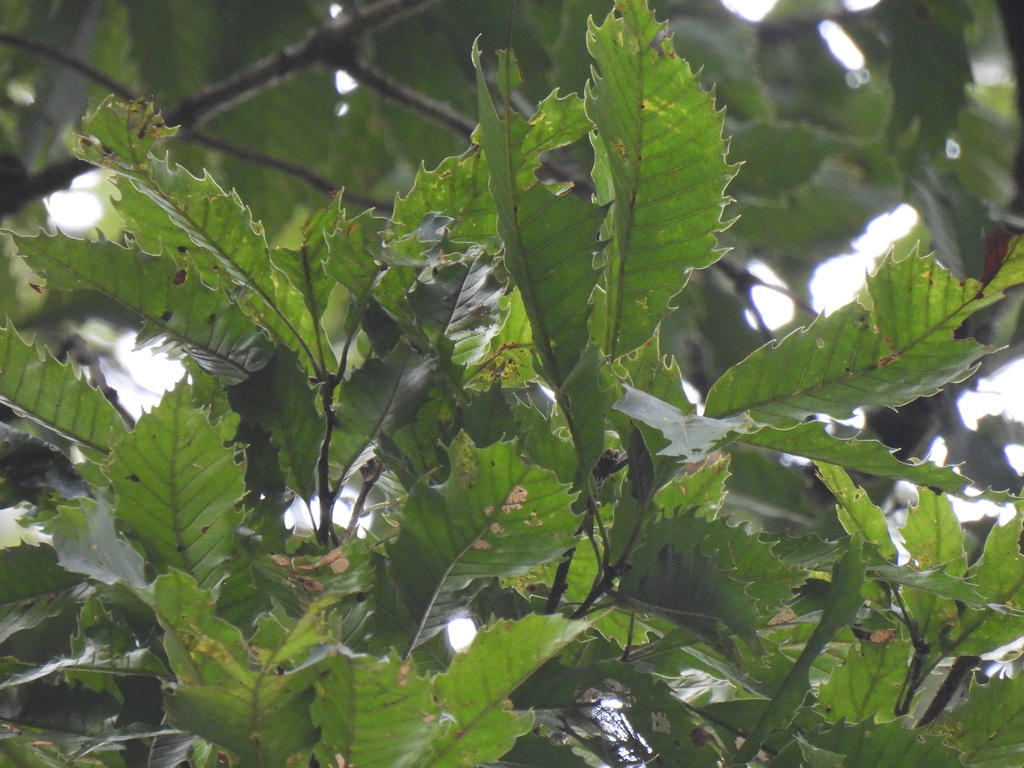
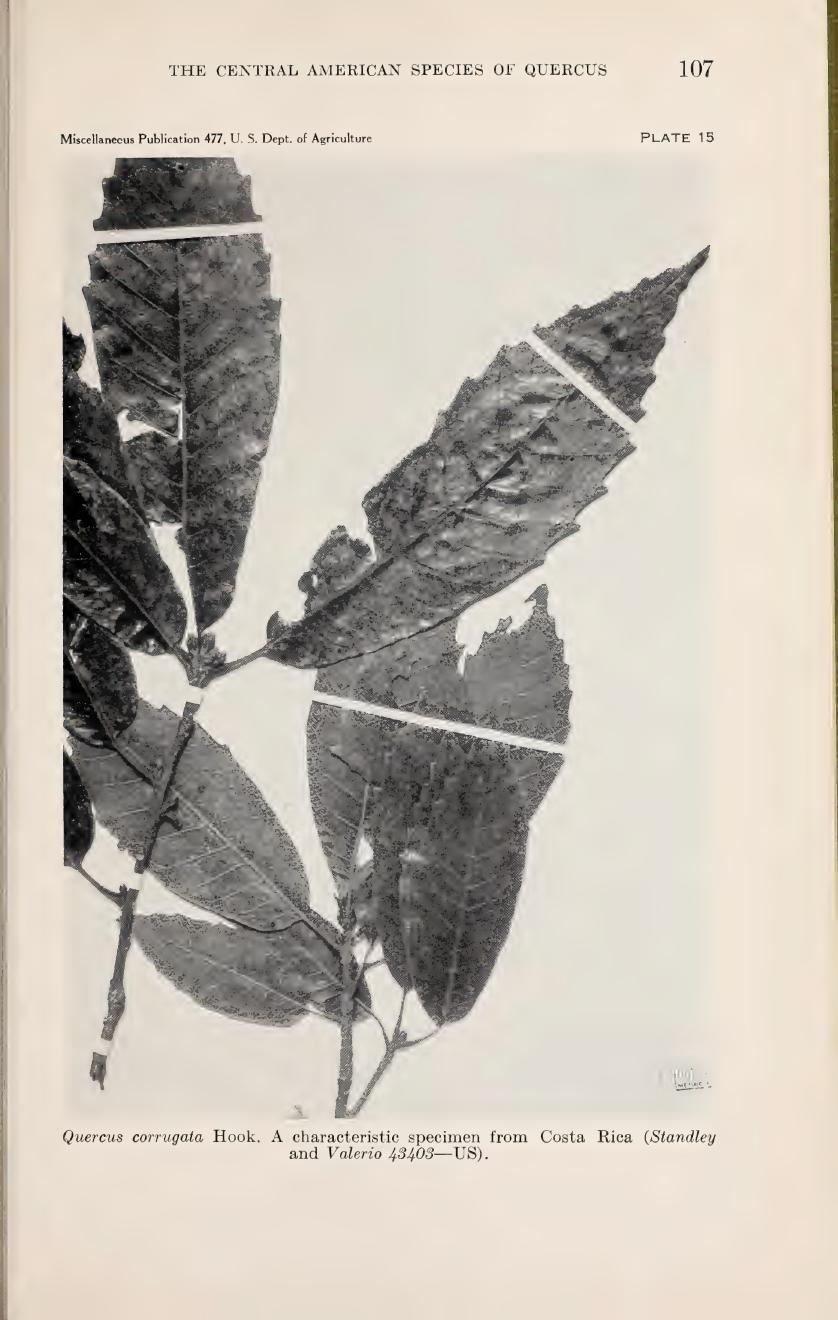
Leaves: The leaves are large and variable, measuring 5 to 25 centimeters long and 2 to 7 centimeters wide. They are lanceolate to oblanceolate or elliptic, with coarsely toothed margins where each tooth is tipped with a small bristle. The leaf texture is thick and somewhat hard, with both surfaces slightly shiny. Older leaves develop the corrugated, bullate texture that gives the species its name. Leaves are deciduous, dropping during a brief period before new growth emerges.
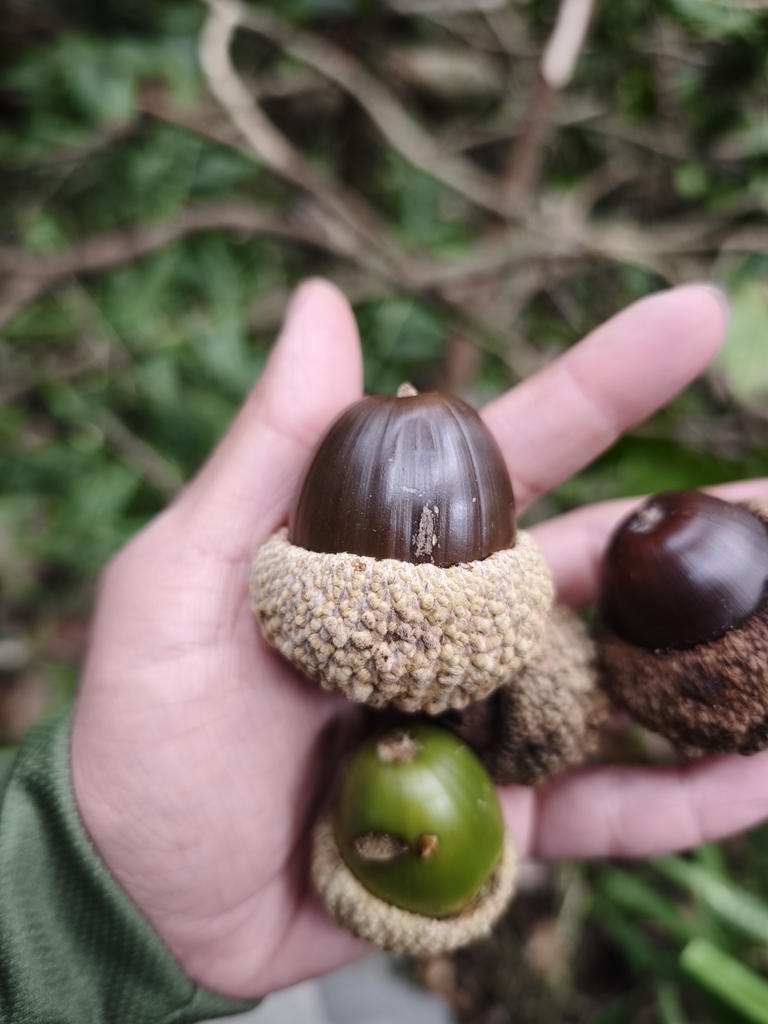
Acorns: The acorns are seated in shallow, scaly cups typical of the red oak group. Like other members of section Lobatae, they require two years to mature after pollination. The acorns provide food for numerous forest animals including quetzals, squirrels, agoutis, and peccaries.
Ecology and Distribution
Quercus corrugata has one of the broadest distributions of any Central American oak, ranging from the mountains of southern Mexico through Guatemala, Belize, Honduras, El Salvador, Nicaragua, Costa Rica, and into western Panama. In Costa Rica, it occurs primarily in the cloud forests of the Cordillera de Tilarán (including Monteverde), the Cordillera Central, and the Cordillera de Talamanca, at elevations between 700 and 2,200 meters.
The species thrives in wet tropical montane forests where cloud immersion is frequent and annual rainfall exceeds 2,500 millimeters. It often grows alongside other oaks including Q. insignis, Q. copeyensis, and Q. costaricensis, forming mixed oak forests that are among the most diverse in the Neotropics. In the Monteverde Cloud Forest Reserve, Q. corrugata and Q. insignis are dominant canopy trees, creating a forest structure that supports extraordinary biodiversity.
Research at Monteverde has revealed the ecological importance of these oaks. A study comparing fungal diversity between Q. corrugata and Q. insignis found 33 fungal species associated with Q. corrugata alone, growing on acorns, soil, roots, and leaf litter. Many of these fungi have specific associations with oak trees, and the high fungal diversity suggests these oaks play a keystone role in forest nutrient cycling.
Wildlife Interactions
The large acorns of Q. corrugata provide food for numerous mammals including agoutis, pacas, squirrels, and peccaries. However, these animals typically consume acorns completely rather than caching them, acting more as seed predators than dispersers. Jays and other corvids play a more important role in long-distance dispersal, carrying acorns up to a kilometer from parent trees before burying them. Mast years, when trees produce bumper crops of acorns every two to five years, overwhelm predators and allow some seeds to escape consumption.
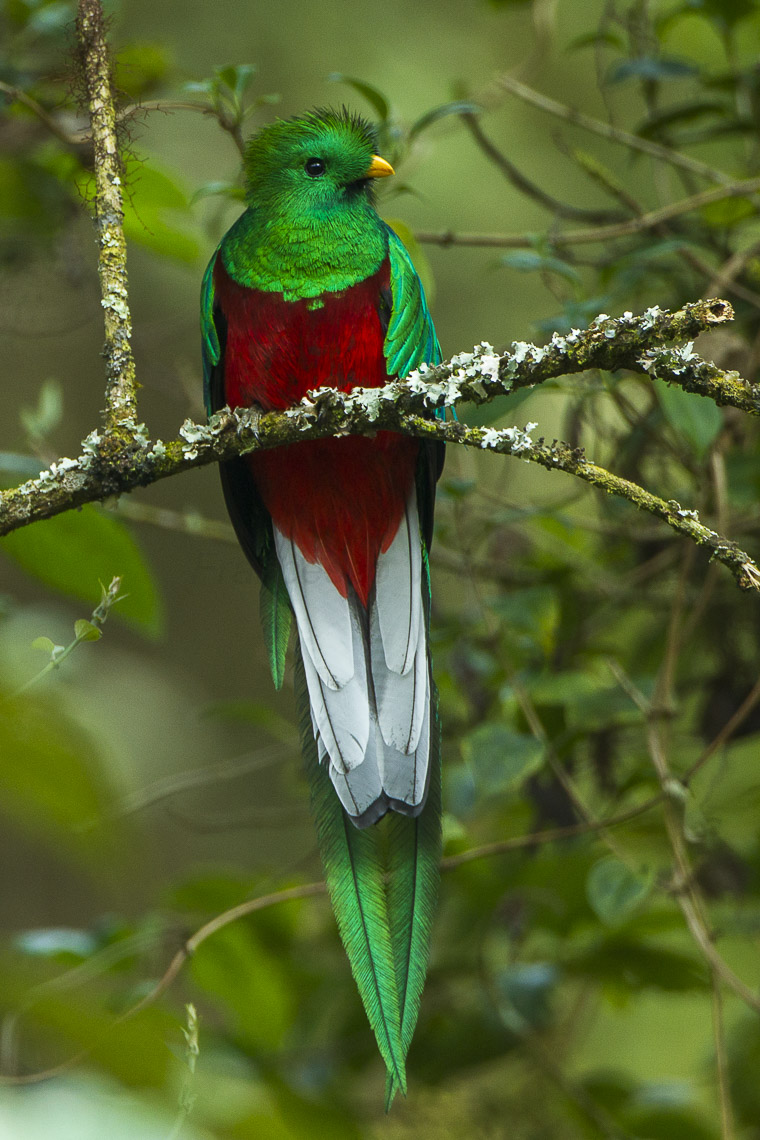
The massive trees provide critical nesting habitat for cloud forest birds. The Resplendent Quetzal (Pharomachrus mocinno), while primarily feeding on Lauraceae fruits, nests in cavities of large trees including oaks. The Three-wattled Bellbird (Procnias tricarunculatus) uses oak-dominated forests during parts of its annual cycle. The abundant epiphytes supported by oak branches create microhabitats for amphibians, invertebrates, and small mammals, while the deep bark furrows shelter roosting bats and nesting birds.
Quercus corrugata belongs to the red oak group (section Lobatae), which is characterized by bristle-tipped leaf lobes and acorns that take two years to mature. This group dominates Central American montane forests and includes most of the region's endemic oak species. The closest relatives of Q. corrugata appear to be lower-elevation Mexican oaks, reflecting patterns of dispersal along the mountain chains that connect Mexico to Panama.
Uses
Timber: The wood of Q. corrugata is hard, heavy, and durable, valued for construction, furniture, and tool handles. Like other tropical American oaks, the heartwood is reddish-brown with prominent rays that give an attractive figure when the wood is quarter-sawn. However, the wood is difficult to dry and prone to checking (surface cracks from uneven drying), requiring careful seasoning before use.
Fuel: Oak wood produces excellent firewood and charcoal due to its high density and energy content. In rural areas of Costa Rica and throughout Central America, oaks have been harvested for fuel for centuries, though this practice has declined as forests have gained protection and alternative fuels have become available.
Ecological Services: As a dominant canopy tree in cloud forests, Q. corrugata provides critical ecosystem services. The massive crowns intercept cloud moisture, adding significant water input to the forest system. The deep root systems stabilize mountain slopes and regulate water flow to streams. The trees provide food and habitat for countless species, from the fungi that decompose its leaves to the birds that nest in its branches.
Conservation
Quercus corrugata is listed as Least Concern by the IUCN, reflecting its broad distribution and presence in numerous protected areas. However, cloud forests throughout Central America face ongoing threats from agricultural expansion, climate change, and selective logging. The species' preference for wet montane habitats makes it potentially vulnerable to upward shifts in climate zones.
In Costa Rica, significant populations are protected within Monteverde Cloud Forest Reserve, Alberto Manuel Brenes Biological Reserve, and numerous other protected areas in the Cordillera de Tilarán and Cordillera de Talamanca. These reserves protect not only the oaks but the entire cloud forest ecosystem they help create, maintaining watershed functions critical to communities at lower elevations.
Resources & Further Reading
Species Information
Authoritative taxonomic information including synonyms and distribution.
Global biodiversity occurrence records and distribution data.
Overview of the species including description and distribution.
Ecology and Research
Research on fungal diversity associated with oaks at Monteverde Cloud Forest Reserve.
Scientific chapter on oak diversity in the Neotropics.
Organization dedicated to oak research, conservation, and cultivation worldwide.
Community observations with photos from across the species' range in Mexico and Central America.
Conservation
Comprehensive global assessment of oak conservation status, finding 31% of oak species threatened with extinction.
Analysis of 75 red oak species showing only 41% are adequately protected in current reserves.
Taxonomic References
Original publication by William Jackson Hooker containing the first description of Q. corrugata.
Major molecular phylogeny of oaks providing insights into relationships among Central American species.
Complete monograph with 124 botanical plates illustrating Central American oaks. USDA Miscellaneous Publication No. 477.