Guaitil
The "jagua" tree whose unripe fruits yield an indelible blue-black dye that has painted indigenous faces from the Emberá of Darién to the Bribri of Talamanca for millennia, while its fragrant flowers and football-sized berries feed monkeys, coatis, and tepescuintles across Brunca's riparian forests.
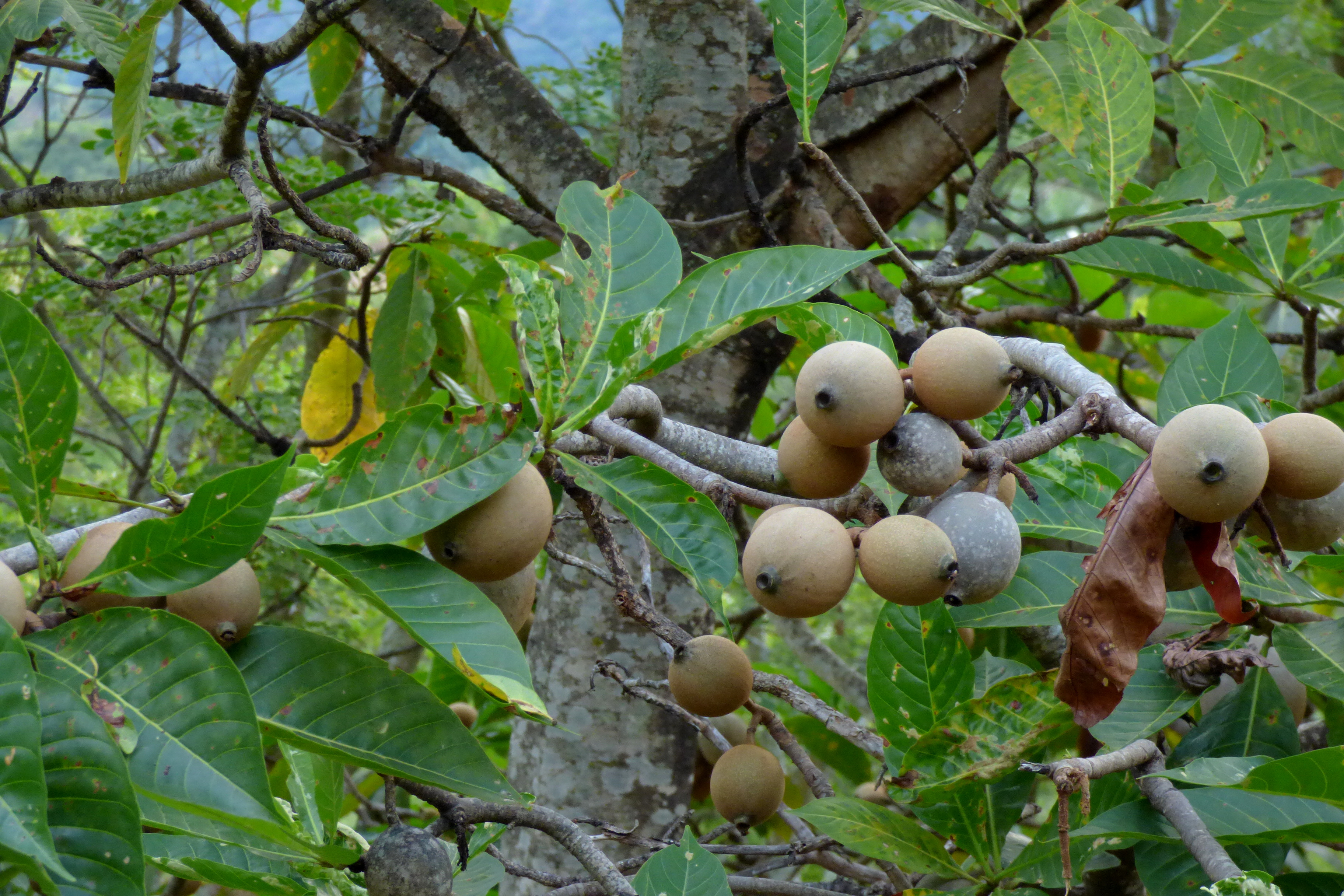
Squeeze the juice from an unripe guaitil fruit onto your skin and nothing happens. Wait twelve hours and you bear an indelible blue-black mark that will not wash off for two weeks. This slow-developing dye, caused by the compound genipin reacting with proteins in human skin, has made Genipa americana one of the most culturally significant trees in the Neotropics. The Emberá of Panama, the Shipibo of Peru, the Kayapó of Brazil, and the Bribri of Costa Rica have all used jagua body paint for ceremonies, warfare, courtship, and insect repellency since long before European contact.
In Costa Rica the tree goes by guaitil, tapaculo, or tabacón, depending on the region. It grows as an occasional subcanopy tree from sea level to about 1,200 meters, preferring the moist soils of river levees, swamp edges, and secondary forests throughout both Pacific and Atlantic slopes. A January 2026 GBIF query returned 176 records from the Brunca bounding box alone, with clusters along the Sierpe floodplain, the Golfo Dulce foothills, and the riparian corridors around Pérez Zeledón.
Identification
Trunk & Bark
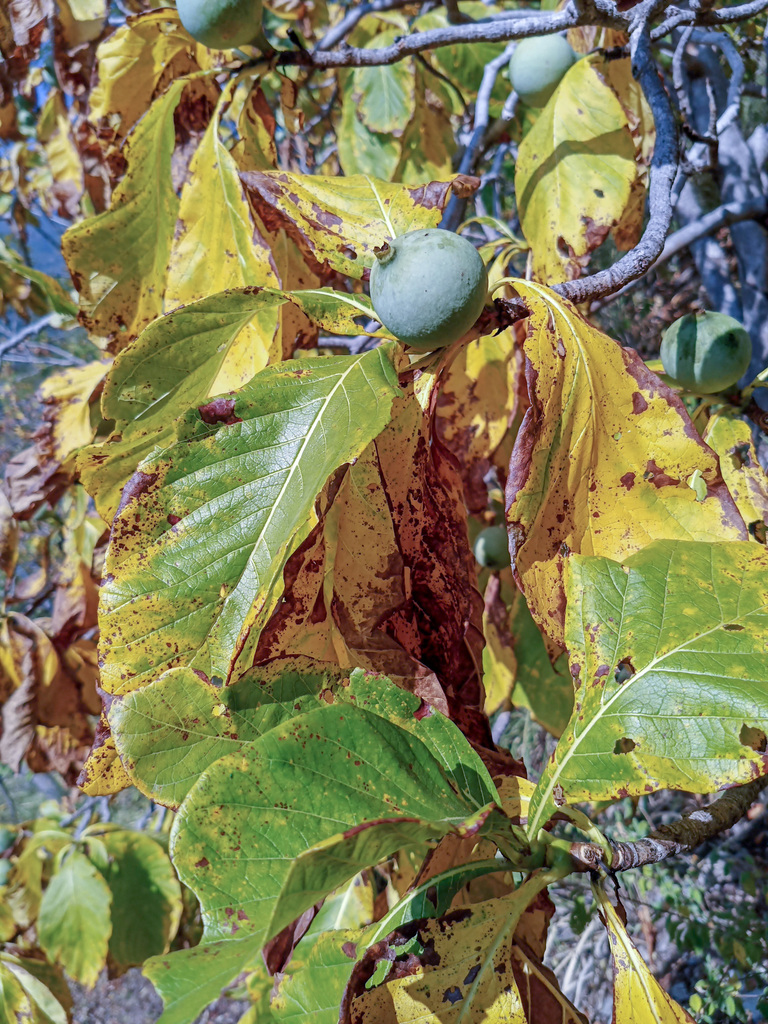
The trunk is straight and cylindrical, without buttresses, reaching about 50 cm in diameter. Smooth, pale gray bark covers the bole, and horizontal branches concentrate in the upper third of the crown. The wood is fibrous and strong, traditionally used for tool handles, spear shafts, rifle stocks, and cabinetwork, though it is susceptible to insect damage if not properly treated.
Leaves
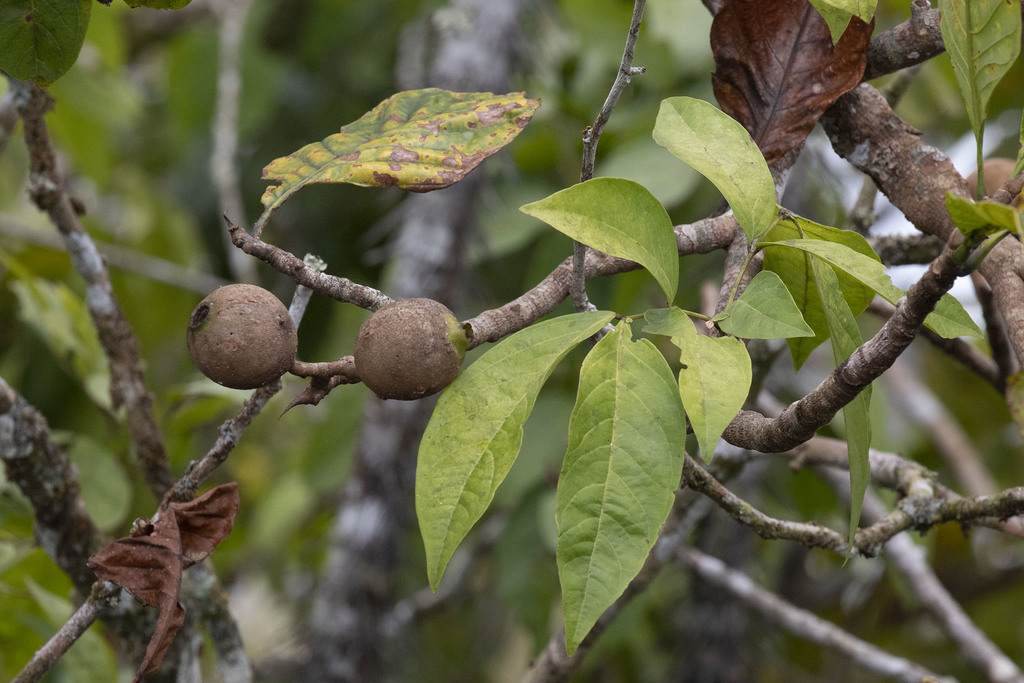
Leaves are simple and opposite, clustering at branch tips to appear almost whorled. Blades are elliptical to spatulate, 10-33 cm long and 4-13 cm wide, with a prominent whitish midrib and pronounced drip tips. Trees are briefly deciduous, shedding foliage for about two weeks in February during the dry season.
Flowers
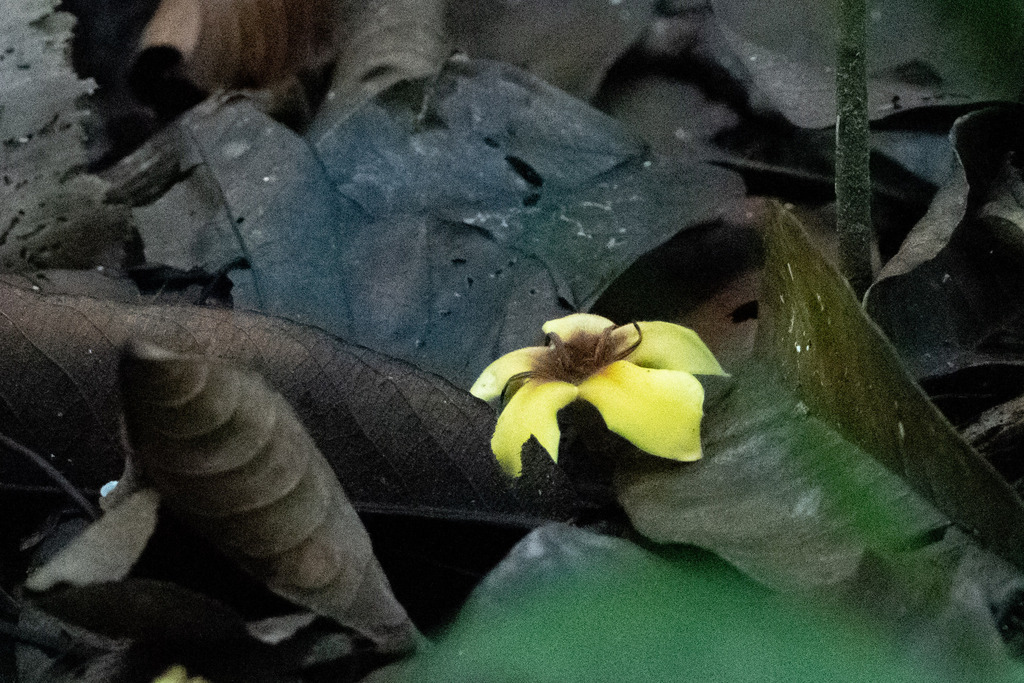
The species is dioecious (separate male and female trees). Large flowers (about 4 cm diameter) appear in terminal clusters, each with a thick leathery tube dividing into five fleshy yellow-white petals. Male flowers bear five brown stamens; female flowers possess a thick central pistil. The blooms emit a mild lemon fragrance and attract bees and hummingbirds. Flowering extends from late February through June in Costa Rica, with continuous production into fall in some regions.
Fruits
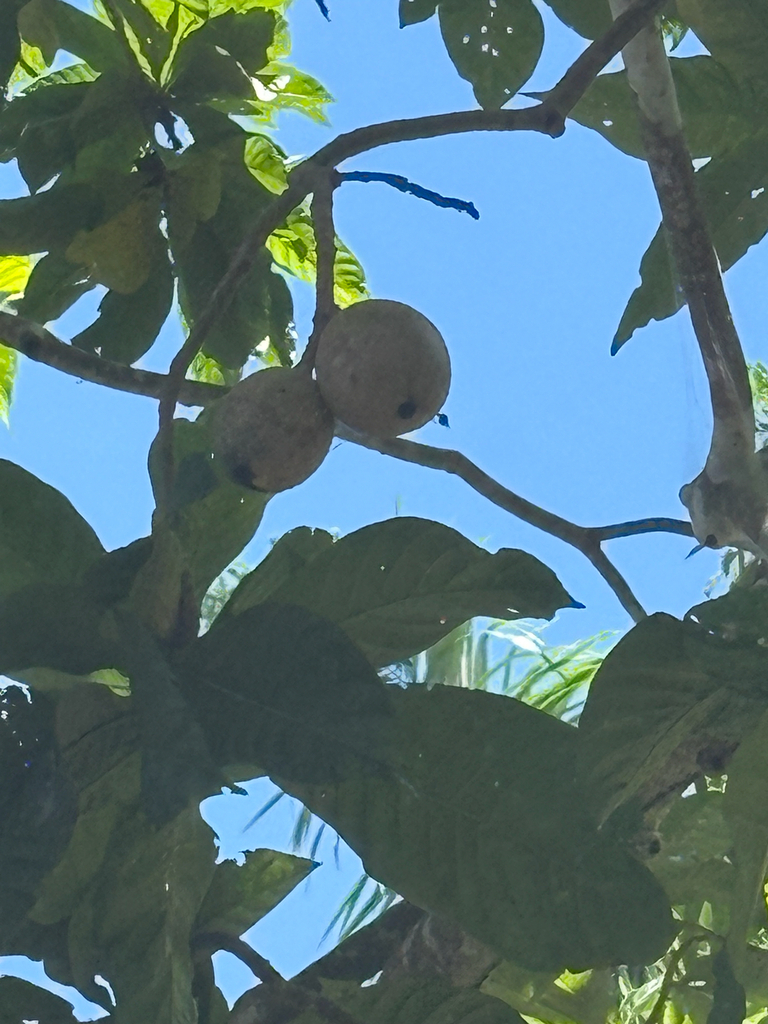
Fruits are large, football-shaped berries 9-15 cm long and 7-9 cm wide, weighing 200-400 grams. The smooth gray-green skin encases a thin leathery layer (6-12 mm thick) of whitish rubbery flesh, with a central cavity containing flat circular seeds embedded in mucilaginous membranes. The juice from unripe fruits appears clear when first squeezed but turns blue-black within 2-12 hours of exposure to air. Ripe fruits develop a complex flavor reminiscent of dried apricots and prunes, with a pleasant acidity that makes them prized for beverages, preserves, and desserts across Latin America. In Brazil, licor de jenipapo is a beloved regional specialty, while in Costa Rica the pulp is blended into refrescos or fermented into a mild wine.
Distribution
Guaitil ranges from southern Mexico and the Caribbean islands through Central America to Argentina. In Costa Rica, it occurs on both Atlantic and Pacific slopes, though it grows more commonly in seasonal climates than in ever-wet zones. The species tolerates altered ecosystems well, thriving in secondary forests, roadsides, pasture edges, and riparian corridors. It requires humid conditions and deep, rich, loamy soil, preferring floodplain terraces and swamp margins where moisture remains consistent through the dry season.
Ecology
Seed Dispersal
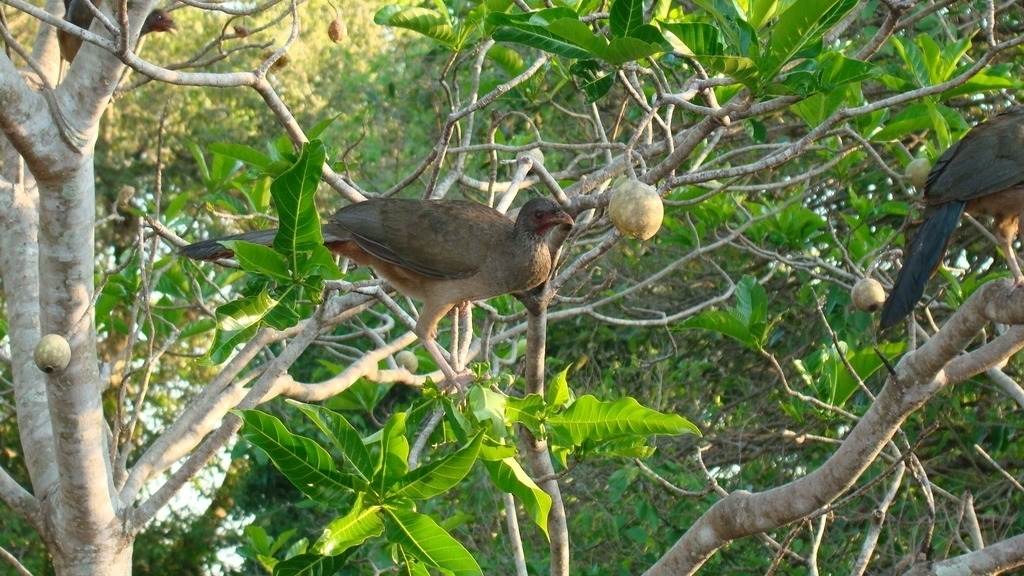
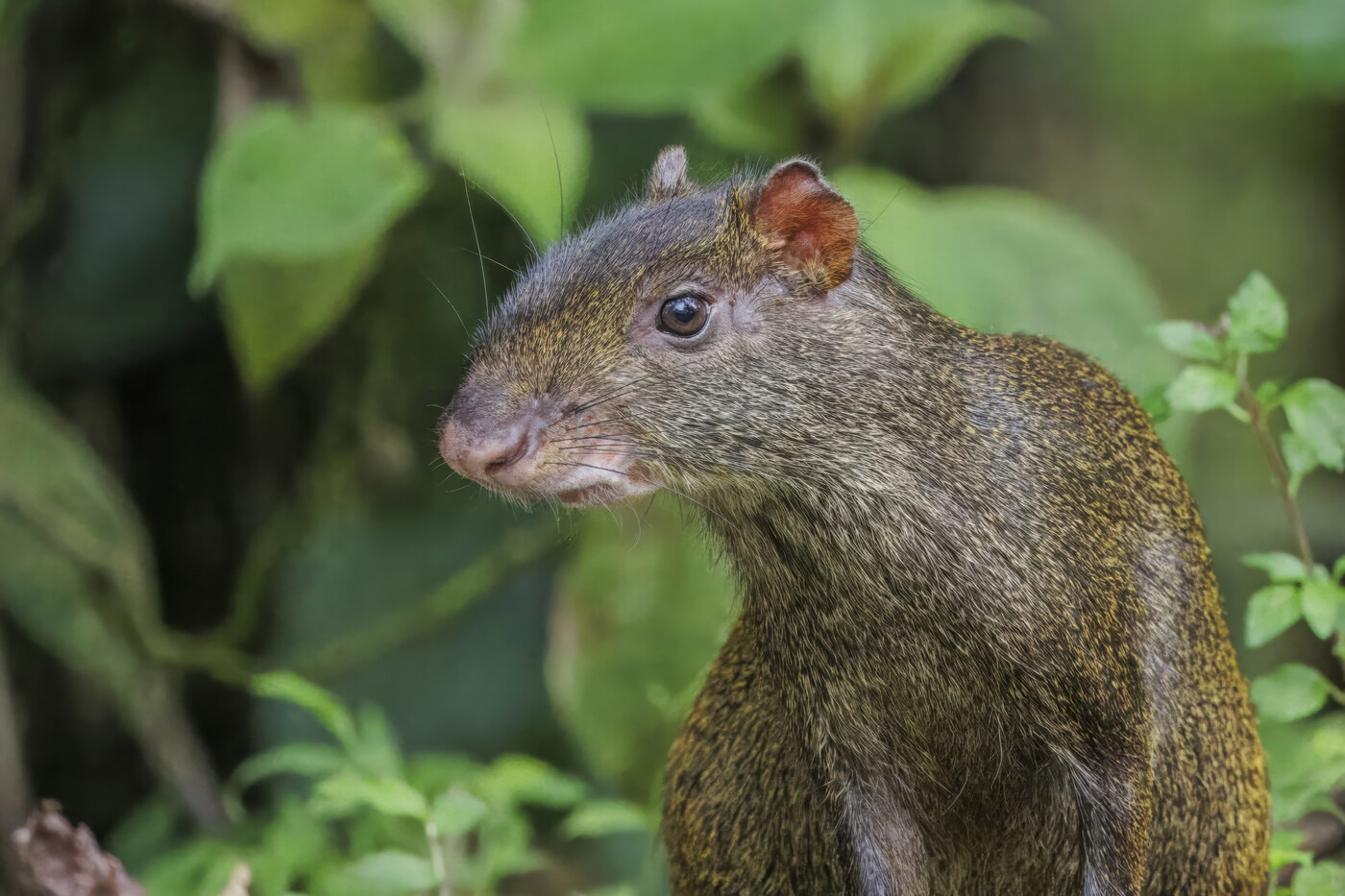
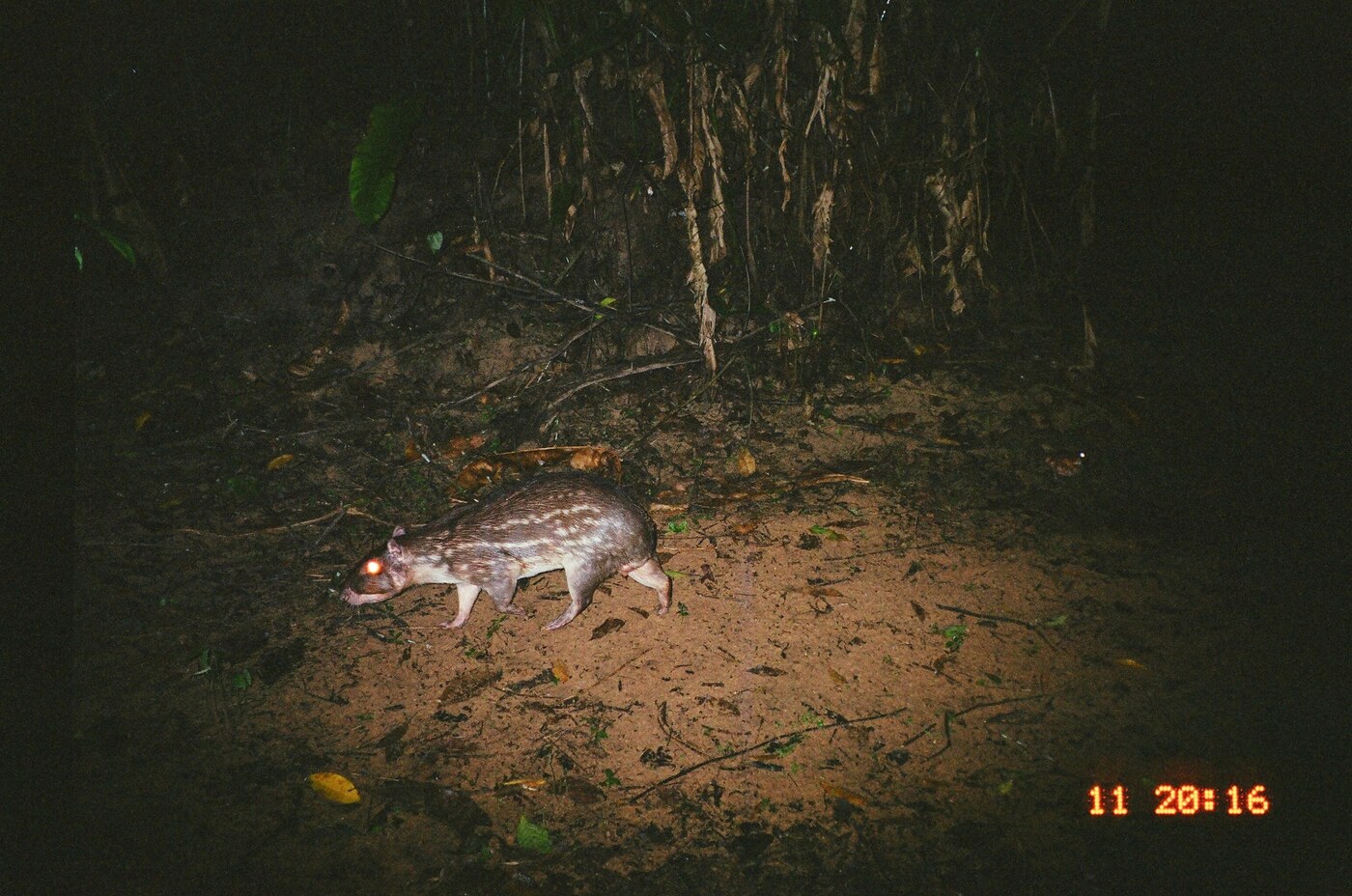
The large, aromatic fruits attract a parade of forest mammals. White-faced capuchins (Cebus imitator) are among the primary dispersers in Central American forests, breaking open the tough skin to reach the pulp and carrying fruits away from the parent tree. Spider monkeys (Ateles geoffroyi) swallow seeds whole and defecate them intact, often at considerable distances. On the forest floor, a different guild takes over: agoutis, pacas, coatis, and raccoons gnaw through fallen fruits to reach the seeds, scatter-hoarding some for later retrieval and inadvertently planting others.
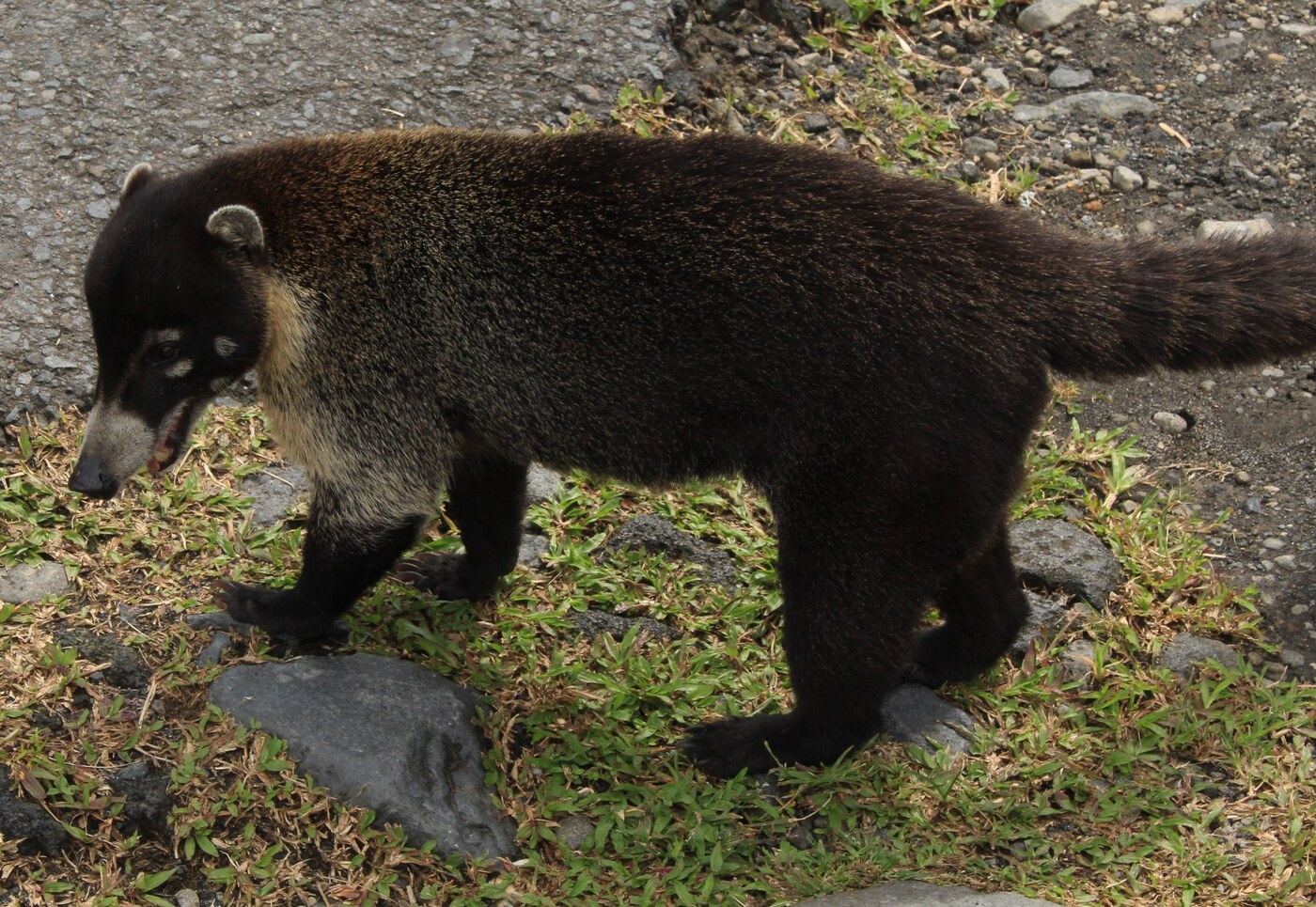
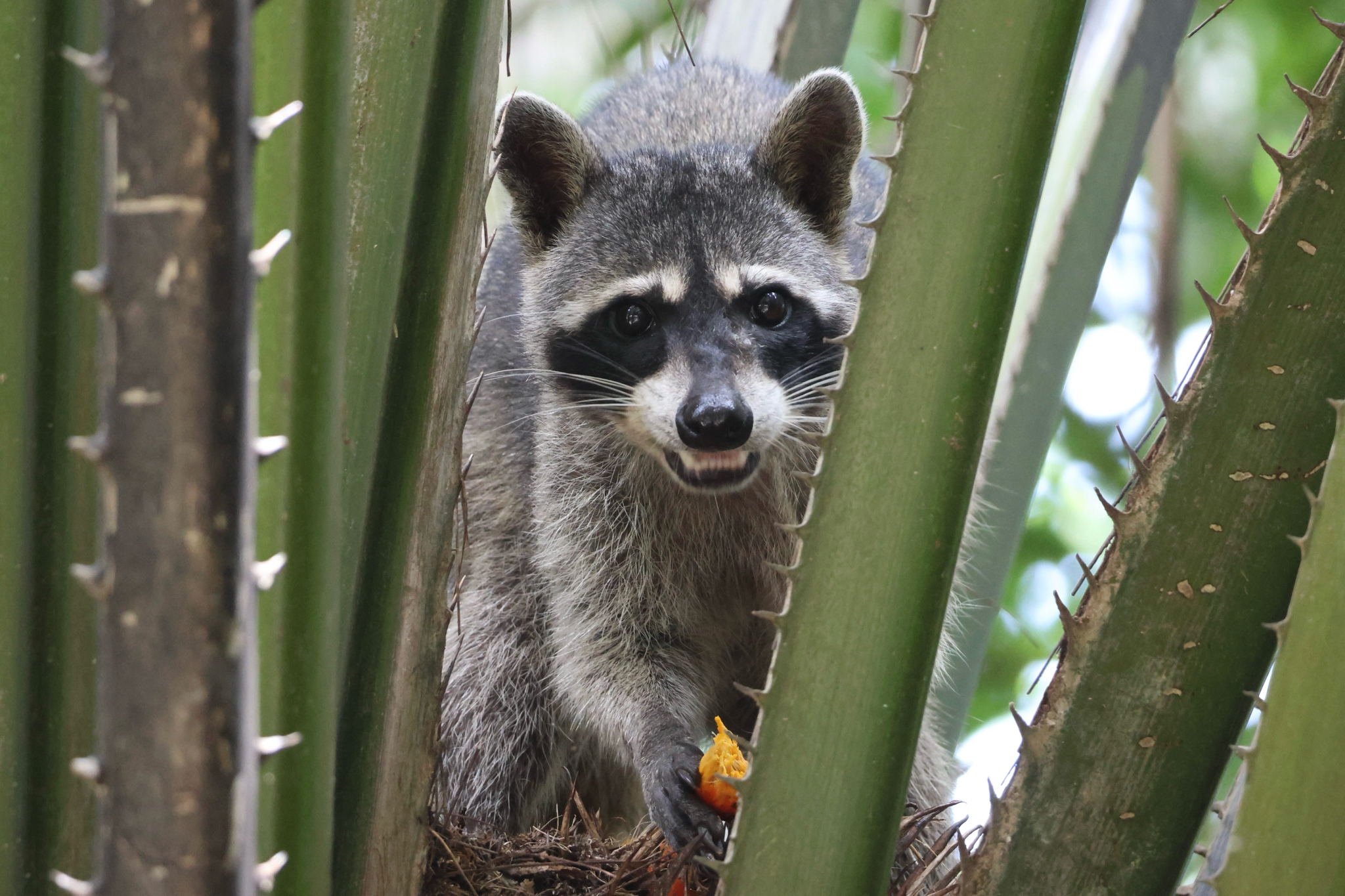
The oversized fruits and large seeds suggest an evolutionary history with megafauna. Before the Pleistocene extinctions, gomphotheres, ground sloths, and other large herbivores likely consumed guaitil fruits whole and dispersed seeds across the landscape. Today, Baird's tapirs (Tapirus bairdii) remain the largest native dispersers capable of swallowing the fruits intact. Where tapir populations have been extirpated, capuchins and spider monkeys partially compensate, though seed shadows are likely more restricted than they were 12,000 years ago.
Along rivers and in seasonally flooded forests, water provides an additional dispersal pathway. Guaitil fruits can float for weeks and remain viable after four months of submersion. Fish, including Colossoma macropomum (tambaquí) in South America, consume floating fruits and deposit seeds downstream, a phenomenon known as ichthyochory. This flood tolerance helps explain the species' preference for riparian habitats and floodplain terraces.
Pollination
The large, fragrant flowers open during the dry season when other nectar sources are scarce. In Costa Rica, Cinnamon Hummingbirds (Amazilia rutila) and Blue-vented Hummingbirds (Saucerottia hoffmanni) visit the blossoms, their curved bills well suited to the tubular corollas. In Mexico and northern Central America, the Buff-bellied Hummingbird (Amazilia yucatanensis) pollinates guaitil, though it does not range south to Costa Rica. Large-bodied bees, including Xylocopa carpenter bees and Bombus bumblebees, also work the flowers, vibrating the anthers to release pollen. Because the species is dioecious (with separate male and female trees), effective pollination requires pollinators to move between individuals, favoring scattered distributions rather than dense monospecific stands.
Habitat & Regeneration
Despite its association with riparian zones, guaitil is not a pioneer species. It establishes in gaps and forest edges but requires partial shade during its first years. Trees can persist in pastures and along roadsides where remnant individuals were spared during clearing. Seed germination is rapid in moist soil, sometimes occurring within two weeks of dispersal, and seedlings grow quickly when light is adequate. This combination of flood tolerance, gap colonization ability, and persistence in degraded landscapes makes guaitil a resilient component of Central American forest mosaics.
Ethnobotany
The magic of jagua lies in genipin, an iridoid compound found in the unripe fruit. When genipin contacts proteins in human skin, it triggers a spontaneous oxidation reaction that produces a deep blue color through polymerization. The dye develops slowly over 12 hours, reveals its full intensity by 24 hours, and then fades only as the epidermis naturally sheds over 1-2 weeks. This property made jagua ideal for semi-permanent body decoration long before synthetic tattoo inks existed.
About 80,000 Emberá people living across Panama and Colombia continue to use jagua for ceremonial body painting, applying geometric designs that signify clan identity, life transitions, and spiritual protection. The Shipibo-Conibo of the Peruvian Amazon paint intricate labyrinthine patterns that represent cosmic visions. In Costa Rica, Bribri communities have used jagua for ceremonies, insect repellency, and medicinal purposes for generations. Today, jagua has found a global market as a natural alternative to henna for temporary tattoos, with the dye extracted and shipped to cosmetic manufacturers worldwide.

Beyond body paint, jagua has a long pharmacological history. Traditional healers across Latin America have used the fruit as a remedy for jaundice, a vermifuge (to expel intestinal parasites), and a diuretic. In 1964, researchers isolated genipic acid and genipinic acid from the fruit and demonstrated antibiotic properties. Some indigenous groups mash the seeds into fish poison, while others mix fruit pulp with bark to treat rheumatism.
The fragrant flowers have been commercially harvested for perfume production. The wood, though susceptible to insect damage, serves well for tool handles, flooring, and cabinetwork. Fallen fruits provide important forage for livestock, and the flowers are valuable nectar sources for bees. In some regions, guaitil fruits are cut up in water with sugar to make a lemonade-like beverage, or fermented into wine and liqueur.
Taxonomic History
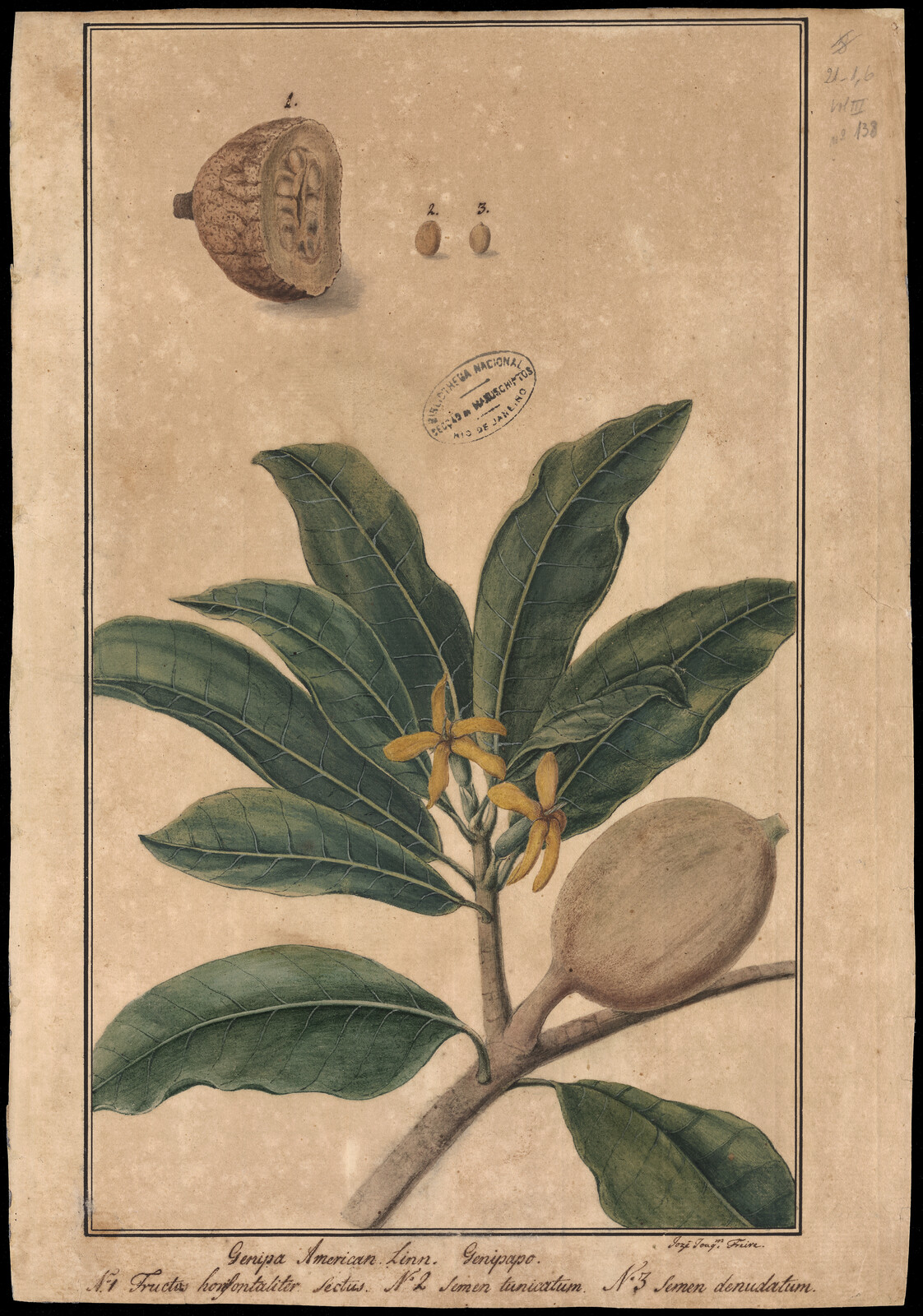
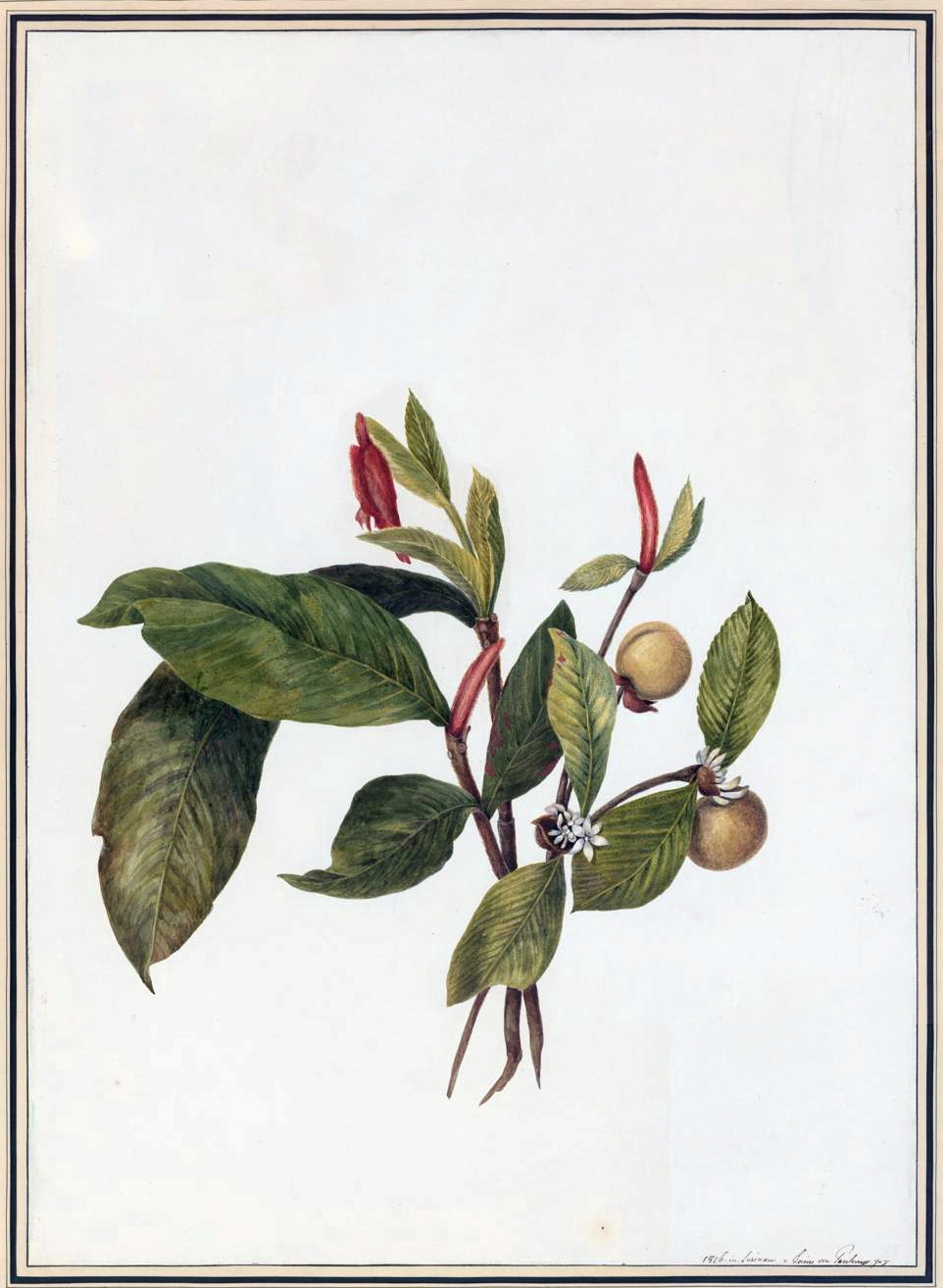
Carl Linnaeus first described Genipa americana in the tenth edition of Systema Naturae (1759), citing material from South America. The genus name derives from the Tupi word ianypaba, meaning "fruit for painting," a direct reference to the indigenous use of unripe fruits for body decoration. The species epithet americana simply indicates its New World origin.
The species type was designated by Richard A. Howard in 1989, based on an illustration labeled "Ianipaba" from Georg Marcgraf's Historia Rerum Naturalium Brasiliae (1648), one of the earliest European depictions of a Neotropical tree. Over the following centuries, botanists described several populations as distinct species, notably Genipa caruto Kunth from Central America and Genipa oblongifolia Ruiz & Pav. from Peru. Modern revisions have synonymized these under Linnaeus's original name, recognizing G. americana as a single, widely variable species distributed throughout tropical America.
Conservation Outlook
Genipa americana has not been formally assessed by the IUCN, but its broad distribution from Mexico to Argentina, tolerance of disturbed habitats, and presence in both primary and secondary forests suggest that it faces no immediate extinction risk. The species regenerates readily from seed in light gaps and forest edges, and it persists in pastures, roadsides, and riparian corridors where other trees have been cleared.
The growing global market for jagua dye as a natural alternative to henna raises questions about sustainable harvest. Wild-collected fruits currently supply most of the trade, and overharvesting from accessible populations could reduce seed availability and local regeneration. Cultivation programs, already underway in parts of Brazil and Colombia, offer a path toward sustainable production while preserving wild populations. The tree's deep cultural importance to indigenous communities across Latin America provides an additional layer of protection: where traditional land rights are recognized, local stewardship tends to maintain guaitil populations for ceremonial and practical use.
Resources & Further Reading
Species Information
Overview of taxonomy, distribution, morphology, and traditional uses of the jagua tree.
Field guide account with morphological details and observations from Manuel Antonio National Park.
Species profile from the Osa Peninsula with phenology and local common names.
Ethnobotany & Uses
Comprehensive reference on cultivation, food uses, nutritional composition, and ethnobotanical applications.
History of jagua dye use among indigenous peoples and the chemistry of genipin.
Occurrence Data
Global occurrence records and distribution maps.
Community observations with photographs from across the species' range.
Taxonomy & Nomenclature
Accepted name, synonymy, and global distribution from Kew's authoritative database.
Nomenclatural details, type specimens, and publication history from Missouri Botanical Garden.