Dogwood-leaf Rudgea
Fragrant white flowers that may open at dusk for moths, leaves that house invisible armies of mites, and an alkaloid found nowhere else in the plant kingdom. All from a quiet understory shrub you could walk past a hundred times.
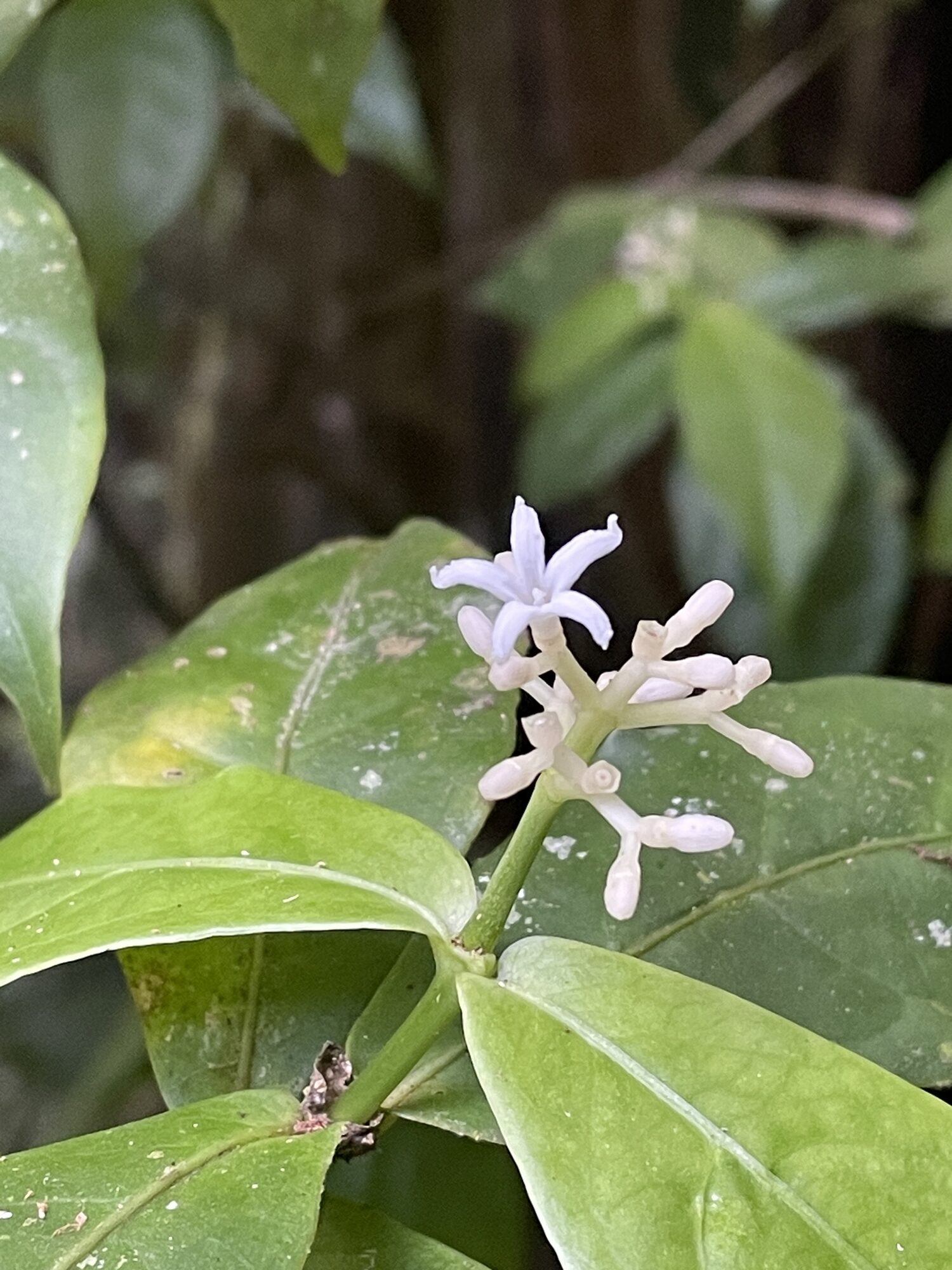
Among the tens of thousands of plant specimens that Alexander von Humboldt and Aimé Bonpland hauled back to Paris from their five-year journey through the Americas, one small shrub from the Colombian or Venezuelan interior would take more than a century to settle into a stable name. Carl Sigismund Kunth, the German botanist hired to catalogue Humboldt's collections, described it as Psychotria cornifolia in 1819, noting leaves that reminded him of dogwood. Over the following decades, other botanists working independently across Latin America kept encountering what seemed like new species, describing it under at least 24 different names: Augustin de Candolle placed Mexican material in the coffee genus Coffea, George Bentham named South American specimens Psychotria fimbriata, and John Donnell Smith described Costa Rican collections as an entirely new species, Rudgea ceratopetala. The confusion was understandable: this is a plant that ranges from eastern Mexico to Bolivia and southeastern Brazil, and its leaves vary so dramatically between populations that regional specialists kept seeing different species where there was only one.
It was Paul Standley at the Field Museum in Chicago who, in 1931, finally placed the species in Rudgea, the genus named for Edward Rudge, an English antiquary whose purchase of a Guiana plant collection had drawn him into botany. Even Standley, ironically, went on to describe additional specimens as new species (R. bogotensis, R. hispidula, R. dahlgrenii) before the full extent of synonymy became clear. Today, Rudgea cornifolia stands as a textbook case of how a single widespread plant can fracture into a cloud of names when botanists work in isolation from one another. Beneath those accumulated names lives a quiet, shade-tolerant understory shrub that has carved out a successful life across the Neotropics, producing fragrant flowers that likely attract nocturnal moths, fruits that turn white when ripe rather than the usual red, and leaves that harbor microscopic mites in specialized chambers along the midvein.
Identification
Habit
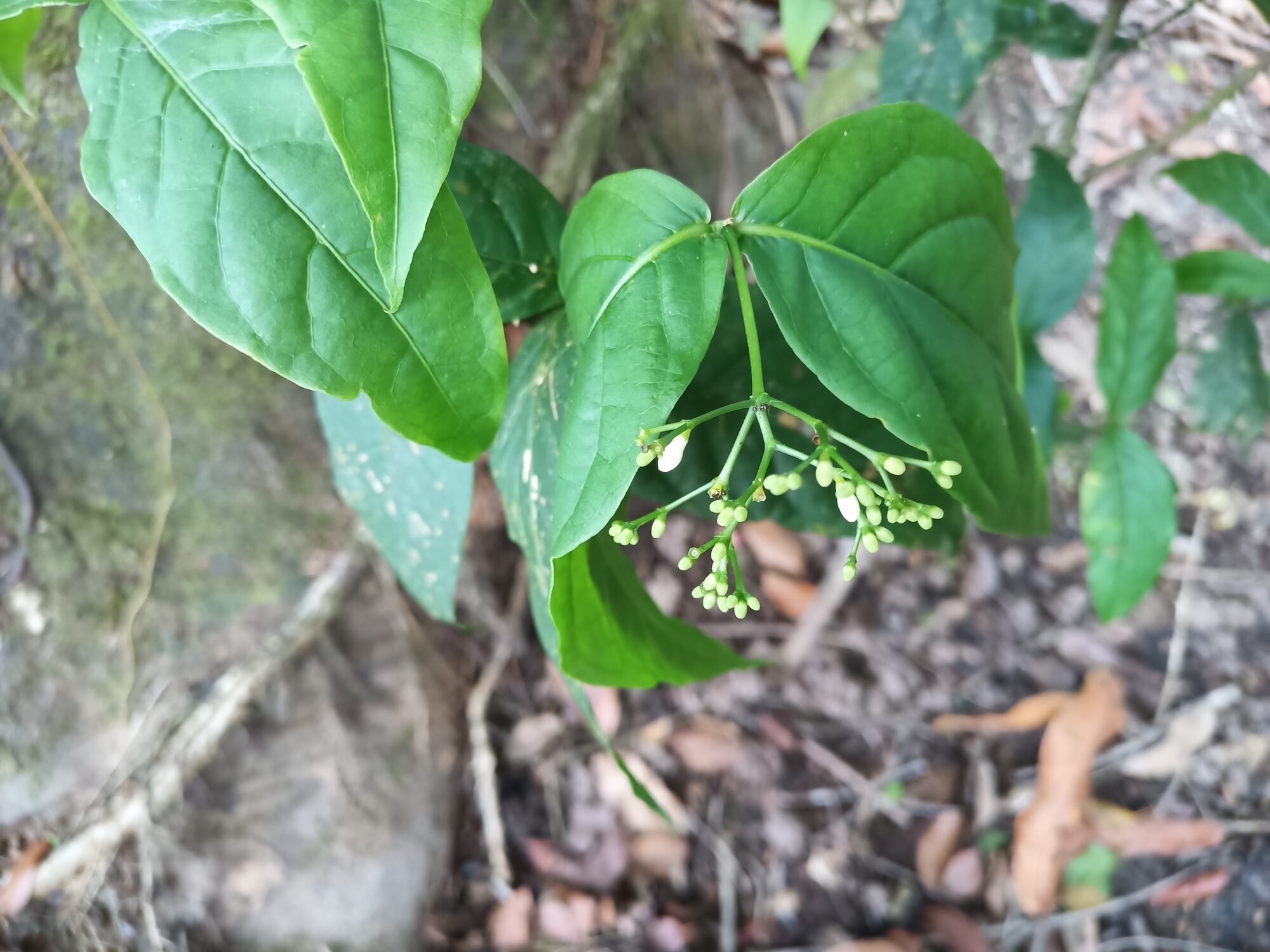
Rudgea cornifolia grows as an evergreen shrub or small treelet, typically 1.5 to 6 meters tall, occasionally reaching 10 meters in favorable conditions. The leafy stems are slender, 1.2 to 3 mm thick, completely glabrous (hairless), and dry to a grayish or yellowish-green color. Nodes are conspicuously thickened, a feature visible even on dried herbarium specimens. The plant occupies the lowest stratum of closed-canopy tropical wet forest, growing in deep shade beneath the taller canopy trees. Its overall form is loose and open, with opposite branching and foliage concentrated toward the branch tips.
Leaves
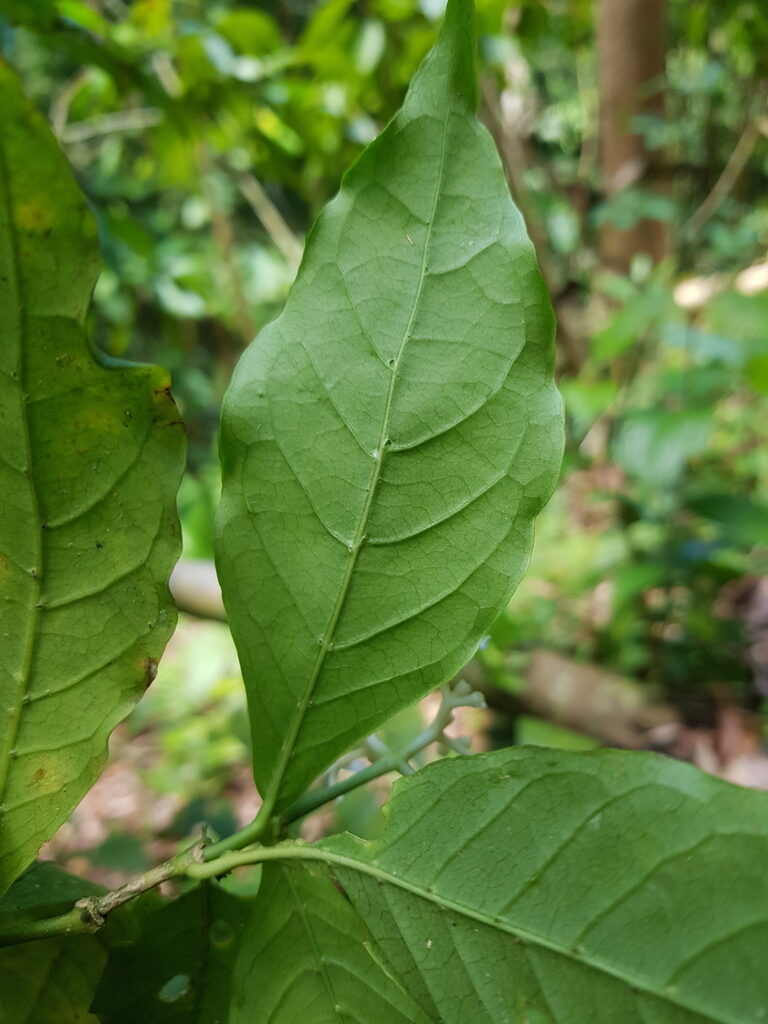
The leaves are opposite, subsessile (nearly stalkless) or with short petioles 1.5 to 6 mm long. Blades measure 4.5 to 15 cm long (sometimes reaching 18 cm) and 2 to 7 cm broad, varying from broadly elliptic to narrowly elliptic, elliptic-oblong, or ovate. The tip is acuminate with a drip-tip 7 to 15 mm long, while the base is obtuse and often slightly rounded, sometimes approaching subcordate. When dried, the leaves become pale grayish or yellowish green, a characteristic color that helps distinguish pressed specimens. The surface is entirely glabrous on both sides. Secondary veins number 5 to 9 per side (rarely as few as 3), usually with a very fine veinlet running along the leaf margin. The curving venation pattern that reminded Kunth of dogwood (Cornus) is the source of the species epithet.
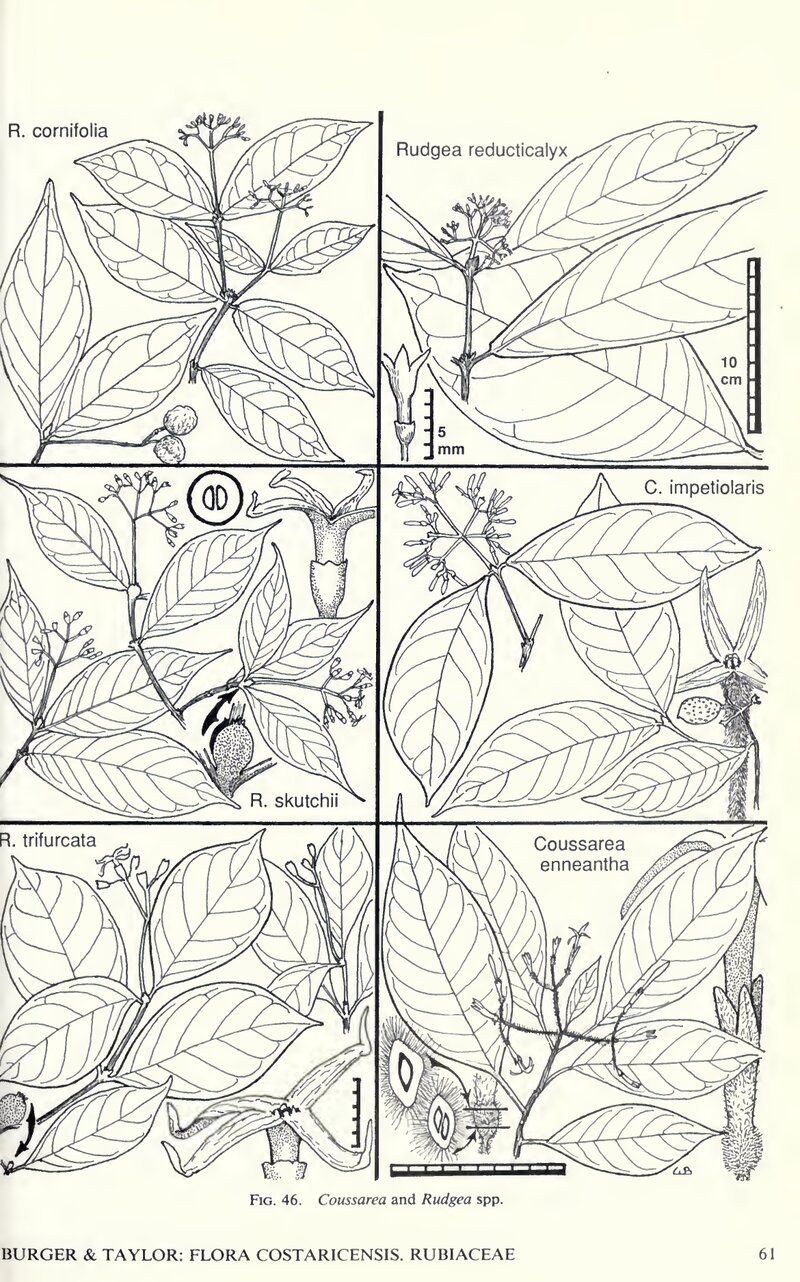
One of the most distinctive features of this species lies in its stipules: short structures 2 to 7 mm long at the base of each leaf pair, with a truncated tip bearing 3 to 5 stiff, finger-like teeth (digitate projections). These tiny toothed stipules are diagnostic for R. cornifolia and separate it immediately from lookalike species in Psychotria and Coussarea. The underside of the leaf blade often reveals slit-like or rounded pit domatia (small cavities) along the midvein, structures that house mutualistic mites.
Flowers
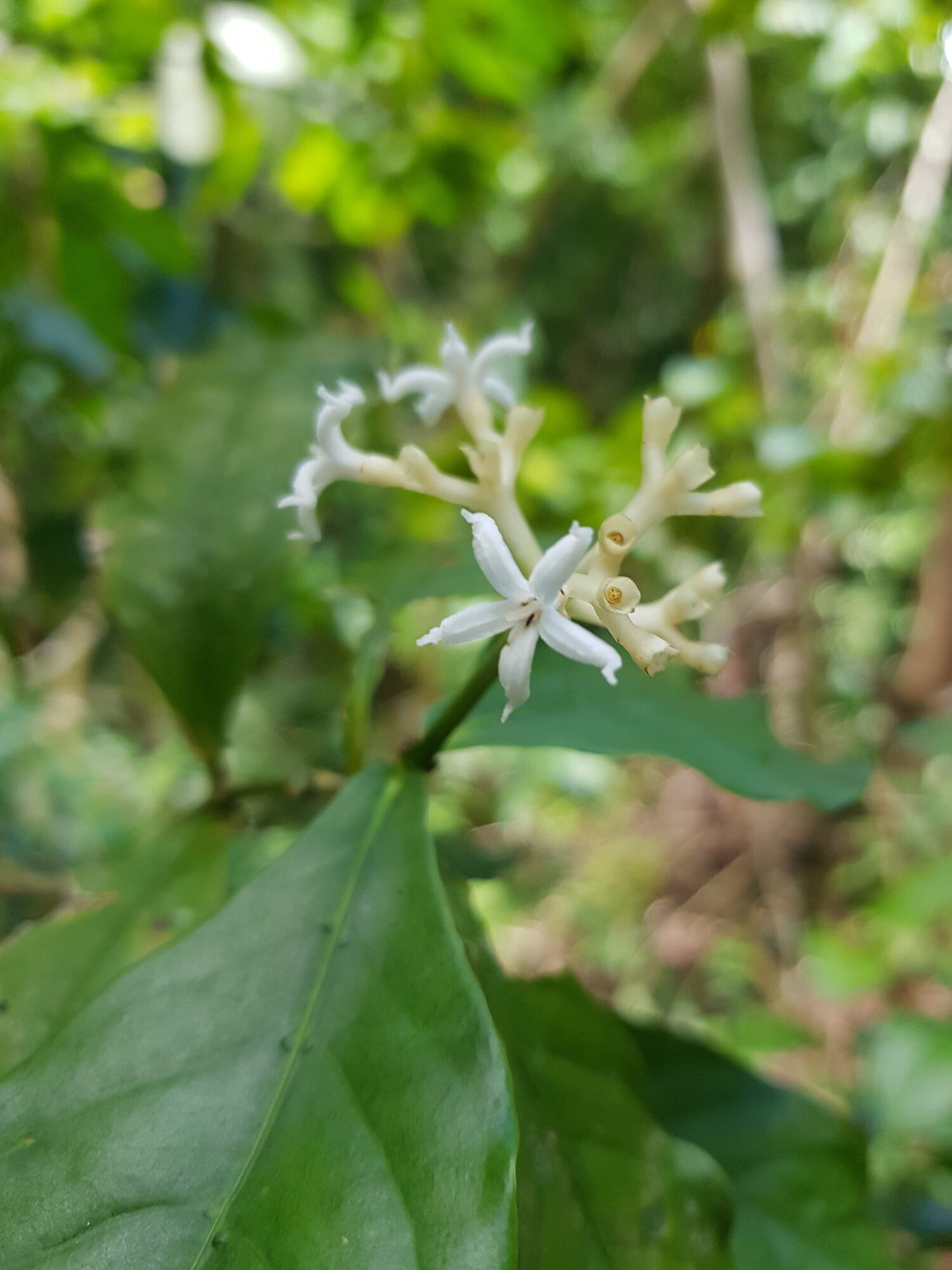
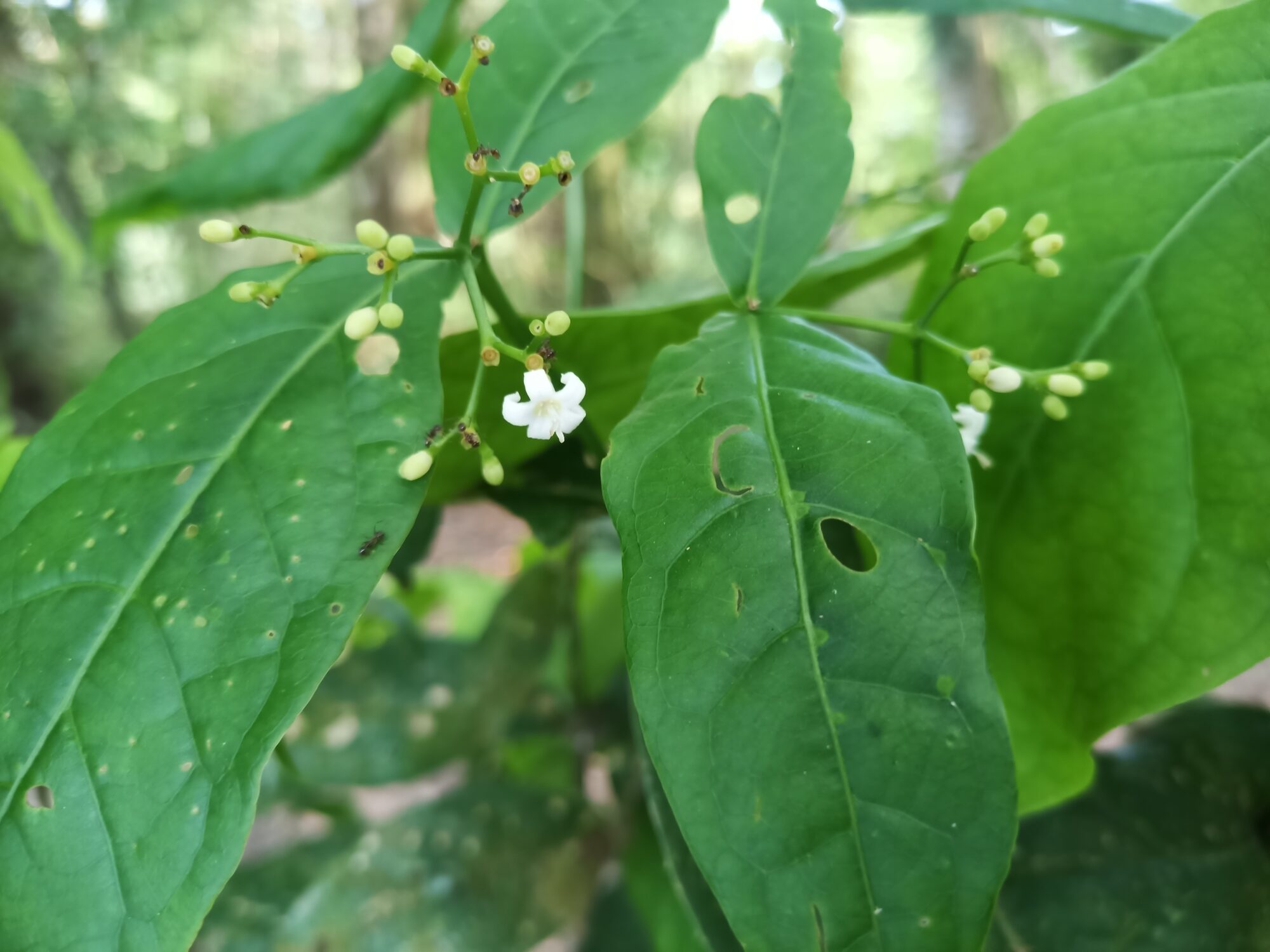
The inflorescences are solitary terminal clusters, 3 to 7 cm long and 2 to 5 cm broad, with a few-branched, open pyramidal architecture. The first node bears two lateral branches, with distal branches ending in small cymes of 3 to 5 flowers. The peduncles are 1 to 5 cm long and glabrous. Individual flowers are white and fragrant, with a salverform (trumpet-shaped) corolla: a slender tube 3 to 7 mm long and about 1 mm in diameter opening into 4 oblong lobes 3 to 4.5 mm long. The calyx is reduced to a shallow cup with barely visible lobes, sometimes absent entirely. Bracts are vestigial.
The species is distylous, meaning individual plants produce either "pin" flowers with a long style and short stamens, or "thrum" flowers with a short style and long stamens. This dimorphism promotes outcrossing, as pollen from pin flowers can only fertilize thrum flowers and vice versa. Kamaljit Bawa and James Beach confirmed this self-incompatibility system through breeding experiments at La Selva Biological Station in Costa Rica in 1983. In Costa Rica, flowering occurs primarily from February to September, peaking in June and July.
Fruits
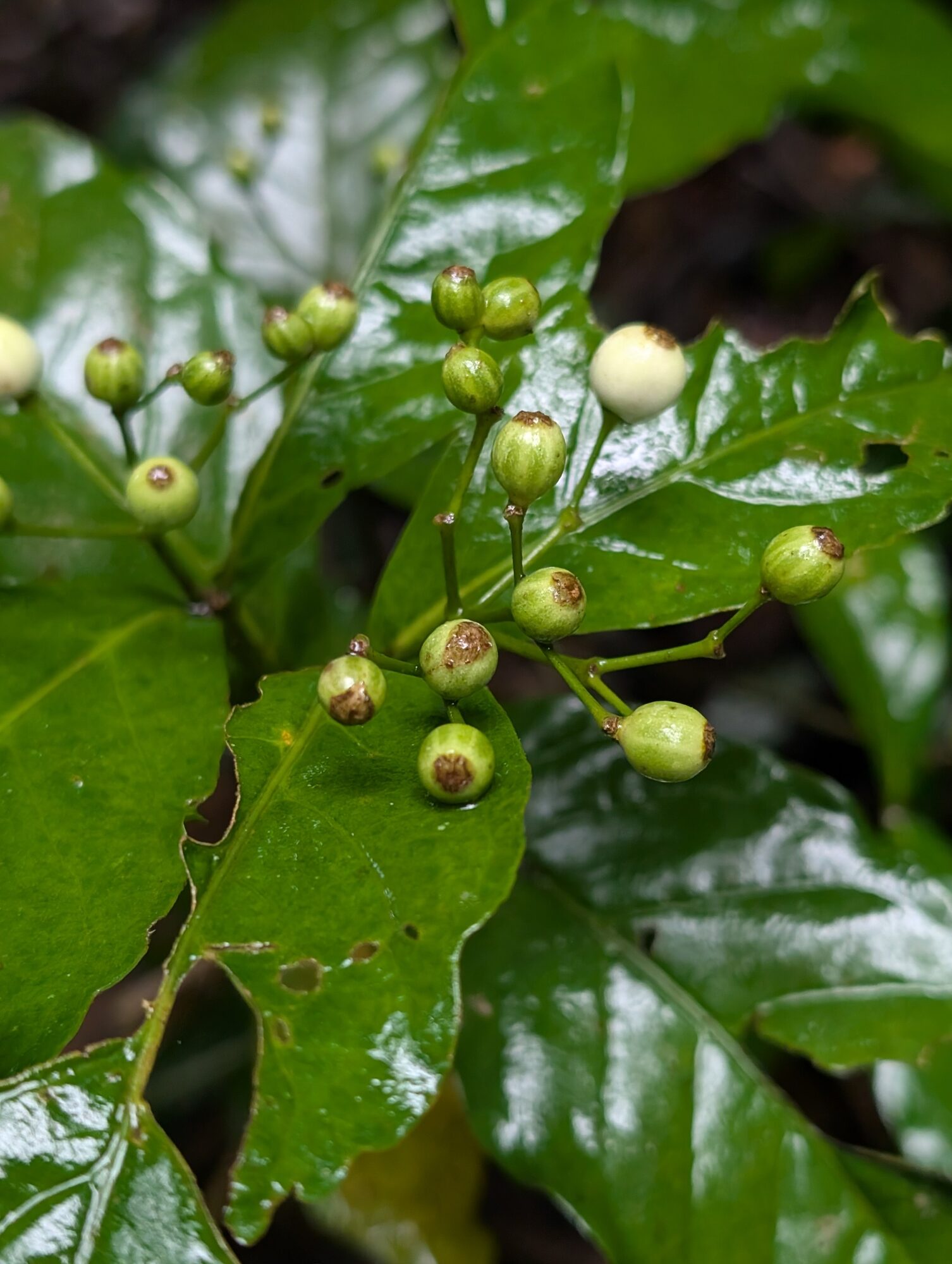
The fruits are small drupes, 6 to 9 mm long and 5 to 9 mm in diameter, oblong-ellipsoid or subglobose. They ripen from green to white, a coloration unusual among understory Rubiaceae, where red fruits are the norm. Each drupe is smooth and fleshy, topped by a prominent persistent calyx tube 0.5 to 3 mm long that gives the fruit a crowned appearance. Inside, each fruit contains two pyrenes (hard-walled seed compartments). The white color at maturity immediately distinguishes R. cornifolia from the common Psychotria horizontalis, whose fruits turn red. In Costa Rica, fruiting occurs from January to March and again from July to November.
Distribution
Rudgea cornifolia has one of the broadest ranges of any species in its genus, spanning from eastern Mexico through Central America and south to Bolivia and southeastern Brazil. GBIF data document nearly 3,000 occurrence records across at least 16 countries, with the largest numbers from Brazil (677 records, 22.8%), Costa Rica (383, 12.9%), and Mexico (268, 9%). The species also occurs in Ecuador, Peru, Colombia, Panama, French Guiana, Venezuela, Bolivia, Guyana, Guatemala, Nicaragua, Suriname, Belize, and Honduras. Its range reaches from the Caribbean lowlands of Central America through northern South America and the Amazon basin to the Atlantic Forest of southeastern Brazil. One of the genus's two centers of diversity lies in Brazil's Atlantic Forest; about 70 of the roughly 120 to 150 Rudgea species occur in Brazil, nearly half of them endemic.
In Costa Rica, the species grows on the Caribbean slope and the southern Pacific slope, from 50 to 800 meters elevation, in evergreen rain forest and wet forest formations. Its 383 documented records span six provinces, including Guanacaste (on the wet Caribbean slopes of the volcanoes, never in the dry Pacific lowlands). Key collection sites include La Selva Biological Station (Heredia, where its breeding biology was studied), Hitoy Cerere Biological Reserve and Gandoca-Manzanillo (Limón), Braulio Carrillo National Park (San José), and La Cangreja National Park (Puriscal). In the Brunca region specifically, 51 localities are documented, concentrated in the lowlands around Piedras Blancas National Park, the La Gamba area, Bahía Chal and Chocuaco on the Osa Peninsula, Río Nuevo and Río Brujo in the Térraba-Sierpe watershed, and as high as 1,229 meters near Las Mellizas in Sabalito. The species favors lowland to premontane wet forest and is classified as shade-tolerant, growing characteristically in the deep interior of closed-canopy forest rather than in gaps or edges.
Ecology
The white, fragrant, salverform flowers of R. cornifolia suggest pollination by nocturnal moths. The narrow corolla tube, white color, and fragrance are hallmarks of the sphingophilous (moth-pollinated) syndrome. The genus-level assessment describes Rudgea flowers as "probably nocturnally scented and visited by moths." The distylous breeding system, confirmed by Bawa and Beach at La Selva, means the species depends entirely on these animal pollinators for cross-fertilization between pin and thrum morphs; plants cannot self-pollinate. Although no study has identified the specific moth species involved, the flower morphology strongly points to sphingid moths or other long-tongued nocturnal Lepidoptera.
The fleshy white drupes are likely consumed and dispersed by birds, following the pattern common among understory Rubiaceae. Thrushes (Turdus spp.), manakins, and tanagers are typical dispersers of similar fruits in wet forest understory, though no study has specifically documented frugivore visits to R. cornifolia. The white fruit color, unusual in a family where red predominates, may represent a different signal to dispersers, perhaps targeting species active at dusk or dawn when white fruits are more visible than red ones against the dark forest floor.
The leaf domatia of R. cornifolia are part of one of the most widespread and elegant mutualisms in tropical forests. These small cavities along the midvein on the leaf underside shelter predaceous or fungivorous mites that protect the plant from fungal pathogens and herbivorous arthropods. A Brazilian study by Marcon and Bruniera (2024) classified the domatia in R. cornifolia as an intermediate type, displaying characteristics of both crypt and pit domatia. The mites benefit from shelter and humid microhabitat; the plant benefits from reduced fungal infection and herbivore damage. This mutualism is invisible to the naked eye yet runs through millions of leaves across the species' range.
Chemistry
In 2012, a team led by Johann Schinnerl isolated a novel alkaloid from Rudgea cornifolia and named it rudgeifoline. This compound belongs to the alstrostine class of monoterpenoid indole alkaloids, rare molecules built from one tryptamine unit and two iridoid (secologanin) units, a 1:2 ratio that distinguishes them from the more common strictosidine-derived alkaloids found in related genera. Alstrostines were first described from Alstonia rostrata (Apocynaceae), the genus that gives the class its name; Schinnerl's 2012 study reported the first alstrostines in the coffee family, finding alstrostine A in Chassalia curviflora and the new derivative rudgeifoline in Rudgea cornifolia. Their presence in Rudgea made the discovery a significant finding for understanding chemical evolution in the Rubiaceae. The pyrrolidinoindoline core structure of these compounds is characteristic of Rudgea and Chassalia, distinguishing them chemically from Palicourea (which accumulates strictosidine-type alkaloids) and Psychotria sensu stricto (which tends toward polyphenols and tannins rather than alkaloids). Among three Rudgea species tested by the research group, R. cornifolia was the only one to yield alkaloids.
Despite its novel structure, Rudgea alkaloid fractions showed poor pharmacological activity in initial screenings. Klein-Junior and colleagues (2016) tested alkaloid fractions from Palicoureeae species for enzyme inhibition relevant to neurodegenerative diseases. None of the tested fractions, from any genus, could inhibit acetylcholinesterase (AChE). For monoamine oxidase A (MAO-A), Rudgea fractions showed only weak activity, while Palicourea and Psychotria species demonstrated stronger inhibition. The significance of rudgeifoline may therefore lie less in pharmacology than in taxonomy: its presence supports the separation of Rudgea from Psychotria, which lacks these alkaloids. The shared alstrostine chemistry links Rudgea with Chassalia and Geophila, although molecular phylogenies place Rudgea's sister genus as Notopleura.
Taxonomic History
The species was first described as Psychotria cornifolia by Carl Sigismund Kunth (1788-1850) in Roemer and Schultes' Systema Vegetabilium 5: 191 (1819), with a parallel description in Kunth's monumental Nova Genera et Species Plantarum 3: 362, the multi-volume work describing thousands of plants from the Humboldt-Bonpland expedition of 1799-1804. Kunth, the son of a Leipzig university lecturer, was sent to Berlin in 1806 to stay with his uncle and was hired by Humboldt to catalogue the expedition's botanical collections in Paris, where he described thousands of species new to science. He later became professor of botany at the University of Berlin and vice-director of the Berlin Botanical Garden. The type material was collected by Humboldt and Bonpland during their exploration of the Colombian or Venezuelan interior around 1800-1801 and is likely held at the Paris herbarium (P).
The nomenclatural history thereafter reflects the species' enormous range and variable morphology. Otto Kuntze transferred it to Uragoga cornifolia in his 1891 Revisio Generum Plantarum, part of his controversial campaign to apply strict priority rules across all plant genera. Paul Carpenter Standley (1884-1963), the prolific Central American botanist at the Field Museum, made the final transfer to Rudgea cornifolia in 1931, as part of his broader revisionary work on Neotropical Rubiaceae. The genus Rudgea itself was established by Richard Anthony Salisbury in 1807, named for Edward Rudge (1763-1846), an English botanist and antiquary. Rudge, the son of a merchant and alderman of Salisbury, had purchased a collection of Guiana plants from the collector Joseph Martin, which drew him into the study of South American botany and led to his publication of Plantarum Guianae rariorum icones et descriptiones (1805-1807).
Modern molecular phylogenetics places Rudgea in tribe Palicoureeae within subfamily Rubioideae, sister to Psychotrieae. Taylor, Bruniera, and Zappi (2015) refined the boundary between Rudgea and Palicourea based on stipule morphology: species with truncate to triangular stipules bearing caducous glandular appendages belong to Rudgea, while those with different stipule forms fall in Palicourea. Razafimandimbison and colleagues (2024) confirmed this tribal placement in their comprehensive phylogeny of the coffee family. The species epithet cornifolia, from Latin cornus (the dogwood genus, itself from cornu, horn, for the hardness of its wood) and folia (leaves), refers to the broadly elliptic leaves with curving secondary veins that superficially resemble dogwood foliage.
Similar Species
In Panama and throughout much of its Central American range, R. cornifolia is most often confused with Psychotria horizontalis, another understory Rubiaceae shrub that shares similar habitat and leaf form. The two can be separated by two reliable characters: P. horizontalis lacks the glandular digitate stipule teeth of R. cornifolia, and its fruits ripen to red rather than white. In Costa Rica, immature-fruited specimens may resemble Coussarea caroliana, a related understory shrub. Coussarea is distinguished by its elongate, Ficus-like stipules that form a slender cap over the shoot apex (versus the short, toothed stipules of Rudgea), its racemiform inflorescences (versus pyramidal), and its ellipsoid-oblong fruits (versus subglobose). Seven Rudgea species occur in Costa Rica; among them, R. monofructus, endemic to the northern Caribbean slope, differs in its usually solitary flowers, large cylindrical hypanthium, and higher elevation preference (600-1200 m).
Conservation Outlook
Rudgea cornifolia is listed as Least Concern in conservation databases, a status supported by its vast geographic range, occurrence in at least 10 countries, and apparent local abundance in suitable habitat. In Costa Rica alone, 383 herbarium records and 174 unique localities document a species that is common wherever closed-canopy wet forest persists on the Caribbean slope and southern Pacific lowlands. It occurs in multiple protected areas including La Selva Biological Station, Hitoy Cerere Biological Reserve, Carara National Park, Braulio Carrillo National Park, and Piedras Blancas National Park. As a shade-tolerant understory species, its primary vulnerability lies in deforestation: when the canopy is removed, the shaded microhabitat it depends on disappears. Secondary forest regeneration may eventually restore suitable conditions, though the species' dependence on moth pollinators and specialized mite mutualists may slow recolonization.
Resources & Further Reading
Taxonomy & Nomenclature
Plants of the World Online entry with accepted name, full synonymy (24 names), and native range.
Nomenclatural data, type specimens, and literature references from Missouri Botanical Garden.
Key paper defining the boundary between Rudgea and Palicourea based on stipule morphology. Kew Bulletin 70: 45.
Comprehensive molecular phylogeny confirming tribal placement of Rudgea in Palicoureeae. Taxon.
The multi-volume work (1815-1825) in which Kunth first described Psychotria cornifolia from Humboldt-Bonpland collections.
Species Information
Global occurrence records (nearly 3,000 records across at least 16 countries) and specimen data.
Species account from the Smithsonian Tropical Research Institute's Panama flora database.
Costa Rica photographic reference with habitat information.
Digital Flora de Costa Rica occurrence statistics and distribution data.
Burger & Taylor (1993). Fieldiana Botany n.s. no. 33. Field Museum. Full treatment of Rudgea cornifolia on pp. 303-305.
Genus-level information on ecology, distribution, and diversity of Rudgea.
Chemistry & Ecology
Discovery of rudgeifoline, a novel alstrostine-type monoterpenoid indole alkaloid from R. cornifolia. Phytochemistry Letters 5(3): 586-590.
Revised classification showing distinct alkaloid profiles across genera. Phytochemistry Reviews 21: 1-36.
Pharmacological screening of Rudgea and related genera for MAO-A and AChE inhibition. Natural Product Communications 11(9).
Breeding biology study at La Selva Biological Station confirming distyly and self-incompatibility. American Journal of Botany 70(9): 1281-1288.
Study of leaf domatia types in Rudgea species of Brazil, classifying R. cornifolia as an intermediate crypt-pit type. Hoehnea 51: e1072023.
Related Reading
Biography of the botanist for whom the genus Rudgea was named.
Historical biography from the 1885 DNB on Rudge's botanical and antiquarian pursuits.
Kunth described Psychotria cornifolia in 1819 from Humboldt-Bonpland expedition specimens.
Standley transferred the species to Rudgea in 1931 and authored key Central American floristic works.
Community-contributed photographs and occurrence records.