Borojó
Alibertia patinoi — A small rainforest tree famed for its massive fruits and legendary reputation as an aphrodisiac. The borojó's name comes from the Emberá language: "boro" (head) and "jo" (fruit), describing its head-sized, globular fruits.
In the markets of Colombia and Ecuador, vendors sell thick brown juice from a fruit few outside the Chocó bioregion have heard of. They call it "jugo de amor" (love juice), and claim it can cure everything from impotence to malnutrition. The fruit is borojó, and its reputation as a natural aphrodisiac has made it famous throughout Latin America. Whether the claims hold up to scientific scrutiny is still being investigated, but researchers have found the fruit contains unusually high concentrations of phosphorus, amino acids, and bioactive compounds including oleuropein, which may partially explain its traditional uses.
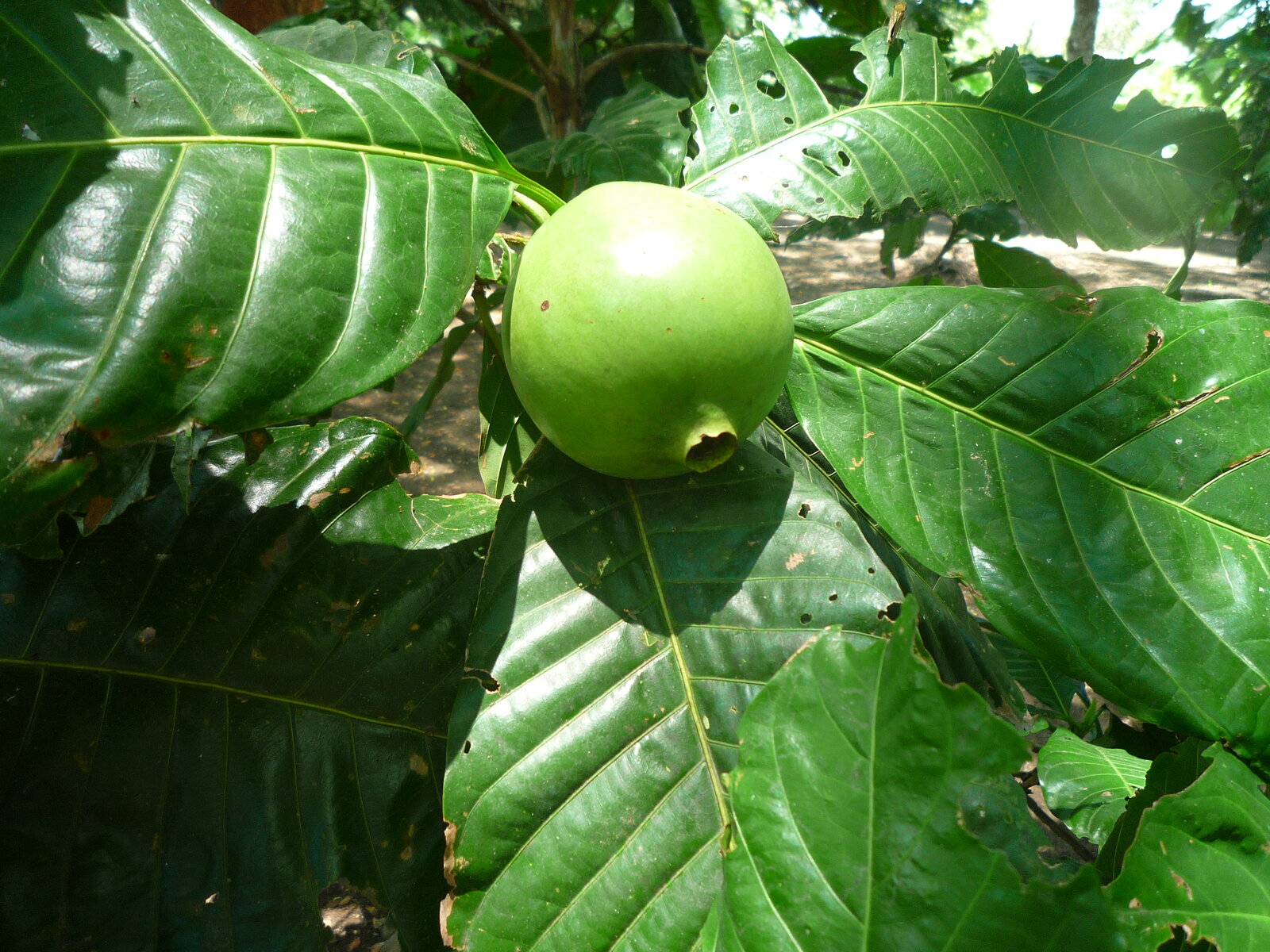
The borojó is native to the wet lowland forests stretching from Costa Rica through Panama, Colombia, and into Ecuador. It is a small understory tree, rarely exceeding 8 meters in height, that thrives in the shade and humidity of mature rainforest. The species is dioecious, meaning individual trees are either male or female, requiring both sexes for fruit production.
Identification
Habit
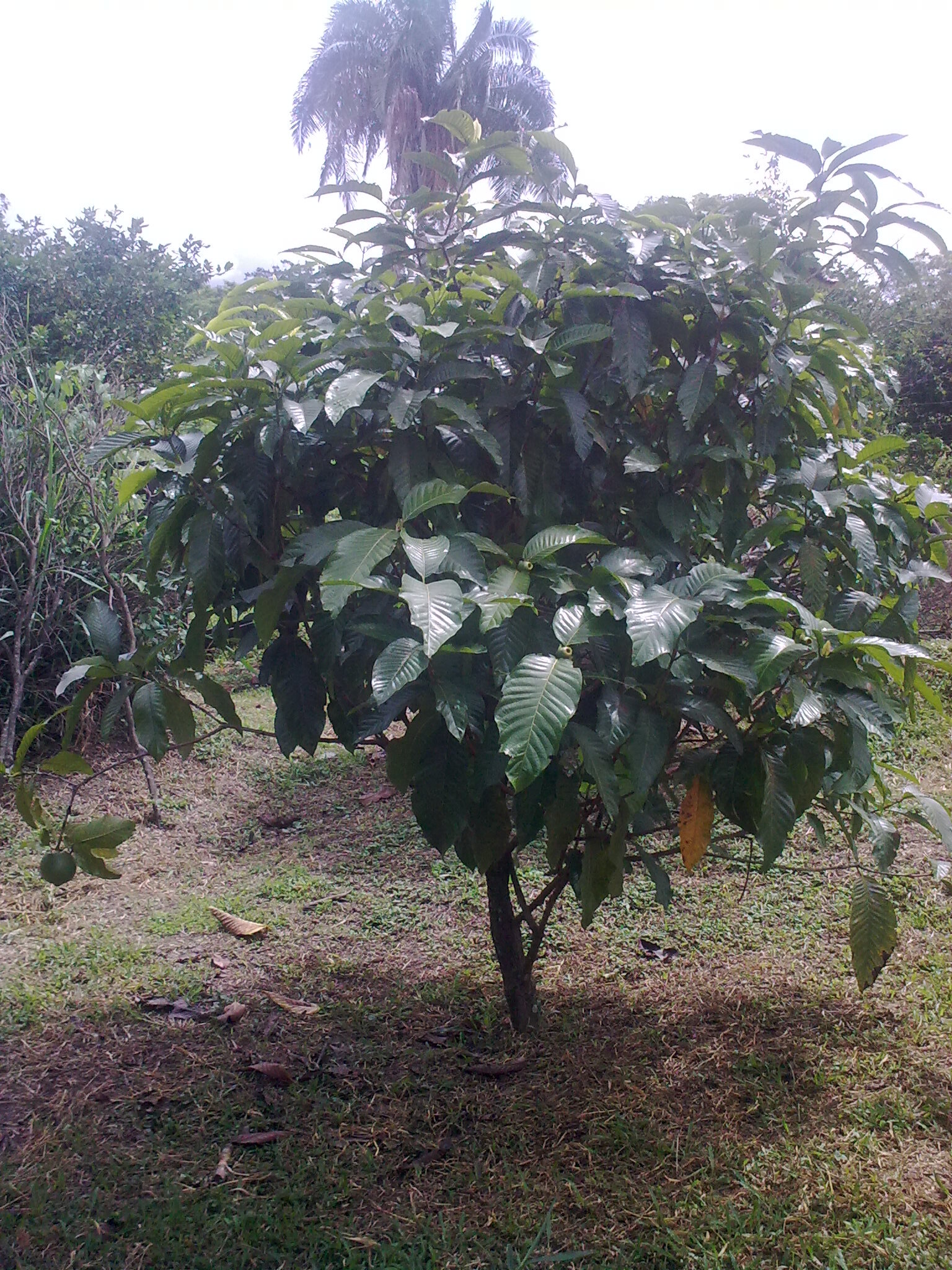
Borojó is a small to medium-sized evergreen tree typically growing 2-5 meters tall in the forest understory, though exceptional specimens can reach 8 meters or even 17 meters under optimal conditions. The trunk often divides into 2-3 smaller stems, giving the tree a multi-stemmed appearance. The bark is grey-brown and relatively smooth.
Leaves
The leaves are among the most distinctive features of the borojó. They are large, up to 30 cm long, with a leathery (coriaceous) texture and glossy upper surface. The leaves are arranged in opposite pairs (decussate) with prominent stipules between them, a characteristic feature of the Rubiaceae family. The venation is pinnate with clearly visible secondary veins.
Flowers
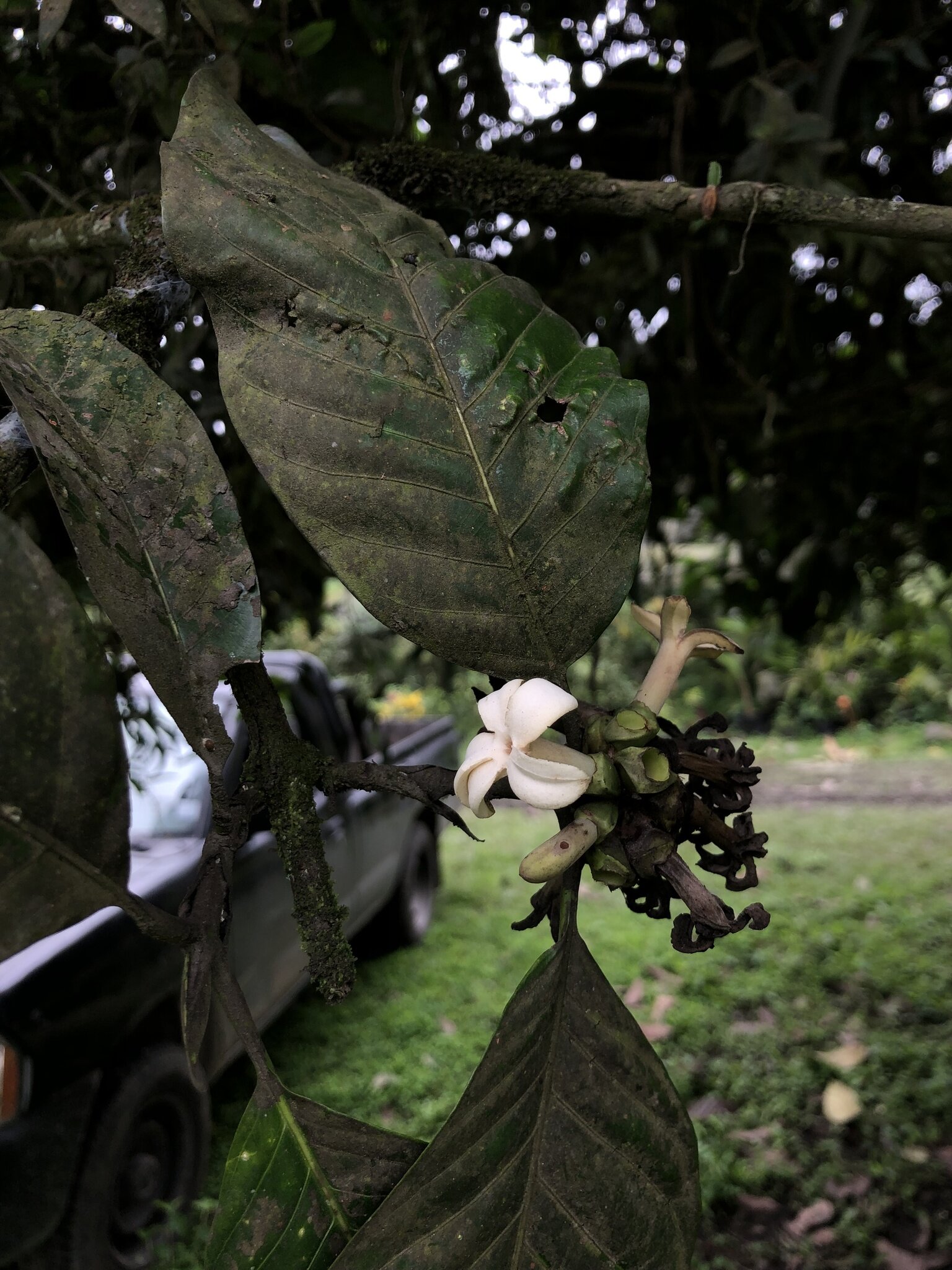
Because borojó is dioecious, male and female flowers occur on separate trees. Male flowers appear in clusters and are fragrant, white, with a prismatic or conic shape. They are pentamerous (five-parted), sometimes tetramerous, and lack a functional ovary. Female flowers are solitary, appearing singly at branch tips, with 7-8 lobed corollas. Both flower types are white and fragrant. Flowering occurs primarily in May through July.
Fruits
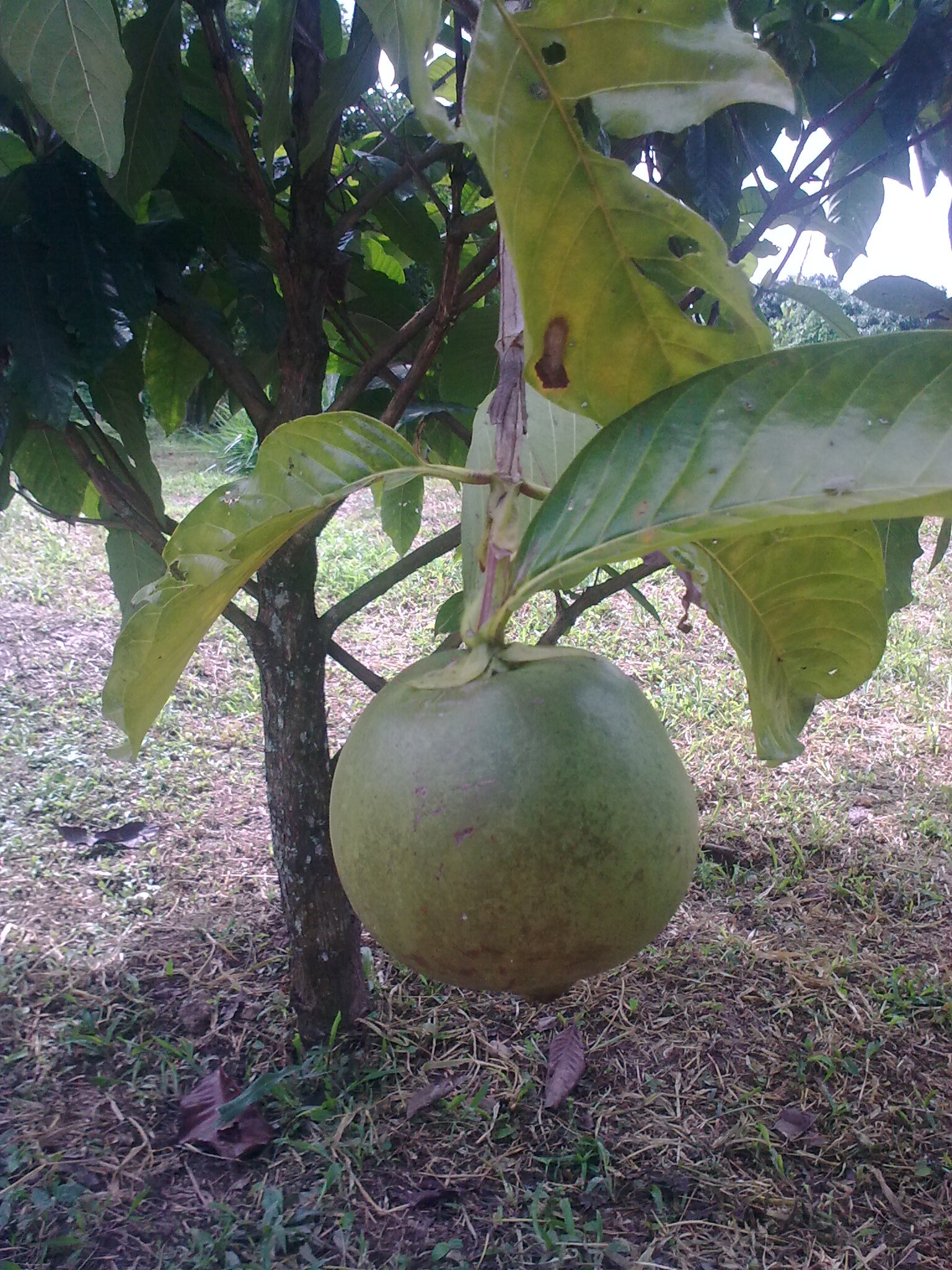
The fruits are what make borojó famous. They are large, globose (spherical), and can reach 7-12 cm in diameter, weighing 740-1000 grams on average. Immature fruits are green, turning brown when ripe. The exterior has a somewhat rough texture. Inside, the fruit contains a dense, brown, acidic pulp with a sweet, aromatic flavor and slight bitterness. Each fruit contains 90-600 seeds embedded in the pulp. Remarkably, the fruit takes over a year to mature after flowering, and fruits are considered ripe only when they fall naturally from the tree. Fruiting occurs from May through December.
Seeds
Borojó seeds are highly uniform in size: approximately 8.8 mm long, 6.3 mm wide, and 3.6 mm thick, with an average mass of 0.13 grams. Studies have found that seeds have exceptionally high germination rates, exceeding 96% under laboratory conditions. Germination begins around day 7 and completes by day 25, with a mean germination time of 13-15 days. The seeds germinate equally well in light or darkness, showing no light requirement for germination.
Distribution
Borojó is native to the Chocó-Darién moist forests bioregion, one of the most biodiverse areas on Earth. Its natural range extends from Costa Rica through Panama, Colombia, and into Ecuador. The species occurs primarily at low elevations, with 90% of records from sea level to 330 meters, though it has been found as high as 990 meters in suitable microhabitats.
In Costa Rica, borojó occurs in wet lowland forests on both the Pacific and Caribbean coasts, with the majority of records from the Brunca region on the Pacific side. GBIF documents 89 records from Costa Rica, with 37 localities in the Brunca region and 18 elsewhere, including Caribbean lowland sites like La Selva Biological Station. Herbarium specimens exist from multiple Costa Rican collections spanning from 1977 to 2013.
Ecology
In its natural habitat, borojó is an understory species of mature tropical rainforest, growing in humid, shaded conditions beneath the forest canopy. Wild populations are found in closed-canopy forests rather than disturbed or open areas. However, cultivation experience shows the species can adapt to a range of light conditions: while it grows well in partial to full shade, some growers report successful cultivation in full sun exposure when provided with adequate moisture and soil nutrition. The tree prefers a mean annual temperature around 26°C (tolerating 20-28°C) and requires high rainfall, typically 3,000-6,200 mm annually with approximately 290 rainy days per year. Relative humidity should be high, between 83-92%.
Little is known about the specific pollinators of borojó, though the fragrant white flowers suggest insect pollination, consistent with most Rubiaceae. The fleshy fruits suggest dispersal by frugivorous animals, though specific dispersers have not been documented. The species has been cultivated for so long that wild populations are difficult to distinguish from planted ones, and most biological observations come from cultivated trees.
Traditional Uses
Borojó is famous throughout Colombia and Ecuador for its purported medicinal properties, particularly as an aphrodisiac. The fruit pulp is consumed fresh as "jugo de borojó" or "jugo de amor" (love juice), and is also processed into jams, wines, desserts, sauces, and ice cream. The dense, nutritious pulp is said to contain amino acids equivalent to 3 pounds of fresh meat in a single pound of fruit.
In traditional medicine, borojó has been used to treat hypertension, bronchial diseases, and malnutrition. The Emberá people, who gave the fruit its name, have used it as a general tonic and "cure-all" for generations. Modern phytochemical analysis has identified numerous bioactive compounds in the fruit, including flavonoids (rutin, quercetin, luteolin, apigenin), phenolic acids (catechin, caffeic acid, ferulic acid), and notably oleuropein, a compound with antioxidant properties that may have testosterone-increasing activity.
Despite these findings, the aphrodisiac properties of borojó have not been clinically validated. Researchers have identified eleven compound families in borojó that could theoretically explain aphrodisiac effects, but controlled studies in humans have not been conducted. The fruit remains a subject of active research for its antioxidant, antimicrobial, and potential anticancer properties.
Taxonomic History
The borojó was first described scientifically in 1949 by the Colombian botanist José Cuatrecasas as Borojoa patinoi, published in the Secretaría de Agricultura y Ganadería de Colombia, Serie Botánica Aplicada. The genus Borojoa was created specifically for this species and a few close relatives.
However, molecular and morphological studies in the early 2000s revealed that Borojoa was nested within the larger genus Alibertia. In 2011, Delprete and Persson formally transferred the species to Alibertia, creating the new combination Alibertia patinoi (Cuatrec.) Delprete & C.H.Perss., published in Novon 21:137. This placement is now accepted by all major botanical databases and floras, including Flora Mesoamericana, the Manual de Plantas de Costa Rica, and Plants of the World Online.
The common name "borojó" comes from the Emberá language, an indigenous language of the Chocó region. "Boro" means "head" and "jo" means "fruit," a reference to the fruit's large, head-like, globular shape.
Conservation Outlook
Borojó is listed as Least Concern by the IUCN. The species has been cultivated for so long, with approximately 3,000 hectares under commercial production in Colombia and Ecuador, that truly wild populations are difficult to identify. The species does not appear to face significant conservation threats, though the wet lowland forests where it naturally occurs continue to face pressure from agricultural expansion and development.
In Costa Rica, borojó remains relatively uncommon, with most observations from the Pacific lowlands. The species is protected within the boundaries of several conservation areas in the Brunca region, including areas around Corcovado National Park and the Golfo Dulce Forest Reserve.
Key Sources & Resources
Species Information
Overview of the species with information on distribution, uses, and cultural significance.
Species account from Costa Rica's Osa Peninsula.
Detailed information on uses, cultivation, and ecology.
Taxonomy & Nomenclature
Authoritative taxonomic information from the Royal Botanic Gardens, Kew.
Scientific Literature
Scientific study on seed characteristics and germination of borojó.
Analysis of bioactive compounds and traditional medicinal claims.
Occurrence Data
Community-submitted observations with photographs and locations.
Cultivation
Forum discussion on light requirements and cultivation experiences, including reports of successful full-sun cultivation.