Chomelia microloba
Chomelia microloba — A small understory tree of the coffee family distinguished by small corolla lobes and domatia on its leaves. This species bears fleshy black fruits consumed by guans and other forest birds.
In the lowland wet forests of Costa Rica's Osa Peninsula, a small understory tree quietly produces clusters of yellow flowers that give way to fleshy black fruits. The drupes are consumed by guans and curassows, large forest birds that disperse its seeds through the understory. Chomelia microloba is one of three Chomelia species documented from the Osa Peninsula, thriving in the last expanse of tropical wet forest on the Pacific slope of Central America.
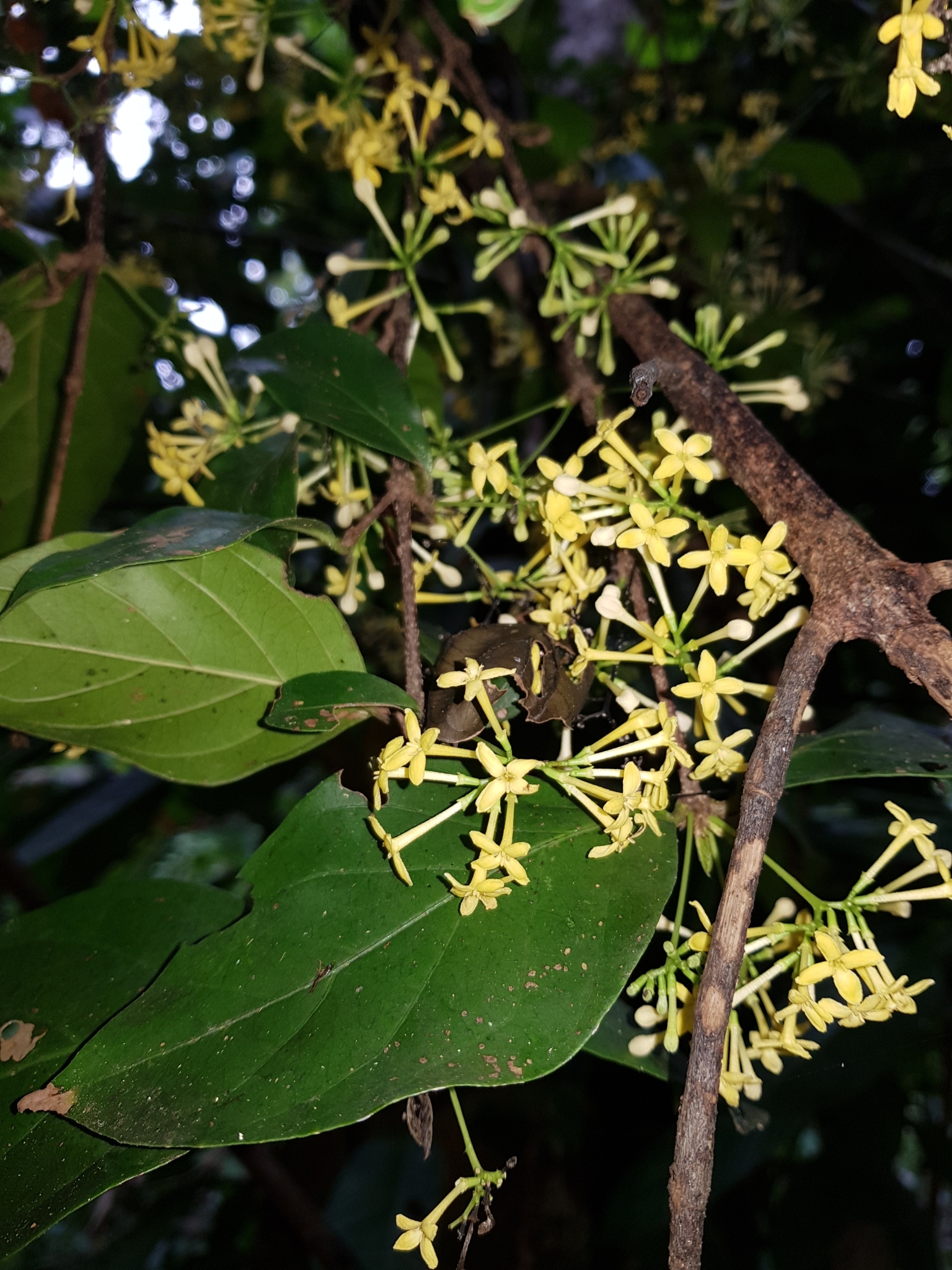
The species belongs to tribe Guettardeae within the Rubiaceae, a tribe characterized by fleshy drupaceous fruits that evolved during the Eocene-Oligocene radiation of modern bird and mammal dispersers. Despite being widespread from Costa Rica through Panama to Colombia, Chomelia microloba remains poorly studied. Most observations come from herbarium collections and citizen science records, with little known about its pollination biology or detailed life history.
Identification
Habit
Chomelia microloba exhibits considerable variation in growth form, ranging from a shrub of about 3 meters to a small tree reaching 15 meters under favorable conditions. Field measurements from Colombian specimens record trunk diameters (DBH) of 2.9-13.1 cm. Some individuals develop fluted trunks (fustes acanalados), a feature noted in tropical forest inventory studies. The branches are arranged oppositely, a characteristic shared with all members of the genus.
Leaves
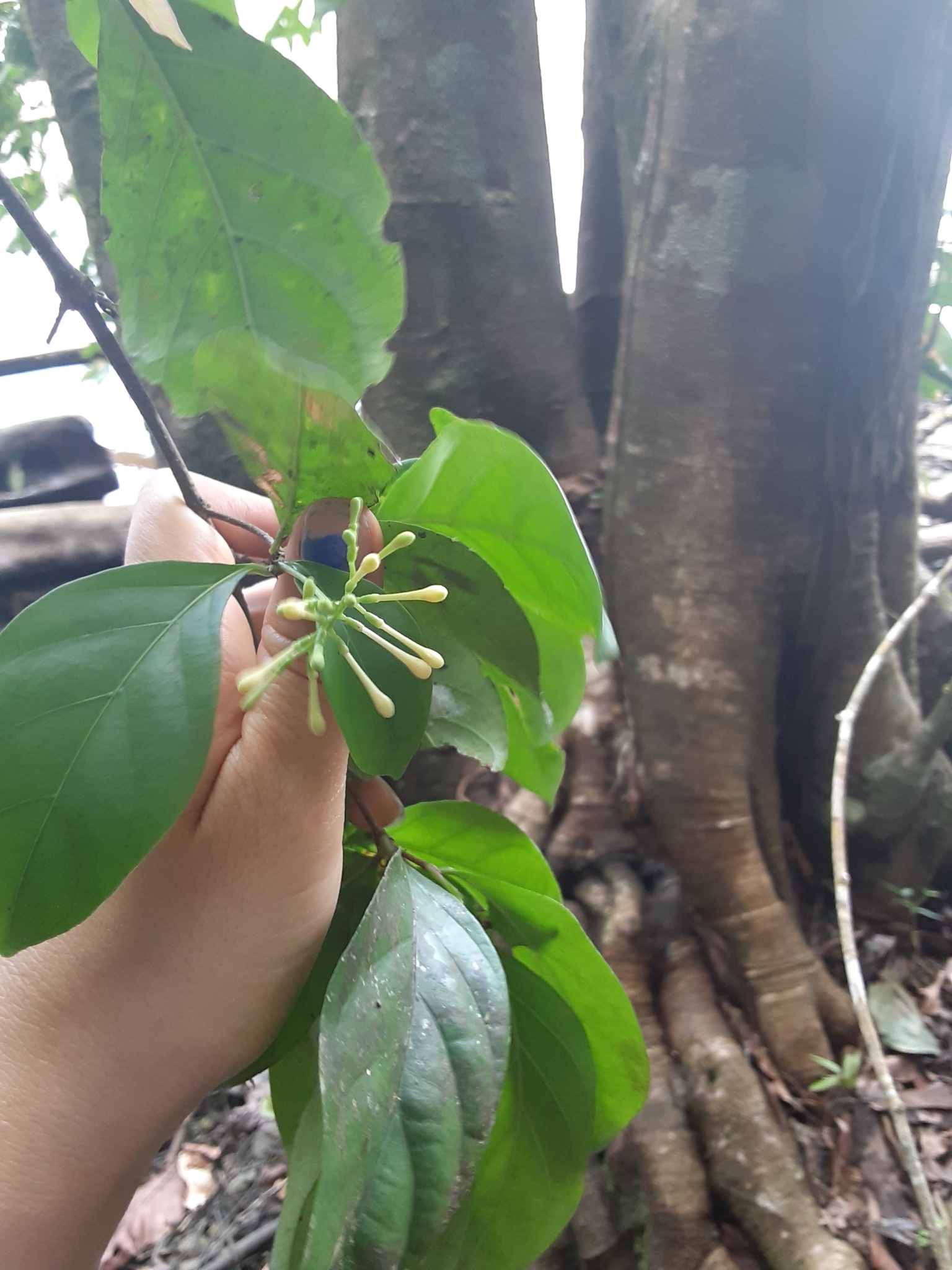
The leaves are arranged in opposite pairs with interpetiolar stipules, typical of the Rubiaceae. A key diagnostic feature is the presence of domatia (small pockets or tufts of hairs on the leaf underside) that provide shelter for beneficial arthropods such as mites that may protect the plant from herbivores. This character distinguishes C. microloba from the related C. costaricensis, which lacks domatia entirely. The leaves have prominent pinnate venation.
Flowers
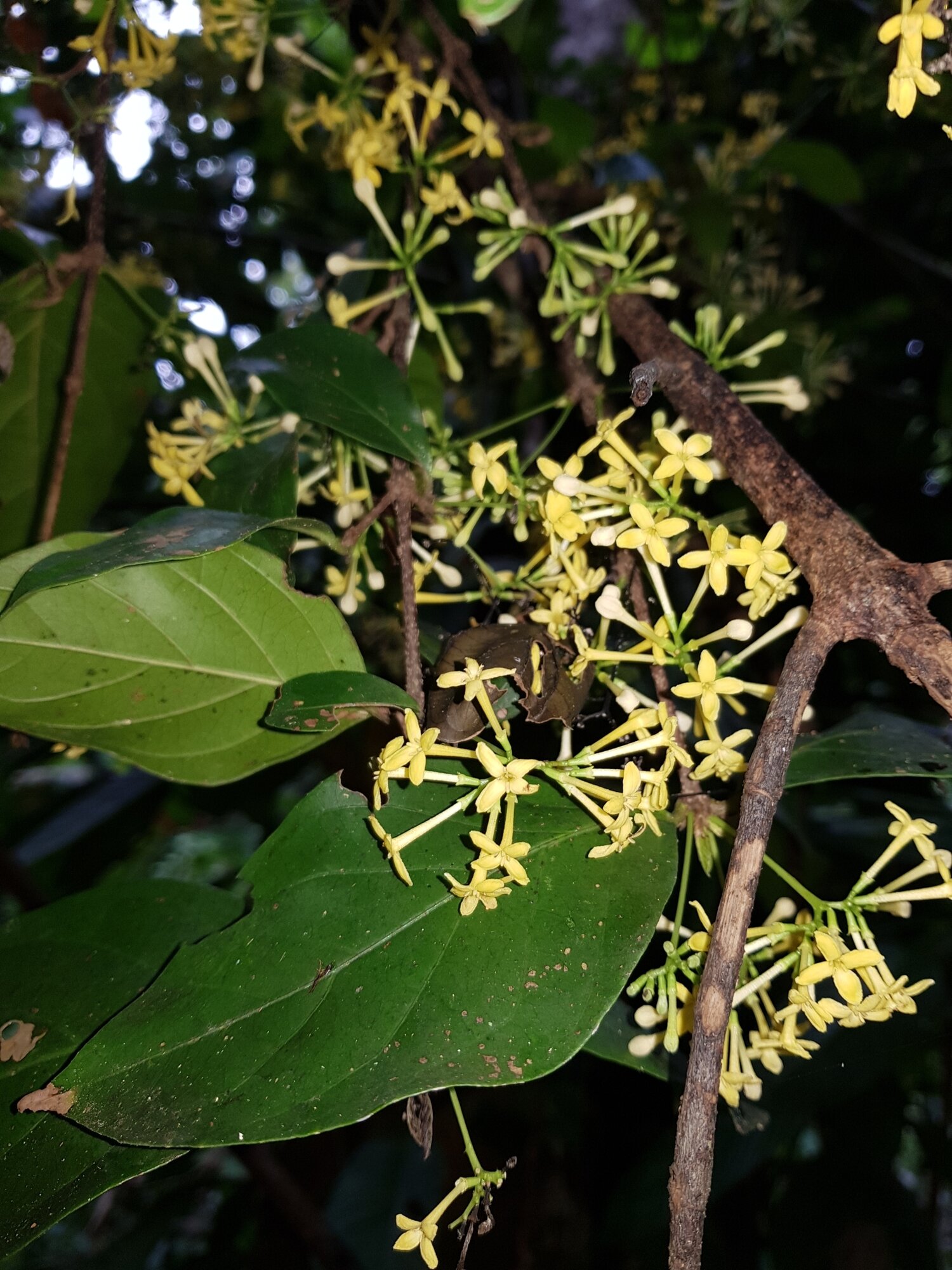
The flowers are arranged in helicoid cymes (coiled, one-sided clusters) at the branch tips. Each flower is 4-merous (occasionally 5-merous), with a tubular corolla bearing relatively short lobes, the feature that gives the species its name: "microloba" means "small-lobed" in botanical Latin. The corolla is yellowish to cream-colored. The ovary is inferior, a consistent character of the Rubiaceae. Flowering has been observed in July in Costa Rica.
Fruits
The fruits are fleshy drupes that turn black when mature, consistent with the tribe Guettardeae. Each drupe contains a single hard seed that is distinctly 2-lobed and yellowish in color. The fleshy fruit is adapted for dispersal by frugivorous birds, particularly cracid birds (guans and curassows). Fruiting has been observed from February (in Colombia) through July (in Costa Rica), suggesting an extended or variable fruiting season across its range.
Distribution
Chomelia microloba is native to the wet lowland forests from Costa Rica through Panama to Colombia. GBIF records (as of January 2026) show 253 total occurrences globally, with 146 records from Costa Rica alone. Within the Brunca region of Costa Rica, there are 87 documented occurrences, concentrated in Puntarenas Province, particularly around Golfito and the Osa Peninsula.
The species occurs at low elevations, from near sea level (30-60 m in Costa Rica) up to approximately 450 m in Colombia. It appears to be strictly a lowland species, with no records from montane forests. Documented localities in Costa Rica include Manuel Antonio National Park, El Macho Quebrada near Golfito, and multiple sites on the Osa Peninsula.
Ecology
Chomelia microloba inhabits wet tropical forest understories, including primary forest, riparian zones, and regenerating forest fragments. Colombian field notes describe it from "bosque ripario" (riparian forest) and "fragmento de bosque en proceso de regeneración" (regenerating forest fragment), suggesting some tolerance for secondary habitats. The species appears to require humid conditions typical of lowland wet forest.
The domatia on the leaves likely host beneficial mites that protect the plant from herbivorous arthropods, a mutualistic relationship common in tropical forest understory plants. Pollination biology has not been studied, but the tubular, cream-colored flowers suggest insect pollination, possibly by bees or moths. Seed dispersal is almost certainly by frugivorous birds, with the Colombian name "fruto de pava" directly implicating cracid birds (guans and curassows) as dispersal agents.
Taxonomic History
Chomelia microloba was first described by American botanist John Donnell Smith (1829-1928) in the Botanical Gazette in January 1897, as part of his series "Undescribed Plants from Guatemala and Other Central American Republics." Smith specialized in the flora of Central America and donated his herbarium of over 100,000 specimens to the Smithsonian Institution in 1906.
The genus Chomelia was named by Austrian botanist Nikolaus Joseph von Jacquin in 1760 to honor French botanist and physician Pierre-Jean-Baptiste Chomel (1671-1740). The species epithet "microloba" derives from Greek mikros (small) and Latin lobus (lobe), referring to the characteristically small lobes of the corolla.
The species has accumulated several synonyms over its taxonomic history: Anisomeris microloba (Donn.Sm.) Standl. (a transfer to a different genus), Antirhea panamensis Standl., Chione chambersii Dwyer & M.V.Hayden, Chomelia panamensis (Standl.) Dwyer, and Chomelia peninsularis Dwyer. The last synonym is particularly interesting as it suggests specimens from the Osa Peninsula were once considered a distinct species.
Conservation Outlook
Chomelia microloba is classified as Least Concern by the IUCN. The species is relatively widespread within its range and occurs in protected areas including Manuel Antonio National Park in Costa Rica. With 253 documented occurrences globally and 146 from Costa Rica alone, the species appears to be reasonably common within suitable habitat.
However, the lowland wet forests where this species occurs continue to face pressure from agricultural expansion, particularly for oil palm and cattle ranching. The species' apparent tolerance for regenerating forest fragments may provide some resilience, but loss of mature forest could affect populations dependent on cracid birds for seed dispersal, as these large frugivores are often the first to disappear from degraded habitats.
Key Sources & Resources
Species Information
Community-submitted observations with photographs and distribution maps.
Taxonomic information and global occurrence records.
Taxonomy & Nomenclature
Authoritative taxonomic information from the Royal Botanic Gardens, Kew.
Taxonomic revision of Guettardeae including diagnostic characters for Chomelia species.
Related Reading
Academic study documenting Chomelia microloba as one of three Chomelia species on the Osa Peninsula.
Overview of the genus Chomelia and its distinguishing characters within Rubiaceae.