Coconut
Three dark pores on every coconut shell look like a grimacing face. Portuguese sailors in the 1500s called them "coco" — goblin. The coconut palm drifted across oceans for millennia before humans, colonizing remote tropical shores with seeds that float for months at sea.
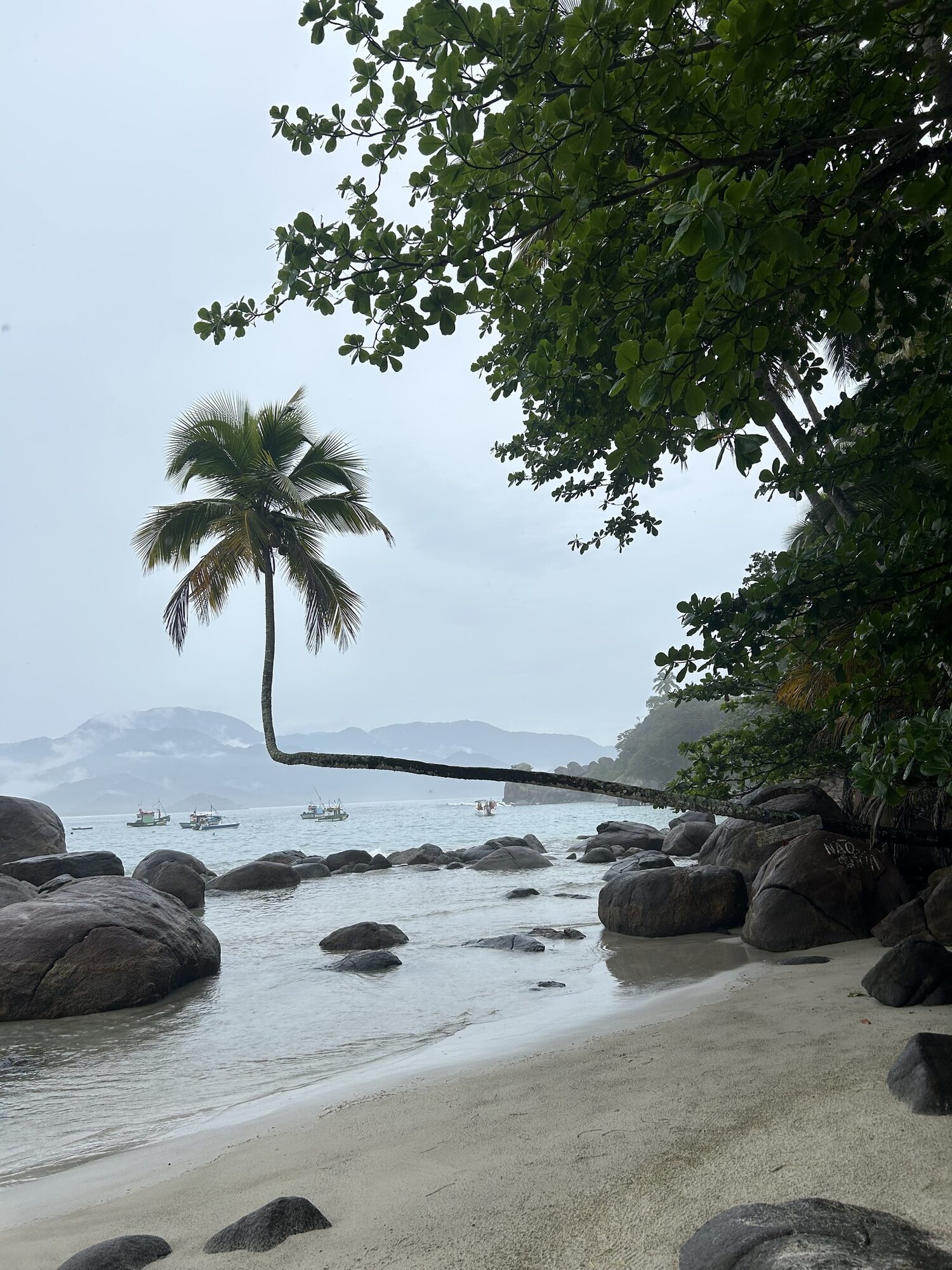
When Portuguese sailors under Vasco da Gama first encountered coconuts at Malindi, Kenya, in 1498, the three indentations on the hard shell reminded them of ghosts from Portuguese folklore. "Coco" meant grimacing face, grin, or bugbear in Portuguese and Spanish of the time. The resemblance was uncanny: three dark pores arranged like two eyes and a mouth, giving each nut an expression somewhere between surprise and mischief.
The species epithet nucifera simply means "nut-bearing," from Latin nux (nut) and fera (bearing). Together, the name translates roughly as "grimacing-face nut-bearer." Carl Linnaeus adopted the Portuguese folk name when he formally described the species in 1753 in his Species Plantarum, making the coconut palm one of the earliest species in modern botanical nomenclature.
Cocos nucifera stands as the sole living species in its genus, a testament to millions of years of evolutionary singularity. Genetic studies place its closest relative as Syagrus, the queen palms, with the two genera diverging approximately 35 million years ago. Today, coconut palms grow throughout the tropics, their distribution a complex story of natural ocean dispersal and human cultivation spanning at least 2,000 years. In Costa Rica, the species occurs on both coasts: Pacific populations bear genetic signatures of Southeast Asian coconuts that arrived before European contact, while Caribbean coast palms descend from Indian Ocean stock brought by Spanish colonizers. The 881 occurrence records in Costa Rica document the palm primarily in coastal lowlands, where it thrives in the salty air and sandy soils it has evolved to colonize.
Identification
Habit
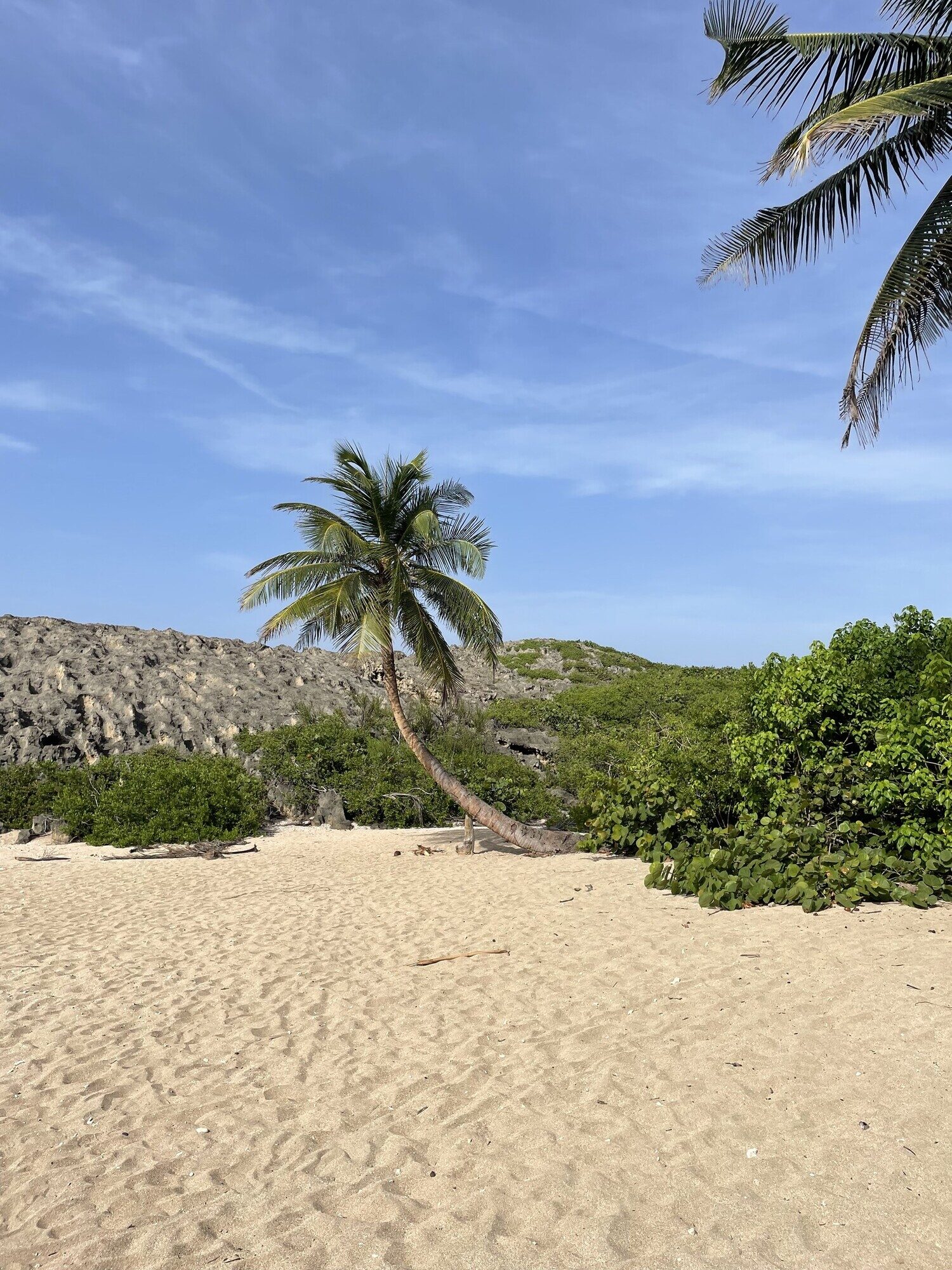
The coconut palm grows as a solitary, unbranched trunk reaching 20-30 meters in tall varieties, or 8-12 meters in dwarf cultivars. As a monocotyledon (related to grasses and orchids rather than typical trees), it lacks true wood and produces no branches. Instead, the trunk grows from a single apical meristem at the crown, adding height continuously throughout its 80-100 year lifespan. The palm typically assumes a slightly curved or leaning posture, particularly in coastal environments where it bends toward light or away from prevailing winds. The crown consists of 20-30 massive pinnate fronds arranged in a spherical spray, each frond persisting for about 2.5 years before dropping to leave its distinctive scar on the trunk. In coastal forest ecosystems, mature coconut palms serve as canopy or emergent trees, their crowns rising above the surrounding vegetation.
Trunk
.jpg)
The trunk measures 20-30 cm in diameter and presents a smooth surface colored ash-gray to almost white. Palms do not produce bark in the traditional sense; instead, the "trunk" consists of densely packed vascular bundles surrounded by hard tissue. The most diagnostic feature appears as numerous ring-shaped scars encircling the trunk at regular intervals, each marking where a frond's petiole once attached before the leaf dropped. These annular scars create a subtle ladder-like pattern ascending the trunk, with spacing reflecting the palm's growth rate: faster growth produces wider gaps between rings. The trunk base often swells slightly wider than the middle sections, and in older palms, the lower trunk may show some weathering or cracking of the outer tissue.
Leaves
_2.jpg)
Leaves are pinnately compound (feather-like), measuring 4-7 meters in total length. Each frond consists of a central rachis bearing 200-250 linear-lanceolate leaflets arranged in a single plane on either side. Individual leaflets measure 50-150 cm long by 1.5-5 cm wide, tapering to an acute tip. The leaflet surfaces appear minutely scaly beneath, particularly when young. Fronds emerge from the crown center as tightly furled spears that gradually unfold over several weeks. The palm maintains a crown of 20-30 mature fronds at any given time, producing approximately one new leaf per month. Frond color ranges from bright yellow-green in new growth to deeper forest green in mature leaves, with older fronds yellowing before abscission. The massive leaves create substantial shade beneath the palm and shed readily during storms, reducing wind resistance.
Inflorescence & Flowers
_1.jpg)
Coconut palms are monoecious, bearing both male and female flowers on the same inflorescence. Inflorescences emerge from the leaf axils, each developing over approximately 14 months from primordium to fully opened structure. A healthy palm produces up to 15 inflorescences per year, staggered so that multiple developmental stages coexist. The inflorescence takes the form of a branched spadix initially enclosed within a large woody spathe (protective bract). When the spathe splits open, it reveals a panicle of small yellow-white flowers arranged along the branches. Male (staminate) flowers predominate, appearing in clusters along the branch tips. These measure a few millimeters across and consist of 3 sepals, 3 petals (sometimes reduced), and 6 stamens surrounding a non-functional ovary. Female (carpellate) flowers occur singly at the branch bases, substantially larger than male flowers. Each female flower contains 3 sepals, 3 petals, vestigial stamens, and a functional ovary with 3 locules (though typically only one develops into a seed). The flowers exhibit protandry: male flowers mature and shed pollen before female flowers on the same inflorescence become receptive, promoting cross-pollination. Flowering occurs year-round in tropical climates.
Fruits

The fruit is technically a drupe, measuring 20-30 cm long by 15-20 cm in diameter and weighing 1-2 kg at maturity. The fruit's three-layered structure consists of a smooth outer epicarp (exocarp), a thick fibrous mesocarp ("husk"), and an extremely hard inner endocarp (the shell familiar from grocery stores). Young fruits appear green, maturing to yellow or brown depending on variety. The fruit's most distinctive feature is the three germination pores (the "eyes") arranged at one end, corresponding to the ovary's three locules. These three dark indentations give the nut its face-like appearance that inspired the Portuguese name. Inside the endocarp shell, white solid endosperm (the "meat") lines the interior, surrounding a cavity of liquid endosperm (coconut water). As the fruit matures, the liquid endosperm diminishes as the solid endosperm thickens. A mature fruit takes approximately 11 months to develop from pollinated flower to harvest-ready coconut. Tall varieties begin fruiting at 6-10 years of age; dwarf varieties at 2-3 years. A palm reaches full production at 20 years, thereafter producing fruit continuously year-round, with each individual fruit requiring a full year to mature. The thick fibrous mesocarp provides exceptional buoyancy, allowing coconuts to drift in ocean currents for over 110 days while remaining viable for germination.
Distribution
The coconut palm's distribution presents one of botany's most intriguing biogeographical puzzles. Genetic evidence points to the species' center of origin in the Central Indo-Pacific, specifically Maritime Southeast Asia and Melanesia, where coconuts display their greatest genetic diversity. From this ancestral heartland, two independent domestication events established distinct coconut populations: one in the Pacific Basin (Philippines, Malaysia, Indonesia) and another around the Indian Ocean periphery (southern India, Sri Lanka, Maldives, Laccadives). These two population groups show substantial genetic differentiation, with approximately 33% of total genetic variation partitioned between them.
The species' pantropical distribution today reflects millennia of both natural and human-mediated dispersal. Pacific coconuts reached the coasts of Central and South America approximately 2,250 years ago, long before European contact. Archaeological and linguistic evidence suggests Austronesian peoples spread Pacific-type coconuts westward along ancient trade routes, reaching Madagascar and coastal East Africa where Pacific genetic signatures intermingle with Indian Ocean populations. European colonization after 1498 introduced Indian Ocean coconuts to the Caribbean and Atlantic coasts of the Americas, creating the modern distribution pattern where Pacific and Atlantic coconut types occupy opposite shores of Central America.
.jpg)
In Costa Rica, coconut palms occur on both Caribbean and Pacific coasts, with 881 documented occurrence records. Pacific coast populations bear Southeast Asian genetic signatures consistent with pre-Columbian arrival, while Caribbean populations around Limón Province descend from Indian Ocean stock introduced during Spanish colonization. The species' cultural importance in Caribbean Costa Rican cuisine remains pronounced: coconut milk serves as a foundational ingredient in traditional dishes like "rondon" and "rice and beans" (Limón's take on gallo pinto, made with coconut milk and Caribbean spices). The palm thrives in coastal lowlands from sea level to approximately 600 meters elevation, preferring sandy, well-drained soils with access to groundwater. Its salt tolerance as a glycophyte allows the species to withstand regular salt spray exposure that would kill most other trees.
Ecology
Coconut palms employ a mixed pollination strategy combining wind (anemophily) with insect pollination (entomophily), with flexibility even within individual palms. While wind moves pollen between trees, approximately 35 insect species from 6 orders and 17 families visit coconut inflorescences and contribute to pollination. Hymenoptera (bees and wasps) constitute the most numerous and diverse visitors. Families Formicidae (ants), Apidae (bees), and Curculionidae (weevils) under Coleoptera appear in particular abundance. The introduced honeybee (Apis mellifera) demonstrates the most effective foraging behavior, visiting both pistillate (female) and staminate (male) flowers and carrying pollen on its ventral surface. Native small bees and specialized weevils also serve as efficient pollinators. The palm's protandrous flowering pattern (male flowers mature before female flowers on the same inflorescence) promotes outcrossing, though selfing can occur when wind carries pollen from older inflorescences to younger ones on the same tree.
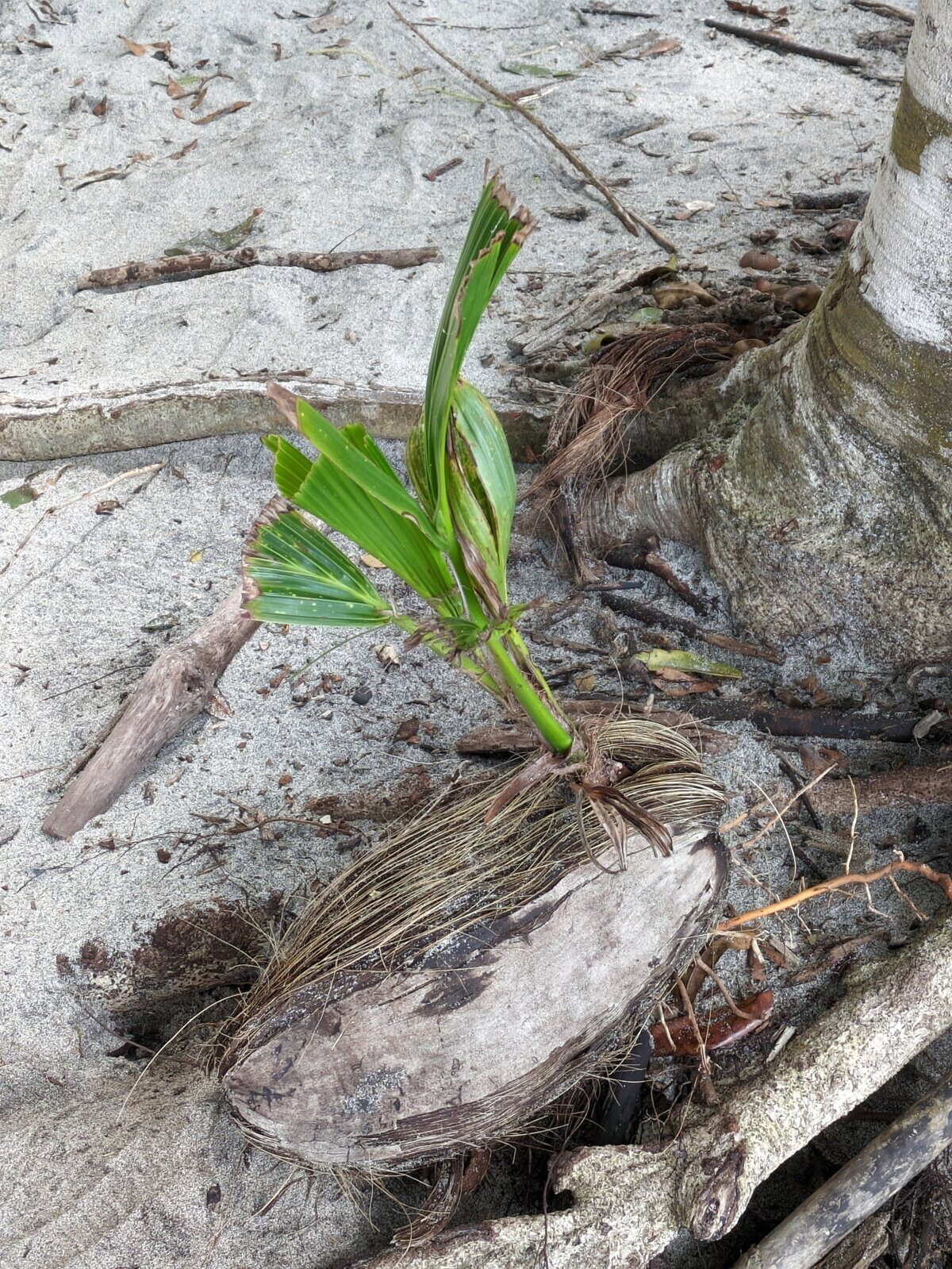
The coconut palm's dispersal mechanism ranks among the most remarkable in the plant kingdom. The species achieves dispersal primarily through hydrochory (water dispersal), a rare strategy among palms. The thick fibrous mesocarp creates exceptional buoyancy, allowing mature coconuts to float for months in seawater while the embryo remains protected and viable. Experimental studies document successful germination after 110 days of continuous floating in salt water. The mesocarp's structure serves multiple functions: providing flotation, extending the duration of viable dispersal, delaying germination until landfall, and offering a moisture-retentive rooting medium for the emerging seedling. This adaptation enabled coconuts to colonize remote Pacific islands millennia before human arrival. Ocean currents carried coconuts thousands of kilometers, establishing populations on isolated atolls where few other trees could reach. Genetic evidence traces these natural dispersal routes, revealing how currents distributed coconuts across the Indo-Pacific long before Austronesian voyagers began deliberately transporting them.
Various animals consume coconuts, though few can access the mature nut's interior without human assistance. The coconut crab (Birgus latro), the world's largest terrestrial arthropod at up to 4.1 kg, possesses powerful claws capable of cracking coconut shells, though coconuts form only a minor part of its omnivorous diet. Monkeys in Southeast Asia have learned to harvest coconuts, while sun bears use sharp claws and teeth to rip open fallen nuts. Palm cockatoos crack coconuts with their powerful beaks. Smaller animals like rats opportunistically feed on coconuts cracked by larger animals or humans. The palm also hosts extensive insect fauna: more than 900 insect pest species attack coconut palms worldwide, with the red palm weevil (Rhynchophorus ferrugineus) and rhinoceros beetle (Oryctes rhinoceros) causing the most severe damage. Coconut palms maintain strong mycorrhizal associations, with 23 species of arbuscular mycorrhizal fungi (AMF) documented in root systems. Most sampled roots show over 50% colonization by AMF, with Acaulospora scrobiculata as the dominant species. These fungal partners enhance nutrient and water uptake, contributing to the palm's ability to thrive in nutrient-poor coastal sands.
Taxonomic History
Carl Linnaeus formally described Cocos nucifera in his epochal 1753 work Species Plantarum, published May 1, 1753. The binomial appears on page 1188 of volume 2, making the coconut palm one of the earliest species in modern botanical nomenclature. Rather than designating a physical herbarium specimen as the type, H.E. Moore and J. Dransfield established a lectotype in 1979 based on illustrations in Hendrik van Rheede tot Drakestein's Hortus Indicus Malabaricus, specifically plates 1-4 from volume 1, published in Amsterdam in 1678. Rheede's magnificent 12-volume herbal catalogued medicinal plants of the Malabar Coast (modern Kerala, India), and the work opens with coconut, underscoring the palm's prominence in Indian Ocean cultures. The choice of an illustrated type rather than a pressed specimen makes sense: palm fronds press poorly, and coconut fruits are far too large for standard herbarium sheets.
Cocos stands as a monotypic genus, containing only this single living species. The genus name derives from the 16th-century Portuguese word "coco," as explained earlier, referring to the grimacing face formed by the fruit's three germination pores. In 1768, Philip Miller redescribed the plant as Palma cocos in The Gardeners Dictionary, though Linnaeus's earlier name retained priority under nomenclatural rules. The genus belongs to tribe Cocoseae within subfamily Arecoideae of the palm family. Molecular phylogenetic studies using DNA sequences of WRKY transcription factor loci identified Syagrus (queen palms) as Cocos' closest living relative, with the two genera diverging approximately 35 million years ago during the Oligocene. The queen palm (Syagrus romanzoffiana) was originally classified within Cocos before reclassification into Syagrus, which explains persistent confusion between the two genera. Fossil evidence suggests that Cocos-like palms existed as early as the Eocene, with the modern genus appearing in the Miocene.
Similar Species
The coconut palm is most often confused with Syagrus romanzoffiana (queen palm), its closest living relative. This confusion stems from the queen palm's original classification within Cocos and its somewhat similar growth habit. Both display tall solitary trunks crowned with pinnate fronds. However, distinguishing features include fruit size and structure: coconuts produce massive 20-30 cm drupes with thick fibrous mesocarps and three prominent germination pores, while queen palms bear smaller (2-3 cm), orange, smooth-skinned fruits in large hanging clusters. Trunk appearance also differs: coconut trunks show prominent ring-shaped leaf scars and measure 20-30 cm diameter, while queen palms display smoother trunks marked by closely spaced leaf bases and reach 30-50 cm diameter. Coconut leaflets are larger and fewer (200-250 per frond) compared to queen palm's more numerous, finer leaflets. Distribution provides another distinction: coconuts thrive in coastal tropical zones with salt tolerance, while queen palms prefer inland subtropical climates and lack significant salt tolerance. In Costa Rica, both palms are cultivated, with coconuts dominating coastal areas and queen palms appearing primarily in urban and suburban landscapes. The monotypic status of Cocos means no other species bears truly close resemblance to coconuts; all confusion arises from the Syagrus relationship.
Conservation Outlook
The IUCN Red List has not formally assessed Cocos nucifera, categorizing it as "Not Evaluated." This status reflects the species' extensive cultivation and global abundance rather than any assessment of wild population status. Coconut palms grow on millions of hectares worldwide, producing approximately 3.5-3.7 million tonnes of coconut oil annually and supporting the livelihoods of countless coastal communities. However, this cultivation success masks significant conservation concerns. Genetic erosion threatens the species due to expansion of high-yielding selections and hybrids with narrow genetic bases. Commercial cultivation favors a handful of varieties, reducing overall genetic diversity. The loss of wild or semi-wild populations eliminates reservoirs of genetic variation potentially valuable for breeding programs. Critically, no wild coconut species exists to supply additional genetic diversity for breeding purposes, making conservation of existing variation paramount.
Lethal yellowing disease poses the most severe biotic threat to coconut palms. Caused by a phytoplasma pathogen vectored by planthoppers (Haplaxius crudus, formerly Myndus crudus), lethal yellowing has destroyed thousands of hectares of coconut plantations in the Caribbean, Central America, and Africa. Once infected, palms die within months as the pathogen blocks nutrient transport. No cure exists; management relies on resistant varieties and vector control. Climate change compounds conservation challenges: sea-level rise threatens coastal habitat where coconuts naturally occur, while changing precipitation patterns affect palm productivity. Urbanization along tropical coasts eliminates habitat and fragments populations. Conservation efforts focus on ex situ preservation: germplasm banks maintain diverse coconut varieties, while cryopreservation techniques preserve pollen, zygotic embryos, and embryogenic calli. The International Coconut Genebank for Latin America and the Caribbean (ICG-LAC) conserves tall coconut palm accessions for breeding purposes. In Costa Rica, coconuts occur in numerous protected areas along both coasts, though primarily as cultivated specimens rather than wild populations. Ensuring long-term coconut conservation requires maintaining genetic diversity across its pantropical range, protecting remaining wild or feral populations, and developing disease-resistant varieties adapted to future climate conditions.
Resources & Further Reading
Taxonomy & Nomenclature
Comprehensive taxonomic treatment with accepted name, synonymy, and global distribution data from Royal Botanic Gardens, Kew.
Nomenclatural database from Missouri Botanical Garden with publication details and specimen records.
Global occurrence records with mapped distribution and specimen data from natural history collections worldwide.
Species profile with morphological descriptions and taxonomic information.
Species Information
Extensive encyclopedia article covering botany, cultivation, uses, cultural significance, and biogeography of coconut palms.
Species profile from Royal Botanic Gardens with cultivation information and botanical details.
Plant Finder entry with cultivation requirements and morphological characteristics.
Tropical plant database entry with Pacific vs. Atlantic coconut type distributions.
Food and Agriculture Organization overview of coconut cultivation, products, and global trade.
Scientific Literature
Genetic study documenting two independent domestication centers in the Pacific and Indian Ocean basins, published in PLOS ONE.
Molecular phylogenetic study identifying Syagrus as sister genus to Cocos, published in PLOS ONE.
Comprehensive review of coconut chemistry, traditional medicinal uses, and pharmacological activities.
Study of mixed wind and insect pollination strategies in coconut palms, published in Genetic Resources and Crop Evolution.
Study identifying 23 arbuscular mycorrhizal fungi species colonizing coconut palm roots, published in Symbiosis.
Research on coconut seed viability after extended ocean drift, documenting germination after 110 days in seawater.
Conservation & Genetic Resources
Comprehensive review of genetic erosion threats and conservation strategies for coconut germplasm.
Information on lethal yellowing phytoplasma disease affecting coconut palms in the Pacific and Caribbean.
Cultural & Historical Context
Max Planck Institute article on Rheede's Hortus Indicus Malabaricus (1678-1693), which featured coconut prominently as the lectotype.
Article on coconut milk's role in Limón Province's traditional dishes including rondon and rice and beans.