Canfin
A tree so flammable that even its green wood ignites. Costa Ricans named it after kerosene.
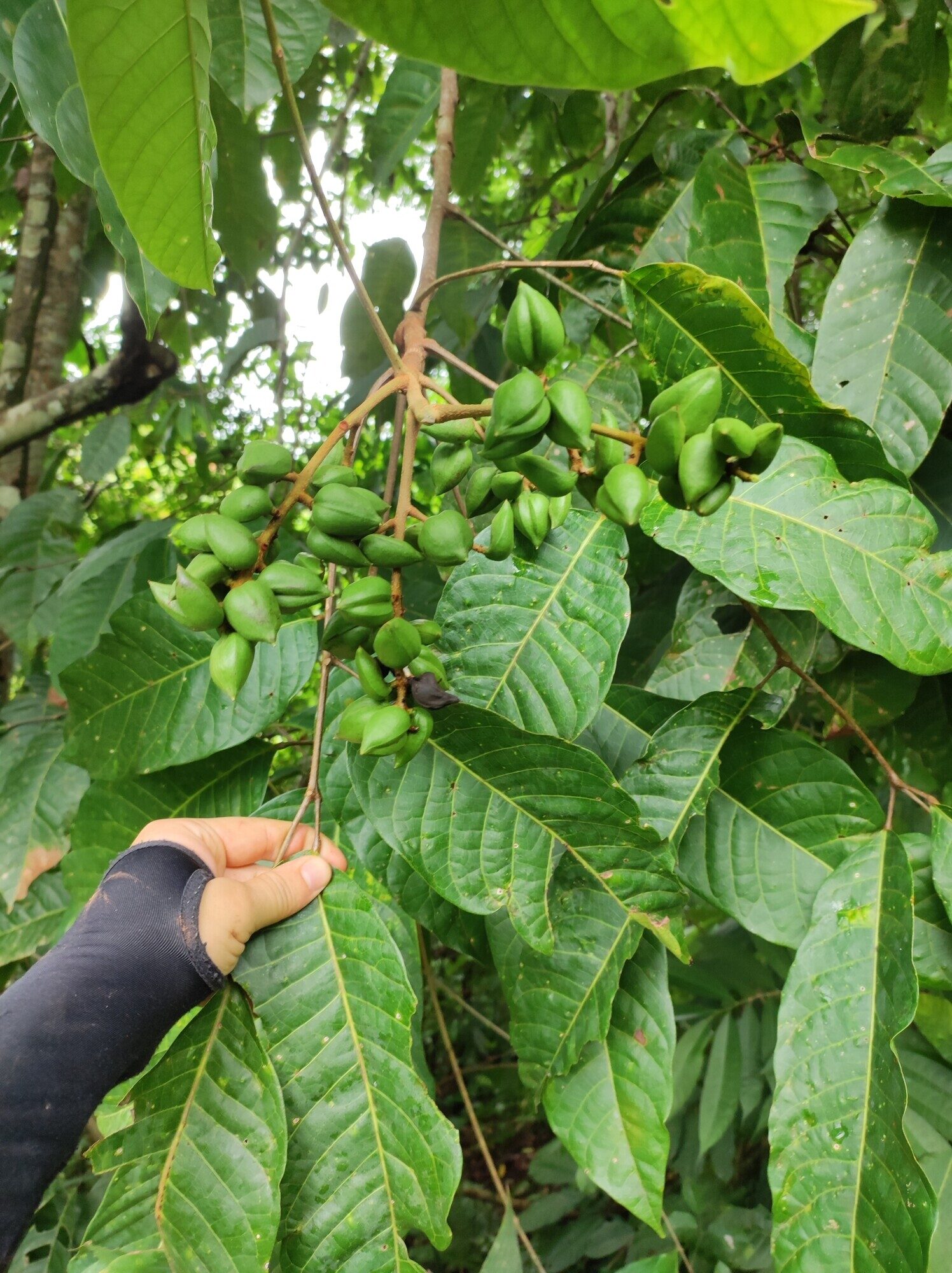
Slash the bark of this unassuming understory tree and a clear, pungent sap wells up, smelling unmistakably of turpentine. Touch a match to the resin, or to a green twig, and it catches fire with startling ease. Costa Ricans call the tree canfin, the same word they use for kerosene, a linguistic connection that captures the species' most remarkable trait: even living wood burns readily, charged with volatile hydrocarbons that permeate every tissue from roots to leaf tips.
Protium panamense belongs to the Burseraceae, the incense tree family, a group renowned for aromatic resins. The genus Protium alone accounts for roughly 150 species across the Neotropics, with its center of diversity in Amazonia. In Costa Rica, twelve to fourteen Protium species populate the wet lowland forests, most going by variations of "canfin" or "canfincillo." Among them, P. panamense stands out for the sheer volume and combustibility of its sap, and for the curious etymology of the name that ties a living tree to a petroleum product.
Identification
Habit
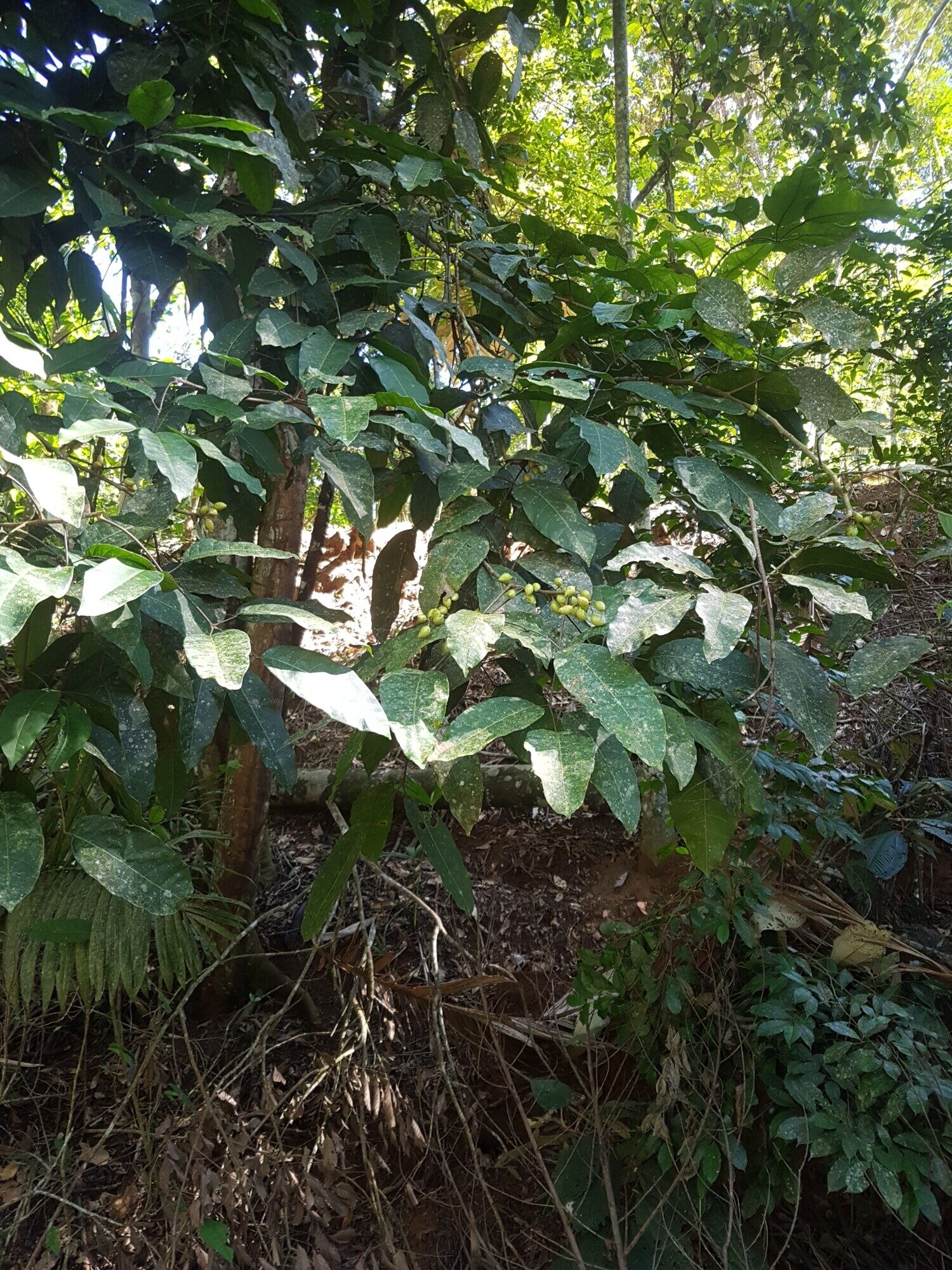
Protium panamense is a small to medium-sized tree, typically 10 to 20 meters tall, though specimens reaching 30 meters have been documented. The trunk is straight and cylindrical, 9 to 40 cm in diameter at breast height, with a narrow, thick crown that positions it below the main canopy in mature forest. Older trunks are often marked by elevated knobs where branches have fallen away, and in some individuals encircling rings scar the bark at intervals. The most conspicuous structural feature is the development of stilt roots (raíces zancos) at the base of larger trees, woody prop roots that buttress the trunk in the saturated soils of wet lowland forest. Abundant juveniles populate the shaded understory, revealing the species' shade tolerance and its status as a climax forest component rather than a pioneer.
Bark
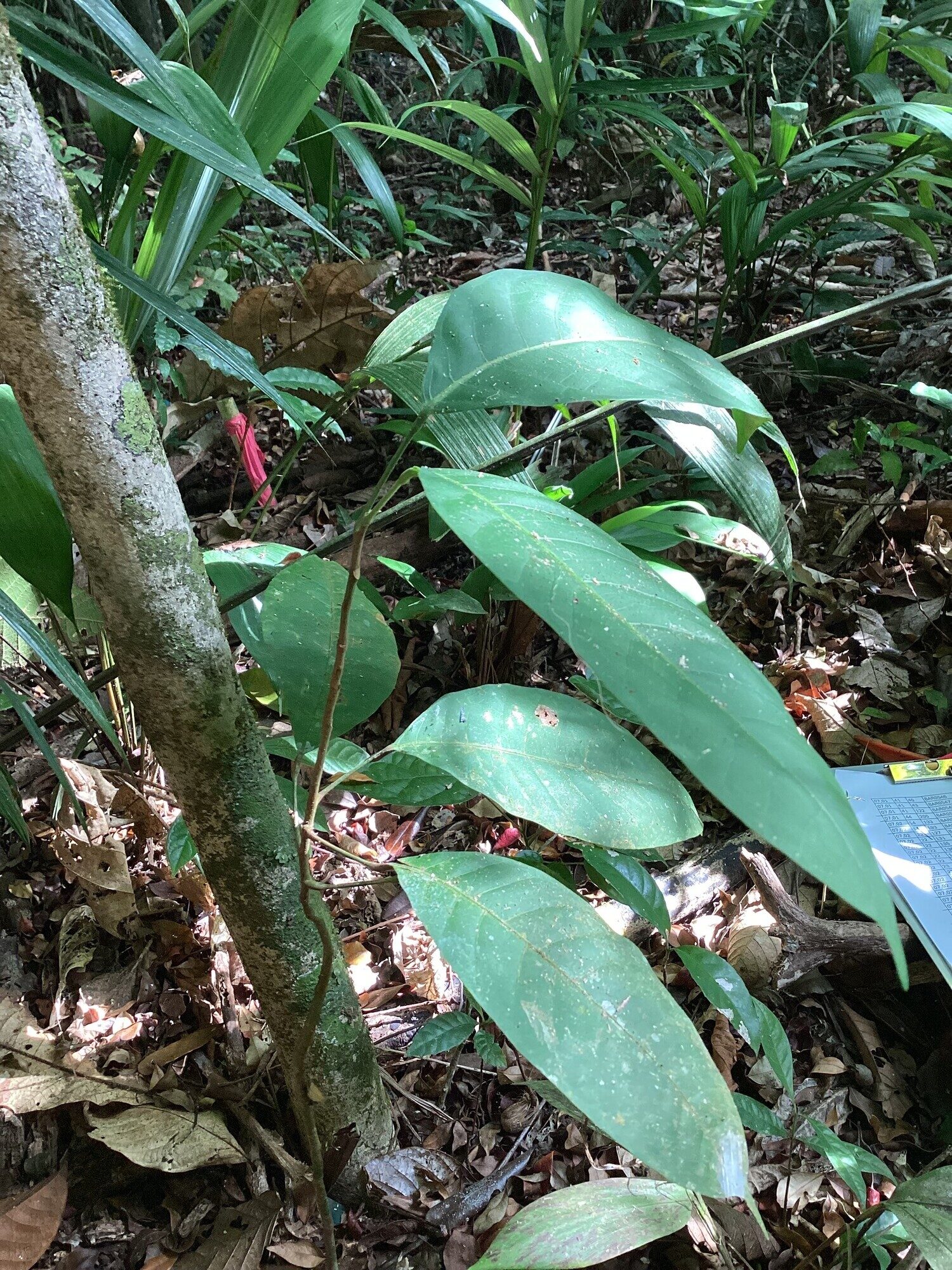
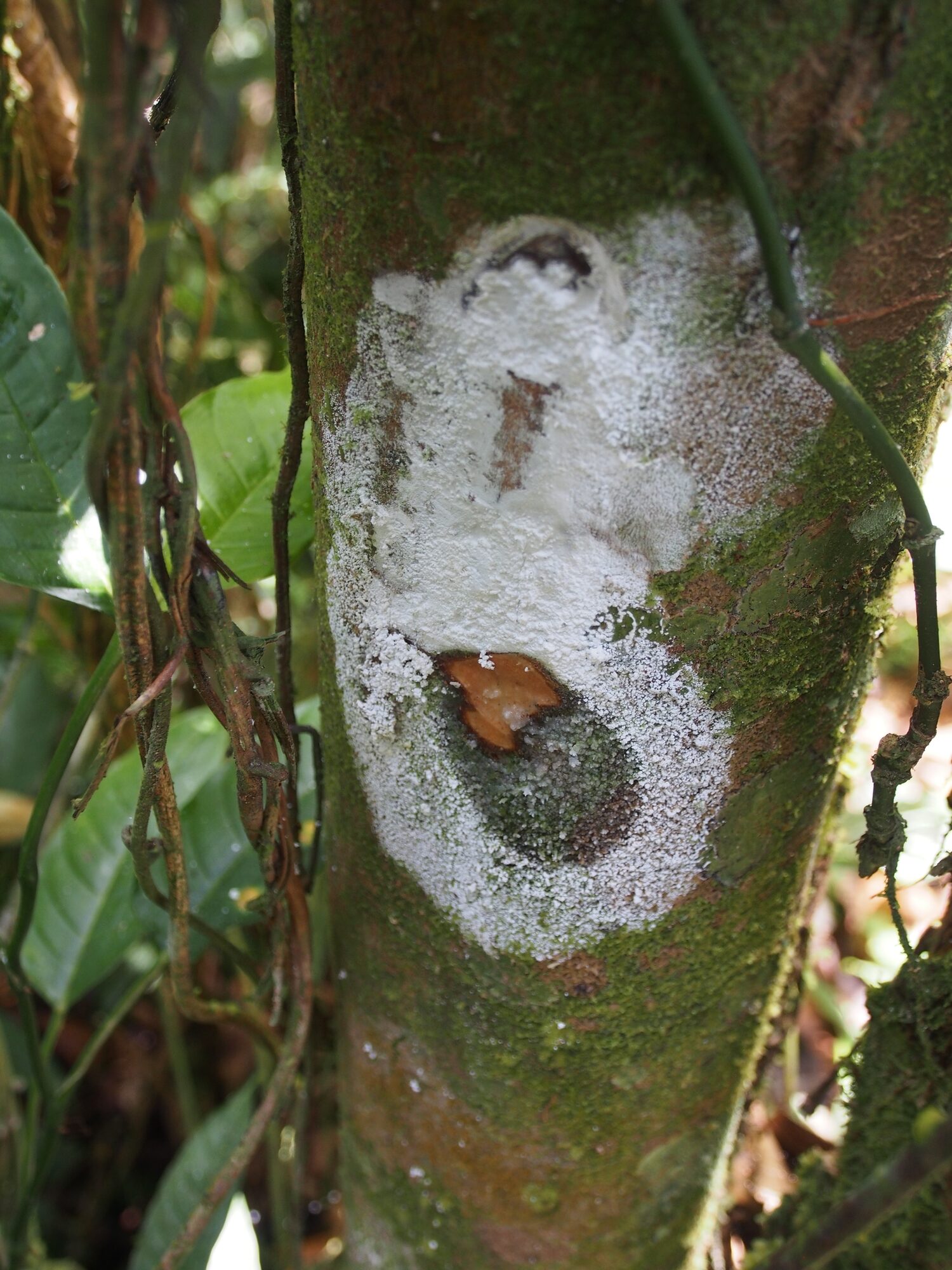
The bark is smooth and finely textured, cream to tan or light brown, with a thin flaking exterior peppered with small lenticels (breathing pores). When cut, it exudes copious clear resin with an unmistakable turpentine-like or kerosene-like scent. This sap is present in extraordinary quantities throughout the tree: in the bark, twigs, leaves, and even the wood itself. The resin is hydrocarbon-based and spectacularly flammable. Green twigs snap and burn like kindling. Forest workers in both Costa Rica and Panama have long exploited this property, using canfin wood to start campfires and torches even in the rain.
Leaves
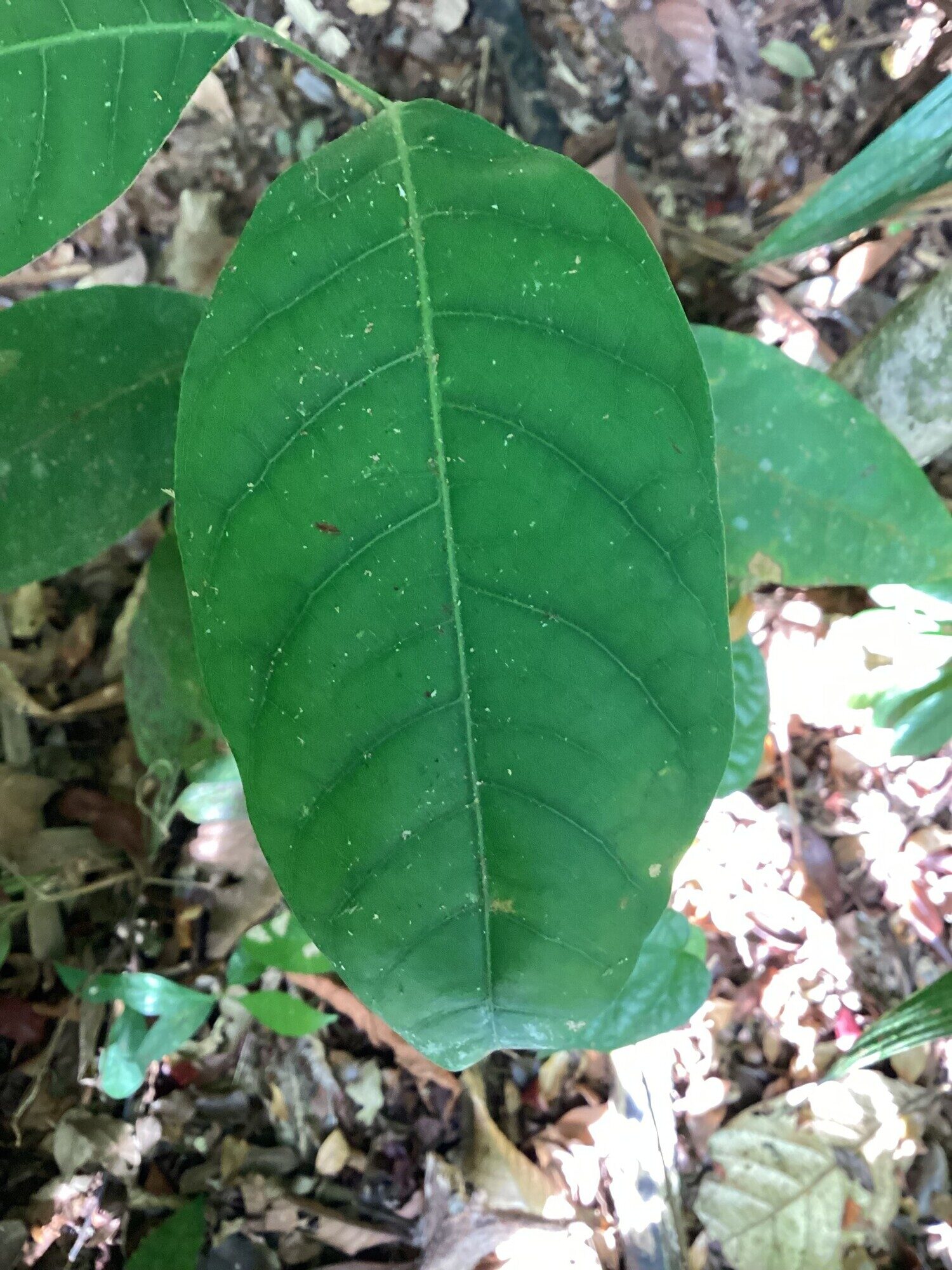
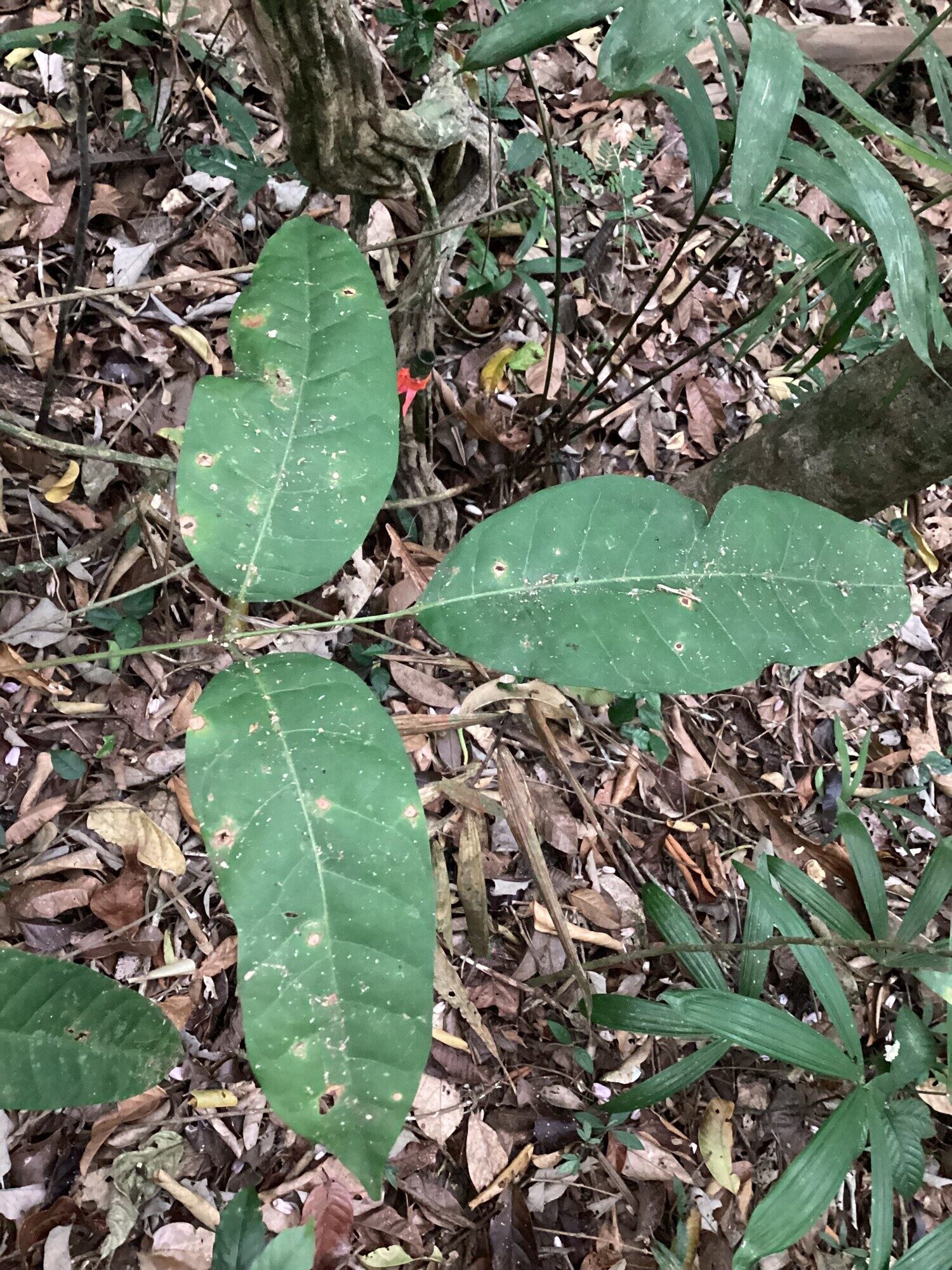
The leaves are among the largest in the genus. They are alternate, imparipinnate (odd-pinnate), typically with five to nine large leaflets including a terminal one. Each leaflet is widely spaced along the rachis (central axis), giving the leaf an open, finger-like appearance quite unlike the crowded foliage of many tropical trees. Lateral leaflets measure 16 to 32.5 cm long and 6.7 to 10.3 cm wide; terminal leaflets are slightly smaller at 15 to 28.3 cm long and 7 to 13.6 cm wide. They are ovate-lanceolate to oblong, coriaceous (leathery), with obtuse to rounded bases and wavy margins. The leaflet tips are small and pointed, forming short drip tips. A conspicuous brown swelling, the pulvinus, marks where each leaflet stalk meets the central rachis. Petiolules (leaflet stalks) are notably long, 5.2 to 8.7 cm, and the petiole base is swollen, brown, and flattened. Crushed leaves release a pleasant turpentine-like aroma, intense in young foliage. New leaves emerge late in the wet season, from October to December, accompanied by the shedding of old leaves, a pattern botanists call brevideciduous (briefly leafless) rather than truly evergreen.
Flowers
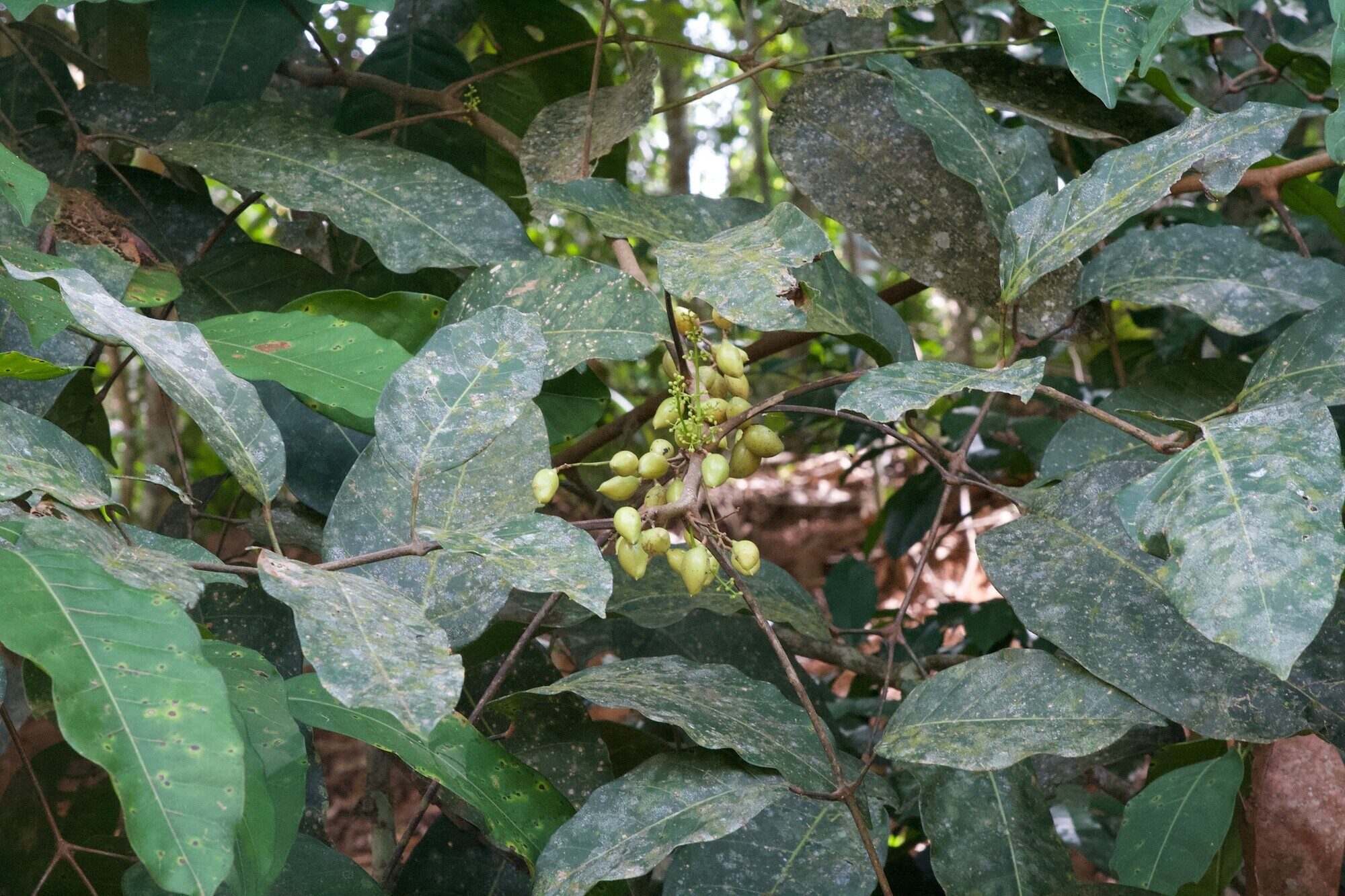
The flowers are tiny, about 3 mm across, white to slightly yellow, and borne on branching panicles (loose, pyramidal clusters) near the tips of branches. The species is dioecious (separate male and female trees). Male flowers appear in long, stringy, subterminal panicles bearing eight stamens in each four-parted flower. Female flowers are fewer and borne on shorter panicles on the uppermost branches, also four-parted. The pistil and pistillode (vestigial pistil in male flowers) are glabrous (hairless). Despite their small size, the flowers produce a strong, sweet fragrance that carries through the understory. In Costa Rica's Pacific slope forests, flowering occurs in April with highly regular synchronization across individuals. In Panama, the season is broader, spanning February to March and again July to September, possibly reflecting the different rainfall patterns of the Atlantic slope.
Fruits
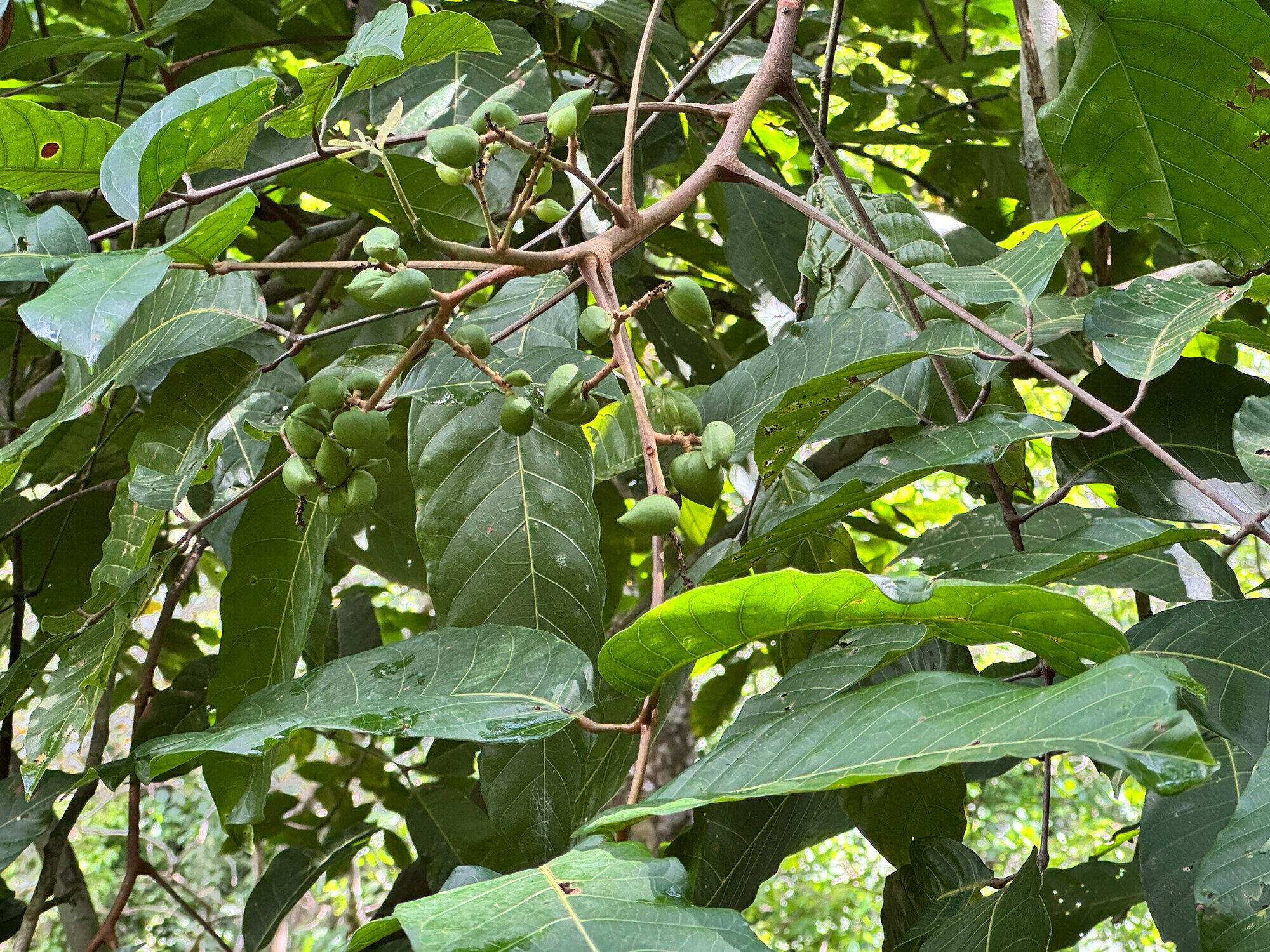
The fruits are relatively large valvate capsules, about 4 cm across, containing two to four sections. They begin green, ripen to deep red, and then split open along their valves to reveal narrow, wedge-shaped, gray-brown seeds enveloped in thick, pasty white arils (fleshy seed coverings). Each seed may dangle below its capsule on a thin thread, a display that attracts the attention of birds and monkeys. The apex of each fruit bears a small sharp point (apiculate), a diagnostic detail that helps distinguish P. panamense from its close relative P. tenuifolium, whose fruits have rounded tips. In Costa Rica, fruiting peaks in August, compressed into a brief, punctuated season. Panama populations fruit more broadly, mainly from July through February.
Distribution
Protium panamense ranges from Costa Rica through Panama into northwestern Colombia. The core of its distribution lies in Panama, where 62% of known herbarium records originate, particularly from the Atlantic slope forests around Barro Colorado Island, Soberania National Park, and the upper Chagres watershed. In Panama, the species is notably Atlantic-biased: abundant around BCI and Sherman but absent from forests near the Pacific coast.
Costa Rica accounts for another 30% of records (129 specimens), concentrated along the Pacific slope, an intriguing reversal of the Panamanian pattern. The species is found in most deep forest habitats along the country's middle to southwest Pacific lowland region, uniformly scattered throughout all of these forests except the driest. Within the Brunca region, 31 localities have been documented, spanning Reserva Forestal Golfo Dulce (at Rancho Quemado, Mogos, and Estacion Agujas), Parque Nacional Piedras Blancas near La Gamba, Corcovado National Park (Estacion Sirena), Ojochal, Playa Tortuga, and the Coto Colorado valley. Further north, it occurs in Parque Nacional Carara, La Cangreja, La Selva Biological Station in Heredia, and scattered sites along the Caribbean slope in Limon. The elevation range is narrow, from near sea level (5 m) to 700 m, placing it squarely in the tropical wet and very wet forest life zones of Holdridge's classification.
Ecology
As a shade-tolerant tree of mature wet forest, P. panamense occupies the understory to subcanopy strata, persisting beneath taller emergents and canopy trees. It is a climax species, absent from deforested or heavily degraded areas and dependent on the intact forest conditions that shelter its seedlings and saplings. In Panama, it co-occurs with its congener P. tenuifolium at Barro Colorado Island and Soberania, where the two species are "nearly equal in abundance" despite having "opposite distributions across the isthmus" at larger scales. The non-congener most likely to be confused with it in the field is Trichilia tuberculata (Meliaceae), which has a similar stature and pinnate foliage.
The white arils surrounding the seeds attract a range of vertebrate dispersers. In Panama, the STRI species account documents that monkeys, toucans, and parrots consume the pulp and transport the seeds. Birds appear to be the primary dispersal agents in Costa Rica as well. Seeds that fall to the forest floor are vulnerable to insect predators: specimens collected in Panama "usually have holes in the testa, presumably due to insect attack." Pollination is likely carried out by small insects attracted to the flowers' sweet fragrance. While no direct pollination study exists for P. panamense, stingless bees (Trigona species) have been documented visiting the flowers of the closely related P. tenuifolium, and similar visitors are expected for this species.
The Canfin Name
The word canfin is uniquely Costa Rican. Nowhere else in the Spanish-speaking world does it appear. In Costa Rica, it means kerosene, and its application to Protium panamense was a natural leap: the tree's clear, volatile resin smells like kerosene and burns like it too. But the origin of the word itself is debated. One widely cited folk etymology holds that it derives from labels on imported kerosene tins that read "the best you CAN FIND," which Costa Ricans supposedly contracted into a single word. A more linguistically plausible alternative traces it to the English word camphene, a hydrocarbon distilled from turpentine that was widely used in lamps before the petroleum era. "Camphene" entered Spanish as canfeno and eventually shortened to canfin. In either case, the tree earned its name because its resin performs like the imported fuel it was named after.
In Panama, the tree goes by chutra and copal. The name copal connects P. panamense to a broader tradition: across Mesoamerica, resins from Protium species have served as ceremonial incense since pre-Columbian times. The Maya burned Protium copal resin in religious ceremonies, calling it pom. While P. panamense itself is not specifically documented in ceremonial use, its aromatic, easily combustible resin would have been familiar to indigenous communities throughout its range.
Uses
In Panama, the resinous sap is used in traditional medicine for treating colds, asthma, and headaches. It is also applied to extract botflies (torsalo), the larvae of Dermatobia hominis that burrow beneath the skin, and as a wound-healing agent. The wood, though not commercially important, is valued locally for carpentry, cabinetry, furniture, and flooring. Its readiness to burn even when green makes it the preferred kindling in wet forest camps. One account from Costa Rica speculates that the tree might have commercial potential as a source of plant-derived hydrocarbons if cultivated at scale, though this remains untested.
Taxonomic History
The species was first described in 1911 by the American botanist Joseph Nelson Rose (1862-1928), who placed it in the genus Icica as Icica panamensis in his Burseraceae treatment for the collaborative multi-volume North American Flora (vol. 25, p. 260). Rose was a farm boy from Liberty, Indiana, who rose through Wabash College (B.A. 1885, Ph.D. 1889) to become Associate Curator of the U.S. National Herbarium at the Smithsonian. He is best remembered as co-author, with Nathaniel Lord Britton, of the monumental monograph The Cactaceae, but his taxonomic reach extended broadly across Mexican and Central American plants, including the Burseraceae. He described Icica panamensis from material collected in Panama, the epithet panamense simply meaning "from Panama."
Thirteen years later, Ivan Murray Johnston (1898-1960), then a young assistant at Harvard's Gray Herbarium, transferred the species to Protium, publishing the combination Protium panamense (Rose) I.M. Johnst. in the Contributions from the Gray Herbarium (vol. 70, p. 72, 1924). The transfer reflected a broader reclassification: the genus Icica Aublet, an older name for certain resinous neotropical trees, was being absorbed into Protium as systematists consolidated the family's taxonomy. Johnston himself went on to collect extensively in the Andes, Panama, and the American Southwest, eventually becoming associate professor of botany at Harvard.
The genus name Protium was established by Nicolaas Laurens Burmann in his Flora Indica (1768), likely from the Greek protos (first). Burmann described it from Southeast Asian material, the type species P. javanicum being from Java. Today the genus encompasses roughly 150 species, overwhelmingly neotropical, with its center of diversity in Amazonia. A major revision by Daly and Fine (2018) reorganized Protium into nine sections after absorbing the genera Crepidospermum and Tetragastris.
That absorption created a nomenclatural pitfall: Tetragastris panamensis (Engl.) Kuntze, a well-known canopy tree of Central American wet forests, also carried a "panamensis" epithet. When Tetragastris was subsumed into Protium, the epithet "panamense" was already occupied by our species, so the former Tetragastris panamensis received the next available synonym: Protium stevensonii (Standl.) Daly. The two trees are entirely unrelated within the genus, despite the confusingly similar names.
Similar Species
The closest look-alike is Protium tenuifolium (Engl.) Engl., which overlaps with P. panamense in Panama (at BCI and Soberania) and also occurs in Costa Rica. The two can be distinguished by several features: P. panamense has short, blunt drip tips on its leaflets, while P. tenuifolium has extended, acuminate ones; P. panamense develops stilt roots, P. tenuifolium does not; the flowers of P. panamense are four-parted versus five-parted in P. tenuifolium; and the fruits of P. panamense are apiculate (sharply pointed at the tip) while those of P. tenuifolium are rounded. Among non-congeners, Trichilia tuberculata (Meliaceae) is the most common source of field confusion, sharing a similar growth form and pinnate leaves. The simplest distinction: Protium species have opposite leaflets along the rachis, while Trichilia leaflets are alternate. A recently described species, P. hammelii Santam.-Aguilar & Lagom. (2017), occurs on the Caribbean slopes of Nicaragua and Costa Rica and differs from P. panamense in having smaller lateral leaflets (11-22 cm vs. 16-32.5 cm) and shorter petiolules (1.8-4.3 cm vs. 5.2-8.7 cm).
Conservation Outlook
The IUCN assessed Protium panamense as Near Threatened in 2013, then revised the status to Least Concern in 2022, likely reflecting improved knowledge of the species' distribution. The downgrade should be interpreted with caution. While the tree occurs across three countries and is locally abundant where habitat persists, it is a species of mature wet forest, dependent on intact canopy conditions and unable to colonize disturbed or secondary growth. Multiple sources describe it as "becoming rare due to habitat loss," a trajectory driven by ongoing deforestation of lowland wet forest throughout Central America and northwestern Colombia.
The species benefits from its presence within several well-protected areas: Barro Colorado Island Nature Monument and Soberania National Park in Panama, and La Amistad International Park in Costa Rica. Within the Brunca region, it is documented from Reserva Forestal Golfo Dulce, Parque Nacional Piedras Blancas, and Parque Nacional Corcovado. Its long-term persistence depends on the continued protection of these wet lowland forests, the very habitat type most threatened by agricultural conversion and infrastructure development across the Pacific lowlands of southern Costa Rica.
Resources & Further Reading
Species Information
Plants of the World Online entry with accepted name, distribution, and synonymy.
Global occurrence records and specimen data, 436 records across 6 countries.
Detailed species account for Costa Rica's Pacific slope, including morphology, ecology, and phenology.
Comprehensive species account from the Smithsonian Tropical Research Institute, covering Panama populations.
Community observations with field photographs from Costa Rica and Panama.
Overview of Protium species in Costa Rica, the largest native Burseraceae genus.
Taxonomy & Nomenclature
Nomenclatural data, type information, and specimen records from Missouri Botanical Garden.
Colombian plant database entry with synonymy and Kew specimen records.
PhytoKeys 76: 89-113. Describes P. hammelii and provides comparative morphology with P. panamense.
Brittonia. Explains why Tetragastris panamensis became Protium stevensonii when subsumed into Protium.
Phytotaxa 434(2): 183-194. Describes P. santamariae, a new Osa Peninsula endemic.
Biogeography & Phylogeny
Evolution and historical biogeography of the Protieae (Burseraceae), reconstructing late Oligocene/early Miocene radiation in Amazonia.
Chemistry & Ethnobotany
Review of triterpene chemistry and bioactivity in Protium resins.
Popular article exploring the disputed etymology of the Costa Rican word canfin.
Related Reading
Biography of the American botanist who first described the species as Icica panamensis in 1911.
Biography of the Harvard botanist who transferred the species to Protium in 1924.
Digitized volume containing Rose's original Burseraceae treatment with the description of Icica panamensis.