Pittier's Ocotea
Ocotea pittieri — An endangered laurel named for the Swiss botanist who founded Costa Rica's first herbarium, this rare tree persists in the montane forests of Costa Rica and Panama.
In 1901, German botanist Carl Mez described a new laurel from Central America and named it Phoebe pittieri, honoring Henri Pittier, the Swiss naturalist who had spent the previous fourteen years transforming Costa Rica's scientific institutions. Mez was one of the great taxonomists of his era, with particular expertise in the Lauraceae. He wrote his doctoral thesis on the laurel family and later published a comprehensive monograph on American Lauraceae. Later taxonomic revision by Henk van der Werff moved the species to Ocotea, but the epithet pittieri remains, a botanical tribute to one of the region's most influential natural historians.
Today, Ocotea pittieri is classified as Endangered on the IUCN Red List. Like many Lauraceae in Central American montane forests, it faces pressure from habitat loss and the specialized ecological requirements that limit its distribution. Yet the species remains poorly documented. While dozens of Ocotea species have been studied for their chemistry, ecology, and relationships with birds, O. pittieri exists largely in herbarium specimens and taxonomic databases, a ghost in the forest.
Identification
Ocotea pittieri belongs to a genus of approximately 350 species distributed across tropical America, Africa, and Asia. In Mesoamerica alone, over 100 Ocotea species have been documented, making identification a challenge even for specialists. The genus is characterized by aromatic leaves, small flowers, and drupes seated in cupules, the cup-shaped structures that are a hallmark of the Lauraceae.
Like other members of the Lauraceae, O. pittieri produces leaves rich in aromatic oils. Crushing a leaf releases the characteristic scent shared by avocados, bay laurels, and cinnamon, all relatives in this ancient plant family. These aromatic compounds serve as chemical defenses against herbivores and pathogens, and have made many Lauraceae species valuable in traditional medicine.
The Namesake: Henri Pittier
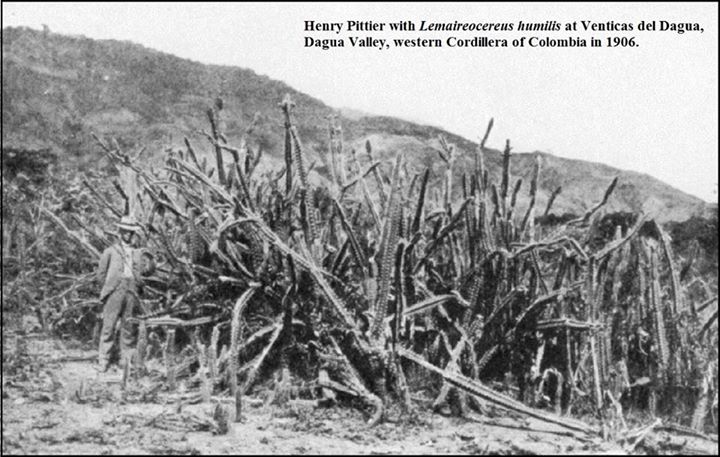
Henri François Pittier (1857-1950) arrived in Costa Rica from Switzerland on November 27, 1887, at the age of thirty. He had trained as an engineer at the University of Jena and completed a doctorate in philosophy in 1885, but his interests quickly expanded to encompass botany, geography, and the systematic documentation of Costa Rica's natural wealth. Recruited by education reformers Mauro Fernández and Ricardo Jiménez to strengthen the country's scientific institutions, Pittier would spend the next seventeen years transforming Costa Rica's approach to natural history.
Working alongside Swiss botanist Adolphe Tonduz, Pittier built what would become the richest herbarium in Latin America and the Caribbean. By 1904, the collection held approximately 20,000 specimens, with about 60% credited to Tonduz's tireless fieldwork. Together they published Primitiae Florae Costaricensis (1891-1901) in collaboration with Théophile Durand of the Brussels Botanical Garden, a multi-fascicle work documenting the country's flora. Specimens from their collections were sent to specialists across Europe, including Mez at the Berlin Herbarium, who used them to describe new species.
Pittier is now recognized as Costa Rica's first conservation scientist. Following his ascent of Volcán Barva in July 1888, he proposed protecting mountain forests as water reservoirs. Within three weeks, the Costa Rican Congress passed legislation declaring a two-kilometer forest zone on either side of the volcano's ridge inalienable, a protection that has persisted for over 135 years. By the time German botanist Carl Mez honored him with the name Phoebe pittieri, Pittier had already left a permanent mark on Costa Rican science.
Pittier later moved to Venezuela in 1917, where he classified over 30,000 plant species and continued his work until his death at age 92. Venezuela's first national park, Henri Pittier National Park, bears his name. Multiple plant genera and animal species also commemorate him, including the genera Pittiera, Pittierella, and Pittierothamnus, along with Pittier's crab-eating rat (Ichthyomys pittieri).
Ecology and Distribution
Ocotea pittieri is known from Costa Rica and Panama, where it inhabits montane and cloud forests. These forests, draped in mist at elevations between 1,200 and 3,000 meters, harbor an extraordinary concentration of Lauraceae species. In the Talamancan montane forests alone, Ocotea is among the most species-rich genera, with at least 12 species documented alongside related genera like Persea, Nectandra, and Cinnamomum.
The Lauraceae are characteristic trees of these cloud forests, often dominating the canopy. Their lipid-rich fruits sustain some of the region's most iconic birds, including the Resplendent Quetzal, Three-wattled Bellbird, Black Guan, Emerald Toucanet, and Mountain Thrush. While specific fruiting data for O. pittieri is not available, its genus-level ecology suggests it likely participates in these ancient plant-bird relationships. In Monteverde alone, over 70 Lauraceae species have been documented, and the family provides essential nutrition during seasons when other food sources are scarce.
Chemistry
The genus Ocotea is known as a rich source of bioactive compounds, particularly aporphine alkaloids, lignoids, and flavonoids. In the 1980s, Costa Rican researchers Orlando Castro, Jorge López, and Antonio Vergara, working with Frank Stermitz at Colorado State University, conducted pioneering phytochemical studies on Costa Rican Lauraceae. Their work on Phoebe pittieri (as it was then known) resulted in two publications: "Alcaloides aporfínicos en hojas de Phoebe pittieri" in Revista de Ingeniería y Ciencia Química (1982) and "Aporphine alkaloids from Phoebe pittieri" in Phytochemistry (1985). The research team also studied related species including P. molicella and P. valeriana, building a comprehensive picture of alkaloid diversity in Costa Rican laurels.
This chemical diversity makes the Lauraceae a valuable family for natural products research. Several Ocotea species from Costa Rica, including O. brenesii and O. gomezii, have been studied for their essential oils and cytotoxic activities. The presence of aporphine alkaloids in O. pittieri suggests it shares the pharmacological potential of its relatives, though further research is needed.
Conservation
Ocotea pittieri is classified as Endangered on the IUCN Red List. The species faces the same threats confronting many montane Lauraceae: habitat loss from agricultural expansion, climate change pushing cloud forest zones upward, and the naturally restricted distributions that characterize many cloud forest endemics.
The conservation challenge is compounded by limited data. While species like the Critically Endangered Ocotea monteverdensis have received targeted conservation attention, less-studied species like O. pittieri may slip through the gaps. There is no Wikipedia article for the species. iNaturalist records only a single observation. The detailed ecological and population data needed for effective conservation planning simply do not exist.
Henri Pittier spent his life documenting plants so that future generations could understand and protect them. The species that bears his name now needs the same attention he gave to so many others: field surveys to locate populations, ecological studies to understand its requirements, and conservation action to secure its future in the montane forests of Central America.
Resources & Further Reading
Species Information
Species page with observations and photographs from the citizen science platform.
Taxonomic information and database identifiers for the species.
Comprehensive taxonomic treatment of the genus in Mesoamerica, including keys and distribution data.
Henri Pittier
Scholarly article documenting Pittier's role as Costa Rica's first conservation scientist.
Museum's account of Pittier's founding role in Costa Rican natural history institutions.
Overview of Pittier's life and institutional contributions in Costa Rica.
Biographical article on the Swiss-born geographer and botanist.
Ocotea Genus
Authoritative genus-level information from the Royal Botanic Gardens, Kew.
Comprehensive review of chemical constituents and bioactivities in the Ocotea genus.
Ecology & Conservation
Landmark PNAS study documenting how bellbirds provide directed dispersal of Lauraceae seeds to favorable sites.
Conservation efforts for threatened Ocotea species in Costa Rica's cloud forests.
Overview of the montane forest ecoregion where Ocotea pittieri occurs.
Accessible article on the ecological relationships between Ocotea trees and Costa Rican birds.