Roble Negro
Quercus costaricensis — The Costa Rican black oak dominates the cloud forests of the Talamanca range, where ancient specimens tower 50 meters above the mist. Endemic to Costa Rica and Panama, this slow-growing giant can live over 500 years, its gnarled forms at treeline marking the boundary between forest and sky.
Above 2,700 meters in the Cordillera de Talamanca, the cloud forest belongs to oaks. Quercus costaricensis and its companion species Q. copeyensis form the canopy of one of the most distinctive forest types in Central America, their massive trunks draped in mosses and bromeliads, their branches disappearing into perpetual mist. These are the highest oak forests in the neotropics, reaching elevations where few other trees can survive.
On Cerro Chirripó, Costa Rica's highest peak, the roble negro defines the ecosystem. Hikers ascending toward the summit pass through successive zones of oak forest, each marked by increasingly stunted trees as altitude rises. Near 3,100 meters, where the forest gives way to páramo grassland, the oaks become dwarfed and gnarled, their twisted forms sculpted by wind, cold, and the thin atmosphere. These elfin forests mark the absolute limit of tree growth in southern Central America.
Taxonomic History
The Danish botanist Frederik Michael Liebmann described Quercus costaricensis in 1854, publishing the name in the proceedings of the Royal Danish Academy of Sciences. Liebmann himself never visited Costa Rica; he had collected extensively in Mexico from 1841 to 1843 and was working through Central American oak specimens when he died in 1856, aged only 43. His colleague Anders Sandøe Ørsted, who had explored Costa Rica and Nicaragua from 1846 to 1848 and was later called "the most important botanist of Central America," posthumously edited Liebmann's oak monograph, publishing it as Chênes de l'Amérique Tropicale in 1869.
The species has accumulated several synonyms over time. Quercus irazuensis, described by Kuntze in 1891 and named for Irazú Volcano, turned out to be the same species. So did Q. endresii, described by Trelease in 1924. In his influential 1942 monograph The Central American Species of Quercus, Cornelius Muller placed the roble negro as the sole member of Series Costaricenses, recognizing its distinctiveness among Central American oaks. Some sources have reported the species from Honduras, but the IUCN considers these records to be misidentifications, noting that the species is absent from northern Costa Rica and Nicaragua, making a disjunct Honduras population implausible.
Despite sharing habitat with Quercus copeyensis, the two species belong to different evolutionary lineages. The roble negro is a black oak (section Lobatae), while the roble copey is a white oak (section Quercus). They diverged millions of years ago and arrived in Central America via separate migrations, yet today they grow side by side in the same cloud forests, their canopies intermingling in the mist.
Identification
Physical Characteristics
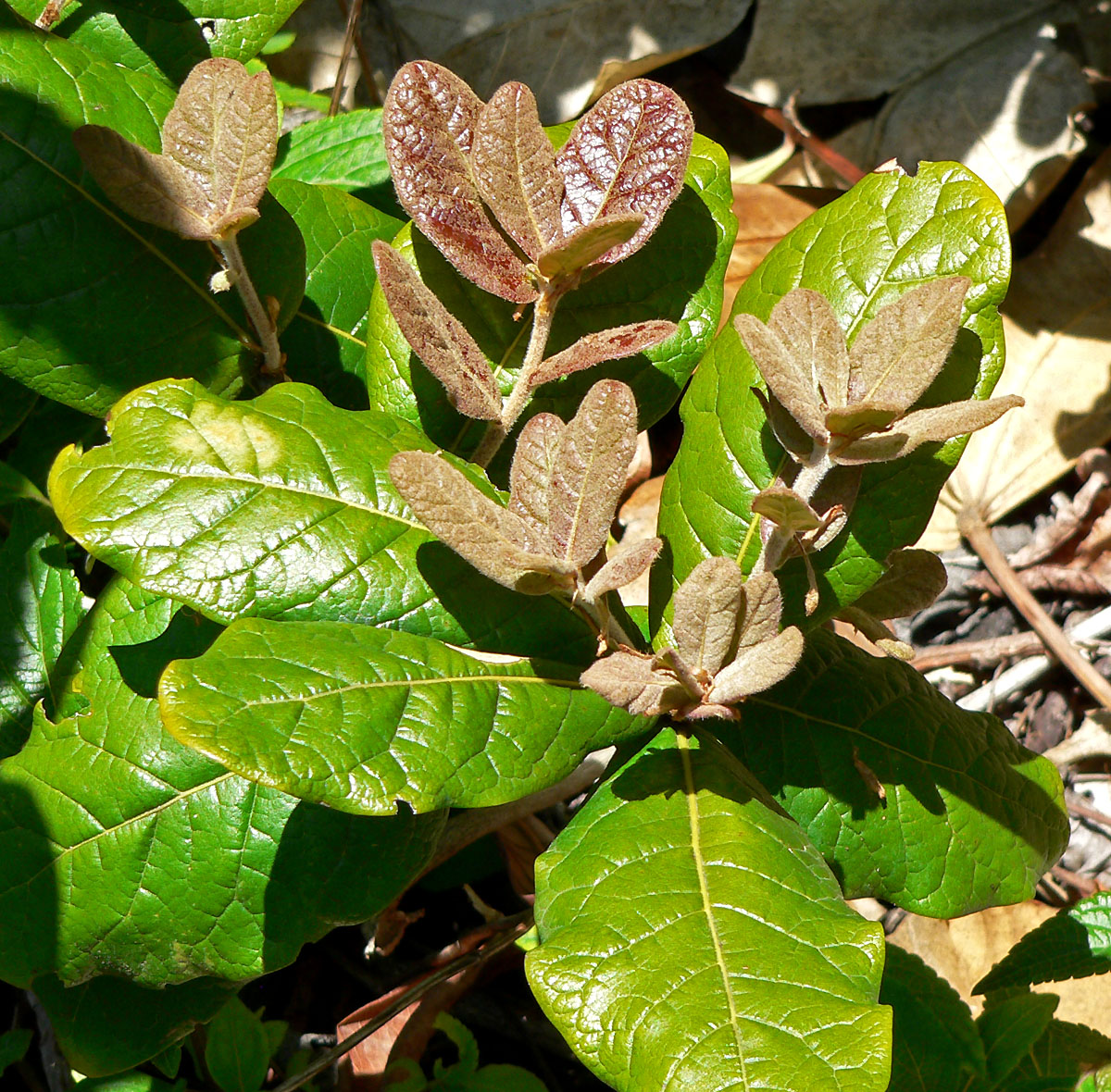
Crown: In optimal conditions, Q. costaricensis develops a dense, rounded crown atop a straight trunk, creating the cathedral-like canopy of the montane oak forest. At higher elevations near treeline, the crown becomes irregular and wind-sculpted. The evergreen foliage maintains its dark green color year-round, though new leaves emerge with distinctive pinkish or reddish hues before maturing to green.
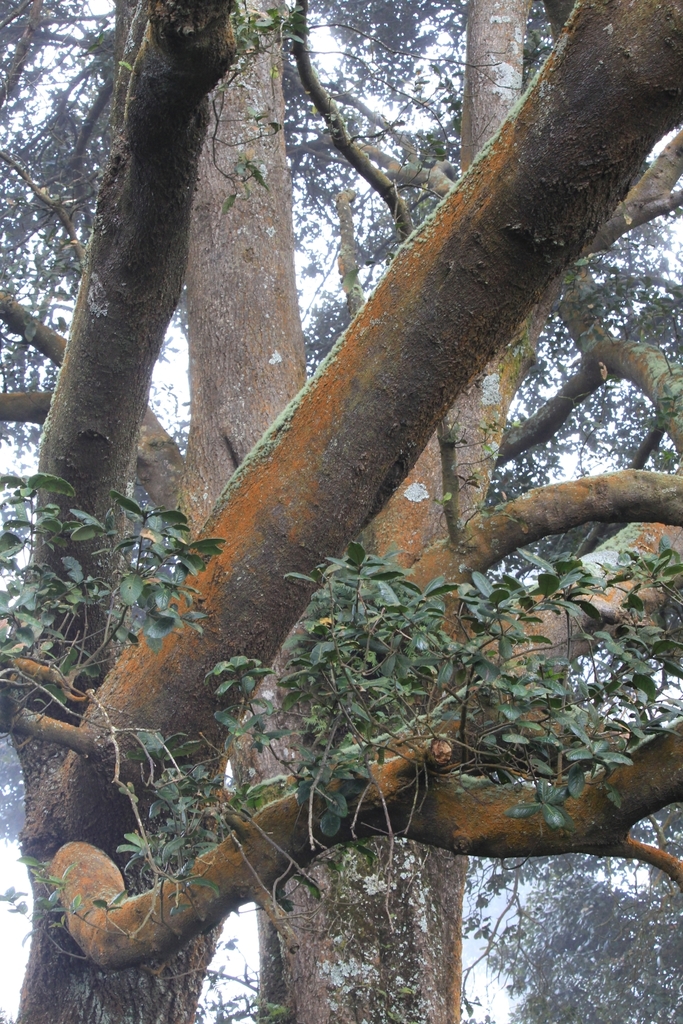
Bark: The bark is thick, rough, and deeply fissured on mature trees, ranging from gray to dark brown or nearly black, which contributes to the common name "roble negro" (black oak). Young trees have smoother bark that becomes increasingly furrowed with age. In the perpetually moist cloud forest, the bark is typically covered with mosses, lichens, and epiphytic plants.
Leaves: The leaves are leathery and stiff, elliptical to ovate in shape, measuring 10-15 cm long and 4-7 cm wide. The upper surface is glossy dark green with sparse hairs, while the underside is covered with short, dense pubescence giving it a lighter appearance. Leaf margins are entire (smooth-edged) with slightly revolute (rolled under) edges. A form previously described as Q. irazuensis has larger leaves tapering at both ends.
Flowers and Acorns: Like all oaks, Q. costaricensis is monoecious, bearing separate male and female flowers on the same tree. Male flowers form yellowish-brown catkins 4-9 cm long, while female flowers cluster at the ends of twigs. The species exhibits synchronized mast flowering every three to four years. Acorns mature in their first year, borne singly or in pairs on short stalks. Each acorn is hemispherical, yellowish-brown, 2-3.5 cm long, and sits in a cup-shaped cupule that encloses up to half the nut. Remarkably, studies near Cerro de la Muerte found that 42 percent of Q. costaricensis acorns contain multiple seeds, a phenomenon called polyembryony. Only ten oak species worldwide are known to produce multi-seeded acorns, making this an exceptionally rare trait.
Ecology and Distribution
Quercus costaricensis is endemic to the Cordillera de Talamanca, the mountain range that forms the spine of southern Costa Rica and extends into western Panama. Key populations occur on Volcán Irazú, Cerro de la Muerte, and Cerro Chirripó. The species has one of the highest elevational ranges of any oak, dominating forests from 2,700 to 3,300 meters but occurring anywhere between 2,000 and 3,600 meters.
The oak forests of the Talamanca are characterized by majestic, tall trees reaching up to 50 meters, with Q. costaricensis and Q. copeyensis forming the dominant canopy. Associated tree species include Magnolia, Drimys, and Weinmannia. The forest floor is often dominated by bamboo understory, particularly Chusquea species. These forests receive 1,000-4,000 mm of rainfall annually and are characterized by persistent cloud cover that maintains high humidity year-round.
At the highest elevations (above 3,100 meters), Q. costaricensis becomes the dominant species along with Myrsine pittieri in dwarf forest formations. Here the trees are severely stunted, contorted, and gnarled, their branches laden with epiphytic mosses and lichens. As elevation increases further, even these dwarfed oaks give way to the treeless páramo grasslands that cap the highest Talamanca peaks.
At 2,650 meters elevation in the Cordillera de Talamanca, Q. costaricensis makes up approximately 80 percent of canopy trees, making these among the most oak-dominated forests in the Neotropics. The oaks support remarkable epiphyte communities: studies at Cerro de la Muerte found nearly 3,000 kg per hectare of bryophytes and lichens growing on oak branches and trunks, with 67 percent concentrated on lower branches. These epiphytes fix approximately 6 kg of nitrogen per hectare annually, providing a crucial nutrient input to the cloud forest ecosystem.
The synchronized masting of Q. costaricensis drives dramatic fluctuations in wildlife populations. During mast years, populations of forest mice (Peromyscus mexicanus and Scotinomys xerampelinus) surge to four or five times their normal density, fueled by the abundance of acorns. Squirrels serve as both the primary seed predators and the primary dispersers: they cache acorns throughout the forest and inevitably lose track of some buried seeds, which germinate to become the next generation of oaks. Even Baird's tapirs, the largest native land mammals, consume acorns during mast years, spending an average of six minutes per feeding session on fallen acorns. The Talamanca highlands support the highest recorded density of Baird's tapirs anywhere in their range, at nearly three individuals per square kilometer.
The oak forests also provide essential habitat for the resplendent quetzal, though this celebrated bird depends primarily on wild avocados and other Lauraceae fruits rather than acorns. The quetzals feed on at least 41 species of fruits, with nearly half coming from the laurel family. The oak forest structure provides nesting sites and protects the Lauraceae trees that sustain the quetzals, making oak conservation inseparable from quetzal conservation. The Los Santos Forest Reserve in the Talamanca foothills has been identified as critical quetzal habitat precisely because of its intact oak-Lauraceae forest mosaic.
The oaks form symbiotic relationships with ectomycorrhizal fungi that extend their root networks and enhance nutrient uptake. Research at Cerro de la Muerte has documented several species of Cortinarius fungi forming mycorrhizas with Q. costaricensis. These fungi likely include Russula, Lactarius, and Amanita species as well, based on patterns observed in other oak forests worldwide. The fungal networks connect individual trees, potentially allowing them to share nutrients and chemical signals across the forest.
Ice Age Legacy
The oak forests of the Talamanca bear the imprint of dramatic climate swings over the past 20,000 years. During the Last Glacial Maximum, temperatures in montane Costa Rica dropped 7-8°C below present levels, and the upper forest line shifted more than 1,000 meters downslope. Sites that today support tall oak forest were then treeless páramo grassland. At Cerro Chirripó, glaciers carved cirques and deposited moraines that still punctuate the landscape above the modern treeline.
Pollen cores from Talamanca bogs record the postglacial recovery. As the climate warmed after 10,400 years ago, oak forests gradually recolonized upslope. A mixed Podocarpus-Quercus forest characterized the middle Holocene between 7,000 and 4,500 years ago, before giving way to the oak-dominated forests we see today. Even brief climate reversals left their mark: during the Younger Dryas cooling event around 11,000 years ago, known locally as the La Chonta stadial, temperatures dropped 2-3°C and the forest line descended 600-700 meters below its present elevation.
Human Uses and Conservation
The wood of Q. costaricensis is hard, heavy, and dark cream to pinkish when freshly cut. Historically, it was used for construction, furniture, and fence posts. However, the primary historical pressure on the species came from charcoal production. The dense wood burns slowly and produces high-quality charcoal, and throughout the 19th and 20th centuries, local communities extensively harvested oak for cooking fuel.
In parts of the Talamanca range, logging of these massive oaks left distinctive evidence. Because the trees were so large, with huge trunk diameters compounded by buttresses reaching several meters up the base, loggers often cut them at a height of around 3 meters. The tall stumps from this historical cutting still stand today, and their wood continues to be used locally for construction.
The mountain pass through the heart of the roble negro's range bears the grim name Cerro de la Muerte, the Mountain of Death. The name commemorates the travelers who perished crossing this fog-shrouded highland before roads existed. In the 19th century, ox cart caravans took three to four days to cross the pass, and ill-prepared travelers regularly succumbed to hypothermia in the cold rain and temperatures that can drop near freezing. In 1908, the Costa Rican Congress passed Decree Number 45 mandating the construction of three rest stations along the route: División, La Muerte, and Ojo de Agua, spaced 10 to 12 hours of hiking apart. A rule required guests to leave firewood ready for the next traveler. The restored Casa Refugio Ojo de Agua now serves as a small museum commemorating this history.
Fire has also shaped these forests. Charcoal records from lake sediments at Chirripó show that the highlands have burned repeatedly over the past 4,000 years, likely from both lightning and human ignition. In March 1976, a massive wildfire burned more than 5,000 hectares of páramo in Chirripó National Park, one of five major fires since 1953. Biologist Adelaida Chaverri Polini documented the slow recovery: nine years later, bamboo had regrown to its original height, but bare patches remained and species composition had shifted. The fire became part of a long series recorded in both historical accounts and fossil charcoal.
The IUCN classifies Q. costaricensis as Vulnerable, with an area of occupancy of less than 2,000 km². The primary past threat was excessive logging for charcoal, but the population is currently recovering. Most remaining habitat falls within protected areas, including Chirripó National Park and La Amistad International Park, a UNESCO World Heritage Site that protects the largest tract of montane forest in Central America.
Resources & Further Reading
Species Information
Detailed botanical profile including distribution, habitat, physical characteristics, and cultivation notes.
Taxonomic information, morphological descriptions, and distribution data from the comprehensive oak database.
Community observations with photos and distribution maps from citizen scientists across Costa Rica and Panama.
Stevens (1989) research documenting that 42% of acorns near Cerro de la Muerte contain multiple seeds, a rare trait found in only ten oak species worldwide.
Oak Forest Ecology
Comprehensive scientific treatment of Talamanca's oak forests edited by Maarten Kappelle, the definitive reference on this ecosystem.
Research on epiphyte communities and nitrogen cycling in oak forests at Cerro de la Muerte, Costa Rica.
First density estimates of Baird's tapir in Talamanca oak forests, showing the highest densities recorded for this endangered species.
Research on synchronized acorn production and its effects on wildlife populations in temperate and tropical oaks.
Documentation of ectomycorrhizal fungi forming symbiotic relationships with Q. costaricensis at Cerro de la Muerte.
Research documenting thermal migration rates and mortality-driven compositional changes in Costa Rican forest ecosystems.
Paleoecology and Fire History
Islebe and Hooghiemstra's research on Pleistocene and Holocene climate effects on oak forest distribution, including the La Chonta stadial.
Sally Horn's 1989 analysis of 4,000 years of fire history from lake sediment charcoal at Lago Chirripó.
Chaverri Polini's documentation of the massive 5,000+ hectare wildfire and subsequent slow vegetation recovery.
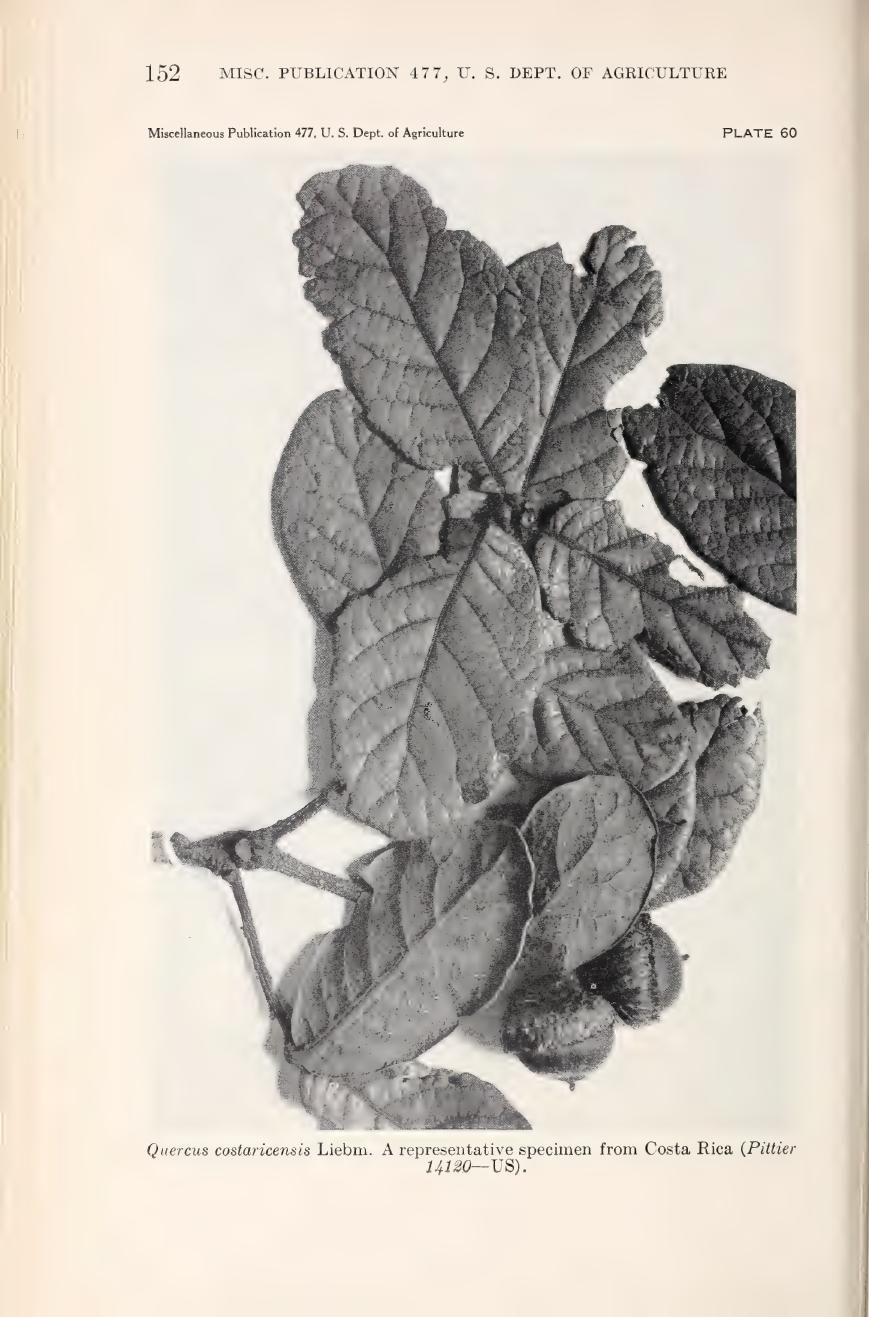
Complete monograph with 124 botanical plates illustrating Central American oaks. USDA Miscellaneous Publication No. 477.