Firecracker Plant
Gaudy yellow-to-red flower clusters that shift color as they age, collected by a Czech botanist who swam ashore from a shipwreck with nothing but his plant press.
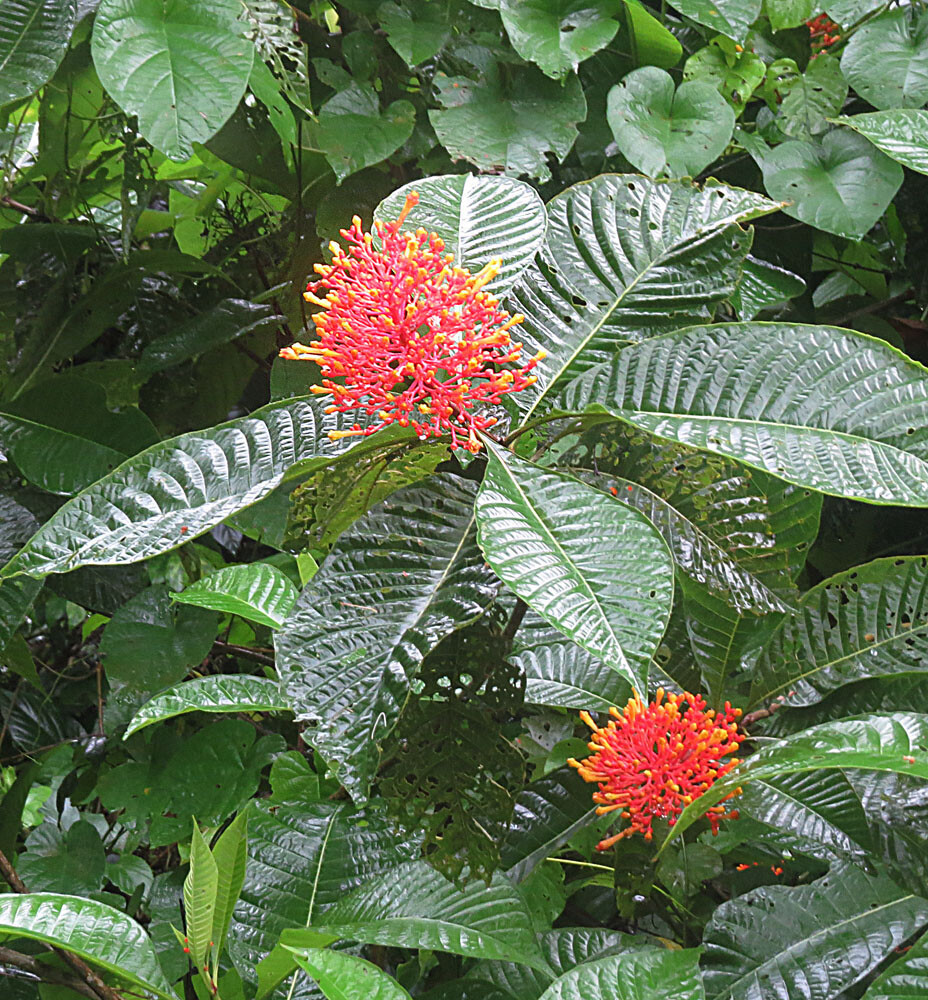
In July 1789, a young Czech botanist named Thaddaeus Haenke arrived at the port of Cadiz hours after the two corvettes of the Malaspina Expedition had already sailed. He booked passage on a merchant ship to catch up, and it promptly wrecked near the mouth of the Rio de la Plata. Haenke swam to shore, salvaging only his collecting equipment and a copy of Linnaeus's Genera Plantarum. Undeterred, he rejoined the expedition in Chile, and over the following years he pressed more than 15,000 specimens from coastlines stretching from Alaska to the Philippines. One of these, gathered somewhere on the Pacific lowlands of Central America, would later reach the herbarium in Prague and become the type of Isertia haenkeana.
Today the species is easy to find along forest edges and roadsides from Mexico to Peru. In Costa Rica it grows from near sea level to around 600 m, concentrated in the wet Pacific lowlands of the Brunca region: the Osa Peninsula, Golfito, Piedras Blancas, and the Sierpe-Terraba watershed. Its terminal flower clusters shift from bright yellow through orange to deep red as individual flowers open and age, creating a multicolored display that has earned it the English common name "firecracker plant." In Colombia it goes by half a dozen names, from tabaquillo (little tobacco, for the enormous leaves) to coralillo (little coral, for the red-orange inflorescences). The genus itself commemorates a man who never saw the Neotropics: Paul Erdmann Isert, a German-Danish surgeon who died in West Africa at the age of 32.
Identification
Habit
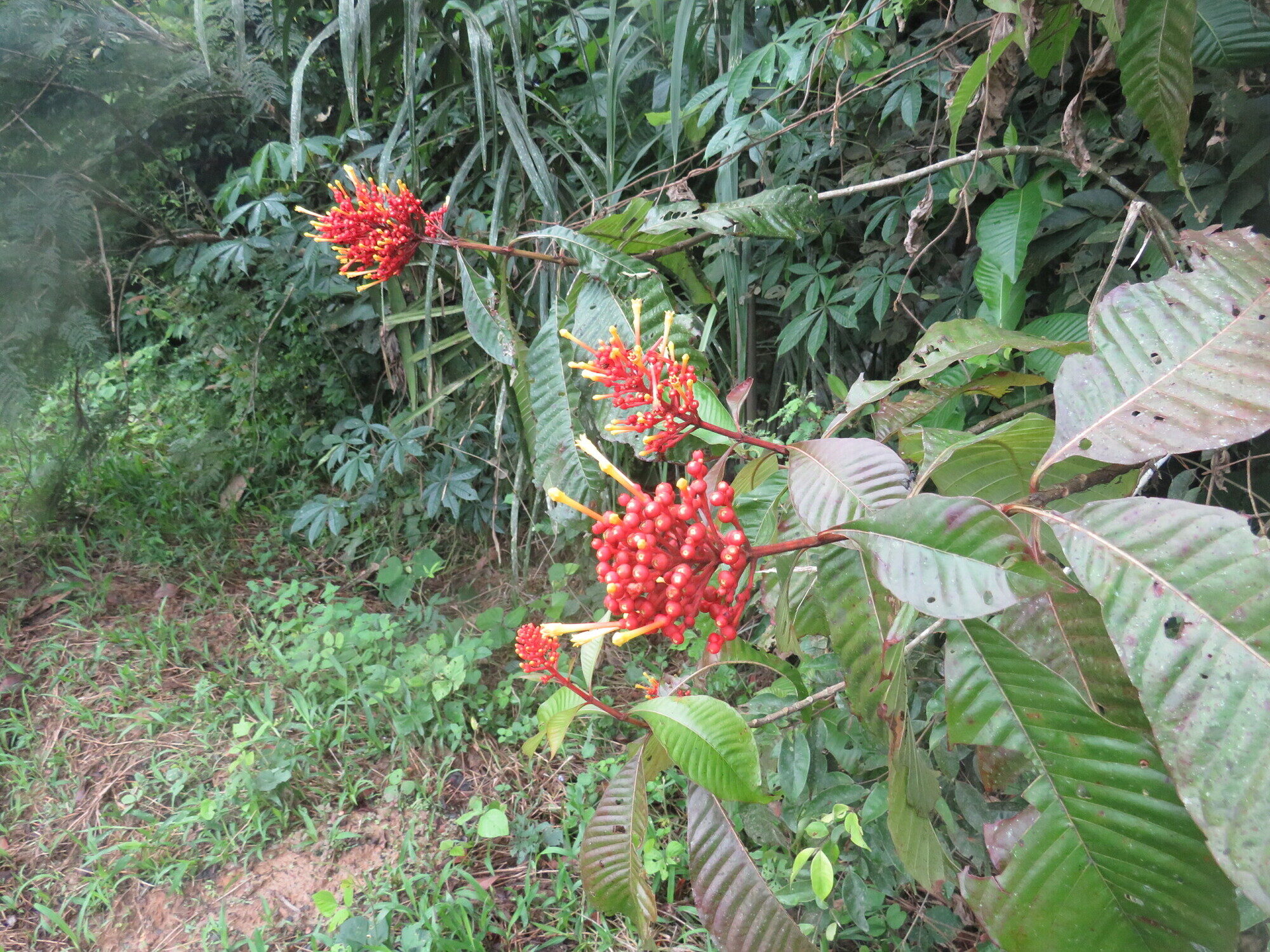
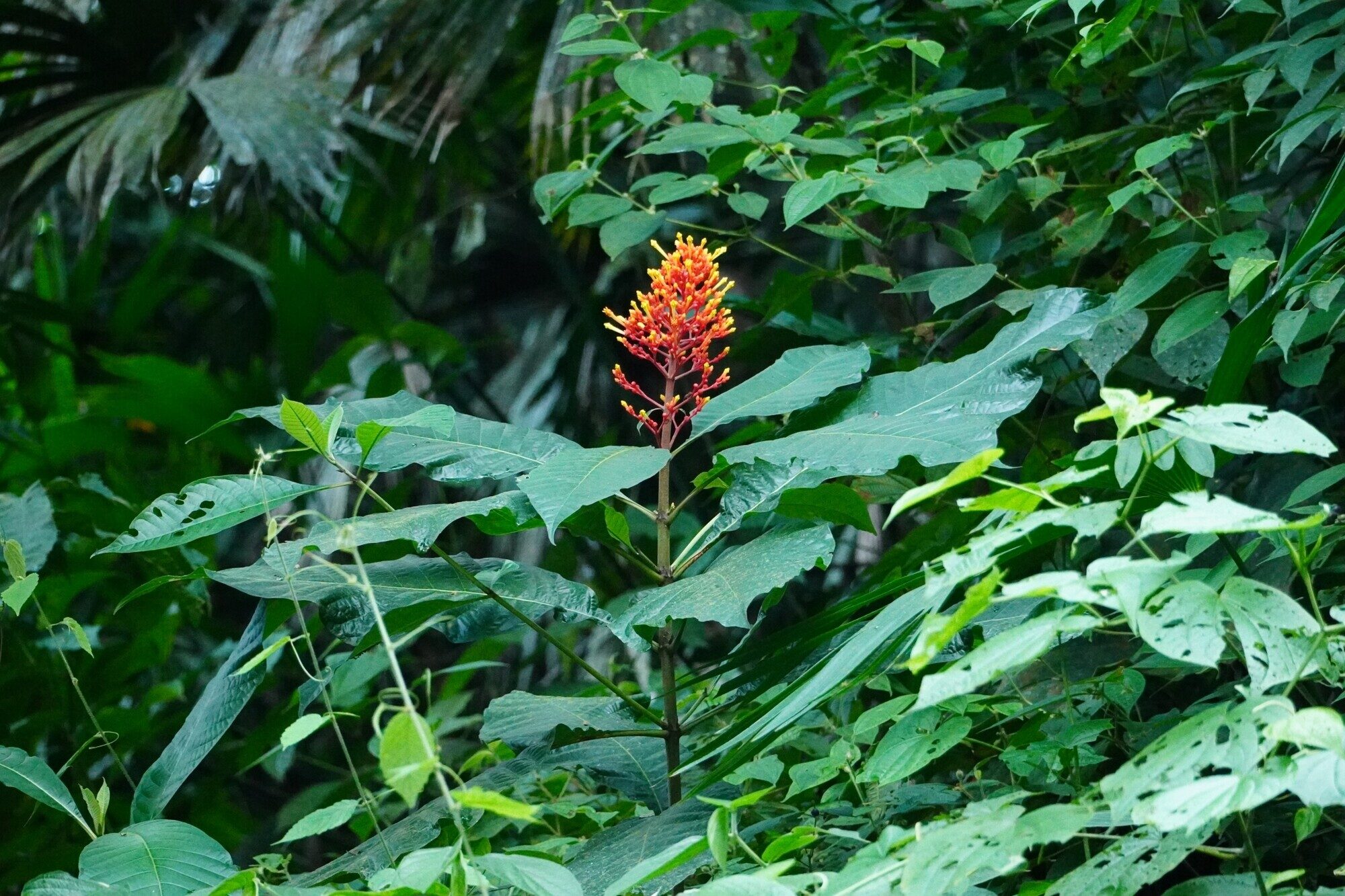
Isertia haenkeana is usually a shrub or small tree reaching 2 to 6 meters in height, occasionally growing to 20 m in favorable conditions. Its branching architecture is distinctive: thick stems, quadrangular with rounded edges, 3 to 10 mm in diameter on leafy branchlets, densely covered in short grayish hairs (puberulent). As the stems age they become cylindrical (terete). The overall form is open and somewhat sprawling, typical of pioneer species that colonize light gaps and forest margins. It is a plant of the forest edge, found along trails, roadsides, riverbanks, and clearings where sunlight reaches the understory. Paul H. Allen collected it from "second growth scrub and margins of forest near Palmar Sur de Osa" in 1950, and STRI field notes describe it as "common and easy to observe on forest edges and trails" in Panama.
Leaves
The leaves are among the most conspicuous in any Neotropical Rubiaceae. Arranged in opposite pairs, they reach extraordinary dimensions: typically 14 to 45 cm long and 7 to 16 cm broad, with extremes of 64 cm long and 28 cm broad recorded. Their shape is elliptic to elliptic-oblong, tapering to a short or long acuminate tip and narrowing gradually at the base, where the blade runs down onto the petiole (decurrent). Petioles measure 5 to 50 mm long and 1.8 to 4 mm thick. The upper leaf surface is glabrous (hairless) and often lustrous, dark brown when dried. The lower surface bears thin, erect or pressed whitish hairs along the veins. The most diagnostic feature is the venation: 14 to 22 secondary veins per side, connected near the margin by a network of loops, creating a strongly ribbed appearance visible from several meters away. The texture is chartaceous (papery) when dried. Stipules are divided into four per node, 7 to 14 mm long (occasionally to 45 mm), narrowly triangular with a long-pointed apex.
Flowers
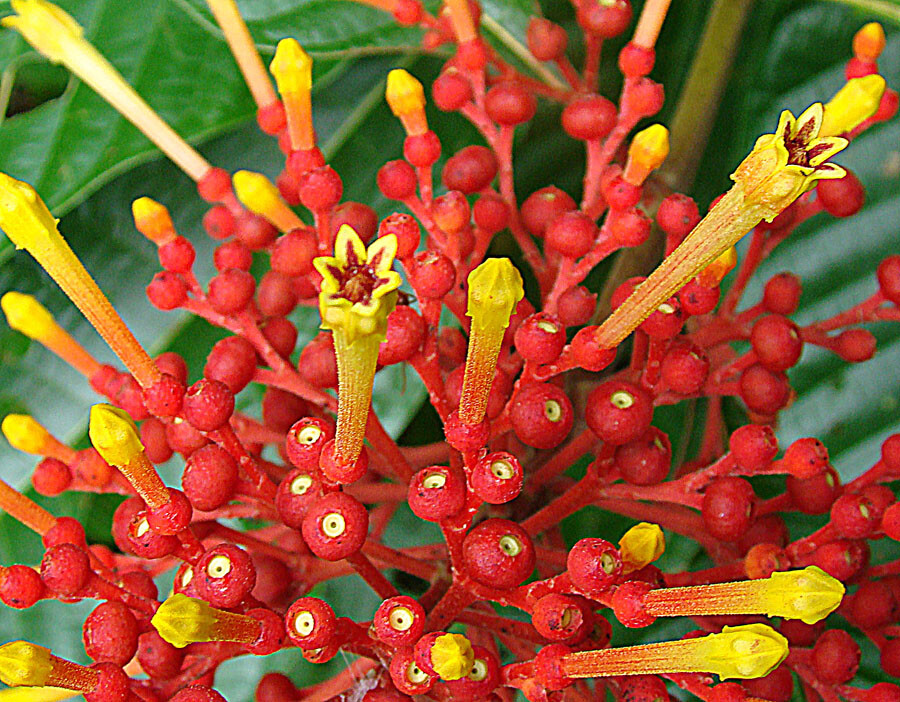
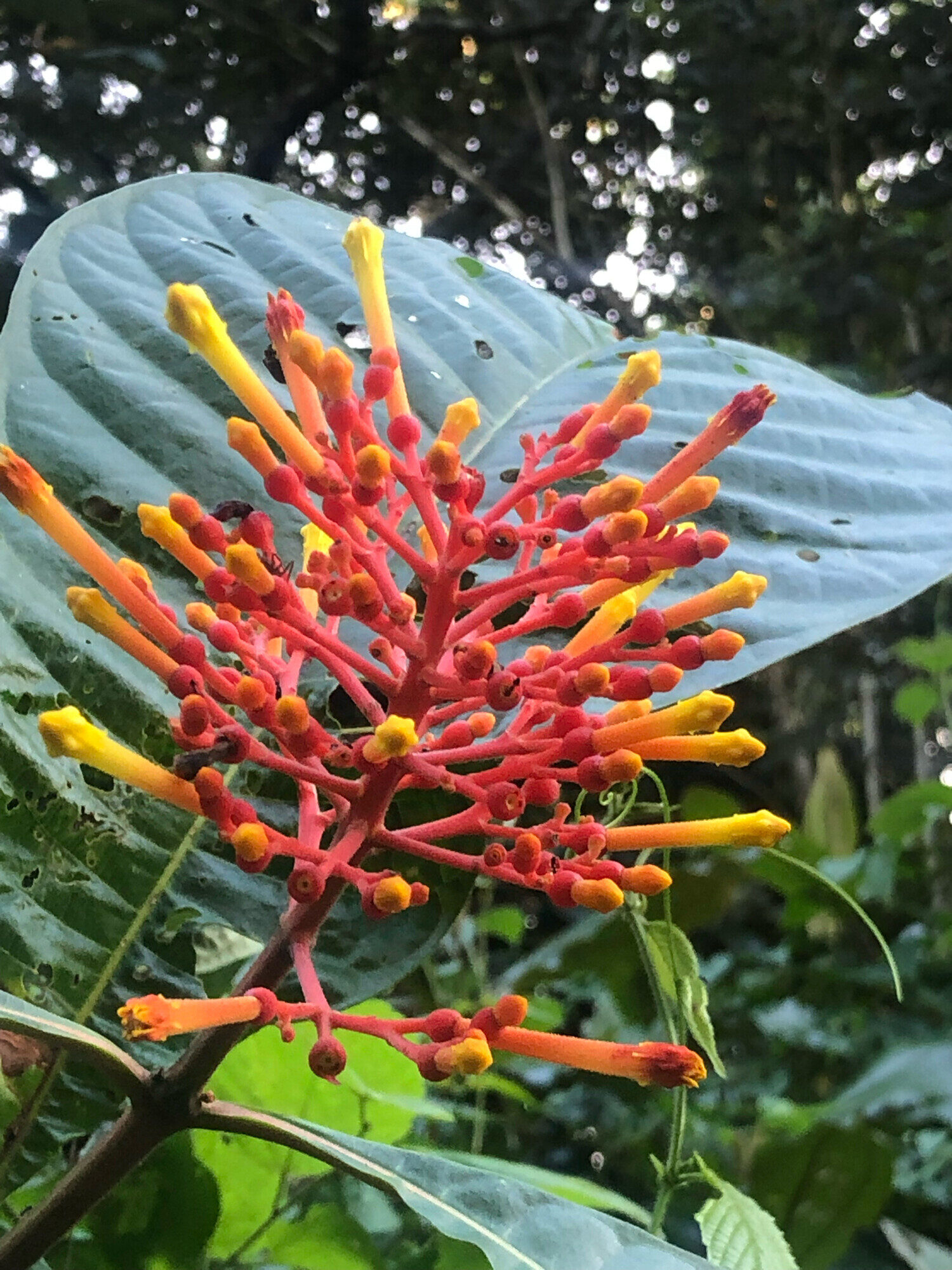
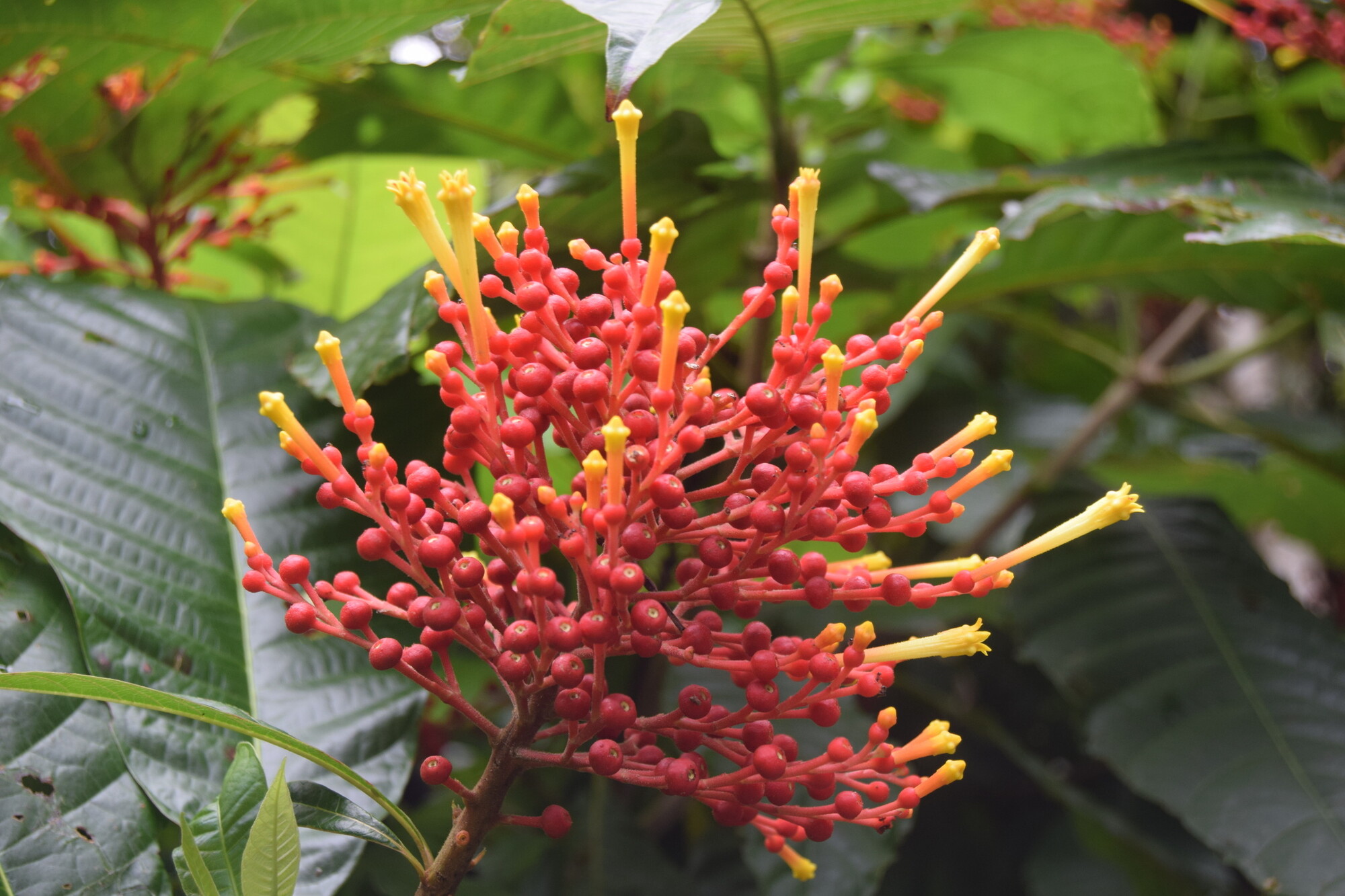
The flowers give I. haenkeana its common names and its visual appeal. They emerge in large terminal paniculate-thyrsiform inflorescences 8 to 22 cm long and 6 to 12 cm broad, with a thick central axis and many lateral branches (dichasia) that terminate in scorpioid cymes bearing 4 to 9 flowers each. Individual flowers begin bright yellow and shift to orange and then red as they age, so that a single inflorescence displays the full color spectrum at once. The corolla is tubular, 17 to 25 mm long (occasionally to 28 mm), about 1.5 mm in diameter at the base and 2 to 3 mm distally, with 5 or 6 spreading lobes 5 to 7 mm long. Dense yellowish hairs about 2 mm long line the inner face of the lobes near their base. The stamens number 5 or 6, with anthers 3.5 to 6 mm long bearing an internal structure found in only one other genus: the interior of each theca is divided into small chambers by transverse and longitudinal septa (walls) composed of parenchyma and idioblasts containing crystals. This polysporangiate (multi-chambered) anther architecture is shared only with the sister genus Kerianthera, and it defines tribe Isertieae within the Rubiaceae. Flowering occurs year-round, with a peak during the early rainy season (May to July) in Panama.
Fruits
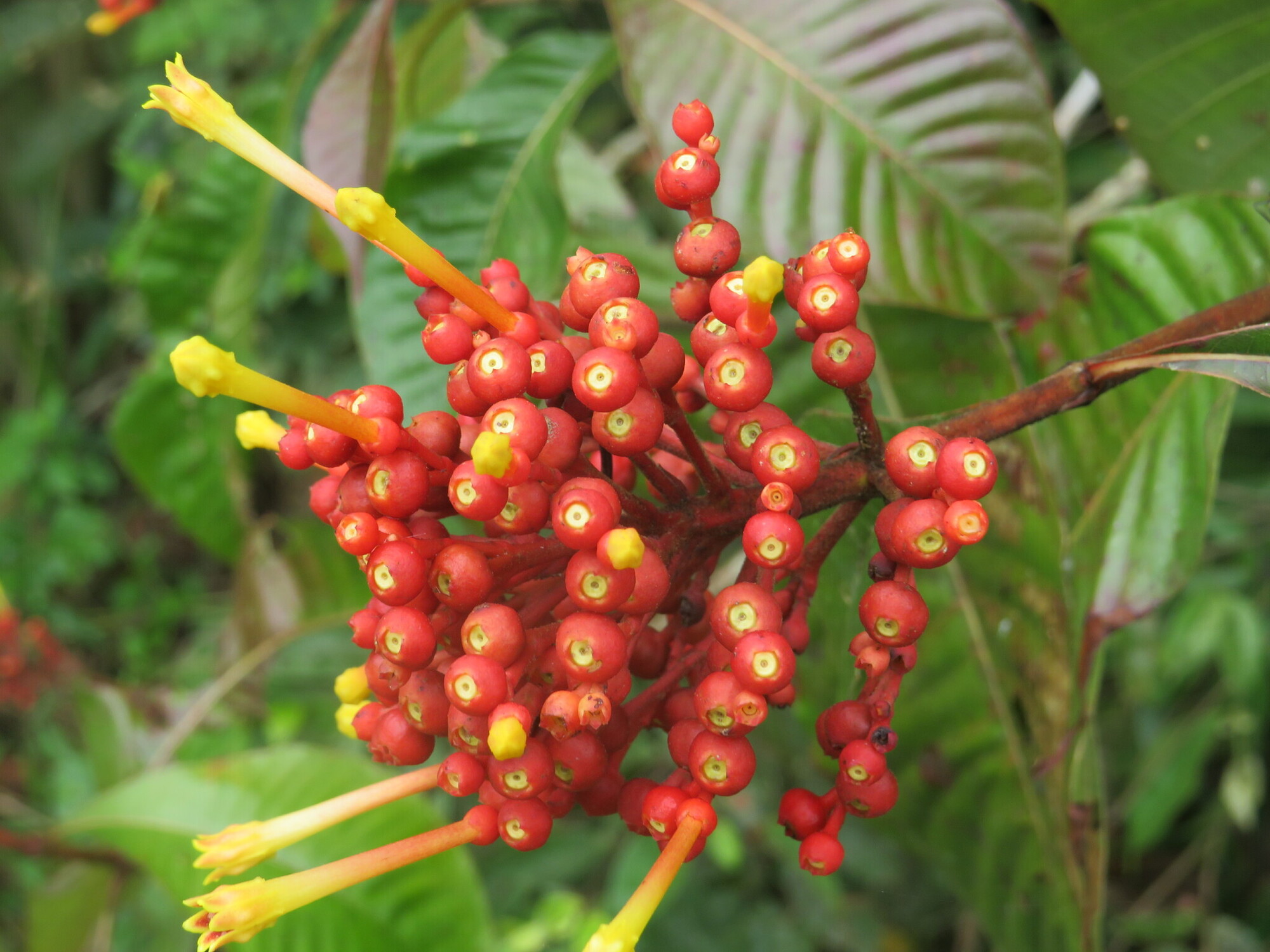
The fruits are berry-like, 4 to 5 mm long and 6 to 8 mm in diameter, oblate (wider than tall), with a smooth surface bearing sparse stiff hairs. Each fruit typically contains 5 or 6 cartilaginous pyrenes (hard-walled seed compartments), with numerous minute seeds 0.6 to 0.9 mm long. The seeds are angular, brownish, with a deeply foveolate (pitted) surface. In Panama, STRI field notes record the fruits as 0.5 to 0.8 cm long, starting green and turning red or black when mature. Because flowers and fruits at different stages coexist on the same inflorescence, the plant often displays a mosaic of green developing fruits, ripe red berries, and still-opening yellow flowers. Fruits mature primarily in the late wet season and early dry season, though as with flowering, fruiting appears to occur year-round in some populations.
Distribution
Isertia haenkeana ranges from southern Mexico through Guatemala, Honduras, Nicaragua, Costa Rica, and Panama into Colombia, Venezuela, and Peru. It also occurs disjunctly in western Cuba and Guadeloupe in the Lesser Antilles. Colombia holds the greatest share of herbarium records (993 of 2,005 in GBIF), followed by Panama (391) and Costa Rica (270). The center of diversity for the genus Isertia lies in northern South America, where most of its 15 species occur. Only two, I. haenkeana and I. laevis, extend into Central America.
In Costa Rica, the species grows from near sea level to about 600 m, with most records below 400 m. It is overwhelmingly concentrated in the Pacific lowlands of Puntarenas province, with 51 of its 105 known localities falling within the Brunca region. Collections come from Parque Nacional Corcovado (San Pedrillo, La Llorona, Sirena), Parque Nacional Piedras Blancas and the La Gamba biological station, Bahia Ballena, Dominical, Sierpe, Palmar Norte and Palmar Sur, Rincón de Osa, and Bahía Drake. Outside Brunca, it occurs along the Caribbean lowlands at Barra del Colorado, Sarapiqui, Cahuita (Reserva Indígena Kekoldi), and La Selva Biological Station. A few collections from Guanacaste (Playa Hermosa) and the San José highlands (Turrubares, Cerro Nara) extend its known range. Henri Pittier made the earliest Costa Rican collection in 1898 at Boca Culebra on the Pacific plains. In the 125 years since, 90 collectors have documented the species across the country.
Ecology
Isertia haenkeana is a plant of evergreen lowland wet forest formations, with a strong affinity for disturbed and edge habitats. It functions as a pioneer, rapidly colonizing light gaps, trail margins, riverbanks, and areas of secondary regrowth. This ecological character makes it one of the more conspicuous Rubiaceae in the wet Pacific lowlands. According to the STRI portal for Panama, its bright tubular flowers are visited by butterflies and hummingbirds. The corolla shape and color spectrum (yellow to orange-red) are consistent with pollination by hummingbirds (ornithophily). In the closely related I. laevis, which has white flowers with much longer corolla tubes (to 55 mm), Wolff and colleagues (2003) documented nine different hummingbird species as diurnal visitors and sphingid moths (hawk moths) as nocturnal pollinators. That study found that diurnal and nocturnal visitors contributed equally to overall reproductive success: hummingbirds achieved higher fruit set (63% vs. 14%) while moths achieved dramatically higher seed set per fruit (59% vs. 14%). Whether hawk moths also visit the shorter, more brightly colored flowers of I. haenkeana has not been studied.
The small, fleshy fruits change from green to red or black at maturity, a coloration pattern typical of bird-dispersed species (endozoochory). Within Rubiaceae, fleshy-fruited taxa are generally dispersed by birds and mammals that consume the berries whole and pass the seeds. No specific dispersal agents have been identified for I. haenkeana, though the fruit size (6-8 mm) and color are well suited to small tanagers, manakins, and other frugivorous birds of the wet lowland forest.
Chemistry
In 1991, Aquino and colleagues isolated a novel nor-triterpene glycoside from the aerial parts of I. haenkeana: pyrocincholic acid 3-beta-O-beta-6-deoxy-D-glucopyranoside-28-O-beta-D-glucopyranoside. The 27-nor-triterpenoid skeleton of this compound had previously been found in only one other plant, Adina rubella (also Rubiaceae). Pyrocincholic acid is a close relative of cincholic acid, which belongs to the same chemical family as quinine, the famous antimalarial alkaloid from the bark of Cinchona. This chemical kinship is phylogenetically coherent: molecular studies place tribe Isertieae as the sister group to tribe Cinchoneae, the quinine-producing lineage, together forming the earliest-diverging branch within subfamily Cinchonoideae. POWO lists I. haenkeana as having medicinal uses, though the specific applications and traditional preparations have not been documented in accessible literature.
Taxonomic History
Augustin Pyramus de Candolle described Isertia haenkeana in his monumental Prodromus Systematis Naturalis Regni Vegetabilis, volume 4, pages 437-438, published in September 1830. Volume 4 contained de Candolle's treatment of Rubiaceae, drawing in part on the earlier work of Achille Richard. The type specimen, deposited at the National Museum herbarium in Prague (PR), was collected by Thaddaeus Haenke without a collection number during the Malaspina Expedition (1789-1794). After Haenke's death in Cochabamba, Bolivia, in 1816, his specimens made their way to the Czech National Museum in Prague. C.B. Presl published many of Haenke's discoveries in Reliquiae Haenkeanae (1825-1835), and it was from this collection that de Candolle drew material for the Rubiaceae treatment.
The specific epithet honors Haenke himself. Born in 1761 in Kreibitz, Bohemia, Haenke studied at Prague and Vienna before joining Alessandro Malaspina's scientific circumnavigation. His dramatic late arrival and shipwreck near Montevideo (see introduction) became one of the expedition's best-known anecdotes. After the ships returned to Spain in 1794, Haenke chose to remain in South America. He settled in Cochabamba, where he continued botanical explorations in the Bolivian Andes until his death in 1816. His legacy endures in dozens of species epithets across multiple plant families.
The genus Isertia was established by Johann Christian Daniel von Schreber in his edition of Linnaeus's Genera Plantarum in 1789. It honors Paul Erdmann Isert (1756-1789), a German-Danish surgeon who served as Chief Surgeon at the Danish colonial post of Christiansborg (now Osu, in Accra, Ghana) from 1783. Isert was an early opponent of the Danish slave trade and attempted to establish a plantation colony as an alternative economic model. He collected approximately 2,000 plant specimens, including some 600 new species, which are preserved with the Peter Thonning herbarium. Isert himself never visited the Americas; the Neotropical genus was named in his honor by Schreber based on specimens from other collectors. Isert died in Africa in 1789, the same year Schreber published the genus, at the age of 32.
The broad distribution of I. haenkeana led to its being described independently several times under different names. Isertia deamii was described by H.H. Bartlett in 1907 from Guatemala, based on collections by C.C. Deam. J.D. Smith described a narrow-leaved variant from the same region as I. deamii var. stenophylla in 1916. Isertia humboldtiana K. Schum. & Krause was named from South American material. Brian M. Boom unified these names in his 1984 revision of the genus in Brittonia, recognizing 14 species in two sections. I. haenkeana belongs to section Isertia, characterized by (4-)5-7 locules in the ovary and hard fruits with cartilaginous pyrenes. Only one new species has been added to the genus since Boom's revision: I. psammophila, described from white-sand areas of the Brazilian Amazon in 2016. Two varieties of I. haenkeana are recognized: the widespread var. haenkeana and var. mirandensis Steyerm., restricted to the Cordillera de la Costa of northern Venezuela.
Similar Species
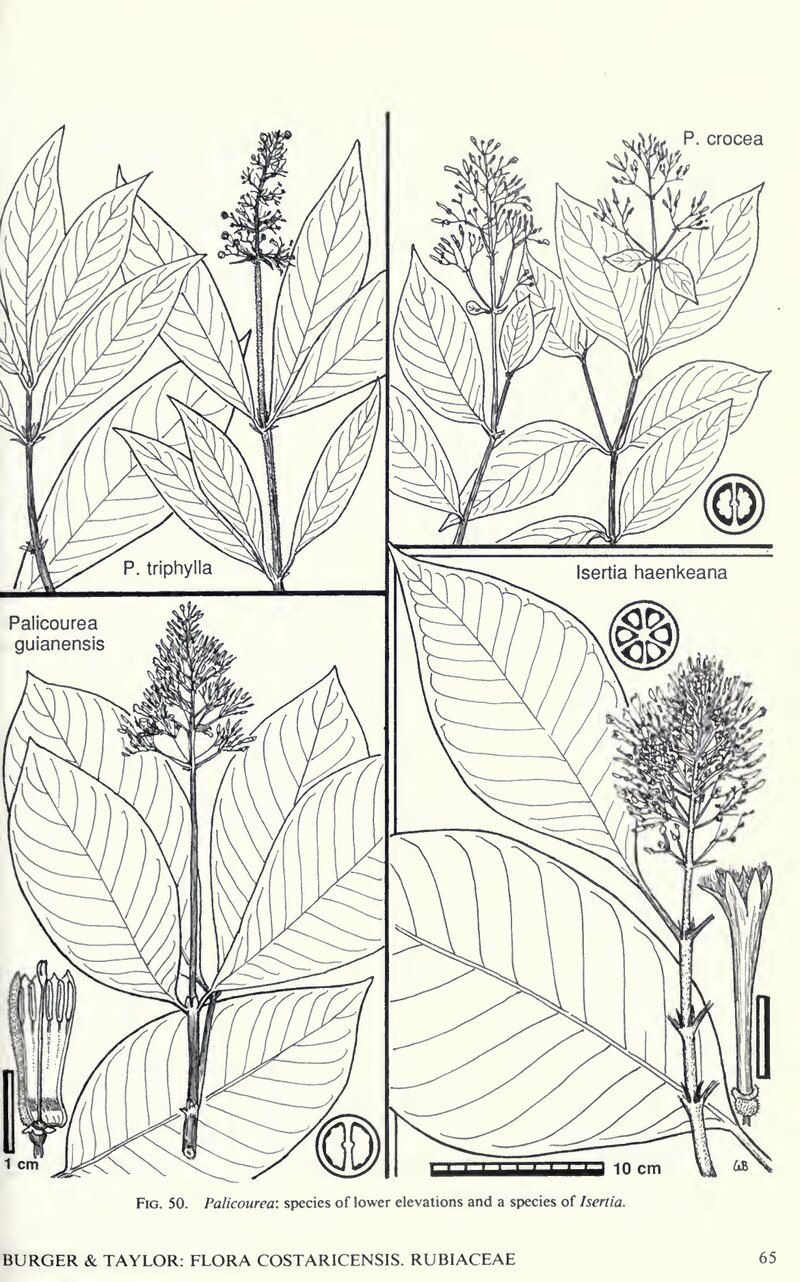
The only other Isertia in Costa Rica is I. laevis, and the two can be separated by several reliable characters. In I. haenkeana, the leaf undersurface is usually dull greenish or grayish, the base is acute and decurrent (running down the petiole), and the corolla is yellow to orange or red, reaching 28 mm in length. In I. laevis, the leaf undersurface is usually whitish-gray, the base is subtruncate to obtuse and not conspicuously decurrent, and the corolla is white, reaching up to 55 mm in length. The fruits also differ: I. haenkeana produces oblate berries about 7 mm in diameter, while I. laevis has ellipsoid fruits about 10 mm across. In Panama, I. haenkeana can be confused with Palicourea guianensis, another Rubiaceae of wet lowland forests with colorful flowers, but Palicourea has smaller leaves and a green trunk.
Conservation Outlook
Isertia haenkeana is assessed as Least Concern with a stable population trend. With more than 2,000 GBIF records spread across 10 countries, it is among the better-documented Neotropical shrubs. In Costa Rica alone, collections span from 1898 to 2023 across 105 localities. The species' pioneer ecology provides an inherent buffer against moderate habitat disturbance: it can recolonize cleared areas, trail margins, and forest edges with apparent ease. It occurs in multiple Costa Rican protected areas including Parque Nacional Corcovado, Parque Nacional Piedras Blancas (Bosque Esquinas), Parque Nacional Marino Bahia Ballena, Refugio Nacional de Vida Silvestre Golfito, Zona Protectora Cerro Nara, Zona Protectora La Selva, La Selva Biological Station, and Reserva Indígena Kekoldi.
The greater concern is for the broader wet lowland forest ecosystems I. haenkeana inhabits. As deforestation reduces and fragments these forests, pioneer species like I. haenkeana may initially expand along newly created edges, but the primary forest interior that sustains the full community of pollinators, dispersers, and associated organisms contracts. The species' long-term persistence depends on the health of the forest matrix it occupies, particularly in the Brunca region where it reaches its highest density in Costa Rica.
Resources & Further Reading
Taxonomy & Nomenclature
Nomenclatural data, type specimens, and synonym records from the Missouri Botanical Garden.
Plants of the World Online entry with accepted name, distribution, synonymy, and conservation assessment.
Taxonomic record with morphological description and accepted name status.
The standard monograph of the genus, recognizing 14 species in two sections. Brittonia 36: 425-454.
Species Information
Global occurrence records (2,005+), specimen images, and distribution maps.
Species account with habitat, pollinators, and field observations from the Smithsonian Tropical Research Institute.
Community observations with photographs and distribution records.
Burger & Taylor (1993). Fieldiana Botany n.s. no. 33. Field Museum. Includes the key to Isertia species and full botanical description of I. haenkeana.
Scientific Literature
Isolation and characterization of a rare pyrocincholic acid glycoside. Phytochemistry 30(6): 2047-2049.
Molecular phylogenetic analysis establishing Isertieae as sister to Cinchoneae. Molecular Phylogenetics and Evolution 56: 21-39.
Detailed study of the polysporangiate (multi-chambered) anthers unique to tribe Isertieae. Protoplasma 258: 683-695.
Demonstrates complementary pollination by hummingbirds (day) and sphingid moths (night) in a closely related species. Plant Biology 5: 71-78.
The first new species added to Isertia since Boom's 1984 revision. Phytotaxa 257(2).
Related Reading
Biography of the Czech botanist who collected the type specimen during the Malaspina Expedition (1789-1794).
The German-Danish surgeon and anti-slavery activist honored in the genus name Isertia.
The Spanish scientific circumnavigation (1789-1794) during which Haenke collected the type specimen.
C.B. Presl's publication of Haenke's botanical collections, from which de Candolle also drew material for his Rubiaceae treatment including I. haenkeana.