Iriartea deltoidea (Barrigona)
Iriartea deltoidea — The pot-bellied palm rises on black stilt roots throughout the wet forests of tropical America, where it ranks as the most abundant canopy tree in many regions. Indigenous communities have long prized its hard outer wood for flooring, canoes, and blowguns.
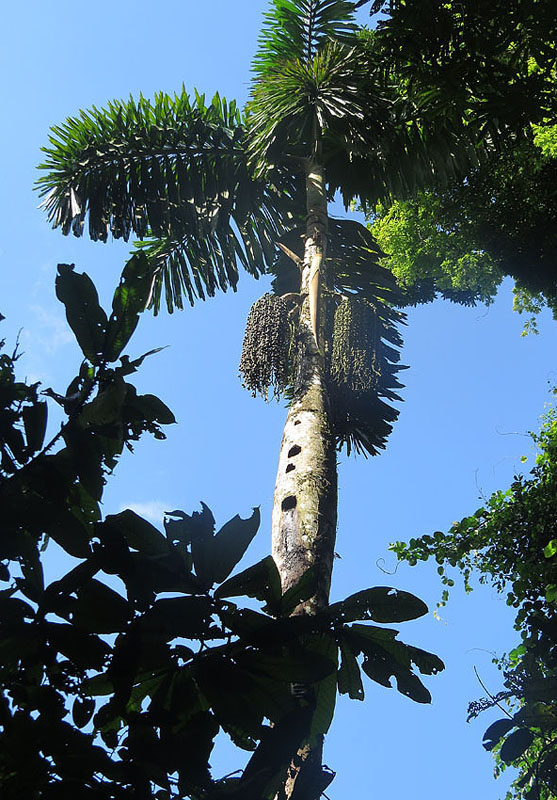
Walk through the lowland rainforest of the Osa Peninsula and you will encounter a palm unlike any other. Iriartea deltoidea stands on a dense cone of black stilt roots that can reach four meters above the forest floor, lifting its swollen trunk toward the canopy 25 to 30 meters overhead. The distinctive belly-shaped swelling in its midsection has earned it the Spanish name "barrigona" (pot-bellied), while its triangular leaflets give it the scientific epithet "deltoidea."
This is no ordinary palm. In surveys of Amazonian forests in Peru and Ecuador, Iriartea deltoidea emerged as the single most abundant tree species, dominating plots where other trees struggle to establish. The genus Iriartea contains only this one species, making it a monotypic lineage that has spread from Nicaragua through Central America to Bolivia and the western Amazon. In the Brunca region of Costa Rica, it shares the wet forest understory with its smaller relative the walking palm (Socratea exorrhiza), though Iriartea typically grows larger and develops more massive stilt root systems.
Identification
Iriartea deltoidea is the sole species in its genus, though it has accumulated many synonyms over the years including Iriartea ventricosa (referring to the belly), Iriartea gigantea, and Deckeria corneto. The species was first described by Spanish botanists Hipólito Ruiz and José Pavón from specimens collected in Peru during their famous 18th-century expedition.
Distinctive Features
Stilt roots: The most striking feature is the dense cone of black stilt roots at the base. These roots emerge from the lower trunk and grow downward into the soil, forming a conical support structure that can reach one meter in diameter and up to four meters in height. The roots are notably darker than those of the related walking palm, appearing black or very dark brown.
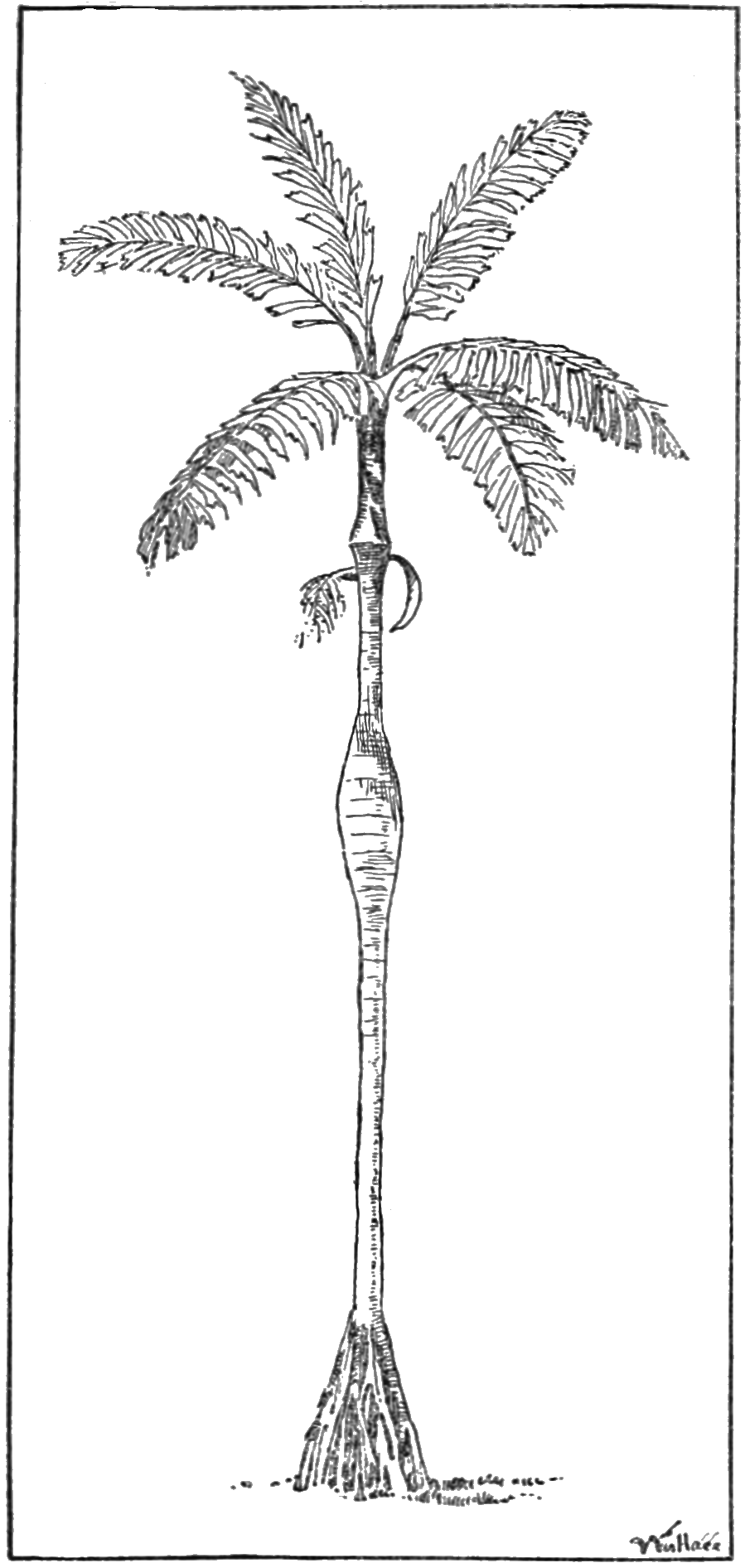
Trunk: Above the stilt roots, the trunk rises smooth and gray with prominent ring-like leaf scars. What truly distinguishes Iriartea from other palms is the ventricose (belly-shaped) swelling that develops in the midsection. While the trunk typically measures 10-30 cm in diameter at the base and apex, it can expand to 70 cm at this central bulge. The Spanish name "barrigona" (big belly) and "barriguda" (pot-bellied) refer directly to this feature.
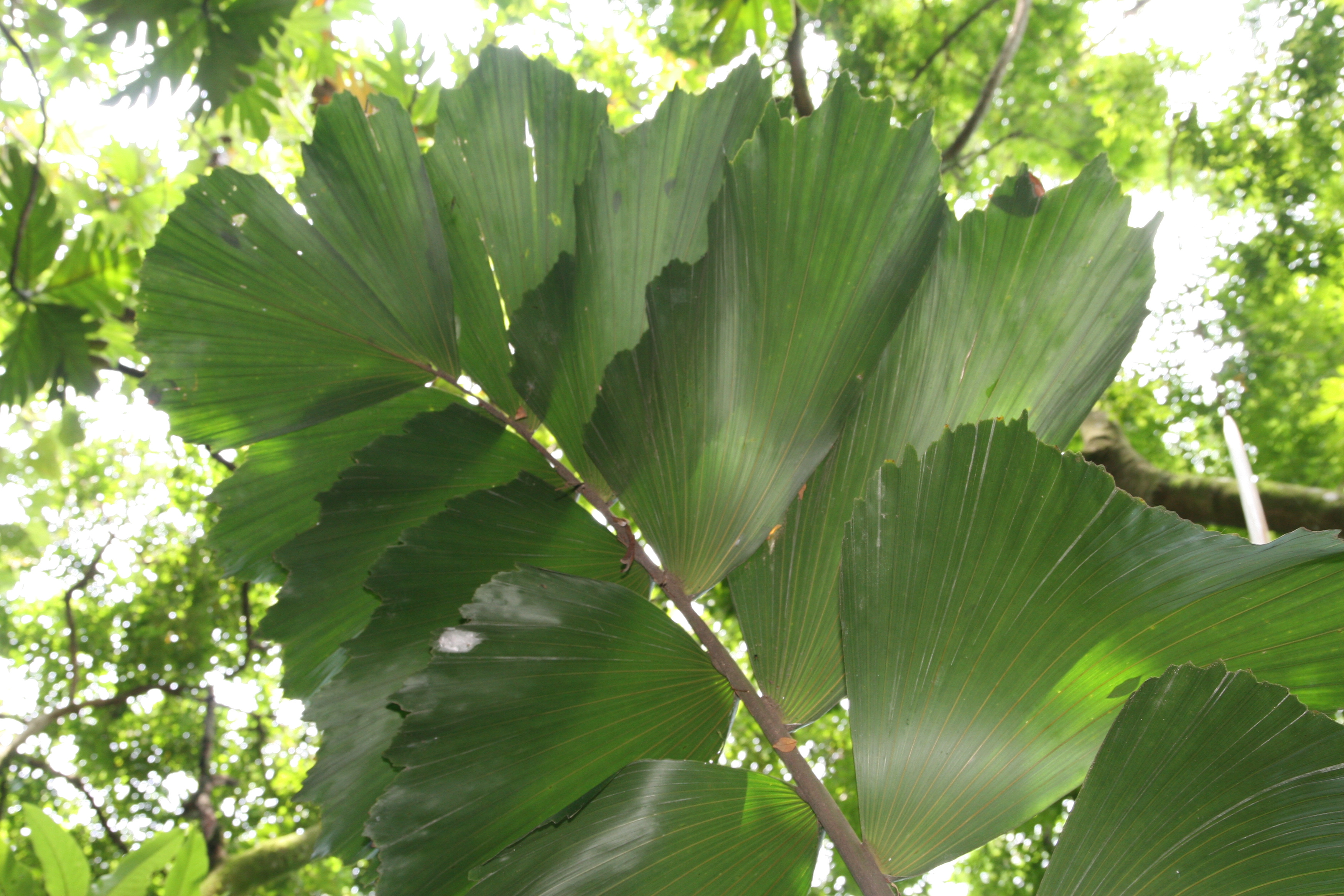
Leaves: The crown bears 4-7 massive pinnate leaves, each several meters long. The leaflets are distinctive for their deltoid (triangular or wedge-shaped) form, which inspired the specific epithet "deltoidea." Young leaflets are often arranged in clusters along the rachis, giving the fronds a somewhat ragged appearance compared to the neat rows of other pinnate palms.
Stilt Roots: Form and Function
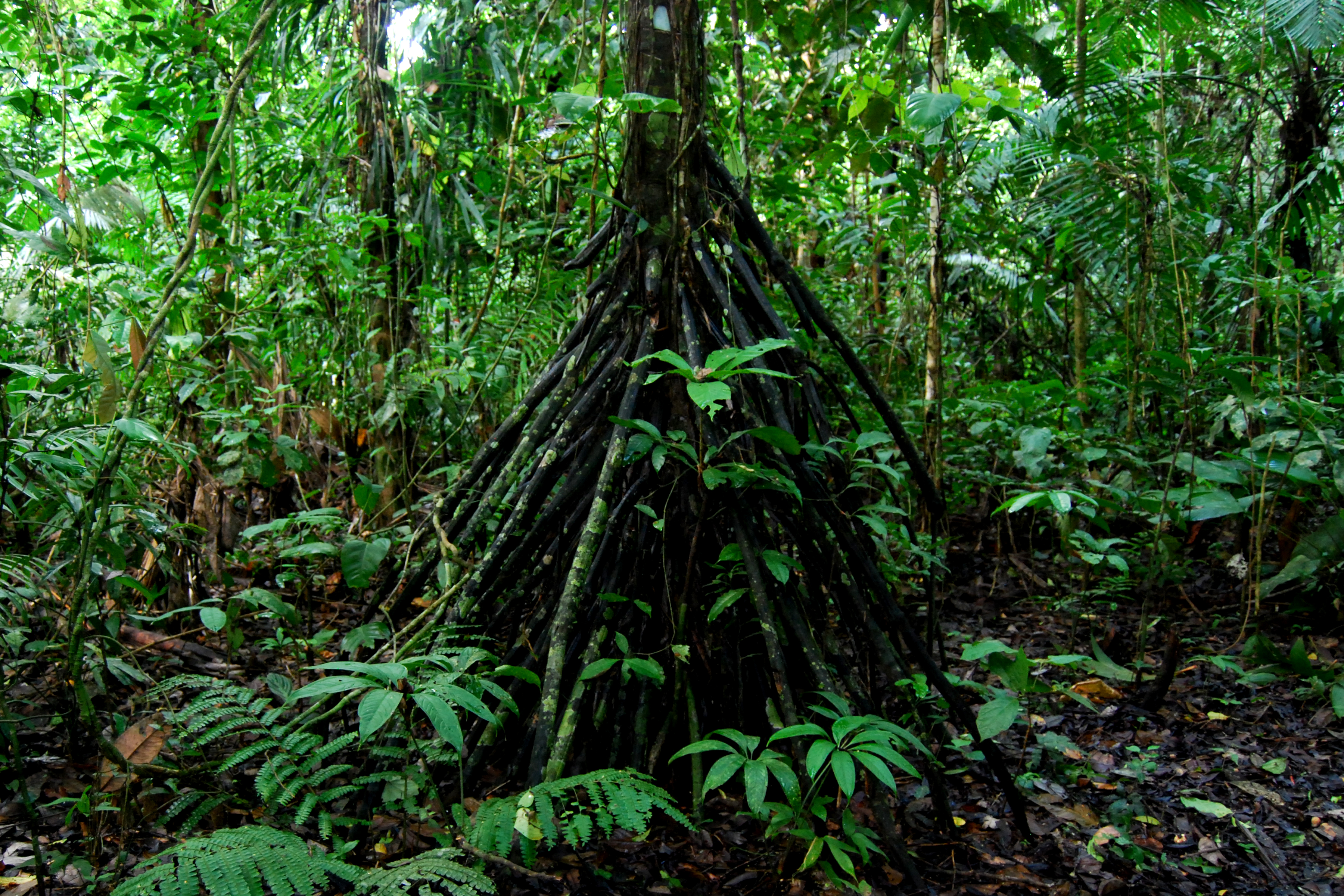
The stilt roots of Iriartea deltoidea have fascinated researchers seeking to understand their function. Several hypotheses have been proposed: increased mechanical support on steep hillsides, better root aeration under waterlogged conditions, the ability to resprout after mechanical damage, and rapid stem elongation during early growth. Research conducted in Costa Rica at the San Ramón Biological Reserve and Golfito Wildlife Refuge compared the stilt root systems of Iriartea and Socratea.
The study found that stilt root development is determined primarily by palm size rather than slope conditions. Larger palms develop taller and more extensive root cones, maintaining stability as they grow regardless of terrain. This suggests the roots function primarily for mechanical support rather than as an adaptation to unstable slopes. The stilt roots allow the palm to position its trunk directly in response to light availability, effectively "walking" toward canopy gaps over time, though this movement occurs far more slowly than popular accounts suggest.
Ecology
Iriartea deltoidea thrives from lowland tropical rain forest along stream margins to premontane forest on steep Andean slopes, tolerating a wide range of conditions. In western Amazonia, it often dominates forest plots, achieving densities that make it the most common tree species recorded. This abundance makes it a keystone species in many Neotropical forests, providing food and habitat for numerous animals.
The fruit is a drupe about 2 cm in diameter, dispersed primarily by bats and toucans. Research on toucan foraging behavior reveals an interesting pattern: seedlings growing around a mature fruiting palm may not be that tree's offspring at all, but rather seeds carried from different trees hundreds of meters away. Toucans collect fruits from multiple palms and deposit the seeds in favored perching sites, creating genetic mixing patterns distinct from wind-dispersed trees.
Traditional Uses
Throughout its range, Iriartea deltoidea has been described as "very important in the economy of native people." The outer wood of the trunk is exceptionally hard and durable, contrasting with the soft, spongy pith at the center. To harvest it, the trunk is split open and the soft cortex removed, leaving sheets of dense outer wood that can be used for flooring, construction, furniture, and handicrafts.
The heart of palm can technically be eaten, but unlike some species it is described as "not tasty" and is not a preferred food source. The flower ash, however, serves as a salt substitute in some indigenous communities. In the Colombian Amazon, a small industry has developed around Iriartea wood, though sustainable harvest remains a concern given the palm's slow growth.
Comparison with the Walking Palm
In the Brunca region, Iriartea deltoidea shares habitat with its relative Socratea exorrhiza, the walking palm. Both species develop stilt roots and inhabit wet lowland forests, but several features distinguish them:
| Feature | Iriartea deltoidea | Socratea exorrhiza |
|---|---|---|
| Maximum height | 20-35 m | 15-25 m |
| Trunk swelling | Distinctive belly (barrigona) | Uniform diameter |
| Stilt root color | Black or dark brown | Brown with spines |
| Leaflet shape | Deltoid (triangular) | Linear |
| Stilt root height | Up to 4 m | Up to 2 m |
Conservation
Iriartea deltoidea is classified as Least Concern by the IUCN due to its wide distribution, tolerance of various habitats including disturbed areas, and general abundance throughout its range. In many forests where it occurs, it is not merely present but dominant, the most common tree species recorded in plot surveys.
However, local harvesting pressure can reduce populations where the wood is heavily exploited. Research in Colombia has examined whether sustainable harvest is possible, balancing traditional use with population maintenance. The slow growth rate of palms means that overharvested populations take decades to recover, making careful management essential where the species is commercially exploited.
In Costa Rica's Brunca region, populations within Corcovado National Park and other protected areas remain secure. The species' tolerance of disturbed habitat means it can persist in secondary forests and forest edges outside protected areas, though old-growth forest retains the largest and most impressive specimens with their massive stilt root systems fully developed.
Key Sources & Resources
Species Information
Overview of the genus including description, distribution, and uses.
Comprehensive information on uses, habitat, and characteristics.
Official taxonomic information and accepted synonyms.
Scientific Literature
Research comparing stilt root development in Costa Rica's two stilt-rooted palms.
Study examining sustainable harvest potential for this economically important palm.
Research on toucan-mediated seed dispersal patterns in Iriartea.
Traditional Knowledge
Study of traditional management and sustainable harvest in the Colombian Amazon (in Spanish).