Aguacatillo de Tonduz
Ocotea tonduzii — A cloud forest tree from Costa Rica's highlands whose fruits sustain the Resplendent Quetzal and whose leaves contain compounds that interest cancer researchers.
In the mist-shrouded cloud forests near San Gerardo de Dota, Costa Rica, the fate of one of the world's most spectacular birds is tied to a genus of trees that few visitors would recognize. The Resplendent Quetzal, with its iridescent green plumage and meter-long tail streamers, depends heavily on the fruits of Ocotea and related trees in the laurel family. These "wild avocados" or aguacatillos comprise over half of the quetzal's diet during peak fruiting season.
Ocotea tonduzii is one of 57 Ocotea species found in Costa Rica. It takes its name from Adolphe Tonduz, a Swiss botanist who arrived in Costa Rica in 1889 and spent three decades collecting plants across the country's diverse landscapes. Tonduz worked alongside Henri Pittier, and together they built what would become one of the most important herbarium collections in Central America.
Identification
Like other members of the laurel family, Ocotea tonduzii has aromatic leaves and bark. The leaves are simple, alternate, and glossy dark green, with a characteristic fragrance when crushed. The genus Ocotea is distinguished by its small flowers with stamens that release pollen through hinged flaps rather than slits, a trait shared with avocados and other laurels.
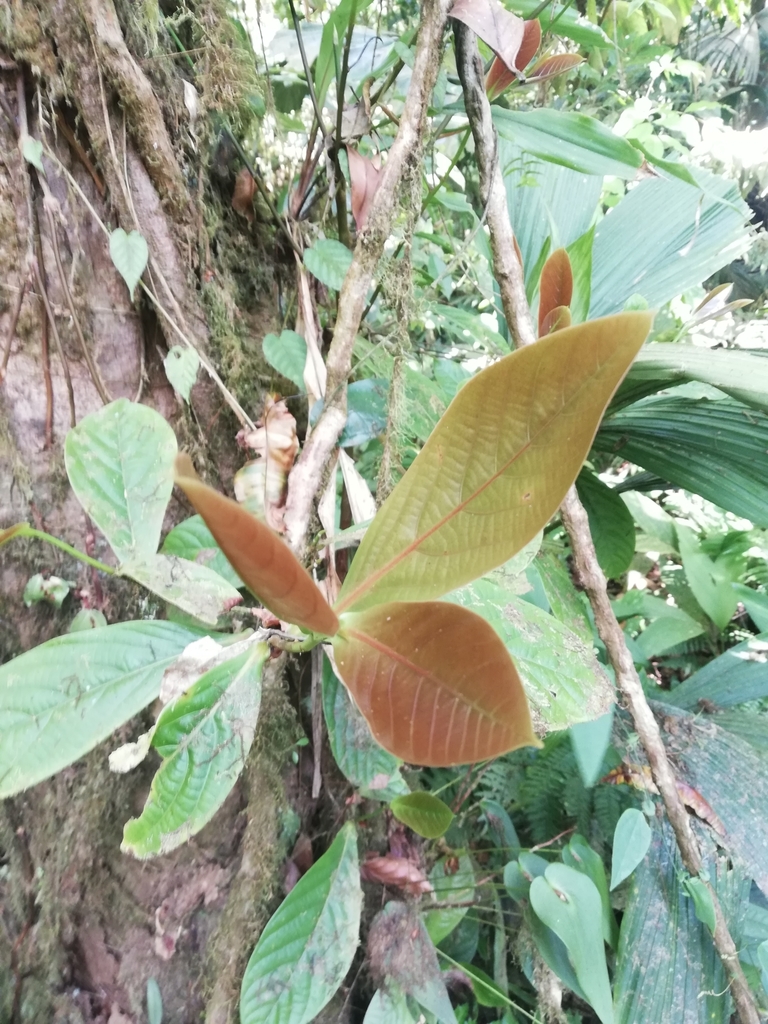
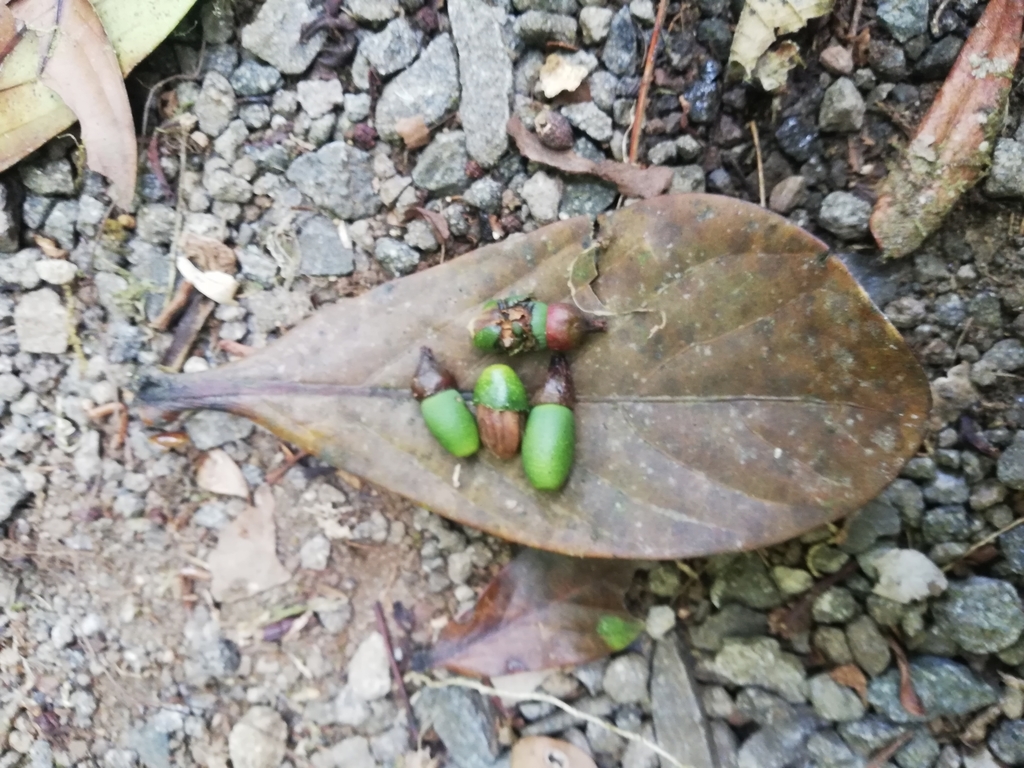
The fruits are small drupes, similar in form to miniature avocados, typically surrounded by a reddish cupule at the base. These "aguacatillos" or little avocados provide essential fatty acids for birds, particularly during the breeding season when quetzals need high-energy foods to sustain their spectacular plumage.
Distribution and Habitat
Ocotea tonduzii is found in the cloud forests of Costa Rica's central and southern highlands, from the Cordillera de Tilarán south through the Cordillera de Talamanca. Records exist from the central volcanic ranges near Vara Blanca and Juan Castro Blanco National Park, as well as from the southern highlands of Coto Brus. The species grows in premontane wet forest at elevations between 1,100 and 1,800 meters. This elevational band represents the transition zone where lowland moisture meets highland coolness, creating the perpetual mist that defines cloud forest ecosystems.
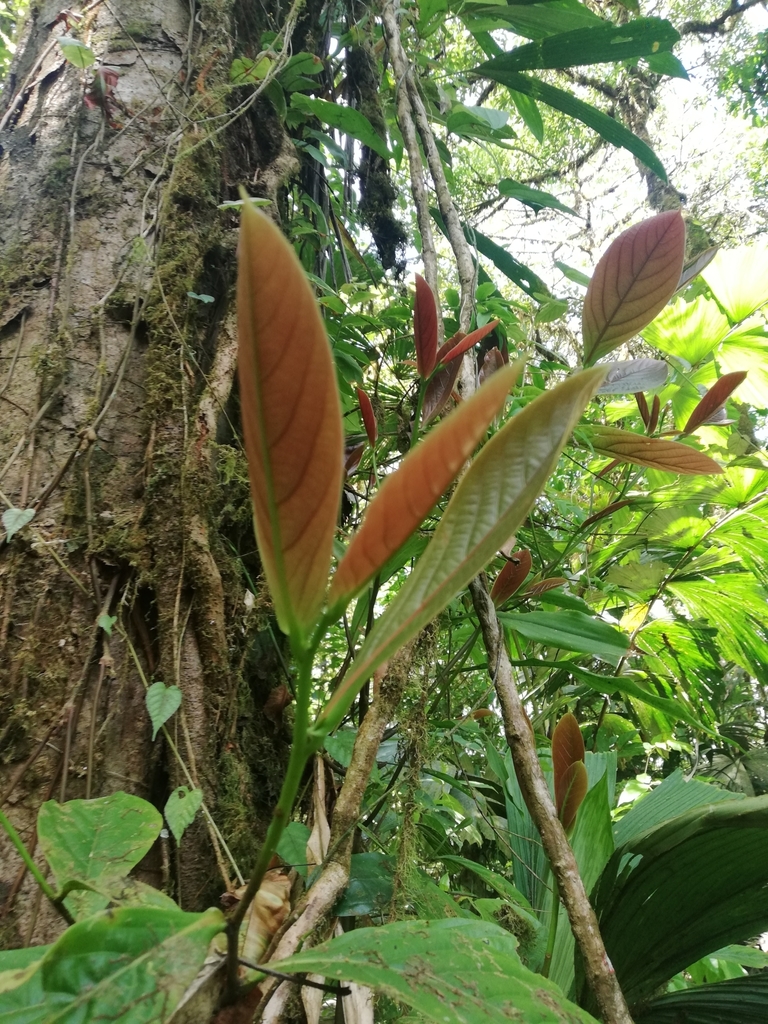
Costa Rica's cloud forests are characterized by nearly constant cloud cover, high humidity, and an extraordinary diversity of epiphytes. Ocotea tonduzii is one of the dominant canopy trees in this ecosystem, its branches laden with mosses, bromeliads, orchids, and ferns. Studies of epiphyte distribution have used this species as a model host tree, documenting the complex communities that depend on its canopy architecture.
Ecology
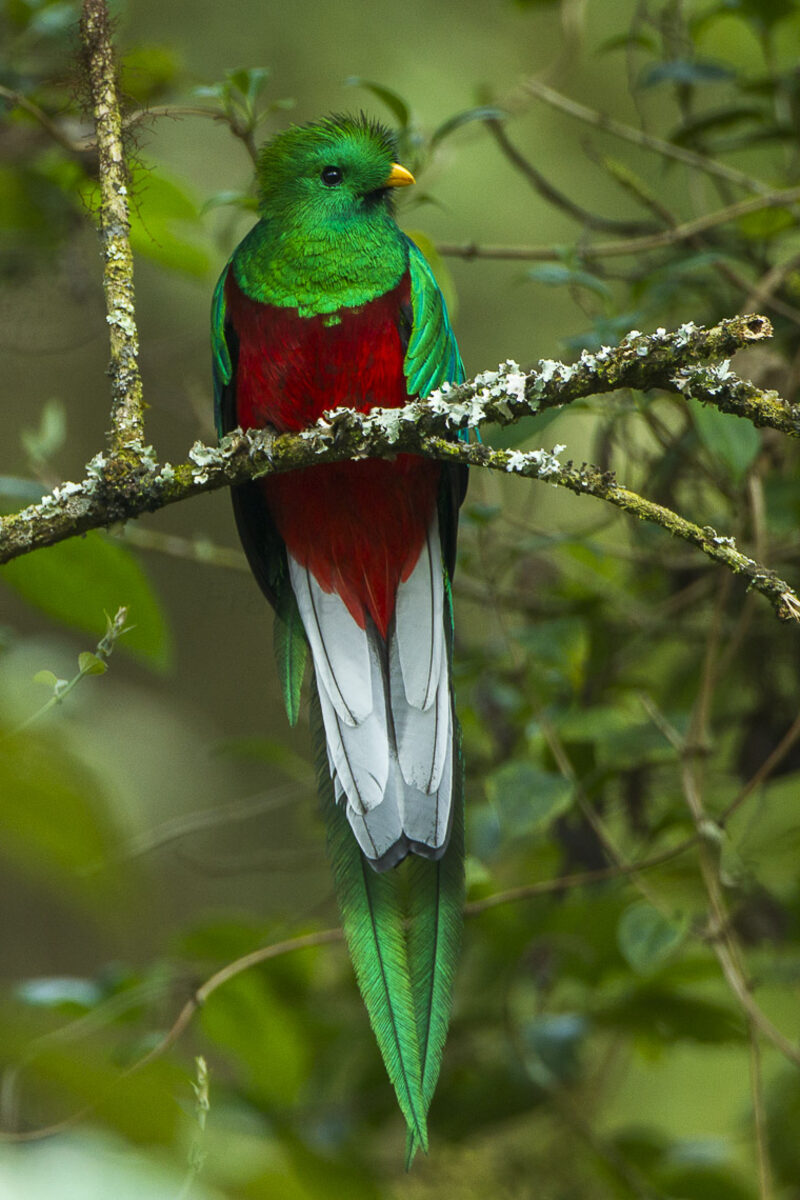
The relationship between Ocotea trees and the Resplendent Quetzal represents one of the most celebrated plant-animal mutualisms in Central American cloud forests. Quetzals feed on the fruits of at least 18 species of laurels, with different species fruiting at different elevations and times of year. This staggered phenology drives the quetzal's famous altitudinal migration, as the birds follow the ripening fruits up and down the mountainsides.
Beyond quetzals, at least ten bird species consume Ocotea fruits in Costa Rica's cloud forests, including three-wattled bellbirds, mountain robins, and several species of toucans. These birds serve as seed dispersers, swallowing the fruits whole and regurgitating or defecating the seeds away from the parent tree. The anatomy, behavior, and life history of quetzals suggest a long coevolutionary relationship with their laurel food sources.
A Model Tree for Canopy Research
Ocotea tonduzii has played a special role in the development of canopy ecology as a scientific discipline. Nalini Nadkarni, a pioneering canopy scientist who began working in Monteverde in the 1980s, used this species and Ficus tuerckheimii as model host trees for studying epiphyte communities. Her research helped establish the Monteverde cloud forest as a global center for understanding how life in the treetops contributes to forest ecosystem function.
One detailed study tracked 279 individual epiphytes on O. tonduzii and Ficus tuerckheimii monthly for over a year, documenting how different species time their flowering and fruiting in relation to wet, dry, and transition seasons. The moss-draped branches of mature Ocotea trees accumulate thick mats of "canopy soil" composed of decomposing organic matter. This epiphytic organic matter (EOM) plays a crucial role in forest nutrient cycling, intercepting nutrients from mist and rainfall that would otherwise reach the ground.
Nadkarni's team discovered that nitrogen from the atmosphere is fixed directly in these canopy soils by free-living bacteria, then cycled through the epiphyte community and eventually to the host tree itself through adventitious roots that grow into the accumulated organic matter. A single mature cloud forest tree may support hundreds of kilograms of epiphytes and associated canopy soil, representing a significant proportion of the forest's total biomass and nutrient storage.
Chemistry
The leaves of Ocotea tonduzii contain essential oils dominated by monoterpenes. Chemical analysis of leaf oils from Monteverde specimens revealed that the principal constituents are α-pinene (41.4%) and β-pinene (25.1%), along with the sesquiterpenes α-humulene (6.9%), β-caryophyllene (5.8%), and germacrene D (3.8%). This terpene-rich profile is typical of the genus and contributes to the aromatic quality of the leaves.
Researchers have tested the cytotoxic activity of O. tonduzii leaf oil against several human cancer cell lines. The oil showed notable activity against breast cancer cells (MCF-7, MDA-MB-231, MDA-MB-468) and melanoma cells (UACC-257), with potency comparable to the chemotherapy drug doxorubicin. While these are preliminary laboratory findings, they highlight the potential pharmacological value of cloud forest species that remain poorly studied.
Drugs from the Cloud Forest
The pharmaceutical research on Ocotea tonduzii is part of a larger effort by William Setzer at the University of Alabama in Huntsville, who has spent more than twenty years studying the chemistry of Costa Rica's cloud forest plants. His team has screened hundreds of species for biological activity, documenting an extraordinary diversity of compounds with potential medical applications.
Beyond cancer research, Setzer's group has investigated Costa Rican cloud forest plants as potential treatments for tropical diseases. Several Ocotea species, including O. tonduzii, have been tested for activity against cruzain, an enzyme essential for the survival of Trypanosoma cruzi, the parasite that causes Chagas disease. This neglected tropical disease affects millions of people in Latin America, and current treatments have serious side effects. Natural products from cloud forest plants represent one avenue for discovering new therapeutic compounds.
Conservation
The conservation of Ocotea tonduzii is inseparable from the broader effort to protect Costa Rica's remaining cloud forests and the wildlife that depends on them. While several reserves protect core cloud forest habitat, conservationists recognized that the quetzal's altitudinal migration creates a challenge: birds breeding in highland cloud forest descend to lower-elevation forests to find fruiting Ocotea trees during certain seasons. If forest fragments along this migration route are lost, the quetzal population becomes isolated and vulnerable.
In 2007, conservationists established the Bellbird Biological Corridor to connect highland cloud forest with Pacific slope forests through a network of protected areas and private reserves. The corridor takes its name from the Three-wattled Bellbird, another species that makes altitudinal migrations following Lauraceae fruits. By maintaining forest connectivity from sea level to the cloud forest zone, the corridor ensures that fruiting Ocotea trees remain accessible to migrating birds throughout the year.
The approach reflects a growing understanding that cloud forest conservation cannot focus solely on protected peaks. The Lauraceae that sustain quetzals and bellbirds are distributed across elevational gradients, with different species fruiting at different altitudes and seasons. Protecting this phenological mosaic requires landscape-level conservation that maintains forest cover from lowlands to highlands.
Taxonomy
The species was described by Paul Carpenter Standley in 1937, in his monumental Flora of Costa Rica published by the Field Museum of Natural History in Chicago. Standley (1884-1963) was one of the most prolific botanists of his era, describing thousands of new species from Central America and Mexico. The specific epithet tonduzii honors Adolphe Tonduz (1862-1921), the Swiss botanist and plant collector who spent three decades working in Costa Rica.
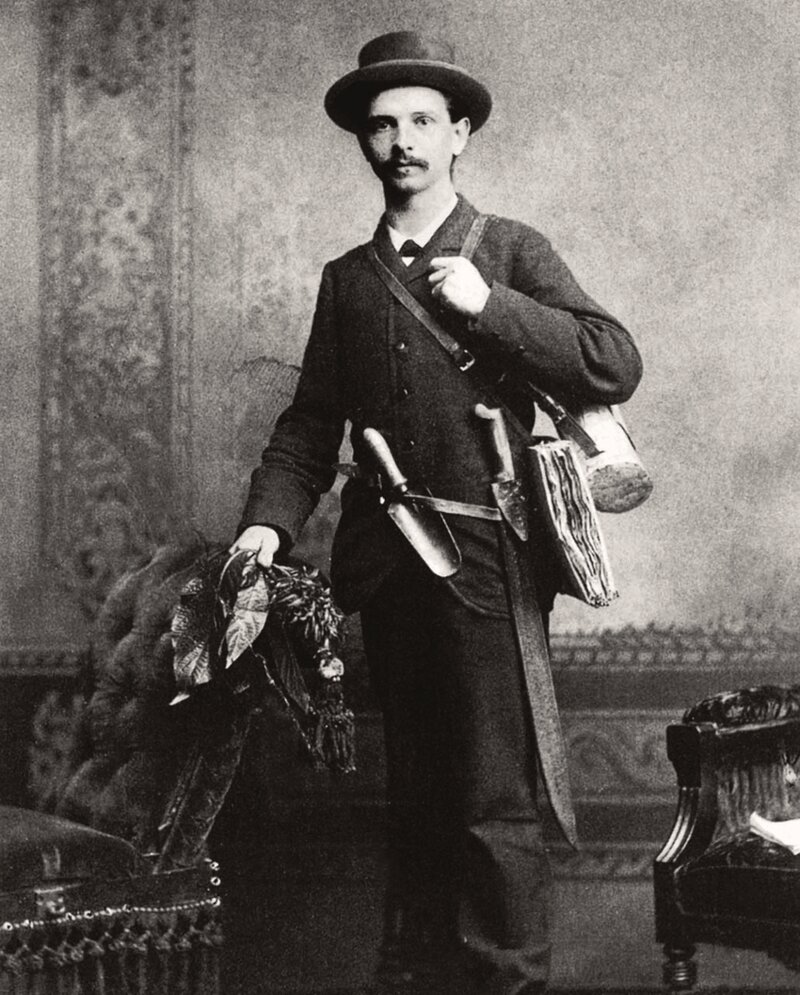
Tonduz arrived in Costa Rica in 1889 to assist Henri Pittier with botanical exploration, part of an ambitious effort to document the natural history of this small but biologically extraordinary country. For 20 years he served as curator of what would become the National Herbarium, and accompanied Pittier on expeditions across the country's remarkable diversity of ecosystems. Their combined efforts produced approximately 20,000 herbarium specimens, forming the foundation for Costa Rican botany.
The collaboration between Pittier and Tonduz produced landmark publications including Primitiae Florae Costaricensis (1891-1901), published in the Bulletin de la Société royale de botanique de Belgique. These works established the taxonomic framework that later botanists like Standley would build upon. When Standley described Ocotea tonduzii in 1937, he was drawing on specimens and observations that Tonduz had collected decades earlier.
After Pittier left for the United States in 1904, Tonduz's fortunes declined. The institutional support that had sustained his botanical work disappeared, and at one point he was reduced to working as a laborer on a coffee plantation. He died in 1921, shortly after being appointed to a position in Guatemala's agricultural service, his contributions largely forgotten until later generations recognized the significance of the specimens he had collected.
Some taxonomic databases suggest that Ocotea tonduzii may be synonymous with Ocotea insularis, a more widespread species. However, the GBIF backbone taxonomy treats O. tonduzii as an accepted species. The Lauraceae are notoriously difficult taxonomically, and molecular studies are gradually clarifying relationships within the family. Several Costa Rican Ocotea species have recently been moved to other genera based on DNA evidence.
Resources & Further Reading
Species Information
Taxonomic status, classification, and occurrence data.
Community observations and photographs.
Essential Oil and Pharmaceutical Research
Analysis of leaf oil chemistry and anticancer activity.
Comparative analysis of essential oils across Monteverde's Ocotea species.
Review of two decades of pharmaceutical research on Monteverde cloud forest plants.
Canopy Ecology Research
Study tracking 279 epiphytes on Ocotea tonduzii and Ficus tuerckheimii in Monteverde.
Pioneering research on canopy soil formation and nutrient cycling in epiphyte communities.
Conservation and Climate
Research on upslope migration of cloud forest species in response to climate change.
Information on the corridor connecting cloud forest to lowlands for quetzal and bellbird migration.
Related Topics
Biography of the Swiss botanist who collected in Costa Rica for three decades.
Swiss-American botanist and geographer who led botanical exploration in Costa Rica with Tonduz.
Overview of the relationship between Ocotea trees and frugivorous birds.
The iconic cloud forest bird that depends on Ocotea fruits.
The protected area that is home to Ocotea tonduzii and other cloud forest species.