Lemon Drop Mangosteen
A tropical fruit tree whose spiny yellow fruits reminded Spanish colonists of Mediterranean strawberry trees, and whose biflavonoids are now being tested against Alzheimer's disease.
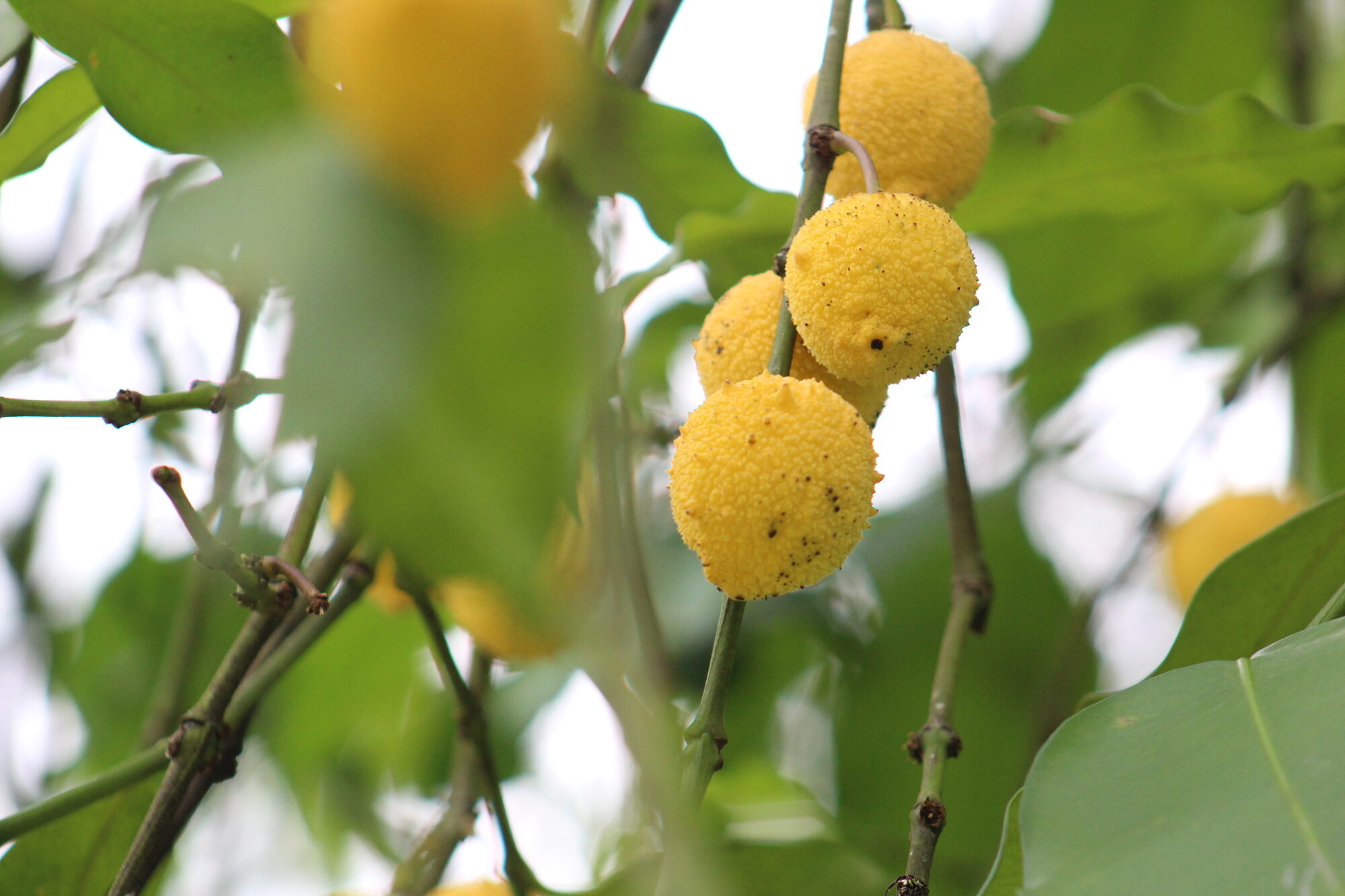
When Aimé Bonpland collected a fruiting tree in the Magdalena Valley of Colombia sometime around 1801, he and Alexander von Humboldt were in the middle of the most ambitious botanical expedition the Americas had ever seen. The tree bore yellow, golf-ball-sized fruits covered in tiny spines, and the local name, "madroño," told a story of homesickness: Spanish colonists had seen in these bumpy tropical fruits a reminder of the strawberry tree (Arbutus unedo) that grows across the Mediterranean. Carl Sigismund Kunth, the young Prussian botanist tasked with describing the expedition's vast plant collections, published the species in 1822 as Calophyllum madruno. It would take another 167 years and a cascade of name changes before the tree landed in its current genus.
Today, Garcinia madruno grows from Honduras to Bolivia across more than a dozen countries, common enough to be sold as a market fruit in Colombia and Ecuador, yet scientifically interesting enough to occupy a team of pharmacologists in Medellín for over a decade. From the tree's twigs, leaves, and fruit rind they have extracted 21 biflavonoids, compounds now being tested for their potential to slow the progression of Alzheimer's disease and atherosclerosis. In Costa Rica, the tree grows on both slopes from sea level to 1,200 meters, with dozens of documented localities in the Brunca region alone, from Corcovado National Park to the forests behind the Golfo Dulce Lodge in Piedras Blancas.
Identification
Habit
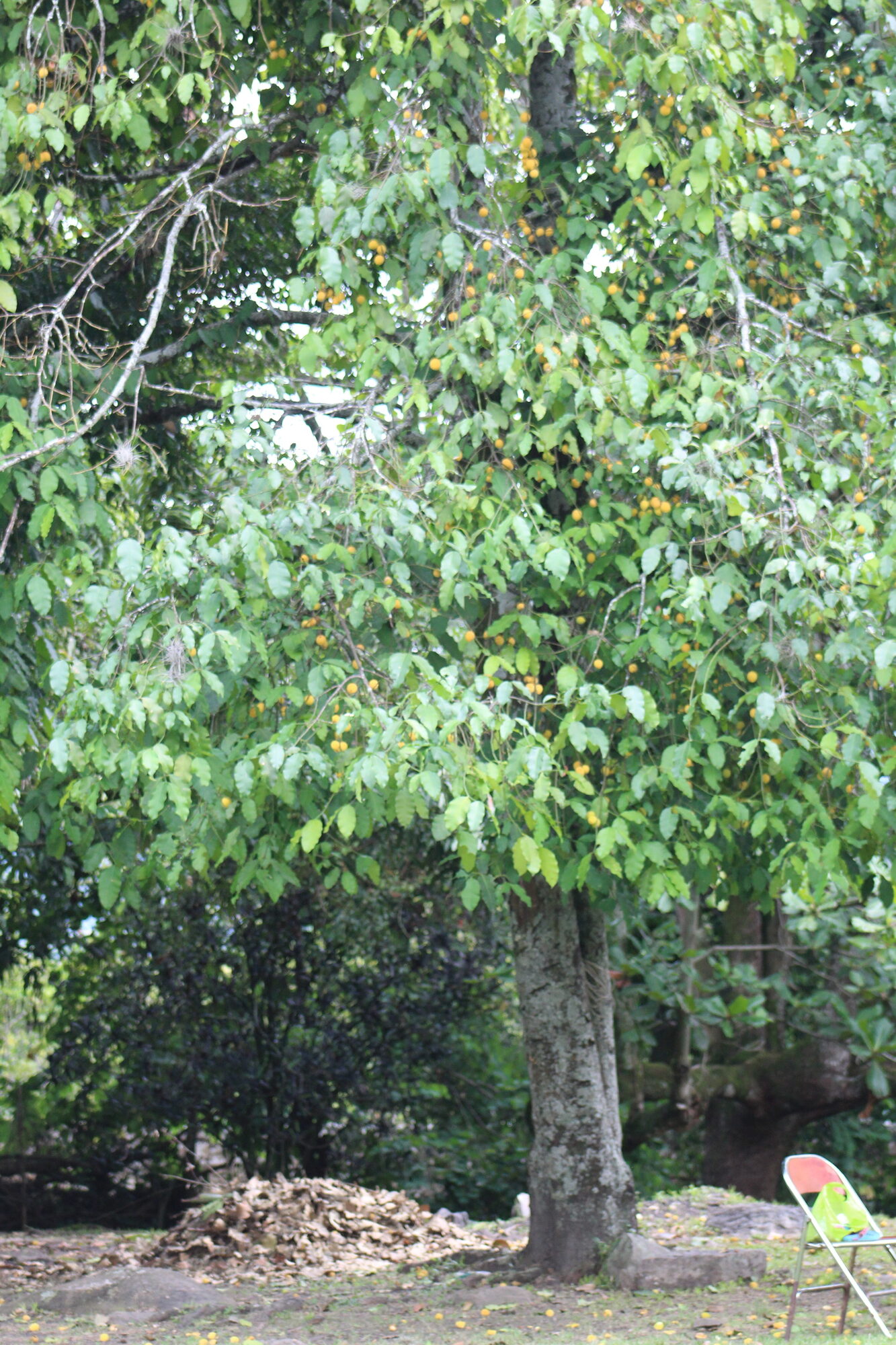
Garcinia madruno is an erect, evergreen tree that reaches 7 to 20 meters tall, with the upper end of that range found in mature primary forest. The trunk is cylindrical, typically 20 to 30 cm in diameter, with gray to brown bark. The crown is dense, pyramidal to rounded, casting heavy shade. All parts of the tree contain gummy yellow latex that bleeds freely when cut, a hallmark of the Clusiaceae family. Young branches are angular rather than rounded, a useful field character when the tree is not in fruit. The species grows slowly to moderately, and seedlings are shade-tolerant, often establishing in the understory of closed-canopy forest before gradually reaching mid-canopy positions as light gaps open above them.
Leaves
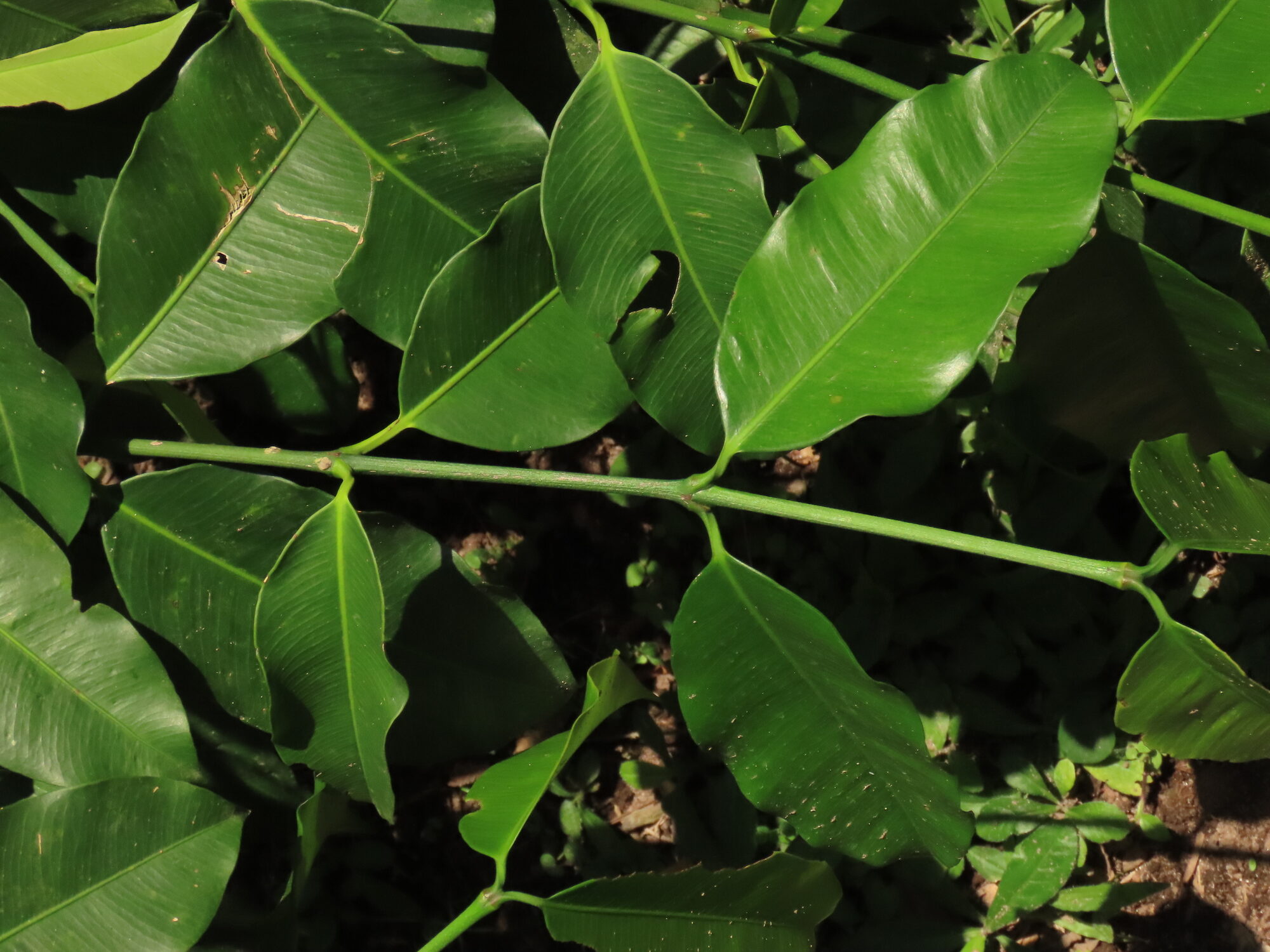
The leaves are simple and opposite, often held in a single plane that gives the branches a flat spray. Each leaf blade is elliptic to oblong, 12 to 22 cm long and 5 to 10 cm wide, dark green above, paler beneath, and leathery (coriaceous) to the touch. The apex tapers to a pronounced point (acuminate), while the margins are smooth and entire. The most distinctive leaf character is the venation: conspicuous secondary veins run at regular angles from the midrib and merge into a thick marginal vein that traces the leaf's outline. The leaf surface is completely hairless (glabrous), and the blade is threaded with secretory canals, a family trait of the Clusiaceae shared with the closely related mangosteen (Garcinia mangostana).
Flowers
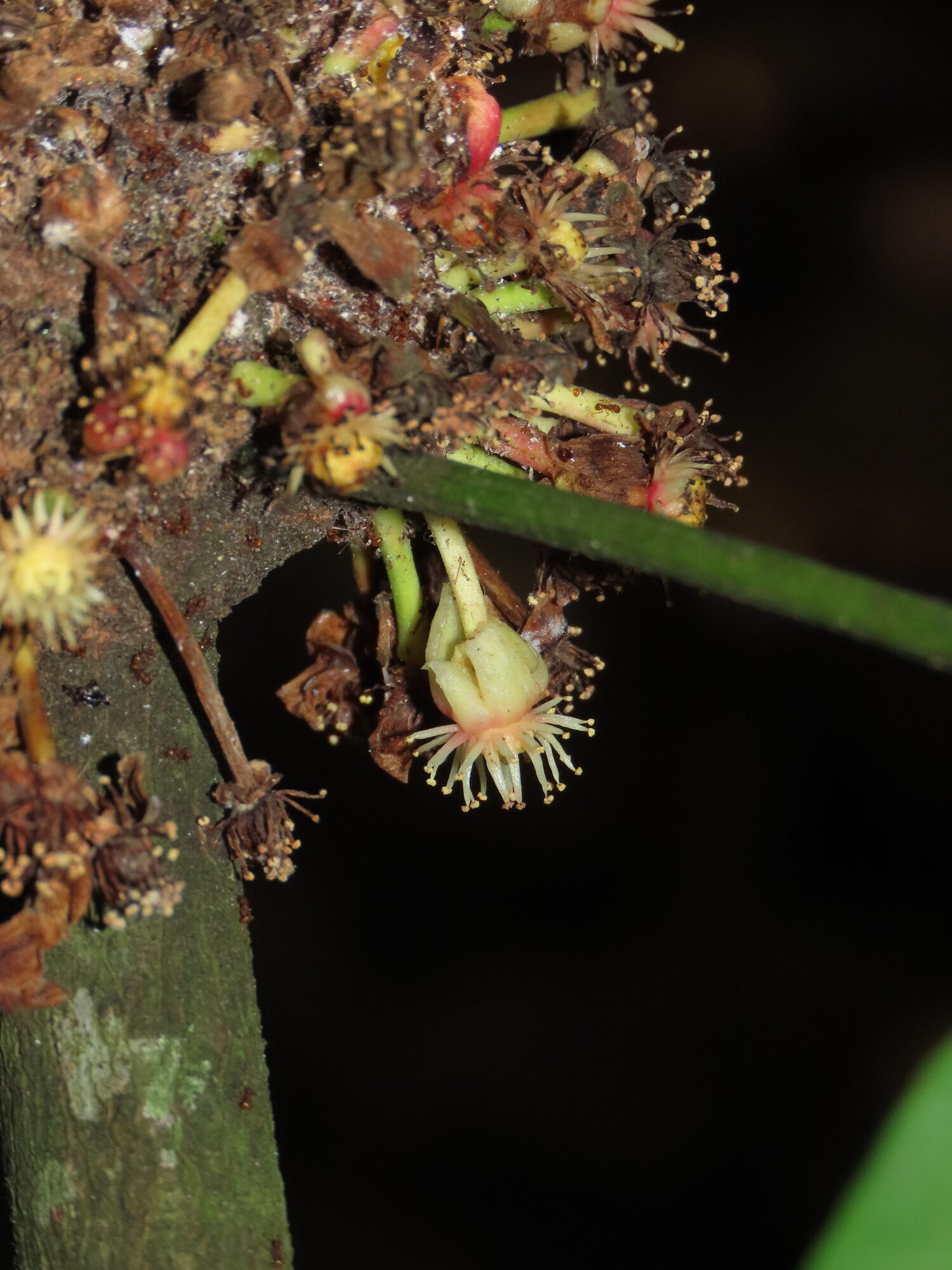
The flowers are small, creamy-white to yellowish, and fragrant, appearing singly or in dense fascicles (clusters) of up to 14 in the axils of recently fallen leaves on young branches. Each flower has four pale-yellow petals that reflex (curve backward) at maturity. The species is functionally dioecious (separate male and female trees), though the biology is more complex than simple dioecy suggests: staminate (male) flowers bear 25 to 30 free stamens arranged in three whorls and lack a functional ovary, while pistillate flowers have both staminodes (sterile stamens) and a central ovary. Some Garcinia species are known to reproduce through apomixis (asexual seed production), and whether G. madruno shares this capacity remains unstudied. Flowering occurs during the dry season, from December through February in Costa Rica, when the fragrant blossoms attract a generalist assemblage of insects, likely including beetles and small bees.
Fruits
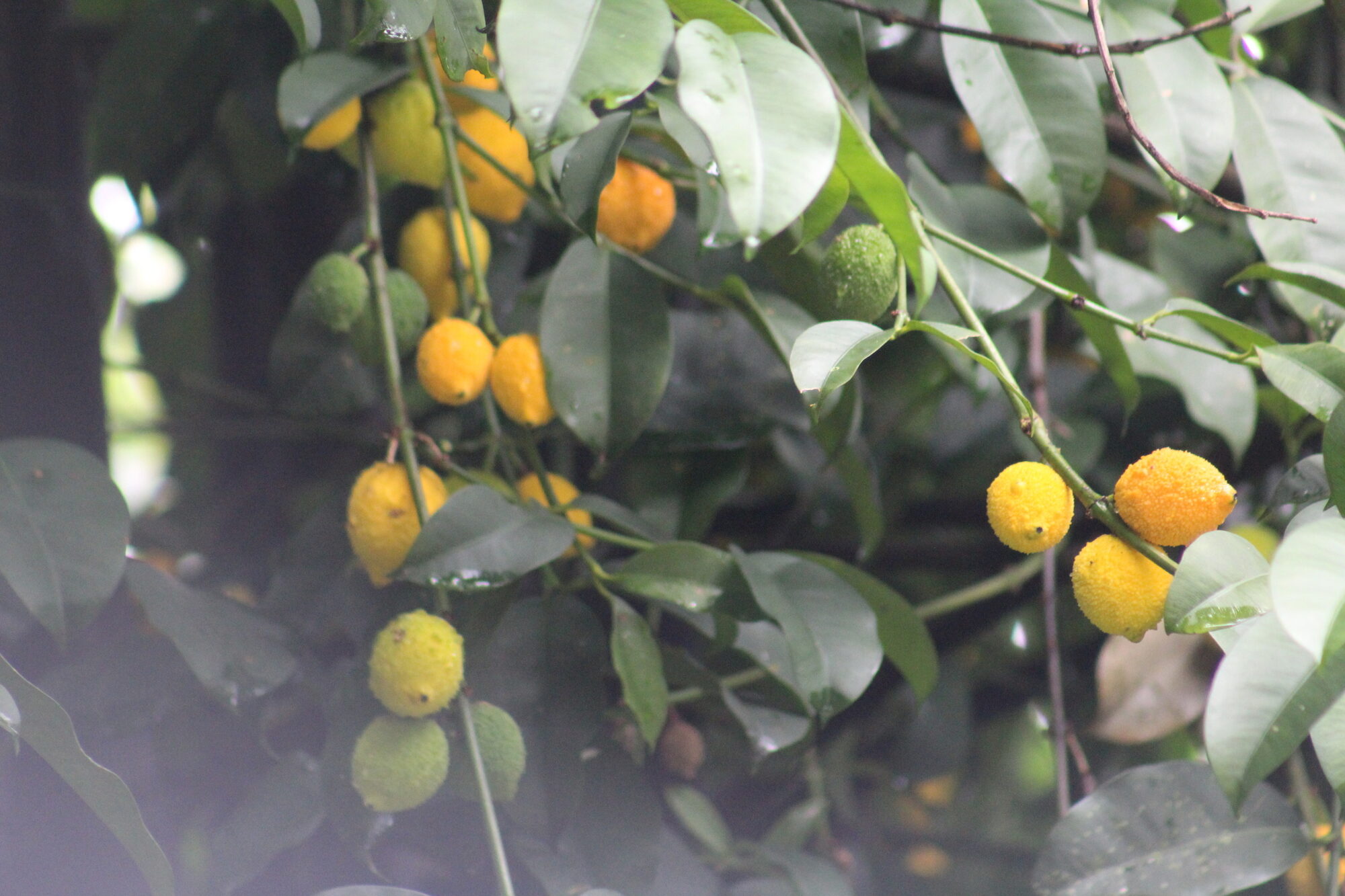
The fruit is a round to ellipsoidal berry, 5 to 7.5 cm long, with a thick, leathery rind covered in sharp, tiny projections (echinate). This surface texture is the quickest way to distinguish G. madruno from its smooth-fruited Costa Rican congener G. intermedia, which shares the common name "jorco." Fruits ripen from green to bright yellow over three to six months following pollination, maturing during the rainy season from May through August. The interior holds one to three ovate seeds, each about 2 cm long, surrounded by a translucent whitish aril. This aril is juicy, slightly aromatic, and pleasantly subacid, with a flavor described as similar to mangosteen with citrus notes. Critically, the fruit is non-climacteric: it must ripen fully on the tree, as immature fruits remain sour and never develop their characteristic sweetness after harvest. In Colombian and Ecuadorian markets, the fruit is sold fresh under names including charichuelo and madroño, and also used for jams, preserves, and drinks.
Distribution
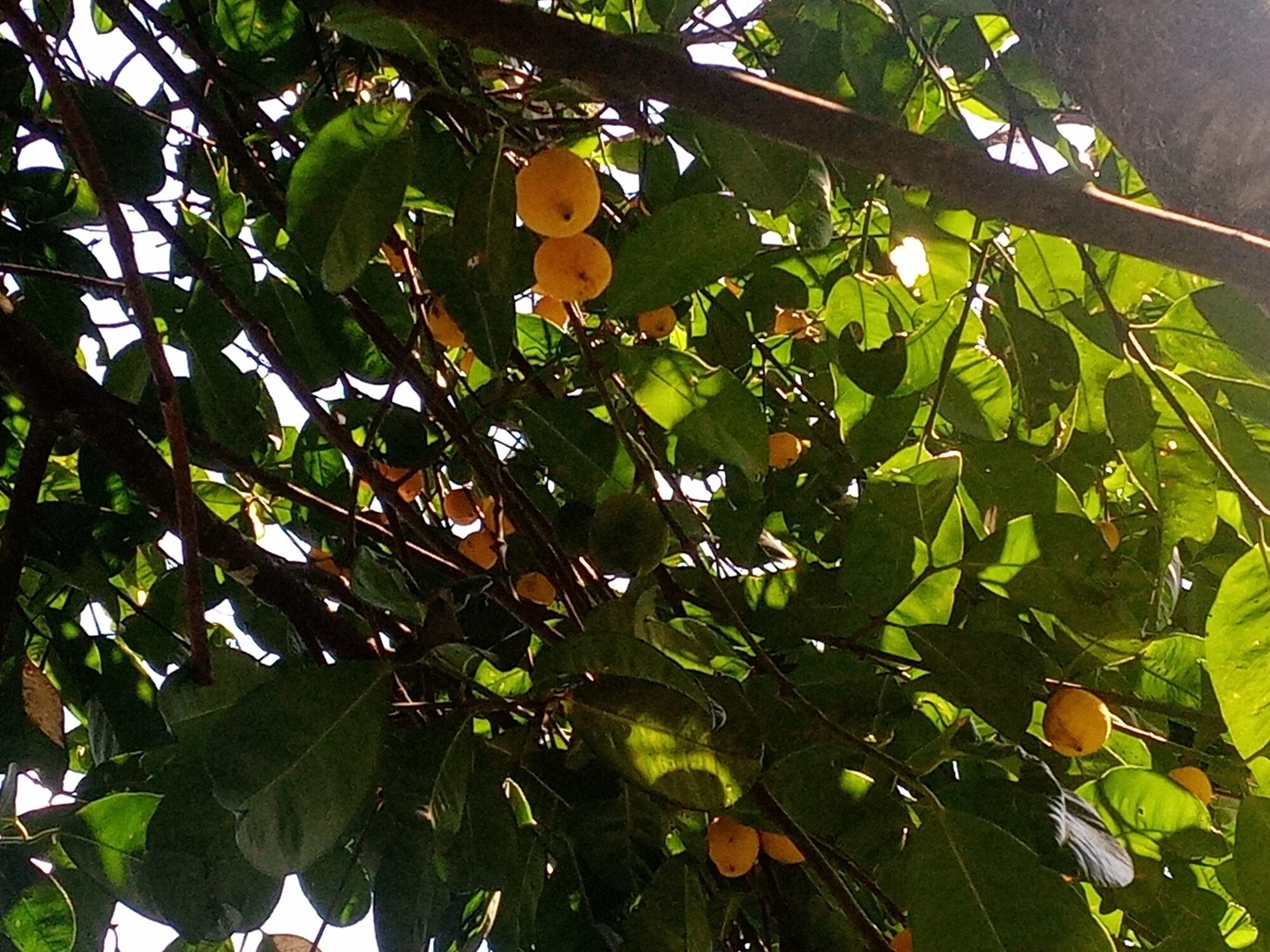
Garcinia madruno ranges continuously from southern Central America (Honduras, Costa Rica, Panama) through northern and western South America (Colombia, Venezuela, Ecuador, Peru, Bolivia, Brazil, Suriname, French Guiana), with an estimated extent of occurrence exceeding 4.3 million square kilometers. Colombia holds the highest density of herbarium records (37% of 3,144 GBIF records), followed by Brazil (23%) and Peru (10%). The species occupies multiple phytogeographic domains: Amazonian terra firme forests, the Cerrado and Atlantic Forest of Brazil, Andean mountain forests, and the lowland wet forests of Central America. Elevation records span from sea level to 1,210 meters.
In Costa Rica, the tree grows commonly on both the Atlantic and Pacific slopes, with approximately 140 GBIF records distributed across at least six provinces. The Brunca region is particularly well represented, with dozens of documented localities including Parque Nacional Corcovado (Estación Agujas, 300 m), Parque Nacional Piedras Blancas (La Gamba trail, 200 m), Refugio de Vida Silvestre Golfito (Serranías de Golfito), and the Osa Peninsula coast at Mogos and Bahía Chal. Further north, the species has been collected at Parque Nacional Carara (sendero Araceas, 76 m), Refugio Nacional de Vida Silvestre Caño Negro in Alajuela (40 m), Refugio de Vida Silvestre Gandoca-Manzanillo in Limón (10 m), and as high as 1,150 m at INBio in Santo Domingo de Heredia. The species prefers mature humid forests and humid secondary forests, tolerating a wide range of soil types including poor soils and heavy clays. It grows in both primary and secondary forest, establishing as a shade-tolerant understory tree before reaching mid-canopy heights.
Ecology
The fragrant, creamy-white flowers suggest a generalist insect pollination syndrome. The Osa Arboretum records that "flowers are pollinated by insects," and the petal arrangement, scent, and nectaries point to small generalist insects, with bees the documented pollinators of related species. Studies on the related Garcinia brasiliensis have documented honey bees (Apis mellifera) and stingless bees (Trigona spinipes) as effective pollinators, visiting flowers that show traits of a broad, generalist pollination strategy. No formal pollination study has been conducted on G. madruno itself, leaving the identities of its primary pollinators unconfirmed.
The sweet, fleshy arils that surround the seeds attract frugivorous mammals, particularly monkeys, which have earned the tree one of its common names: "fruta de mono" (monkey fruit). The aromatic pulp likely attracts additional fruit-eating mammals and birds, though no published study documents specific dispersal agents, dispersal distances, or seed germination rates in the wild. The tree's phenology aligns with a common neotropical pattern: dry-season flowering (December to February) followed by rainy-season fruit maturation (May to August), ensuring that ripe fruits coincide with peak activity periods for potential dispersers.
Chemistry and Pharmacology
A research group led by Edison Osorio at the Universidad de Antioquia in Medellín has spent over a decade characterizing the phytochemistry of G. madruno, identifying 21 distinct biflavonoids in the leaves, twigs, and fruit epicarp. The dominant compound is morelloflavone, which constitutes 65% of the total biflavonoid fraction and shows potent antioxidant activity: its capacity to inhibit copper-induced LDL oxidation (CE50 = 12.36 µg/mL) significantly exceeds that of quercetin, one of the most widely studied plant antioxidants. The epicarp (fruit rind) is the main source of biflavonoids and a secondary source of polyisoprenylated benzophenones, with concentrations reaching up to 25% of dry weight in some individuals.
The most significant pharmacological finding came in 2018, when Sabogal-Guáqueta and colleagues tested a biflavonoid fraction from G. madruno on aged triple-transgenic Alzheimer's mice (3xTg-AD). After three months of treatment (25 mg/kg every 48 hours), treated mice showed reduced amyloid-beta deposition in the hippocampus, entorhinal cortex, and amygdala; reduced tau pathology; and decreased neuroinflammation (both astrogliosis and microgliosis). Separately, a 2017 study demonstrated atheroprotective effects in ApoE-knockout mice: biflavonoids composed of 85% morelloflavone, 10% volkensiflavone, and 5% amentoflavone reduced atheromatous lesion size, lowered circulating cholesterol, and modulated macrophage responses to oxidized LDL. A 2023 study addressed the compounds' poor water solubility by developing natural nanodispersions from peel extracts that improved solubility and dissolution rate up to 400%, a step toward potential therapeutic applications. One caution applies to all this work: the 2024 taxonomic revision of the G. madruno complex raises the possibility that some study material from Colombia may actually belong to one of the three newly described segregate species rather than G. madruno sensu stricto.
Taxonomic History
The nomenclatural history of this tree is tangled by the fact that it was described independently from two different continents. The earliest valid description comes from Peru, where Hipólito Ruiz and José Antonio Pavón collected the species during the Royal Botanical Expedition to Peru and Chile (1777-1788), publishing the binomial Verticillaria acuminata in 1798 (having established the genus in their 1794 Prodromus). Then in 1822, Kunth described Bonpland's Colombian material as Calophyllum madruno in the fifth volume of Nova Genera et Species Plantarum, the monumental work documenting the botanical discoveries of the Humboldt-Bonpland expedition. In 1860, Jules Émile Planchon and José Jerónimo Triana transferred both names to the genus Rheedia, creating Rheedia acuminata and Rheedia madruno, under which names the tree was known for over a century.
The final move came in 1989, when Barry E. Hammel, a curator at the Missouri Botanical Garden and co-editor of the Manual de Plantas de Costa Rica, recognized that Rheedia belonged within a broader Garcinia. He transferred the Mesoamerican Rheedia species to Garcinia, but ran into a nomenclatural problem: the earlier epithet acuminata from Ruiz and Pavón's name was already occupied by an Asian species, Garcinia acuminata. Hammel therefore adopted the next available epithet, Kunth's madruno from 1822, establishing the combination Garcinia madruno (Kunth) Hammel. The lectotype is Bonpland's collection no. 1723 from the Magdalena and Cauca valleys, Antioquia, Colombia, deposited at the Paris herbarium (P-01901275). Comprehensive molecular phylogenetic analyses by Gaudeul, Sweeney, and Munzinger in 2024, sampling 111 Garcinia species, confirmed that Rheedia nests firmly within Garcinia, placing G. madruno in Clade 2 (section Rheedia), characterized by flowers usually with four petals, free or fascicled stamens, and tricolporate pollen.
The genus Garcinia itself honors Laurent Garcin (1683-1752), a French-born physician who served as a surgeon for the Dutch East India Company. Garcin conducted botanical fieldwork across India, Indonesia, Ceylon, Iran, and Arabia, was elected a corresponding member of the Paris Academy of Sciences and a Fellow of the Royal Society of London, and corresponded with Hans Sloane and Bernard de Jussieu. That a French colonial surgeon's name should end up on a neotropical fruit tree is one of the small ironies of Linnaean nomenclature: Linnaeus named the genus for Garcin's work on the Asian species, and when Hammel submerged Rheedia into Garcinia, the American species inherited a European name commemorating Asian botany.
Similar Species
Four Garcinia species occur in Costa Rica, and field identification can be challenging because several share the common name "jorco." Garcinia intermedia is the most likely source of confusion: it grows in the same habitats, reaches a similar height (to 20 m), and produces edible yellow fruits, but its fruit surface is smooth rather than echinate. Garcinia magnifolia, found from Costa Rica to Colombia, has conspicuously larger leaves and smooth branches. The recently described Garcinia isthmensis (2025), restricted to Limón and Puntarenas at 200-350 m, differs in having 40 to 55 stamens (versus 25 to 30 in G. madruno) and leaf blades generally exceeding 19 cm in length.
Uses
Beyond its edible fruit, G. madruno has found various roles in rural economies across its range. The wood is pinkish to dark yellow-brown, hard, heavy, and coarse-textured with straight to irregular grain, used locally for furniture, flooring, heavy construction, and fuelwood, though it can warp during drying and is not commercially exploited at scale. In Panama, the yellow latex has traditional use for treating ulcers and skin sores. The tree is planted in agroforestry systems as a shade tree for Coffea arabica plantations, where its dense crown shelters the coffee plants. Additional agroforestry uses include soil conservation, erosion control, windbreaks, recovery of degraded areas, and living fences. Costa Rican names for the tree reflect this familiarity: cerillo, jorco, lechoso amarillo (a reference to the yellow latex), limón de montaña, manzana amarilla, and satro.
Conservation Outlook
Garcinia madruno is listed as Least Concern by the IUCN, a status consistent with its vast range (over 4.3 million km²), occurrence in fifteen or more countries, and general commonness within its preferred habitats. In Costa Rica, the species is well represented in the protected area network: documented occurrences include Parque Nacional Corcovado, Parque Nacional Piedras Blancas, Parque Nacional Carara, Refugio de Vida Silvestre Golfito, Refugio de Vida Silvestre Gandoca-Manzanillo, Refugio Nacional de Vida Silvestre Caño Negro, and the Osa Arboretum. Deforestation and conversion of humid forest remain the primary threats across its range, particularly in Amazonia and the Andes piedmont, but the species' broad distribution, tolerance of secondary forest, and capacity to regenerate in shade provide resilience. The more pressing conservation concern within the genus may be the recently described G. isthmensis, assessed as Vulnerable in 2025, which is restricted to a narrow band of lowland forest in Limón and Puntarenas provinces of Costa Rica and two provinces in Panama.
Resources & Further Reading
Species Information
Plants of the World Online entry with accepted name, synonymy, and distribution map.
Global occurrence records, specimen data, and distribution maps (3,144 records).
Citizen science observations with field photographs and distribution data.
Species profile from the Osa Peninsula arboretum with phenology and ecology notes.
Detailed species account with uses, cultivation, and propagation information.
Online Flora Costaricensis treatment from the Manual de Plantas de Costa Rica.
Formal 2021 IUCN Red List assessment confirming Least Concern status (e.T176097685A176097687).
Coffee-agroforestry profile documenting use as an Arabica shade tree, windbreak, living fence, and for erosion control and degraded-area recovery.
Taxonomy & Nomenclature
Nomenclatural data, type specimens, and literature references from Missouri Botanical Garden.
Taxonomic revision splitting the G. madruno complex into five species, with three new species described. Acta Botanica Brasilica.
Molecular phylogenetic analysis of 111 Garcinia species confirming the inclusion of Rheedia. PhytoKeys 239: 73-105.
Description of a new Vulnerable species from Costa Rica and Panama. Phytotaxa 708(1): 16-22.
The original publication of Calophyllum madruno Kunth, from the Humboldt-Bonpland expedition collections. Biodiversity Heritage Library.
Nomenclatural record giving the 1798 publication date of the earliest binomial for this species (genus established in the 1794 Prodromus).
Chemistry & Pharmacology
Isolation and characterization of six biflavonoids with potent antioxidant activity. Molecules 18(5): 6092-6100.
Demonstration of reduced amyloid-beta and tau pathology in aged 3xTg-AD mice treated with G. madruno biflavonoids. Pharmacological Research 129: 128-138.
Atheroprotective effects of G. madruno biflavonoids in ApoE-knockout mice. Frontiers in Immunology 8: 923.
Full characterization and antioxidant activities of the main biflavonoids. Journal of Functional Foods 27: 503-516.
Chemometric profiling identifying the epicarp as the main biflavonoid source, reaching up to 25% of dry weight in some individuals. Food Chemistry.
Related Reading
Overview of the genus including its pantropical distribution and economic importance.
Biographical entry for the French physician and botanist for whom the genus was named.
Detailed horticultural guide with cultivation notes and fruit description.
Staff profile of the botanist who transferred the Mesoamerican Rheedia species to Garcinia in 1989.
Documents Apis mellifera and Trigona spinipes as effective pollinators of a congener under a generalist pollination system. Plant Systematics and Evolution.
Scholarly biography of Laurent Garcin documenting his Dutch East India Company service, Asian collections, and that Linnaeus named the genus for him. Harvard Papers in Botany 21(1).