Türckheim's Wild Grape
A canopy tree of Central America's wet forests with leaves up to 70 cm long, grape-like edible fruits, and a singular relationship with tent-making bats that fold its enormous leaves into shelters.
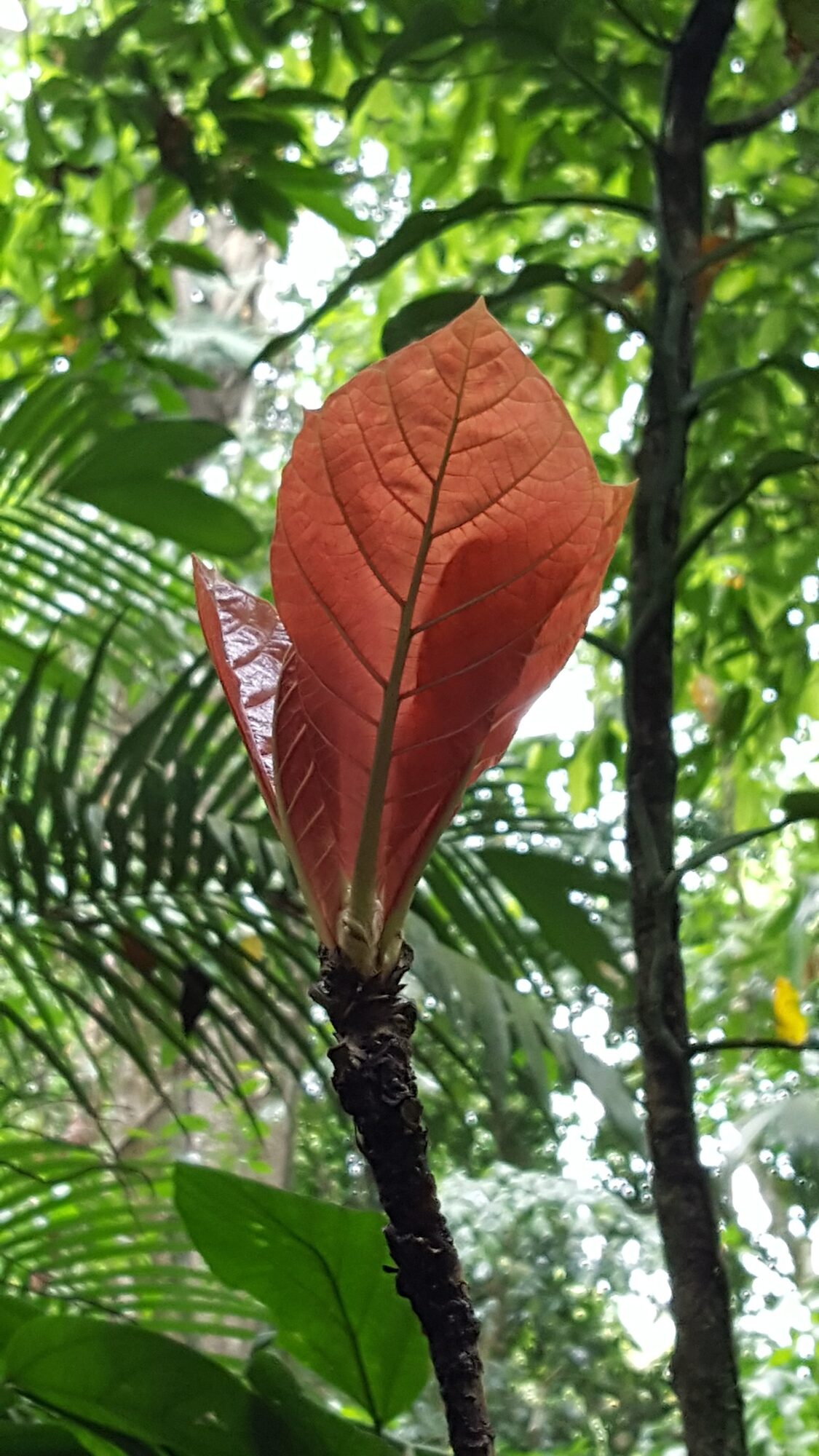
In the wet forests of Central America, from Chiapas to Panama, a tree produces leaves so large that bats fold them into shelters. Coccoloba tuerckheimii grows in humid lowlands and premontane slopes, where its obovate leaves, some reaching 70 cm long and 40 cm wide, make it recognizable at a distance. The leaves emerge from papery, ribbed sheaths called ocreae that encircle each stem node, a hallmark of the buckwheat family (Polygonaceae), to which this unlikely tropical tree belongs. Its grape-like fruits turn red-purple when ripe and hang in clusters among the foliage, attracting birds and earning it the common name uvero, the grape tree.
The species commemorates Hans Freiherr von Türckheim, a German baron who abandoned a career in law to manage a coffee plantation in Cobán, Guatemala, and spent three decades exploring the region's forests as a botanical collector. John Donnell Smith, a Confederate veteran turned Baltimore gentleman-botanist, described many of Türckheim's collections, including this species, which he published in Botanical Gazette in 1904 as part of his long-running series on undescribed Central American plants. Beneath the tree's canopy runs a hidden thread connecting 19th-century Guatemalan coffee country to modern bat ecology and to the wet forests of the Osa Peninsula, where botanist Paul Allen unknowingly described the same species under a different name half a century later.
Identification
Habit
Coccoloba tuerckheimii is an evergreen tree of the wet forest canopy and upper midstory. Height estimates vary by source: Burger's Flora Costaricensis (1983) recorded 7 to 15 m, with occasional trees reaching 20 m, while the STRI Panama portal reports trees up to 35 m and the Osa Arboretum cites 25 m. The range of reported heights likely reflects differences between measured specimens and estimated canopy trees, since collecting fertile material from the upper canopy has always been difficult in this species. Burger noted in 1983 that "very few flowering or fruiting collections have been made," a remark that underscores how much of the tree's reproductive life plays out above the reach of most botanical surveys. The trunk is often multiple-stemmed, slightly grooved, with thick brownish internodes 6 to 15 mm in diameter. The stems and persistent stipules give the branch tips a distinctive, heavily armored appearance.
Leaves
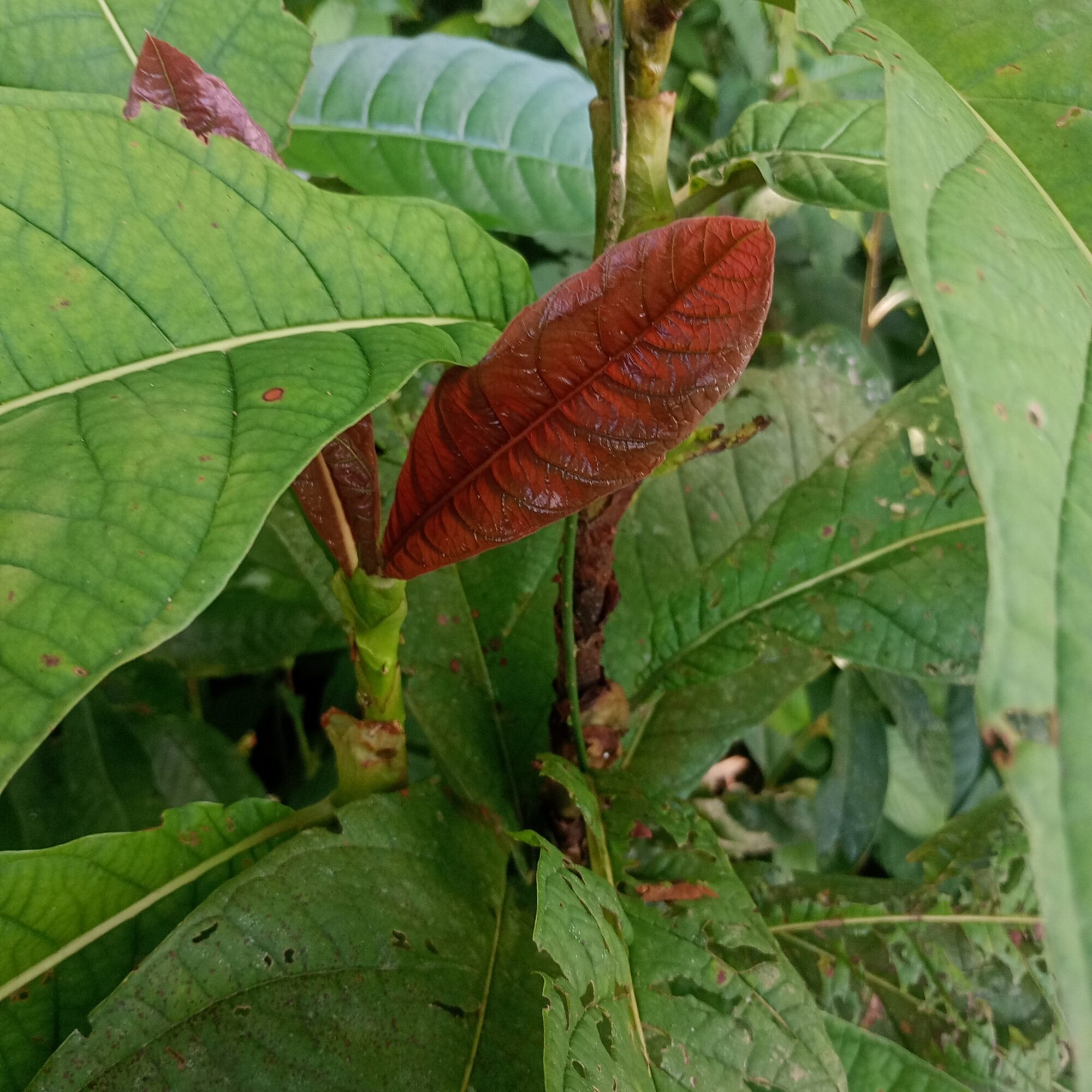
The leaves are the species' most striking feature. Clustered near the ends of branchlets, they range from 20 to 45 cm in typical specimens, with extremes reaching 70 cm long and 40 cm wide. The blade is obovate to broadly elliptic-oblong, abruptly narrowing to a short-acuminate apex and gradually tapering at the base. The margin is entire or slightly undulate. Both surfaces are smooth and glabrous, though tufts of fine hairs occur in the axils of the 6 to 10 pairs of major secondary veins, and the lower surface may be minutely puberulent. The texture is stiffly chartaceous, often drying dark brown in herbarium material.
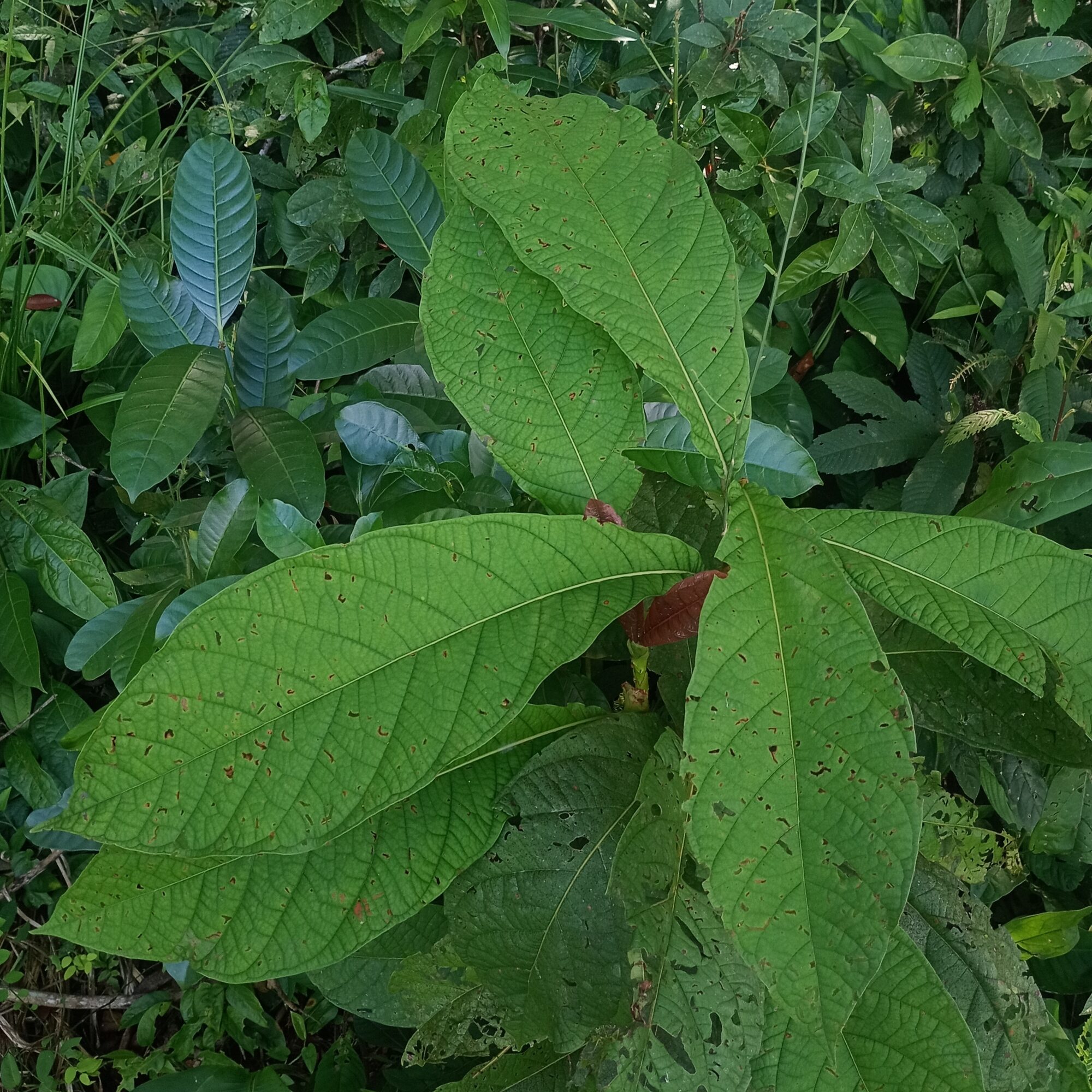
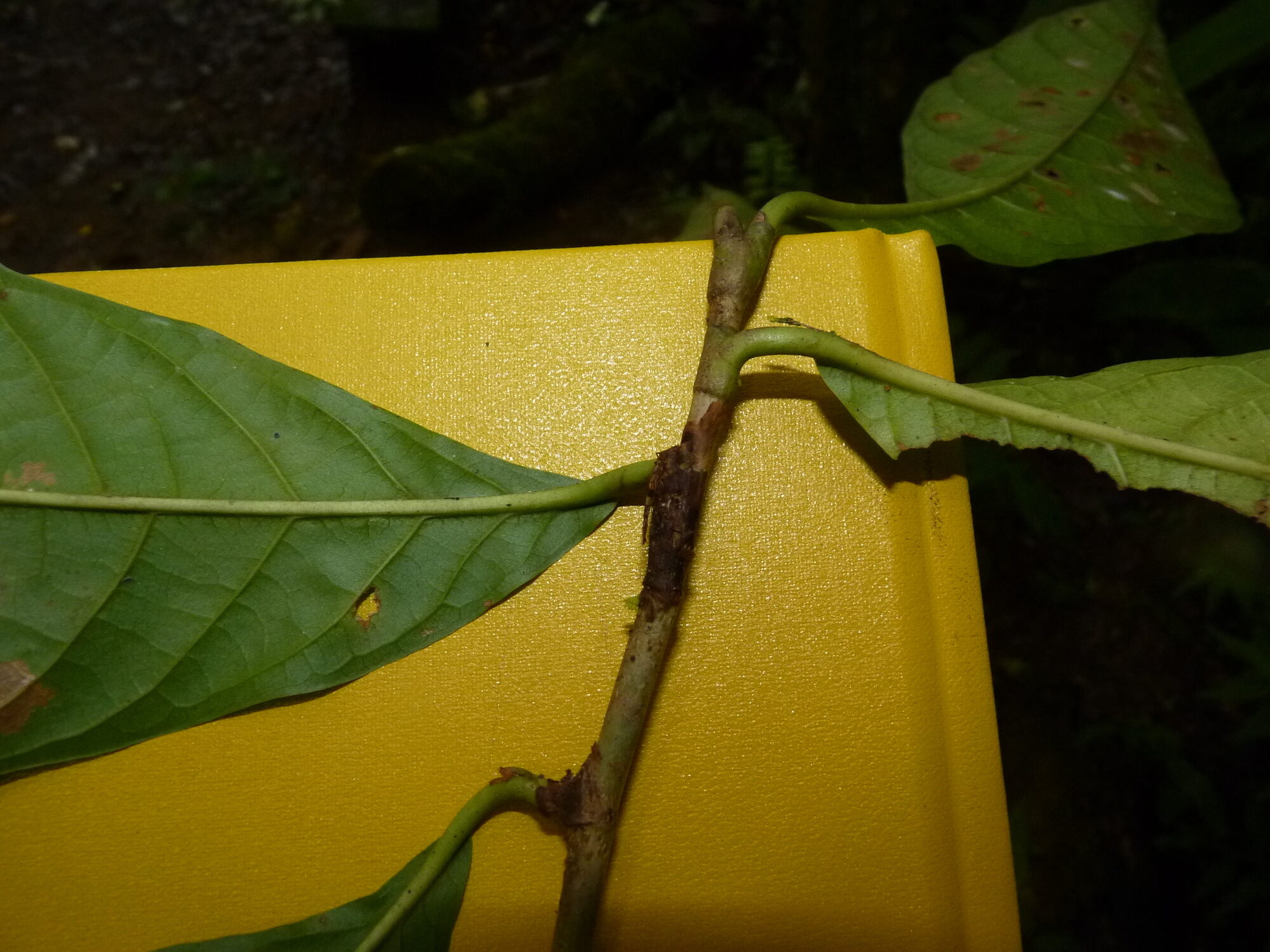
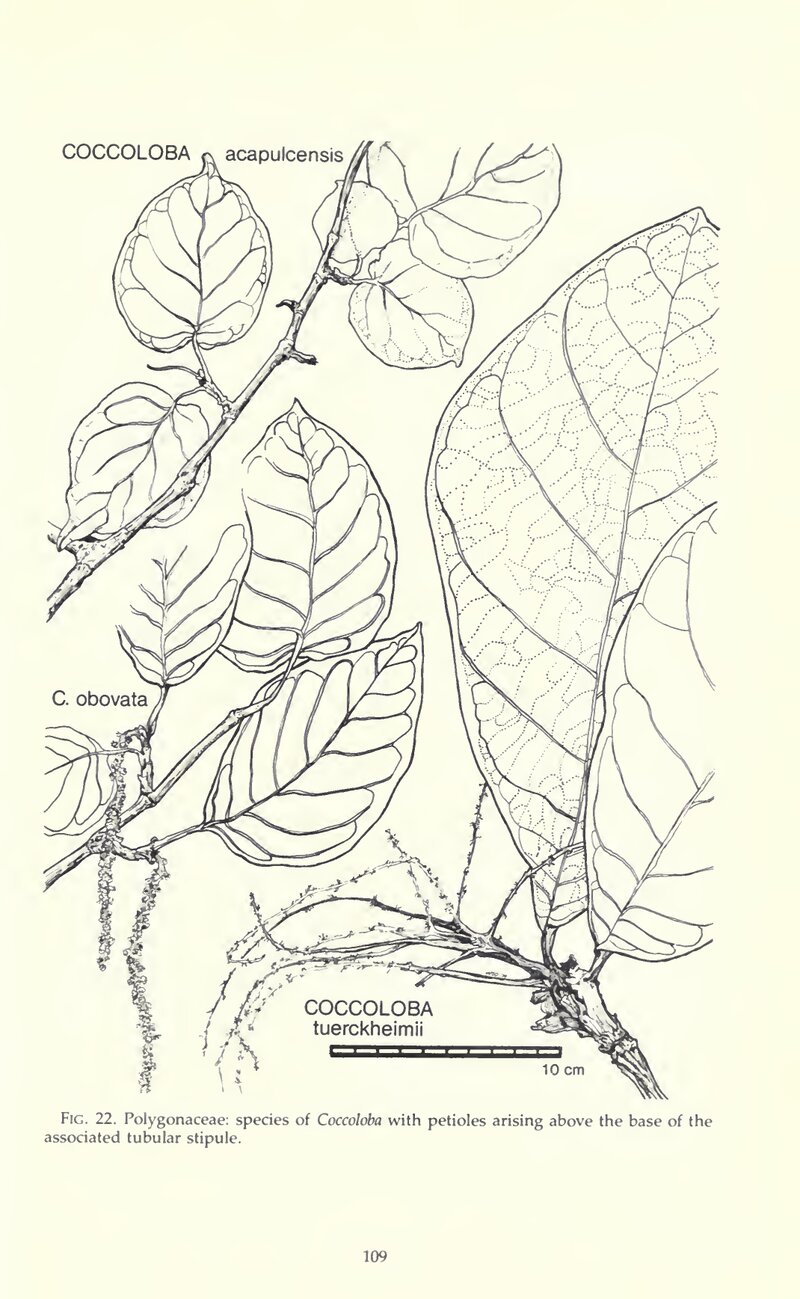
New leaves flush copper-red before turning green, a brief and vivid transformation visible in the forest understory where young trees grow. The petioles are 5 to 45 mm long and 1.5 to 8 mm thick, grooved above, and attach to the stem 6 to 25 mm above the base of the stipular sheath rather than at its base. This elevated petiole insertion, with the petiole rising above the ocrea base, is a diagnostic character that Burger used to organize the Costa Rican Coccoloba species. The ocreae themselves are 2 to 5 cm long, up to 25 mm broad, stiffly chartaceous, prominently striate, and persist with the leaves, giving the shoot tips their distinctive appearance.
Flowers
The inflorescence (the whole flower cluster) is a panicle (a branched cluster) of 10 to 20 racemes (small flower-bearing side branches) of nearly equal length, terminal on short axillary shoots (twigs that grow from the angle where a leaf meets the stem), reaching 20 to 40 cm long. This paniculate (branched) arrangement distinguishes C. tuerckheimii from the many congeners (other species in the same genus) that bear simple racemose (unbranched) inflorescences. The common peduncle (main stalk) and main axis are less than 5 cm long, with individual raceme peduncles under 1 cm. The rachis (the central axis along which the flowers are attached) is very finely puberulent (covered in tiny soft hairs), with longitudinal ridges, 1 to 2 mm thick, drying dark brown.
The flowers are small and white. Male flowers occur in fascicles (tight clusters) of 4 to 8, with pedicels (individual flower stalks) 2 to 3 mm long, filaments (the slender stalks bearing the pollen sacs) 1.5 to 3 mm, and anthers (the pollen-bearing tips) about 0.5 mm. Female flowers are solitary in each fascicle, with a functional pistil (the central seed-producing organ) about 3 mm long. The genus Coccoloba has complex breeding systems: some species are dioecious (male and female flowers on separate trees), others polygamous (a mix of male, female, and bisexual flowers on the same plant), and C. cereifera from Brazil exhibits trioecy, with separate male, female, and hermaphrodite (both-sexed) individuals. The breeding system of C. tuerckheimii remains undocumented, but Burger's description of distinct male and female flowers suggests functional dioecy (effectively separate sexes) or polygamy. Small generalist bees and flies are the most likely pollinators, consistent with flower visitors documented in other Coccoloba species. The STRI portal describes white flowers in terminal spikes, and fertile collections have been recorded from January through September, with July and August being the months Burger found most productive.
Fruits
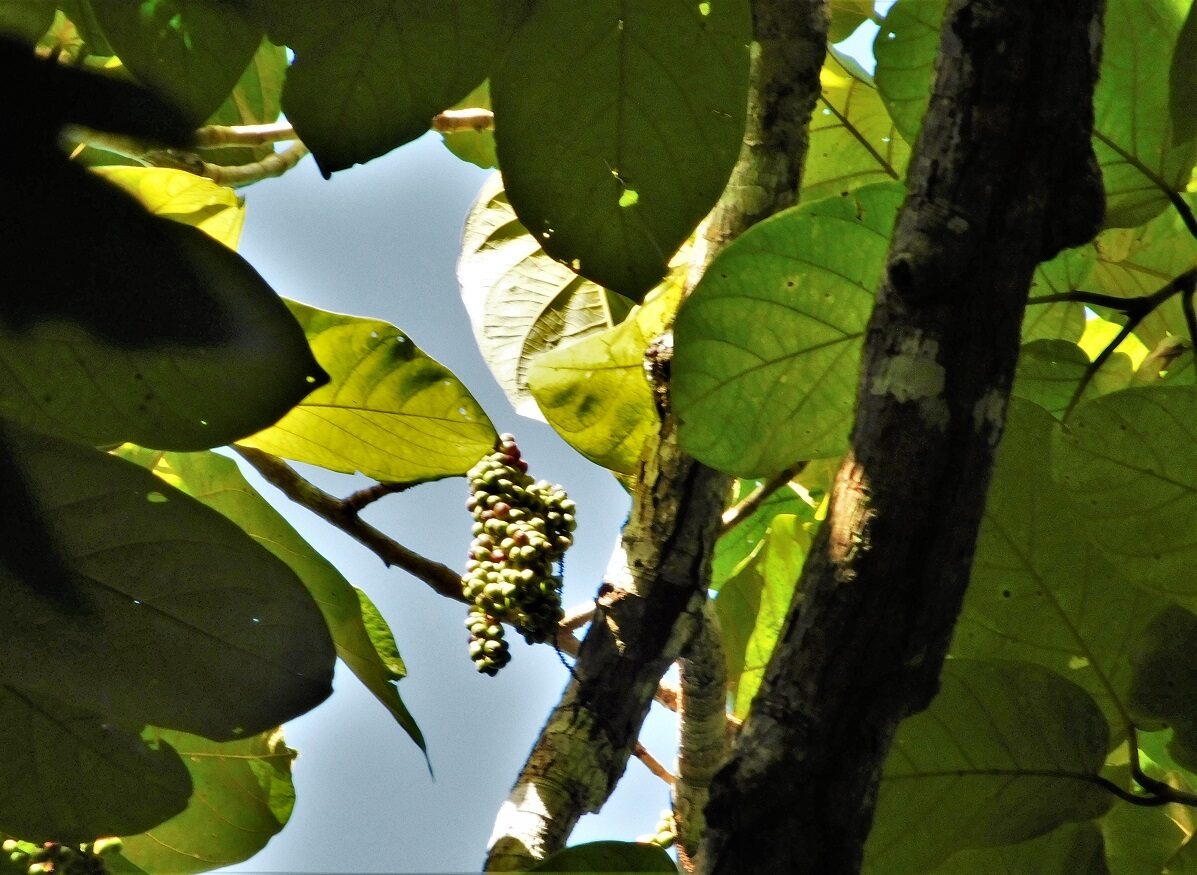
The fruit is an achene enclosed within the fleshy perianth, 11 to 14 mm long and 6 to 9 mm in diameter, ovoid, with the free perianth lobes covering only the apex. It is borne on short pedicels 1 to 3 mm long, with the base constricted into a stalk above the pedicel articulation. The achene itself is obtusely three-angled and dark brown, difficult to separate from the enclosing perianth when dry. The fruits ripen from green to red or purple, hanging in conspicuous clusters that resemble grape bunches. Both the STRI Panama portal and the Tradewinds Fruit nursery confirm that ripe fruits are edible, "can be eaten fresh or used in desserts." Seeds have been offered commercially, though supply is inconsistent given the tree's sporadic fruiting and canopy-level flowering.
Diagnostic Features
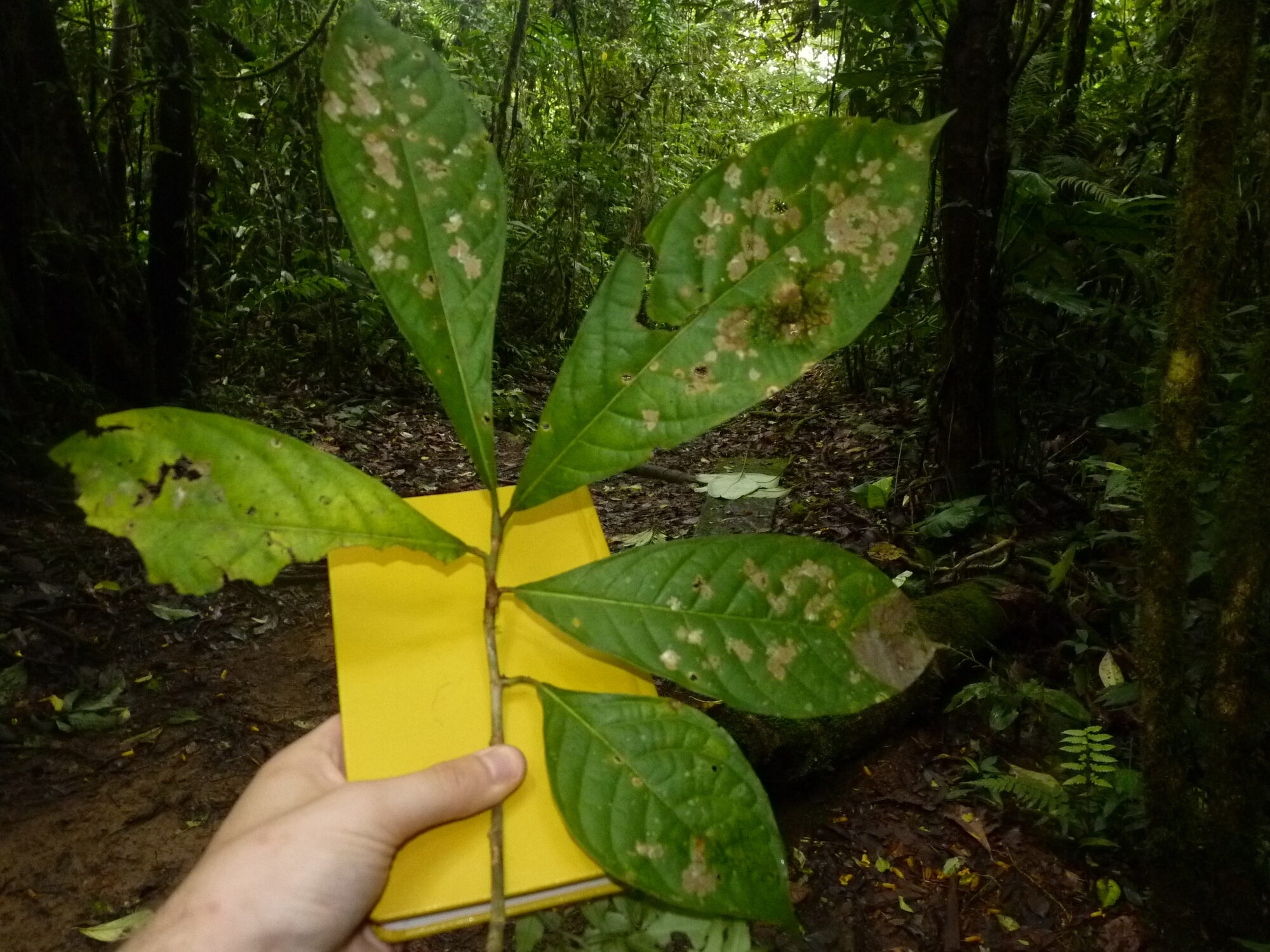
Burger summarized the species as "very distinctive because of the unusually large leaves borne on large striate ocreae enclosing the nodes on thick brownish stems and the paniculate arrangement of long racemose inflorescence branches." In practice, five characters in combination will identify this tree: (1) unusually large leaves, often exceeding 30 cm and sometimes reaching 70 cm; (2) large, persistent, prominently striate ocreae at each node; (3) paniculate inflorescences composed of multiple racemes, unlike the simple racemes of most Coccoloba species; (4) thick brownish stems; and (5) wet evergreen forest habitat. The combination of enormous leaves and paniculate inflorescences is unique among Central American species in the genus.
Distribution
Coccoloba tuerckheimii ranges from southern Mexico through Central America to Panama, following the wet forest corridor along the Caribbean lowlands and humid Pacific slopes. It occurs in Mexico (Veracruz, Chiapas), Belize, Guatemala, Honduras, Nicaragua, Costa Rica, and Panama. Of 349 records in GBIF, nearly half (170) come from Costa Rica, where the species is widespread across both slopes. On the Caribbean side, it grows in the Tortuguero lowlands, the Sarapiquí basin, and up through the cordilleras of Guanacaste, Tilarán, and the Central Valley foothills. It is documented at La Selva Biological Station and Braulio Carrillo National Park in Heredia. On the Pacific slope, it appears in the Carara area and extends southward to the Golfo Dulce region.
In the Brunca region, the species has been collected at five localities concentrated in the Golfo Dulce area: the Reserva Forestal Golfo Dulce at Estación Río Bonito in the Serranías de Golfito, Fila Gamba northeast of Golfito, and additional sites near the Osa Peninsula. This is where Paul Allen collected the sterile material he described as Coccoloba standleyana in 1956. The species inhabits wet evergreen forest formations, predominantly below 1,000 m elevation, ranging into very humid premontane forest and tropical pluvial forest. Most records fall between 100 and 700 m, with a maximum documented elevation of 1,200 m near San Francisco de San Isidro in Heredia Province.
Ecology
Tent-Making Bats
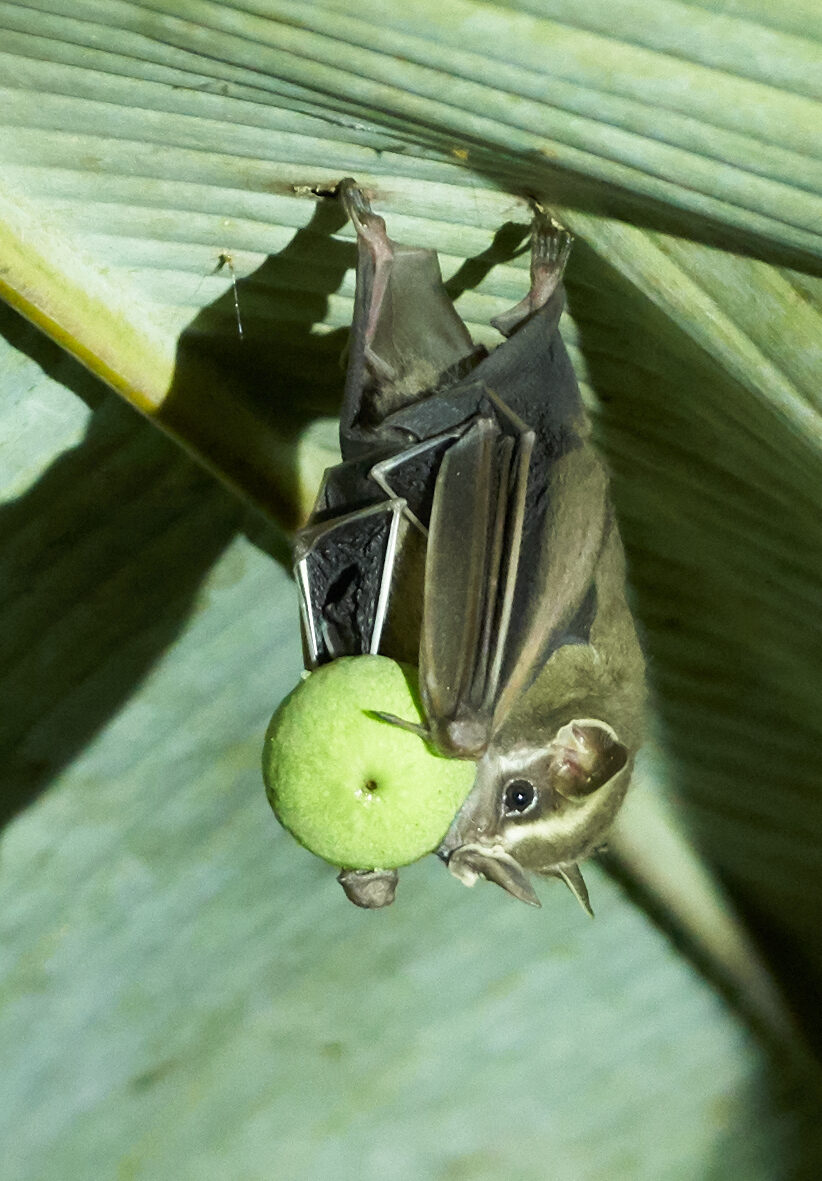
The large leaves of C. tuerckheimii serve as raw material for one of the more remarkable mammalian behaviors in neotropical forests. The tent-making bat Uroderma bilobatum (Peters's tent-making bat) uses Coccoloba leaves as shelter, chewing through the leaf midrib or structural veins so that the blade folds down into an inverted-V-shaped tent. On Barro Colorado Island in Panama, Kunz and McCracken (1994) documented an even more elaborate construction technique with the congener C. manzanillensis: the bats sever the midribs of the lowest leaves first and work upward, so that upper leaves collapse onto lower ones, forming a multi-leaf conical tent resembling a tepee. A single tree may contribute 6 to 14 leaves to one of these structures. This is unique among bat tent-building strategies, which in other species rely on single-leaf modifications. The Ecos del Bosque database explicitly records U. bilobatum utilizing C. tuerckheimii, and leaves reaching 70 cm would provide ample material for tent construction.
Ectomycorrhizal Associations
Below the forest floor, Coccoloba species maintain a partnership unusual among tropical trees. Nearly all rainforest trees feed themselves through arbuscular mycorrhizae (AM), microscopic fungi that grow inside the cells of fine roots and trade soil nutrients for plant sugars. Coccoloba instead favors ectomycorrhizae (ECM), a different fungal partnership in which the fungus wraps each rootlet in a dense sheath and sends visible mushrooms (chanterelles, amanitas, earthballs, and their relatives) up through the leaf litter. ECM-dominated forests are the rule in temperate regions, where oaks, beeches, and pines depend on them, but they are rare in the wet tropics. The practical difference is that ectomycorrhizal partners are better at scavenging nutrients directly out of decaying leaves and wood, so trees that use them can grow well in patches where the soil itself is too leached or salty to support most species. Studies of C. uvifera in the Caribbean have documented partnerships with the earthball fungus Scleroderma bermudense as the dominant ECM partner, along with species of Amanita, Inocybe, Cantharellus, Russula, and the Tomentella-Thelephora lineage, the most species-rich group on Coccoloba roots. In Western Amazonia, 64 ectomycorrhizal morphotypes have been described from Coccoloba species, revealing a surprisingly diverse fungal community. Dual mycorrhization, with both ECM and AM fungi on the same root system, has also been documented. These ectomycorrhizal partnerships help Coccoloba tolerate salt stress and nutrient-poor soils by increasing phosphorus and potassium uptake while reducing sodium and chloride accumulation in tissues. While no specific mycorrhizal study exists for C. tuerckheimii, the genus-level pattern makes it virtually certain that this species participates in similar underground networks.
Seed Dispersal
The fleshy, brightly colored perianth (the modified outer flower parts, which stay attached and swell up around the developing seed) that encloses each achene (a small, hard, single-seeded dry fruit) is a clear adaptation for vertebrate dispersal: it offers an animal a sugary mouthful while letting the seed itself ride along inside and pass through unharmed. In related species, fruits attract mockingbirds, robins, pigeons, doves, woodpeckers, and other birds. The red-purple fruits of C. tuerckheimii, at 11 to 14 mm, fall within the size range consumed by frugivorous birds such as toucans, cotingas, and tanagers, as well as by mammals. Coccoloba achenes also float: those of C. uvifera can survive up to five months in seawater and have washed ashore in Ireland and the Canary Islands, demonstrating that hydrochory (seed dispersal by water) contributes to dispersal within the genus, though this capacity is more relevant for coastal species than for the inland C. tuerckheimii.
Taxonomic History
John Donnell Smith described Coccoloba tuerckheimii in the March 1904 issue of Botanical Gazette (volume 37, page 213), as part of his series "Undescribed Plants from Guatemala and Other Central American Republics," which ran to 36 installments between 1887 and 1916. The type collection, Türckheim 8493, came from Guatemala. The lectotype is deposited at the Field Museum in Chicago, with isolectotypes held at the US National Herbarium (three sheets), Harvard (GH), Kew (K), and the New York Botanical Garden (NY).
Smith was born in Baltimore in 1829, graduated from Yale in 1847 (where he was a member of Skull and Bones), and served as a Confederate officer in the Civil War. After the war he devoted himself to botany, becoming a trustee of the Peabody Institute (1888-1915) and a Fellow of the Linnean Society of London. In the 1880s he developed a particular interest in Central American flora, subsidizing the collecting work of Hans von Türckheim and processing the specimens that arrived in Baltimore. In January 1906 Smith donated his herbarium of more than 100,000 mounted specimens and his botanical library of over 1,600 volumes to the Smithsonian Institution. He died on December 2, 1928, at the age of 99, the oldest living graduate of Yale at the time.
The species epithet honors Hans Freiherr von Türckheim (1853-1920), a German baron and trained lawyer who left his homeland in 1877 to manage a coffee plantation near Cobán in Alta Verapaz, Guatemala, where he also served as German consul. For roughly three decades, Türckheim explored the forests of Guatemala as a botanical collector, sending his specimens to Smith in Baltimore. Their collaboration produced the Enumeratio plantarum guatemalensium (1889-1907), covering 3,736 species. After returning to Germany in 1908, Türckheim accepted a request from Ignatz Urban to botanize the mountains of Hispaniola in 1909-1910. He died in Karlsruhe in 1920. Dozens of plant species carry the epithet tuerckheimii, including the cycad Zamia tuerckheimii, the palm Chamaedorea tuerckheimii, and the orchid Tolumnia tuerckheimii.
The genus name Coccoloba derives from the Greek kokkos (berry, seed) and lobos (pod, lobe), referring to the fleshy perianth that encloses each fruit like a berry within a capsule. Patrick Browne first described the genus in The Civil and Natural History of Jamaica (1756). Linnaeus had earlier placed the type species under Polygonum uvifera in Species Plantarum (1753), noting "I have not seen the flowers," before adopting Coccolobus uvifera in the tenth edition of Systema Naturae (1759). With approximately 120 to 195 species (counts vary by authority), Coccoloba is the largest genus of tropical woody Polygonaceae in the Americas, distributed from Florida and Bermuda to Argentina. Molecular phylogenetics (Koenemann and Burke, 2020) suggest a Mesoamerican origin for the genus, making the range of C. tuerckheimii consistent with the ancestral distribution.
Synonymy and Taxonomic Confusion
Two synonyms are currently recognized. Coccoloba guatemalensis hort. ex Lindau was a horticultural name, likely applied to cultivated plants; the "hort. ex" designation indicates it originated in gardens and was later formalized. More interesting is Coccoloba standleyana P.H. Allen, described in 1956 from sterile material collected in the Golfo Dulce region of southwestern Costa Rica. Allen included it in his pioneering The Rain Forests of Golfo Dulce, a foundational study of the tree flora of the Osa Peninsula area. Richard Howard, the foremost authority on Coccoloba taxonomy in the 20th century, suggested in 1959 that Allen's species "probably" belonged under C. belizensis. POWO (Kew) now treats it as a synonym of C. tuerckheimii, while the GBIF Backbone Taxonomy places it under C. mollis. Three different opinions for the same name illustrate the genuine difficulty of identifying Coccoloba species from vegetative material. Howard's 1959 revision of the Mesoamerican species recognized 32 taxa, and his broader 1961 revision reduced the number of accepted species in the genus from about 159 to 77.
Similar Species
The STRI Panama portal warns that C. tuerckheimii is "often confused with Coccoloba lasseri," but the two are separated by habitat: C. lasseri inhabits low elevations in dry areas, while C. tuerckheimii occurs at medium elevations in very humid or cloud forests. Coccoloba belizensis, which shares the large ocreae and paniculate inflorescences, ranges from Belize to eastern Nicaragua and may be closely related; its leaves, however, dry with a smooth, pale gray or yellowish-brown upper surface, while those of C. tuerckheimii dry stiffly chartaceous and dark brown. Coccoloba padiformis, treated on the adjacent page in Flora Costaricensis, is a Pacific slope species distinguished by completely glabrous vegetative parts, stiff pale-drying leaves with obscure tertiary venation, and short axillary racemes rather than panicles. For context on leaf size within the genus: C. gigantifolia from the Brazilian Amazon holds the record with leaves reaching 2.5 m, a species described only in 2019 despite first being encountered in 1982, illustrating how difficult it can be to collect fertile material in the canopy-dwelling members of this genus.
Conservation Outlook
The IUCN assessed Coccoloba tuerckheimii as Least Concern in September 2021, with stable population trends. The broad geographic range, spanning seven countries and both Atlantic and Pacific slopes, supports this assessment. In Costa Rica alone, 170 documented records across multiple provinces, collected from 1939 to 2025, suggest a species that is widespread if not locally abundant. It occurs in or near several protected areas, including Braulio Carrillo National Park, La Selva Biological Station, Rincón de la Vieja National Park, the Guanacaste Conservation Area, Carara National Park, and the Golfo Dulce Forest Reserve.
There is a tension, however, between the Least Concern rating and field observations of local scarcity. Burger noted in 1983 that very few fertile collections existed. The STRI Panama portal describes the species as "rare" in Panama, though specimens appear along trails in Altos de Campana National Park. Only 11 observations exist on iNaturalist as of 2026. The paradox may reflect a tree that is genuinely widespread but occurs at low densities within its preferred habitat, with its canopy-level flowering making it harder to detect and collect than more accessible understory species. The main threats to this species are the same that affect all Central American wet forest trees: deforestation, agricultural conversion, and habitat fragmentation, particularly in the lowland zones where it is most common.
Resources & Further Reading
Taxonomy & Nomenclature
Plants of the World Online entry with accepted name, distribution, and synonymy.
Nomenclatural data, type specimens, and literature from Missouri Botanical Garden.
Systematic Botany 45(3): 567-575. Molecular phylogenetic analysis with biogeographic assessment suggesting Mesoamerican origin.
Recent taxonomic work on the paniculate section of the genus to which C. tuerckheimii belongs.
Kew's authoritative checklist of all 194 accepted species in the genus, with distribution and synonymy.
Type species of the genus, with taxonomic history covering Linnaeus's 1753, 1759, and 1762 treatments and Patrick Browne's 1756 genus description.
Species Information
Global occurrence records (349 total) with specimen data and distribution maps.
Community observations with photographs and IUCN conservation status.
Costa Rican species profile with habitat data and ecological interactions including tent-making bat association.
Species profile from the Golfo Dulce region with phenology, IUCN status, and conservation data.
Smithsonian species account with morphological description, similar species, and Panamanian distribution.
AI-assisted identification platform with photographs and IUCN conservation data.
Commercial nursery listing with horticultural notes on habit, leaf appearance, and fruit edibility.
Ecology & Conservation
Journal of Natural History 28(3). Multi-leaf tent construction on Coccoloba at Barro Colorado Island, Panama.
Springer Nature chapter on ectomycorrhizal fungal communities associated with Coccoloba in the Caribbean.
64 ectomycorrhizal morphotypes from Coccoloba species in Western Amazonia with high host specificity.
Documentation of Coccoloba achenes floating to Ireland and the Canary Islands, demonstrating hydrochory capacity.
Botanical References
Fieldiana Botany n.s. 13: 99-138. Authoritative treatment of Costa Rican Coccoloba species including detailed morphological descriptions.
Popular account of C. gigantifolia, the largest-leaved species in the genus, described in 2019 from Brazil.
Biography & History
Biographical profile and collection overview of the species describer.
Archival collection at the Hunt Institute for Botanical Documentation.
Biography of the German baron and botanical collector for whom the species is named.