Cafecillo Amarillo
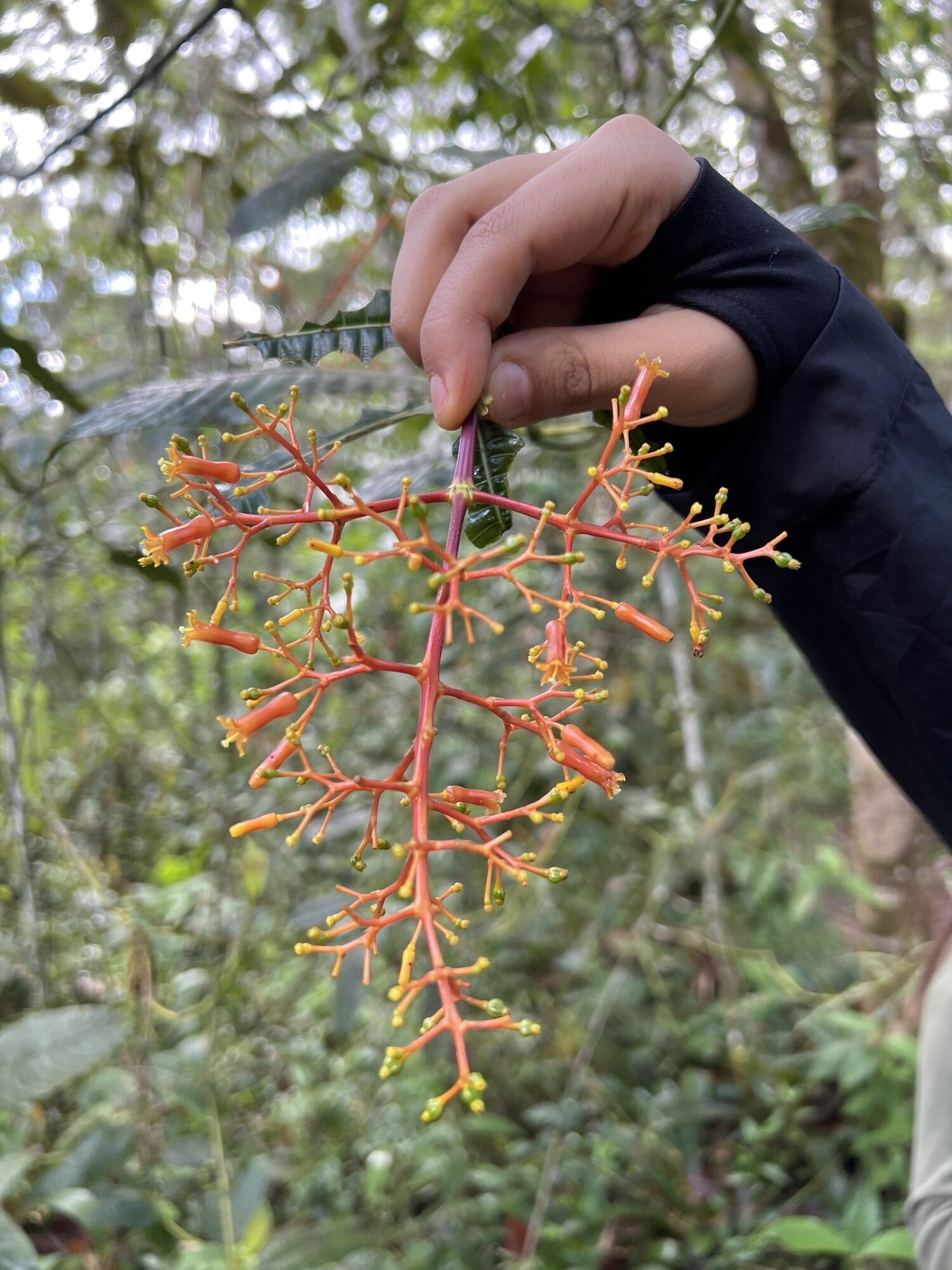
Palicourea padifolia — Yellow tubular flowers on coral-red branches make this cloud forest shrub a beacon for hummingbirds, and one of the most studied distylous plants in the Americas.
When Alexander von Humboldt and Aimé Bonpland gathered plants during their celebrated American expedition of 1799 to 1804, they collected a small Rubiaceae with yellow, fleshy flowers. The specimen ended up at the Berlin Botanical Garden, where the director Carl Ludwig Willdenow gave it the name Psychotria padifolia, noting that its leaves resembled those of the European bird cherry (Prunus padus). Willdenow never published the description himself. Instead, Josef Jakob Roemer, a Swiss botanist, and Josef August Schultes, an Austrian, formally described it in 1819 in their Systema Vegetabilium. Nearly two centuries of taxonomic revision would follow before the species found its current home in the genus Palicourea, a name derived from the Palikur indigenous people of French Guiana.
Today Palicourea padifolia ranks as the most commonly collected species of Palicourea in Central America, with over 3,300 documented records from Mexico to northwestern Colombia. Its striking inflorescences, with coral-red to orange branches bearing clusters of waxy yellow flowers, have made it a magnet for researchers studying hummingbird pollination, floral evolution, and cloud forest biogeography. A research team at the Instituto de Ecología (INECOL) in Xalapa, Mexico, has devoted over a decade to studying how the species' two floral forms interact with their pollinators, uncovering an evolutionary puzzle that may be reshaping our understanding of how new reproductive strategies arise in flowering plants.
Identification
Habit
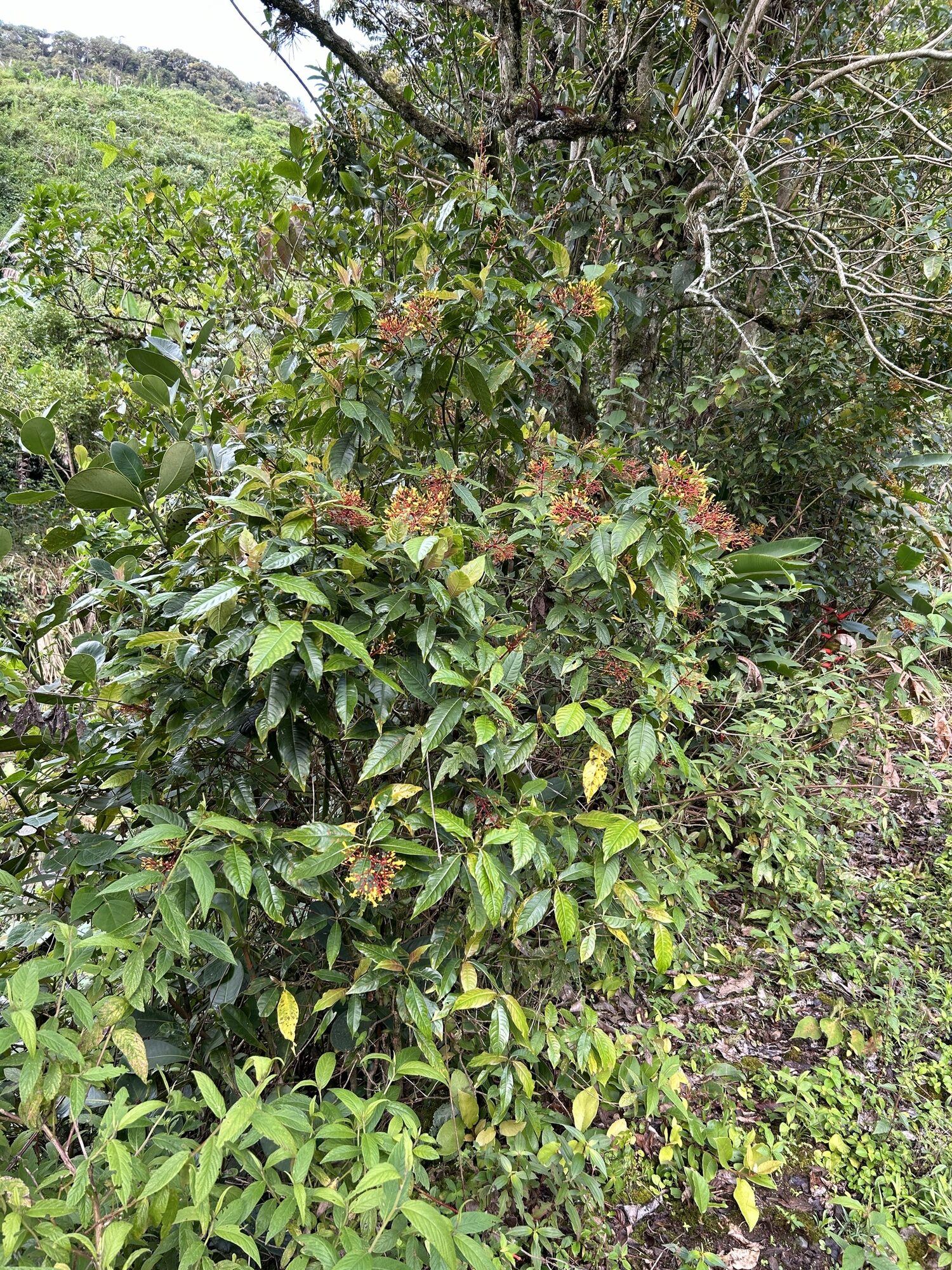
Palicourea padifolia typically grows as a shrub or small tree 2 to 7 meters tall, though specimens occasionally reach 10 meters. The plant is a long-lived understory species that also thrives at forest edges, where it may branch more broadly. Young stems are quadrangular (four-angled) in cross-section, becoming cylindrical with age. The stems are 1.5 to 5 mm thick and generally glabrous (hairless), though rare individuals may show fine hirsute hairs. Stipules form a short tubular sheath 1 to 4 mm long at each node, tipped with narrow awns 2 to 10 mm long. In the cloud forests of Veracruz, Mexico, the species has been called "the most abundant floral resource for hummingbirds," with individual plants bearing 30 to 80 inflorescences during the blooming season. Young foliage emerges copper-colored before darkening to green.
Leaves
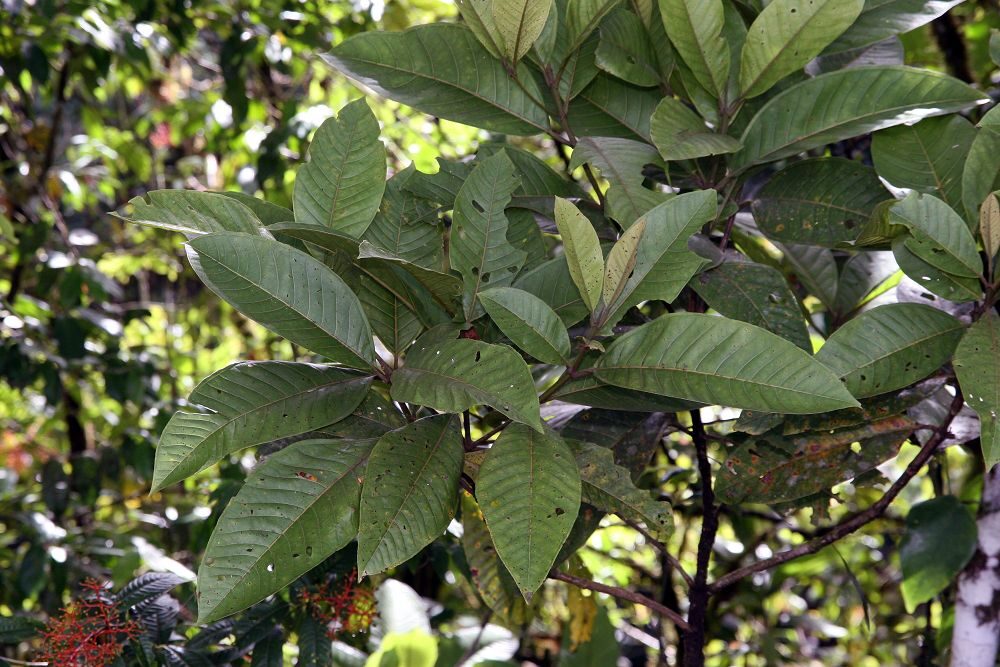
The leaves are opposite, borne on petioles 4 to 22 mm long. Leaf blades measure 6 to 16 cm long (occasionally reaching 24 cm) and 2 to 6 cm wide, narrowly elliptic-oblong to lanceolate in shape, with an acute to acuminate apex and an acute to obtuse base. The texture is stiffly chartaceous (papery), and the upper surface is glabrous, often dotted with tiny cystoliths (mineral deposits) visible as pale spots about 0.2 mm across. The undersides carry thin whitish hairs 0.3 to 0.9 mm long along the major veins, sometimes restricted to the midvein alone. Secondary veins run in 8 to 14 pairs per side, evenly spaced and more or less parallel. The leaf margins are entire and slightly wavy. The overall leaf shape is the source of the species epithet "padifolia," meaning leaves resembling those of Padus, the European bird cherry.
Flowers
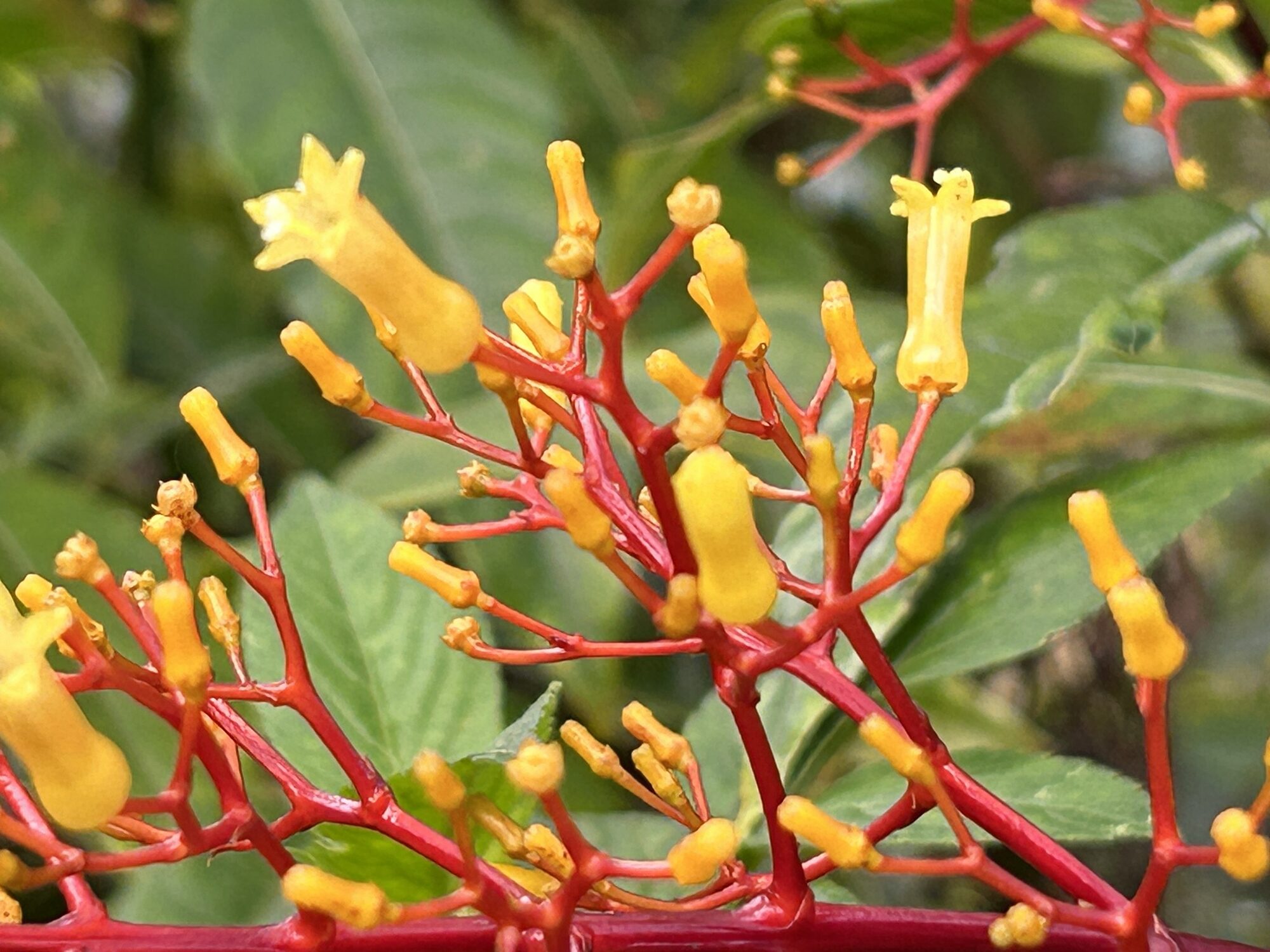
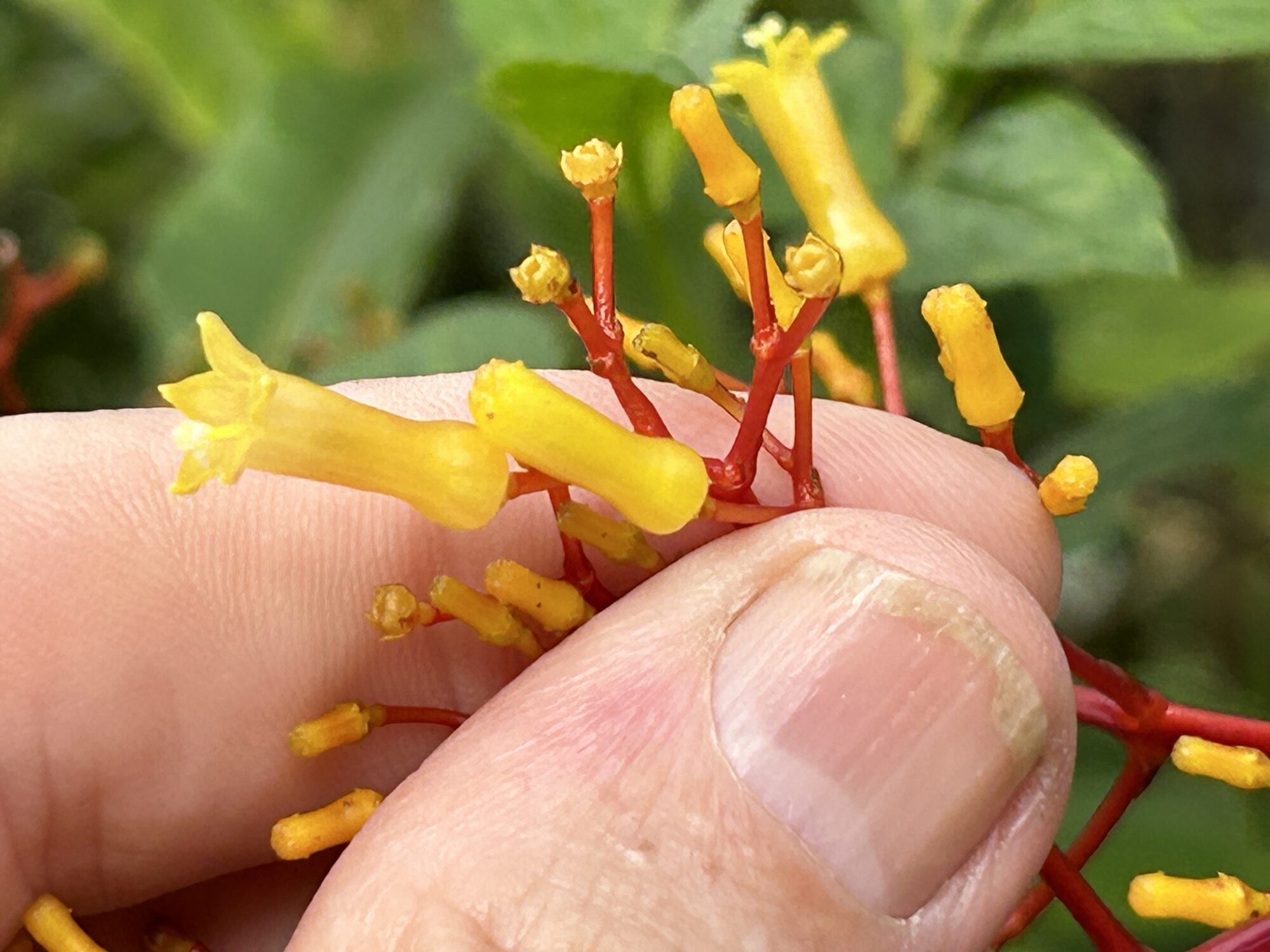
The inflorescences are broadly pyramidal, 7 to 18 cm long and 4 to 14 cm wide, borne at the branch tips on peduncles 1.5 to 5 cm long. What makes them instantly recognizable is their color: the branches of the inflorescence are reddish-purple, salmon red, or orange, creating a vivid scaffold that contrasts sharply with the yellow flowers. Bracts are linear and 2 to 8 mm long. Each inflorescence opens two to four flowers per day, and each plant produces approximately 80 to 90 floral buds per blooming season. The corolla is tubular to slightly funnelform, carnose (fleshy), yellow to orange, with a tube 8 to 18 mm long and 1.5 to 2.5 mm in diameter, distinctly narrowed at the middle. Corolla lobes are short, 2 to 3 mm long. Calyx lobes are minute, 0.5 to 1 mm long, triangular and obtuse. The anthers measure 2.5 to 4 mm. Flowering occurs throughout the year but peaks from December through August, with blooming in Mexican populations concentrated from mid-March to August.
Fruits
The fruits are small drupes, 4 to 6 mm long (occasionally to 10 mm), ovoid to ellipsoid or globose, with longitudinal ribs and a persistent calyx about 1 mm high. Each fruit contains two striated seeds. The color changes as the fruit matures: bright green with dark stripes gives way to light blue, then dark blue, and finally glossy black at full ripeness. This progression from green through blue to black is consistent with dispersal by birds, which in temperate and tropical forests are attracted to dark-colored fruits. Fruiting occurs mostly from January through August.
Distribution
Palicourea padifolia ranges from eastern Mexico south through all of Central America to northwestern Colombia, spanning nine countries and producing over 3,300 documented records in the Global Biodiversity Information Facility. Mexico accounts for the most records (1,347), followed by Costa Rica (908), Nicaragua (284), Panama (196), Honduras (182), and Guatemala (145), with smaller numbers from El Salvador, Colombia, and Belize. The species inhabits evergreen lower montane forest formations and moist pockets within deciduous forests, generally between 1,000 and 2,000 meters elevation, though records extend from 800 meters to as high as 2,450 meters in Costa Rica.
In Costa Rica, P. padifolia is "quite common," in the words of the Flora Costaricensis treatment, and ranges across all the country's major mountain systems: the Cordilleras de Guanacaste and Tilarán, around the Caribbean side of the central volcanic chain, and through the Cordillera de Talamanca. Specific localities include Volcán Barba, the Cerros de Escazú (Pico Blanco, at 1,894 m), Braulio Carrillo National Park, the Monteverde Biological Reserve, and Juan Castro Blanco National Park. In the Brunca region, 32 localities have been documented, including sites throughout Parque Internacional La Amistad (Casa Coca sector, Cerro Amuo, 1,690 to 2,150 m), the Buenos Aires canton (Estación Tres Colinas, Cerro Kamuk area, 2,050 to 2,250 m), and the Coto Brus canton, where it grows near the Wilson Botanical Garden at Las Cruces Biological Station (1,175 m) and along the road from Sabalito (1,550 m).
The Flora Costaricensis notes a curious biogeographic puzzle: P. padifolia is "very closely related" to P. thyrsiflora of Ecuador and Peru and may even be the same species, yet as of 1993 neither had been collected in Colombia or the eastern half of Panama. GBIF data now shows 40 records from Colombia, suggesting the gap may be closing as sampling improves. A chloroplast DNA study of 22 Mexican populations revealed a phylogeographic break at the Isthmus of Tehuantepec, with distinct genetic lineages on either side that diverged 103,000 to 309,000 years ago during the Pleistocene. This finding supports the hypothesis that cloud forests fragmented during glacial cycles, isolating populations on separate mountain ranges.
Ecology
Hummingbird Pollination
The narrow tubular flowers of P. padifolia are classic hummingbird flowers: fleshy, brightly colored, scentless, and filled with nectar at the base of a tube too narrow for most insects to access. A landmark study by Juan Francisco Ornelas and colleagues at INECOL documented eleven hummingbird species visiting the flowers in the cloud forests of Veracruz, Mexico, accounting for 82% of all floral visits. The Azure-crowned Hummingbird (Amazilia cyanocephala) dominated, making 30.6% of visits and aggressively defending flowering plants from competitors. The Berylline Hummingbird (Amazilia beryllina) contributed 16.6% and the Green Violet-ear (Colibri thalassinus) 11.7%. The remaining 18% of visits came from small bees, bumblebees, and butterflies, which generally proved less effective at moving pollen between the two floral forms.
Two Floral Forms and a Path Toward Dioecy
Palicourea padifolia is distylous, meaning every individual produces one of two flower types. In "pin" flowers (long-styled), the stigma protrudes above the anthers; in "thrum" flowers (short-styled), the anthers sit above the stigma. A genetic self-incompatibility system ensures that pollen from one morph can only fertilize the other, preventing self-pollination and maintaining a roughly 1:1 ratio of the two forms in natural populations. This mechanism is shared with other Rubiaceae, including coffee.
What makes P. padifolia unusual is that the two forms differ in more than just the position of their reproductive organs. Long-styled flowers produce narrower corolla tubes (about 2.5 mm shorter), have larger pollen grains that are 1.3 times more numerous, and secrete greater volumes of nectar, attracting more hummingbird visits. Short-styled flowers, by contrast, develop more fruits. Over a five-year study tracking 126 reproductive individuals, Ornelas and his team found that the balance between "male function" (pollen production) and "female function" (fruit production) shifted from year to year. A 2020 study in Botanical Sciences took this further, documenting abnormalities in pollen and anther development at multiple stages, with short-styled flowers showing more frequent malfunction due to premature programmed cell death in the tapetum (the nutritive tissue surrounding developing pollen). The authors interpreted this as a possible incipient step toward functional dioecy (separate sexes), with the short-styled morph trending toward female specialization and the long-styled morph toward male. If confirmed, P. padifolia would represent a living snapshot of one pathway by which flowering plants evolve from hermaphroditism toward separate sexes.
Seed Dispersal
The glossy black fruits attract birds from at least four families: thrushes (Turdidae), tanagers (Thraupidae), flycatchers (Tyrannidae), and New World sparrows (Passerelidae). Tanagers visit both flowers and fruits. The progression of fruit color from green through blue to black is characteristic of bird-dispersed species throughout the tropics, where dark fruits signal ripeness to avian dispersers. Each fruit contains two striated seeds. Insect herbivory has been documented to reduce fruit production, with long-styled plants suffering proportionally greater damage than short-styled ones.
Chemistry
Phytochemists at the University of Vienna, working with material collected in Costa Rica, isolated three tryptamine-iridoid alkaloids from P. padifolia: strictosidine, lyaloside, and a cinnamoyl derivative of lyaloside. These compounds derive from the monoterpene secologanin and the amino acid tryptophan, and they serve as chemosystematic markers for the genus Palicourea, helping to confirm the molecular phylogenetic evidence that separates Palicourea from the superficially similar Psychotria. A broader survey of six Costa Rican Palicourea species identified 14 alkaloids across the group, including compounds never before reported in the Rubiaceae. A 2024 study from the Universidad de Guanajuato found that leaf extracts also contain chlorogenic acid, scopoletin, trans-cinnamic acid, and epicatechin, and show high antioxidant capacity, though antidiabetic potential proved low.
Taxonomic History
The taxonomic journey of this species began with Humboldt and Bonpland's collections, which Willdenow examined in Berlin and named Psychotria padifolia. In the same volume of the 1819 Systema Vegetabilium, Roemer and Schultes also described Psychotria mexicana, which proved to be the same species under a different name. In 1853, the British botanist George Bentham described Palicourea costaricensis from material that Anders Sandøe Oersted had collected during his 1845 to 1848 expedition to Central America, making Oersted's specimens among the earliest documented collections in Costa Rica. Oersted, a Danish botanist, recorded the species from forests on the elevated plateau called the Tablazo and on the slopes of Volcán Barba. In 1877, the botanist Johann Polák described Palicourea subrubra from Costa Rican material, adding yet another synonym. The German botanist Carl Ernst Otto Kuntze transferred several of these names to Uragoga in the late 1800s, though that generic name did not persist.
The modern circumscription came in 1985, when Charlotte M. Taylor and David H. Lorence published the combination Palicourea padifolia in Taxon, moving the species from Psychotria to Palicourea based on morphological analysis. Taylor followed this with a comprehensive monograph of Central American Palicourea in 1989 (Systematic Botany Monographs 26), which established the current species circumscription. DNA phylogenetic studies in the 2000s and 2010s confirmed that Psychotria subgenus Heteropsychotria, to which P. padifolia had originally belonged, is nested within Palicourea rather than Psychotria sensu stricto. This resulted in the transfer of approximately 250 neotropical Psychotria species to Palicourea, expanding the genus to roughly 700 to 800 species and making it one of the largest genera in Rubiaceae. The genus name Palicourea was coined in 1775 by Jean-Baptiste Aublet in his Histoire des plantes de la Guiane Françoise, after the Palikur indigenous people who inhabit the border region of French Guiana and Brazil.
Similar Species
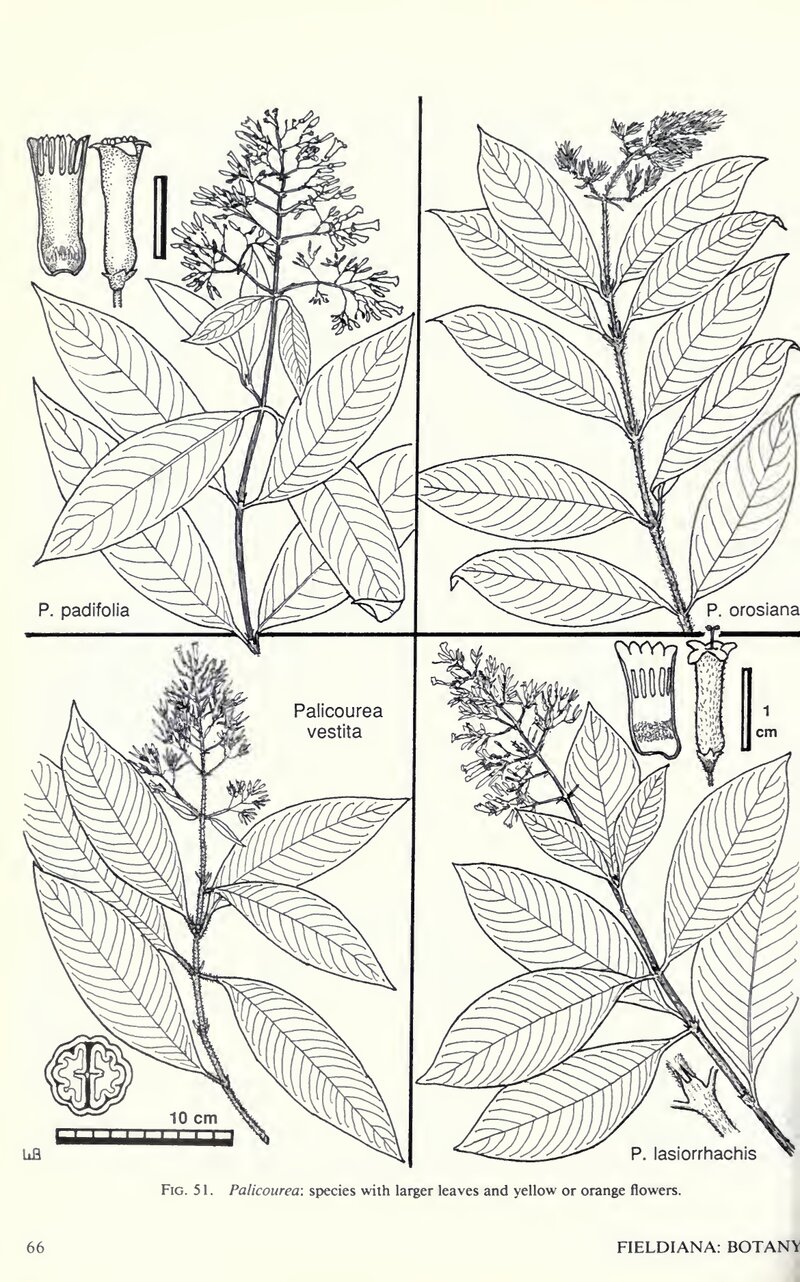
In Costa Rica, P. padifolia is most easily confused with three congeners: P. angustifolia, P. crocea, and P. purpurea. All three differ by having purplish flowers rather than yellow or orange. Palicourea purpurea is the closest look-alike, growing in similar montane habitats and reaching the same height, but its corollas are purple to lavender and its inflorescence branches are deep lavender rather than red or orange, while its fruits are globose rather than ovoid. Palicourea lasiorrhachis resembles P. padifolia in flower color (both yellow) but has yellow rather than red inflorescence branches. Palicourea montivaga, an endemic of the central volcanic chain, has smaller, narrower leaves with longer tips and smaller, white to yellowish corollas. Fruiting plants of P. padifolia may also be confused with species of Psychotria, but the inflorescences are more colorful in Palicourea.
Conservation Outlook
Palicourea padifolia has not been formally assessed by the IUCN Red List. Given its wide range across nine countries, abundance in suitable habitat (the most commonly collected Palicourea in Central America), and presence in numerous protected areas, the species would likely qualify as Least Concern at the range-wide level. In Costa Rica it is documented from at least eight protected areas, including Parque Internacional La Amistad, Parque Nacional Braulio Carrillo, Parque Nacional Juan Castro Blanco, the Monteverde Biological Reserve, and the Zona Protectora Cerros de Escazú.
The longer-term picture is less certain. Tropical montane cloud forest, the primary habitat of P. padifolia, is among the most threatened ecosystems on Earth, subject to conversion for agriculture and cattle ranching, logging, and the upward march of the cloud base driven by climate change. The phylogeographic study by Gutiérrez-Rodríguez and colleagues demonstrated that Mexican populations on either side of the Isthmus of Tehuantepec carry distinct genetic lineages that diverged during the Pleistocene and show no gene flow between them. If cloud forest fragments continue to shrink, these isolated populations could lose unique genetic diversity. The species' dependence on hummingbird pollination and its obligate outcrossing via distyly mean that populations below a certain threshold may face reproductive failure even before they disappear entirely. For common species in fragmented habitats, the risk is often genetic erosion rather than outright extinction.
Resources & Further Reading
Species Information
Plants of the World Online entry with accepted name, synonymy, and global distribution.
Over 3,300 occurrence records with maps, specimen data, and images.
Community observations with photographs from across the species' range.
Costa Rican natural history account including bird interactions and habitat information.
Species profile with cultivation and restoration uses.
Jim Conrad's field account from Mexico with ecological context.
Taxonomy & Nomenclature
Nomenclatural data, type citations, and synonymy from Missouri Botanical Garden.
Two new combinations, lectotypifications, and a new name for Costa Rican Palicourea. PhytoKeys 69: 53-60.
Molecular phylogenetics and chemosystematics confirming genus-specific alkaloid accumulation in Palicourea. Phytochemistry Reviews.
Etymological study tracing Palicourea to the Palikur indigenous people of French Guiana.
Scientific Literature
Hummingbirds' effectiveness as pollen vectors in distylous P. padifolia. American Journal of Botany 91(7): 1052-1060.
Attracting and rewarding mutualistic and antagonistic floral visitors. American Journal of Botany 91(7): 1061-1069.
Five-year study of functional gender variation in distylous P. padifolia. Annals of Botany 95: 371-378.
Past fragmentation and demographic expansion in Mexican cloud forests. Molecular Phylogenetics and Evolution 61: 603-615.
Pollen and anther development malfunction in distylous flowers, suggesting incipient evolution toward dioecy.
Loganin and secologanin derived alkaloids from P. crocea and P. padifolia. Phytochemistry 116: 162-169.
Phenolic and volatile compounds, antioxidant and antidiabetic activity of P. padifolia leaves. Acta Botánica Mexicana 131.
Flora Treatments
Burger & Taylor (1993). Fieldiana: Botany n.s. no.33. Field Museum. The definitive treatment of Costa Rican Palicourea including P. padifolia on pp. 208-209.
Historical Sources
Biography of the Danish botanist whose 1845-1848 Central American expedition produced the earliest documented Costa Rican collections of this species.