Jaul: The Nitrogen Tree of the Cloud Forest
Collected by Humboldt on his great American expedition, this highland alder feeds the soil beneath it, fuels Andean farms, and carries an ancient partnership with fungi across two continents.
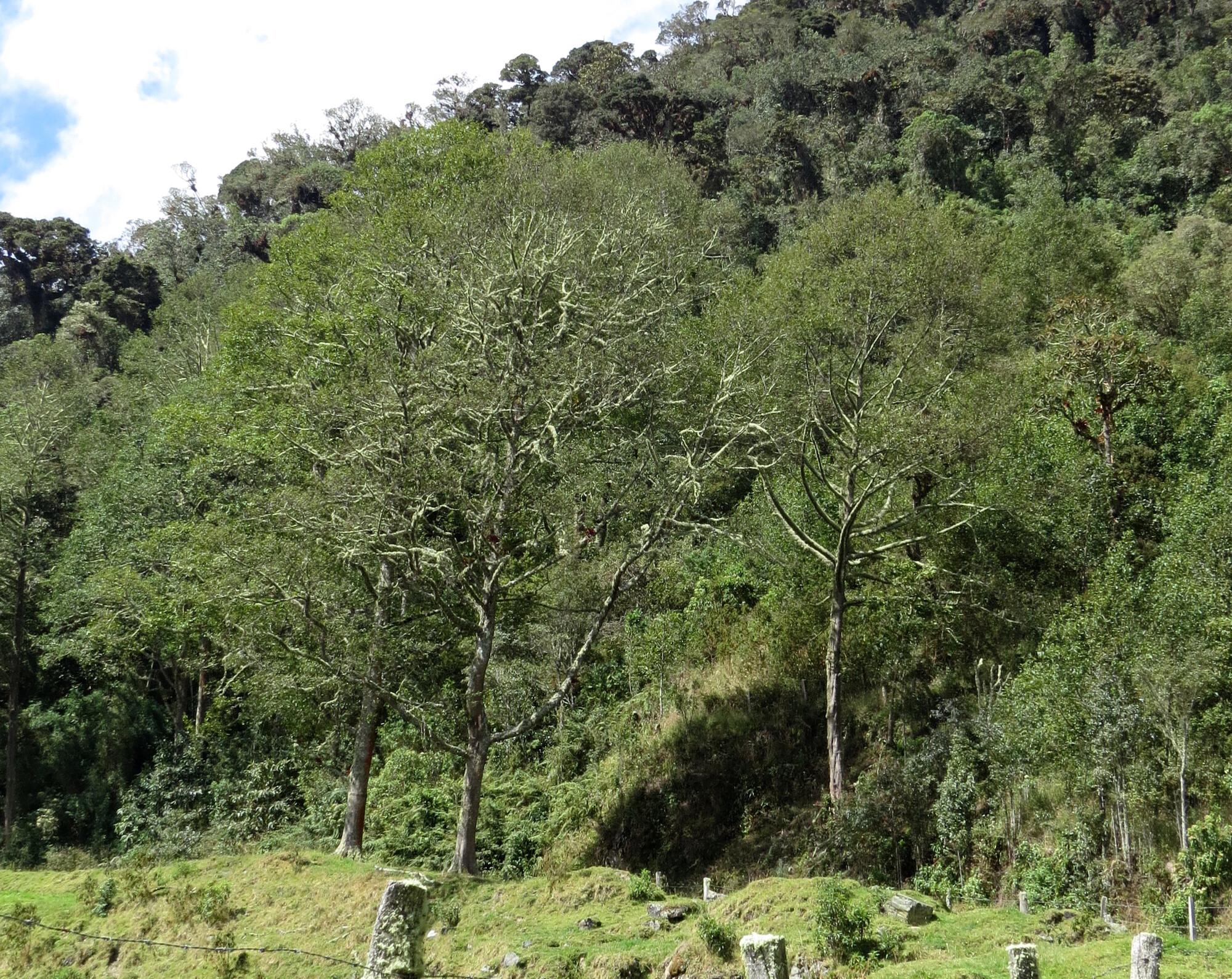
In the highlands of Costa Rica, where dairy pastures climb into the mist, stands of slender, pale-barked trees lean over streams and fill old clearings. Costa Ricans call them jaul. For more than a century, highland farmers have planted them among their cattle, knowing that the soil beneath an alder grows richer with each passing year. The reason lies underground: the roots of Alnus acuminata harbor colonies of Frankia, a filamentous actinobacterium that converts atmospheric nitrogen into a form plants can use. In Colombian highland plantations, researchers have measured this symbiosis fixing up to 279 kilograms of nitrogen per hectare annually, a quantity that rivals or exceeds what most legumes deliver.
The tree that highland farmers know so intimately was first described from specimens that Alexander von Humboldt and Aime Bonpland collected during their celebrated 1799-1804 expedition through the Americas. Carl Sigismund Kunth, a young Prussian botanist hired by Humboldt to catalogue the expedition's vast botanical haul, published the name Alnus acuminata in 1817 in the monumental Nova Genera et Species Plantarum. Two centuries later, the species remains the only alder native to South America, a living link in a genus that began in Asia and crossed the Bering Land Bridge into the New World millions of years ago.
Identification
Habit
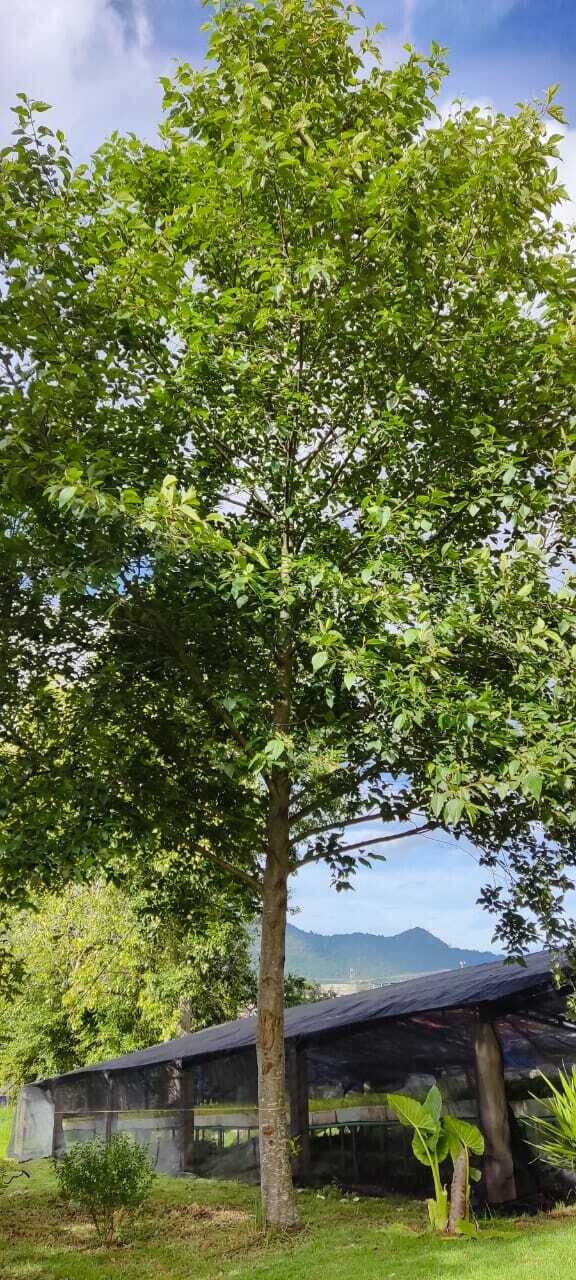
Alnus acuminata is a fast-growing tree that typically reaches 5 to 20 meters tall, though exceptional specimens can exceed 30 meters with a trunk diameter of 50 cm or more. The crown is narrow to rounded, sometimes pyramidal, carried on a straight trunk with ascending branches. On exposed ridges or poor soils, it may remain shrubby. In Costa Rican pastures, trees are commonly spaced 8 to 14 meters apart, about 100 per hectare, and managed on 20-year rotation cycles for timber. The bark is light grey to dark brown, smooth when young, becoming shallowly fissured with age and marked by conspicuous yellowish lenticels (raised pores) that form horizontal bands encircling the trunk.
Bark
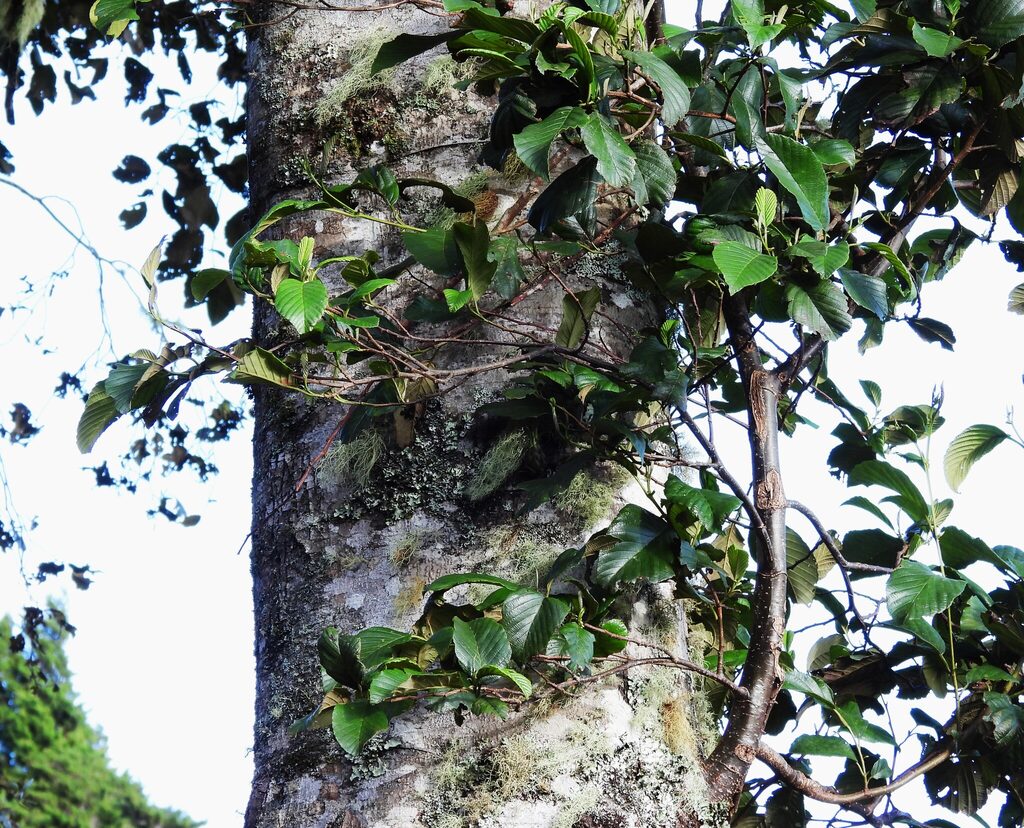
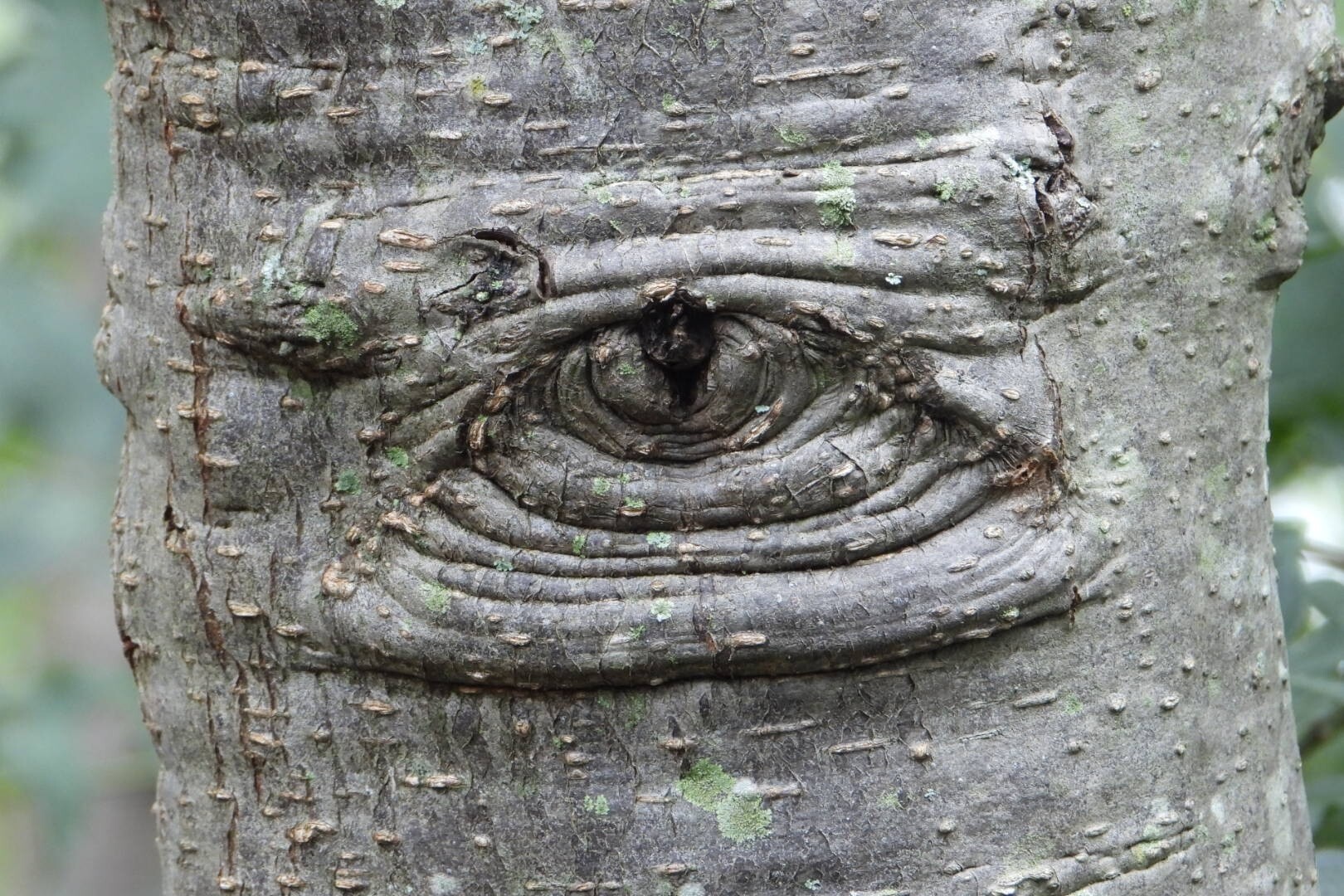
The bark is one of the most recognizable features of the jaul. Young trunks are smooth and pale grey, densely spotted with oval to circular yellowish lenticels 0.5 to 2.0 mm long. As the tree matures, the bark develops deep encircling bands and becomes rougher, often hosting lichens and mosses in humid cloud forest settings. Where branches have fallen, the healing scars can produce striking concentric patterns. The bark is rich in tannins, and Andean communities have long extracted these for tanning leather and producing a brown dye for textiles.
Leaves
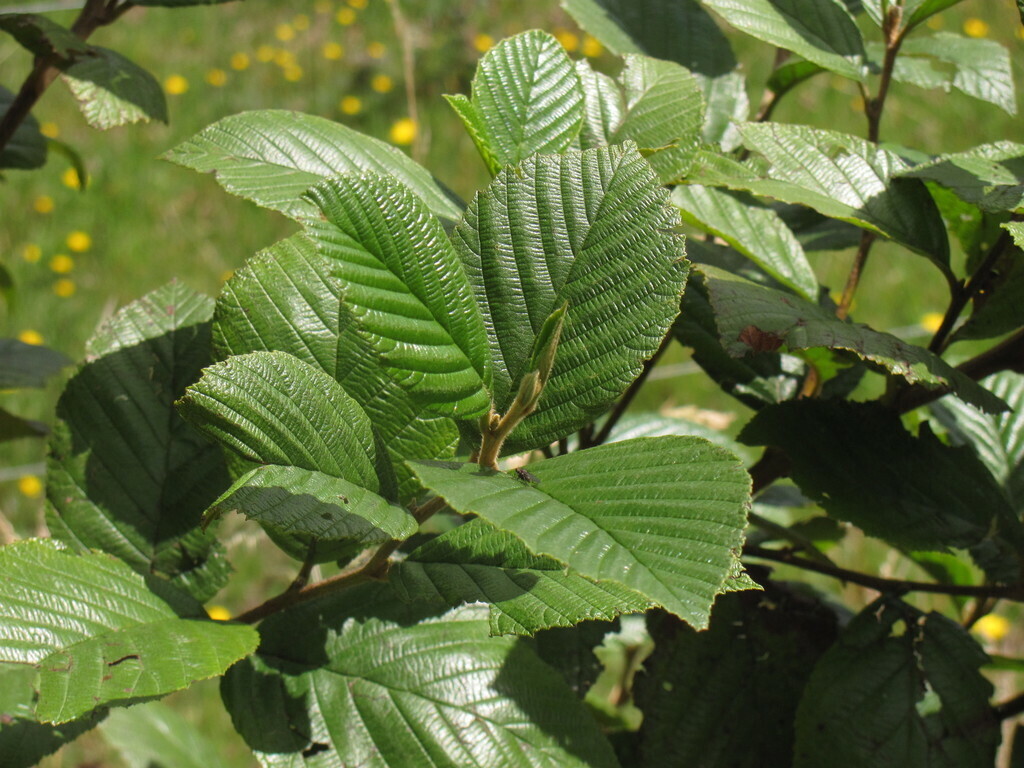
The leaves are arranged spirally on the branch and borne on grooved petioles (leaf stalks) 7 to 25 mm long. Each blade is 5 to 17 cm long and 3 to 9 cm wide, broadly elliptic to oblong, with the widest point near the base rather than toward the tip. The apex tapers to a point (the "acuminate" tip that gives the species its name), while the base is rounded or truncate. The margin is unequally doubly serrate, meaning two scales of teeth overlap, with the larger teeth terminating each secondary vein. The upper surface dries a dark stiff chartaceous (papery) texture and is smooth or sparsely hairy. The lower surface is paler, often with scattered yellowish-brown peltate glands (tiny disc-shaped structures) that are visible under a hand lens. Secondary veins number 9 to 16 pairs, spaced 4 to 9 mm apart at mid-leaf, running parallel toward the margin and standing out prominently beneath.
Flowers
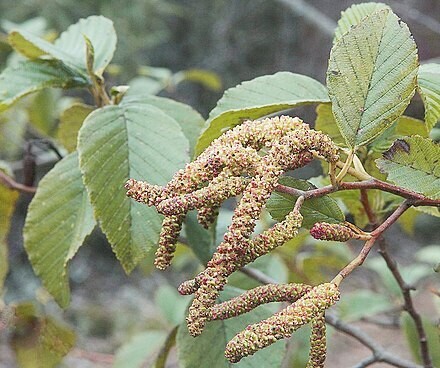
Alnus acuminata is monoecious: each tree bears both male and female flowers, produced the previous growing season and appearing before or alongside new leaves. The staminate (male) catkins hang in drooping clusters of 3 to 6, each 4 to 12 cm long and 5 to 9 mm thick, resembling yellowish-brown tassels that shed clouds of pollen into the wind. The pistillate (female) catkins are smaller and erect, clustered in groups of 3 to 6, each only 7 to 10 mm long at pollination. They lack petals entirely, as is typical of wind-pollinated trees. Pollen grains are small and light, designed for atmospheric travel rather than insect attraction. All American species of Alnus are diploid (2n = 28) and can potentially interbreed where their ranges overlap.
Fruits
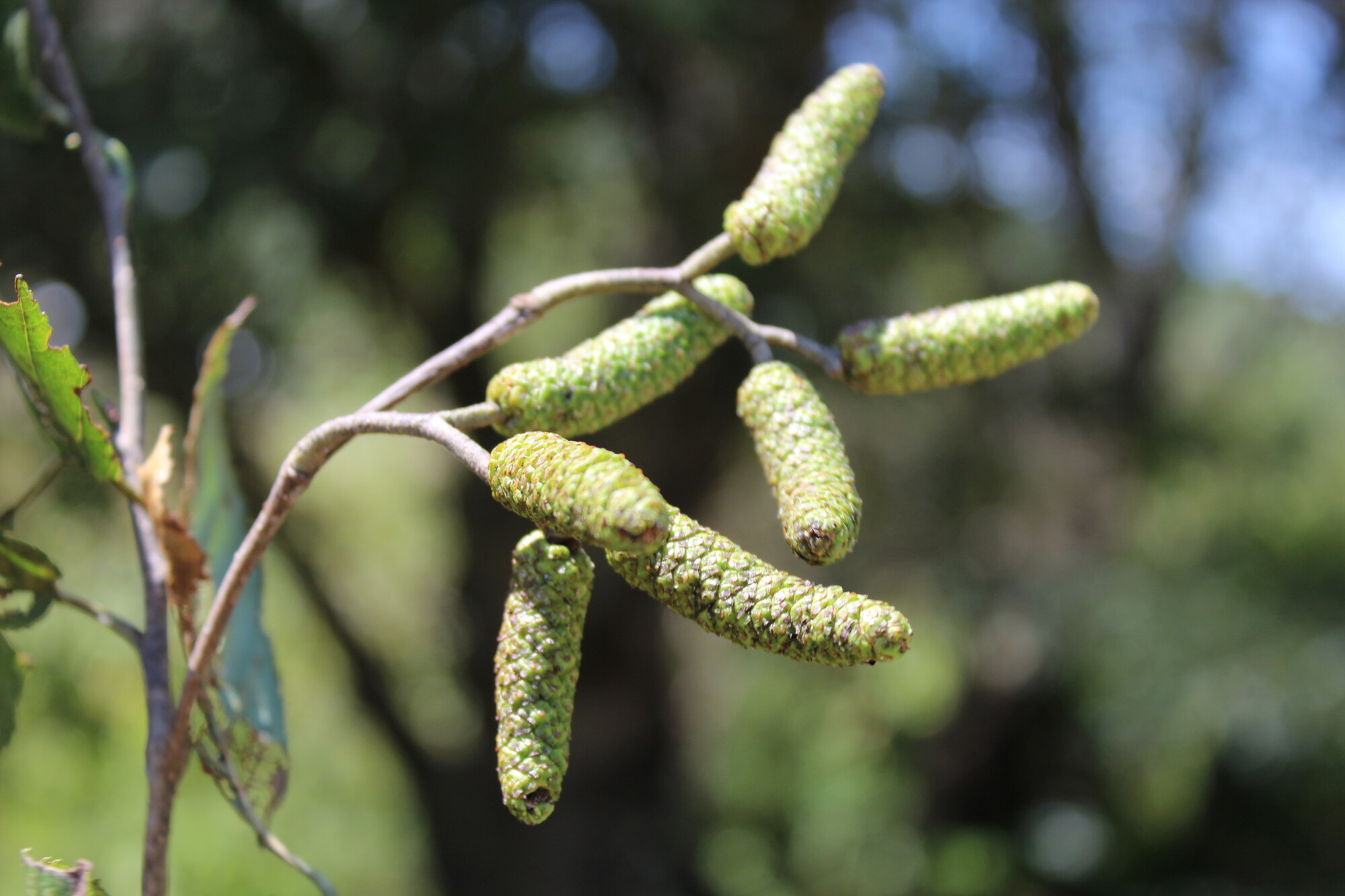
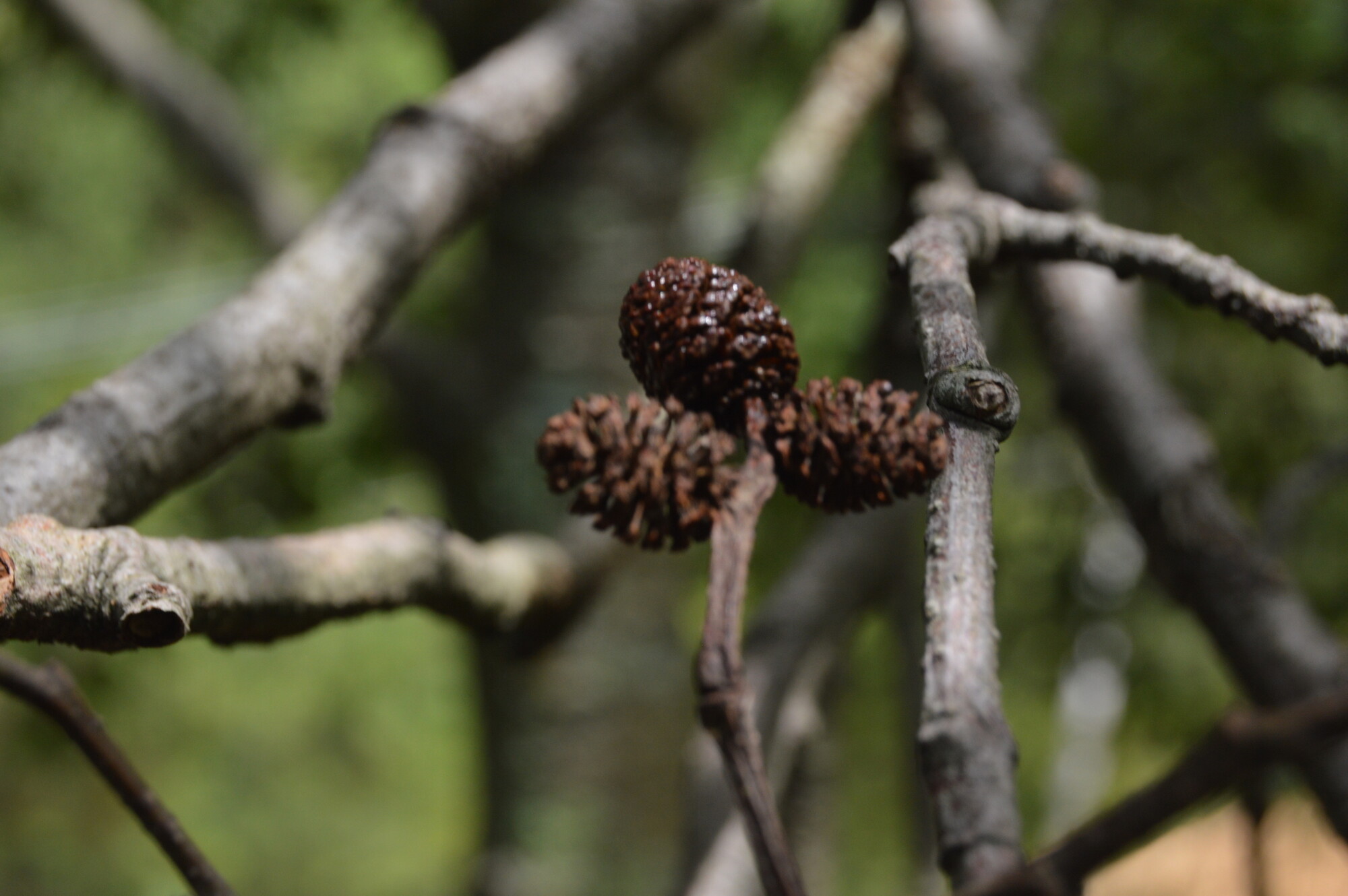
After pollination, the female catkins develop into woody, cone-like structures that are among the most distinctive features of any alder. These fruiting cones mature to 1.2 to 2.5 cm long and 9 to 12 mm thick, with 5-lobed woody scales derived from the fused bracts and bracteoles. Each scale shelters a tiny 2-winged nutlet (samara), with the body measuring 2.2 to 3.0 mm long and each wing 0.8 to 2.1 mm long. The samaras are adapted for wind dispersal and are released when the cone scales open. Once mature, the empty cones persist on the branches as dark brown, woody structures that remain recognizable for months. Seeds are short-lived: germination declines from about 70% to roughly 20% within a few months, which is why nurseries sow them promptly after collection.
Distribution
Alnus acuminata has the broadest range of any alder in the Americas, spanning from central Mexico through Central America (Guatemala, Costa Rica, Panama) and down the length of the Andes through Colombia, Ecuador, Peru, Bolivia, Venezuela, and into northwestern Argentina. Mexico holds the most documented records (41% of global GBIF occurrences), followed by Colombia (30%) and Ecuador (7%). The species occurs at elevations between about 1,000 meters in Costa Rica and 3,800 meters in Peru, always in areas of adequate rainfall (1,000 to 3,000 mm annually) and cool to warm temperatures.
In Costa Rica, the jaul occurs in montane forest formations from 1,500 to 3,100 meters. The Flora Costaricensis notes that it has been collected between the slopes of Volcan Barva and the Cordillera de Talamanca, extending eastward to the slopes above San Isidro del General. Major collection localities include Volcan Irazu (up to 3,350 m), the Cerro de la Muerte area, Monteverde, and the highlands of Heredia and Cartago provinces. Researchers working with forest genetic resources in 1993 subdivided Costa Rican populations into 15 provenances across two major regions: five in the Talamanca range (Division, Siberia, Copey de Dota, El Empalme, Canon) and ten in the Cordillera Volcanica Central (including Pacayas, Irazu, Llano Grande, Zarcero, and Poasito).
In the Brunca region, the species reaches the Talamanca highlands at Parque Internacional La Amistad and the Valle del Silencio, where collections have been made at around 2,500 to 2,700 meters. Specimens were also gathered along the forested slopes of the Rio Buru in the Cordillera de Talamanca at approximately 2,000 meters. These high-elevation localities represent the southeastern edge of the species' range in Costa Rica, where it persists in relict stands amid montane forest.
Ecology
Nitrogen Fixation and Soil Symbiosis
The ecological significance of Alnus acuminata centers on its partnership with Frankia, a genus of nitrogen-fixing actinobacteria that forms nodules on the tree's roots. This is unusual for a non-leguminous tree and makes A. acuminata one of the few tree species capable of converting atmospheric nitrogen (N2) into ammonia that enriches the surrounding soil. A global biogeographic study of Alnus-associated Frankia strains found that different Frankia lineages associate with Alnus on different continents, suggesting a long co-evolutionary relationship. In Costa Rica, a host-specific Frankia strain has been isolated from A. acuminata root nodules.
Fungal Partnerships
Beyond its bacterial symbiosis, A. acuminata also hosts a specialized community of ectomycorrhizal (ECM) fungi. Compared to the rich ECM diversity found on oaks or pines, the alder's fungal community is species-poor but highly specific, dominated by genera such as Tomentella, Cortinarius, and Alnicola. In Argentina, mycologists described Alpova austroalnicola, a truffle-like hypogeous fungus found exclusively in A. acuminata stands, dispersed by armadillos that dig up the underground fruiting bodies. A study by Kennedy and colleagues (2011) found that ectomycorrhizal fungi of Mexican alders are more closely related to those on East Asian alders than to fungi on European or North American species, supporting a "host co-migration hypothesis" in which the fungi traveled alongside Alnus from Asia across the Bering Land Bridge and down through the Americas.
Pioneer Ecology
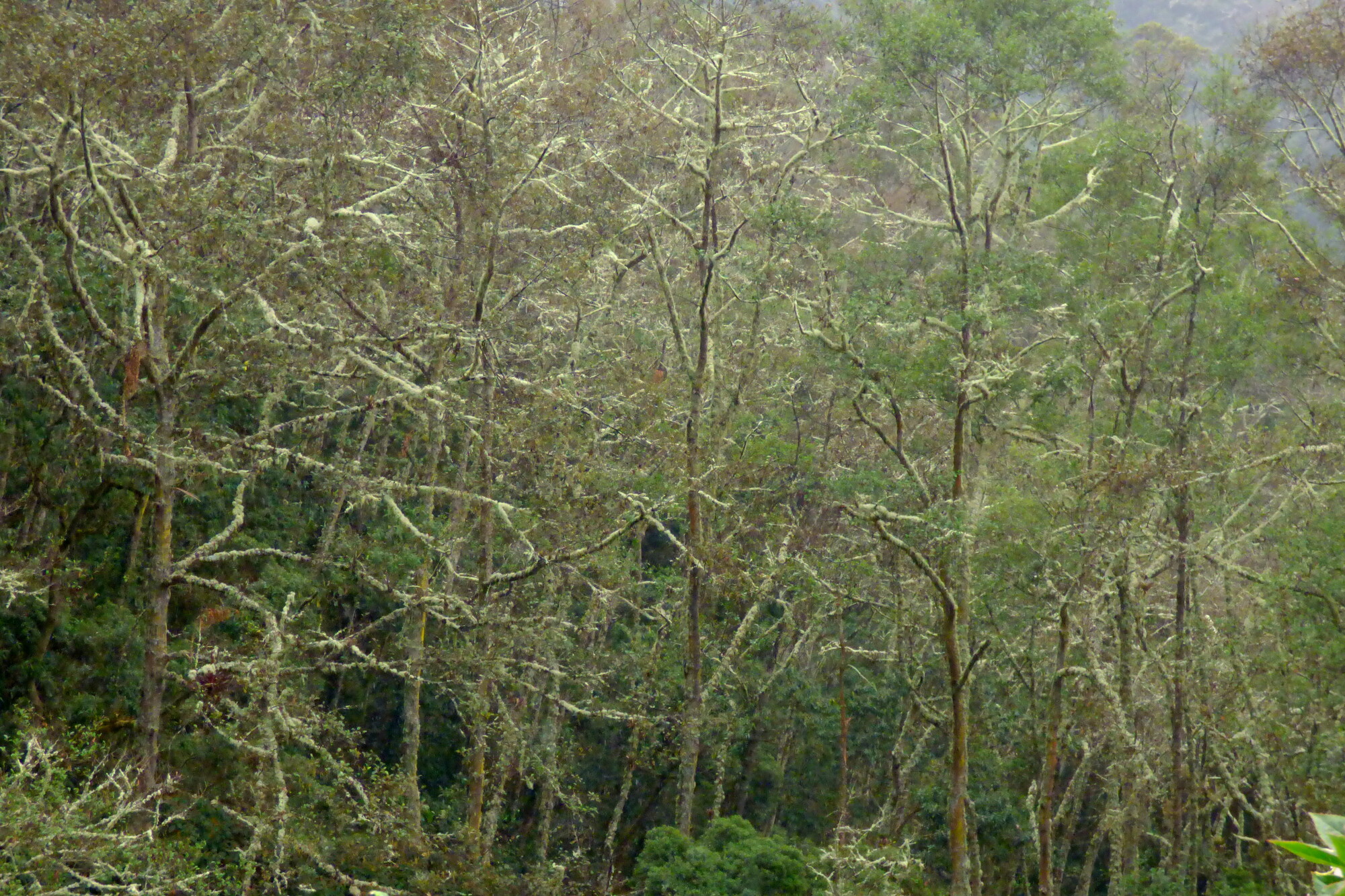
Alnus acuminata is a classic pioneer species. It colonizes open, disturbed ground: landslides, stream margins, road cuts, and abandoned farmland. In these settings it can form dense, nearly pure stands, growing fast enough to reach 25 meters in ten years under ideal conditions. This rapid establishment enriches the soil through nitrogen fixation and leaf litter, preparing the ground for slower-growing species. Fossil pollen records from highland Ecuador and Peru show that Alnus abundance peaked between 9,000 and 5,000 years ago, tracking the warm, moist conditions of the early Holocene. A synchronous decline across all available records around 4,500 years ago may reflect cooling, drought, or early human land use. In the late Holocene, alder pollen increased again after about 2,000 years ago, possibly reflecting secondary forest regrowth on land cleared by growing human populations.
Uses
Agroforestry
The practical value of Alnus acuminata to highland agriculture is substantial. In Costa Rica, farmers have integrated the species into dairy pastures for well over a century, combining it with kikuyu grass (Pennisetum clandestinum) and elephant grass (P. purpureum) between 1,300 and 2,500 meters elevation. Studies have found that cattle milk production increases in pastures shaded by alders, and forage production can improve up to sevenfold beneath the trees. In 1951, the American ecologist Leslie R. Holdridge published a foundational study in Caribbean Forester documenting the jaul's role in Costa Rican agriculture, concluding that populations across the species' range intergrade and can be treated as a single species for forestry purposes.
Timber and Traditional Uses
The wood of A. acuminata is light brown-yellow to pinkish, lightweight (specific gravity 0.34-0.39), odorless, and easy to work. It serves for construction, posts, furniture, plywood cores, particleboard, boxes, broom handles, and musical instruments. A Colombian match company that evaluated more than 20 native species found A. acuminata wood best suited for making stick matches. The wood also produces good firewood and charcoal, with a calorific value of 19,250 kJ/kg. Throughout the Andes, Quechua-speaking communities, who know the tree as yuraq ramran, have long used it medicinally: bark and leaf preparations treat muscular and joint pain, rheumatism, and skin infections. Leaf and flower infusions serve as a general tonic for arthritis and colic. In Peru, the macerated leaves have been recommended for prostate inflammation.
Taxonomic History
The name Alnus acuminata was published by Carl Sigismund Kunth in 1817 in volume 2 of Nova Genera et Species Plantarum, the vast catalogue of plants collected by Alexander von Humboldt and Aime Bonpland during their 1799-1804 expedition through Latin America. Kunth (1788-1850) had trained under the botanist Carl Ludwig Willdenow at the Berlin Botanical Garden before being hired by Humboldt to work through the expedition's enormous herbarium. The holotype is housed at P-Bonpl (the Bonpland herbarium in Paris), with an isotype at B-W-17373 in Berlin.
The genus name Alnus comes from the classical Latin word for alder, which derives from Proto-Italic *alznos and ultimately from a Proto-Indo-European root meaning "red" or "brown," a reference to the reddish color of freshly cut alder wood. The Proto-Germanic form *aliso shares the same ancient ancestor. The Spanish common name aliso, used throughout the Andes, entered the language from Gothic rather than from Latin, but preserves the same Proto-Indo-European root. The epithet acuminata means "tapering to a long point," describing the leaf apex.
The taxonomic history of A. acuminata has been complicated by extensive morphological variation across its range and persistent confusion with the related A. jorullensis of Mexico and Guatemala. For decades, Costa Rican specimens were misidentified under the latter name. In his 1979 monograph of American alders in Rhodora, John J. Furlow clarified the situation by recognizing three subspecies within A. acuminata: subsp. acuminata (tropical/subtropical South America), subsp. arguta (Mexico through Costa Rica and Panama, with coarser, more deeply toothed leaves), and subsp. glabrata (central and southern Mexico, with entirely glabrous leaf undersurfaces). Costa Rican plants belong to subsp. arguta. The Flora Costaricensis (Burger, 1977) noted that while Costa Rican alders show affinity with the South American A. acuminata, they appear somewhat more similar to A. arguta of Mexico and Guatemala, a perspective that Furlow's subsequent work formalized. The species has accumulated at least 30 synonyms over the past two centuries.
Similar Species
The species most frequently confused with A. acuminata is Alnus jorullensis, the Mexican alder, which ranges from eastern and southern Mexico through Guatemala and Honduras. The primary diagnostic character is leaf shape: A. acuminata has leaves broader toward the base (ovate to elliptic) with 10 to 16 pairs of secondary veins, while A. jorullensis has leaves broader toward the apex (obovate-elliptic) with 5 to 10 pairs of veins and a somewhat leathery texture. Where the two species meet in Mexico and Guatemala, hybridization is possible, compounding identification difficulties. In Costa Rica, A. acuminata is the only native alder, so confusion with congeners does not arise in the field. The cone-like fruiting structures, pendulous staminate catkins, and peltate glands on the leaf undersurface make the genus immediately recognizable among Costa Rican trees.
Conservation Outlook
Alnus acuminata is assessed as Least Concern on the IUCN Red List. The species is widespread, common within its elevation band, and widely planted in agroforestry systems across its range. It regenerates readily from seed and by coppicing (resprouting from cut stumps), and its pioneer habit means it colonizes disturbed ground faster than most competing trees. These traits have made it one of the most promising species for reforestation of degraded montane sites throughout Latin America.
The principal concern is habitat loss in the drier inter-Andean valleys, where much of the original alder habitat has been converted to agriculture over the centuries. In Costa Rica, small relict stands persist in the Talamanca highlands, and researchers have recommended that seed movement between provenances be regulated to avoid genetic mixing between low-altitude and high-altitude populations, and between the Cordillera Volcanica Central and Talamanca regions. The species occurs in several protected areas in Costa Rica, including Parque Internacional La Amistad and Parque Nacional Volcan Irazu. Outside its native range, A. acuminata has been reported as a potential invasive species, a testament to the same pioneer vigor that makes it valuable for restoration work at home.
Resources & Further Reading
Species Information
Comprehensive account covering morphology, subspecies, distribution, and cultivation, from the International Dendrology Society.
Detailed species profile with habitat, uses, medicinal properties, and cultivation requirements.
Overview of the genus Alnus, including ecology, nitrogen fixation, and global distribution.
Community observations with photographs from across the species' range.
Invasive species assessment and ecological profile from CABI's international database.
Taxonomy & Nomenclature
Accepted name, synonymy, and native distribution from the Royal Botanic Gardens, Kew.
Nomenclatural data, type specimens, and specimen records from Missouri Botanical Garden.
Global occurrence records, specimen data, and distribution maps.
Biography of the Prussian botanist who described A. acuminata from Humboldt's collections.
Agroforestry & Management
Comprehensive fact sheet covering silviculture, agroforestry, timber properties, and management in tropical highlands.
Murillo, Vilchez & Rojas (1993). Provenance study identifying 15 genetic populations across two Costa Rican regions.
Field study of alder-pasture combinations in Costa Rican dairy highlands. Agroforestry Systems 10: 241-252.
Agroforestree Database profile with management, propagation, and product information.
Related Reading
Pollen record analysis of Alnus acuminata in highland Ecuador and Peru over the past 10,000 years. Journal of Quaternary Science 19(7): 685-691.
Study of nitrogen-fixing Frankia actinobacteria diversity across the global range of Alnus. New Phytologist.
Evidence that ectomycorrhizal fungi migrated with Alnus from Asia through the Bering Land Bridge. Mycorrhiza.
Review of diarylheptanoids, flavonoids, tannins, and other phytochemicals in Alnus species. Pharmacognosy Reviews 5(10): 174-183.
Burger (1977). Fieldiana Botany v.40. Treatment of Alnus acuminata with morphological description and Costa Rican distribution.