Zapotillo
Pouteria reticulata — A canopy tree with wood so dense it sinks in water, this member of the sapodilla family produces fleshy fruits favored by monkeys and birds across the Neotropics.
In the tropical forests from Mexico to Bolivia, a tree produces wood so heavy that freshly cut logs refuse to float. Pouteria reticulata, known variously as zapotillo, chupón, or caimitillo across its range, belongs to Sapotaceae, the sapodilla family whose members share two distinctive traits: milky latex and fruits with an unmistakable sweet, somewhat mucilaginous flesh. Unlike its famous relatives the sapodilla and mamey, this species rarely appears in markets, yet it plays a quiet but essential role in forest ecology as a food source for canopy-dwelling wildlife.
The genus Pouteria is one of the largest in Sapotaceae, with over 300 species distributed across tropical regions worldwide. Many produce edible fruits, including the lucuma (P. lucuma) cultivated in Peru since pre-Columbian times, and the abiu (P. caimito) prized in Brazil. Pouteria reticulata contributes to this legacy of nourishment, though primarily for forest animals rather than humans.
Identification
Name Origin
The common name "zapotillo" is a diminutive of zapote, referring to the tree's membership in the sapodilla family. The many regional names reflect its broad distribution: in Mexico it is zapotillo, in Guatemala zapotillo negro, in Costa Rica níspero zapote, in Venezuela chupón (sucker), in Peru and Ecuador caimitillo (little caimito), in Colombia zapote macho (male sapote), and in Brazil abiu or guapeva. The specific epithet reticulata comes from the Latin for "netted," describing the distinctive vein pattern visible on the leaves.
Physical Characteristics
Trunk & Crown: Pouteria reticulata develops as a medium to large canopy tree, typically reaching 25-35 meters in height. The trunk is straight and cylindrical, often with slight buttresses at the base. Like all Sapotaceae, the bark exudes a milky white latex when cut, a family trait that once made some relatives economically important for chicle production.
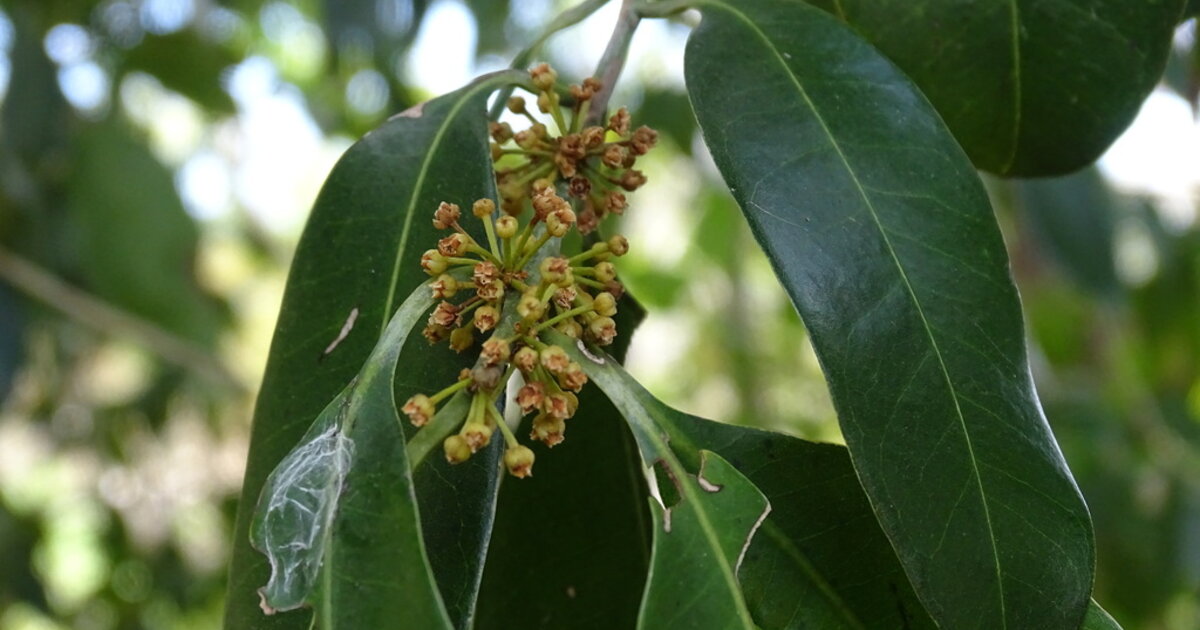
Leaves: The leaves are simple and alternate, elliptic to obovate, with the distinctive reticulate (net-like) venation that gives the species its name. They are clustered toward the branch tips, a characteristic growth pattern in the genus. The upper surface is dark green and somewhat glossy, while the underside is paler.
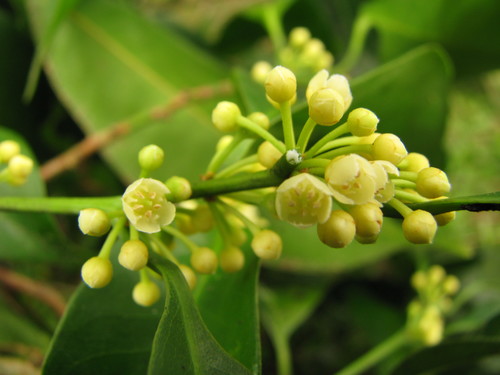
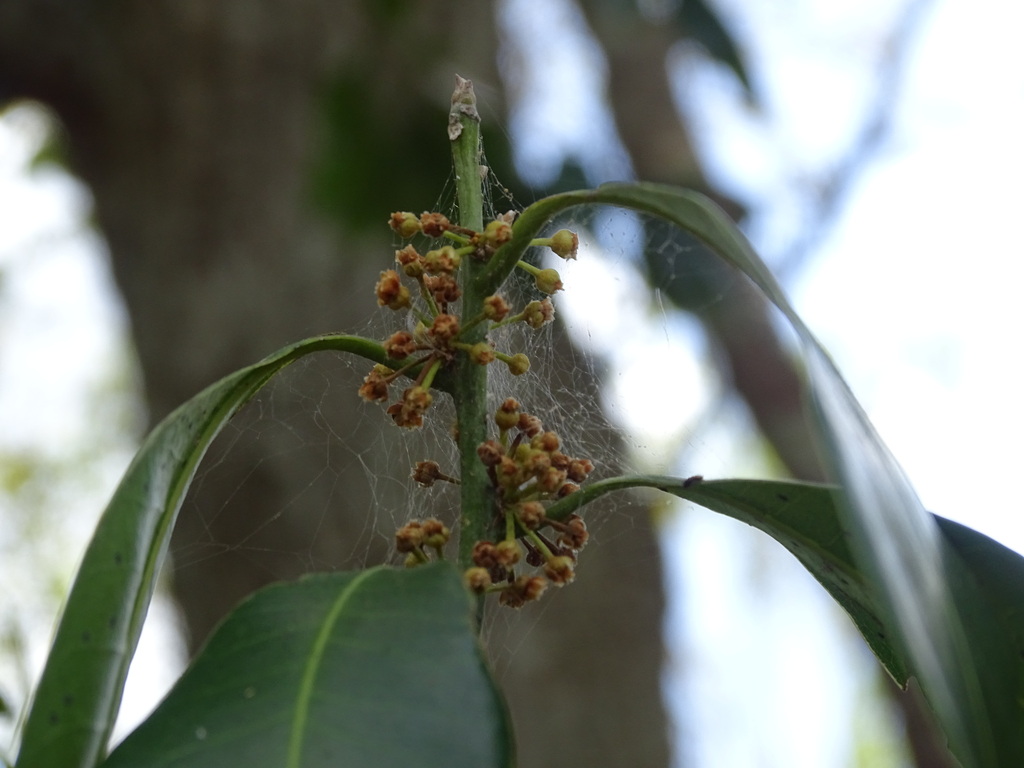
Flowers: Small, cream to greenish-white, appearing in clusters in the leaf axils. The flowers are typical of Sapotaceae, with fused petals forming a short tube. In some populations, the species shows a tendency toward dioecy, with individual trees producing predominantly male or female flowers.
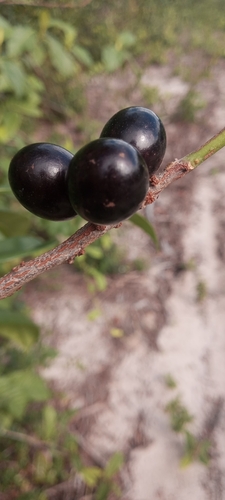
Fruits: The fruits are fleshy berries, 1.5 to 4 cm in diameter, ripening from green to yellow or orange. The flesh is sweet and mucilaginous, surrounding one to several large, shiny brown seeds. Like other Pouteria fruits, they are edible but not particularly sought after by humans compared to cultivated relatives.

Habitat & Distribution
Pouteria reticulata ranges from southern Mexico through Central America and across South America to Bolivia and Brazil. It thrives in wet tropical forests at elevations between 100 and 1,500 meters, occurring in both lowland rainforests and lower montane forests. The species grows in primary forest but can also persist in secondary growth and forest edges. In Venezuela, the species grows so abundantly in certain areas that local formations are called "chuponales," named after the tree's regional common name.
In Costa Rica, zapotillo is found on both the Caribbean and Pacific slopes, from the lowland forests of the Osa Peninsula to the foothills of the volcanic cordilleras. It often grows alongside other Sapotaceae species and is a characteristic component of the mid-canopy in mature wet forests.
The species is common on Barro Colorado Island in Panama, perhaps the most intensively studied tropical forest in the world. Since 1982, every tree and shrub in a 50-hectare plot has been censused every five years, with the complete dataset now covering over 423,000 trees of more than 300 species across 35 years. This long-term monitoring has revealed that tree species continuously immigrate into the plot at rates sufficient to maintain the observed diversity, and Pouteria reticulata is among the species tracked in this remarkable ecological experiment.
Wildlife Interactions
Spider monkeys (Ateles) are among the most important dispersers of Pouteria reticulata and other Sapotaceae trees. Studies of Guiana spider monkeys found that Sapotaceae fruits comprise 8.6% of their diet, making it one of the top six plant families consumed. Individual spider monkeys disperse approximately 195,000 seeds per year, swallowing seeds from over 98% of the fruit species they eat. This makes them what ecologists call "high-quantity dispersers," responsible for moving enormous numbers of seeds across the forest landscape.
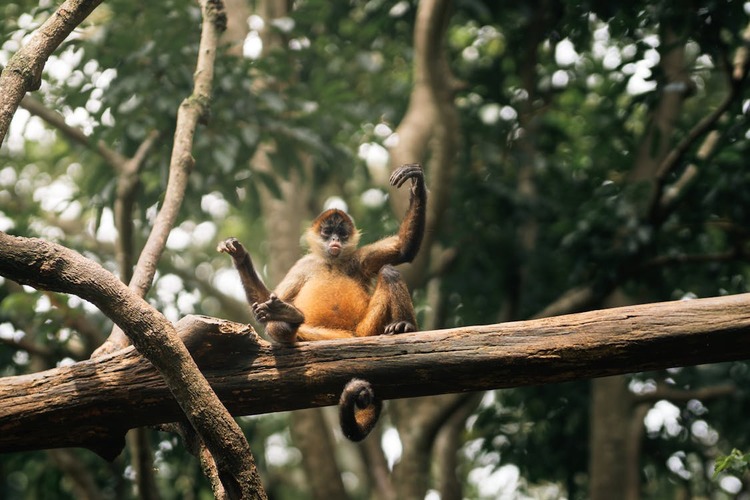
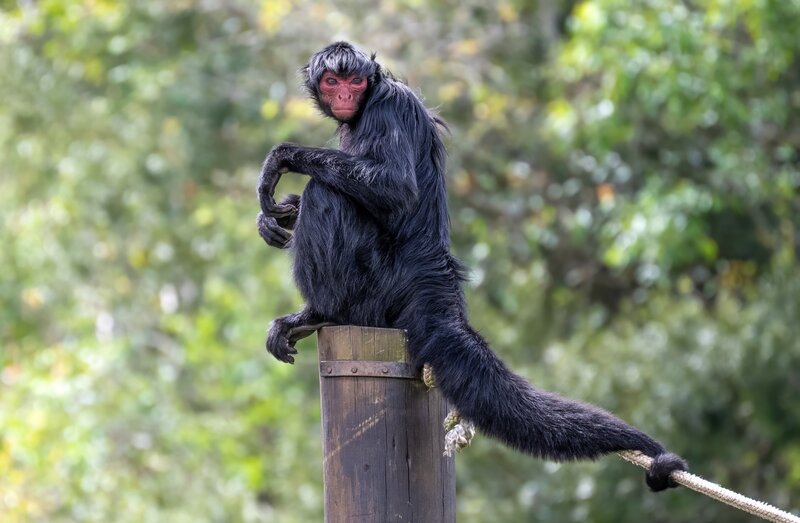
The relationship between primates and Sapotaceae trees carries special urgency. Unlike families like Burseraceae or Myristicaceae, whose seeds can be dispersed by both mammals and birds, Sapotaceae seeds are dispersed almost exclusively by mammals. This means that where hunting has reduced primate populations, Sapotaceae trees face what researchers call a "dispersal vacuum." Studies in French Guiana found that where spider monkeys have been hunted out, seed removal rates dropped from 77% to 47%, with Sapotaceae showing weaker compensation from other dispersers than bird-dispersed families.
Genetic Insights from Barro Colorado
On Barro Colorado Island, researchers used microsatellite DNA markers to study how seed and pollen dispersal shape the genetic structure of Pouteria reticulata populations. Because the species is dioecious (with separate male and female trees) and has small flowers pollinated by insects while producing fleshy fruits dispersed by vertebrates, they hypothesized that seeds would carry genes farther than pollen. Their findings confirmed this prediction: seed-mediated gene flow exceeded pollen-mediated gene flow, leading to weaker patterns of fine-scale spatial genetic structure than would be expected in wind-dispersed or insect-dispersed species.
This study reveals something important about tropical forest ecology: the animals that eat fruits are not just consumers but genetic messengers, carrying the tree's hereditary information across the landscape. The long-distance movements of spider monkeys and other frugivores ensure that Pouteria reticulata populations remain genetically connected even when individual trees stand hundreds of meters apart.
Wood Properties & Uses
The most remarkable property of Pouteria reticulata wood is its extraordinary density. At approximately 1,140 kg/m³, the heartwood is denser than water and will sink when placed in it. The sapwood is pale reddish-brown while the heartwood deepens to a rich reddish-brown, with a fine, uniform texture and grain that can be straight or interlocked. Anatomically, the wood is characterized by very abundant vessels (more than 20 per square millimeter), often arranged in radial multiples of four or more, with abundant rays that are exclusively uniseriate. These microscopic features contribute to the wood's remarkable density and workability.
Across the Pouteria genus, wood density varies enormously, from 360 to 1,220 kg/m³ depending on the species. This variation is not surprising for such a large genus, but P. reticulata sits at the denser end of the spectrum. Its close relatives include species prized for shipworm resistance, a property related to silica content that varies from 0.0% to 0.9% among Pouteria species. Those with higher silica content can resist the marine borers that destroy most wooden structures in salt water.
Traditionally, the dense, durable wood has been used in naval construction, particularly for dock pilings, deckings, and components that must resist constant water exposure. The very property that makes freshly cut logs sink also makes them ideal for underwater applications where the wood will never dry out and movement from moisture changes is not a concern. The wood is also employed for heavy construction, posts, and turned objects. When properly dried and finished, it can achieve an excellent polish, sometimes showing an attractive figure of dark stripes against a sandy to mid-brown background.
The Sapotaceae Legacy
The sapodilla family has shaped human history in ways few plant families can match. The Maya cultivated Manilkara zapota for both its fruit and its latex, which they chewed to quench thirst on long journeys. They called it sicte, and Aztec merchants later traded it under the name tzictli, from which we get the word "chicle." When former Mexican president General Santa Anna brought a sample of chicle to Thomas Adams in New York in 1866, Adams eventually mixed it with sugar to create the first commercial chewing gum, launching an industry that would transform the product from a Mesoamerican tradition into a global commodity.
The Latex That Wired the World
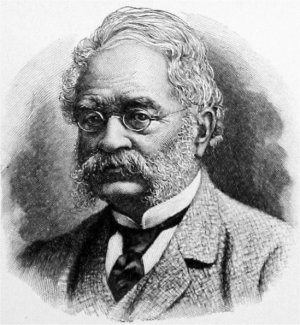
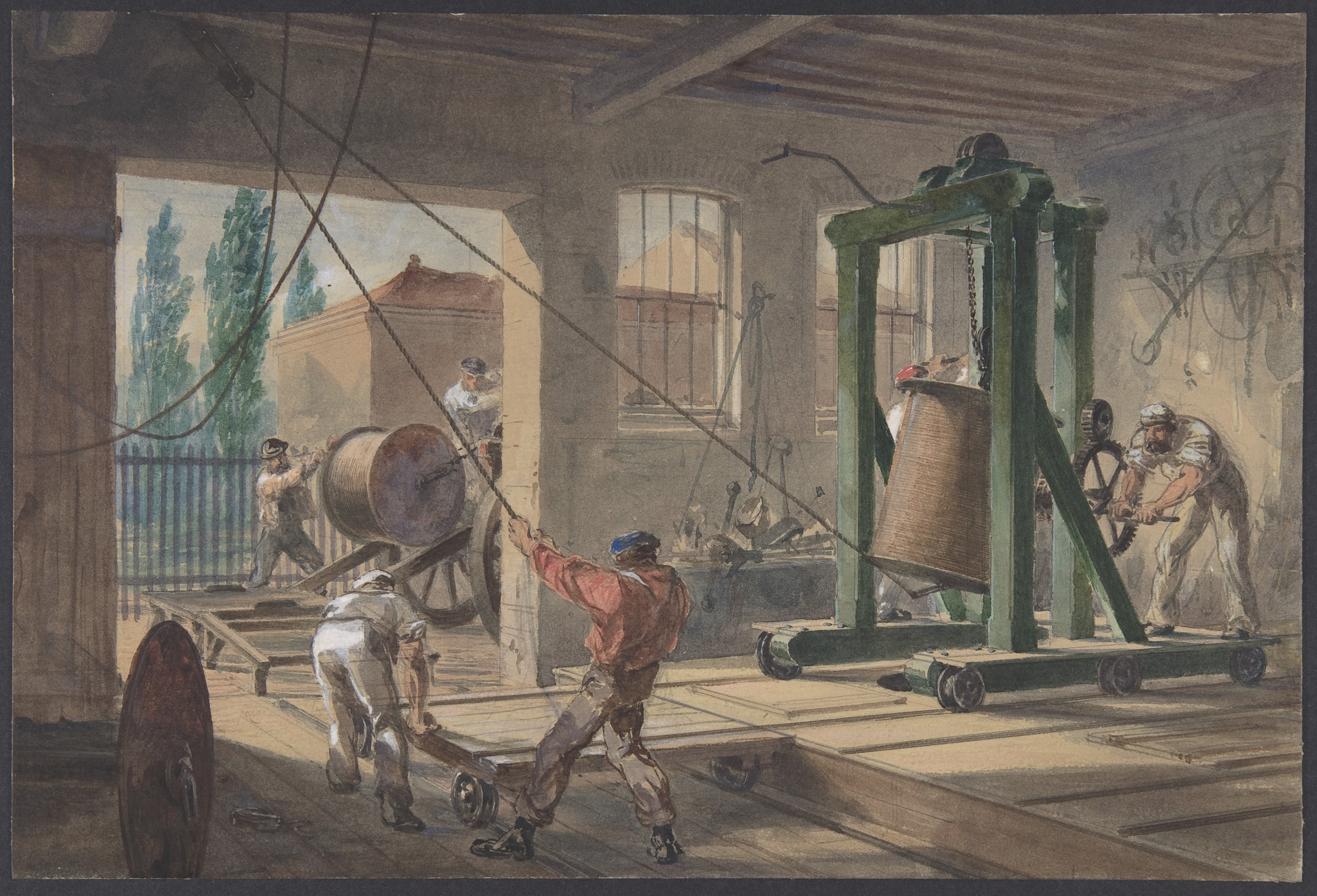
Perhaps the most consequential use of Sapotaceae latex came from Southeast Asian relatives. In 1843, British surgeon William Montgomerie sent samples of gutta-percha, the latex of Palaquium trees, to England. German inventor Werner Siemens immediately recognized its potential: unlike rubber, gutta-percha does not degrade in seawater, resists marine life, and maintains excellent electrical insulation. By 1845, telegraph wires insulated with gutta-percha were being manufactured, and in 1866, the first successful transatlantic telegraph cable used 300 tons of gutta-percha to insulate its 2,500 nautical miles of copper wire.
The global submarine cable network grew from about 15,000 nautical miles in 1866 to over 200,000 nautical miles by 1900, all insulated by Sapotaceae latex. Contemporaries called this network the "nervous system" of the British Empire and of world commerce. The difference between gutta-percha and natural rubber is molecular: both are polyisoprenes, but rubber has a cis-configuration that makes it elastic, while gutta-percha has a trans-configuration that makes it rigid and crystalline. Only around 1940 did polyethylene finally replace gutta-percha as the insulator of choice.


Chemistry of Defense
All Sapotaceae share the distinctive milky latex that flows when bark or leaves are damaged. This latex serves as a defense against herbivores and pathogens. The family is particularly rich in triterpenoid saponins, compounds with demonstrated anticancer, antioxidant, anti-inflammatory, and antimicrobial activities. The most common structural core of these compounds in Sapotaceae is protobassic acid, found across six genera. While Pouteria reticulata itself has not been extensively studied for bioactive compounds, its relatives have yielded nearly 100 distinct triterpenoids of pharmaceutical interest.
The family's combination of fleshy fruits and defensive chemistry represents an evolutionary strategy of selective partnership: attracting vertebrate dispersers with nutritious flesh while deterring less beneficial herbivores with toxic latex. This strategy has served the Sapotaceae well across 53 genera and over 1,200 species distributed throughout the world's tropics.
Conservation Status
Pouteria reticulata is classified as Least Concern by the IUCN, reflecting its wide distribution and occurrence in protected areas throughout its range. However, like many tropical forest trees, it faces ongoing habitat loss from deforestation and agricultural expansion. Its dependence on large frugivores for seed dispersal means that hunting pressure on primates and large birds could affect regeneration even where forests remain standing.
The species serves as a reminder that forest conservation must extend beyond protecting trees to maintaining the animal communities that enable their reproduction. Without spider monkeys and toucans to disperse its heavy seeds, Pouteria reticulata would struggle to colonize new areas or maintain genetic diversity across fragmented landscapes.
Resources & Further Reading
Species Information
General species information (Spanish Wikipedia; no English article exists).
Authoritative taxonomic information and distribution data.
Species profile from the Osa Peninsula arboretum with flowering and fruiting data.
Scientific Research
Schroeder, Tran, and Dick's study using microsatellite markers to analyze gene flow patterns on Barro Colorado Island.
Research documenting that individual spider monkeys disperse approximately 195,000 seeds per year.
Boissier et al. study in French Guiana showing seed removal rates dropped from 77% to 47% where spider monkeys have been hunted out.
Analysis of 30 years of tree census data showing how species input maintains diversity in tropical forests.
Comprehensive review of nearly 100 triterpenoid compounds identified from Sapotaceae species.
Biodiversity Databases
Observations and photographs from across the species range.
Global occurrence records and distribution data.
Information about the world's most intensively studied tropical forest.
Sapotaceae Family History
Overview of the sapodilla family including economically important species.
History of chicle from Maya origins to the modern chewing gum industry.
The Sapotaceae latex that insulated the world's first transatlantic telegraph cables.
Detailed history of how Sapotaceae latex enabled global telecommunications.