Manil
Symphonia globulifera — A swamp-dwelling tree with stilt roots and bright yellow latex that originated in Africa and floated across the Atlantic to colonize the Americas three separate times. Its scarlet flowers attract tanagers, and its resinous bark has been used to treat ailments from malaria to leishmaniasis.
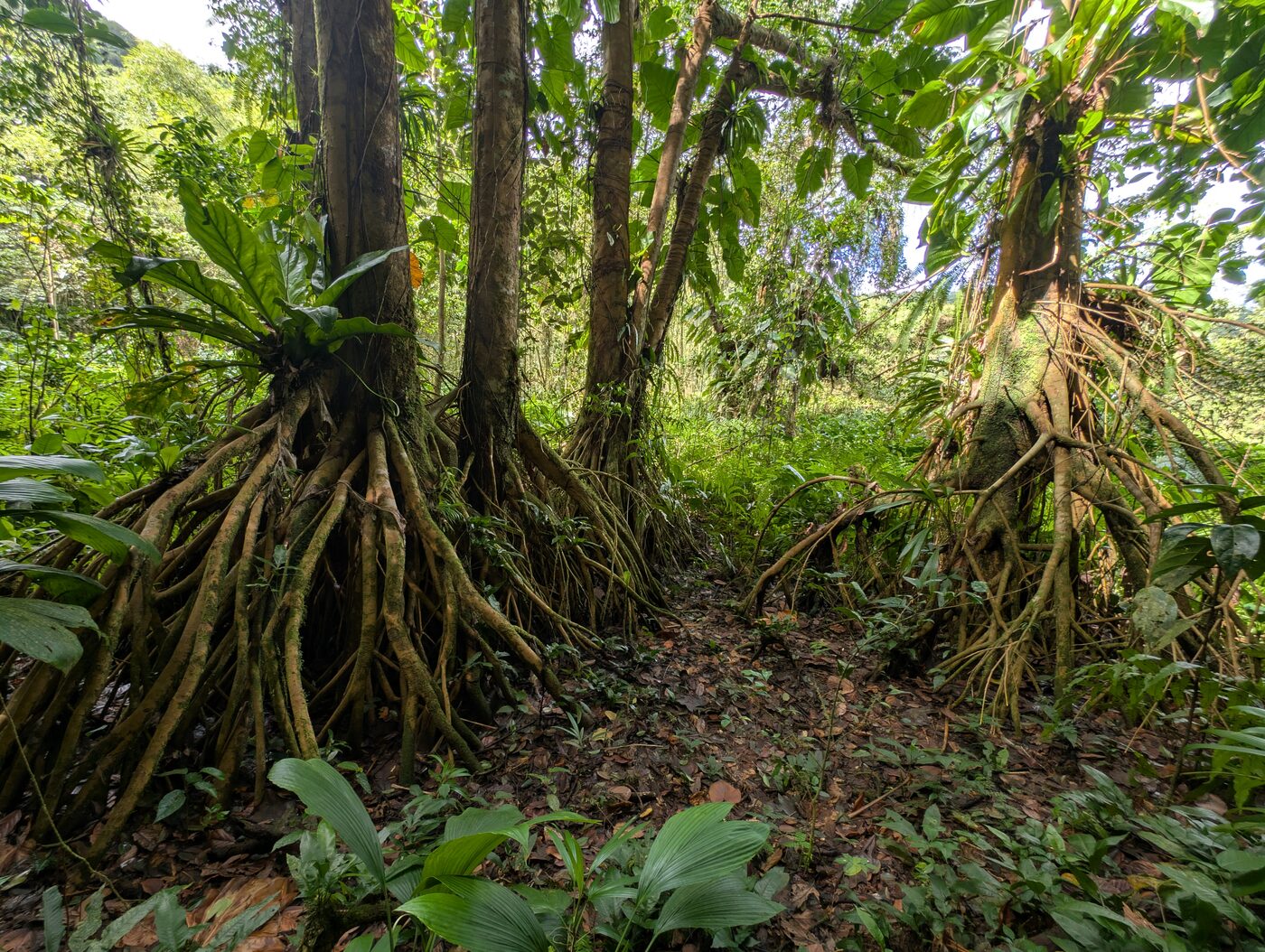
In the flooded forests of the Osa Peninsula, where streams spread across the lowlands and the soil stays waterlogged for months, a tree rises on stilts. Symphonia globulifera, known in Costa Rica as cerillo, leche amarilla, or by its trade name manil, lifts itself above the muck on a scaffold of aerial roots, surrounded by finger-like pneumatophores that poke up through the water to breathe. Slash the bark and a bright yellow latex oozes out, turning black and pitch-like as it dries in the air.
Indigenous peoples on two continents learned to use this resin to seal canoes and treat wounds, while the tree's scarlet globular flowers draw flocks of tanagers and honeycreepers through the swamp canopy. In parts of West Africa and Belize, people still chew its antibacterial twigs for dental hygiene, a practice validated by modern pharmacological research. Few trees have wound themselves so deeply into human cultures across such distant lands.
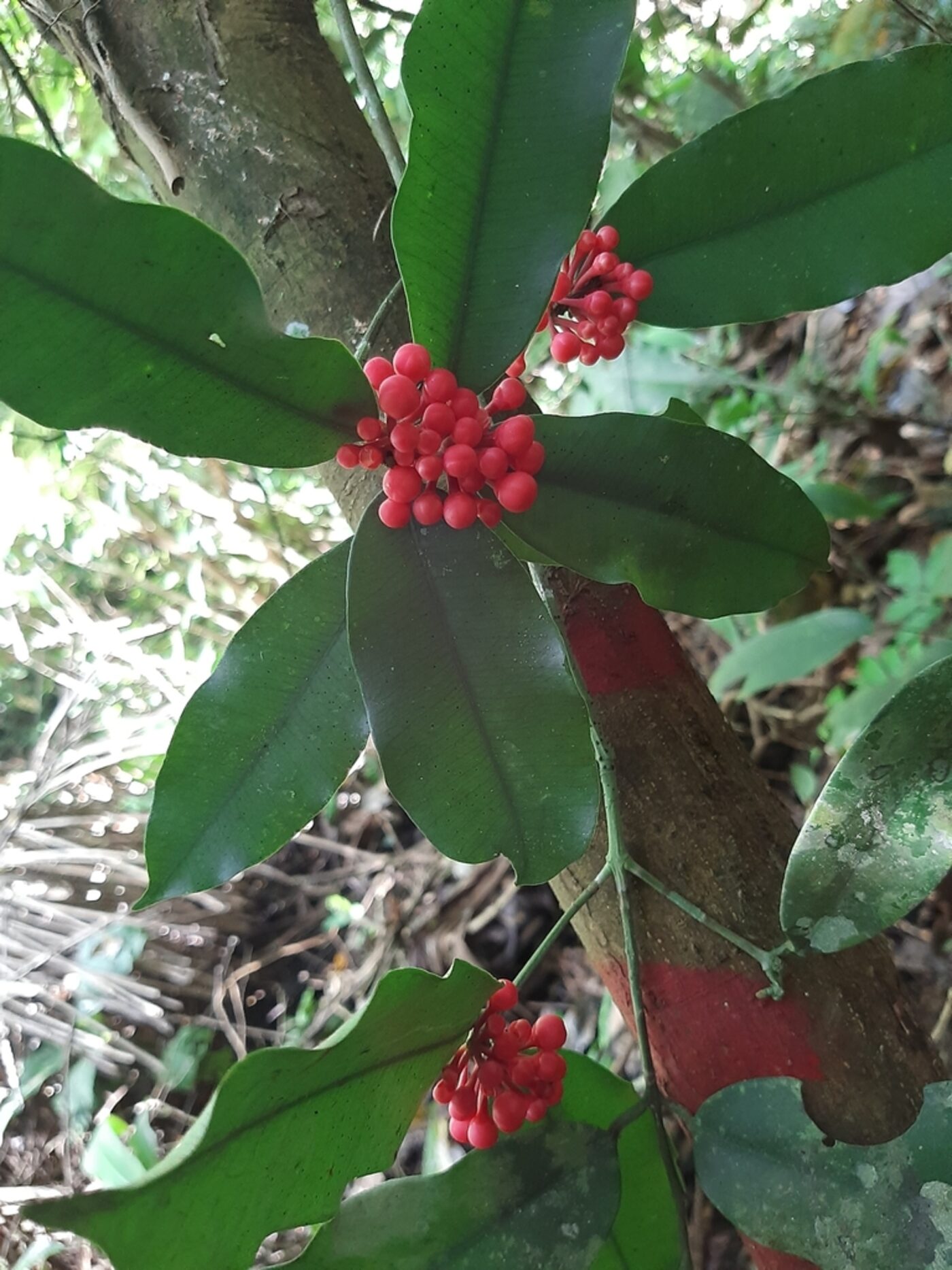
Identification
Physical Characteristics
Crown & Trunk: Symphonia globulifera is a medium to large evergreen tree, typically reaching 15 to 30 meters in height, with exceptional specimens exceeding 40 meters. The trunk is straight and cylindrical, with a rounded crown formed by horizontal branches that sometimes curve downward. In swampy habitats, the tree develops conspicuous stilt roots that elevate the trunk above the waterline, surrounded by finger-like pneumatophores that allow the roots to breathe in waterlogged soil.
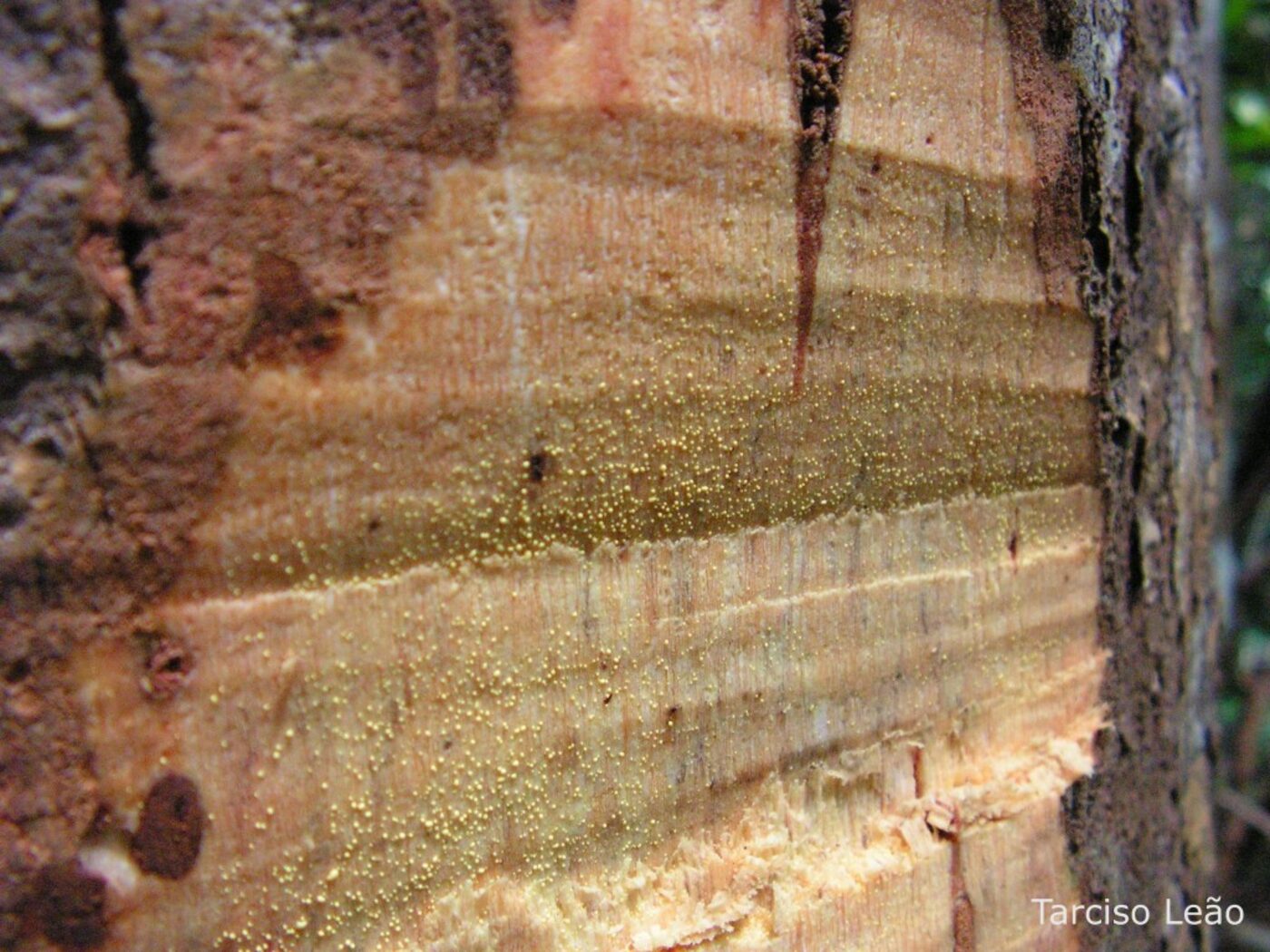
Bark & Latex: The bark is smooth or finely fissured, ranging from buff to greenish-yellow or grey-brown, with lenticels arranged in vertical rows. The tree's most distinctive feature is its bright yellow latex, which exudes from all parts when cut or wounded. This sticky resin oxidizes upon exposure to air, turning black and pitch-like within minutes. Indigenous peoples across its range have exploited this property for centuries, using the hardened resin as a waterproof sealant for canoes and tools.
Leaves: The leaves are simple, opposite, and leathery, with elliptical to lanceolate blades measuring 5 to 12.5 cm long. They are dark green and glossy above, paler below, with a prominent midrib. The foliage forms a dense, dark crown that contrasts strikingly with the scarlet flowers.
Flowers: The flowers are striking: bright crimson or scarlet, globose, and arranged in umbel-like clusters. Each flower measures 10 to 12 mm in diameter, with thick, waxy petals that form a nectar chamber. The flowers are odorless but highly conspicuous against the dark foliage. They remain open for about 31 hours, typically opening around dusk and closing the following evening.
Fruits: The fruit is a broadly ellipsoid or globose berry, about the size of a pigeon's egg, containing 1 to 3 seeds embedded in a fleshy, acidulous pulp described as pleasantly tasting. The interior is filled with yellow resin. Bats and monkeys consume the fruits and disperse the seeds throughout the forest.
Distinguishing Features
Symphonia globulifera is unmistakable in the field. The combination of opposite simple leaves, bright yellow latex that turns black, stilt roots in swampy locations, and scarlet globular flowers is unique. No other tree in Costa Rican swamp forests shares this suite of characteristics. When not in flower, the golden latex alone is diagnostic.
Habitat & Distribution
Symphonia globulifera has one of the most remarkable distributions of any tree: it occurs naturally across tropical America from Mexico to Brazil and Peru, throughout the Caribbean, and across tropical Africa from Guinea-Bissau to Tanzania, western Zambia, and Angola. This pantropical range is shared by only a handful of tree species, and most of those inherited their distribution from the breakup of Gondwana over 100 million years ago.
But the manil's story is different. The oldest fossil pollen of Symphonia (the fossil taxon Pachydermites diederexi) was found in Nigeria and dates to the mid-Eocene, approximately 45 million years ago, long after Africa and South America had separated. Genetic studies using plastid DNA and nuclear microsatellites have confirmed an African origin, with the species colonizing the New World independently three times. The most plausible explanation is marine dispersal: whole trunks, buoyant with resinous wood and capable of vegetative regeneration, floated across the Atlantic on ocean currents.
This hypothesis is supported by the species' ecology: it is common along rivers and on the inner edges of mangroves, it tolerates occasional saltwater flooding, and it propagates vegetatively in open habitats. The genetic structure shows that Caribbean and Mesoamerican populations are highly differentiated, while the eastern foothills of the Andes show little genetic diversity, consistent with recent long-distance colonization.
In Costa Rica, Symphonia globulifera grows on both the Atlantic and Pacific slopes from sea level to 1,700 meters elevation. It is most abundant in swamp forests and along stream banks, where it often forms the dominant canopy species alongside Calophyllum brasiliense. At La Selva Biological Station, an unusual ecotype occurs: small understory trees less than 15 meters tall, suggesting ongoing ecotype differentiation between swamp and terra firme populations.
Pollination & Ecology
The scarlet flowers of Symphonia globulifera are pollinated not by hummingbirds, as one might expect from their color, but primarily by perching birds. Research in French Guiana documented five species of Thraupidae (tanagers and honeycreepers) as the main pollinators: black-faced dacnis, blue dacnis, green honeycreeper, purple honeycreeper, and red-legged honeycreeper. These are among the most colorful birds in the Neotropical forest, and they visit the flowers as members of mixed flocks, inserting their beaks into the nectar chamber formed by the thick petals. Occasional visitors include other tanagers such as the paradise tanager and silver-beaked tanager, plus the bananaquit and even the waved woodpecker.

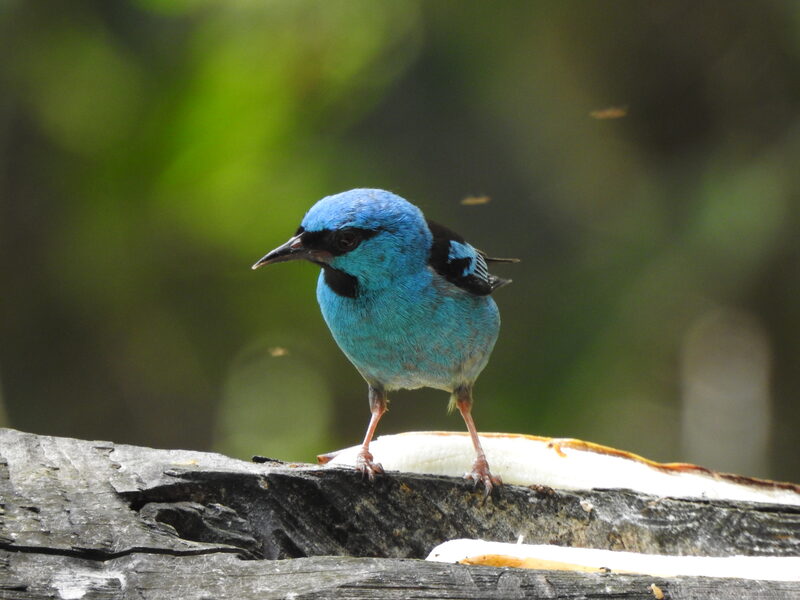


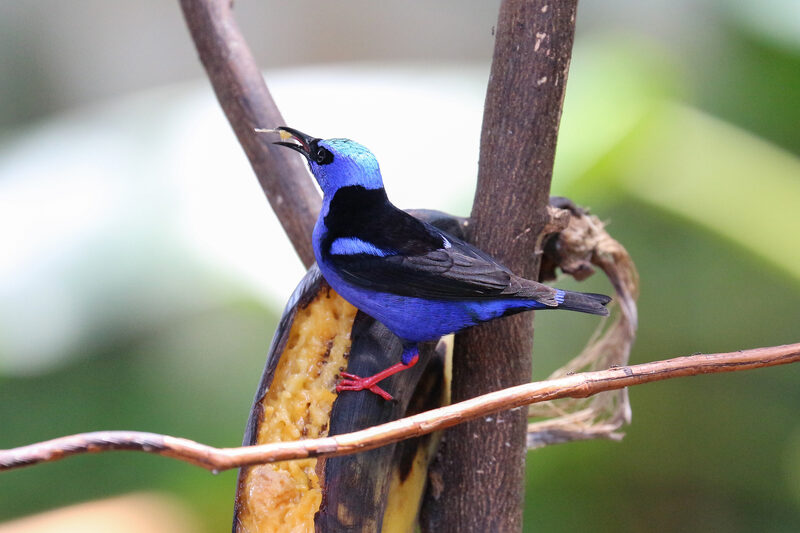
The five main bird pollinators of Symphonia globulifera in the Neotropics. Photos: Wikimedia Commons, CC BY-SA.
The floral anatomy is perfectly suited for perching birds: the flowers face upward and are easily reached from nearby branches; they are bright red, a color highly visible to birds; and the anthers and stigmas are positioned to contact bird beaks during nectar extraction. Most remarkably, the pollen is embedded in a sticky, glue-like substance that adheres readily to bird beaks, ensuring effective transfer between flowers. Nectar production is generous but highly variable, ranging from 3 to 130 microliters per flower, with sugar concentrations of 5 to 17 percent. The nectar is hexose-dominant, rich in glucose and fructose, which is typical of bird-pollinated flowers in the family Clusiaceae.
Hummingbirds do visit the flowers, but research suggests they may be nectar robbers rather than effective pollinators. Their visits are so brief that observers have difficulty making confident determinations of their role. Bird-mediated pollen dispersal appears to be relatively local, with mean distances of only 27 to 53 meters in French Guiana, and over 1,000 meters in fragmented Costa Rican landscapes. This surprisingly limited gene flow makes the species' fragmented populations across the Osa Peninsula particularly important for conservation. In Africa, sunbirds and various insects take over the pollination role from the tanagers and honeycreepers that serve the species in the Americas.
Seed Dispersal: A Multi-Continental Network
The seed dispersal network of Symphonia globulifera reflects its pantropical distribution. In the Neotropics, bats have been proposed as the main dispersers, consuming the fleshy, acidulous fruits and spreading the seeds across the forest. But the species has also enlisted an extraordinary cast of larger animals: tapirs, agoutis and other rodents, spider monkeys, howler monkeys, and even deer all consume the fruits and distribute the seeds. In Africa, an entirely different but ecologically similar guild takes over: hornbills, various primates, and duikers (small forest antelopes) perform the dispersal duties.
In Costa Rica, an unexpected consumer has been documented: Baird's tapir (Tapirus bairdii). Researchers in Corcovado National Park observed tapirs eating the bark from the exposed stilt roots of Symphonia globulifera, presumably for the medicinal compounds in the resinous bark. This behavior suggests that the tree's pharmacologically active compounds may serve ecological functions beyond deterring herbivores. These capable dispersers, able to move seeds across kilometers of forest, help explain why the species shows resilience to the genetic effects of forest fragmentation.
Traditional Medicine
Across its vast range, Symphonia globulifera has been used in traditional medicine for more than 30 different health conditions, making it among the most ethnomedicinally important trees in tropical Africa and the Americas. In Belize and parts of West Africa, the tree is known as "chewstick" because its twigs have been used for centuries as a natural toothbrush and flossing tool. The antimicrobial compounds in the bark help maintain oral hygiene, and the practice persists today in rural communities. Research has confirmed that extracts show good antibacterial activity against Staphylococcus aureus, validating this traditional use.
In Colombia, traditional healers use a decoction of the bark to treat cutaneous leishmaniasis. In Nigeria, leaf decoctions are used for malaria, diabetes, and skin diseases. In Ghana, the bark tonic serves as an appetizer and stomachic, while bark extract is used to manage river blindness (onchocerciasis). In Uganda, it treats children's coughs; in Cameroon, pregnant women take it as a mild laxative and general tonic; in Gabon, the bark is used as an emetic for chest complaints, and boiled bark and roots create a wash for itching skin.
The yellow latex has its own pharmacopoeia. Applied externally as a wrap, it treats eczematous dermatoses, wounds, and skin infections. Burned to ashes and applied to recalcitrant ulcers of the abdomen and legs, it reportedly dries infections rapidly. In Panama, fresh latex is applied as a cataplasm against skin ailments and body pain. Taken internally, the resin is diuretic and has been used to treat gonorrhea. The sap from leaves can be sniffed to stop nosebleeds. Even the fruit is edible: the fleshy pericarp has been described as acidulous and pleasantly tasting, though it is rarely consumed today.
Pharmacology: Validating Traditional Uses
Modern phytochemical research has validated many of these traditional uses. Scientists have isolated over 40 compounds from Symphonia globulifera, including several polycyclic polyprenylated acylphloroglucinols (PPAPs) with remarkable biological activities. From the roots, researchers extracted poly-isoprenylated benzophenone derivatives known as guttiferones A through D, which showed HIV-inhibitory effects in laboratory studies. Prenylated xanthones from the plant demonstrated cytotoxic properties against cancer cells.
Extracts from the stem bark, root bark, seeds, and leaves have shown good antibacterial activity against Staphylococcus aureus, along with promising in vitro anti-leishmanial, antiplasmodial, and anti-trypanosomal activities. These findings confirm the traditional use of this plant for treating leishmaniasis, malaria, and skin infections, and point to the manil as a potential source of new pharmaceutical compounds.
Timber & Uses
The wood of Symphonia globulifera, traded internationally as manil or boarwood, is a general-purpose timber used across the tropics. The heartwood is buff-brown with shades of yellow, rose, or orange, distinctly demarcated from the grey-yellow sapwood. The grain is generally straight, sometimes interlocked, with a medium to coarse texture and a characteristic mealy appearance. The wood has medium lustre, with conspicuous lines and arches on the radial surface.
The wood is moderately heavy, with a density of 530 to 750 kg per cubic meter at 12 percent moisture content. It falls between the weight and hardness of northern red oak and white oak and has been suggested as a substitute for those temperate species. The timber is easy to work with both hand and machine tools, though surfaces tend to roughen during planing and shaping, and pre-boring is recommended for nailing. Shrinkage rates are high, and the wood dries moderately rapidly with some risk of distortion and checking.
The connection between this tree and watercraft runs deep. In southern Nigeria and Central Africa, straight trunks are cut and hollowed into small dugout canoes. In Guyana and across Amazonia, the same practice prevails. The Ijo people of the Niger Delta call it the "paddle tree" and carve the wood into oars and paddles. This nautical tradition reflects the tree's natural habitat in swamp forests and along rivers, where its buoyant, resinous wood was easily accessible to the canoe-makers of both continents. There is an irony in this: the same buoyancy that allowed the species to cross the Atlantic on floating trunks now sends it floating once more, this time carved by human hands.
Common uses include construction, flooring, carpentry, railway sleepers, boxes, crates, sports articles, furniture, cabinets, plywood, veneer, turning, tool handles, and truck bodies. The durability is moderate, and the wood is susceptible to termite damage, limiting its use in ground contact applications. One curiosity: freshly harvested logs in some regions are too dense to float, with densities of 800 to 950 kg per cubic meter, which means they cannot be transported by river until dried.
Beyond timber, the bark gum known as hog gum, mani wax, or karamani wax has been used for centuries. This waterproof resin serves as glue for joining wood, fixing tool handles, and caulking boats and calabashes. Indigenous peoples across its range mixed the hardened resin with sand to seal the crevices of canoes and used it as a sealant for mooring arrowheads to their shafts. The resin also produces a khaki dye and can fuel candles and torches.
Conservation Status
Symphonia globulifera is classified as Least Concern by the IUCN. The species has an enormous natural range spanning two continents, tolerates a variety of habitats from sea level to 2,600 meters, and regenerates readily from root suckers and fallen fragments. Its abundance in swamp forests and along rivers, habitats that are often difficult to develop, provides additional protection. While individual populations may face pressure from logging and habitat conversion, the species as a whole is under no immediate threat of extinction.
In Costa Rica, Symphonia globulifera is protected within numerous reserves and national parks, including Corcovado National Park on the Osa Peninsula, where gene flow studies have documented its role as a key component of the swamp forest ecosystem. Its ability to vegetatively regenerate and its tolerance for disturbed wetlands make it likely to persist even as other, more sensitive species decline.
Resources & Further Reading
Species Information
Overview of the species including distribution, characteristics, and uses.
Costa Rican species account with common names and ecological information.
Comprehensive information on uses, properties, and cultivation.
Detailed information on African populations, uses, and wood properties.
Biogeography & Evolution
Genetic study of African populations revealing Pleistocene population dynamics and refugia.
Gene flow study in the Osa Peninsula examining dispersal by mobile pollinators and seed dispersers.
Pollination Biology
Detailed study of flower morphology, nectar production, and pollination by perching birds.
Research on Amazonian populations suggesting hummingbird pollination, later revised by French Guiana studies.
Seed Dispersal
Comparative dataset of dispersers and pollinators in Africa and the Neotropics.
Pharmacology & Medicinal Uses
Comprehensive review of over 40 compounds isolated from the species, including guttiferones with HIV-inhibitory effects.
Review of traditional medicinal uses and validation of antibacterial, anti-leishmanial, and antiplasmodial activities.
Behavioral study validating traditional medicinal uses in Latin American and African medicine.
Wood Properties
Technical specifications and commercial information for boarwood timber.
Detailed wood anatomy and properties.
Ethnobotany & Traditional Uses
Seed source with information on the "chewstick" name and traditional dental hygiene uses.
Mesoamerican ethnobotanical research on traditional uses and ecology.
Biodiversity Databases
Global occurrence records and distribution maps.
Authoritative taxonomic information and native range data.