Encino
Quercus insignis — An endangered oak of Central American cloud forests, bearing some of the largest acorns in the world. Once common from Mexico to Panama, populations have declined by over 80% as coffee plantations replaced its misty mountain habitat.
The name insignis means "remarkable" or "distinguished," and Quercus insignis earns it. This cloud forest oak produces acorns so large they seem almost prehistoric, reaching up to 12 centimeters in diameter with distinctive bur-like cups covered in protruding scales. Few oaks anywhere in the world match this species for the sheer size of its fruit.
Yet this remarkable tree is disappearing. From the cloud forests of Veracruz to the highlands of western Panama, Q. insignis has lost an estimated 80% or more of its population. The same mist-shrouded mountains where it evolved now support shade-grown coffee, and the species that once formed extensive stands now persists only in scattered fragments, often as isolated individuals. In Mexico, it is considered one of the most threatened oak species, and the IUCN lists it as Endangered throughout its range.
Identification
Physical Characteristics
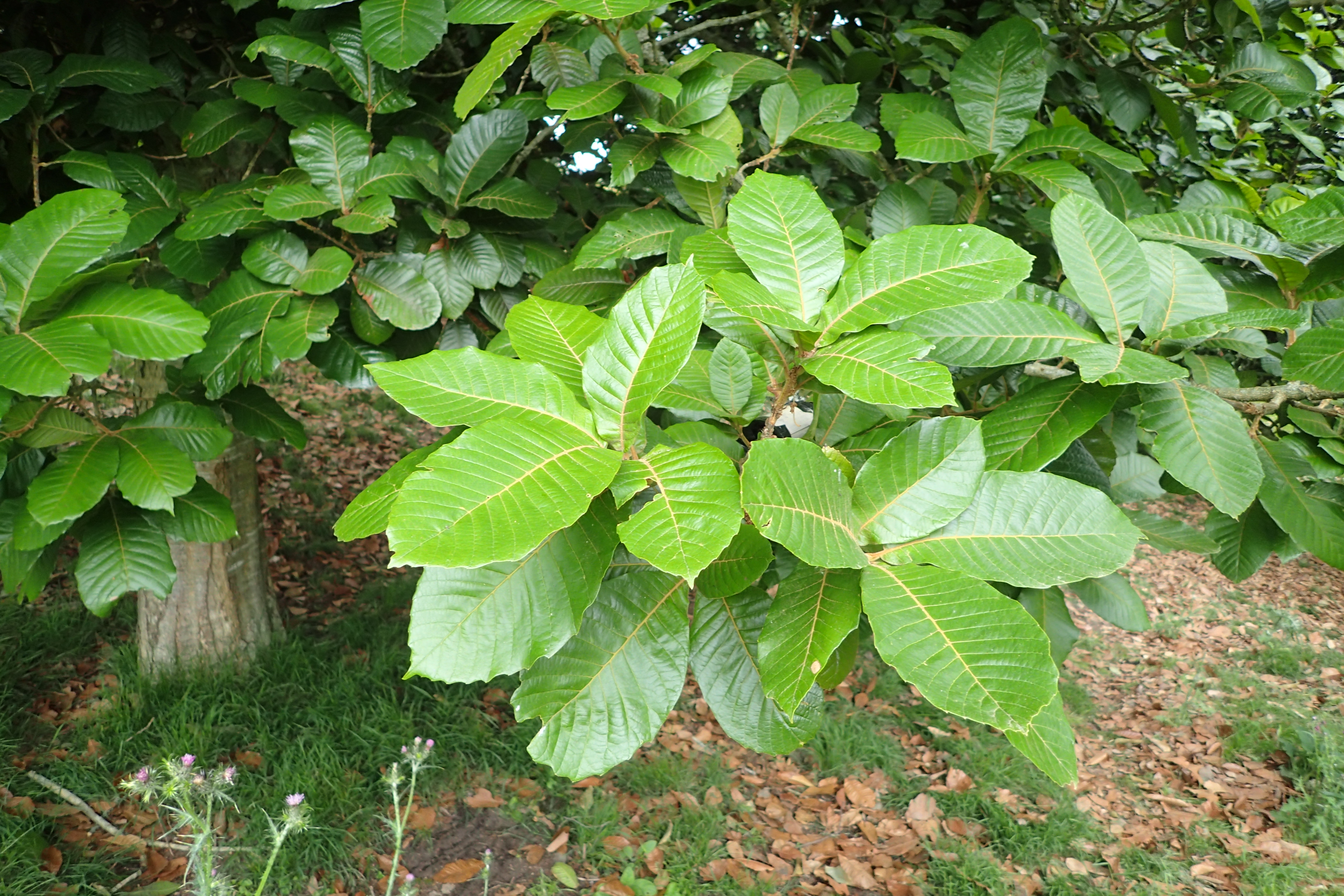
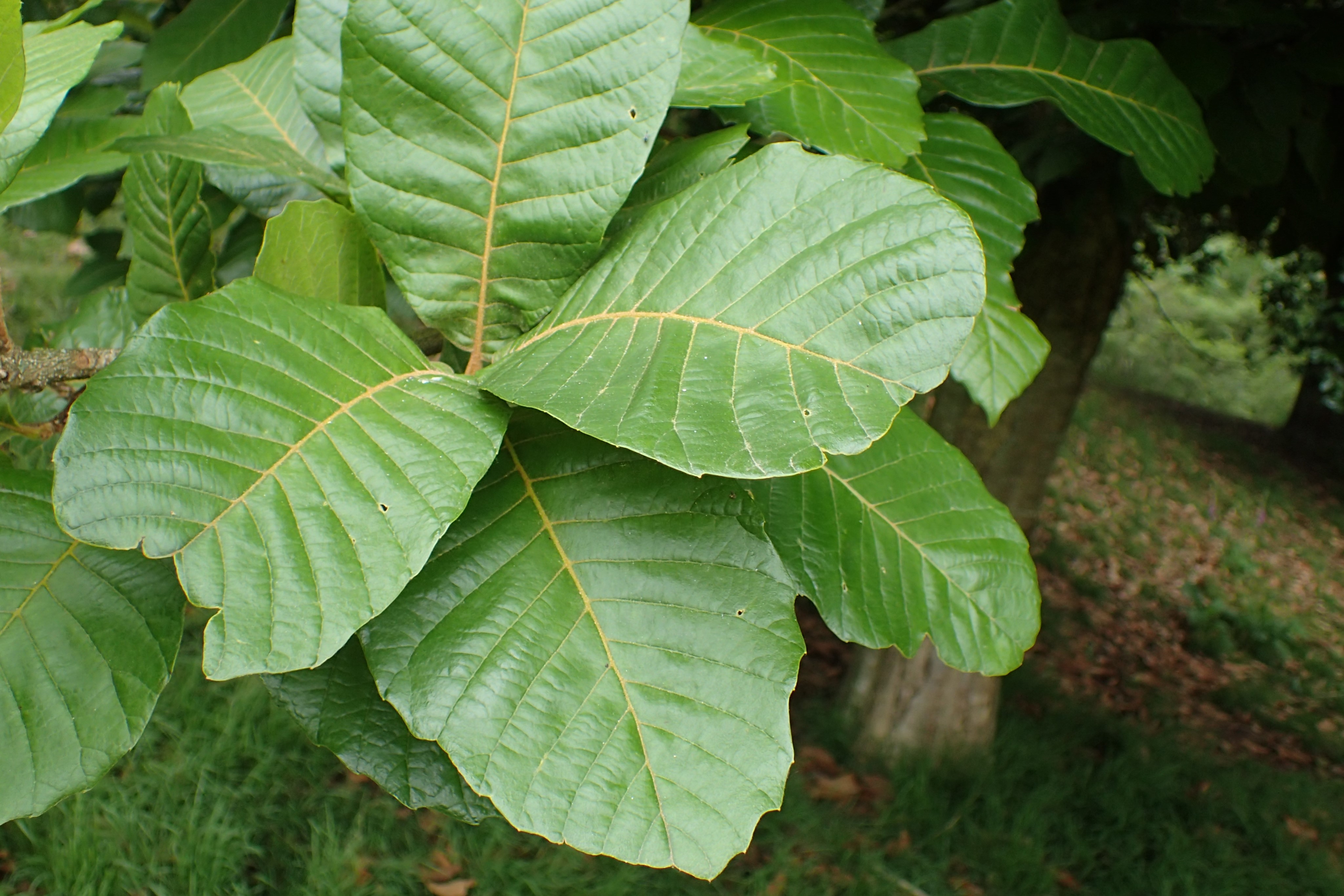
Leaves: The leaves of Q. insignis are among the largest of any Central American oak, measuring 10-28 cm long and 4-10 cm wide. They are elliptic to obovate in shape, with entire or slightly undulate margins. The upper surface is shiny and hairless, while the lower surface is covered with dense, dull tomentum. Each leaf displays 18-20 prominent secondary veins per side, giving the foliage a strongly ribbed appearance. Young branchlets are covered in dense yellow to reddish tomentum, becoming smooth and grayish in the second year with prominent white lenticels.
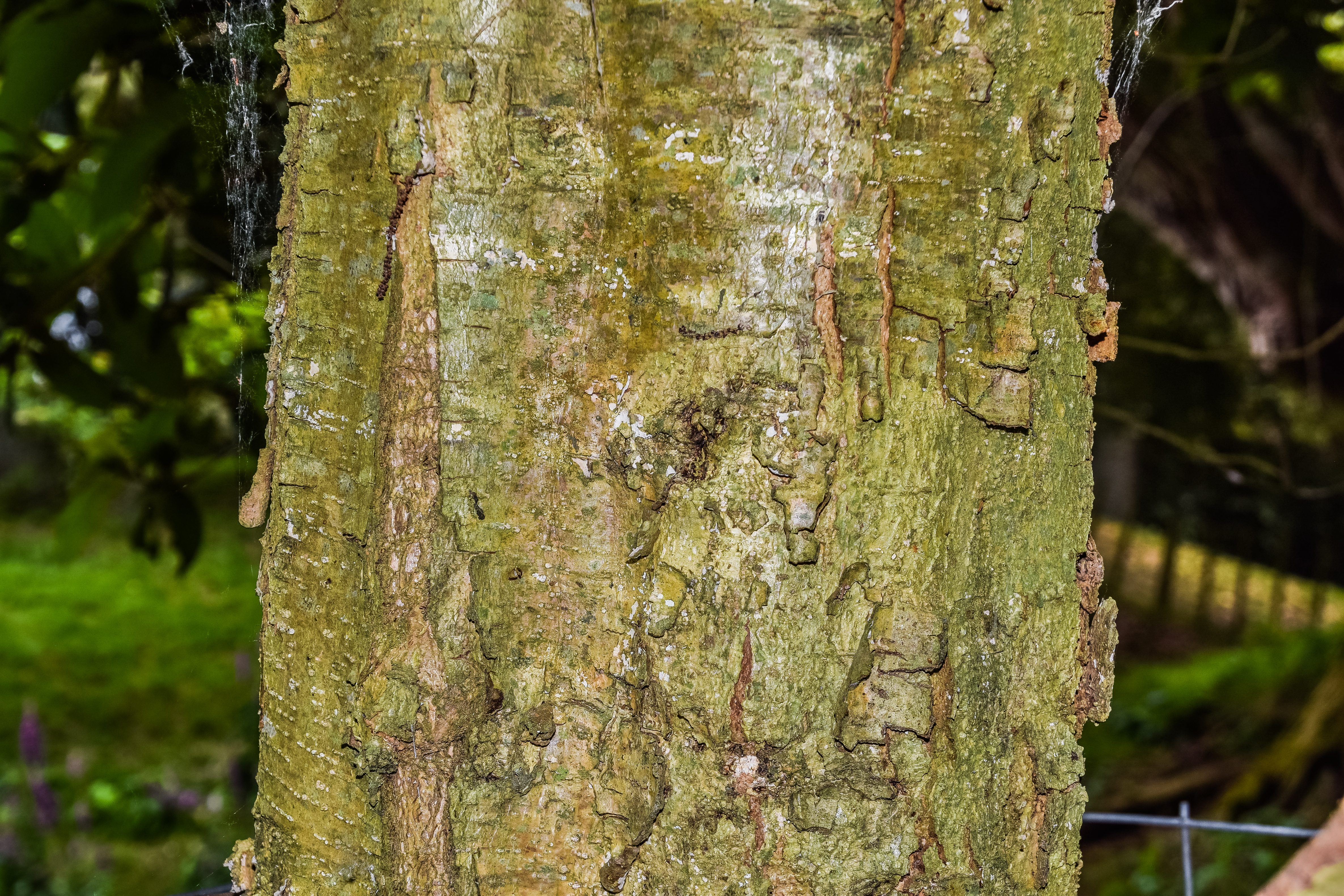
Bark: The bark is grayish to brownish, developing shallow fissures with age. In the humid cloud forest environment, trunks are often covered with mosses and lichens.
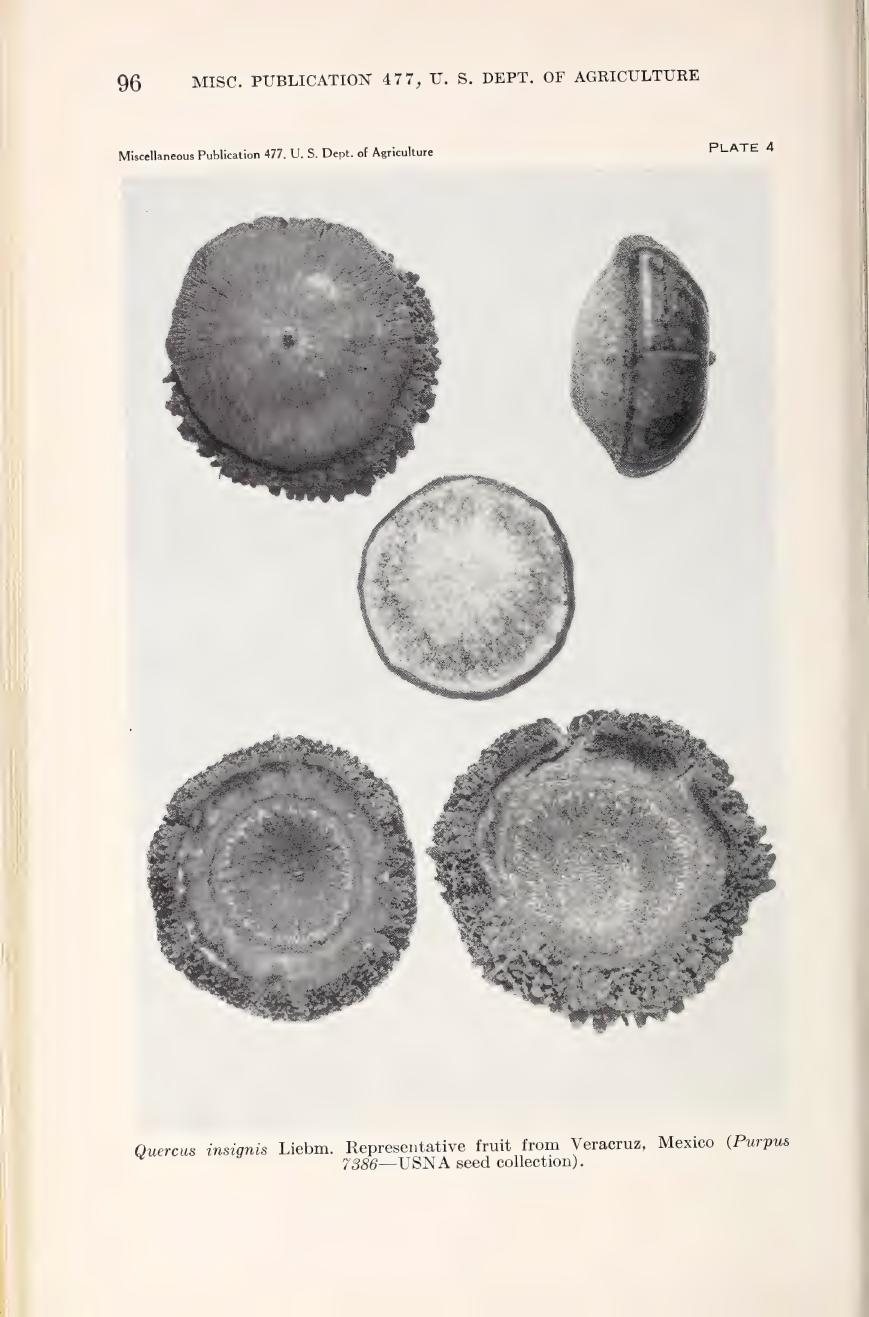
Acorns: The acorns of Q. insignis are extraordinary. Measuring 3-5 cm long and up to 8-12 cm in diameter, they rank among the largest of any oak species in the world. Each acorn is ovoid to globose, with half to two-thirds enclosed in a distinctive saucer-shaped cup measuring 4-8 cm across. The cup scales are large and free, covered in golden tomentum, with triangular bases and narrow, inward-curving tips that give the cup a bur-like or shaggy appearance. Golden silky hairs crown the apex of the nut. Cupules appear singly or in groups of up to four, sessile on the branch. Acorns mature in their first year, with fruiting in Costa Rica occurring from July to August, and in October in the northernmost populations of Veracruz. However, trees produce heavy acorn crops only every five to ten years, a masting strategy shared with many oaks but particularly pronounced in this species.
The germination of these giant acorns is unlike other oaks. Rather than sending the radicle out through the tip of the nut, the Q. insignis acorn splits nearly in half, or breaks off an entire chunk, to release its massive radicle. The emerging seedlings are strikingly colorful, bright green with a dense covering of red hairs, making young Q. insignis one of the most visually distinctive oak seedlings.
Ecology and Distribution
Quercus insignis inhabits tropical montane cloud forests from southern Mexico through Guatemala, Belize, Honduras, El Salvador, Nicaragua, Costa Rica, and into western Panama. Its typical elevation range is 900-2,500 meters, where persistent cloud cover and high humidity create the misty conditions it requires. Despite this wide geographic range, populations are scattered and low-density, with only a few individuals typically found together.
In Costa Rica, the species occurs in the Cordillera de Talamanca and other highland areas where cloud forest persists. It shares habitat with other montane oaks including Q. costaricensis, Q. copeyensis, and Q. corrugata, though it tends to occur at somewhat lower elevations than those high-elevation specialists.
The species is slow-growing with a long life cycle and regenerates poorly after disturbance. Studies on seedling establishment in Veracruz show overall survival of only 26% after fifty months, though survival improves to 34% when seedlings grow under partial vegetation cover rather than in full sun (18.6%). Notably, Q. insignis seedlings produce more biomass in both shoots and roots than related Mexican oaks like Q. sartorii and Q. xalapensis, and show high early survival (over 90%) in the first year under both light gap and closed canopy conditions. This suggests the species is suited to both gap colonization and understory establishment, though long-term survival remains challenging. The irregular mast fruiting cycle, combined with these survival patterns, means populations recover slowly from logging or land clearing.
Conservation
The IUCN classifies Quercus insignis as Endangered globally, with populations estimated to have declined by 80% or more. However, the threat level varies by country: Critically Endangered in Mexico, Endangered in Panama, and Near Threatened in Guatemala. The species is reportedly still locally abundant in Nicaragua. In Mexico, where it has a very restricted distribution in Veracruz, Oaxaca, and Chiapas, populations tend to be small, degraded, and severely fragmented, making it one of the most threatened Mexican oaks.
The primary threat is habitat loss from conversion of cloud forest to agriculture, particularly shade-grown coffee cultivation, as well as urbanization and cattle grazing. Deforestation has severely fragmented remaining populations, with often only a few isolated individuals found together where once there were extensive stands.
Conservation efforts are underway. The Global Conservation Consortium for Oak (GCCO) published propagation protocols for Q. insignis in 2023, the result of collaborative research between institutions in Costa Rica, Mexico, and the United States. These protocols aim to enable ex-situ conservation in botanical gardens and eventually support reintroduction efforts. The Morton Arboretum's "Guardianes de los Árboles" (Guardians of the Trees) initiative works with landowners throughout Central America to protect remaining populations on private land, an approach essential for a species so scattered across the landscape. However, given the species' slow growth, irregular fruiting, and poor seedling survival, recovery will be measured in decades rather than years.
Traditional Uses
Like many oaks, Q. insignis produces acorns that are edible after processing to remove bitter tannins. Indigenous communities historically leached the ground acorn meal in running water or through repeated boiling to produce a nutritious flour. The wood is hard and durable, used locally for construction and fuel, though commercial logging has contributed to population declines. Given the species' endangered status, any harvest today would be difficult to justify.
Resources & Further Reading
Species Information
Comprehensive botanical description including morphology, distribution, and cultivation notes.
General overview of the species including distribution, description, and conservation status.
Species account from the Flora de Costa Rica project with distribution data and specimens.
Conservation
Conservation propagation protocol developed by the Global Conservation Consortium for Oak (2023).
Scientific study on regeneration ecology and seedling survival in southern Mexico.
Home of the "Guardianes de los Árboles" initiative working with Central American landowners to protect endangered oak species.
Scientific Research
Long-term study (2009-2013) documenting 26% seedling survival after 50 months and differential responses to light conditions.
Field research project documenting populations and threats in the Sierra Madre de Chiapas, Mexico.
Complete monograph with 124 botanical plates illustrating Central American oaks. USDA Miscellaneous Publication No. 477.