Sigua
Ocotea whitei — A tall canopy tree of the laurel family, this species bears a scientific synonym honoring Alexander Skutch, the legendary naturalist who documented the birds of Costa Rica for over six decades.
In the wet forests of Central America, from the cloud forests of Costa Rica to the lowlands of Panama, a tall canopy tree produces the small avocado-like fruits that sustain monkeys, toucans, and guans. Ocotea whitei belongs to the Lauraceae, the same family as the cultivated avocado and the aromatic laurels. Like its relatives, the sigua's leaves release a faint avocado scent when crushed, a chemical signature of the essential oils that pervade the tree.
But this tree is more than a footnote to ornithological history. Since the 1980s, Ocotea whitei has become one of the most intensively studied tree species in the Neotropics, serving as a model organism for understanding how tropical forests maintain their extraordinary diversity. Research on this single species has helped answer one of ecology's most enduring questions: why do so many tree species coexist in tropical forests?
Identification
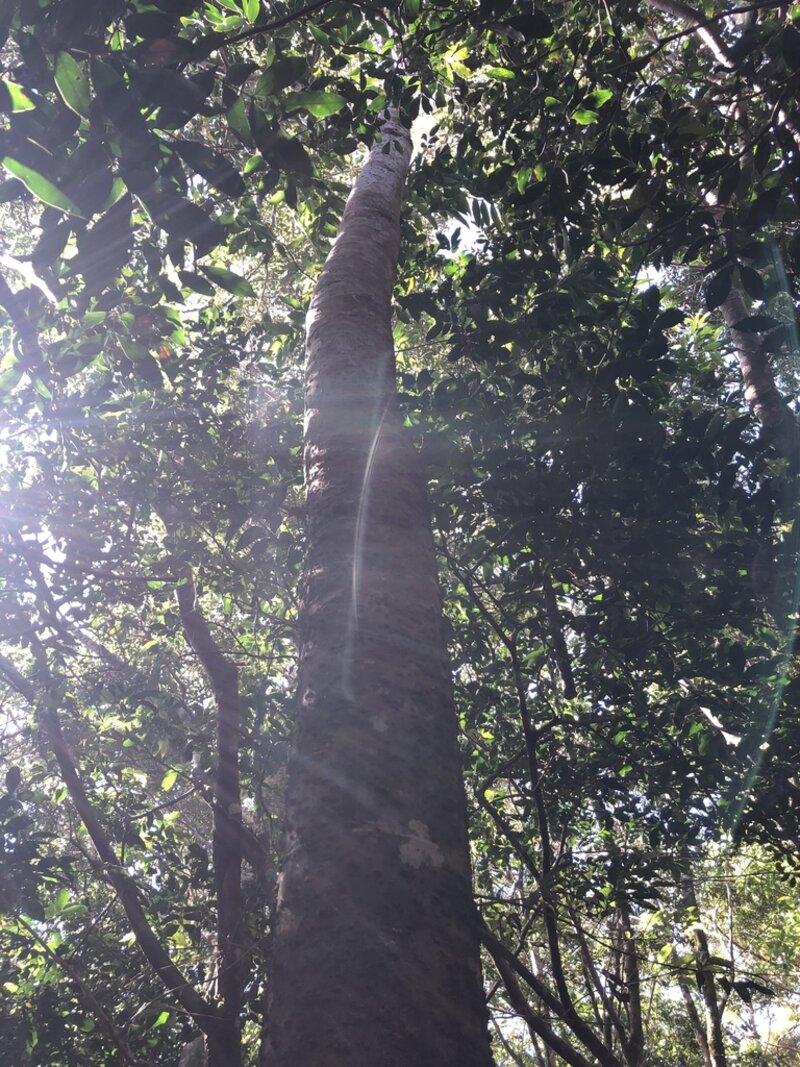
Ocotea whitei is a tall forest tree reaching 10 to 30 meters in height with a cylindrical trunk that often leans slightly. Larger trees develop buttresses at the base, and some medium-sized individuals exhibit stilt-roots with sprouting stems. The bark is dark brown. Like many Lauraceae, the leaves release an avocado-like aroma when crushed.
Physical Characteristics
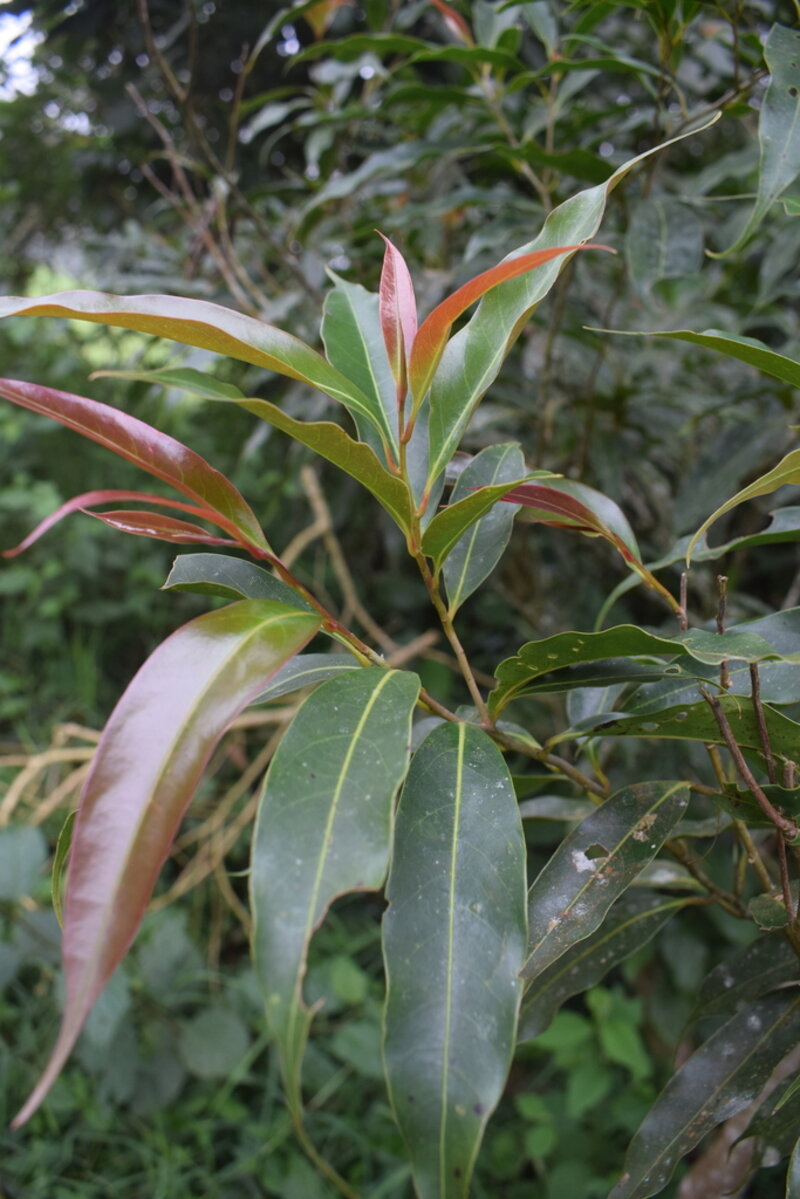
Leaves: Simple, alternate, and elongated with a long pointed tip. The secondary veins are widely spaced. Young leaves emerge with a distinctive reddish or copper color before maturing to deep green. The petiole is slightly swollen and cylindrical, measuring 1-1.5 cm long.
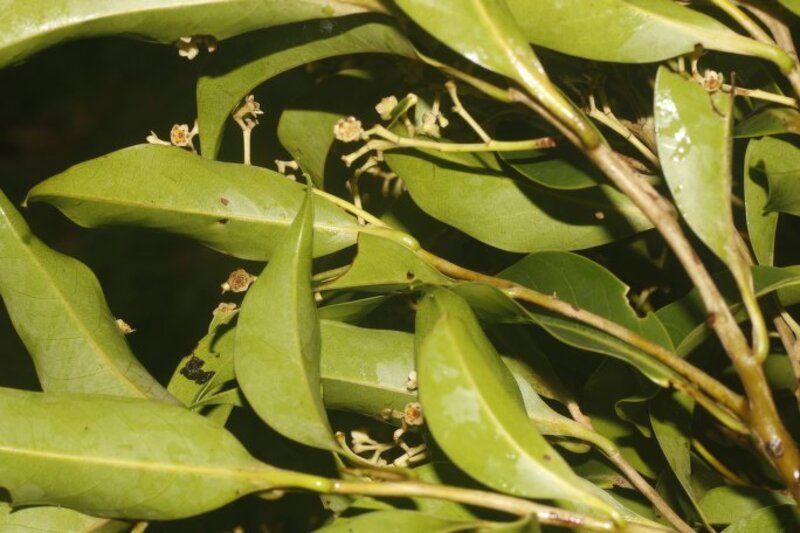
Flowers: Small, white or greenish, appearing in clusters along branches during March and April. The species is dioecious, meaning individual trees are either male or female. Both sexes are needed for fruit production, which has implications for forest regeneration.
Fruits: Oblong berries resembling small avocados, with very thin pulp surrounding a large seed. The fruit sits in a dark cup (cupule) at the base. Fruits mature during May and June. Seeds germinate immediately upon falling, producing carpets of seedlings beneath parent trees.

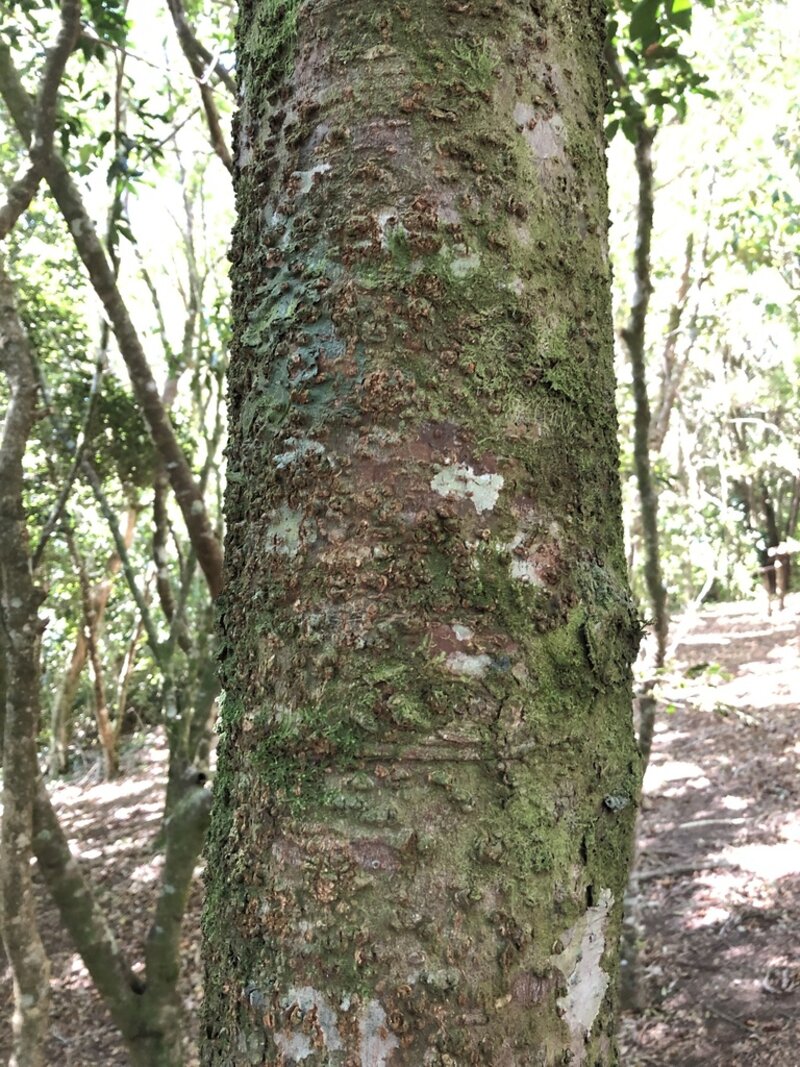
Trunk and bark: The trunk is tall and cylindrical, often leaning slightly, reaching up to 1 meter in diameter. Larger trees develop prominent buttresses at the base, while some medium-sized individuals produce stilt-roots with sprouting stems. The bark is dark brown.
Ecology
Ocotea whitei grows in humid and very humid forests at low to medium elevations, typically on slopes and in ravines within mature forest. In Panama, it is fairly common in old-growth forest on Barro Colorado Island, though elsewhere in its range it tends to be rare. The species has been documented in La Amistad International Park, which spans the border between Costa Rica and Panama.
Wildlife Relationships
The fruits of Ocotea whitei are an important food source for monkeys and large birds. Toucans and guans feed on the lipid-rich berries, swallowing them whole and dispersing the seeds across the forest. Like other Lauraceae, this species depends on large-gaped frugivores for seed dispersal, as the seeds must pass through the digestive tract intact to germinate successfully.
Regeneration
Seeds germinate rapidly after falling, forming dense carpets of seedlings beneath parent trees. However, most of these seedlings die off gradually due to competition, shade, and herbivory. Successful establishment typically requires dispersal away from the parent tree, often to light gaps or forest edges where conditions favor survival. This pattern highlights the importance of animal dispersers in maintaining populations of this species.
A Model for Tropical Diversity
In 1980, ecologists Stephen Hubbell and Robin Foster established a 50-hectare permanent forest plot on Barro Colorado Island (BCI) in Panama, where every tree over 1 cm in diameter is mapped, measured, and identified every five years. This plot has since been censused eight times, tracking over 450,000 individual trees. Ocotea whitei became one of the key species for testing the Janzen-Connell hypothesis, one of the most important theories explaining how tropical forests maintain their extraordinary tree diversity.

The Janzen-Connell Hypothesis
In the early 1970s, ecologists Daniel Janzen and Joseph Connell independently proposed that host-specific enemies, such as pathogens, herbivores, and seed predators, prevent any single tree species from dominating tropical forests. Near a parent tree, these enemies concentrate: specialized beetles attack seeds, fungi infect seedlings, and herbivores target the abundant young plants. Seeds and seedlings that escape to locations far from parent trees, where their enemies are less abundant, have a better chance of survival. This creates space for other species, maintaining the astonishing diversity of tropical forests.
Canker Disease and Population Regulation
A groundbreaking 1994 study examined stem cankers on Ocotea whitei within the BCI plot. The researchers found that while cankers occur on both adults and juveniles, young trees are far more likely to show symptoms. The spatial patterns were striking: both canker incidence and tree mortality were significantly higher close to adult trees than far away. Over a decade, this pattern shifted the juvenile population away from adults, exactly as the Janzen-Connell hypothesis predicts.
Perhaps most intriguingly, seedlings growing near adults of a different Lauraceae species, Beilschmiedia pendula, showed lower than expected disease incidence. This "protective neighbor effect" suggests that growing near unrelated species dilutes the pathogen load, providing another mechanism by which diversity begets diversity in tropical forests.
Population Dynamics Over 35 Years
Ocotea whitei is classified as a "slope specialist" at BCI, preferring the steeper terrain and ravines within the plot. Long-term census data reveals dramatic population fluctuations: from 1,118 individuals in 1982, the population declined steadily to just 374 by 2005. But then something unexpected happened: the population stabilized and began a modest recovery, reaching 381 individuals by 2015. These dynamics illustrate how even "common" tropical trees can experience substantial population changes over decades, driven by a complex interplay of disease, climate, and competition.
Taxonomic History
The sigua was first described by Robert Everard Woodson Jr. (1904-1963), an American botanist at the Missouri Botanical Garden who specialized in the flora of Panama. In 1937, Woodson published the species in the Annals of the Missouri Botanical Garden, based on specimens collected by Russell Seibert along the Río Chiriquí Viejo in Panama's Chiriquí Province during the summer of 1935. The holotype, Seibert 307, remains at the Missouri Botanical Garden.
Eight years later, Caroline Kathryn Allen (1904-1975), a pioneering botanist who specialized in Lauraceae, described the same species under a different name: Ocotea skutchii. Allen was remarkable in her era, serving as a research associate at the New York Botanical Garden and describing over 275 new species during her career. She also was an accomplished botanical illustrator, often drawing the microscopic details that distinguished genera within the laurel family. Her 1945 paper in the Journal of the Arnold Arboretum honored Alexander Skutch, who had collected specimens in Central America. Though her name is now a synonym, it preserves the connection between this tree and one of the tropics' greatest naturalists.
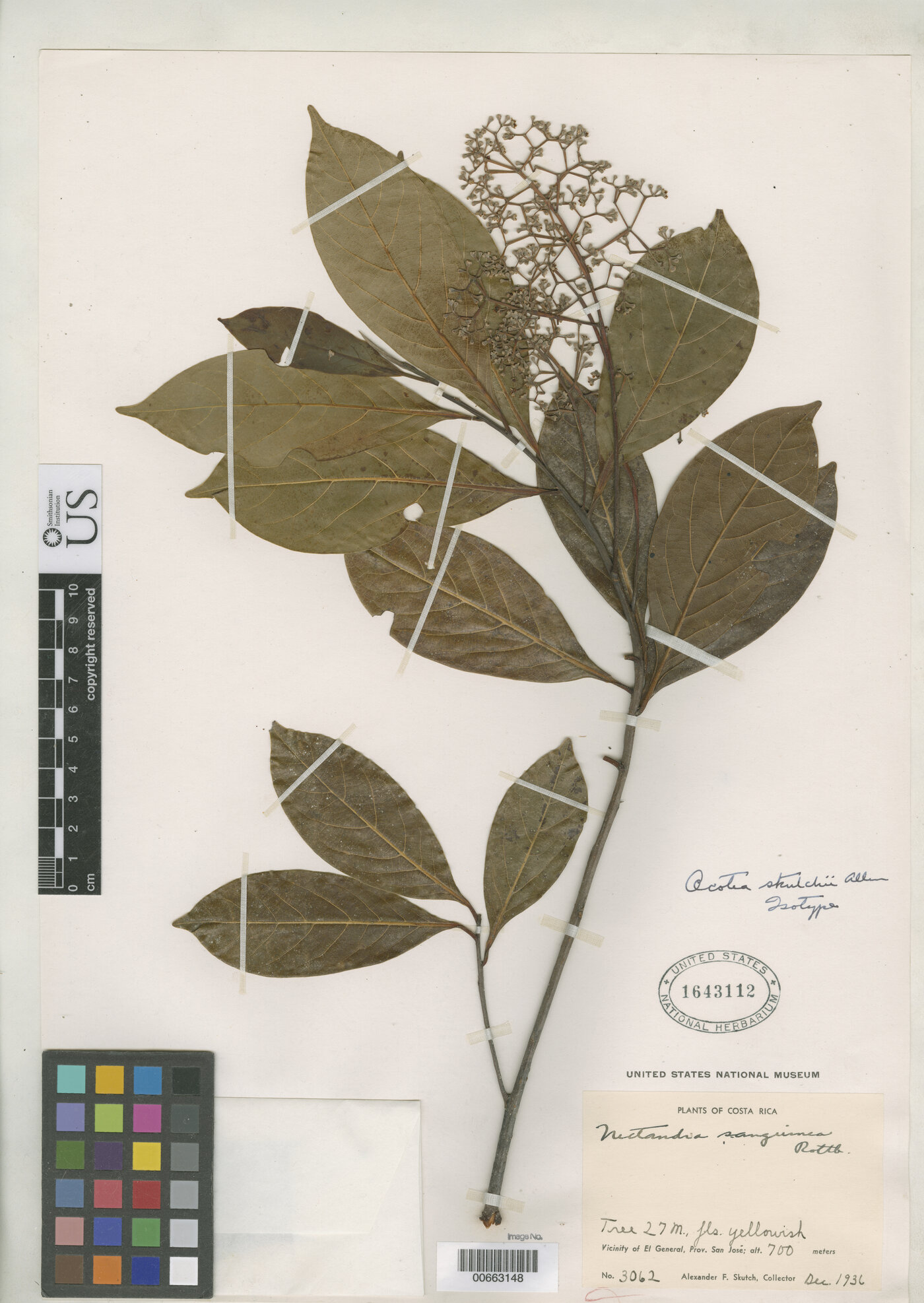
The Alexander Skutch Connection
The scientific synonym Ocotea skutchii honors Alexander Frank Skutch (1904-2004), one of the most influential naturalists in the history of tropical biology. Born in Baltimore, Skutch received his doctorate in botany from Johns Hopkins University in 1928 and first came to the tropics to study banana diseases for the United Fruit Company. But his heart was captured by birds.
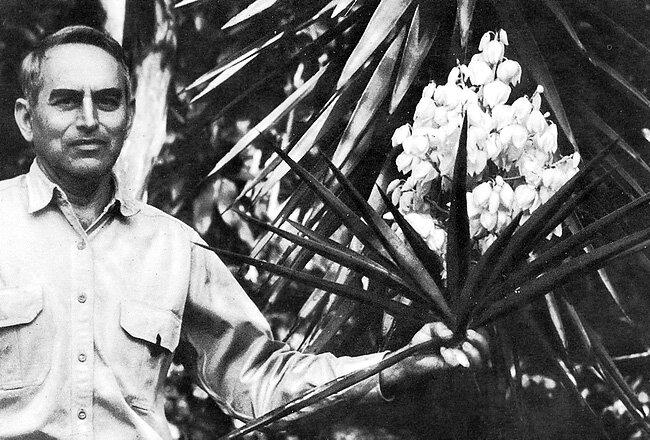
In 1941, Skutch purchased a farm in Costa Rica's San Isidro de El General valley, naming it Los Cusingos after the Fiery-billed Aracari (Pteroglossus frantzii) that frequented the property. For the next six decades, he lived there with his wife Pamela, daughter of the English naturalist Charles Lankester, observing birds and writing. A lifelong vegetarian who believed in "treading lightly on the mother Earth," Skutch lived without electricity until his final years, bathing in the nearest stream and growing his own food.
Skutch's best-known work is A Guide to the Birds of Costa Rica, co-authored with Gary Stiles. He is also remembered for pioneering research on helpers at the nest, cooperative breeding behavior where non-breeding birds assist in raising young. He died just eight days before his 100th birthday in 2004, and is buried at Los Cusingos, which is now a bird sanctuary managed by the Tropical Science Center. Over 300 bird species have been recorded there, 200 of which Skutch himself described.
Chemistry and Research
Research on Ocotea species in Monteverde has analyzed the chemical composition of leaf essential oils across the genus. Ocotea whitei belongs to a group characterized by significant concentrations of alpha-pinene (9.8-22.5%) and beta-pinene (9.7-21.3%), monoterpenes that contribute to the aromatic qualities of the leaves. These compounds are shared with O. caudata and O. floribunda, suggesting a chemical affinity within this group.
Alpha- and beta-pinene are among the most pharmacologically significant monoterpenes. Research has demonstrated a wide range of biological activities including antimicrobial, anti-inflammatory, antioxidant, and anticancer effects. In laboratory studies, these pinenes show synergistic activity with antibiotics against methicillin-resistant Staphylococcus aureus (MRSA), and inhibit biofilm formation in pathogenic fungi. The compounds appear to work by disrupting bacterial cell membranes.
Screening for biological activity revealed that Ocotea whitei essential oil is toxic to M-14 melanoma cells, a finding that has sparked interest in the potential pharmaceutical applications of Lauraceae compounds. Broader research on pinenes has shown inhibitory effects on breast cancer and leukemia cell lines. While no clinical applications have yet emerged specifically from O. whitei, the genus Ocotea continues to attract pharmaceutical interest for its diverse bioactive compounds.
Uses
The wood of Ocotea whitei is dense and durable, making it suitable for demanding applications. In Panama, it has been used in heavy construction, port installations, hydraulic works, railroad ties, and flooring. The timber's resistance to moisture and decay made it particularly valuable for structures in contact with water or soil.
Conservation
Ocotea whitei is classified as Least Concern by the IUCN, with stable populations across its range from Honduras to Peru. While not currently threatened, the species faces the same pressures affecting tropical forests throughout Central America: deforestation, fragmentation, and the loss of large frugivores that disperse its seeds. Conservation of mature forest habitat and wildlife corridors remains essential for long-term persistence of this and other Lauraceae species.
The connection to Alexander Skutch offers an additional dimension to conservation. Los Cusingos, his former farm, now protects 78 hectares of secondary and primary forest in the Alexander Skutch Biological Corridor. Visiting this sanctuary honors the legacy of a naturalist who believed that detailed, patient observation of the natural world was the foundation of all conservation.
Resources & Further Reading
Species Information
Authoritative taxonomic information, synonyms, and global distribution data.
Detailed species account from the Smithsonian Tropical Research Institute including morphology, ecology, and uses.
Citizen science observations and photographs from Costa Rica and Panama.
BCI Forest Dynamics Research
Groundbreaking study demonstrating Janzen-Connell effects in Ocotea whitei through canker disease patterns.
Six-year study of seedling cohorts testing Janzen-Connell predictions on recruitment and survival.
Information about the long-term forest dynamics plot where Ocotea whitei research has been conducted since 1980.
Daniel Janzen's original paper proposing the hypothesis that host-specific enemies maintain tropical tree diversity.
Ocotea Research
Chemical analysis of Ocotea essential oils including alpha-pinene and beta-pinene content.
Comprehensive review of the pharmacological properties of pinenes including antimicrobial, anti-inflammatory, and anticancer effects.
Overview of the ecological relationship between Ocotea trees and frugivorous birds in Monteverde.
Taxonomic & Historical Sources
Original description of Ocotea whitei by Robert E. Woodson Jr., based on specimens from Panama.
Caroline K. Allen's paper describing Ocotea skutchii, now a synonym of O. whitei.
Biography of the botanist who first described Ocotea whitei in 1937.
Alexander Skutch
Biography of the naturalist who spent over 60 years studying birds in Costa Rica.
Official website of Alexander Skutch's former farm, now a bird sanctuary with over 300 recorded species.
Essay on Skutch's influential memoir about life at Los Cusingos.