Lorito
Pink bottlebrush flowers against dark cloud forest. The bark of this high-altitude shrub was once used to adulterate quinine, earning it the name "bastard briziletto."
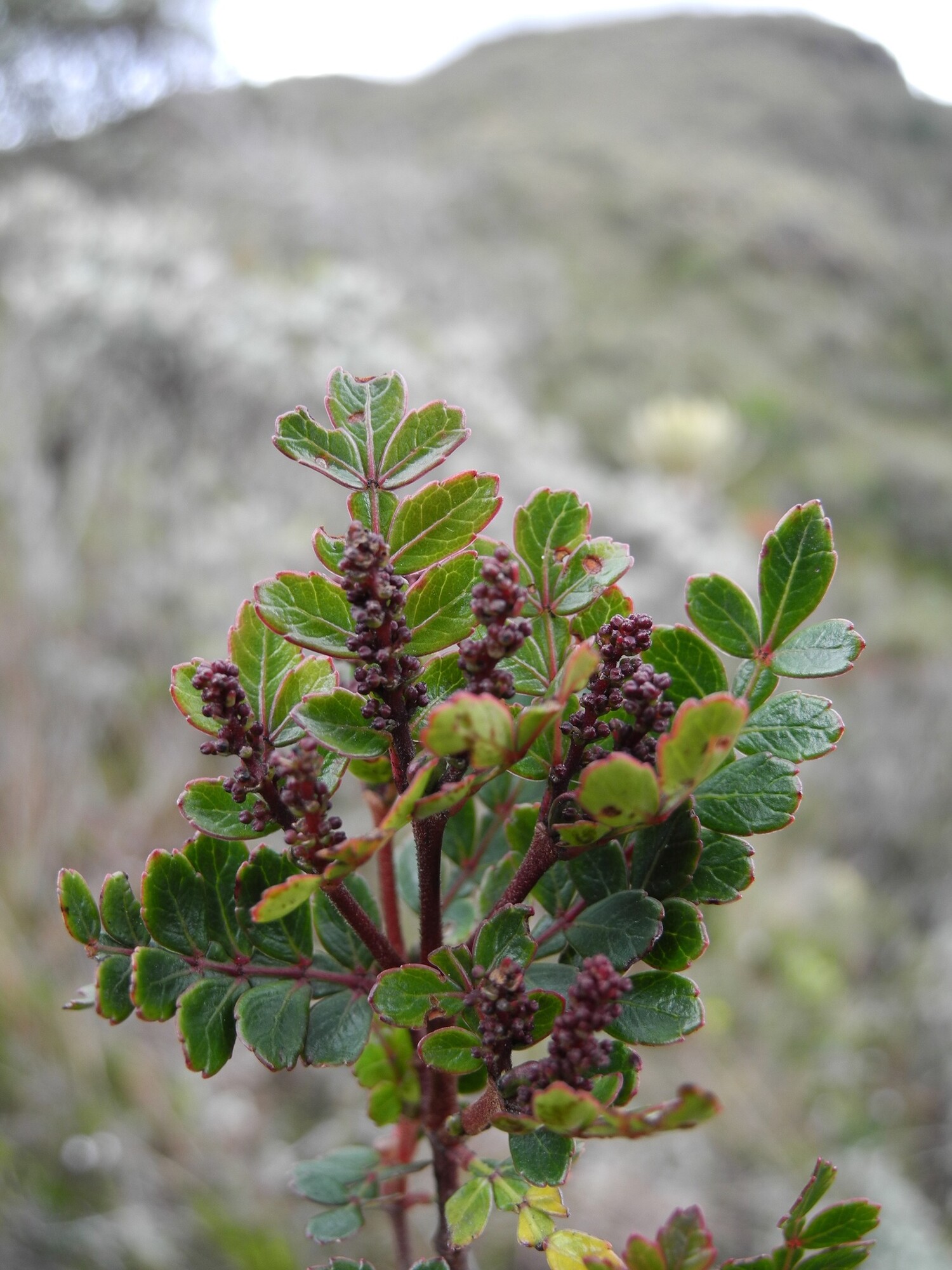
In 18th-century Caribbean ports, unscrupulous merchants mixed the bitter bark of a cloud forest shrub into shipments of quinine, the precious anti-malarial extract from Cinchona trees. The adulterant came from Weinmannia pinnata, whose tannin-rich bark mimicked the astringency of genuine cinchona closely enough to fool buyers. The deception gave the plant its English name: "bastard briziletto," marking it as a counterfeit of brasiletto, the valuable red dyewood. Three centuries later the quinine trade has vanished, but the little tree still clings to cloud-wrapped ridges from Mexico to Bolivia, its pink flower spikes brightening the understory of oak forests perpetually wreathed in mist.
Weinmannia pinnata holds a distinguished place in the history of New World botany. Patrick Browne, an Irish physician working in Jamaica, described it in 1756 under the name Windmannia, making it one of the first tropical American plants to enter the Linnaean system when Carl Linnaeus formalized the species three years later. The genus commemorates Johann Wilhelm Weinmann, a Regensburg pharmacist whose Phytanthoza Iconographia (1737-1745) was the first important botanical work to use color-engraved prints, illustrated by the young Georg Dionysius Ehret, who would become one of history's greatest botanical artists.
Identification
Habit
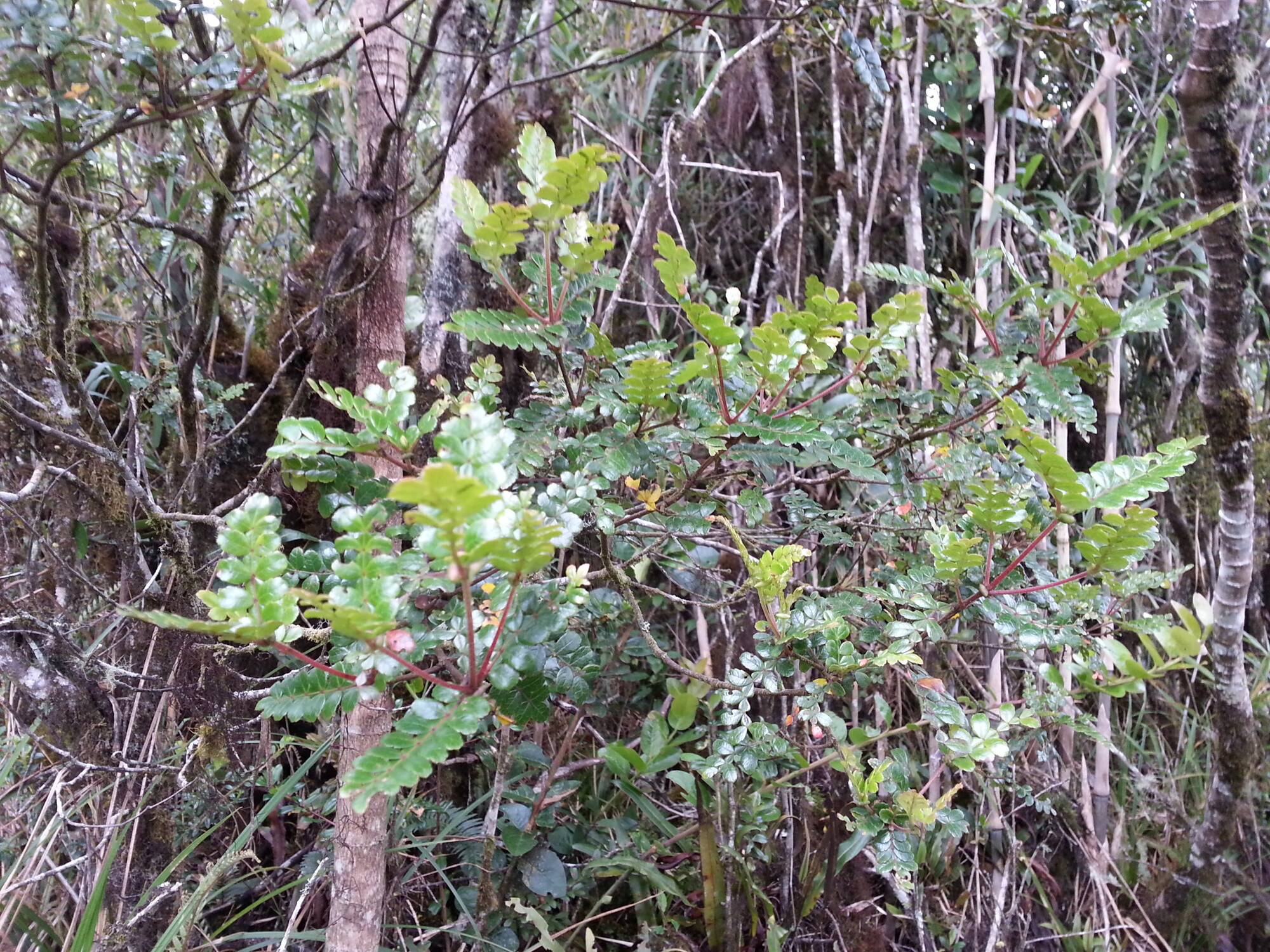
Weinmannia pinnata grows as an evergreen shrub or small tree. In Costa Rica, the Manual de Plantas describes it as reaching 2 to 6 meters, though across its range individuals can grow to 15 meters with trunks up to 30 cm in diameter. The stems are densely to moderately appressed-puberulent (finely hairy, pressed flat), becoming smoother with age. Size varies dramatically with altitude and exposure: on wind-battered ridges above 3,000 meters it remains a compact shrub barely two meters tall, while in protected mid-elevation cloud forest it can reach tree stature. The heartwood is reddish-brown, distinct from the whitish sapwood, and the bark exudes an astringent gum rich in tannins. Henri Pittier, collecting on Volcán Irazú in the 1890s, described it as "Arbre de 5-10 m. de hauteur" at Sitio Birris, 2,800 meters.
Leaves
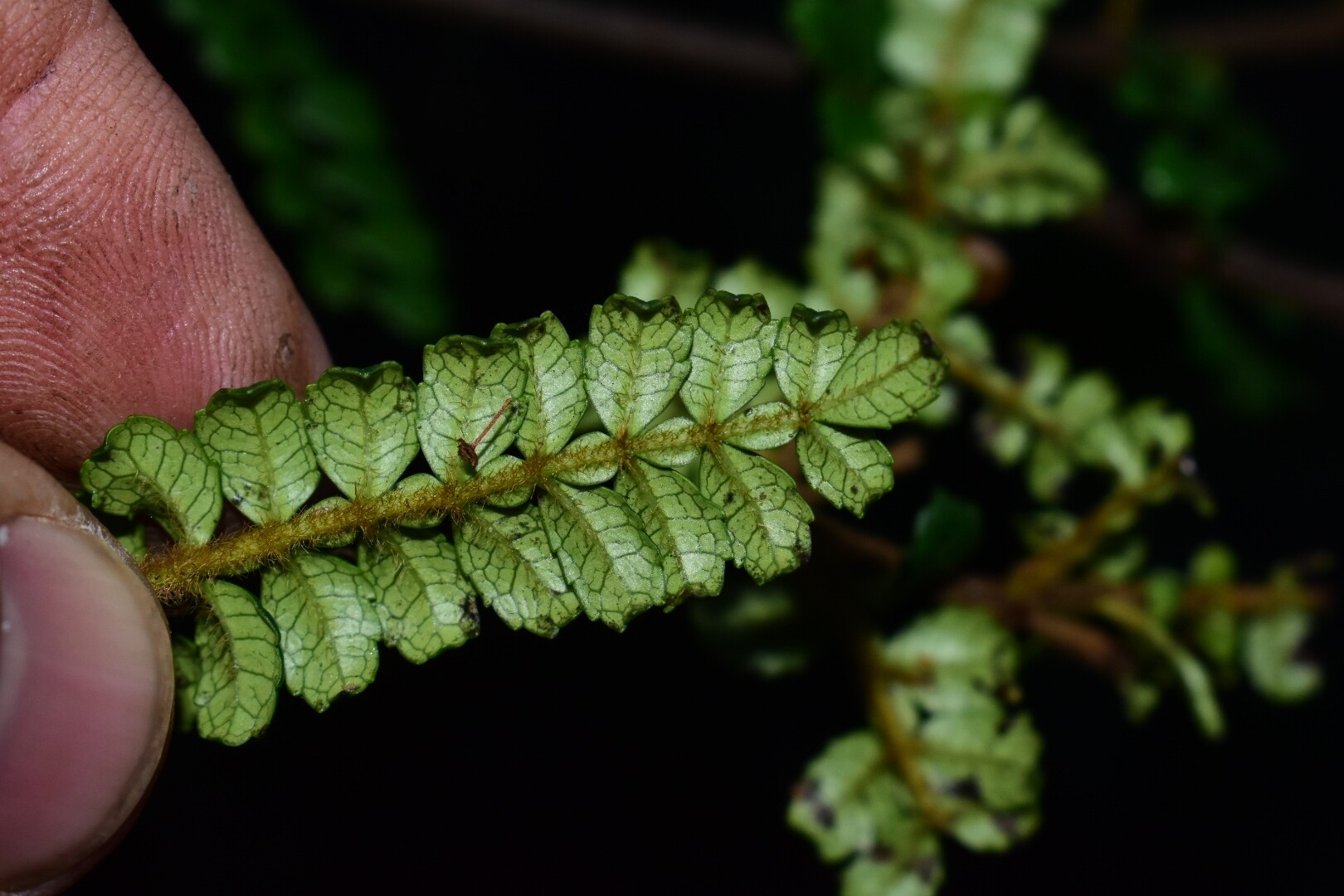
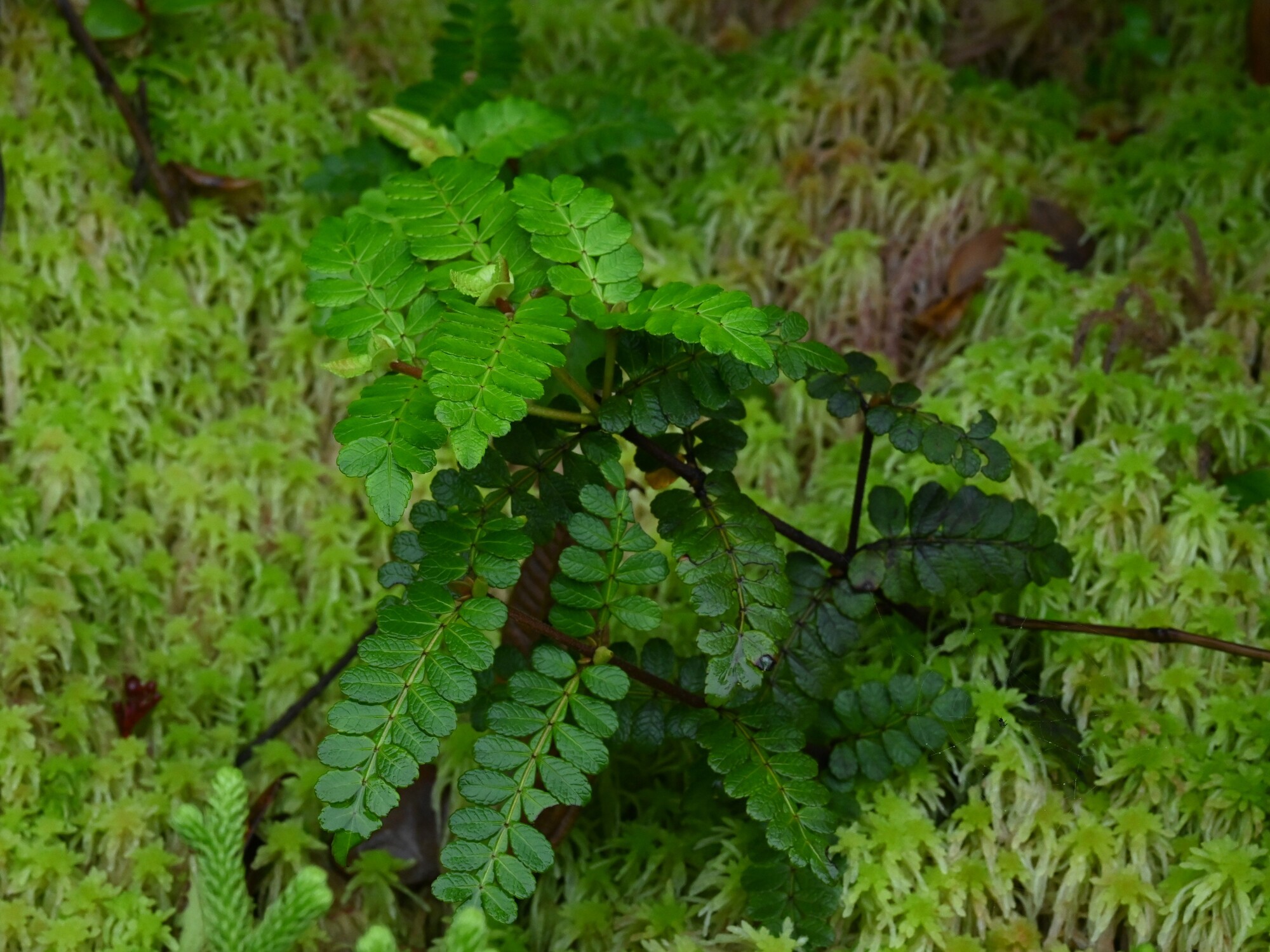
The leaves are the feature that gives the species its name: "pinnata," Latin for feathered. They are pinnately compound, arranged in opposite pairs, and reach up to 10 cm long. Each leaf bears 9 to 20 oval leaflets along a winged rachis (central axis), with each leaflet showing serrated margins and prominent venation. The rachis itself is a key diagnostic character for the genus, broadly winged between each pair of leaflets so that the leaf appears almost ladder-like. The undersides of the leaflets carry rusty-brown hairs, particularly along the midrib and veins, and become paler and glabrous (hairless) with age on some forms. Interpetiolar stipules (small appendages between the leaf bases of opposite leaves) are present, another hallmark of Weinmannia.
Flowers
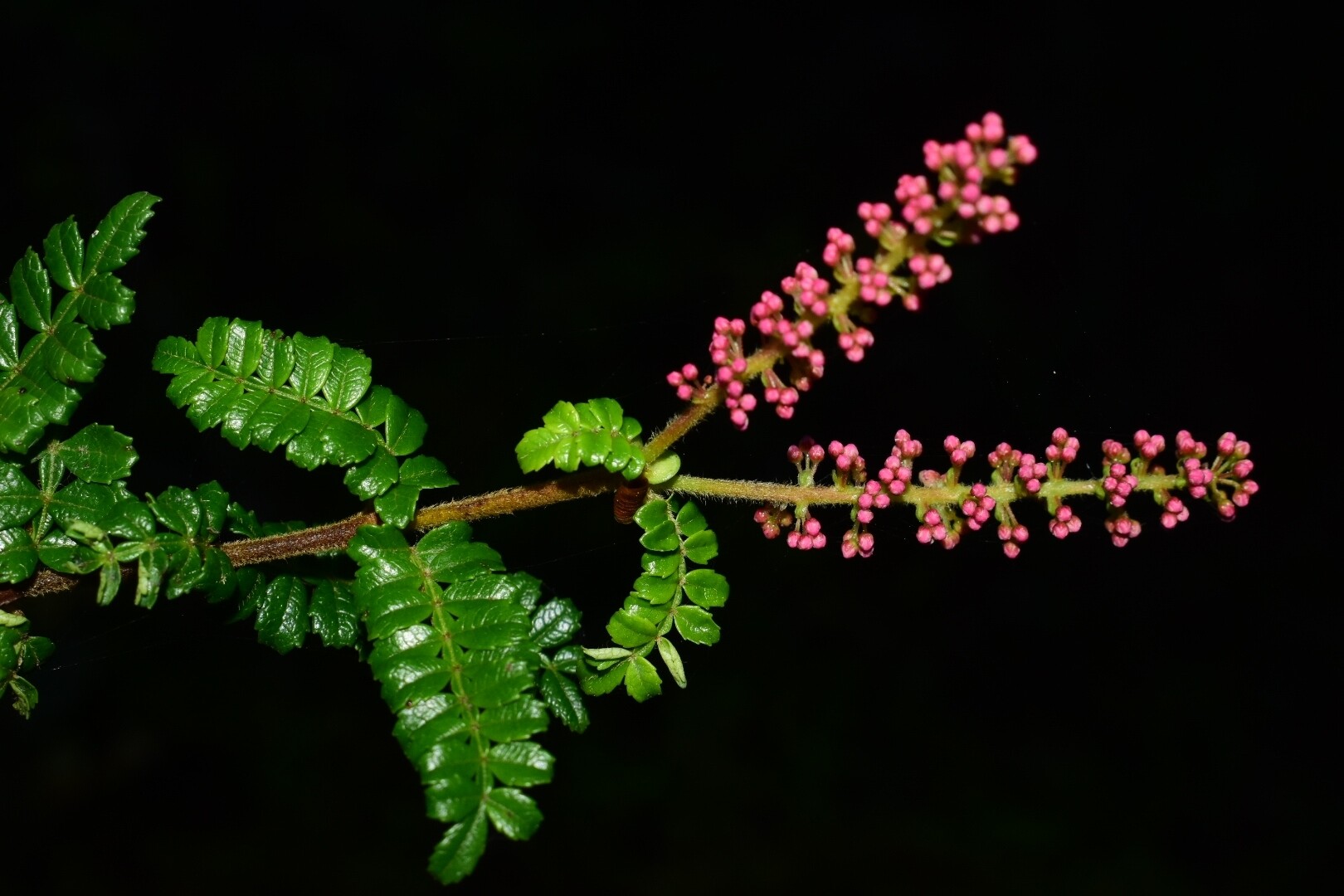
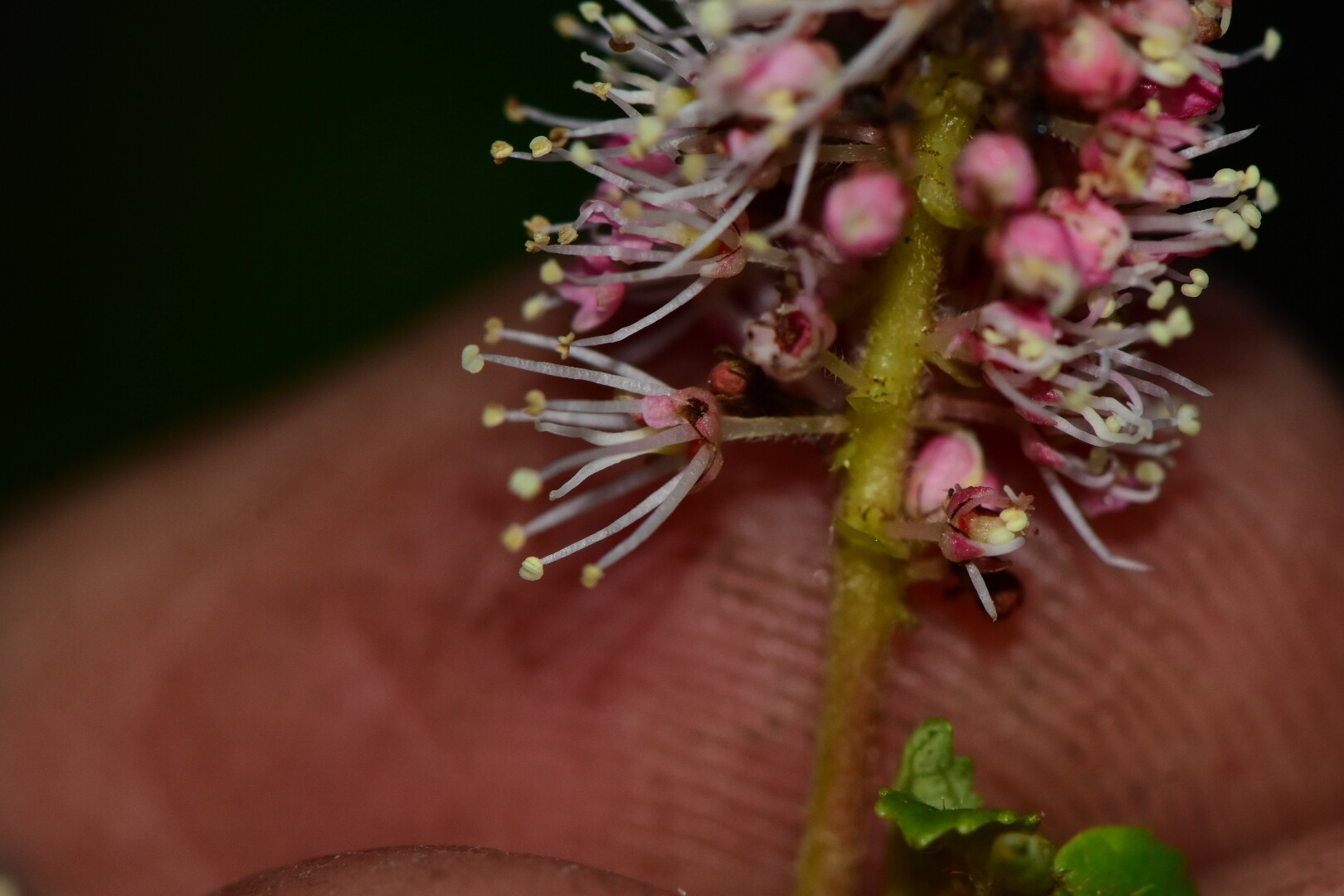
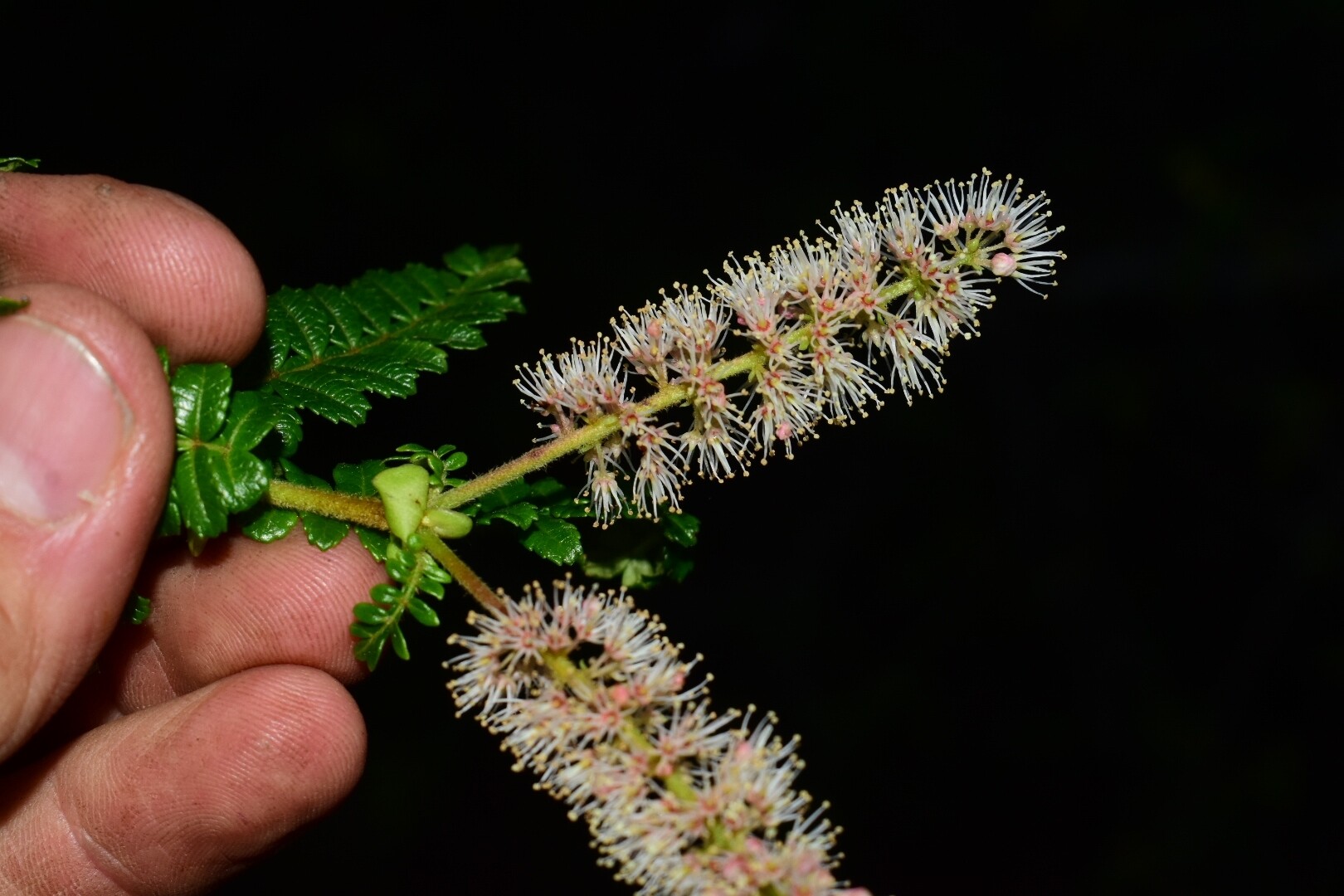
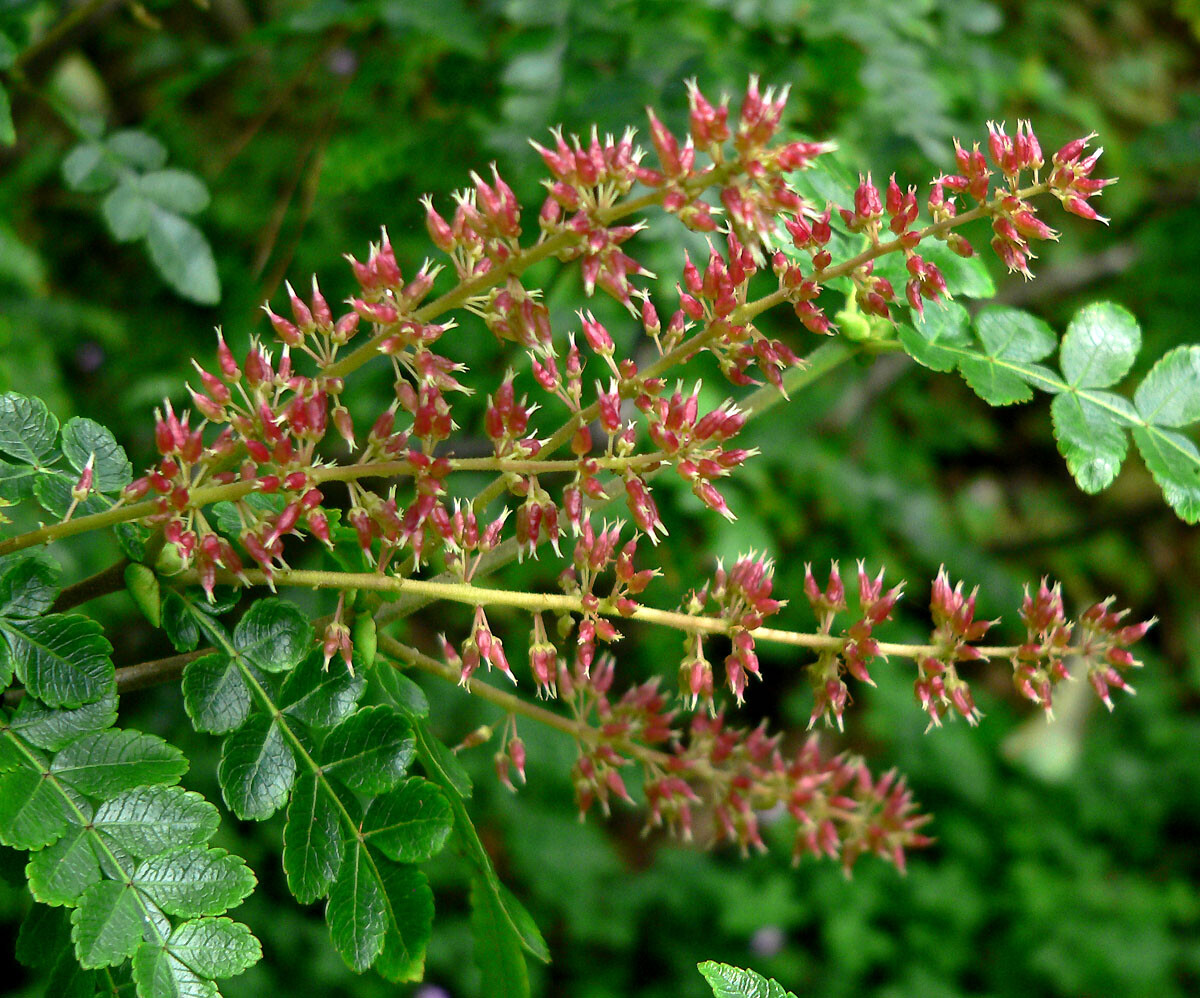
The flowers are small and bisexual, arranged in bottlebrush-like racemes up to 10 cm long. In bud, the flowers are a vivid pink that stands out sharply against the dark cloud forest backdrop. As they open, each flower reveals 8 to 10 white or pale stamens tipped with yellow anthers, radiating outward in a starburst pattern. The calyx and petals are 4- to 5-lobed, with the ovary 2-chambered and bearing 2 styles. The overall effect is striking: dense spikes of delicate white filaments emerging from clusters of tiny pink cups along a central axis. The flowers are apparently scentless, a pattern shared across the genus.
Fruits
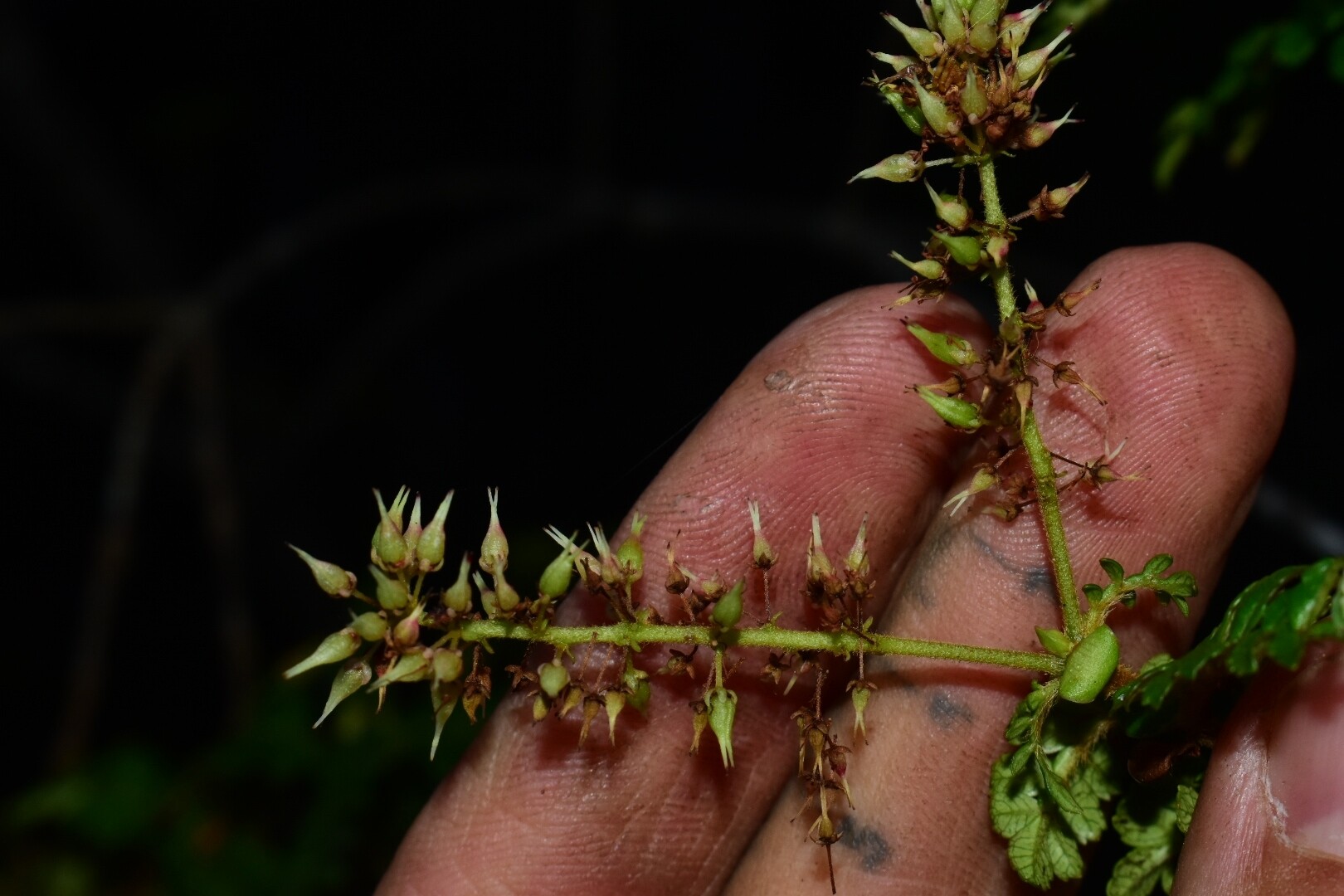
The fruit is a small, dry, red capsule divided into two chambers, each tipped by the remnants of the long style that gives the fruiting spike a spiny appearance. The capsules split open vertically from apex to base, releasing tiny seeds coated in fine hairs. These hairs increase air resistance, allowing the seeds to ride wind currents through the cloud forest canopy, an effective dispersal strategy in the high-altitude, windy environments where Weinmannia thrives.
Distribution
Weinmannia pinnata has one of the broadest ranges of any species in its genus, spanning from central Mexico through Guatemala, Honduras, Costa Rica, and Panama into South America, where it extends along the Andes through Colombia, Venezuela, Ecuador, Peru, and Bolivia into southeastern Brazil. It also colonized the Caribbean, reaching Cuba, Jamaica, Hispaniola, Puerto Rico, and the Lesser Antilles as far south as St. Lucia. GBIF records total over 4,500 occurrences across more than ten countries, with Mexico (790 records), Colombia (581), Ecuador (563), and Costa Rica (550) contributing the largest shares.
In Costa Rica, the species occurs across all major mountain ranges, from Volcán Cacao (1,445 m) in Guanacaste to Cerro Echandi (3,163 m) on the Panamanian border. The 550 Costa Rican records span 128 unique localities, with the majority concentrated in Heredia province (36 localities, mostly around Volcán Barva in Parque Nacional Braulio Carrillo, a reflection of intensive collecting by botanist Brad Boyle), followed by San José (30 localities) and Puntarenas (16). Elevations range from an outlier at 650 meters at Estación Pitilla in Guanacaste to 3,236 meters near Cerro Apri in the Cordillera de Talamanca. Most records fall between 1,500 and 3,000 meters. In the Brunca region, the species has been collected at Cerro Chai (1,925 m), Zona Protectora Las Tablas, and along the trail to Cerro Echandi in subparamo habitat above 2,300 meters.
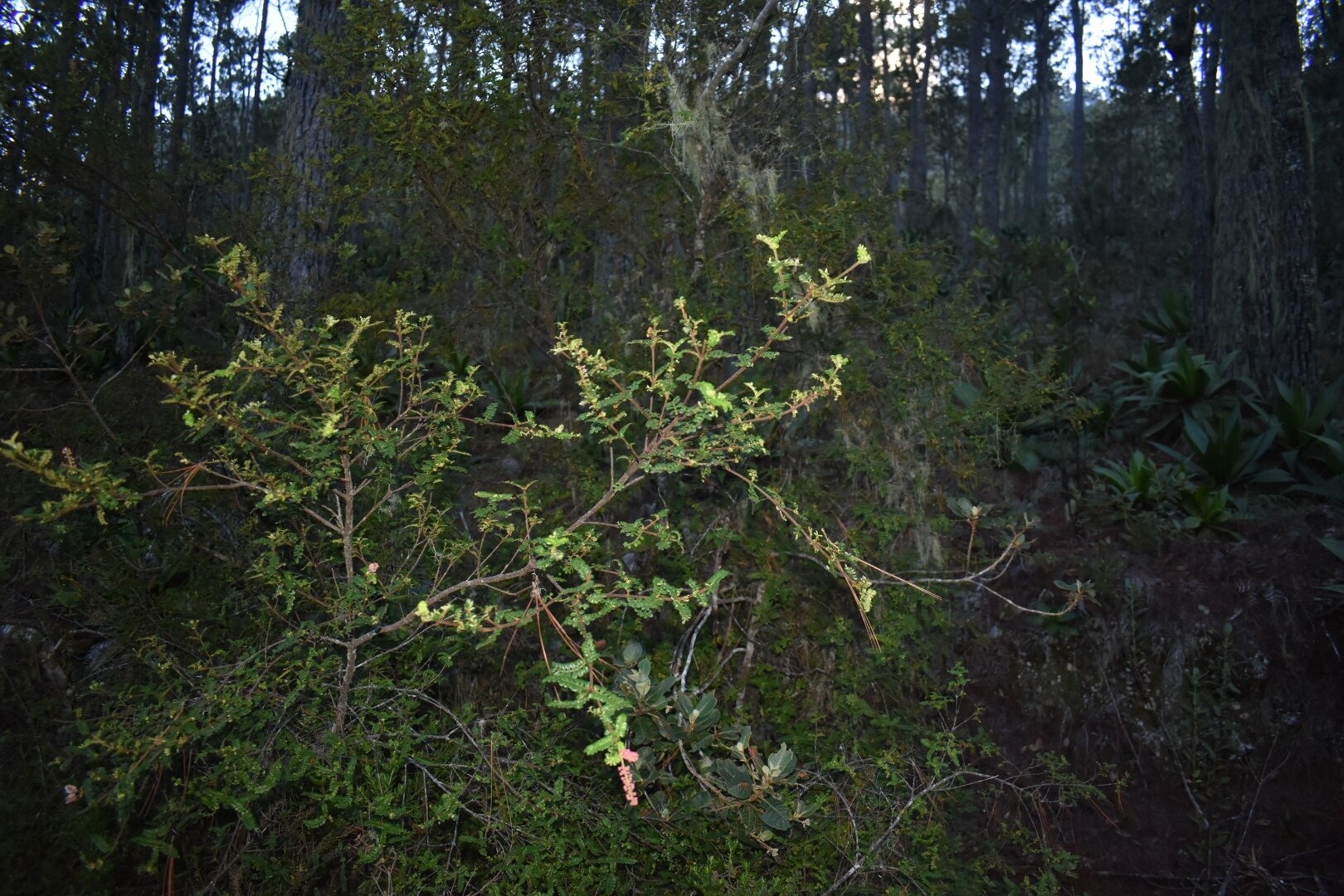
The species inhabits cloud forest, oak-dominated montane forest, and subparamo shrubland. In the Cordillera de Talamanca, it grows in the understory of forests dominated by Quercus costaricensis and Q. copeyensis, whose massive trunks reach 50 meters tall. Accompanying species include Schefflera rodriguesiana, Styrax argenteus, Magnolia, Drimys, and the dwarf bamboo Chusquea. At the highest elevations, above the treeline, it persists as a stunted shrub in the open subparamo alongside Vaccinium and páramo grasses. Multiple collection records note the species from secondary forest, areas in succession, and even roadside habitats, evidence of its capacity to colonize disturbed montane sites.
Ecology
In Costa Rica's Talamancan oak forests, Weinmannia pinnata occupies a mid-successional niche. A 2023 study in Landscape Ecology examining how disturbance and light shape the elevation ranges of tropical mountain trees found that W. pinnata is positioned between early-successional species like Schefflera rodriguesiana and late-successional ones like Styrax argenteus. This means it colonizes forest gaps created by treefalls or landslides, persists as the canopy closes, but eventually gives way to more shade-tolerant species in mature forest. Collection records from "bosque secundario y potreros en sucesión" (secondary forest and pastures in succession) at La Chonta and other Talamancan localities confirm this role as a colonizer of disturbed montane sites, making it an important element of cloud forest recovery after disturbance.
Pollination in Weinmannia follows a generalist pattern. A study of floral biology across Cunoniaceae (Hopkins et al., 2015) found that the ancestral and predominant pollination mode in the family is generalist entomophily (insect pollination), with visitors including honey bees, native halictid bees, flies, beetles, and butterflies. The genus has additionally been associated with wind pollination, which may contribute to long-distance pollen movement across the fragmented montane habitats where these plants grow. The hairy seeds are dispersed by wind, their fine coating acting as a parachute that carries them on the air currents sweeping across exposed ridges and through forest gaps.
Taxonomic History
Patrick Browne (1720-1790), an Irish physician who spent years studying Jamaica's natural history, first described this plant in 1756 under the name Windmannia in his Civil and Natural History of Jamaica. Three years later, Carl Linnaeus formalized the genus as Weinmannia in the tenth edition of his Systema Naturae (1759, vol. 2, p. 1005), with W. pinnata as its type species. The lectotype, designated by Harling in Flora of Ecuador 61: 22 (1999), is specimen LINN-508.1 at the Linnean Society of London, based on Browne's Jamaican material.
The genus name honors Johann Wilhelm Weinmann (1683-1741), a pharmacist born in Gardelegen, Germany, who settled in Regensburg in 1710 and purchased his own apothecary shop two years later. Weinmann created a botanical garden and produced Phytanthoza Iconographia (1737-1745), a multi-volume florilegium (collection of flower illustrations) with over 1,000 hand-colored engravings. It is recognized as the first important botanical work to use color-engraved prints. The illustrations were begun by the young Georg Dionysius Ehret, using a newly developed mezzotint process. Ehret would go on to become one of the most celebrated botanical artists in European history. A common error attributes the genus name to J. A. Weinmann (1782-1858), a later botanist; the correct honoree is the earlier Regensburg pharmacist. The species epithet "pinnata" is Latin for "feathered" or "pinnate," describing the compound leaves with their multiple leaflets arranged along a central rachis.
The species has accumulated over 40 synonyms, a consequence of its vast geographic range and significant morphological variability. Botanists working in different regions over 250 years repeatedly described local populations as new species: W. intermedia from Mexico, W. hirta from Jamaica, W. hirtella from the Andes, W. burserifolia from Central America, W. stuebelii and W. weberbaueri from Peru. No comprehensive monograph has reconciled all these names. J. Francisco Morales of INBio published the key regional reference in 2010, a synopsis of Weinmannia in Mexico and Central America that recognized 10 species with identification keys and distribution maps. Morales maintained W. burserifolia as distinct, though the Plants of the World Online (POWO) at Kew treats it as a synonym of W. pinnata. In Costa Rica, the species was originally documented under the synonym W. intermedia Cham. & Schlecht. in the Primitiae Florae Costaricensis (1891-1901), with early collections by Hoffmann at Volcán Barba and by Henri Pittier and Adolphe Tonduz at Volcanes Irazú, Poás, and Barba in the 1890s.
Recent phylogenetic work has reshaped our understanding of Weinmannia at the genus level. Pillon et al. (2021), using the Angiosperms353 probe set, demonstrated that the genus as traditionally defined was paraphyletic (not a natural group), splitting into two distinct lineages. Because W. pinnata is the type species, the name Weinmannia stays with the American and Mascarene clade; the Old World species have been transferred to the revived genus Pterophylla. A 2025 phylogenetic study using 2bRAD sequencing further revealed that the genus originated in the southern extratropics and dispersed northward into the tropical Andes as Andean uplift created suitable cool, wet habitats. Older lineages are found at higher latitudes, with tropical species representing more recent arrivals. The family Cunoniaceae itself has an Australasian origin, making the presence of Weinmannia in the Neotropics a story of long-distance dispersal and subsequent diversification.
Similar Species
Approximately eight Weinmannia species occur in Costa Rica, and distinguishing them requires careful attention. W. wercklei Standl., endemic to Costa Rica and Panama, and W. karsteniana, ranging from Costa Rica to northwestern Venezuela, both overlap with W. pinnata in elevation and habitat. The Morales (2010) synopsis provides diagnostic keys, but identification remains challenging because the genus shows overlapping morphologies that may reflect recent divergence or hybridization. In Nicaragua, plants identified as W. pinnata are known only from sterile (non-flowering) material and the identification is considered tentative. The variability that generated over 40 synonyms across the species' range also creates difficulty at the local level: leaf size, pubescence (hairiness), and leaflet number can vary substantially even within a single population.
Conservation Outlook
Weinmannia pinnata is assessed as Least Concern by the IUCN, a status consistent with its broad distribution across more than ten countries and over 4,500 documented occurrences. In Costa Rica it is well represented within the protected area system, occurring in Parque Nacional Braulio Carrillo, P.N. Volcán Poás, P.N. Chirripó, P.N. La Amistad, P.N. Los Quetzales, Reserva Biológica Monteverde, P.N. Guanacaste, P.N. Rincón de la Vieja, and Zona Protectora Las Tablas. The species' ability to colonize secondary forest and successional habitats provides additional resilience against localized disturbance.
Cloud forests face particular vulnerability to climate change. As temperatures rise, the cloud condensation level shifts upward, effectively shrinking the habitat band that cloud-dependent species occupy. For a plant whose range extends from 650 to 3,236 meters but whose core habitat lies between 1,500 and 3,000 meters, this compression could reduce available habitat over the coming decades, particularly at the upper margins where subparamo populations have nowhere higher to go. The species' wide latitudinal range, from the Caribbean to the Andes, provides a buffer against complete range loss, but individual mountain populations in Central America may face increasing isolation as suitable habitat contracts upward.
Resources & Further Reading
Species Information
Plants of the World Online entry with accepted name, synonymy, and global distribution.
Over 4,500 global occurrence records with specimen data and distribution maps.
General overview including morphology, distribution, and common names.
Species account with details on habit, wood properties, and traditional uses.
Citizen science observations with field photographs from across the species' range.
Conservation assessment and population information.
Taxonomy & Nomenclature
Nomenclatural data, type specimens, and complete synonym list from Missouri Botanical Garden.
J. Francisco Morales. Anales del Jardín Botánico de Madrid 67(2): 137-155. The authoritative regional treatment with identification keys, descriptions, and distribution maps.
Genus-level overview including horticultural information and identification notes.
Scientific Literature
American Journal of Botany. Demonstrated paraphyly of Weinmannia and proposed the transfer of Old World species to Pterophylla.
Molecular Phylogenetics and Evolution. Revealed that the genus originated in the southern extratropics and dispersed northward into the tropical Andes.
Landscape Ecology. Documents the mid-successional role of W. pinnata in Costa Rica's Talamancan oak forests.
Kew Bulletin. Family-level study of pollination including the role of insects, birds, and geckos.
Frontiers in Pharmacology. Phytochemistry and bioactive properties of a related species' tannin-rich bark.
Related Reading
Biography of the Regensburg pharmacist who produced the first botanical work with color engravings.
Harvard University Herbaria page on Weinmann's landmark illustrated botanical work (1737-1745).
Overview of the ecoregion where W. pinnata forms part of the oak forest understory in Costa Rica and Panama.
Scientific Reports. Examines how glacial-era climate expanded montane habitats, potentially connecting Weinmannia populations across South America.