Coralillo
Hamelia patens Jacq. — The firebush of forest edges and clearings, its tubular orange-red flowers draw hummingbirds throughout the year while its medicinal leaves have soothed wounds and fevers across Mesoamerica for centuries.
Along forest edges from Florida to Argentina, wherever light penetrates the canopy, firebush ignites the understory with clusters of tubular flowers that glow like embers. In Costa Rica's Brunca region, Hamelia patens thrives in the disturbed zones where forest meets farm, its branches perpetually decorated with the orange-red blooms that earn it names like coralillo (little coral) and chichipince in Central America. This is the hummingbird bush par excellence: few garden plants in the Neotropics attract as many hummingbird species as firebush, making it a keystone of pollinator communities wherever it grows.
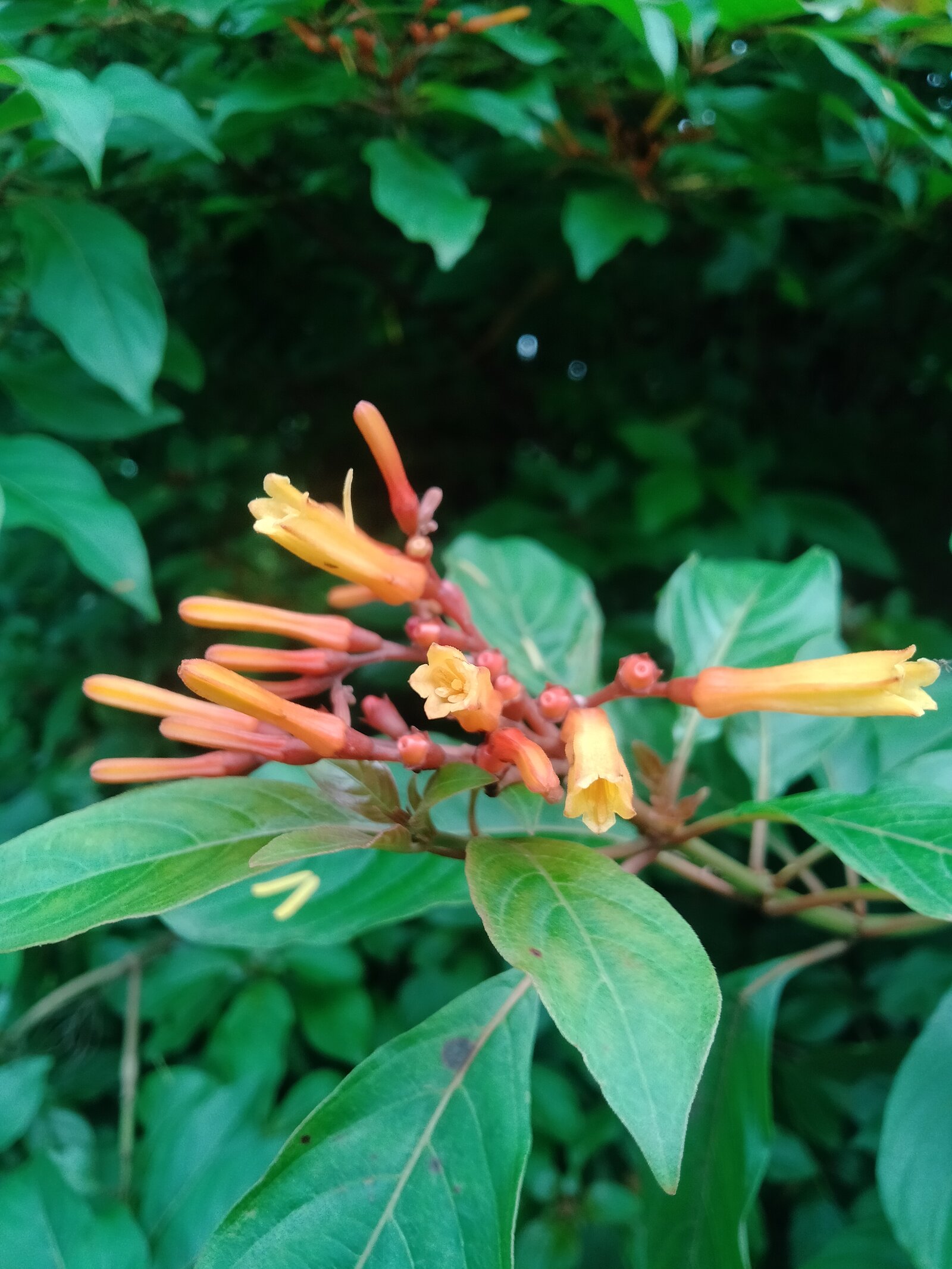
What looks like a garden ornamental has deeper roots in human history. Long before horticulturists discovered its landscaping appeal, Maya and Aztec healers recognized firebush as one of the most versatile medicinal plants in their pharmacopeia. The leaves, crushed and applied as poultices, treated burns, rashes, and bacterial infections. Leaf infusions reduced fevers and calmed inflammation. Modern pharmacology has validated much of this traditional knowledge, finding that Hamelia leaves contain potent antimicrobial and anti-inflammatory compounds. In rural Costa Rica, the folk name hierba de cáncer (cancer herb) reflects enduring belief in its healing power.
Identification
Leaves
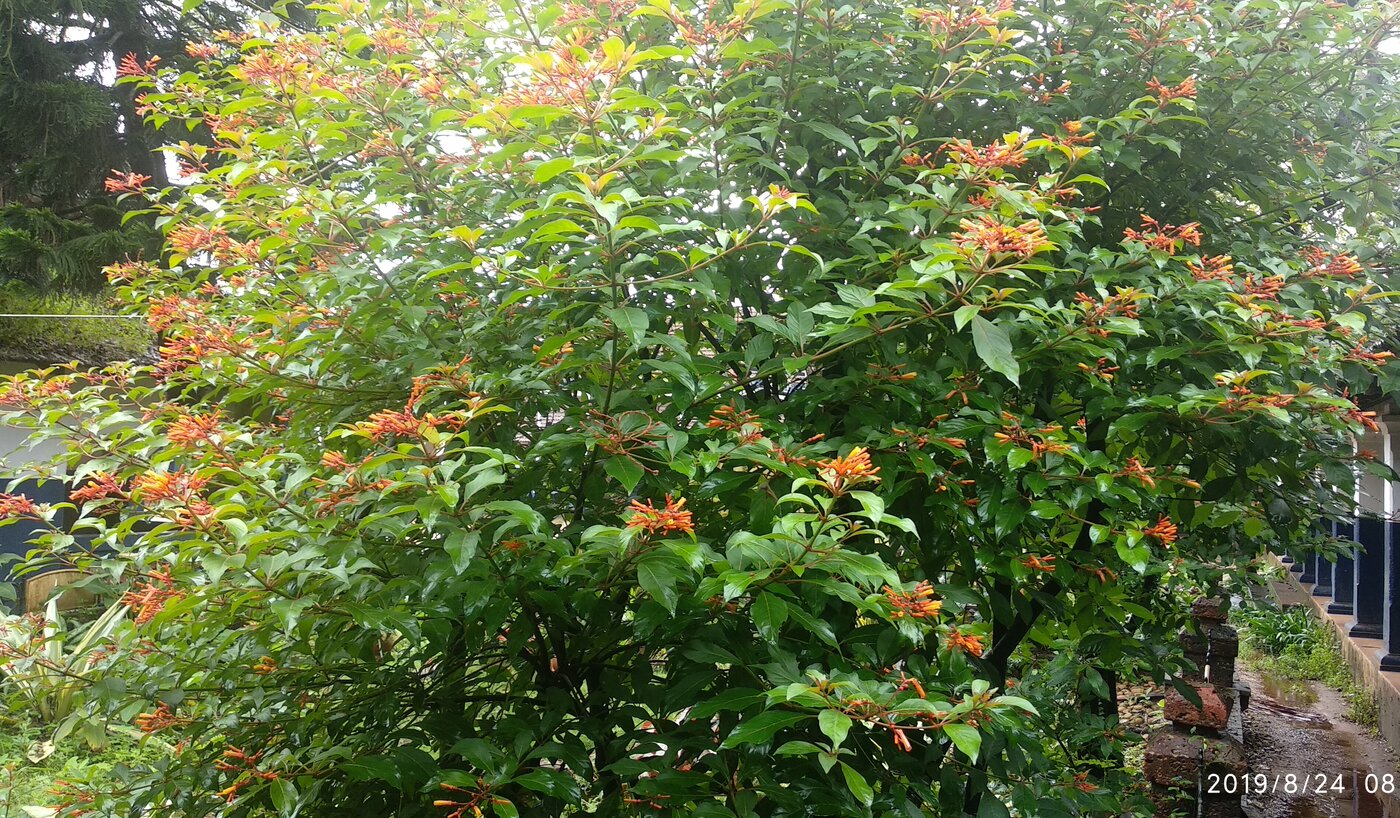
The leaves of firebush are arranged in whorls of three or four along the stems, or sometimes opposite. Each leaf is elliptic to ovate, 8-20 cm long, with a pointed tip and entire margins. The upper surface is medium to dark green; the lower surface is paler and often finely pubescent. The most diagnostic feature is the bright red coloration of the petioles and young stems, which contrasts vividly with the green foliage. When crushed, leaves release a slightly bitter, herbaceous scent.
Flowers
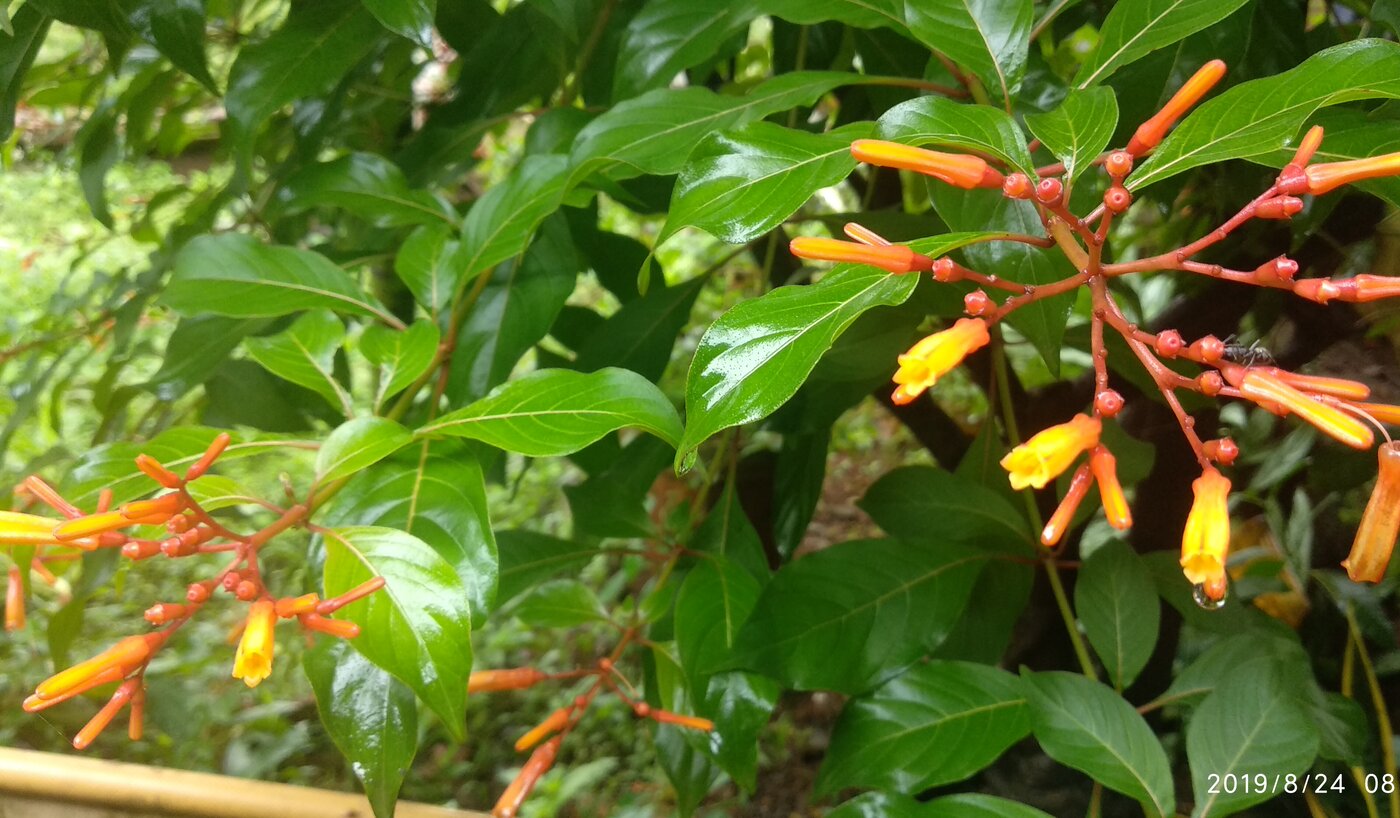
Firebush flowers are borne in terminal cymes that emerge bright red and age to orange-red, creating a bicolored effect within each cluster. The individual flowers are tubular, 1.5-2.5 cm long, with five small lobes that barely flare at the corolla mouth. This narrow tube is perfectly adapted for hummingbird pollination: the birds insert their bills deep into the flower to reach nectar at the base, while their foreheads contact the anthers and stigma positioned near the tube opening. Flowering occurs year-round in Costa Rica, though peak production happens during the wet season from May to November.

Fruits
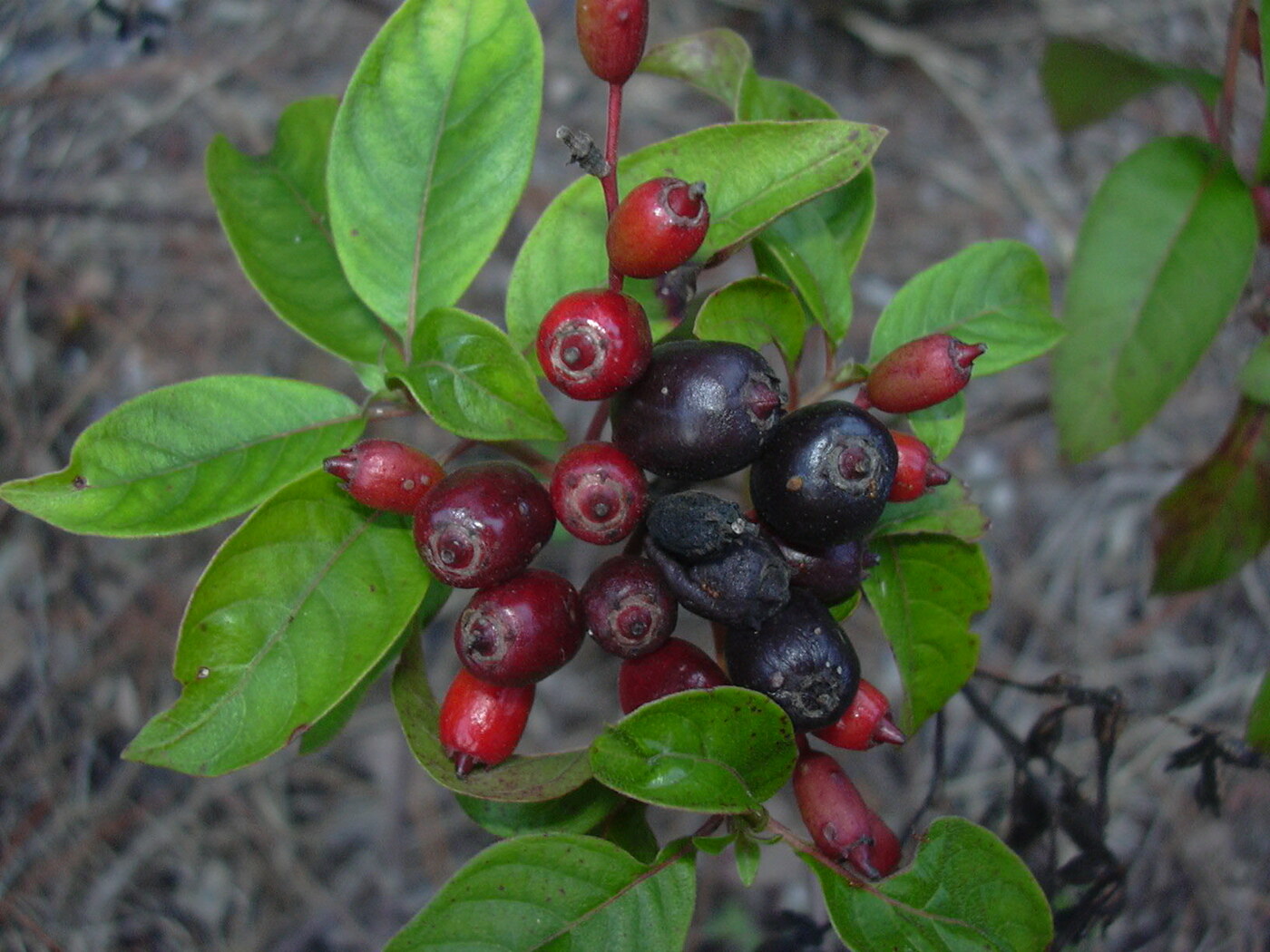
The fruits are small berries, about 5-8 mm in diameter, that ripen from green through red to deep purple-black. Each berry contains numerous tiny seeds embedded in juicy pulp. When fully ripe, the berries are edible and mildly sweet, with a flavor reminiscent of mulberry. In Costa Rica, children sometimes eat them as trail snacks, though the taste is unremarkable. The dark berries attract frugivorous birds, which disperse the seeds across the landscape after passing through their digestive systems.
Distribution
Firebush has one of the broadest native ranges of any Neotropical shrub, extending from southern Florida and the Florida Keys through Mexico, Central America, and the Caribbean to Paraguay and northern Argentina. It occurs in virtually every country between these extremes, adapting to a wide variety of tropical and subtropical climates. This vast distribution reflects its ecological flexibility as a pioneer species that thrives in disturbed habitats.
In Costa Rica, firebush occurs throughout all seven provinces, from sea level to approximately 1,600 meters elevation. It is most abundant in the lowland wet forests of the Caribbean slope and the Pacific lowlands, including the Osa Peninsula and the broader Brunca region. Here it colonizes forest edges, roadsides, riverbanks, and the margins of agricultural clearings. The species benefits from human landscape modification: where forests are fragmented, firebush expands along the newly created edges, becoming one of the most visible shrubs in rural landscapes.
Ecology
Hummingbird Pollination
No discussion of firebush is complete without addressing its extraordinary relationship with hummingbirds. A landmark study at La Selva Biological Station in Costa Rica documented seven hummingbird species visiting Hamelia patens as legitimate pollinators, accounting for approximately 86 percent of all flower visits. The most frequent visitors include the Rufous-tailed Hummingbird (Amazilia tzacatl), a territorial species that defends productive firebush patches, and the Long-billed Hermit (Phaethornis longirostris), a trapline forager that visits scattered plants along regular routes. Other documented pollinators include the Stripe-throated Hermit (Phaethornis striigularis), Crowned Woodnymph (Thalurania colombica), and Bronze-tailed Plumeleteer (Chalybura urochrysia). The plant's year-round flowering ensures a reliable nectar source even during months when other flowers are scarce.
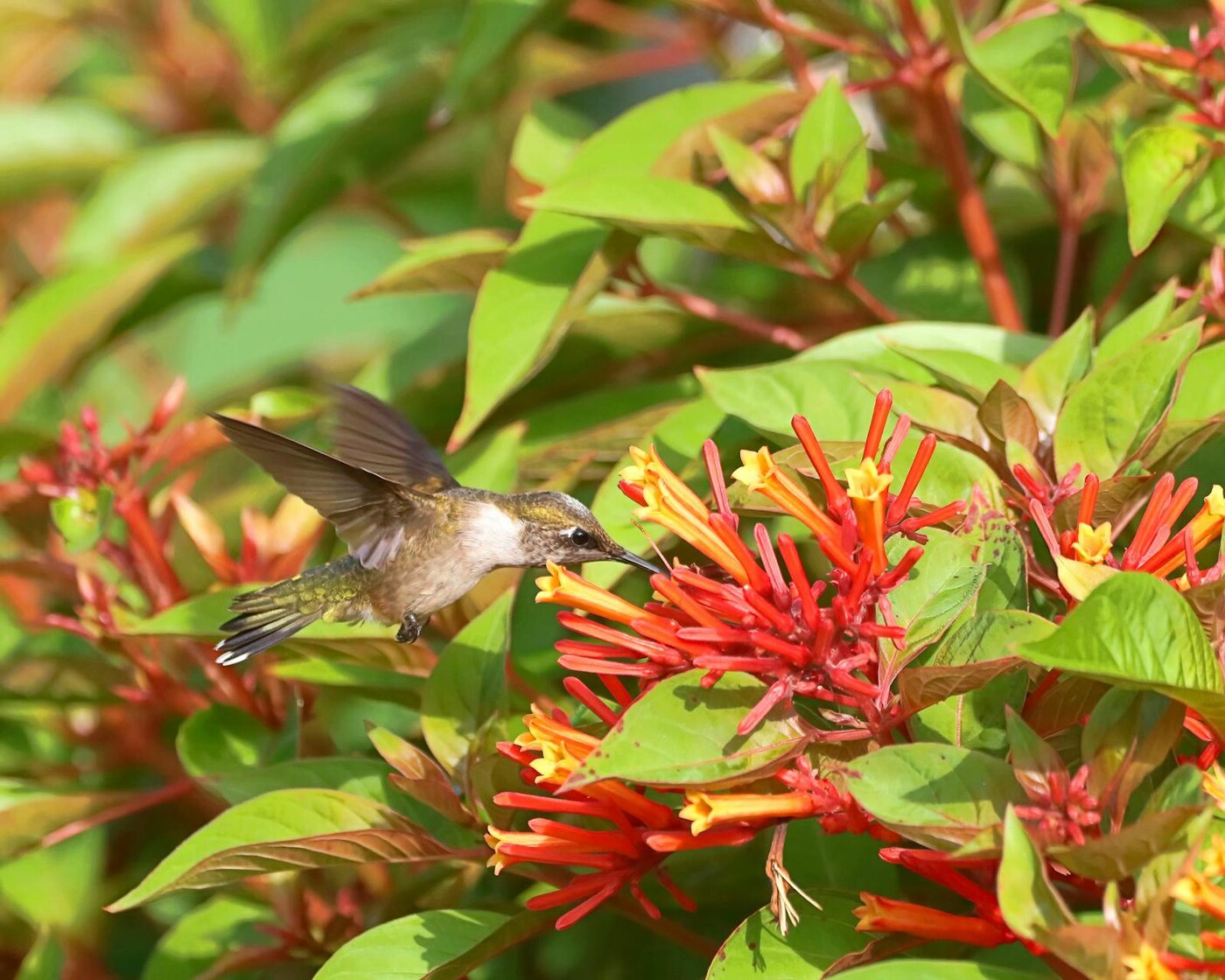
The pollination story has a twist: not all visitors play fair. The La Selva study found that 71 percent of flowers showed signs of nectar robbery, with four species of perching birds piercing flower bases to steal nectar without providing pollination services. Despite this high robbery rate, research showed that robbed flowers received similar amounts of pollen as unrobbed ones, suggesting that legitimate pollinators continue visiting regardless. The territorial hummingbirds, despite being the most frequent visitors, proved to be less effective pollinators than the traplining hermits, which move between distant plants and promote cross-pollination rather than self-fertilization.
Seed Dispersers
The purple-black berries of firebush attract a guild of frugivorous birds that disperse its seeds across the landscape. In Costa Rica, the Clay-colored Thrush (Turdus grayi), the national bird known locally as the yigüirro, is among the most important dispersers, foraging for ripe berries along forest edges where firebush grows abundantly. The Blue-gray Tanager (Thraupis episcopus), one of the most common birds in tropical America, regularly visits fruiting plants, as does its close relative the Palm Tanager (Thraupis palmarum). The Summer Tanager (Piranga rubra), a North American migrant that overwinters in Costa Rica, supplements its diet of bees and wasps with firebush berries during its tropical sojourn. Research on tropical frugivore networks has shown that thrushes and tanagers are among the most effective seed dispersers in fragmented landscapes, moving seeds between forest patches and into regenerating areas.
Butterflies and Moths
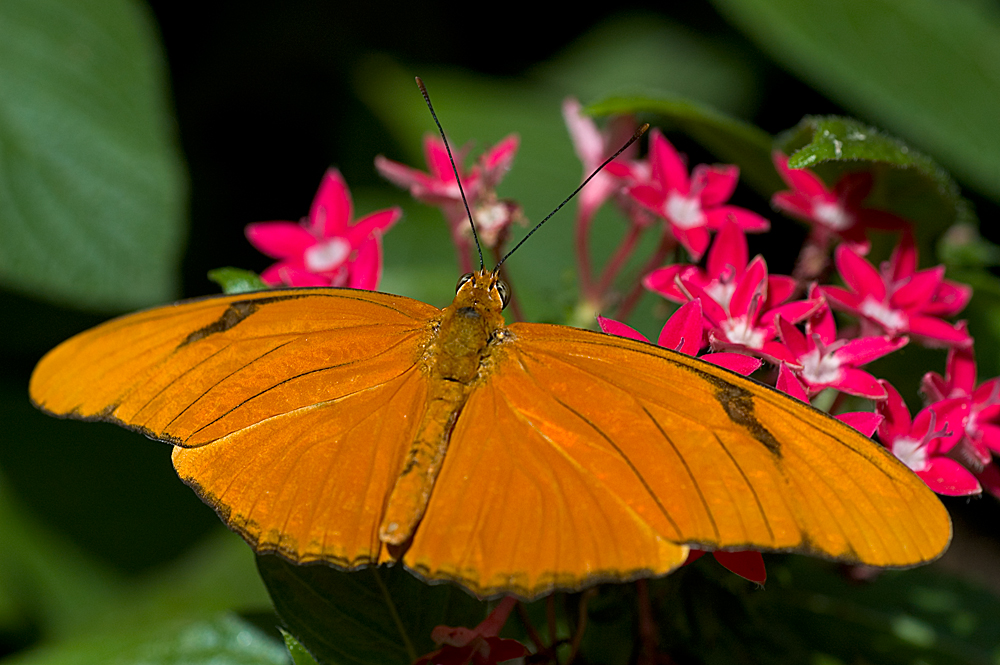
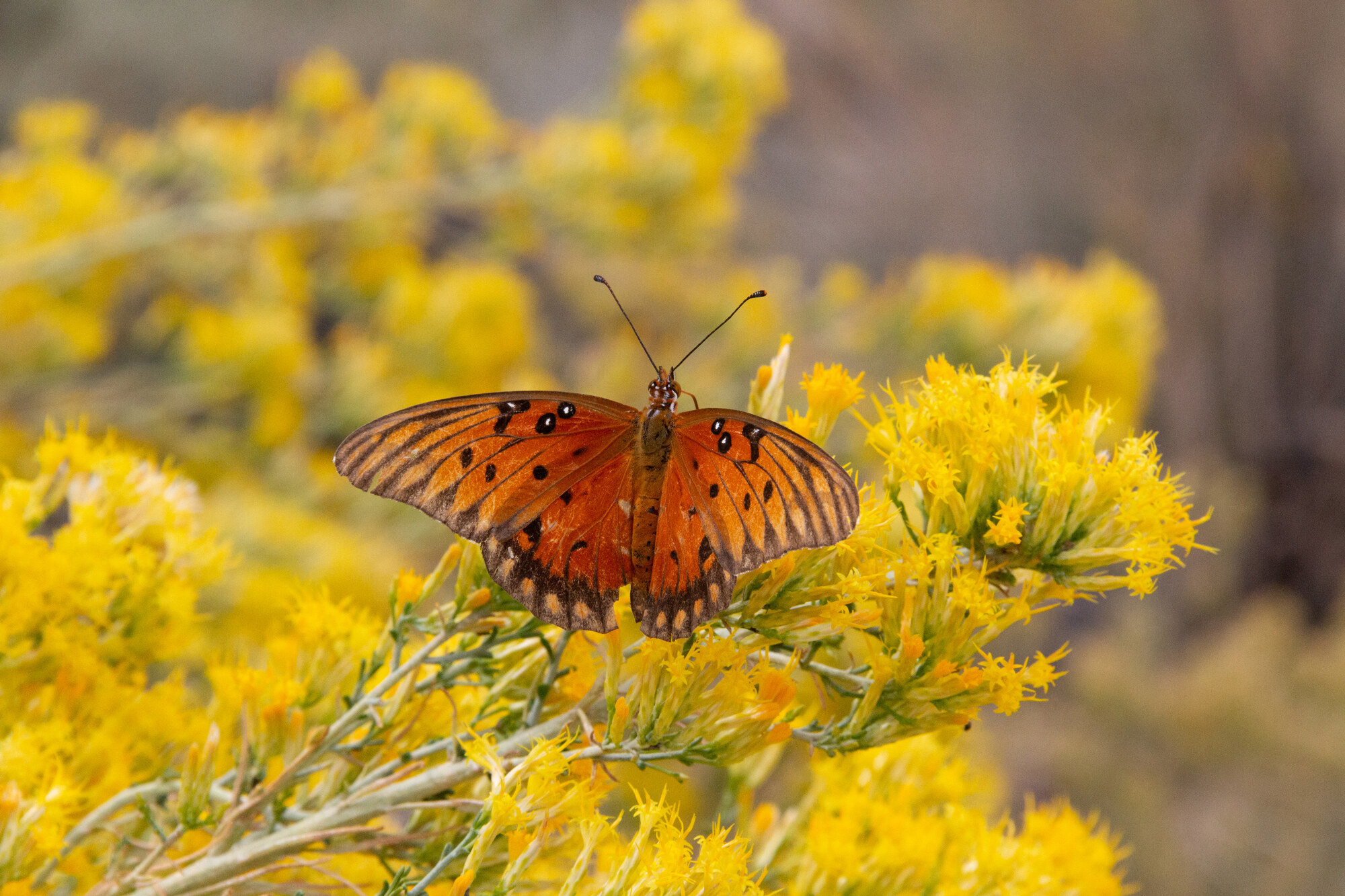
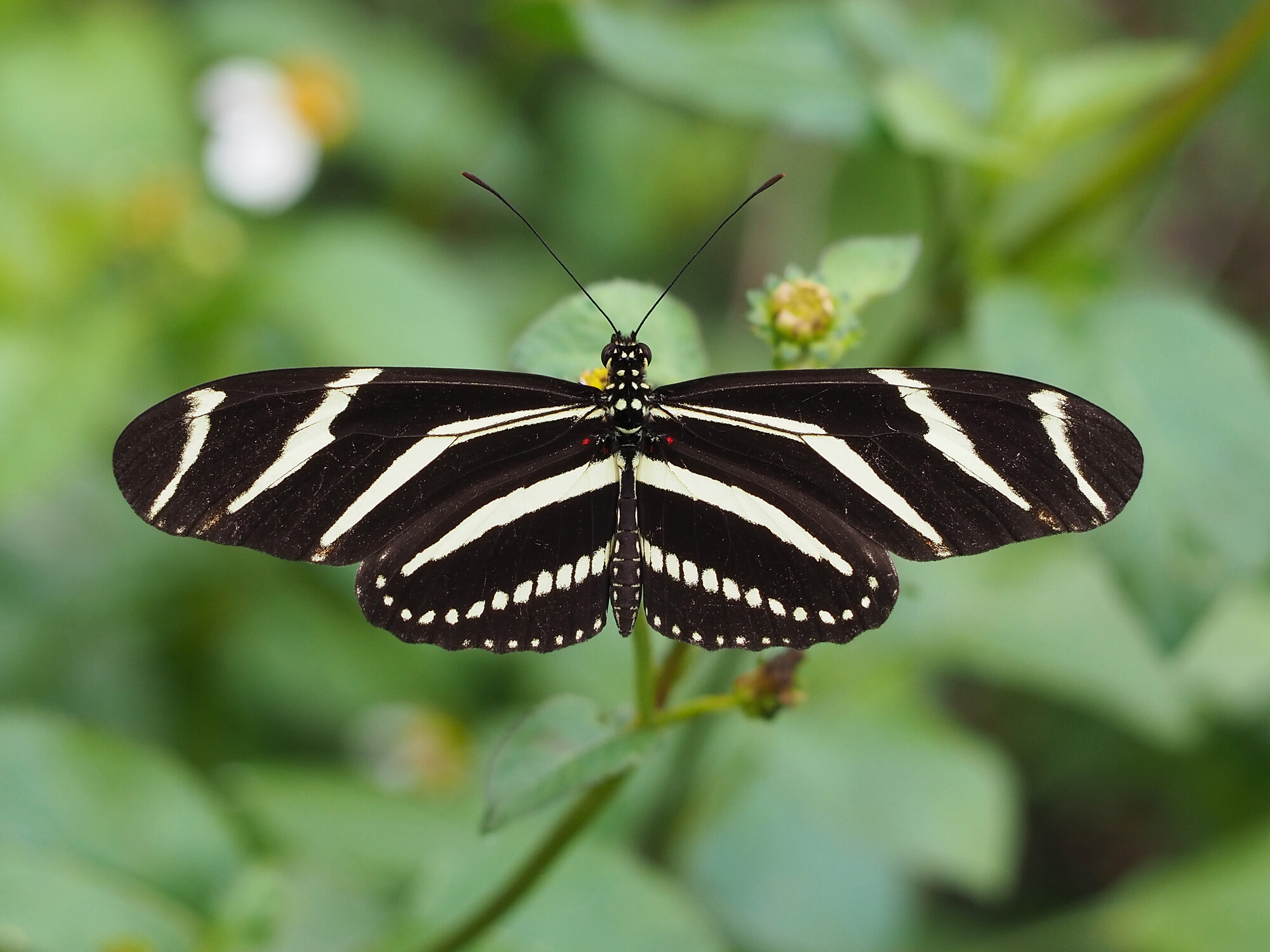
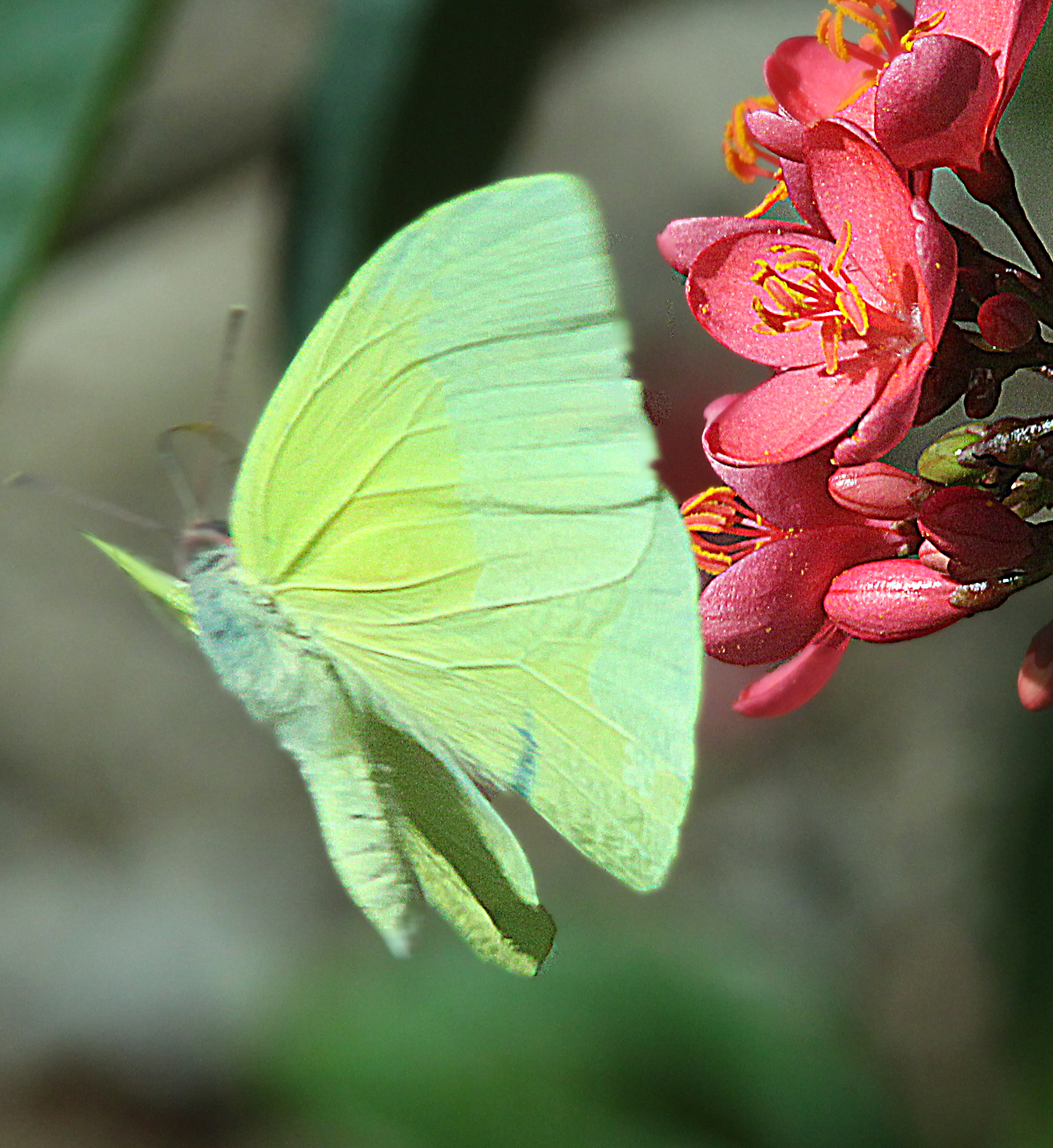
Firebush serves both as nectar source and larval host plant for Lepidoptera. Several butterfly species regularly visit the flowers for nectar, including the Julia Heliconian (Dryas iulia), Gulf Fritillary (Dione vanillae), Zebra Longwing (Heliconius charithonia), and Statira Sulphur (Phoebis statira). The Statira Sulphur shows a particular preference for red and orange flowers like those of firebush. More remarkably, firebush serves as a larval host plant for the Pluto Sphinx (Xylophanes pluto), a striking hawkmoth whose caterpillars come in green, brown, and purple-brown color forms that camouflage them among the foliage. The caterpillars feed nocturnally, hiding at the plant's base during daylight. The Dorantes Longtail (Urbanus dorantes), a skipper butterfly common from Argentina to Florida, also uses firebush as a larval host, though it more typically feeds on legumes.
Ecological Niche
Firebush occupies a particular ecological niche as a pioneer of disturbed sites. It colonizes forest edges, roadsides, and clearings where increased light allows it to flower profusely. This light-demanding habit means it rarely persists as forests mature and close their canopies, but human landscape alteration has greatly expanded its habitat across the Neotropics. In the Brunca region, firebush is one of the most common shrubs along the edges of forest fragments and agricultural lands, serving as an important nectar source for wildlife that moves between forest patches.
Taxonomic History
The genus Hamelia was established by Nikolaus Joseph von Jacquin in 1760, named in honor of Henri-Louis Duhamel du Monceau (1700-1782), the French botanist and agronomist who made important contributions to forestry science. Jacquin described Hamelia patens in the same publication, based on specimens collected in the Caribbean. The specific epithet patens means "spreading" in Latin, referring to the open, spreading habit of the flower clusters.
Given the species' vast distribution from Florida to Argentina, numerous regional variants have been described over the years, leading to a complex synonymy. Two varieties are commonly recognized: var. patens, with leaves sparsely to densely villous (especially beneath) and pubescent flowers, and var. glabra Oersted, with glabrous leaves and flowers. According to Flora Costaricensis, there appear to be no ecological or geographic distinctions between these varieties, and they may represent no more than glabrous and pubescent forms within the same populations. The genus Hamelia contains approximately 16 species, all restricted to the Neotropics, but H. patens is by far the most widespread and commonly encountered.
Conservation Outlook
Firebush faces no conservation concerns. Though not formally evaluated by the IUCN, its population trend is stable to increasing across its range. Unlike many tropical plants that suffer from habitat destruction, Hamelia patens actively benefits from human landscape modification. Forest fragmentation, road construction, and agricultural clearing all create the edge habitats and light gaps where firebush thrives. In Costa Rica and throughout Central America, the species is more abundant today than it was in pre-Columbian times when continuous forest covered most of the landscape.
The conservation value of firebush lies not in protecting it, but in promoting its role in ecological restoration. As a native plant that attracts pollinators and frugivores while tolerating disturbed conditions, it is an ideal species for reforestation projects, wildlife corridors, and buffer zones around protected areas. Its ease of propagation and rapid growth make it accessible to community restoration efforts. In degraded agricultural landscapes, encouraging firebush along fence lines and forest edges helps maintain connectivity for wildlife moving between forest fragments.
Traditional Medicine
The medicinal uses of firebush span cultures and centuries. The Aztecs called it texoxocoyolli and applied leaf poultices to treat skin ailments. Maya healers used it for similar purposes, adding the treatment of fever and headache to its repertoire. In modern rural Costa Rica and throughout Central America, the plant remains an important folk medicine. Fresh leaves are crushed and applied directly to cuts, burns, insect bites, and skin infections. Leaf tea is drunk to reduce fever and inflammation. The name "hierba de cáncer" reflects its use in treating persistent skin lesions, though this should not be interpreted as a treatment for malignant tumors.
Pharmacological research has vindicated many of these traditional uses. The leaves contain rosmarinic acid, a compound with documented anti-inflammatory and antimicrobial properties. Studies have shown that Hamelia leaf extracts inhibit the growth of Staphylococcus, Streptococcus, and other common skin pathogens. The plant also contains flavonoids and other phenolic compounds that contribute to its antioxidant activity. However, like many medicinal plants, firebush has not been subjected to rigorous clinical trials, and self-medication should be approached with caution.
Cultivation and Landscaping
The ornamental potential of firebush has made it one of the most popular native shrubs for wildlife gardens from Florida through the Caribbean to Central America. It is remarkably easy to grow, tolerating a wide range of soil conditions and requiring minimal care once established. Plants flower heavily in full sun but tolerate partial shade with reduced blooming. In Costa Rica, it is increasingly planted in ecotourism gardens specifically to attract hummingbirds for visitor enjoyment. The Florida Wildflower Foundation and similar organizations promote it as a native alternative to exotic ornamentals.
Propagation is straightforward by seed or cuttings. Seeds germinate readily when fresh, and semi-hardwood cuttings root easily in humid conditions. Once established, plants grow quickly, often reaching flowering size within a year. Light pruning encourages bushy growth and more flower production. In frost-free areas, firebush can become somewhat weedy, reseeding into adjacent natural areas. Where it naturalizes, it generally integrates well with native plant communities rather than displacing them, though its preference for disturbed sites limits its spread into intact forest.
Resources & Further Reading
Species Information
Burger & Taylor (1993). Fieldiana Botany n.s. no.33. Field Museum. Authoritative treatment of Costa Rican Rubiaceae including detailed Hamelia species descriptions.
Overview of firebush distribution, characteristics, and uses.
Global distribution records and specimen data from herbarium collections.
Detailed cultivation information and landscape uses for firebush.
Ecology & Wildlife
Landmark La Selva study documenting hummingbird pollination and nectar robbery in firebush.
Information on the Pluto Sphinx moth that uses firebush as a larval host plant.
Native plant profiles highlighting value for hummingbirds and pollinators.
Medicinal Uses
2020 review of bioactive compounds including flavonoids, alkaloids, and phenolic acids.