Mata Ratón
Gliricidia sepium — The "quick stick" that may be the most common living fence in the tropics, this nitrogen-fixing tree shapes the agricultural landscape of Central America while its toxic seeds have killed rodents for centuries.
Drive any rural road in Costa Rica and you will see them: rows of living fence posts with pink flower clusters and feathery green leaves, their branches woven with barbed wire. These are mata ratón trees, and they represent one of humanity's oldest and most elegant agricultural technologies. A farmer needs only to cut a branch, stick it in the ground, and within weeks it takes root and begins to grow. No other fence post in the world plants itself.
The mata ratón's scientific name, Gliricidia, translates roughly as "mouse killer" or "dormouse killer," referring to the traditional use of its toxic seeds as rodenticide. Mix the powdered bark or seeds with rice, let it ferment, and you have a poison that Central American farmers have used for centuries. The common Spanish name "mata ratón" means the same thing: rat killer.
Identification
Physical Characteristics
Crown: The mata ratón develops a medium, open crown when grown as a free-standing tree. The branches spread widely, and the foliage provides moderate shade. When repeatedly coppiced for fodder or fuel, it grows as a multi-stemmed shrub. As a living fence, it forms a narrow hedge with a broad crown.
Trunk: Often twisted or crooked, the trunk can reach 50-70 cm in diameter at the base. The bark ranges from whitish-gray to deep reddish-brown, smooth in young trees and becoming slightly fissured with age. Multiple stems often branch from near the base.
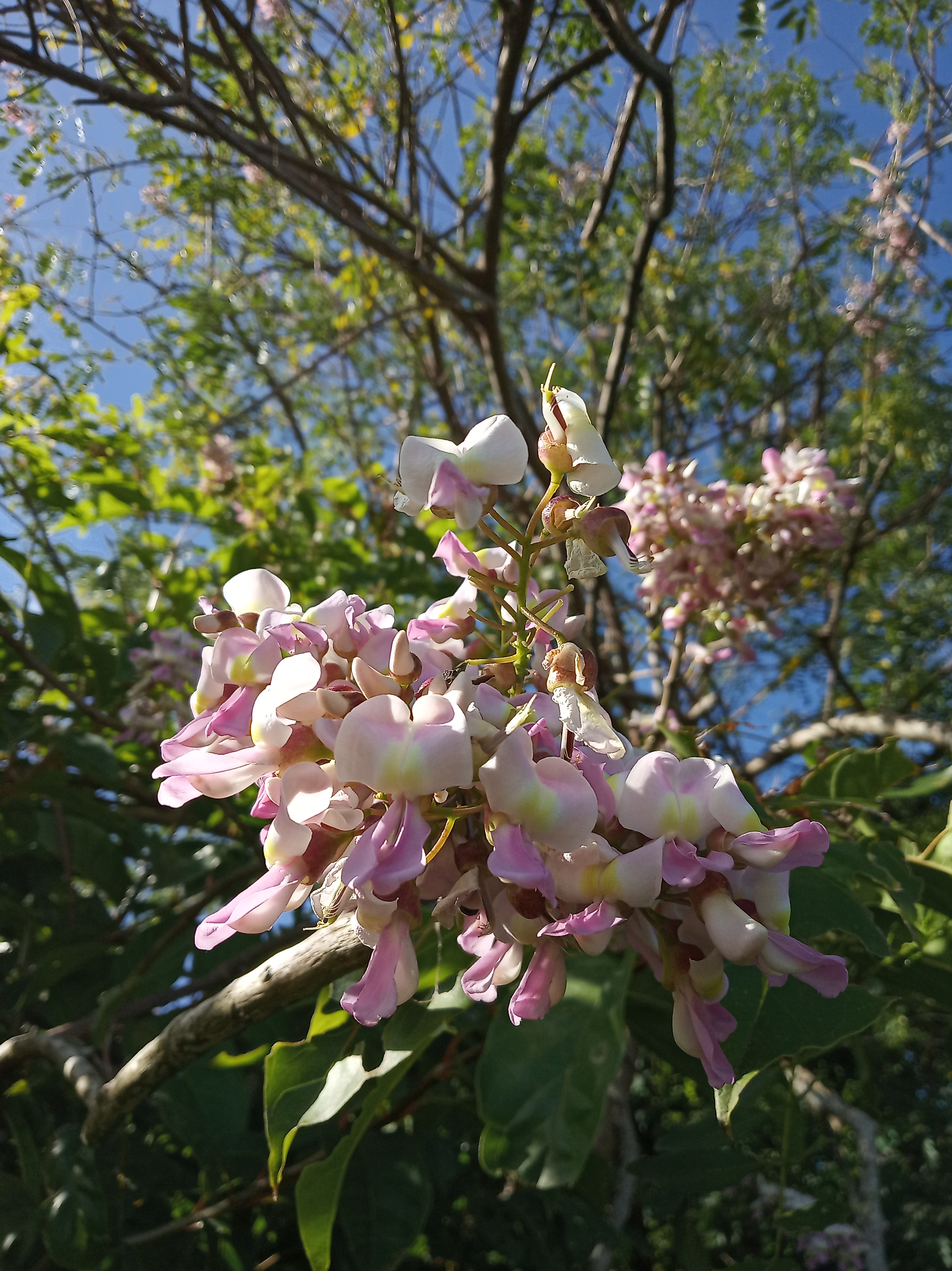
Leaves: Odd-pinnately compound, approximately 30 cm long, with 5-20 ovate or elliptic leaflets measuring 2-7 cm long and 1-3 cm wide. The leaflet midrib occasionally shows red striping. Unlike some legumes, the leaves do not fold at night, remaining open around the clock.
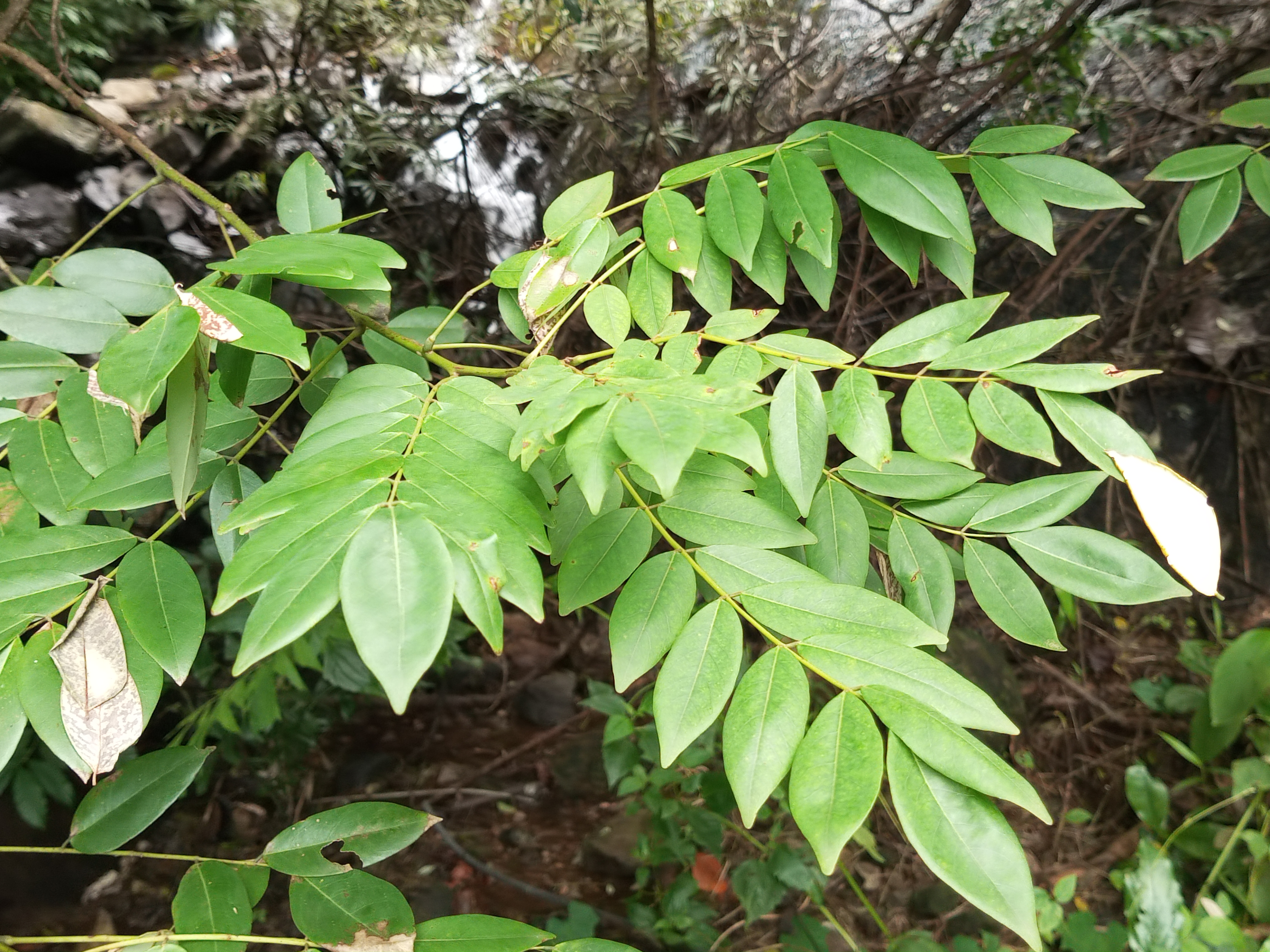
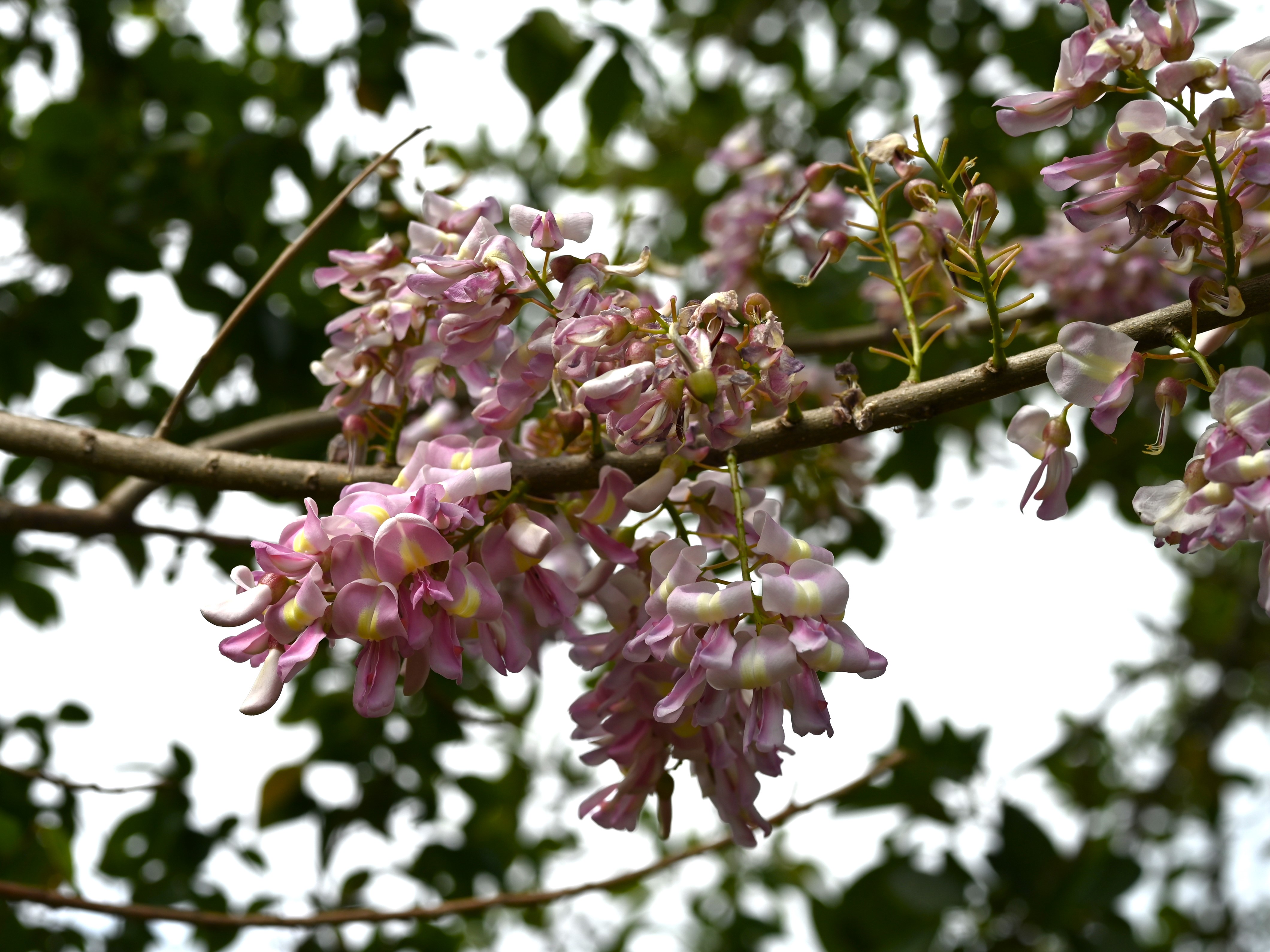
Flowers: Bright pink to lilac, tinged with white, appearing in dense racemes of 20-40 flowers on both new and old wood. The pea-shaped flowers measure about 20 mm long. Flowering typically occurs during the dry season, often on leafless branches, creating spectacular pink displays along roadsides and fence lines.
Fruit: Narrow, flattened pods measuring 10-18 cm long and 2 cm wide. Immature pods are green, sometimes with reddish-purple tints, maturing to light yellow-brown. Each pod contains 4-10 brown seeds. When ripe, the pods explosively dehisce, launching seeds up to 25 meters from the parent tree.
The Living Fence
The mata ratón may be the most common living fence species in the tropics. This technology is ancient and elegant: farmers plant large cuttings directly into the ground, spacing them 1-2 meters apart. The cuttings root within weeks, and within a year they support barbed wire or bamboo rails. The fence grows, heals when damaged, and lasts essentially forever.
For living fences, farmers use stakes 1.5-2.5 meters long with diameters of 5-10 cm, planted 20 cm deep. Even these large cuttings root successfully. An alternative method plants stakes only 10-20 cm apart, creating a dense stockade whose branches can be interwoven without wire.
Habitat & Distribution
The true native range of mata ratón is restricted to the dry and sub-humid lowlands of the Pacific coast of Mexico and Central America, including Belize, Costa Rica, El Salvador, Guatemala, Honduras, and Nicaragua. It grows naturally in early and middle successional vegetation on disturbed sites: coastal sand dunes, riverbanks, floodplains, and fallow land.
Human cultivation has spread the species throughout tropical Latin America, South Asia, Southeast Asia, the Pacific islands, and Africa. In Costa Rica, it grows from sea level to about 1,200 meters elevation, thriving best where annual rainfall ranges from 1,200-2,300 mm with a pronounced dry season.
Climate tolerance: Mata ratón tolerates mean annual temperatures of 15-30°C, surviving brief exposure to temperatures as low as 12°C or as high as 44°C. It dies if frozen below -2°C. The species tolerates drought remarkably well and resprouts quickly after fires when the rains return.
Nitrogen Fixation & Soil Improvement
Like other legumes, mata ratón hosts nitrogen-fixing Rhizobium bacteria in its root nodules, converting atmospheric nitrogen into forms that plants can use. This ability makes it invaluable for improving degraded soils and supporting agricultural systems without synthetic fertilizers.
When used as mulch or green manure, the nitrogen-rich foliage improves crop production through multiple mechanisms: nutrient addition, weed suppression, moisture conservation, and soil temperature moderation. Farmers in alley-cropping systems cut the trees back repeatedly, spreading the leaves around crops of rice, maize, cassava, or coconuts.
The species tolerates repeated coppicing extraordinarily well. First harvest yields 8-15 cubic meters of wood per hectare; subsequent harvests every 2-3 years yield 11-21 cubic meters. When managed for leaf production, annual dry matter yields range from 2-20 tonnes per hectare.
The Quintessential Agroforestry Species
Few trees serve as many agricultural functions as mata ratón. Beyond living fences, it provides shade for cacao, coffee, and tea plantations, where its light canopy and nitrogen-fixing ability support perennial crops without excessive shade. It serves as a nurse tree for shade-loving species and as trellis support for climbing crops like vanilla, pepper, and passionfruit.
The foliage contains 18-30% crude protein, making it valuable livestock fodder. However, naive ruminants often initially refuse the leaves due to volatile compounds. Wilting leaves for 12-24 hours before feeding increases palatability. Interestingly, Costa Rican and Colombian provenances tend to be more palatable to livestock than Mexican varieties.
Toxicity & Traditional Uses
The name "mata ratón" reflects centuries of use as a rodenticide. The leaves, seeds, and powdered bark contain coumarin compounds that convert to dicoumerol during fermentation. Mixed with cooked rice or maize and fermented, this preparation effectively kills rats and mice. Dogs and horses are also sensitive to the toxins, while cattle and goats reportedly consume the foliage safely once accustomed to it.
Traditional medicine employs the plant for numerous conditions. Leaf and bark preparations treat wounds, burns, itching, rheumatism, colds, and fevers. Crude extracts demonstrate antifungal activity in laboratory studies. The flowers are edible when cooked or fried in batter, containing approximately 3% nitrogen and serving as a traditional potherb.
Wood Properties
Mata ratón heartwood is dark brown, becoming reddish on exposure. The wood is hard, heavy, termite-resistant, and remarkably durable in soil contact, explaining its success as fence posts. It burns slowly without sparking and produces little smoke, making it excellent fuel wood for cooking.
Propagation
While mata ratón can be grown from seed, farmers almost universally prefer vegetative propagation. Fresh seeds need no pretreatment and germinate within 7 days with 90-100% success. However, cuttings are far more convenient: stakes of 5-6 months of age, 1.5 meters long with 3.5-4 cm diameter, root readily when planted directly in the ground. Foliage emerges within 4 weeks under adequate moisture.
This ease of propagation from large cuttings is what makes the species so valuable for living fences. No nursery required, no seedling care, no transplant shock. Simply cut a branch from an existing tree, stick it in the ground, and let it grow.
Key Sources & Resources
Species Information
Overview of the species including taxonomy, description, distribution, and uses.
Comprehensive botanical and ethnobotanical information including uses, cultivation, and ecology.
Detailed information on morphology, distribution, cultivation, and feeding value for livestock.
Agroforestry Resources
Overview of the species' multiple roles in agroforestry systems.
Guide to establishing and managing living fences with Gliricidia and other species.
Biodiversity Databases
Community-contributed observations and photographs from around the world.