Mangle Salado
Avicennia bicolor — A Pacific coast endemic that thrives where other mangroves cannot. In the hypersaline mudflats of Golfo Dulce and Térraba-Sierpe, this black mangrove sends pencil-like breathing roots skyward, creating forests that rank among the most productive in the Western Hemisphere.
Walk inland from the water's edge in the mangroves of Golfo Dulce, past the stilted red mangroves and the mid-zone stands of Avicennia germinans, and you reach a different world. Here, where the tide reaches only at its highest and the sun bakes the mud into cracked flats, the mangle salado has carved out its niche. Thousands of pencil-thin pneumatophores spike upward through the dried sediment, each one a snorkel for the buried roots below. These breathing tubes allow the tree to survive in waterlogged, oxygen-poor soils that would suffocate other species.
Despite occupying what might seem like marginal habitat, Avicennia bicolor produces some of the most impressive mangrove forests on Earth. Research in Costa Rica has documented stands with 41 square meters of basal area per hectare and canopy heights reaching 23 meters. These figures place A. bicolor forests among the most developed mangrove ecosystems in the Western Hemisphere, a remarkable achievement for a tree growing in seasonally dry conditions with extreme salinity.

Identification
Taxonomy & Nomenclature
Paul Carpenter Standley, the prolific American botanist who described hundreds of Central American plant species, first published Avicennia bicolor in 1923 in the Journal of the Washington Academy of Sciences. Standley based his description on specimens collected by Henri Pittier in Coclé Province, Panama, in 1911. The species epithet bicolor refers to the two-toned appearance of the leaves, which are darker green above and paler beneath.
The genus Avicennia honors the Persian polymath Ibn Sina (980-1037 CE), known in the West as Avicenna, whose encyclopedic works on medicine and natural philosophy remained influential for centuries. The taxonomic placement of Avicennia has been contentious. Older classifications placed it in Verbenaceae (the verbena family), and some botanists have argued for a separate monogeneric family, Avicenniaceae. Modern molecular studies, following the APG IV system, now place Avicennia within Acanthaceae, the bear's breeches family, in the order Lamiales.
A notable synonym is Avicennia tonduzii Moldenke, published in 1938, which was once considered a distinct species based on narrower leaves and different inflorescence arrangement. Most authorities now treat it as conspecific with A. bicolor. The species is closely related to Avicennia germinans, the more widespread black mangrove, but differs in its smaller flowers (5.5-7 mm corolla vs. 7-10 mm in A. germinans), broader leaves, and more restricted Pacific distribution.
Physical Characteristics
Pneumatophores: The most distinctive feature of all Avicennia species is their pneumatophores: pencil-like aerial roots that project vertically from the horizontal cable roots buried in the mud. These breathing tubes, typically 10-30 cm tall but sometimes reaching 50 cm, contain spongy tissue with abundant air spaces (aerenchyma) and specialized pores (lenticels) that allow gas exchange when exposed at low tide. A mature tree may produce thousands of pneumatophores, creating a distinctive "forest of fingers" appearance around its base.
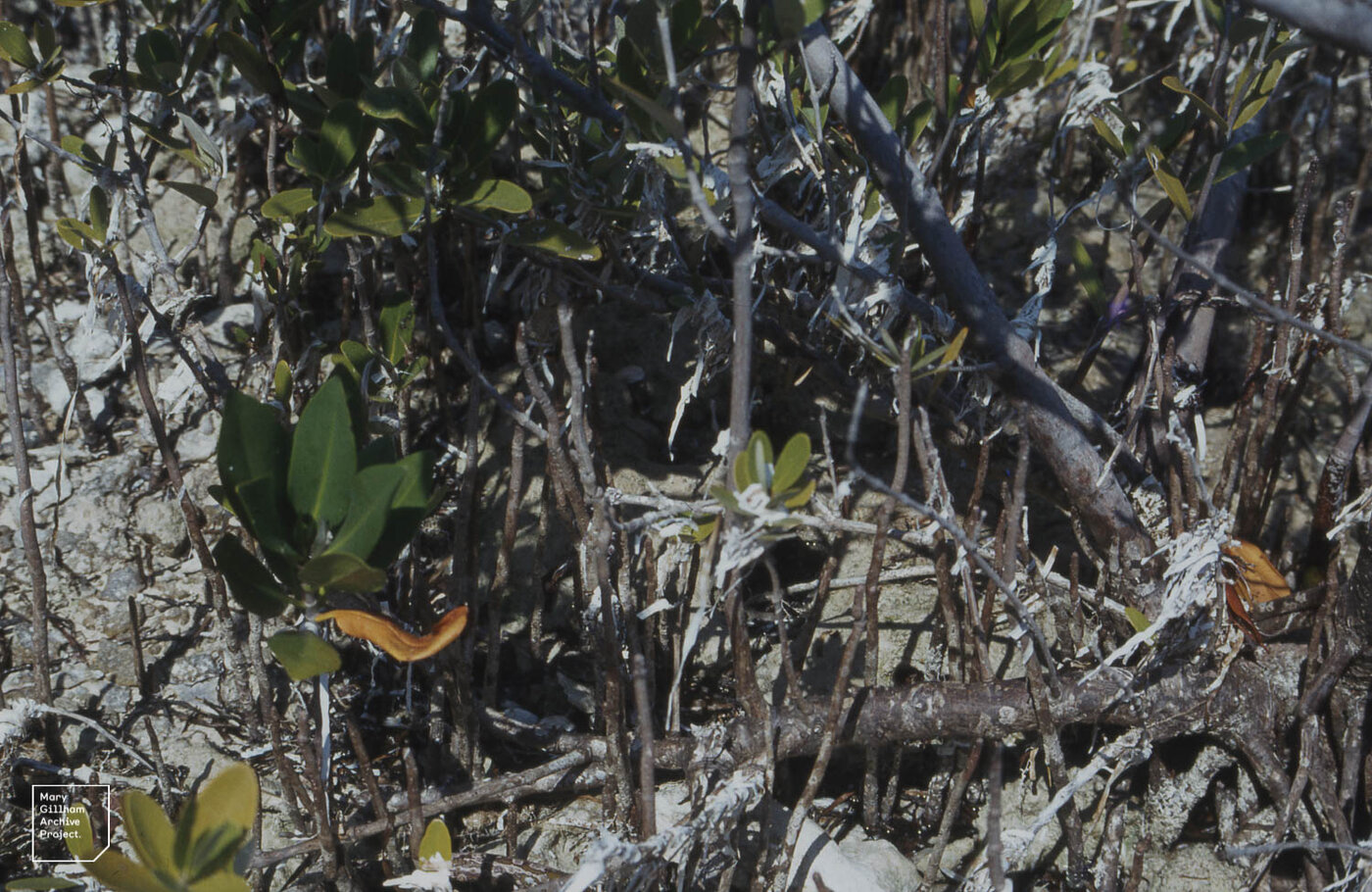
Trunk and bark: The trunk is often short and thick, supporting a dense, spreading crown. The bark is gray and furrowed, becoming increasingly rough with age. Unlike the prop-rooted Rhizophora mangroves, Avicennia develops a conventional trunk rising from ground level, with the pneumatophores forming a separate root system.
Leaves: The leaves are opposite, ovate to ovate-oblong, 8-11 cm long and 4.5-8 cm wide. They are leathery in texture, dark green above and grayish-green beneath, giving the species its epithet bicolor. The apex is rounded-obtuse, and the base decurrent onto the petiole. Under conditions of high salinity, salt crystals may be visible on the leaf surface, secreted through specialized glands, a key adaptation for life in hypersaline environments.
Flowers: The inflorescence is a panicle of spikes, compound, approximately 10 cm long and 10-20 cm wide. Individual flowers are small, with a corolla 5.5-7 mm long, notably smaller than those of A. germinans. The flowers are typically arranged in well-separated pairs along the rachis. They are fragrant and rich in nectar, attracting bees and other insects.

Fruit: The fruit is a capsule, elliptic in shape, not oblique or apiculate, approximately 1.5 cm long and 1 cm wide, with a scarcely sericeous (silky-hairy) surface. Unlike the long, pencil-shaped propagules of Rhizophora, Avicennia fruits are short and rounded. The embryo develops within the fruit while still attached to the parent tree (cryptovivipary) but does not rupture the fruit wall before dispersal.
Habitat & Distribution
Avicennia bicolor is endemic to the Eastern Pacific, occurring along the coast from Chiapas, Mexico, to Buenaventura Bay in western Colombia. This restricted range makes it less common than the widespread A. germinans, which occurs on both Atlantic and Pacific coasts throughout the Americas. The species is most abundant in Costa Rica and Panama, where extensive mangrove systems provide suitable habitat.
In Costa Rica, 99% of mangrove forests are concentrated on the Pacific coast. The southern Pacific region, particularly the Térraba-Sierpe National Wetland and Golfo Dulce, presents the most complex and well-developed mangrove systems. Red mangroves (Rhizophora) here can reach 30-35 meters in height, while A. bicolor reaches up to 23 meters. This productivity results from high precipitation and abundant freshwater input from rivers draining the Talamanca Mountains. Key locations for A. bicolor populations include:
- Térraba-Sierpe National Wetland: Central America's largest mangrove system at over 30,000 hectares. Designated a RAMSAR Wetland of International Importance in 1995, it hosts A. bicolor in the high intertidal zones behind the fringing red mangroves.
- Golfo Dulce: The mangroves of Playa Blanca, Escondido, and Rincón de Osa support mixed stands where A. bicolor occupies the higher, drier positions.
- Zancudo Estuary: Research here has documented 82 fish species utilizing the mangrove system, highlighting the nursery function of these forests.
Mangrove Zonation
Mangrove species typically arrange themselves in distinct zones based on their tolerance to flooding and salinity. In Costa Rica's Pacific mangroves, the zonation pattern from seaward to landward is: Rhizophora mangle and R. racemosa (red mangroves) occupy the lowest intertidal zone with the deepest flooding; Avicennia germinans (black mangrove) appears in the mid-intertidal zone; Avicennia bicolor occupies the high intertidal, often on relatively dry, flat mudflats; and Laguncularia racemosa (white mangrove) and Conocarpus erectus (buttonwood) mark the landward fringe.
The high intertidal position of A. bicolor means it experiences less frequent flooding but more extreme salinity. During the dry season, evaporation can create hypersaline conditions in these mudflats, with salinities reaching 34 psu or higher. The species' ability to excrete excess salt through leaf glands, combined with its pneumatophore system for oxygen acquisition, allows it to thrive in these challenging conditions. Research by Jorge Jiménez has shown that A. bicolor flowers at the beginning of the dry season (December-February) and sets fruit during the early rainy season (August-September), a temporal pattern that differs from A. germinans and may reduce interspecific competition.
Ecological Importance
Research on Avicennia bicolor forests has revealed remarkable productivity. In a landmark 1990 study, Jorge Jiménez documented stands reaching 41 square meters of basal area per hectare, with canopy heights of 23 meters and densities of 4,350 plants taller than 0.5 meters per hectare (769 trees above 5 cm DBH). These figures place A. bicolor forests among the most developed mangrove ecosystems in the Western Hemisphere.
Perhaps more surprising is the growth rate: 0.38 square meters per hectare per year, which Jiménez described as "surprisingly high for mangrove forests under a seasonal dry climate." This productivity occurs despite the harsh conditions of the high intertidal zone, where soil water availability is a limiting factor. The species appears to have evolved particularly efficient mechanisms for capturing and utilizing available resources during favorable periods.
Ecosystem Services
Like all mangroves, A. bicolor provides critical ecosystem services. Its extensive pneumatophore networks help stabilize sediments and protect coastlines from erosion. The leaf litter that falls into the water is decomposed by bacteria and fungi, creating nutrient-rich detritus that fuels estuarine food webs. Mangrove forests are also exceptionally effective at sequestering carbon: their waterlogged, anoxic soils trap organic matter for centuries or millennia, making them up to ten times more effective at carbon storage per hectare than upland tropical forests.
Reproduction & Phenology
Most trees release their seeds in a dormant state, waiting for favorable conditions to germinate. The red mangroves (Rhizophora) take the opposite approach: their seeds germinate while still attached to the mother tree, producing long, spear-shaped seedlings that drop into the water already growing. Avicennia bicolor has evolved a strategy between these two extremes. Inside its fruit, the seed begins to germinate while still on the tree, but the developing seedling stays hidden within the fruit wall. When the fruit drops into the water, it floats on the tides, and only after finding suitable mud does it split open to release the already-growing seedling. This head start gives the young plant crucial extra time to establish itself before the next dry season.
Botanists call this strategy crypto-vivipary (from Greek kryptos, hidden, and Latin vivus, living). In true viviparous species like the red mangrove, the embryo bursts through the fruit wall before dispersal, producing the distinctive dangling propagules. In crypto-viviparous species like Avicennia, the embryo develops within the fruit but remains enclosed, the germination hidden from view. The fruit itself becomes the dispersal unit, carrying a seedling that is ready to grow but protected during its journey through the tides.
The flowering and fruiting phenology of A. bicolor is tightly linked to seasonal rainfall patterns. Flowering occurs at the onset of the dry season (December-February), when reduced freshwater input increases salinity in the high intertidal zone. Fruits develop through the dry season and mature during the early rainy season (August-September), when tidal and fluvial flooding provides dispersal opportunities. This timing differs from A. germinans, which flowers later (February-March), suggesting temporal partitioning that may reduce competition for pollinators and dispersal agents.
Pollination
All Avicennia species are insect-pollinated. The fragrant, nectar-rich flowers attract a diverse assemblage of visitors, primarily bees and flies. Studies on related Avicennia species have documented over 170 flower-visiting insect species, with honeybees (Apis spp.) among the most frequent visitors. The flowers are hermaphroditic and self-compatible, allowing for self-pollination, but cross-pollination appears to enhance fruit set.


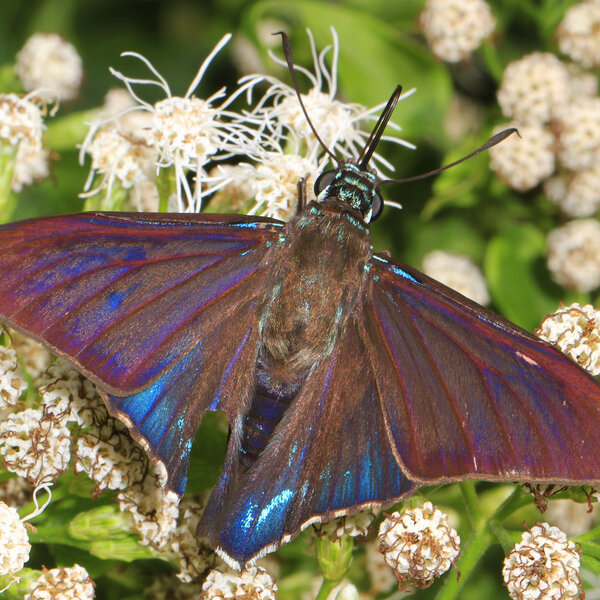
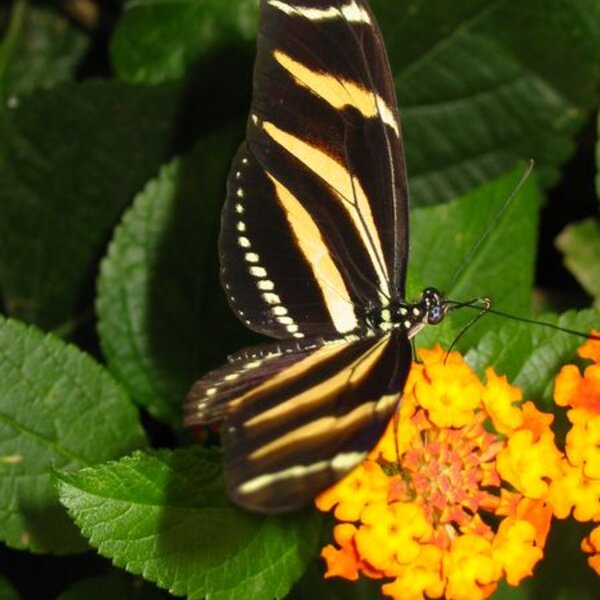
Documented pollinators of Avicennia mangroves in the Americas: honeybees (top left), carpenter bees (top right), and butterflies including the Mangrove Skipper and Zebra longwing (bottom row). Honeybees are among the most frequent flower visitors.
Wildlife Relationships
The mangrove forests where A. bicolor occurs support an extraordinary diversity of wildlife. The Térraba-Sierpe wetland alone hosts over 300 bird species, 55+ fish species, numerous crabs and invertebrates, reptiles including the American crocodile (Crocodylus acutus), and mammals ranging from monkeys to the neotropical otter.
The pneumatophore zone provides habitat for fiddler crabs (Uca spp.) and other burrowing invertebrates whose activity aerates the soil and enhances nutrient cycling. Research has shown that fiddler crab activity can increase mangrove growth by 25-27% compared to areas where crabs are excluded. The larger leaf-litter crab Ucides cordatus processes over 70% of mangrove leaf litter, playing a keystone role in the decomposition process.
Co-occurring Species
Costa Rica hosts seven species of true mangrove trees from four different plant families. In the high-rainfall mangroves of the southern Pacific coast, Avicennia bicolor occurs alongside:
- Avicennia germinans (Black mangrove) — Co-occurs in mixed stands; flowers later (February-March) than A. bicolor; distinguished by larger flowers and narrower leaves.
- Rhizophora mangle (Red mangrove) — Occupies the lowest intertidal zone with its distinctive prop roots.
- Rhizophora racemosa — Often co-dominant with R. mangle in Golfo Dulce; distinguished by lack of black spots on leaf undersides.
- Laguncularia racemosa (White mangrove) — Pioneer species that colonizes new mud banks; secretes salt through petiole glands.
- Pelliciera rhizophorae (Tea mangrove) — A rare species critical for the endemic Mangrove Hummingbird; produces large, showy flowers.
- Mora oleifera — A leguminous tree of mangrove margins and riverbanks.
Conservation
Avicennia bicolor is classified as Vulnerable on the IUCN Red List. Based on documented rates of mangrove loss (approximately 1.4% per year between 1980 and 2000), the species has experienced an estimated 31% decline in habitat over the past 30 years. Over a period of three generation lengths (estimated at up to 120 years), the decline is projected to be substantially higher, qualifying the species for Vulnerable status under Criterion A.
Threats
- Coastal development: The high intertidal habitat of A. bicolor is particularly vulnerable to conversion for urban and industrial development, as these drier mudflats are more accessible than the flooded zones occupied by other mangroves.
- Aquaculture: Shrimp farming has historically been a major driver of mangrove deforestation. Mangroves are cleared to build evaporation ponds, and studies show that aquaculture ponds built where mangroves once stood have lost up to 90% of their ecosystem carbon.
- Cattle grazing: Cattle that feed under and around mangroves reduce regeneration capacity by trampling seedlings and damage the root structure and leaves of mature trees. The high intertidal zone where A. bicolor grows is particularly accessible to livestock.
- Agricultural conversion: Expansion of rice, oil palm, sugar cane, and cattle ranching into coastal areas continues to pressure mangrove margins.
- Climate change: Sea level rise poses the greatest long-term threat. Mangroves may be unable to migrate landward where human development blocks their path. Changes in precipitation patterns and storm intensity may also affect regeneration and survival.
Protection and Restoration
In Costa Rica, significant portions of A. bicolor habitat fall within protected areas. The Térraba-Sierpe National Wetland was established as a Forest Reserve in 1977 and recognized as a RAMSAR Wetland of International Importance in 1995. Cutting mangroves is prohibited under Costa Rican law, though enforcement remains a challenge in remote areas. Restoration efforts are underway using propagules of Rhizophora, Laguncularia, and Avicennia species to restore degraded sites.
The restricted range of A. bicolor makes conservation particularly important. Unlike the widespread A. germinans, this species cannot recover from localized extinctions by recolonization from distant populations. Each population along the Pacific coast represents a significant fraction of the species' total range. Continued protection of Costa Rica's southern Pacific mangroves, combined with restoration efforts and control of livestock access to mangrove areas, will be essential for the long-term survival of this vulnerable endemic.
Key Sources & Resources
Species Information
Authoritative taxonomic information with synonymy and native range.
Conservation assessment, population trends, and threat analysis.
Community observations, photographs, and distribution data.
Scientific Research
Landmark study documenting the exceptional productivity of A. bicolor forests on the Pacific coast.
Distribution and conservation status notes including morphological description.
Documents 82 fish species in the Zancudo estuary, highlighting mangrove nursery function for regional fisheries.
Study showing fiddler crab activity increases mangrove growth by 25-27% through improved sediment aeration.
Documents that mangrove crabs process over 70% of leaf litter, playing a keystone role in nutrient cycling.
Costa Rica Mangroves
Official Ramsar site information for Central America's largest mangrove wetland.
Overview of Costa Rica's mangrove ecosystems and species zonation.