Muñeco Blanco
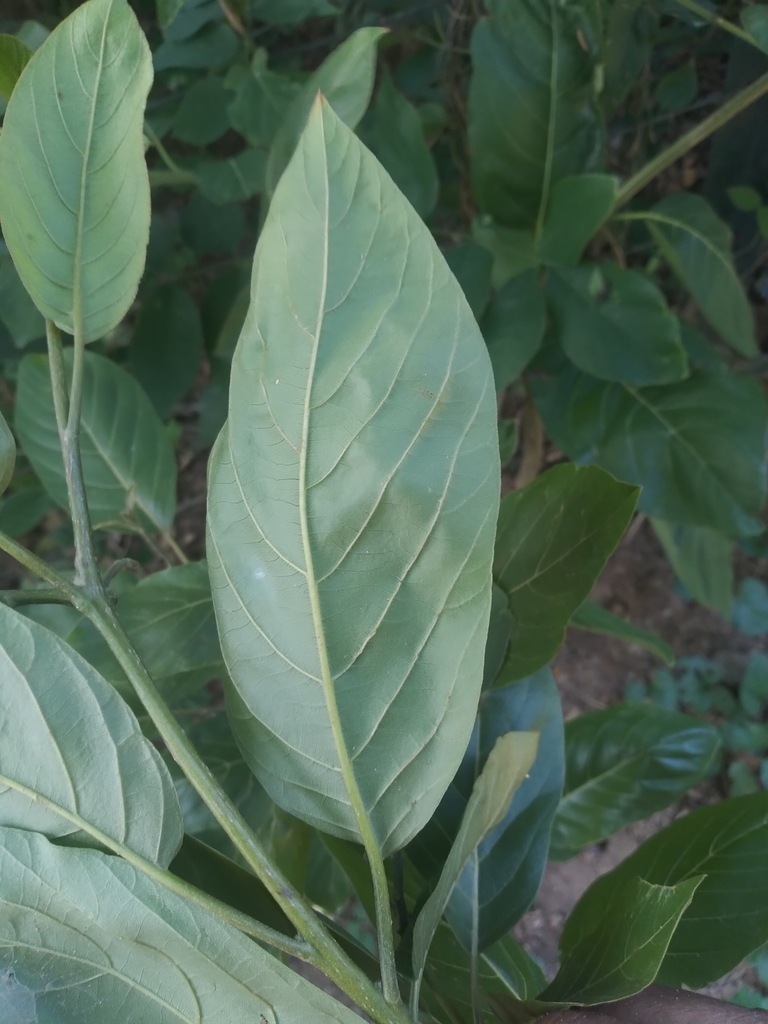
Cordia bicolor — The two-toned Cordia of humid forests. Flip a leaf over and the contrast is immediate: dark green above, rough white below. This fast-growing pioneer produces yellow fruits that feed forest birds throughout its range from Mexico to Brazil.
The name says it all: bicolor, two colors. Pick a leaf from this tree and you will understand immediately why early botanists chose that name. The upper surface is dark glossy green, unremarkable among tropical foliage. But flip it over and the underside is rough and whitish, almost pale gray, with a texture you can feel. No other common Cordia in Costa Rica shows this contrast so clearly.
The muñeco blanco is the smallest of the three Cordia species profiled here, rarely exceeding 20 meters. It lacks the laurel's economic importance and the muñeco's dramatic folded trunk. But it fills its own niche: a fast-growing pioneer of humid lowland forests, equally at home on the Caribbean and Pacific slopes wherever rainfall is abundant. In the Brunca region, you will find it along forest edges, in secondary growth, and at the margins of disturbed areas up to about 550 meters elevation.
Identification
The Two-Toned Leaf
The leaves are the key to identification. Simple, alternate, and elliptical like other Cordias, they measure roughly 10-15 cm long. The upper surface is smooth and dark green. But turn the leaf over and you find a completely different texture: rough, almost scabrous, with a distinctly whitish or pale gray color. This rough white underside is diagnostic. Neither the laurel nor the muñeco shows such a stark contrast between leaf surfaces.
Bark and Form
The trunk is straight and cylindrical, with corrugated bark that distinguishes it from the smooth bark of young laurels and the dramatically folded trunk of the muñeco. The crown is rounded and moderately dense, more compact than the open, layered crown of the laurel. Overall, the tree has a neater, more contained appearance than its relatives.
Flowers and Fruits
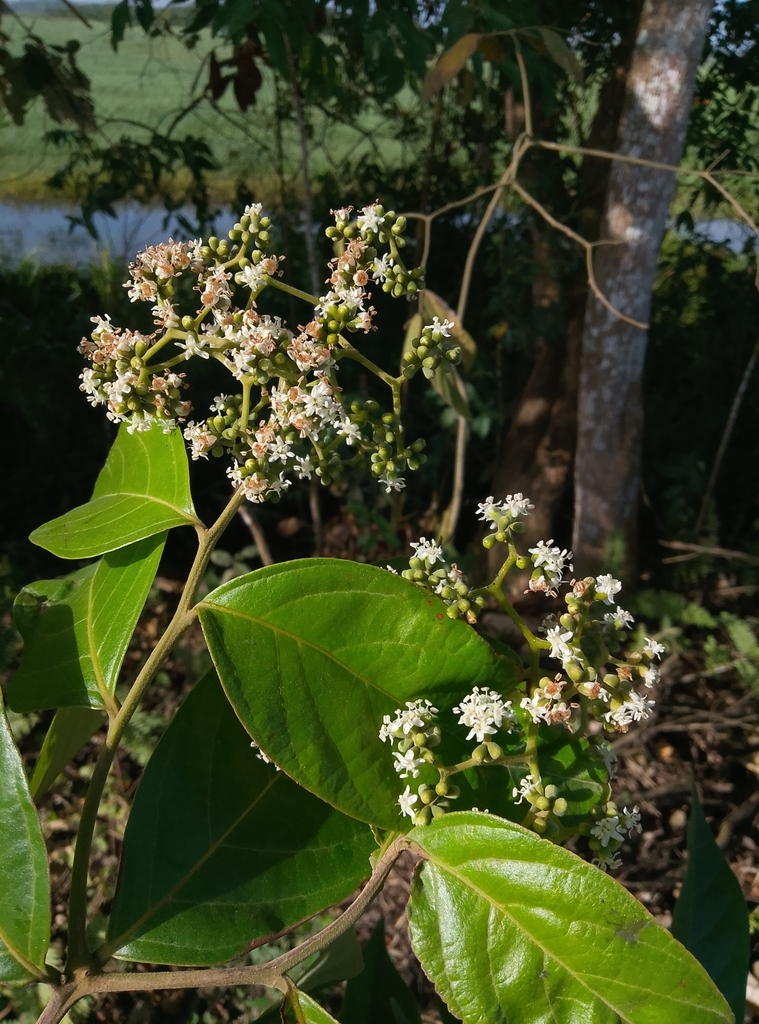
Flowers: Small white blooms appear in terminal clusters, primarily in November in Costa Rica. They are pollinated by bees, butterflies, and other insects. The flowers are similar to other Cordias: small, white, five-petaled, and fragrant.
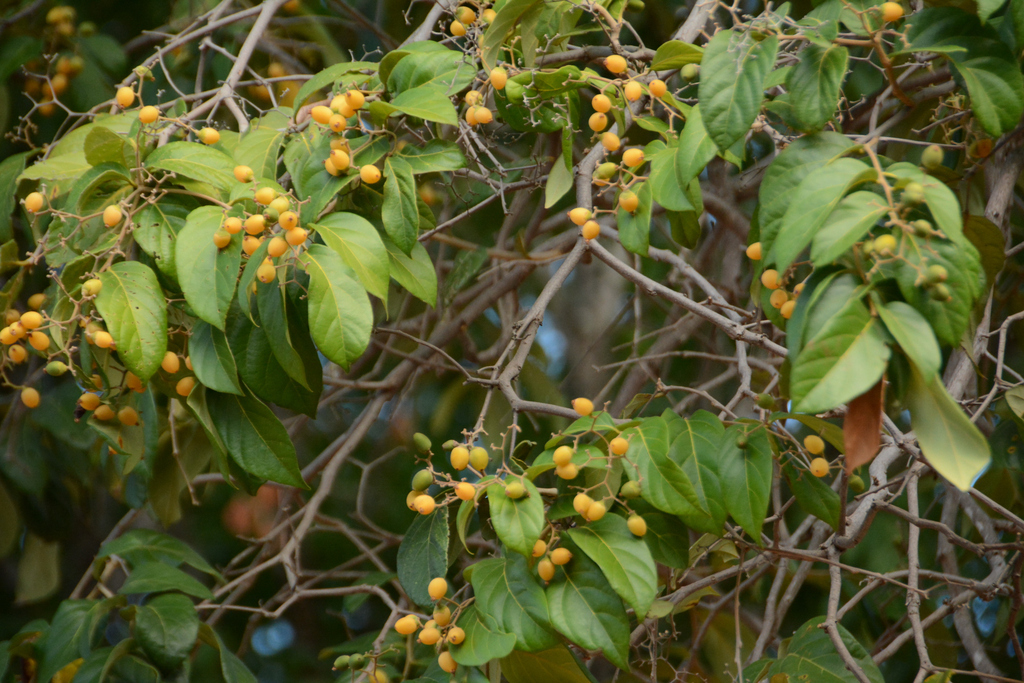
Fruits: Small ovoid drupes about 12 mm long and 8 mm wide, ripening to yellow. This is another distinguishing feature: the muñeco produces red fruits, the laurel produces wind-dispersed nutlets, but the muñeco blanco produces yellow drupes. Fruiting peaks around April in Costa Rica. The flesh is pulpy and sweet, and the fruits are eagerly consumed by birds.
Comparing the Four Cordias
Costa Rica hosts four Cordia species that are commonly encountered. All are pioneers of disturbed sites, but each occupies a different niche and can be distinguished by a few key features.
| Feature | M. Blanco | Muñeco | Laurel | L. Negro |
|---|---|---|---|---|
| Species | bicolor | collococca | alliodora | megalantha |
| Max height | 20 m | 35 m | 30 m | 60 m |
| Leaf test | White underside | Sandpaper | Garlic scent | Smooth both sides |
| Fruit | Yellow drupe | Red drupe | Wind nutlet | Fibrous, brown |
| Habitat | Humid lowlands | Dry Pacific | Versatile | Very wet forests |
| Timber | Moderate | Moderate | Excellent | Excellent |
Ecology
The muñeco blanco is a classic pioneer species. It demands sun, grows fast, and establishes quickly on disturbed ground. You will find it at forest edges, along roadsides, in abandoned pastures, and in gaps within secondary forest. It is particularly common in humid and very humid lowland forests, where it occurs on both the Caribbean and Pacific slopes of Costa Rica.
Its range is extensive: from Mexico through Central America to Panama, then through northern South America including Colombia, Venezuela, Ecuador, Peru, Bolivia, and Brazil. It also occurs in Belize, Guatemala, Honduras, and Nicaragua. This broad distribution suggests ecological flexibility, though it consistently prefers moist conditions and elevations below 550 meters.
Wildlife Value
The yellow fruits are an important food source for forest birds. Fruiting in April places the muñeco blanco's harvest at a different time than many other forest trees, potentially filling a gap in food availability. The flowers attract bees, butterflies, and other insect pollinators. As a pioneer species that rapidly colonizes disturbed areas, it also provides early canopy cover and contributes to forest succession.
Uses
Timber: The wood is used for fence posts and rural construction. It is not as valuable as laurel timber, but it is serviceable and readily available given the tree's abundance in disturbed areas. The Osa Arboretum notes that despite its construction potential, the species remains underutilized commercially in Costa Rica.
Food: The fruits are edible, with pulpy, sweet flesh. However, some Cordia species can cause gastric disturbance, so caution is advised. Birds consume them readily, which is their primary ecological function.
Agroforestry: As a fast-growing pioneer, the muñeco blanco has potential for reforestation and forest restoration projects. It establishes protective root systems and canopy cover quickly, supporting forest succession on degraded land.
Conservation
The muñeco blanco is not threatened. Its wide range across Central and South America, combined with its pioneer habit and tolerance of disturbed conditions, ensures healthy populations throughout its range. The IUCN lists it as Least Concern. Like its Cordia relatives, it is a tree that thrives in the human-modified landscapes of tropical America.
Costa Rica's four Cordias together illustrate how closely related species can partition the landscape. The laurel thrives in coffee farms and mid-elevation slopes across the country. The muñeco claims the dry seasonal forests of the Pacific. The muñeco blanco fills the humid lowlands of both coasts. And the laurel negro towers over the wettest forests near sea level. Each has its place, each its leaf test, each its contribution to the forest.
Resources & Further Reading
Species Information
Overview of the Cordia genus in the borage family.
Comprehensive information on uses, cultivation, and ecology.
Taxonomic information, synonyms, and native range from Kew Gardens.
Occurrence records and distribution maps from worldwide collections.
Community observations with photographs from Central and South America.
Species profile from the Osa Peninsula botanical collection.