Roble Copey
Quercus copeyensis / Q. bumelioides — The white oak giant of Costa Rica's cloud forests. Known as both roble copey and roble amarillo, this species was once described as forming "perhaps the largest single stand of oak timber in the world." Today its massive, buttressed trunks still tower through the mist of the Talamanca highlands, including the tallest measured oak on Earth.
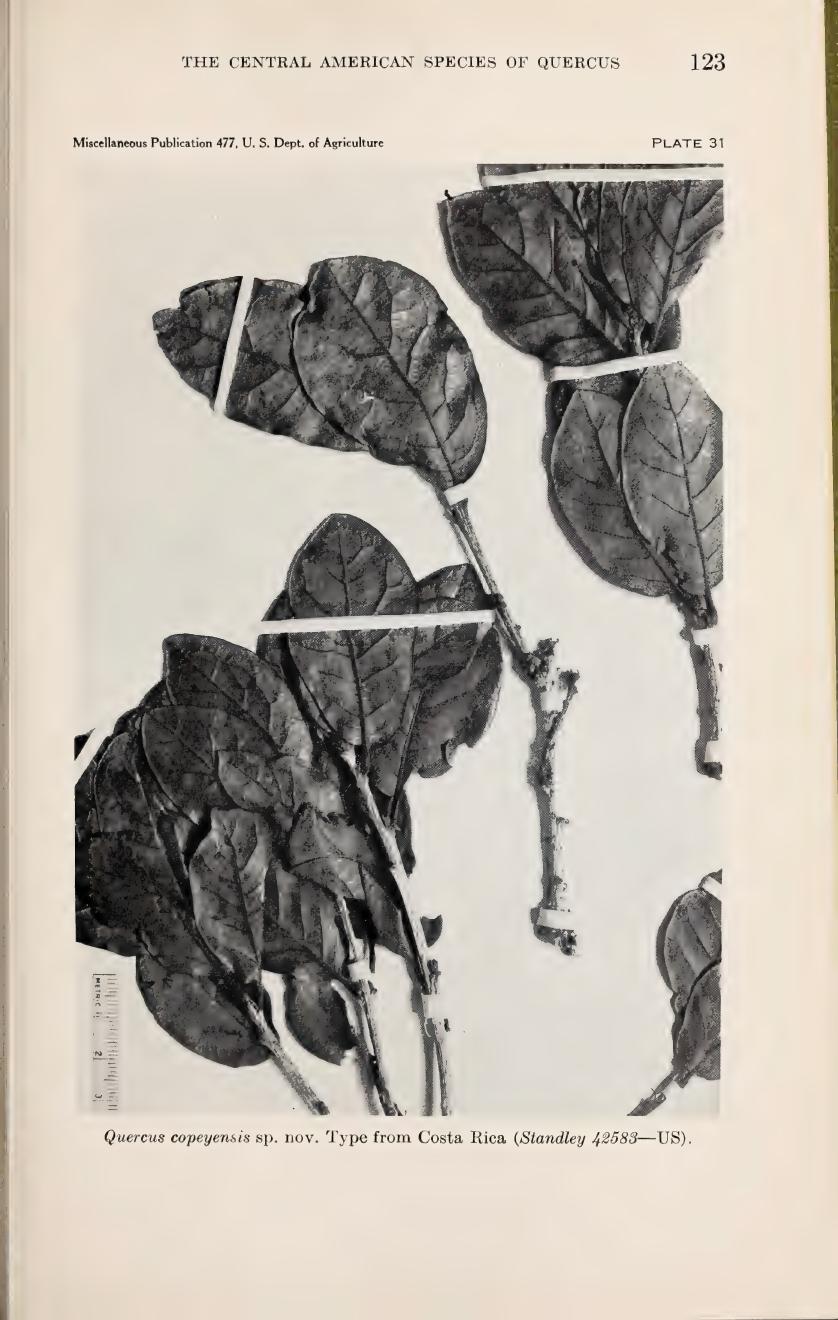
In 1942, when botanist C.H. Muller examined oak specimens from the highlands above Copey de Dota, he recognized a new species. He named it Quercus copeyensis after the village, adding another member to the remarkable oak diversity of Central American cloud forests. The following year, forester Arthur Bevan visited these forests and wrote of encountering trees "125 feet or more tall" with trunks "seven to eight feet in diameter," their bases buttressed "to a height of ten or twelve feet." He described the stand as "perhaps the largest single stand of oak timber in the world" at just nine degrees north of the equator.
The roble copey shares its cloud forest home with the roble negro (Quercus costaricensis), but the two belong to different oak lineages. The roble copey is a white oak (section Quercus), while the roble negro is a black oak (section Lobatae). Together, these two species dominate the upper montane forests of Costa Rica and western Panama, their canopies draped in mosses and bromeliads, their branches disappearing into perpetual clouds.
Identification
Physical Characteristics
Trunk and buttresses: The most striking feature of mature roble copey is its massive trunk with pronounced buttress roots extending outward at the base. These buttresses can reach 3-4 meters high on the largest specimens, an unusual trait among oaks that helps stabilize the tree in thin mountain soils and adds to its imposing presence. The bark is thick, rough, and deeply furrowed on mature trees, typically gray to brownish-gray.
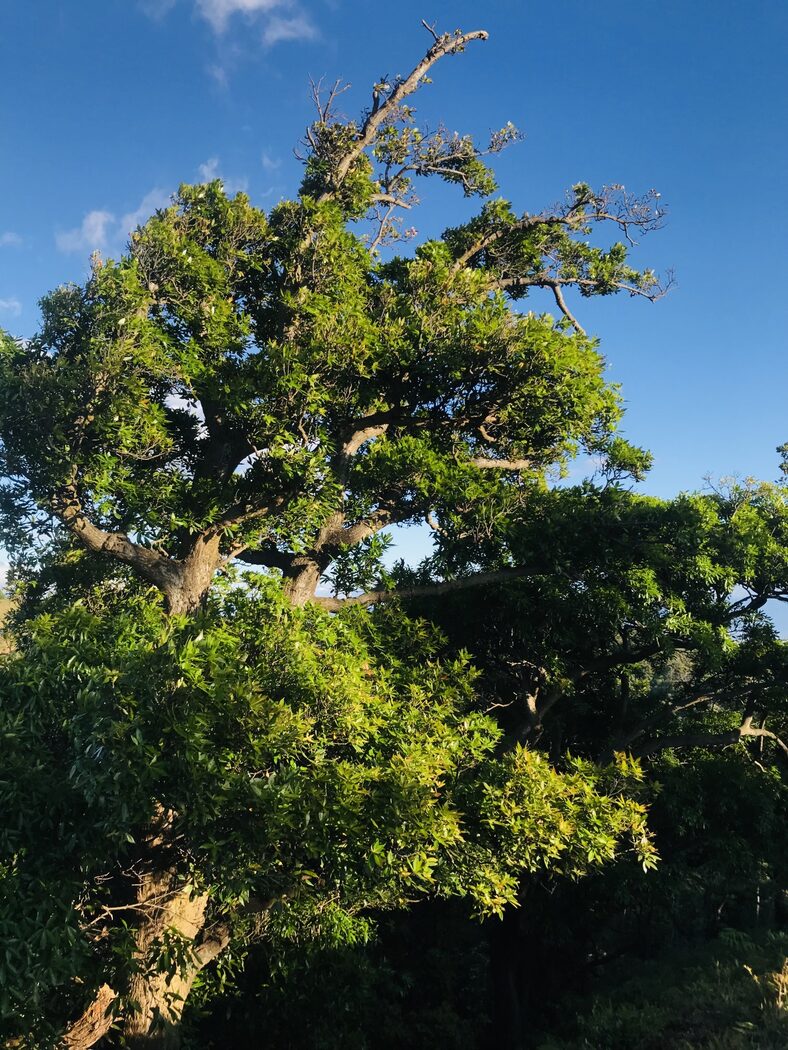
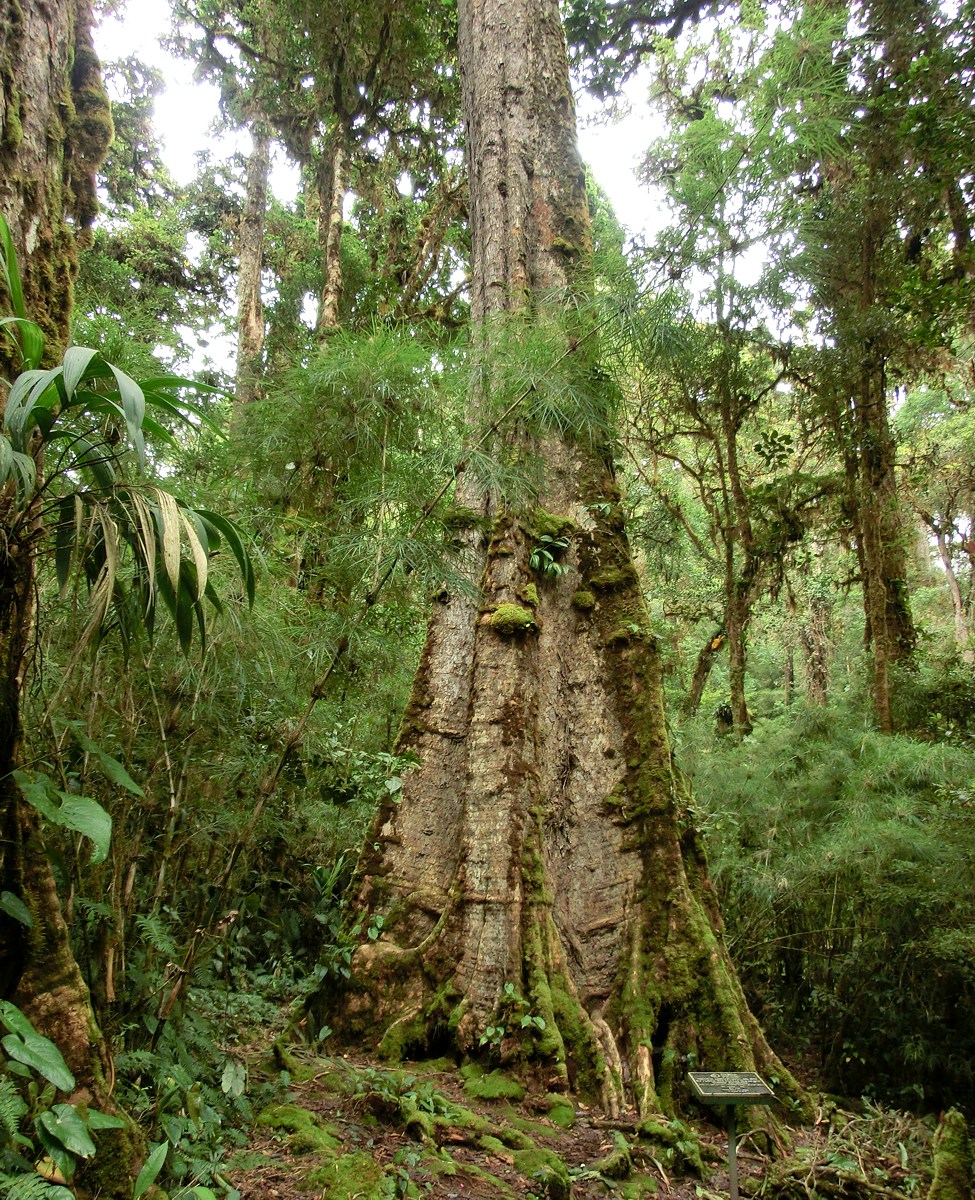
Leaves: The leaves are leathery and evergreen, elliptical to oblong-lanceolate in shape, typically 8-15 cm long and 3-6 cm wide. Unlike many North American oaks, the leaf margins are entire (smooth-edged) or have sparse teeth toward the tip. The upper surface is dark glossy green, while the underside is paler with fine pubescence along the veins. New leaves often emerge with bronze or reddish tints before maturing to green.
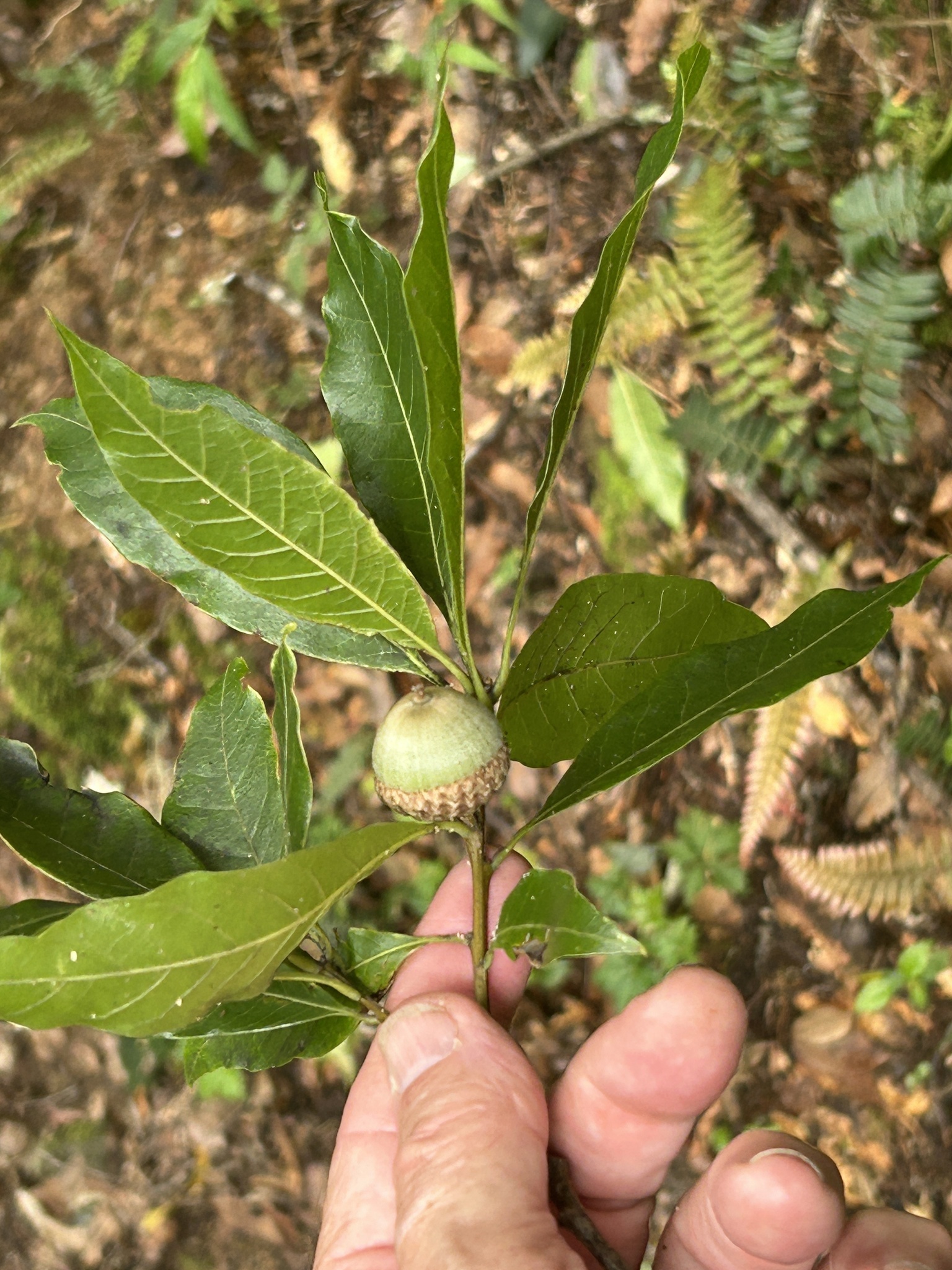
Acorns: As a white oak, Q. copeyensis produces acorns with shallow, warty cups covering about one-quarter to one-third of the nut. The acorns mature in a single year, unlike black oaks which take two years. They are an important food source for highland wildlife including the resplendent quetzal and various rodents.
Distinguishing from Roble Negro
The roble copey and roble negro (Quercus costaricensis) grow together throughout the Talamanca highlands and can be difficult to distinguish at first glance. Both are large evergreen oaks with leathery leaves. However, several features separate them:
| Feature | Roble Copey (Q. copeyensis) | Roble Negro (Q. costaricensis) |
|---|---|---|
| Oak group | White oak (Section Quercus) | Black oak (Section Lobatae) |
| Buttresses | Prominent, 3-4 m high | Less pronounced or absent |
| Acorn maturation | 1 year | 2 years |
| Acorn cup | Shallow, warty | Deeper, scaly |
| Leaf underside | Sparsely pubescent | Densely pubescent |
| Distribution | Guatemala to Panama | Costa Rica and Panama only |
Ecology and Habitat
The roble copey thrives in the upper montane cloud forests of Central America, where high rainfall, persistent mist, and cool temperatures create conditions ideal for oak dominance. In Costa Rica, the species is most abundant in the Cordillera de Talamanca, particularly in the areas around Cerro de la Muerte, San Gerardo de Dota, and Chirripó National Park. It occurs from approximately 2,000 to 3,100 meters elevation, overlapping broadly with the roble negro.
These oak forests are among the most distinctive ecosystems in the neotropics. The canopy can reach 40-50 meters, with roble copey and roble negro as co-dominants. The understory is characterized by dwarf bamboo (Chusquea), tree ferns, and a rich diversity of epiphytes. Mosses, bromeliads, and orchids festoon every branch, while the forest floor supports a thick layer of decomposing leaves and fallen acorns.
Wildlife
The oak forests where roble copey grows are critical habitat for some of Central America's most iconic wildlife. The resplendent quetzal (Pharomachrus mocinno) depends on these forests for wild avocados and other lauraceous fruits, and the oaks provide nesting sites. Acorns feed squirrels, agoutis, and peccaries. The Three-wattled Bellbird breeds in these forests, and mixed flocks of tanagers, warblers, and furnariids forage through the epiphyte-laden canopy.
Conservation and Threats
Much of the original roble copey forest was logged during the construction of the Inter-American Highway in the 1940s, when Bevan's "largest single stand of oak timber in the world" was cut for construction materials. Today, significant stands remain protected within Chirripó National Park, Los Quetzales National Park, and La Amistad International Park.
Climate change poses a longer-term threat. As temperatures rise, the cloud forest belt is expected to shift upward, potentially squeezing oak forest habitat against the summits. Studies in the Talamanca region show that cloud base heights are already rising, reducing the moisture inputs that define these ecosystems. The slow growth and long generation time of oaks make them vulnerable to rapid environmental change.
The Grandfather Oak
The most famous specimen of this species is the "Roble Abuelo" (Grandfather Oak) in Parque Nacional Cerro de la Muerte. Laser measurements in 2014 confirmed it stands 60.4 meters tall with a girth of 14.2 meters at breast height (though much of this is buttress). This makes it the tallest accurately measured oak in the world, exceeding the tallest measured oaks in North America and Europe by approximately 10 to 15 meters. The tree is often identified as Quercus bumelioides in scientific literature, illustrating how both names are applied to the same population. Visitors can reach it via a short trail from the Pan-American Highway at kilometer 80, where a small reserve protects a remnant of the original oak forest.
Resources & Further Reading
Species Information
Overview of the Copey oak with basic information on distribution and characteristics.
Kew's authoritative taxonomic information including distribution, synonyms, and accepted name status.
Field account describing encounters with Q. copeyensis in Costa Rica, including historical context from Arthur Bevan's 1943 discovery.
Cloud Forest Ecology
Research on the montane oak forests of Costa Rica including species composition and elevation gradients.
Where to See Roble Copey
Costa Rica's highest peak, with extensive oak forests along the trail to the summit.
Protects cloud forest habitat in the San Gerardo de Dota area, home to both oak species and the resplendent quetzal.
Detailed measurements and photos of the world's tallest oak, located in Cerro de la Muerte.
Complete monograph with 124 botanical plates illustrating Central American oaks. USDA Miscellaneous Publication No. 477.