Pink Trumpet Tree
Tabebuia rosea is a deciduous canopy tree found throughout Central America and northern South America. Each dry season, it sheds its leaves and erupts into spectacular pink blooms that can be seen from miles away. In El Salvador, it is the national tree.
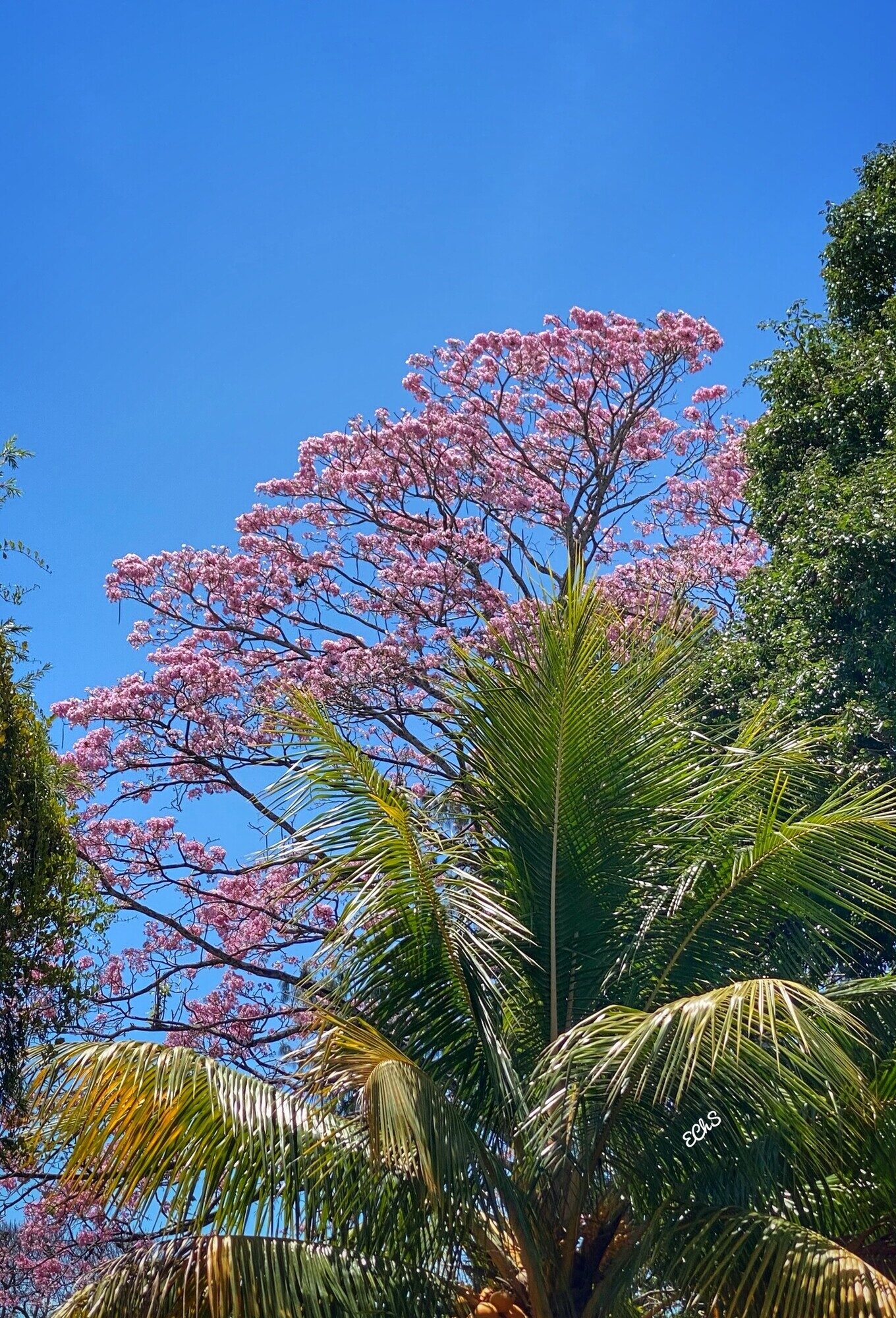
In El Salvador, they call it maquilishuat, a name derived from Nahuatl meaning "five-leaf." Every February, when the country's hillsides transform into carpets of pink and purple, Salvadorans celebrate what may be the most spectacular flowering event in Central America. The maquilishuat has been El Salvador's national tree since 1939, and its annual bloom has become so culturally significant that it spawns hashtag campaigns (#CazandoMaquilishuat) and draws families to rural roads just to witness the display.
Beyond its ornamental fame, the pink trumpet tree ranks among the most important timber species in Central America. The wood is moderately hard and works easily, with a grayish-brown color marked by fine dark striping. Colonial-era builders used it for heavy construction, boat building, and furniture, and one early account noted that "a large part of the cheaper chairs of Central America are made from this wood." The genus name Tabebuia comes from the Tupi-Guarani words tacyba bebuya, meaning "ant wood," because ants frequently colonize the hollow twigs of many species in exchange for defending the tree against herbivores.
Identification
Habit
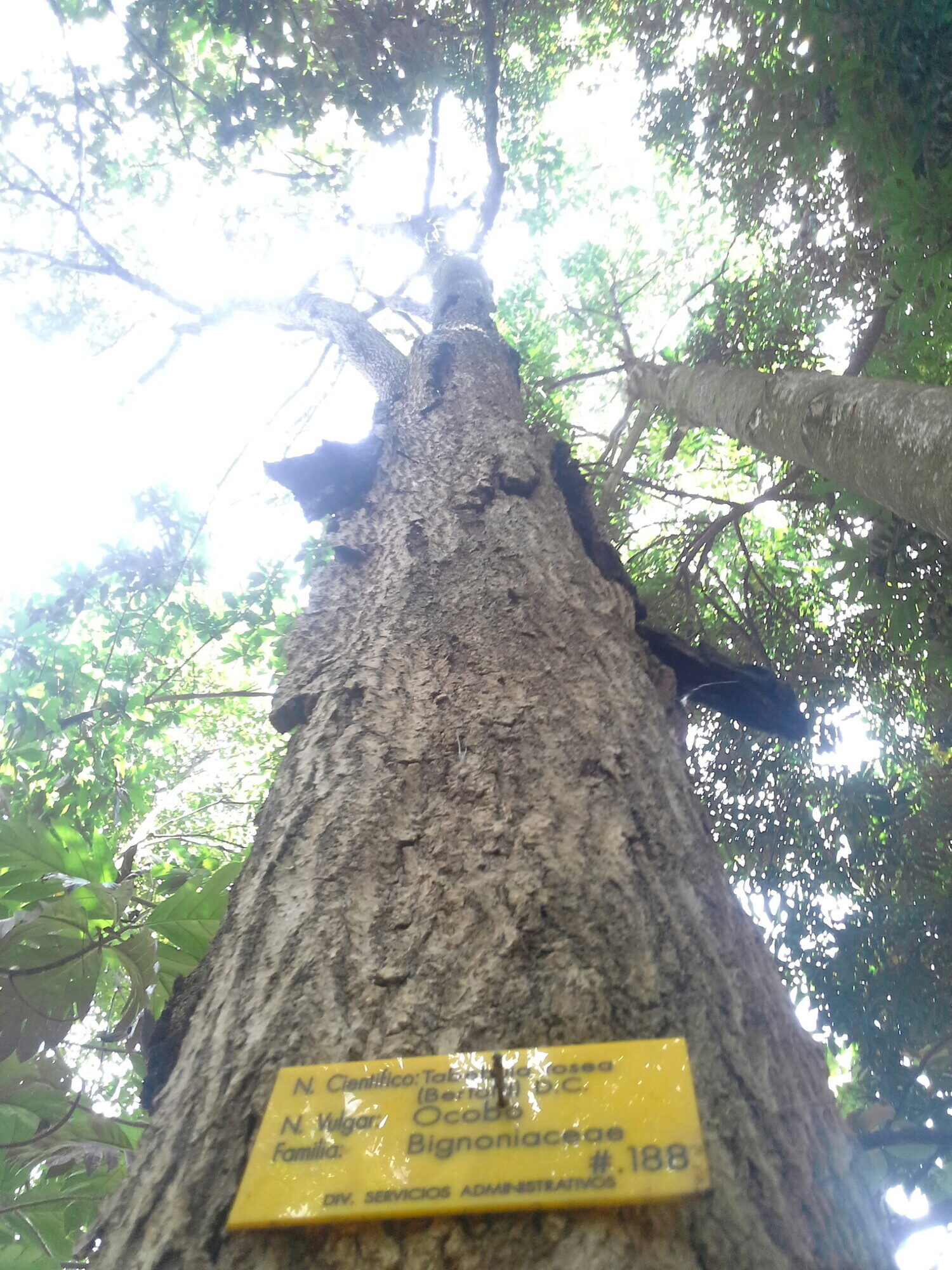
Tabebuia rosea develops into a medium to large tree, typically reaching 15-25 meters but occasionally growing to 30 meters with trunk diameters up to one meter. In open conditions, the crown spreads wide and rounded; in forest settings, the tree grows taller with a more compact crown. Young trees have smooth, grey bark that becomes darker and develops shallow vertical ridges with age. The branching pattern creates a distinctive layered appearance when the tree is leafless.
Leaves

The leaves are palmately compound with five leaflets (hence the Nahuatl name "five-leaf"), arranged in opposite pairs along the branches. Each leaflet is elliptic to oblong, measuring 7-17 cm long and 4-11 cm wide. A distinctive feature: the middle leaflet is noticeably larger than the lateral ones. The leaflet margins are entire or finely serrate, and the upper surface is glabrous or nearly so. The leaves are deciduous in areas with a pronounced dry season, remaining on the tree longer in more humid climates.
Flowers
_(14537394861).jpg)
The flowers are the tree's defining feature. Each trumpet-shaped bloom measures 5-10 cm long, with five lobes that flare open to display a yellow throat marked with darker guide lines. Flower color varies from pale pink to magenta, occasionally appearing nearly white with just a pink blush. The flowers emerge in dense terminal clusters on leafless branches, making them extraordinarily conspicuous. In Costa Rica, flowering peaks between January and April, triggered by the onset of dry conditions. A single tree can produce tens of thousands of flowers over a two-week period.

Fruits and Seeds

After flowering, the tree produces long, slender capsules that hang from the branches. These pods measure 21-38 cm long and remain green for several months before turning brown and splitting lengthwise to release the seeds. Each seed bears transparent, papery wings measuring 28-45 mm across, perfectly designed for wind dispersal. Seeds germinate rapidly (within 3-4 days under favorable conditions), and their release coincides with the onset of the rainy season when conditions favor establishment.
Distribution
Tabebuia rosea has one of the widest distributions of any Central American tree species. Its range extends from the Mexican states of Veracruz and Chiapas southward through Guatemala, Belize, Honduras, El Salvador, Nicaragua, Costa Rica, and Panama, continuing into Colombia, Venezuela, and Ecuador. The species occurs on both Atlantic and Pacific slopes, though it reaches its greatest abundance in the seasonal dry forests of the Pacific lowlands.
In Costa Rica, GBIF records document 297 occurrences across both coasts, with particular concentration in Guanacaste province. The species is common in the Central Valley (where it has been widely planted as an ornamental) and along the Pacific slope from 0-1,100 meters, though planted specimens may grow at higher elevations. In the Brunca region, it has been recorded from Corcovado National Park (Sirena, La Leona, Playa Madrigal), the Osa Peninsula near Rincon, Piedras Blancas National Park, and the Golfo Dulce lowlands.
Ecology
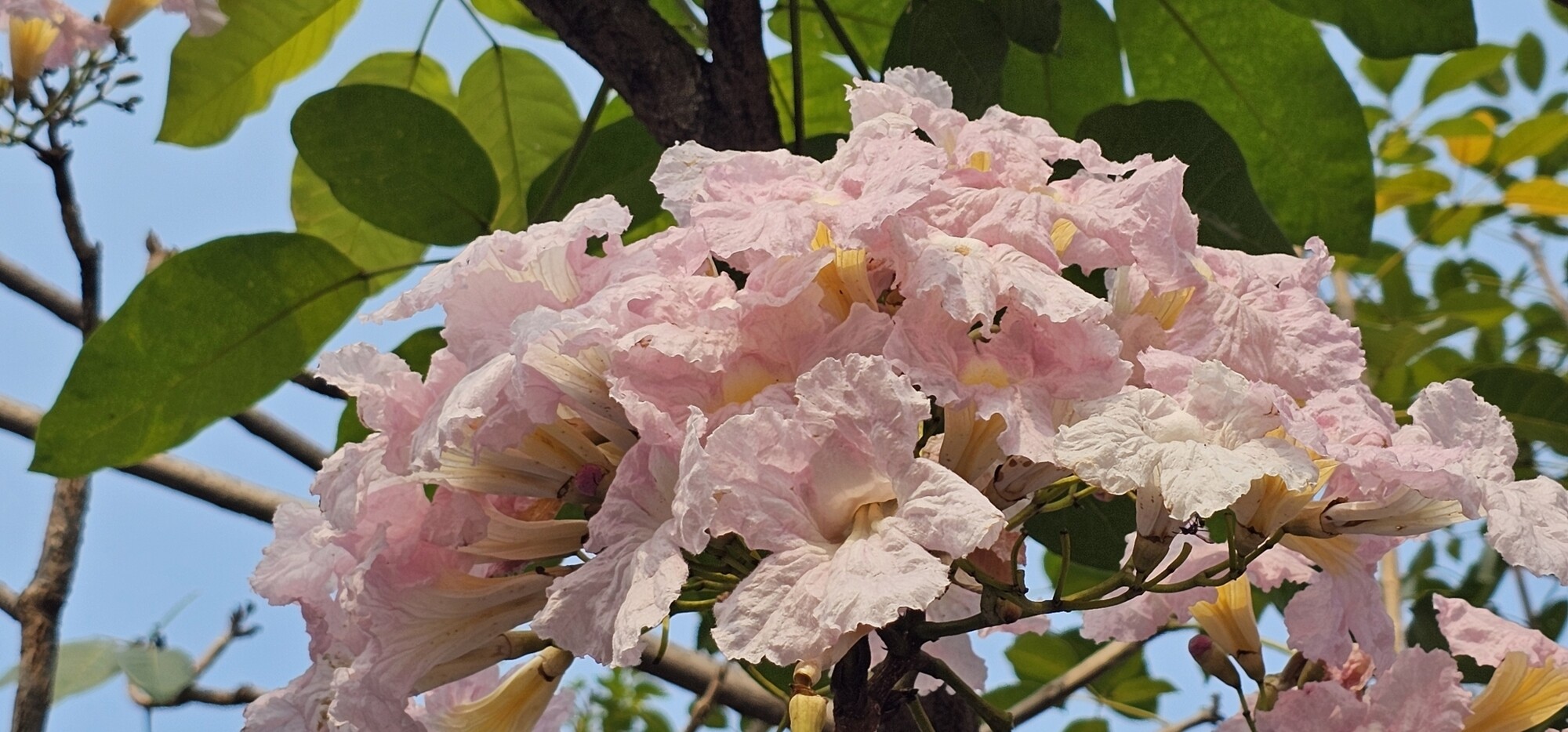
The timing of flowering in Tabebuia rosea is a precisely calibrated response to environmental cues. Research has shown that dry stress followed by a brief rain event can trigger flowering within 23 days. By producing flowers on leafless branches, the tree maximizes visibility to pollinators. The primary pollinators are large bees (particularly Xylocopa and Bombus species), though the flowers also attract hummingbirds, tanagers, and orioles. The bright yellow throat markings serve as nectar guides, directing visitors to the reward.
Seed dispersal is entirely by wind. The papery wings allow seeds to travel considerable distances from the parent tree, and the synchronization of seed release with the rainy season ensures favorable germination conditions. Tabebuia rosea displays pioneer characteristics: rapid growth, early reproduction (flowering within three years in full sun), and efficient colonization of disturbed areas. These traits make it valuable for reforestation and restoration projects.
Taxonomic History
The species was first described as Tecoma rosea by Antonio Bertoloni in 1840, based on specimens collected in Guatemala by Joaquin Velasquez. Bertoloni (1775-1869) was an Italian botanist and physician at the University of Bologna who described over 60 plant taxa from Guatemalan collections. In 1845, the Swiss botanist Augustin Pyramus de Candolle transferred the species to the genus Tabebuia in his monumental Prodromus Systematis Naturalis, recognizing it as Tabebuia rosea (Bertol.) DC.
The genus name Tabebuia derives from the Tupi-Guarani words "tacyba bebuya," meaning "ant wood," a reference to the ants that commonly inhabit hollow twigs of these trees, attracted by extrafloral nectaries. The species epithet "rosea" simply means "rose-colored" in Latin, describing the flower color. Due to its wide distribution and morphological variability, the species has accumulated numerous synonyms, including Couralia rosea, Tabebuia mexicana, and Sparattosperma rosea.
Similar Species
In Costa Rica, T. rosea may be confused with Handroanthus impetiginosus (pink ipe or roble morado), which also produces pink flowers. However, H. impetiginosus has smaller, thinner, and paler leaflets, flowers earlier in the dry season on completely leafless branches, and its wood is exceptionally hard. Tabebuia ochracea is distinguished by white-pubescent leaf undersides and typically smaller stature. Handroanthus ochraceus (corteza amarilla) shares the same habitat but produces yellow flowers. The palmately 5-foliolate leaves with the middle leaflet largest help distinguish T. rosea from many other species.
Uses and Cultural Significance
Tabebuia rosea ranks among the most economically important timber trees of Central America. The wood is greyish-brown with fine deep brown striping, moderately light but reasonably hard, and works well for furniture, flooring, construction, and boat building. As one mid-twentieth-century forestry manual noted, "a large part of the cheaper chairs of Central America are made from this wood." The timber lacks the exceptional hardness and lapachol content that make Handroanthus woods so valuable, but its combination of workability and availability has made it a regional staple.
Beyond timber, the tree serves multiple purposes in agroforestry. It is widely planted as shade for coffee and cacao, as living fence posts, and as an urban ornamental. In Venezuela, where it is called "apamate" and serves as the state tree of Cojedes, traditional medicine employs the bark for fever, inflammation, and respiratory infections. Pharmacological research has documented cytotoxic activity against cancer cell lines and anti-parasitic properties, though the species lacks the lapachol that gives Handroanthus bark its well-known medicinal reputation.
Conservation Outlook
The IUCN assessed Tabebuia rosea as Least Concern in 2019, a status reconfirmed in 2022. The species benefits from its wide distribution, adaptability to disturbed habitats, and extensive cultivation. It occurs naturally in numerous protected areas across its range and is commonly planted in reforestation projects. Unlike many tropical hardwoods, T. rosea faces no immediate conservation threats, and its populations appear stable.
The species' pioneer characteristics and wind-dispersed seeds even allow it to become locally invasive in some regions outside its native range. Its fast growth, early flowering, and tolerance of disturbed conditions make it an excellent candidate for restoration of degraded lands, particularly in the seasonal dry forests where it thrives. For the Brunca region, maintaining forest corridors that connect lowland populations with those in protected areas will help ensure the species' continued presence in the landscape.
Resources & Further Reading
Species Information
Plants of the World Online entry with distribution and synonymy.
Global occurrence records and specimen data (297 Costa Rica records).
Community observations with photographs from across the species' range.
Detailed species account with Costa Rica distribution information.
Taxonomy & Nomenclature
Nomenclatural data and specimen records from Missouri Botanical Garden.
International Plant Names Index record with publication details.
Alwyn Gentry's paper on the complex nomenclatural history of the genus.
Cultural Significance
Overview of El Salvador's national tree and its cultural importance.
In-depth article on the maquilishuat's place in Salvadoran identity.
Uses & Forestry
Comprehensive database entry on uses, cultivation, and properties.
Technical information on wood properties and timber uses.
Agroforestry database entry with silvicultural information.
Scientific Research
Scientific Reports paper on bioactive compounds and anticancer activity.
MDPI Molecules paper on antiparasitic properties of bark extracts.