Magnolia
Magnolia gloriensis — One of Central America's most primitive flowering trees, the magnolia still relies on beetles for pollination, a relationship forged before bees even existed. First discovered as a shade tree in Costa Rican coffee plantations, this elegant species with its large creamy-white flowers represents an ancient lineage that has persisted for over 100 million years.
In the humid forests of Costa Rica, from the misty slopes of Monteverde to the lowland jungles of Tortuguero, a tree bearing flowers of remarkable antiquity still blooms. Magnolia gloriensis belongs to one of the oldest families of flowering plants on Earth, the Magnoliaceae, whose ancestors flourished when dinosaurs still walked the planet. Unlike the vast majority of modern flowering plants that have evolved intricate relationships with bees, this magnolia retains the primitive pollination strategy of its Cretaceous forebears: it relies on beetles.
The creamy-white flowers of M. gloriensis open to reveal a structure designed not for delicate bee visitors but for the clumsy, chewing beetles that were among the first insect pollinators. The flowers produce copious pollen and offer nectar from fleshy tepals that beetles consume directly. Scarab beetles and sap beetles crawl among the spiral-arranged stamens, inadvertently carrying pollen from flower to flower as they feed. This ancient partnership predates the evolution of bees by tens of millions of years, and in Magnolia gloriensis it persists unchanged in the forests of modern Central America.
Taxonomic History
The Swiss-born botanist Henri Pittier first described this species in 1910, publishing it in the Contributions from the United States National Herbarium. Pittier had spent eighteen years in Costa Rica beginning in 1887, where he founded the country's first geographic institute and collaborated on establishing the National Museum. His botanical collections were so extensive that by 1904 the Costa Rican herbarium held 18,000 specimens, making it the richest in Latin America and the Caribbean.
Pittier named the species Talauma gloriensis, placing it in the genus Talauma, then considered distinct from Magnolia. The epithet gloriensis honors La Gloria, a locality in Cartago Province where Pittier found the tree growing as a shade species in coffee plantations. In the traditional agroforestry systems of Costa Rica's Central Valley, farmers planted large native trees to shelter their coffee bushes from harsh sun, and the magnolia served this purpose well.
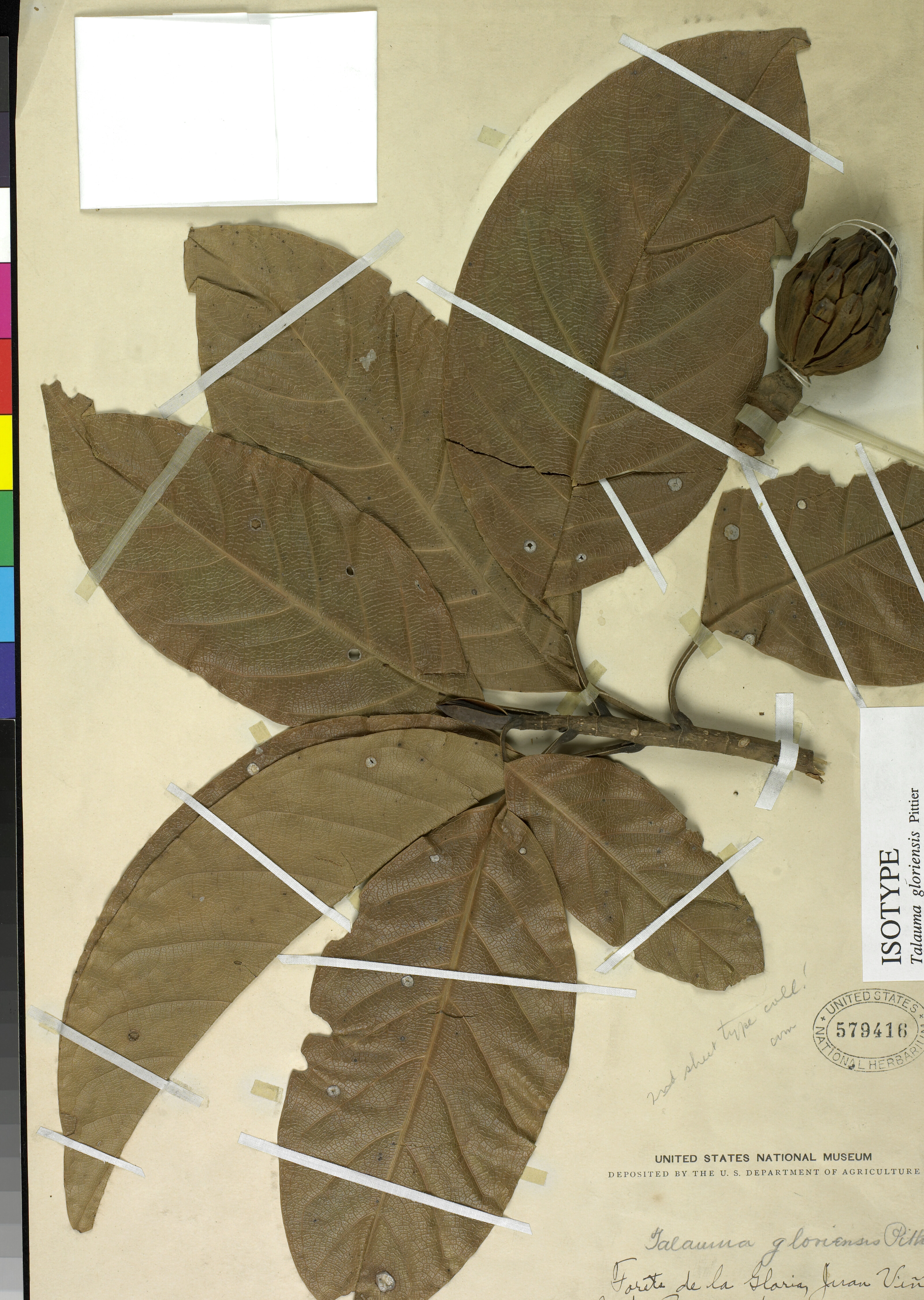
Modern molecular studies have shown that Talauma is nested within Magnolia and does not warrant recognition as a separate genus. In 1996, the Belgian botanist Rafaël Govaerts formally transferred the species to Magnolia, and it is now correctly known as Magnolia gloriensis (Pittier) Govaerts. The former genus Talauma is now treated as a section within Magnolia, the most species-rich section in the genus with approximately 96 species distributed from Mexico to Brazil.
Recent phylogenomic research has revealed that Magnolia sect. Talauma shows a clear geographic pattern, dividing into a northern clade (Mexico and Central America) and a southern clade (South America and the Caribbean). Magnolia gloriensis belongs to the northern clade, which includes other Central American species like M. allenii from Panama and M. poasana from Costa Rica's highlands. The ancestral section Talauma likely began colonizing the Neotropics around 36 million years ago, primarily via the Trans-Mexican volcanic belt.
Identification
Physical Characteristics
Form: Magnolia gloriensis is highly variable in stature, ranging from a shrub of just 3 meters to a substantial tree reaching 30 meters in height. In optimal conditions in humid lowland forest, it develops a straight trunk and rounded crown. The branchlets are glabrous (smooth and hairless), a useful character for distinguishing it from some related species.
Leaves: The leaves are large and leathery, ovate to elliptic-oblong in shape, measuring up to 31 cm long and 16 cm wide. They are cuneate to obtuse at the base and rounded to obtuse at the apex, sometimes slightly emarginate (with a small notch). The upper surface is glabrous and glossy, while the underside is also glabrous. Each leaf has 10-14 pairs of lateral veins, and the petiole reaches up to 5 cm in length.
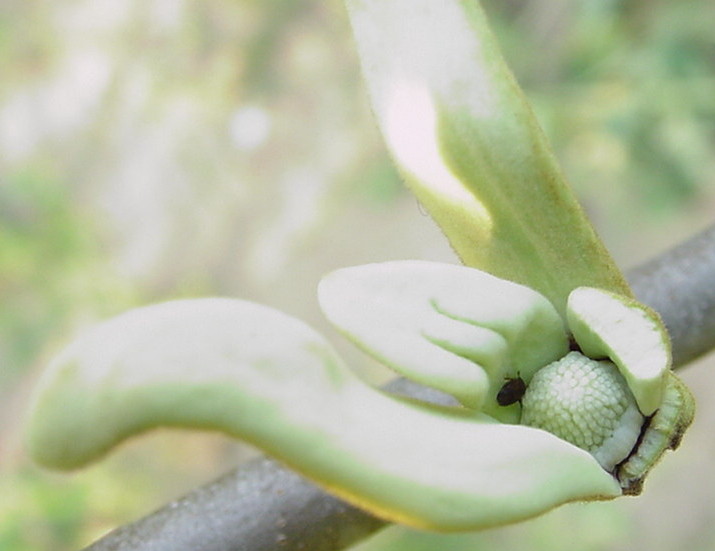
Flowers: The flowers are bisexual and showy, with 9 tepals arranged in 3 whorls of 3. The tepals are greenish-white to creamy-white and glabrous; the outer three are oblong to oblong-elliptic, measuring about 4-4.5 cm long. The numerous stamens are 13-15 mm long, spirally arranged on the elongated receptacle. The gynoecium is ovoid, composed of 25-36 carpels that are finely pubescent. Unlike most modern flowers that open during the day for bee visitors, magnolia flowers often open at night, when their beetle pollinators are most active.
Fruit: The fruit is an aggregate of follicles, with each carpel developing into a separate follicle up to about 30 mm long and 15 mm wide. The follicles are connate (fused together) and dehisce (split open) at the base in a circumscissile fashion, falling away when they open. The seeds are typically orange or red and hang from fine threads when the fruit opens, a display thought to attract birds that disperse them.
Ecology and Distribution
Magnolia gloriensis is native to Costa Rica and western Panama, with possible populations extending into southern Nicaragua and western Colombia. In Costa Rica, it occurs across a remarkably wide range of habitats: the Caribbean slopes of the Cordilleras Central and Talamanca, the San Carlos and Tortuguero plains, both slopes of the Cordilleras de Guanacaste and Tilarán, and the Golfo Dulce region on the Osa Peninsula. This broad distribution makes it one of the more widespread magnolias in Central America.
The species inhabits humid and very humid tropical forest, primarily from sea level to about 800 meters elevation, though it occasionally reaches 1,400 meters. In the Monteverde region of northwestern Costa Rica, it has been recorded at around 600 meters. The tree favors areas with high rainfall and humidity, typical of Costa Rica's Caribbean lowlands and the wetter Pacific slopes.
Beetle Pollination and Floral Thermogenesis
The beetle pollination system of Magnolia gloriensis reflects the ancient origins of its family, a syndrome known as cantharophily. Research on related magnolias has shown that the most common beetle visitors belong to the families Scarabaeidae (particularly Cyclocephala scarab beetles), Nitidulidae (sap beetles), and Staphylinidae (rove beetles). In the related Magnolia tamaulipana from Mexico, beetles accounted for 99.5% of all flower visitors, with Cyclocephala caelestis comprising 52% and rove beetles (Myrmecocephalus sp.) comprising 46% of visits.
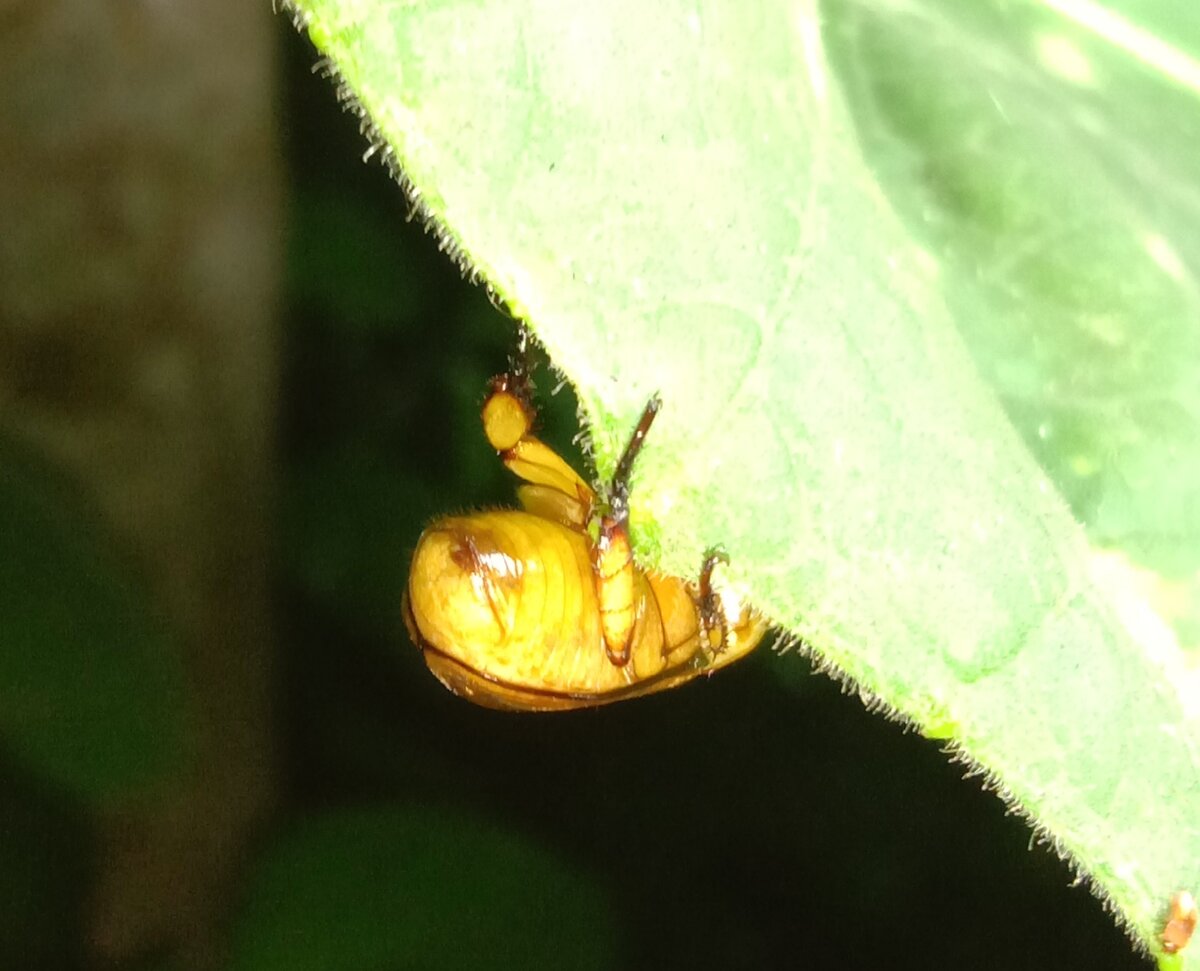
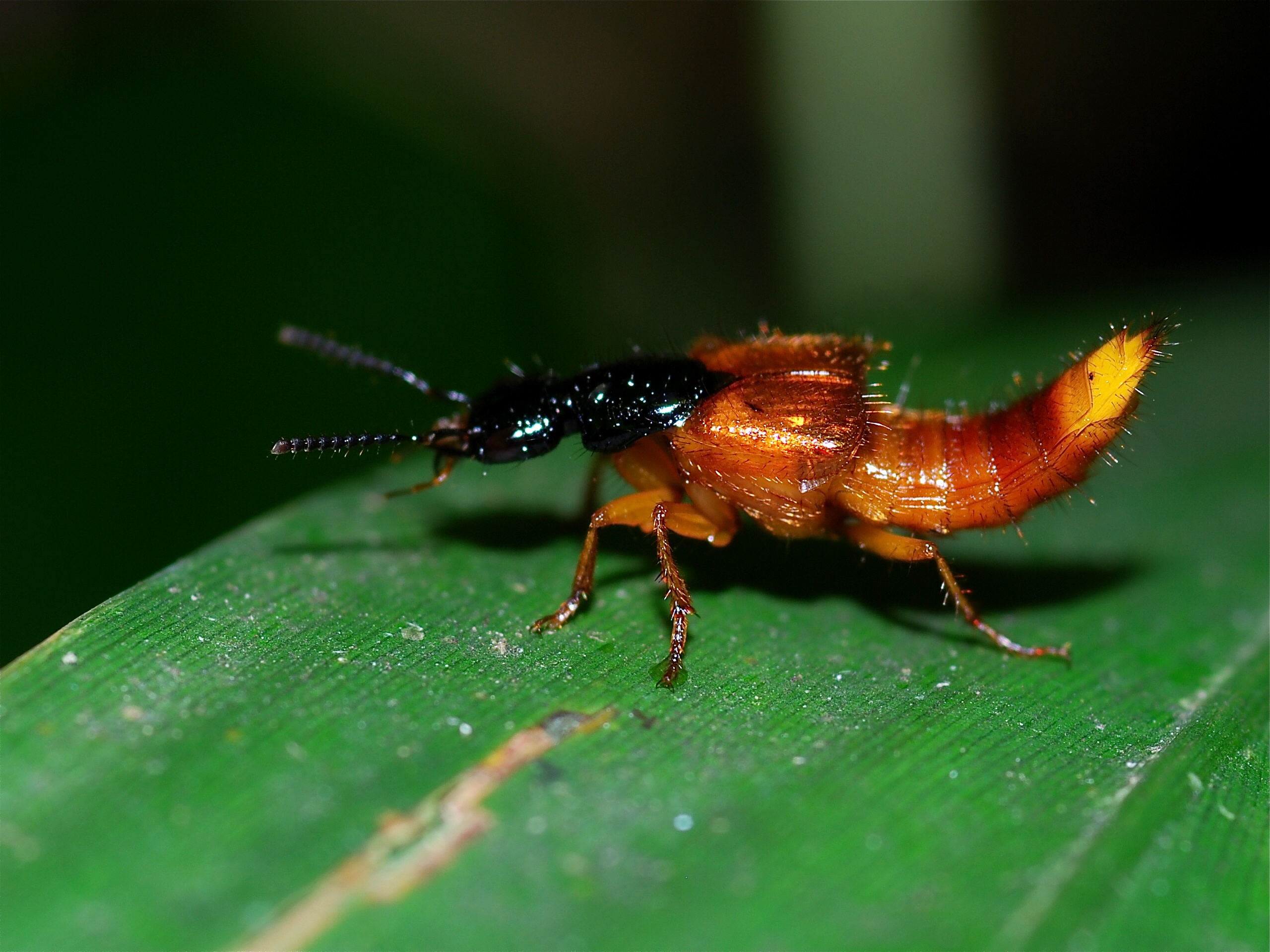
The three beetle families most commonly associated with magnolia pollination. All are attracted to flowers by scent and heat rather than visual cues.
Unlike bee-pollinated flowers, magnolia flowers attract beetles through heat and scent rather than visual displays. Many magnolias exhibit floral thermogenesis, producing heat that can raise flower temperature by 5-11°C above ambient air temperature. This heat serves two purposes: it volatilizes the floral scent to attract beetles over greater distances (especially at night when beetle pollinators are most active), and it provides an energetic reward for the beetles themselves. Cyclocephala beetles feed on the carbohydrate-rich petals, mate within the warmth of the flower, and inadvertently transfer pollen as they move between blooms. The flowers of beetle-pollinated magnolias typically open at night, are protogynous (female-receptive before releasing pollen), and remain viable for only about 24 hours.
Chemical Ecology and Floral Scent
The leaves of Magnolia gloriensis contain aromatic essential oils that have been the subject of scientific investigation. Research on specimens from Monteverde found that the leaf essential oil is dominated by two terpenes: myrcene (31.7%) and germacrene D (43.5%). This sesquiterpenoid-dominated profile is unusual among magnolias; most species have essential oils dominated by monoterpenoids. The bioactivity tests showed notable brine shrimp toxicity (LC50 = 14.1 µg/mL) and slight cruzain inhibitory activity, but the oil was devoid of antibacterial activity against common pathogens.
The volatile compounds in magnolia flowers play a critical role in pollinator attraction. Germacrene D is a common component of floral scents across many plant families and is known to be attractive to various beetle pollinators. In magnolias, floral scent emission coincides with thermogenic peaks, as the heat produced by the flower helps volatilize these aromatic compounds and disperse them over longer distances, particularly during the night when beetle pollinators are most active.
Phenology
A phenological study conducted at the Alberto Manuel Brenes Biological Reserve in San Ramón, Alajuela, Costa Rica, monitored eight Magnolia gloriensis trees from March 2014 to October 2015. The research revealed that this species exhibits a "subannual" reproductive pattern: leaf fall and new foliage emergence occur continuously throughout the year, while flowering and fruiting happen in brief periods scattered across the annual cycle rather than in a single concentrated season.
Statistical analysis revealed significant correlations between phenological events and climate. Fruiting was positively correlated with both air temperature and precipitation, suggesting that fruit development is favored during warm, wet periods. In contrast, flowering showed a strong inverse correlation with ambient temperature (r = -0.91), meaning that flowers are more likely to appear during cooler periods. Leaf emergence also showed inverse relationships with both temperature and rainfall. These patterns may reflect adaptations to optimize pollinator activity and seed dispersal in the variable climate of Costa Rica's premontane forests.
Seed Dispersal
When the aggregate fruit of Magnolia gloriensis matures, the individual follicles split open to reveal brightly colored seeds suspended on fine threads. These orange or red arillate seeds are a classic example of ornithochory, or bird dispersal. The conspicuous coloration and the dangling display are adaptations to attract frugivorous birds, which swallow the seeds whole and later regurgitate or defecate them at some distance from the parent tree. This dispersal strategy increases the chances of seeds finding suitable germination sites away from competition with the parent.
While specific bird dispersers for M. gloriensis have not been documented, research on other neotropical magnolias suggests that thrushes, toucans, and other medium to large frugivores are likely candidates. In related species, the oily aril surrounding magnolia seeds provides high energy content (27-60% lipid by dry mass in some arillate seeds), making them attractive food items. Interestingly, recent research on the Mexican Magnolia vovidesii documented nine bird species feeding on magnolia seeds, and found that seed passage through bird digestive tracts, as well as removal of the sarcotesta (outer seed coat) by birds and ants, significantly improved germination rates.
Co-occurring Species
In Costa Rica's premontane rain forests where Magnolia gloriensis occurs, the tree shares its habitat with a diverse assemblage of canopy and understory species. Studies in the Alberto Manuel Brenes Biological Reserve documented 147 tree species from 54 plant families, with the most species-rich genera being Ocotea and Inga (7 species each) and Miconia (4 species). The dominant plant families include Lauraceae (the avocado family), Rubiaceae (the coffee family), Fabaceae (legumes), and Melastomataceae.
Notable co-occurring canopy trees include Ocotea species (wild avocados, critical food sources for the Resplendent Quetzal), Elaegia uxpanamensis, and Ocotea morae, which can reach heights of 35-45 meters. The stilt palm Iriartea deltoidea is often the most frequent tree species in these forests, particularly on lower slopes and along rivers. Various Ficus (fig) species serve as keystone resources for wildlife. The forest understory is characterized by species of Rubiaceae and Heliconiaceae, which produce showy flowers throughout the year. This complex vegetation structure, ranging from the forest floor to emergent canopy trees, creates numerous microhabitats that support the exceptional biodiversity of Costa Rica's premontane forests.
Conservation
The IUCN classifies Magnolia gloriensis as Data Deficient, meaning that insufficient information exists to assess its conservation status. This classification reflects the challenges of studying a species that, while relatively widespread, occurs at low densities scattered across remote forests. Portions of its range fall within protected areas, including the Monteverde Cloud Forest Reserve and various national parks in the Talamanca region and Osa Peninsula.
Costa Rica harbors at least six species of magnolia, several of which are endemic and threatened. The broader conservation picture for Central American magnolias is concerning: habitat loss in the region's montane and humid forests continues to reduce populations of these slow-growing, often rare trees. The traditional use of M. gloriensis as a shade tree in coffee plantations, while economically motivated, may have inadvertently helped preserve some populations outside of forests.
Resources & Further Reading
Species Information
Overview of the species including distribution, habitat, and conservation status.
Community observations with photos and distribution maps from citizen scientists.
Authoritative taxonomic information from the Royal Botanic Gardens, Kew.
Detailed species profile in Spanish with distribution and ecological information.
Scientific Studies
Phenological study documenting flowering, fruiting, and leaf dynamics with climate correlations (2014-2015).
Research on the chemical composition of the leaf essential oil, including myrcene (31.7%) and germacrene D (43.5%) content.
Molecular study revealing geographic clades within section Talauma and evolutionary history of Central American magnolias.
Research on beetle pollination systems in Magnoliaceae, demonstrating the ancient nature of this plant-pollinator relationship.
Comprehensive review of Cyclocephala beetle-plant interactions, including Magnolia pollination in Mesoamerica.
Research on seed dispersal showing how birds and ants improve magnolia seed germination by removing the sarcotesta.
Habitat and Forest Ecology
Forest structure study documenting 147 tree species from 54 families in Costa Rica's premontane rain forest.
Official information about the reserve where phenological studies of M. gloriensis have been conducted.
Henri Pittier
Biography of the Swiss-born botanist who described M. gloriensis and pioneered conservation in Costa Rica.
Article on Pittier's contributions to Costa Rican botany and conservation during his 15 years in the country.