Quizarra de Monteverde
Ocotea monteverdensis — A critically endangered wild avocado relative that grows only in Costa Rica's Tilarán mountains, where its rust-colored twigs and distinctive leaves mark the cloud forests around Monteverde.
Walk the misty trails between Monteverde and Santa Elena, and you enter the heart of this species' tiny range. Ocotea monteverdensis is one of Costa Rica's rarest laurels, found nowhere else on Earth. The type specimen was collected by ecologist Gary Hartshorn in 1977, and the tree was formally described by William Burger in 1990. An estimated 870 mature trees survive, mostly concentrated in the cloud forests of the Cordillera de Tilarán.
What sets this quizarra apart? Look for rust-colored twigs covered in fine hairs and leaves whose bases run down the petiole (leaf stalk) rather than ending abruptly. This "decurrent" trait, visible even from the ground, makes identification straightforward once you know what to look for. The species grows at middle elevations between 1,000 and 1,500 meters, bridging the gap between lowland rainforest and highland oak forest.
Identification
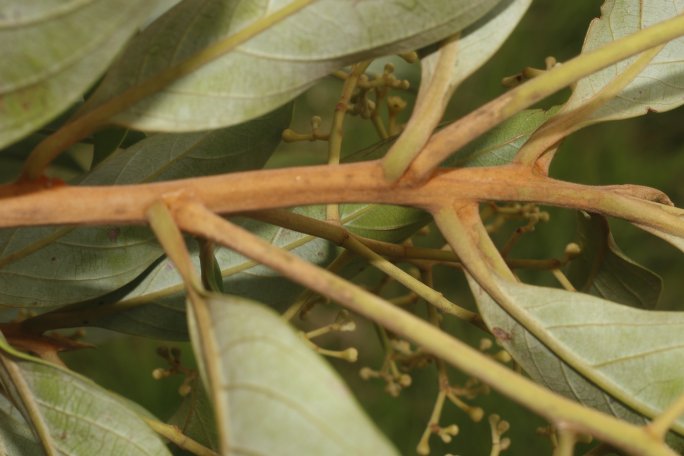
Twigs & Bark
The most immediate field mark is the rust-colored (ferruginous) pubescence on young branchlets. Twigs are covered in fine, downy (tomentulose) hairs about 0.2 mm long that give them a velvety texture and yellowish-brown to orange-brown color. This ferruginous indument distinguishes O. monteverdensis from most other cloud forest laurels.
Leaves
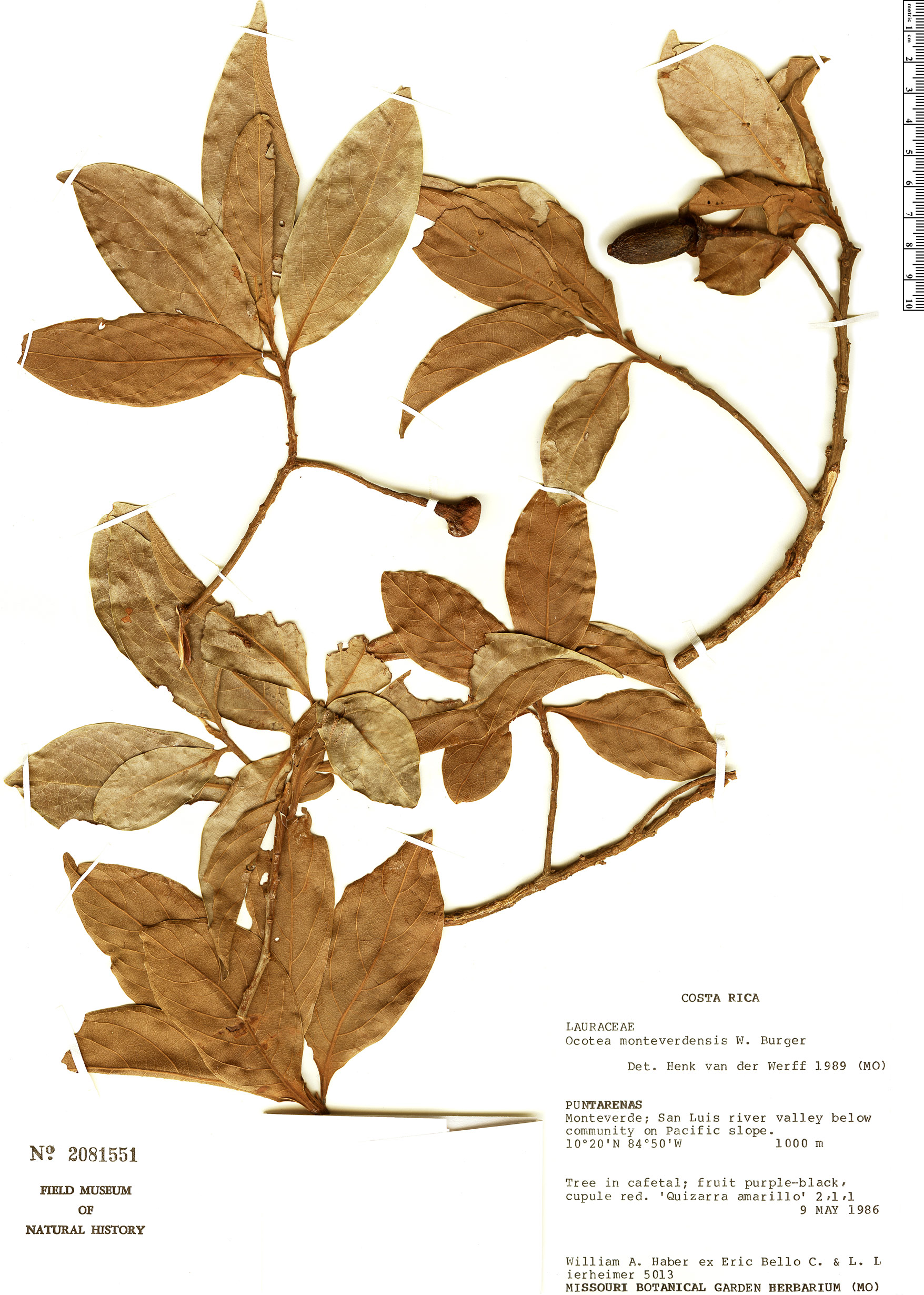
Leaves are 4–12 cm long and 1.5–4 cm wide, elliptic to narrowly elliptic, tapering gradually to a pointed tip. The diagnostic feature is the decurrent base: rather than ending abruptly at the petiole (leaf stalk), the blade tissue runs a few millimeters down onto the stalk, creating a winged appearance. The underside is densely covered with appressed hairs, while the upper surface dries grayish and smooth.
Flowers
Inflorescences are branched clusters (panicles) 6–12 cm long with the same rust-colored pubescence as the twigs. Flowers are small, 3–3.5 mm long and 4–5 mm wide. The inner tepals (petal-like structures) have a bumpy (papillate) surface. Stamens are nearly stalkless, and the flowers lack staminodes (sterile stamens found in some related species). Flowering occurs from June to August during the rainy season.
Fruits
Fruits rest in shallow cupules (the cup-like structures that hold the base of the drupe) 12–16 mm wide and only 1–3 mm deep. The cupules turn bright red as the fruits ripen, creating a striking contrast with the dark green foliage. The ellipsoid drupes (fleshy fruits with a single seed) grow up to 3 cm long and mature from July to August. This fruiting timing coincides with the altitudinal migration of quetzals through Monteverde.
Distribution
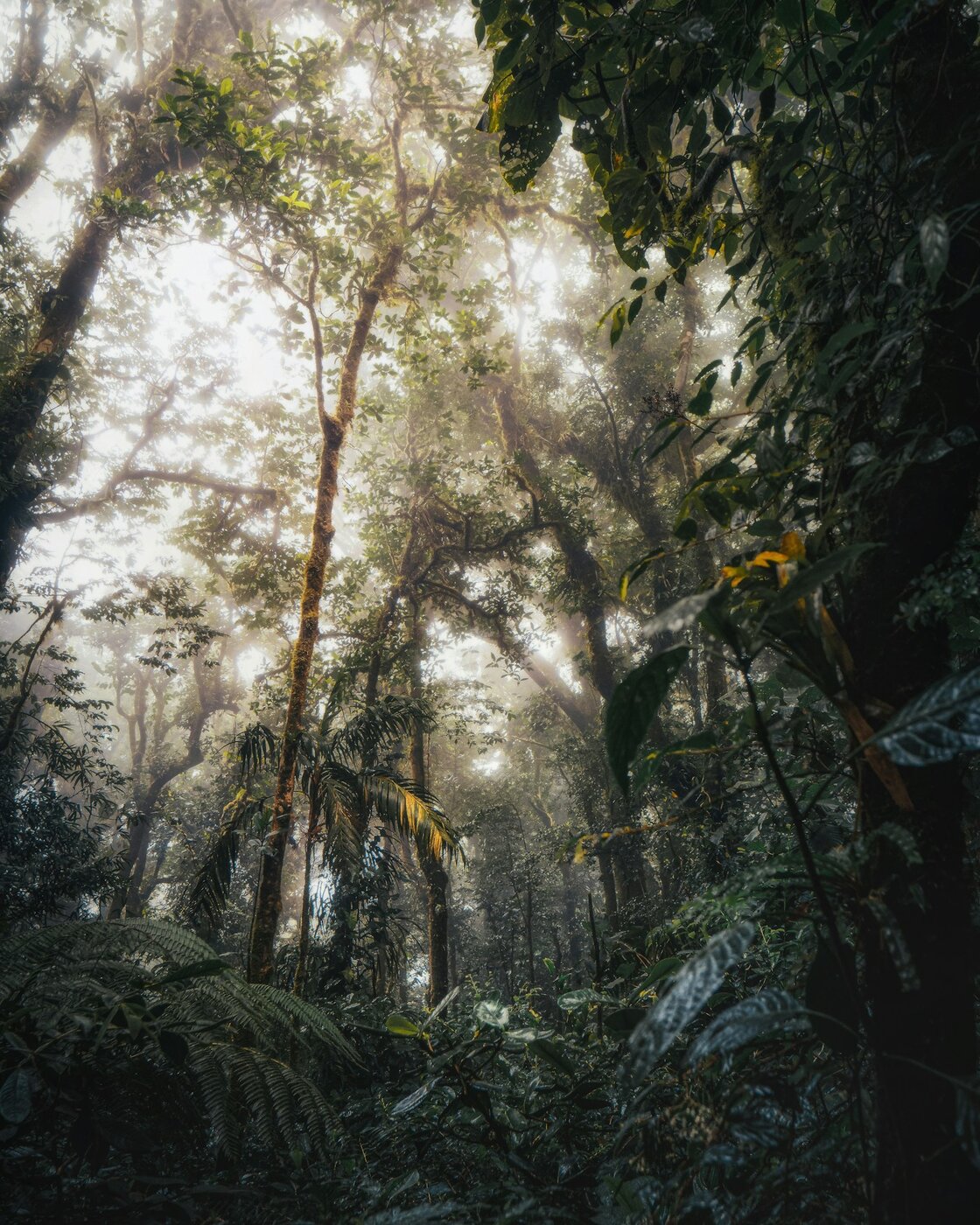
Ocotea monteverdensis lives only in Costa Rica, scattered across a handful of cloud forest patches between 1,000 and 1,500 meters elevation. Most trees grow in and around Monteverde on the Cordillera de Tilarán, with an outlying population near Rincón de la Vieja in the Guanacaste volcanic range to the northwest. These disjunct localities suggest the species may hide in other poorly explored mid-elevation forests.
The species favors forest gaps where filtered light reaches the understory. Private reserves like Monteverde, Santa Elena, and Bajo del Tigre protect some of the known trees. The Monteverde Institute leads conservation of the species through its "Mi Ocotea" project, protecting mature trees, planting seedlings, and monitoring natural regeneration, which remains minimal.
Conservation Outlook
GBIF carries the IUCN listing of Critically Endangered, a status driven by the species’ tiny range and ongoing pressure from dairy expansion and tourism infrastructure. Monteverde’s community reserves protect some mature trees, but roughly 70% grow on unprotected private land, and natural regeneration remains limited.
Reforestation projects now prioritize propagating seedlings and protecting natural regeneration to rebuild the population and maintain a viable gene pool. Restoration planting in the Bellbird Biological Corridor helps reconnect forest fragments across life zones so that fruit-eating birds can move between remnant stands.
Wildlife Connections
Monteverde's flagship birds rely on O. monteverdensis. Resplendent quetzals gorge on the bright red fruits, three-wattled bellbirds patrol the same ridges to fatten up for migration, black guans disperse its seeds, and emerald toucanets, which feed broadly on Monteverde's laurels, likely take its fruit too. Protecting those frugivore routes is the quickest way to keep the species circulating between private reserves.
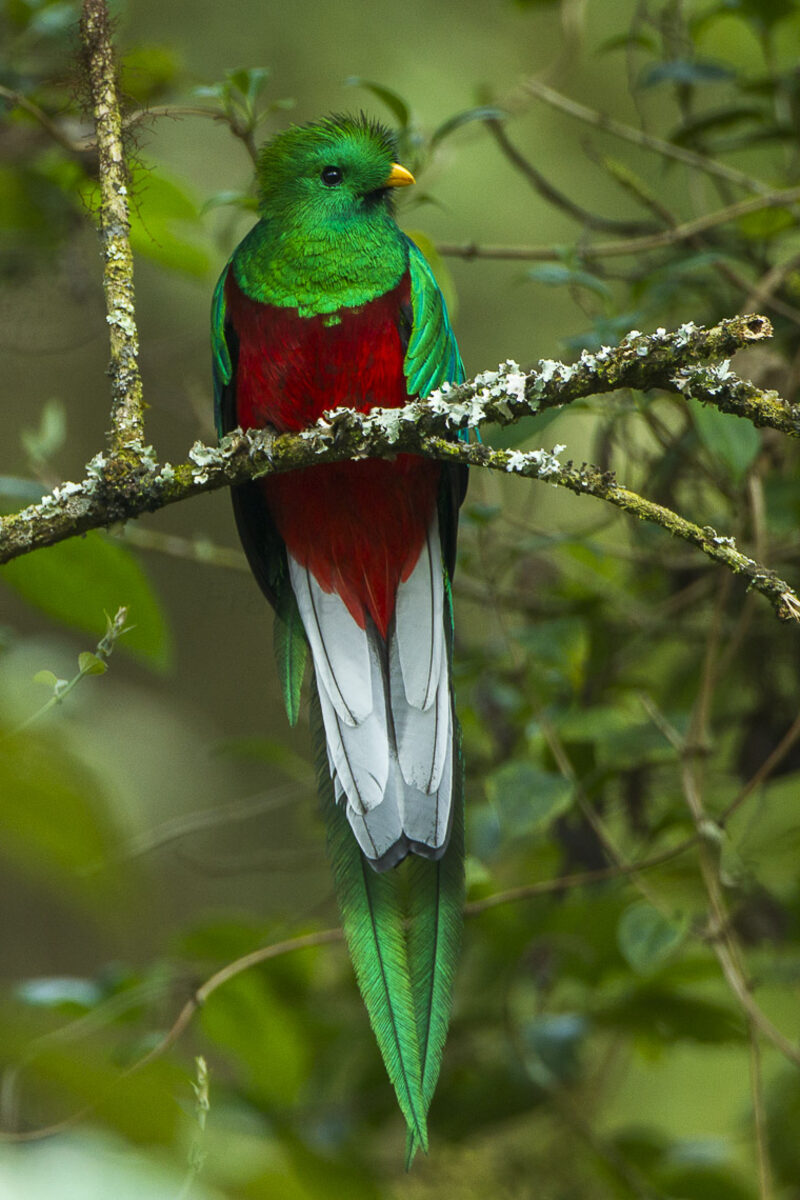
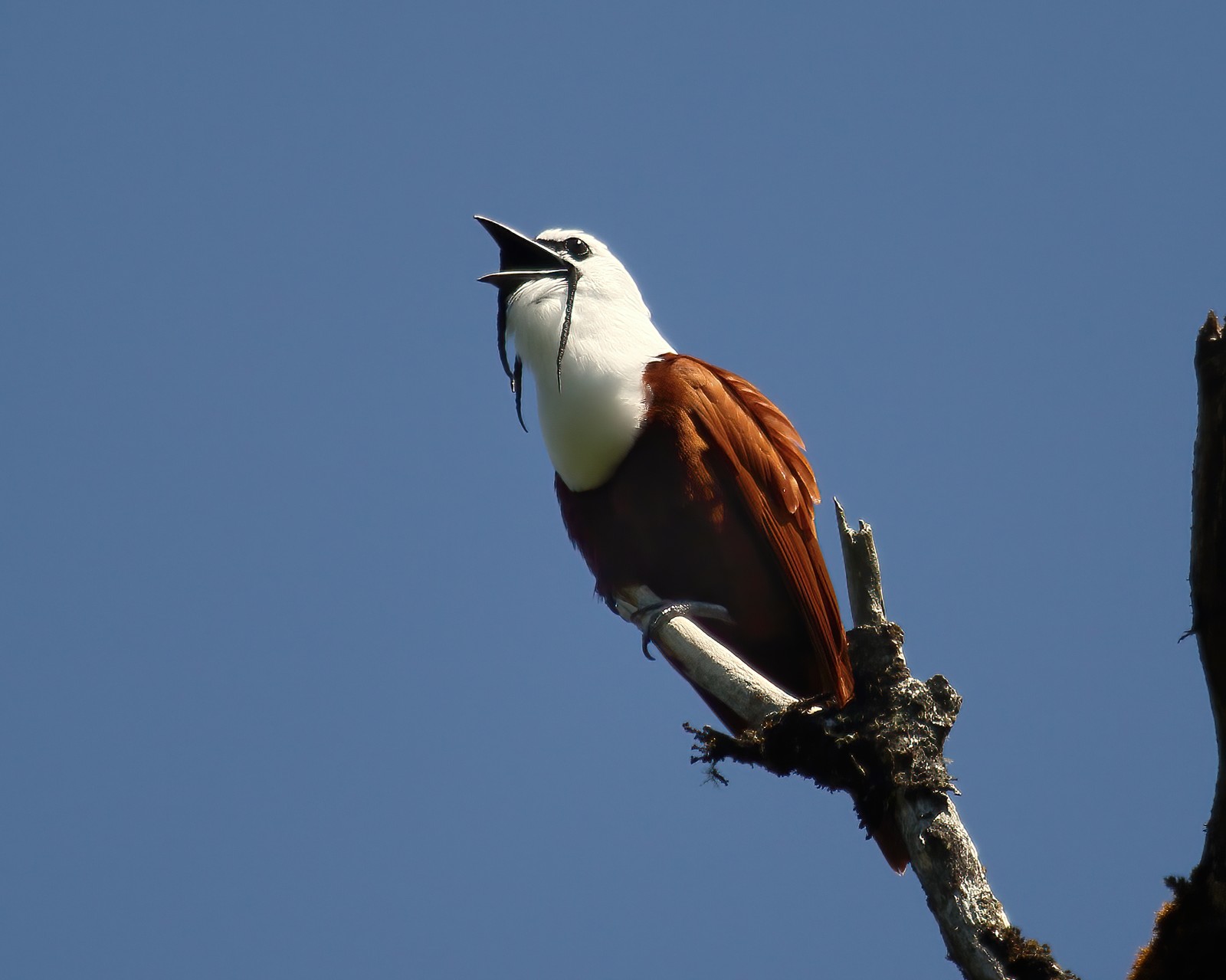
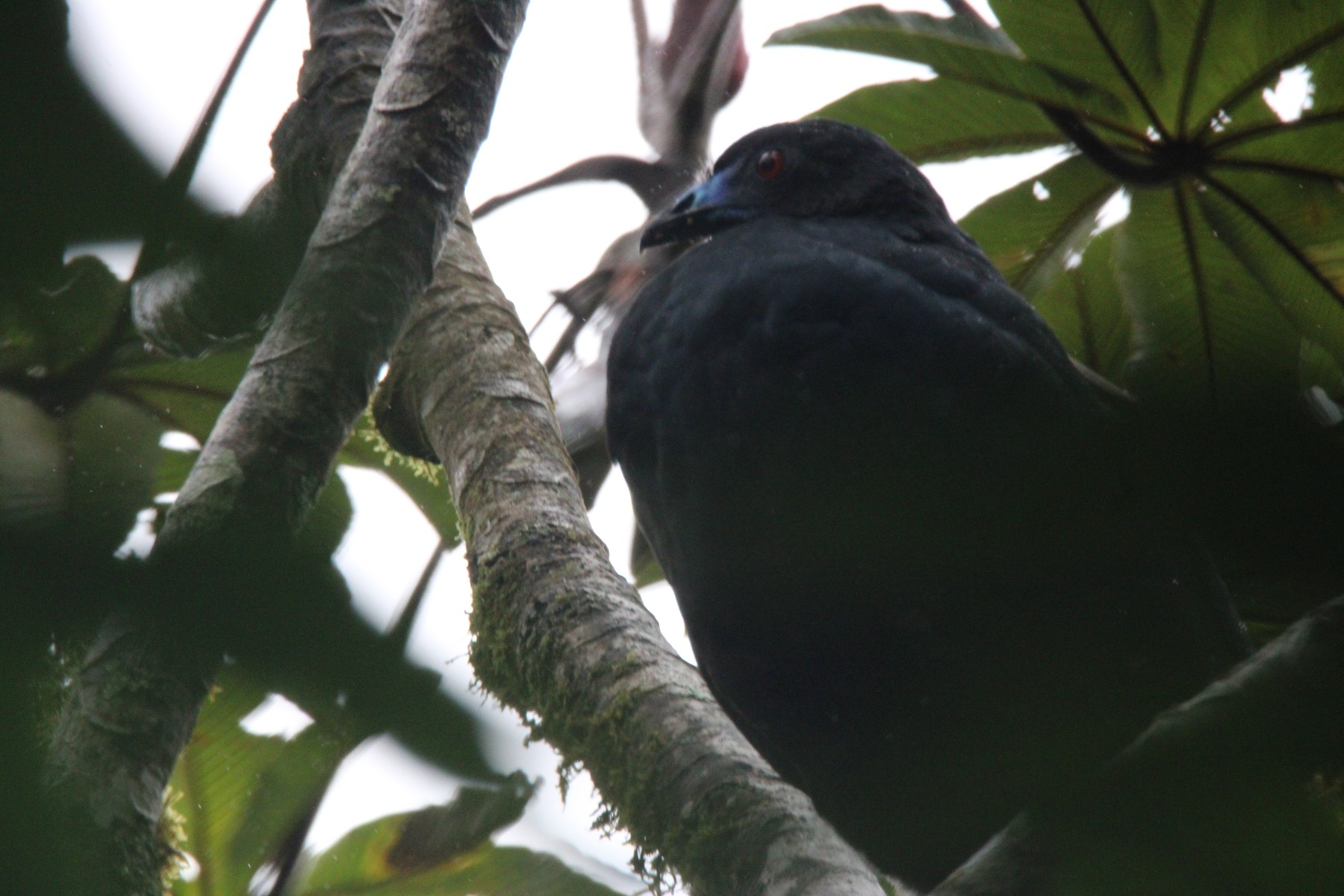
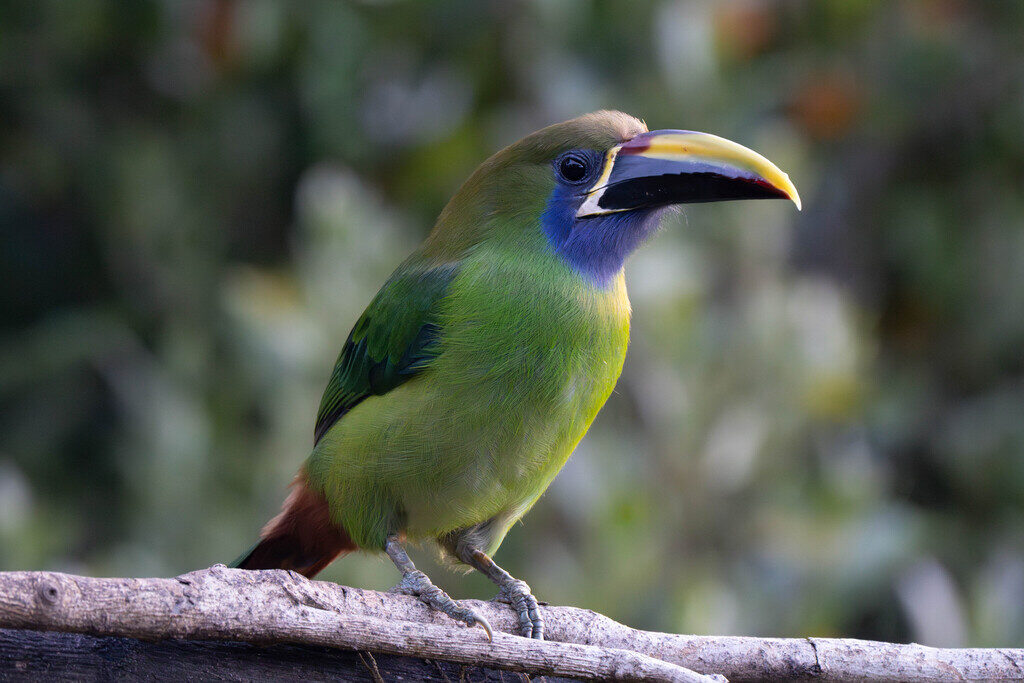
Photos (clockwise from top left): Resplendent quetzal (Cephas, CC BY-SA 4.0), Three-wattled Bellbird (Cephas, CC BY-SA 4.0), Emerald toucanet (Wikimedia Commons, CC BY-SA 4.0), and black guan (Kelly Fretwell, CC BY 4.0).
Taxonomic History
William C. Burger described Ocotea monteverdensis in 1990 as part of his monumental treatment of Lauraceae for the Flora Costaricensis, published in Fieldiana: Botany. The type specimen, Gary S. Hartshorn 1900, was collected in the Monteverde area in 1977. Its holotype is held at the Herbario Nacional de Costa Rica (CR) and an isotype at the Field Museum (F), with a photographic negative at the Missouri Botanical Garden (MO). The epithet "monteverdensis" refers to Monteverde, the type locality.
The species has remained taxonomically stable since its description, with no synonyms or nomenclatural changes. Tropicos and Plants of the World Online both accept Burger's original circumscription. Within Burger's Flora Costaricensis key, O. monteverdensis groups with species having ferruginous indument and decurrent leaf bases, but its combination of narrow leaves, shallow cupules, and restricted highland distribution distinguishes it from relatives such as O. skutchii, O. hartshorniana, and O. mollicella.
Resources & Further Reading
Species Information
Kew's authoritative record confirming nomenclature and endemic status within Costa Rica.
Missouri Botanical Garden's database with type specimen data and publication details.
Distribution map and occurrence records showing the species' restricted range in Costa Rica.
Taxonomy & Nomenclature
Original species description with morphology, range, and phenology notes from the Flora Costaricensis.
Open-access mirror of the original protologue, readable when the Biodiversity Heritage Library page is bot-gated.
Nomenclatural record with publication citation and author attribution.
Conservation
Critically Endangered assessment documenting the species' limited range and threats.
Research and education center working on cloud forest conservation in the species' core range.
Primary Spanish-language conservation case study on the species and its habitat loss.
Peer-reviewed six-year study documenting bellbird preference for Ocotea fruit in Monteverde.
Related Reading
Browse all wild avocado relatives in our tree taxonomy guide.
A related highland laurel that shares the Monteverde cloud forest with O. monteverdensis.