Ira Amarillo
Ocotea laetevirens — A Pacific-slope laurel whose deep-cupped fruits and hairy leaf domatia link Costa Rica's mangrove-fringed lowlands with the oak forests of the Talamancas.
Known locally as "ira amarillo," Ocotea laetevirens is one of the few Costa Rican laurels that genuinely spans the Brunca Region gradient, appearing in wet evergreen forest on both coasts, in Pacific mangrove backwaters, and again in the wind-swept oak stands perched above 2,800 meters. Paul Standley and Julian Steyermark published the protologue, meaning the first formal description, in 1944 from Cerro San Rafael on Guatemala’s Caribbean slope, describing a nine-meter tree with nearly glabrous twigs and deep-cupped fruits collected between 1,200 and 2,000 meters. Subsequent Costa Rican floras treat it as an evergreen shrub or tree reaching 3–35 meters.

From Sea Level to Oak Ridges
The Costa Rican flora describes O. laetevirens as a consummate generalist, collected in wet, very wet, pluvial, and even oak forest from sea level all the way to 3,000 meters, with records on the Caribbean slopes of Guanacaste, Tilarán, and the Central Cordillera as well as the Pacific-facing Cerros de Escazú, Turrubares, Fila Costeña, and Golfo Dulce region.
Digitized herbarium data mirror that reach: the 410 georeferenced records currently in aggregated biodiversity portals place 340 specimens in Costa Rica, 31 in Panama, 25 in Mexico, and smaller numbers in Guatemala and Honduras, with documented elevations from 5 to 3,000 meters and a notable cluster along the Pacific slope between Carara and Las Nubes.
Paired with Ocotea meziana
Field botanists treat O. laetevirens and O. meziana as a Pacific-versus-Caribbean pair akin to the relationship between O. atirrensis and O. pentagona: O. meziana dominates the northern cordilleras and Caribbean lowlands, whereas O. laetevirens becomes common from the Cerros de Escazú and Carara southward on the Pacific slope.
Identification
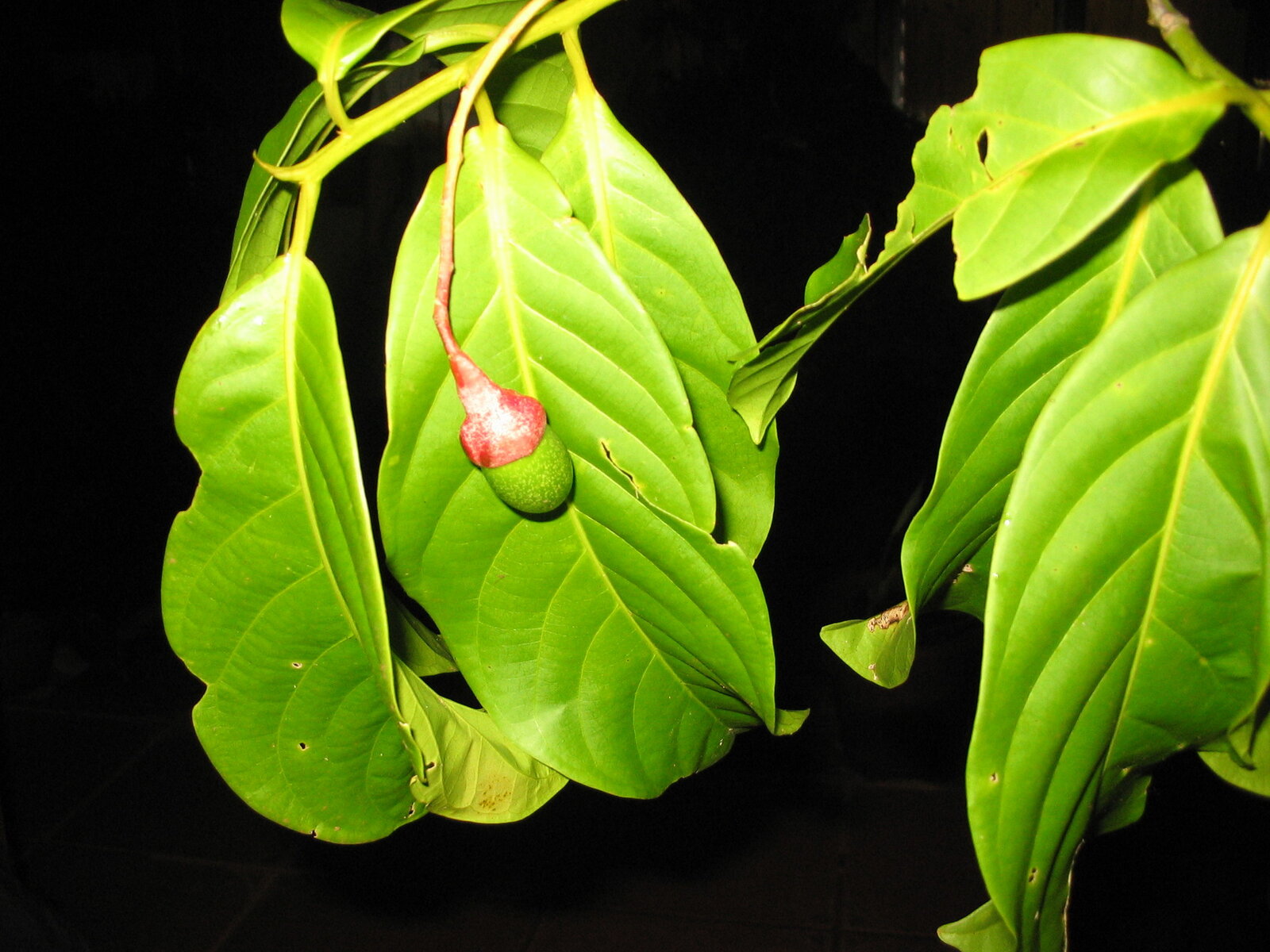
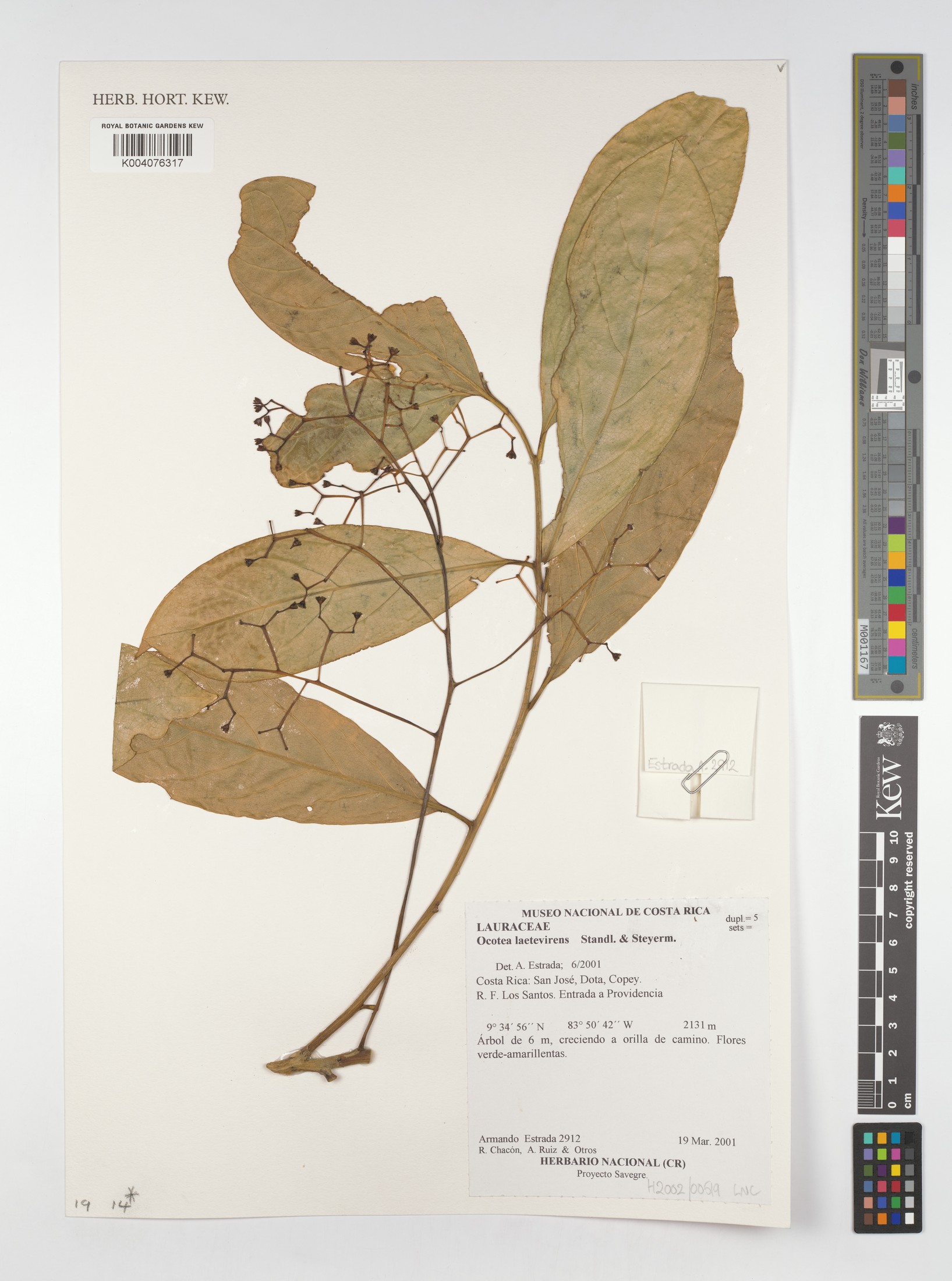
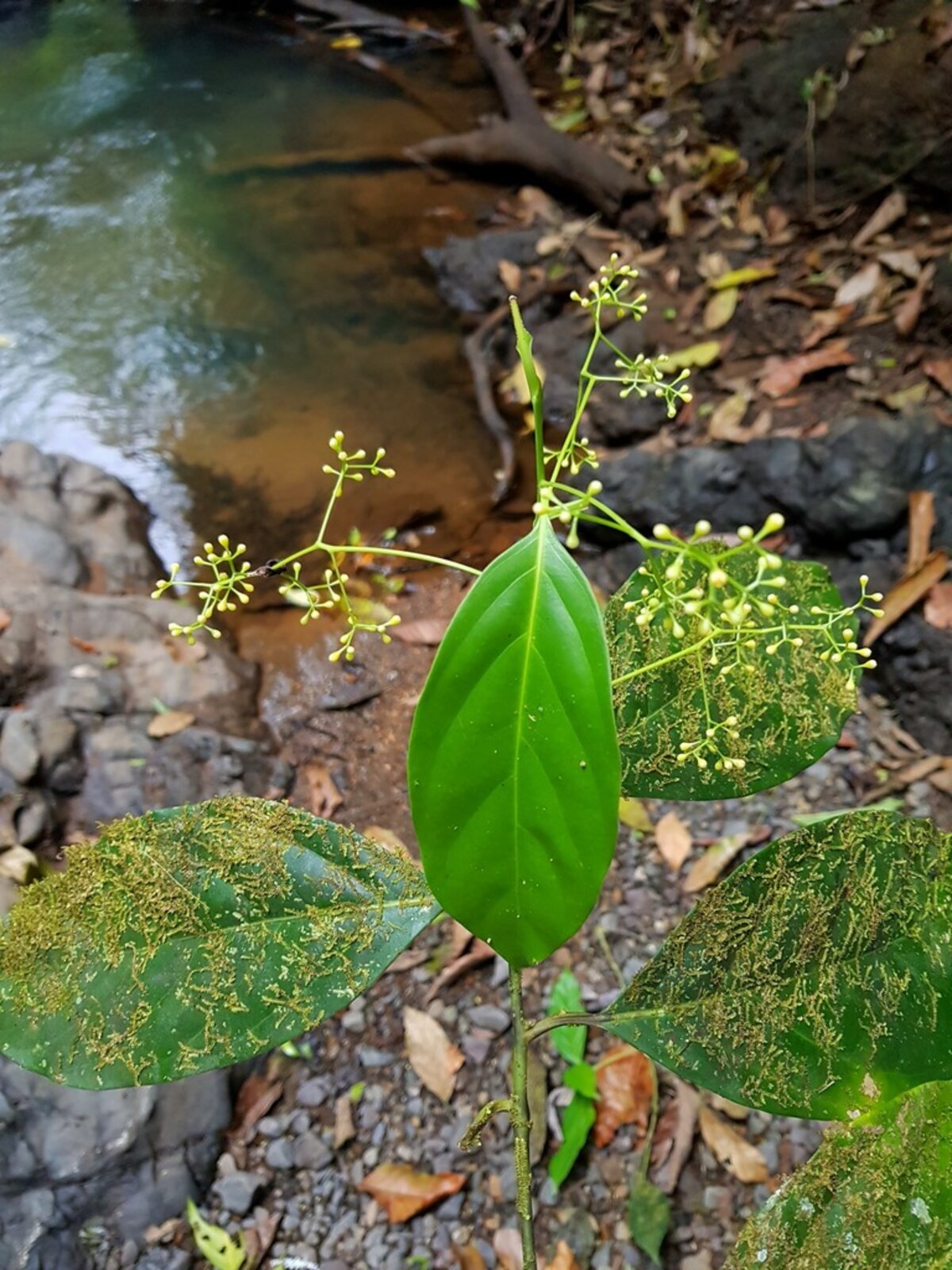
Leaves are 10–28 × 4.5–14 cm, broadly elliptic, abruptly acuminate, and fully glabrous on both surfaces, though many Pacific collections (Carara, Dota) show conspicuous hollow domatia—tiny mite houses with hairy openings—tucked into the axils of the basal secondary veins. Panicles are glabrous and can reach 24 cm, bearing bisexual flowers 2.5–4 mm wide with suberect tepals. The fruits are 2.5–4 cm long, cylindrical, and set above a 0.6–1 cm cupule (a thimble-like cup) that is noticeably deeper than the patelliform cups of O. meziana. Fruit-trait surveys from the Mexican perennifolious forest belt record the drupes as glandular and approximately 9 mm in diameter—the botanists who collected them liken them to mini avocados compared to the larger fruits of other Ocotea.
Seasonal Rhythms
Herbarium phenology records show flowering and fruiting twice a year: January–April and again from July through December, with only a brief lull at the start of the rainy season. Aggregated occurrence datasets echo that rhythm, clustering 54 collection dates in February, 52 in March, and a second pulse with 31 in November, meaning O. laetevirens provides lipid-rich drupes precisely when quetzals, bellbirds, and toucans migrate downslope in search of Lauraceae fruits.
Range and Taxonomy
Plants of the World Online recognizes O. laetevirens across southern Mexico (Veracruz, Oaxaca, Chiapas), Guatemala, Honduras, Costa Rica, Panama, and into the North Pacific floristic province, and it treats Lundell’s O. clarkei as a heterotypic synonym—explaining why older Mexican herbarium labels bear that name.
The 2020 IUCN assessment analyzed 203 BIEN and Tropicos accessions, calculated an extent of occurrence of 417,000 square kilometers, basically a map envelope that encloses all known records, and recorded an elevation span from 2 to 3,077 meters across Mexico, Guatemala, Honduras, Costa Rica, and Panama. Because the species inhabits numerous protected areas, faces no identified large-scale threats, and is presumed to have a large population, it is currently listed as Least Concern with population trend unknown.
Costa Rican taxonomists also flag a look-alike entity with only two anther valves; van der Werff once included it in O. laetevirens, but the Manual de Plantas now treats it as an unnamed Aiouea pending further study, underscoring the evolutionary fluidity of Lauraceae along the Pacific slope.
Wildlife Connections
Lauraceae fruits are lipid-rich packages that birds and mammals seek out when other foods dwindle. On the Caribbean slope, Keel-billed Toucans (Ramphastos sulfuratus), Collared Aracaris (Pteroglossus torquatus), and Turquoise Cotingas (Cotinga ridgwayi) gorge on the drupes of O. laetevirens; on the Pacific slope Yellow-throated Toucans (Ramphastos ambiguus), Fiery-billed Aracaris (Pteroglossus frantzii), and Scarlet-rumped Cotingas follow suit. Spider monkeys (Ateles geoffroyi), white-faced capuchins (Cebus imitator), and howler monkeys (Alouatta palliata) also swallow the oily fruits whole and deposit the seeds beneath perches along mangrove edges and lowland ridges, ensuring that scattered Ocotea groves keep regenerating on both coasts.
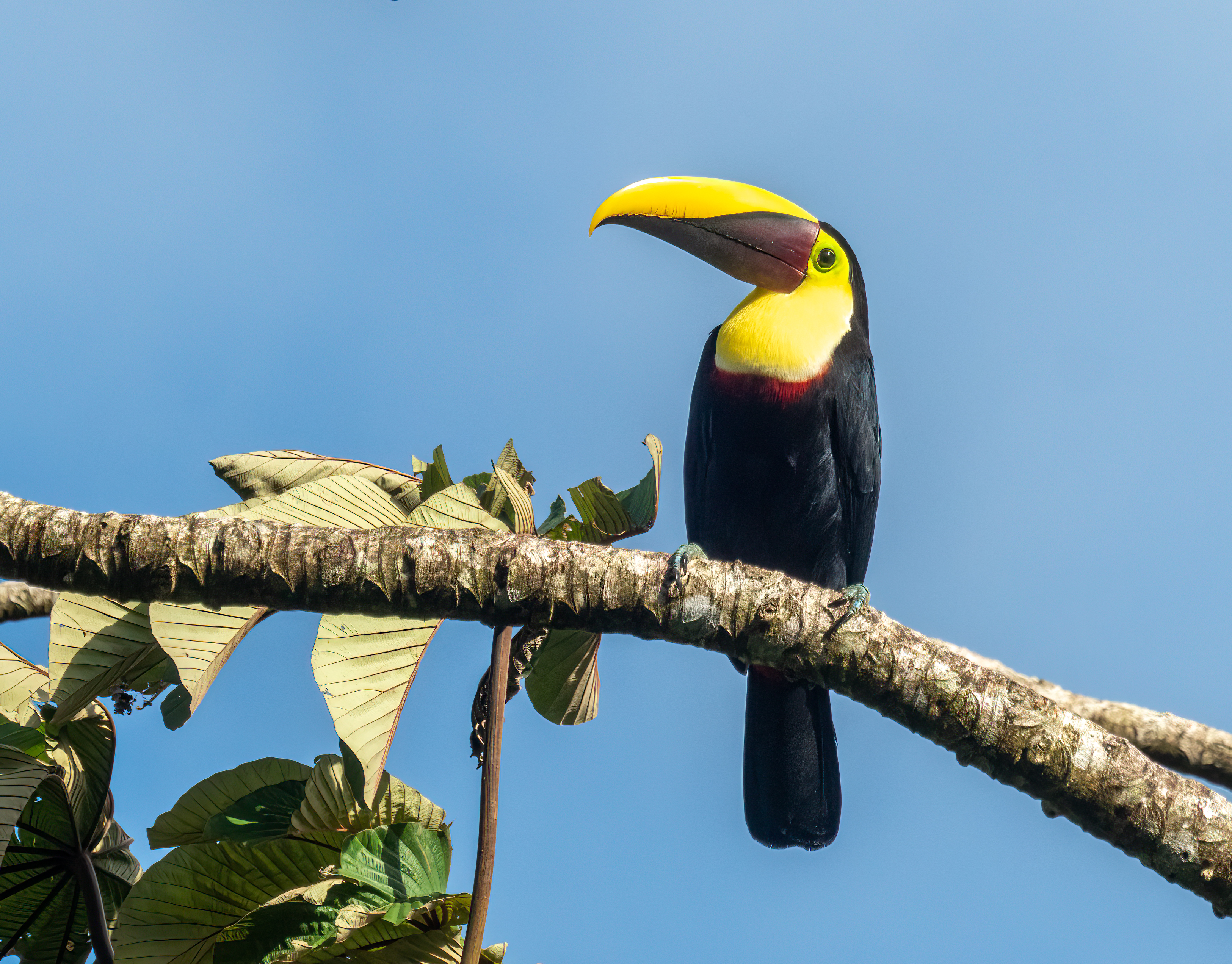
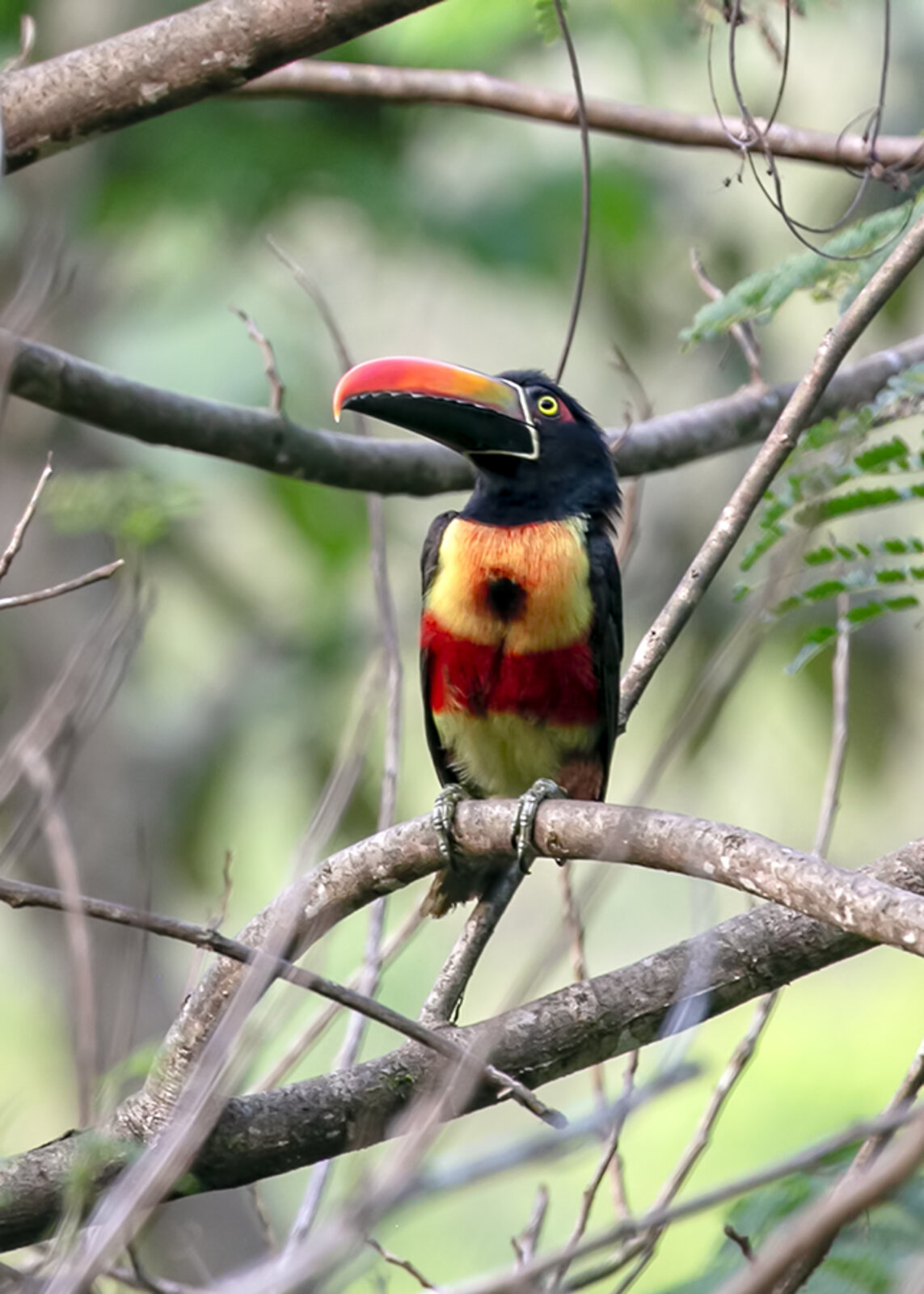
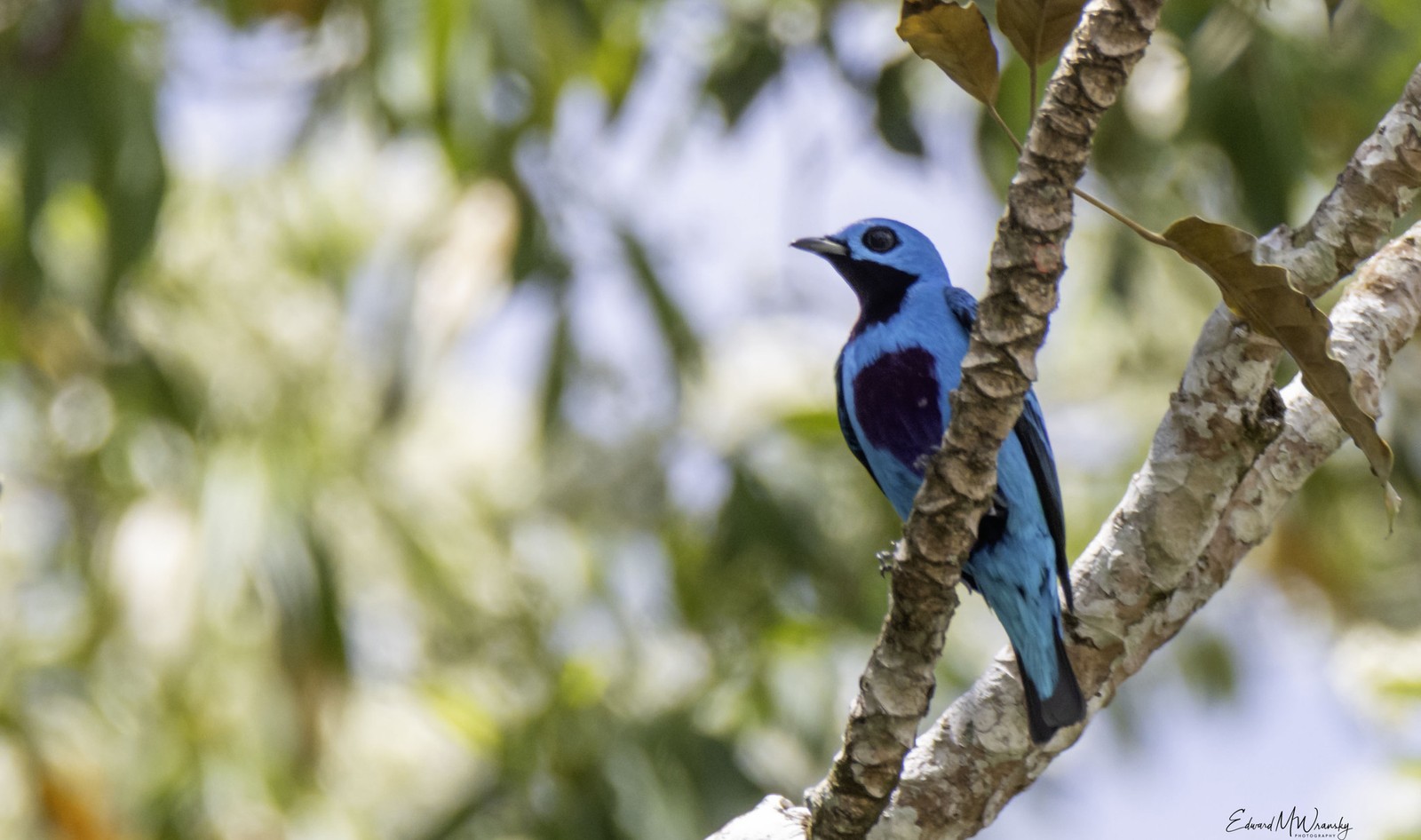
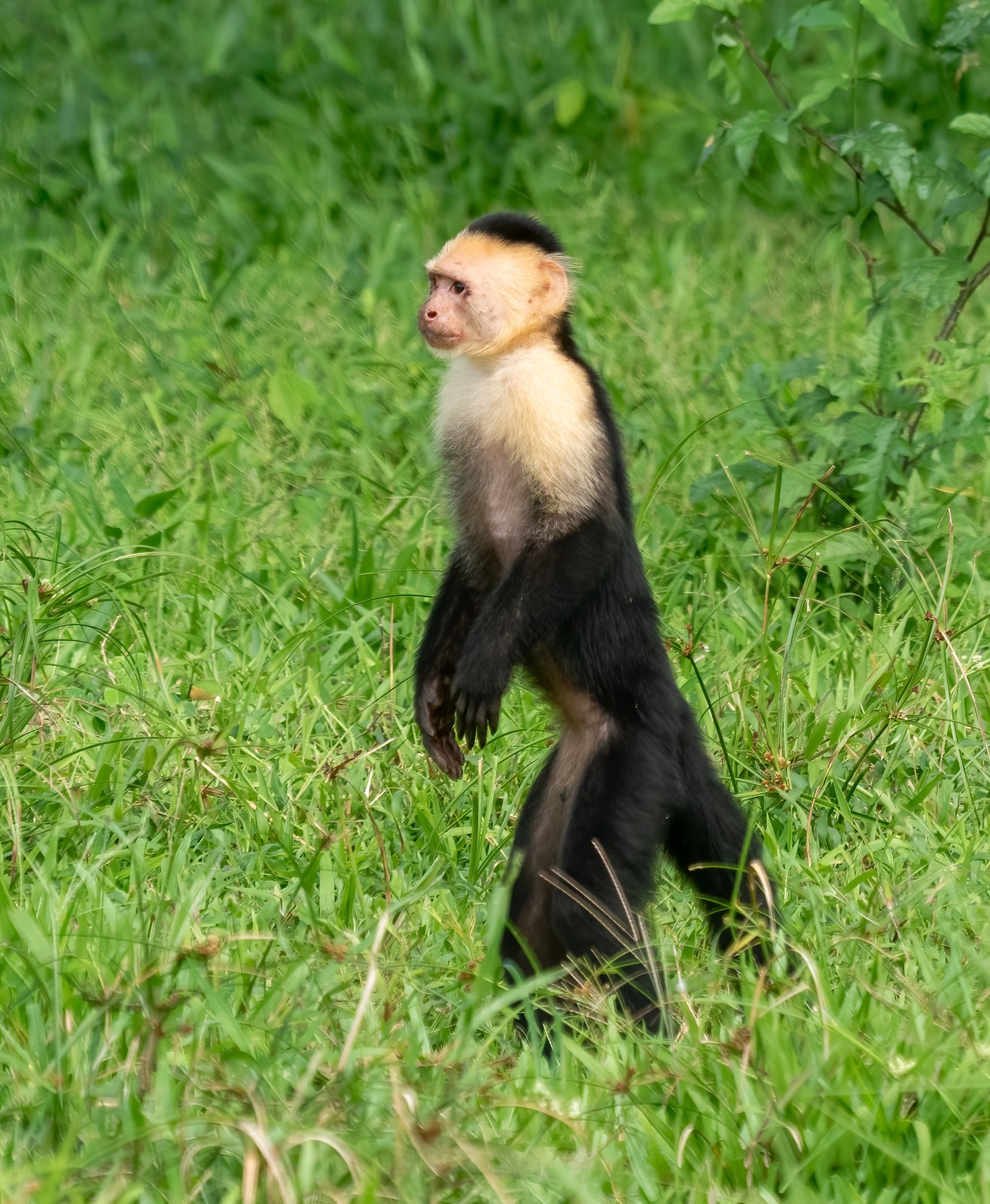
Photos (clockwise from top left): Yellow-throated Toucan, Fiery-billed Aracari, white-faced capuchin, and Scarlet-rumped Cotinga. Credits: Rhododendrites (CC BY-SA 4.0), Charlie Jackson (CC BY 2.0), Rhododendrites (CC BY-SA 4.0), ewransky (CC BY-SA 4.0).
Resources & Further Reading
Floristic References
Primary species description with measurements, habitat notes, and comparisons to allied Ocotea species.
Global range map, bibliographic citation, and synonymy including Ocotea clarkei.
Protologue describing Guatemalan type material, morphology, and altitude range where the species was first collected.
Appendix data showing O. laetevirens with glandular drupes about 9 mm in size within Mexico’s tropical evergreen forests.
Data Sources
Aggregated occurrence records (n = 410) with country counts and elevation metadata.
Month-level occurrence counts used to summarize phenology peaks.
Global analysis of 203 records, extent of occurrence (417,000 km²), elevation limits, and justification for the Least Concern status.
Synthesizes how lipid-rich Lauraceae fruits feed lowland toucans, cotingas, and primates that disperse Ocotea seeds.
Compilation of lowland bird and mammal diets documenting how monkeys, cotingas, and toucans disperse Lauraceae seeds.