Escobo
Buchenavia costaricensis — A Costa Rican endemic discovered only in 1990, this giant of the Pacific lowlands remained hidden in plain sight despite being one of the country's most massive trees.
For decades, botanists walked beneath its massive crown without realizing they were passing something extraordinary. In Manuel Antonio National Park, one of Costa Rica's most visited protected areas, scientists catalogued hundreds of tree species. But Buchenavia costaricensis, despite growing to immense proportions with trunks over 1.5 meters in diameter and buttresses taller than a person, went unrecognized until 1990.
That year, a specimen was finally collected and recognized as new to science. The species was subsequently confirmed from the Osa Peninsula as well, establishing that this endemic giant exists only in the lowland forests of southwestern Costa Rica. It represents a remarkable case of a massive tree hiding in plain sight in one of the world's most intensively studied tropical forests.
Identification
Taxonomy and Classification
The Escobo belongs to the Combretaceae family, a group best known for including the Indian almond (Terminalia catappa) and other tropical trees. Buchenavia costaricensis was formally described by British botanist Clive Anthony Stace in 1995. The comprehensive treatment of the genus appears in Flora Neotropica Monograph 107 (Stace & Alwan 2010), the authoritative reference for Neotropical Combretaceae. The species is also documented in the Flora Mesoamericana treatment of the family.
The genus Buchenavia comprises approximately 25 species distributed from southern Mexico through Central America, the Caribbean, and South America. Recent molecular phylogenetic studies have revealed that Buchenavia is embedded within a larger Terminalia clade, suggesting the two genera may eventually be merged. However, Buchenavia remains morphologically distinct, characterized by tricolporate pollen grains (versus the heterocolpate pollen of Terminalia) and its distinctive floral structure. Buchenavia costaricensis is the only species of the genus endemic to Costa Rica.
Physical Characteristics
Trunk: The trunk reaches 1.5 meters or more in diameter. When young, the trunk appears somewhat angular and prismatic, but it becomes more cylindrical with height. The base is surrounded by tall, thin, sheet-like buttresses that rise up to 2 meters high and radiate outward for up to 3 meters.
Bark: Light gray with characteristic narrow, dark vertical fissures running along the surface. This distinctive pattern helps distinguish the Escobo from other large canopy trees.
Crown: Branching is confined to the extreme upper portion of the tree, where massive limbs spread out horizontally for tens of meters. The crown is single-layered, creating an umbrella-like or flat-topped silhouette. The branches curve upward in distinctive concave arcs.
Leaves: Simple, alternate, and teardrop-shaped (obovate), measuring approximately 9 by 3.5 centimeters. The leaves are arranged in whorl-like clusters at the branch tips, giving the foliage a distinctive appearance. They are light green, smooth, and attached by petioles about 2.5 centimeters long.
Flowering and Fruiting
Flowers: Minute, measuring only about 3 millimeters across. They lack petals but have a yellow, star-shaped calyx and 10 prominent stamens. The flowers are borne in long, dangling racemes about 14 centimeters long, each containing roughly 35 individual flowers. Despite their small size, the flowers are faintly aromatic, emitting a sweet, fruity fragrance.
Flowering occurs during a brief window between late December and early January. Individual trees maintain open flowers for only about 10 days, making the flowering period easy to miss entirely.
Fruits: Globular drupes about 2.5 centimeters in diameter, glossy yellow with distinctive longitudinal ridges. When ripe, they hang vertically from the old flower stalks, resembling yellow Christmas ornaments suspended in the canopy. Each fruit contains a single fibrous, almond-shaped seed measuring 1.5 to 2 centimeters.
Fruits mature over approximately eight months following pollination, with the harvest falling from late July through early November. Seeds begin germinating just a few weeks after fruit-fall, with the first seedlings appearing on the forest floor by August.
Seasonal Cycle
The Escobo follows a distinctive annual rhythm. Trees begin losing their leaves gradually in late September, becoming completely bare by mid-November to mid-December. New foliage emerges quickly, with the crown fully clothed again by early January. This brief deciduous period coincides almost exactly with the flowering window.
Ecology
Pollination: The flowers are insect-pollinated, attracting various pollinators during their brief annual flowering window. The aromatic quality of the flowers, with their sweet, fruity fragrance, likely helps draw insects to these small blossoms high in the canopy. The timing of flowering in late December to early January coincides with the dry season transition, when insect activity may be particularly concentrated.
Seed Dispersal and Wildlife Interactions
The glossy yellow fruits of the Escobo, measuring 2.5 cm in diameter, are typical of fruits adapted for mammal dispersal. In the intact forests of the Osa Peninsula, several animals likely play roles in seed dispersal. Central American spider monkeys (Ateles geoffroyi) are important dispersers for large-fruited trees throughout this region. Research on spider monkeys has shown that a single troop can disperse approximately 195,000 seeds per year across their territory, making them critical agents for maintaining tree diversity.
Central American agoutis (Dasyprocta punctata) also interact with large-seeded trees through scatter hoarding. These rodents cache seeds in shallow burials across the forest floor, and forgotten caches can germinate far from the parent tree. White-lipped peccaries (Tayassu pecari) and collared peccaries (Pecari tajacu) consume fallen fruits, though peccaries often destroy seeds rather than dispersing them.
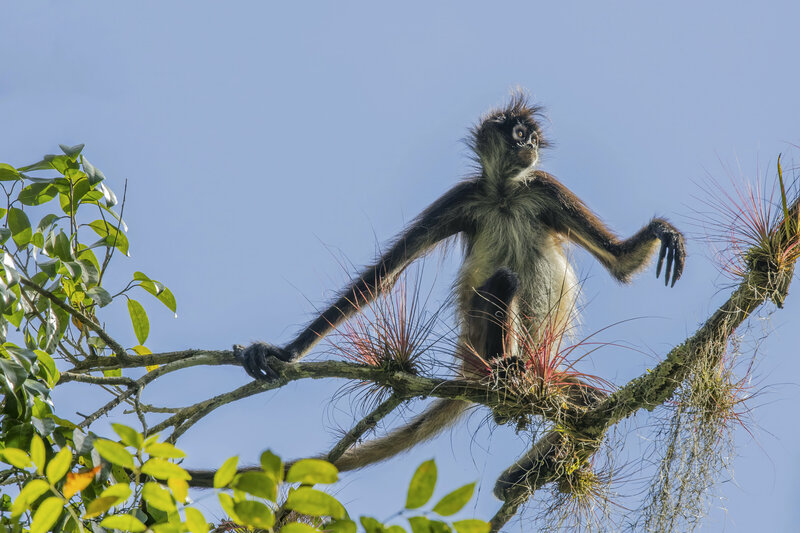
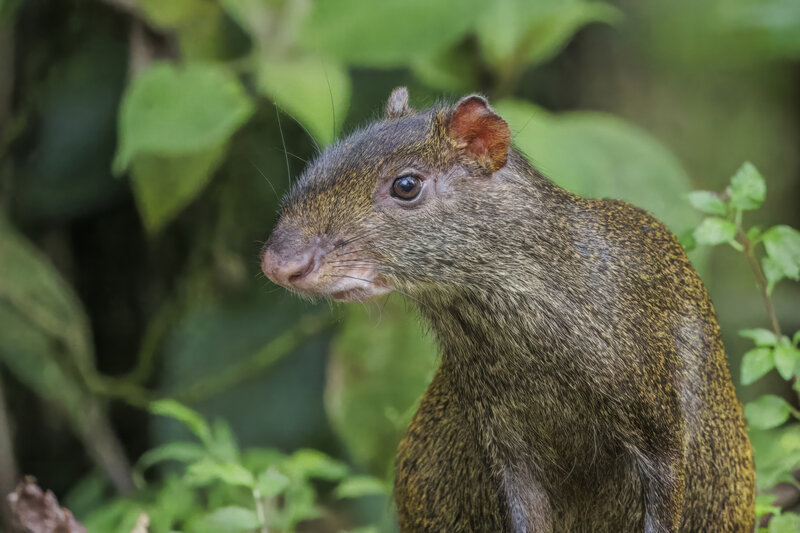
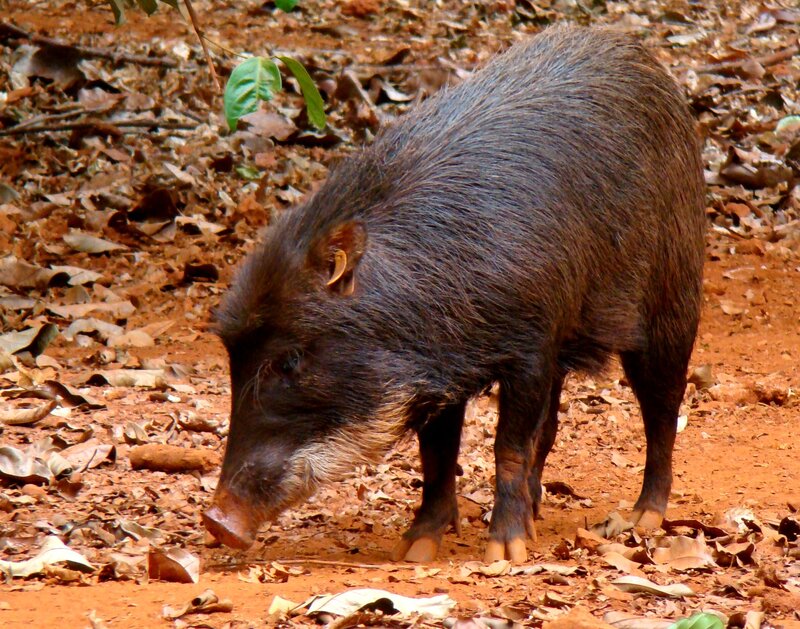
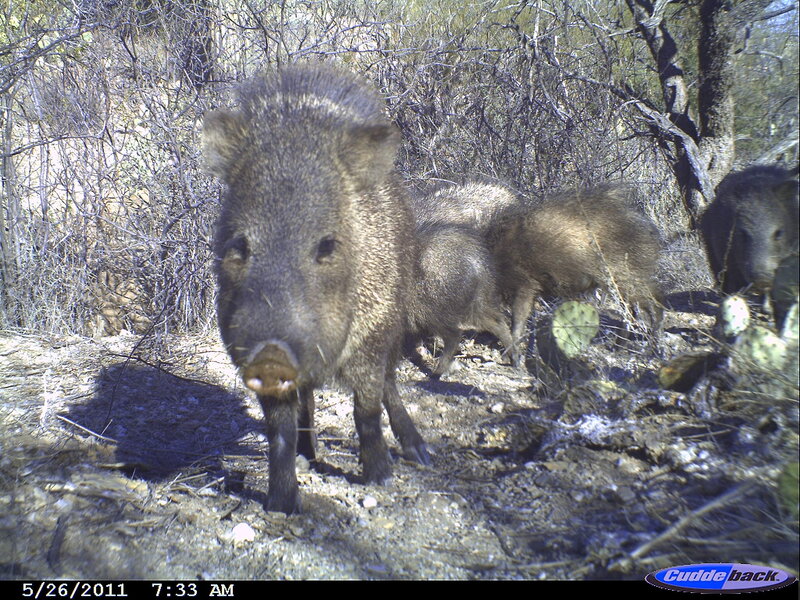
Observations in Manuel Antonio National Park, where the species was discovered, suggest that current dispersal mechanisms may be severely limited. Ripe fruits fall from the crown and rot beneath the parent tree, with no effective dispersal agent apparent. This forest fragment has lost its spider monkey population, and reduced mammal diversity may explain the poor seed dispersal observed. The contrast between Manuel Antonio and the larger Corcovado forest, which retains a complete mammal fauna including all four primate species native to Costa Rica, suggests that effective conservation of the Escobo requires maintaining intact animal communities.
Seedling predation: Young seedlings face significant predation pressure even after successful germination. Ground-dwelling lizards frequently browse on germinating seedlings, potentially limiting recruitment. This combination of poor dispersal and seedling predation may explain the sporadic, scattered distribution of mature trees rather than clustered populations.
Habitat and Distribution
The Escobo is endemic to Costa Rica's southern Pacific lowlands. Its known range is limited to two main areas: the forests around Manuel Antonio National Park and the Osa Peninsula, including Corcovado National Park. Individual trees are found widely scattered throughout primary forest, growing in all habitat types except sandy coastlines.
The species occurs sporadically rather than in groups or clusters. This scattered distribution, combined with the tree's tendency to blend into the general canopy structure despite its massive size, likely contributed to its late discovery.
Co-occurring Species
The Osa Peninsula, which represents the core of the Escobo's range, harbors one of the most diverse tree communities in Central America. Phytogeographic studies have documented over 700 tree species in this small region, with 4.8% being endemic to the peninsula. The Escobo shares its habitat with other massive emergent trees that dominate the Pacific lowland canopy.
Co-occurring emergent giants include the Guapinol (Hymenaea courbaril), which reaches 40 meters with massive buttressed trunks; the Vaco or milk tree (Brosimum utile), growing to 30-40 meters; the Ceiba (Ceiba pentandra), the largest tree in the Neotropics at over 60 meters; and the Nazareno (Peltogyne purpurea), prized for its purple heartwood. Other notable canopy associates include Pradosia species and Eschweilera (Lecythidaceae), members of the Brazil nut family.
Conservation
Although Buchenavia costaricensis has not been formally assessed by the IUCN, its extremely restricted range raises conservation concerns. The species is known only from southwestern Costa Rica, and its entire range falls within just two protected areas: Manuel Antonio National Park and Corcovado National Park.
The Osa Peninsula's extraordinary biodiversity, including 67 endemic plant species, over 700 tree species, and 140 mammal species, makes it a global conservation priority. Corcovado National Park alone protects populations of jaguars, tapirs, and all four primate species native to Costa Rica. However, even within protected areas, the integrity of ecological processes like seed dispersal depends on maintaining complete animal communities. The observed failure of seed dispersal in Manuel Antonio, where spider monkeys have been lost, illustrates how forest fragments can lose ecological function even when trees remain standing.
The species appears on regional "red lists" of tree species in critical conservation status for the Osa Peninsula. Recognizing the large information gaps for many endemic tree species, staff from the Golfo Dulce Forest Reserve have developed strategies for rescuing tree species of the Osa Peninsula that are in critical conservation status. As a recently described endemic, Buchenavia costaricensis exemplifies how much remains to be learned about the region's flora.
A Hidden Giant
The late discovery of the Escobo offers a reminder of how much remains unknown even in well-studied tropical forests. Despite centuries of botanical exploration in Costa Rica and decades of intensive research at Manuel Antonio, one of the country's largest trees went unrecognized until the end of the twentieth century.
Today, mature specimens of this species are considered among the most impressive of Costa Rican trees. Their massive trunks, spreading buttresses, and umbrella-like crowns represent the kind of ancient forest structure that is increasingly rare across the tropics. As an endemic species with a highly restricted range, the Escobo depends entirely on the continued protection of Costa Rica's Pacific lowland forests.
Key Sources & Resources
Species Information
Comprehensive species account with detailed morphological and ecological information.
Taxonomic treatment of Combretaceae for Mesoamerica, including species key and descriptions by C.A. Stace.
Academic Literature
The authoritative monograph on Neotropical Combretaceae, including the formal description of Buchenavia costaricensis.
Molecular phylogenetic study revealing that Buchenavia is embedded within Terminalia, though morphologically distinct.
Research quantifying spider monkey seed dispersal rates and their role in maintaining tropical forest diversity.
Comprehensive analysis of tree diversity and the 4.8% endemism rate on the Osa Peninsula.
Conservation & Endemic Species
New York Botanical Garden project documenting endemic plant species of the Osa Peninsula.
Stanford initiative supporting conservation research in the Osa-Golfito region.
Non-profit organization working to protect the globally significant biodiversity of the Osa Peninsula.
Protected Areas
Official information about Costa Rica's Osa Conservation Area, home to Corcovado National Park.