Sigua
Ocotea austinii — A cloud forest laurel from Costa Rica's central highlands, this medium-sized tree with sulphur-yellow flowers inhabits the misty oak forests where resplendent quetzals feed on Lauraceae fruits.
In the cloud forests that drape Costa Rica's central mountain ranges, where mist rolls through oak-dominated canopies and epiphytes cling to every branch, a member of the avocado family quietly fulfills its role in one of the country's most celebrated ecological relationships. Ocotea austinii is one of dozens of Lauraceae species whose lipid-rich fruits sustain the resplendent quetzal, the emerald-plumed bird that has drawn birdwatchers to places like San Gerardo de Dota and Monteverde for generations.
Unlike many tropical trees that announce themselves with massive buttresses or showy flowers, the sigua is unassuming. It grows in the understory and mid-canopy of montane forests, reaching perhaps 15 meters in height, its leathery leaves polished to a subtle sheen. Yet its ecological importance far exceeds its modest stature. In these high-elevation forests, the Lauraceae family dominates the frugivore food web, and species like O. austinii help bridge the gaps between fruiting seasons, ensuring that quetzals and other fruit-eating birds have sustenance throughout the year.
A Name from Zarcero
The species was first described in 1945 by Caroline Kathryn Allen (1904-1975), one of the twentieth century's foremost authorities on the Lauraceae family. Born in Pawling, New York, Allen earned her Ph.D. from Washington University in St. Louis in 1932 before spending her career at the Arnold Arboretum and later the New York Botanical Garden. Over her lifetime, she described more than 275 new species, and she was renowned for her meticulous microscopic dissections that distinguished closely related genera. Allen was particularly committed to maintaining the distinction between Nectandra and Ocotea, a position she defended throughout her career against proposals to merge them.
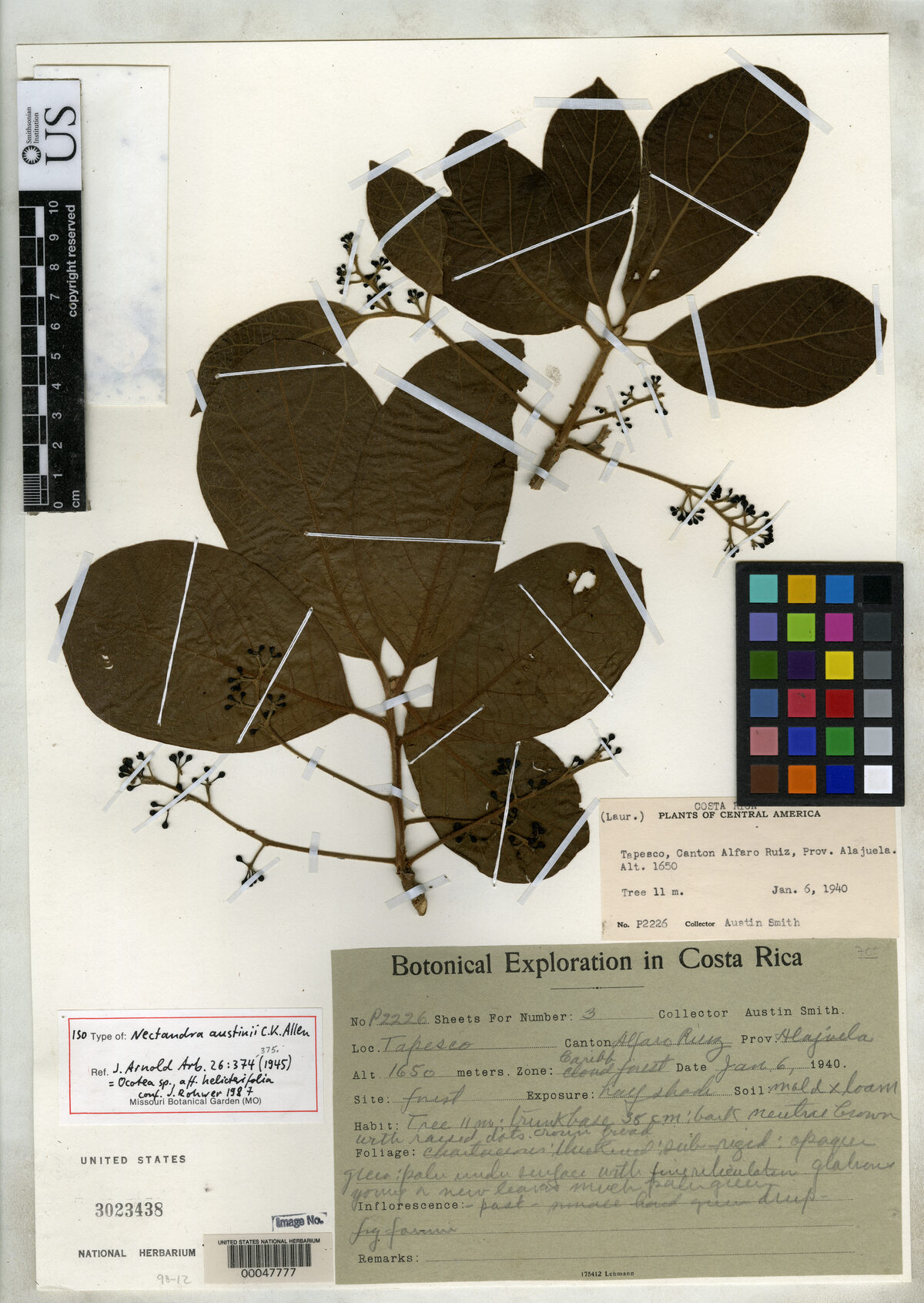
The type specimen was collected on August 14, 1935, by Austin Paul Smith (1881-1948), an American naturalist who spent nearly three decades collecting birds and plants in Central America. Smith worked in Costa Rica from 1920 until his death, amassing collections that enriched the Field Museum and other institutions. The specimen (A. Smith A125) came from the cloud forests near Zarcero, a small town in Alajuela Province perched at 1,765 meters elevation in Costa Rica's central volcanic highlands. Allen honored Smith in the species name, which literally means "Austin's Ocotea."
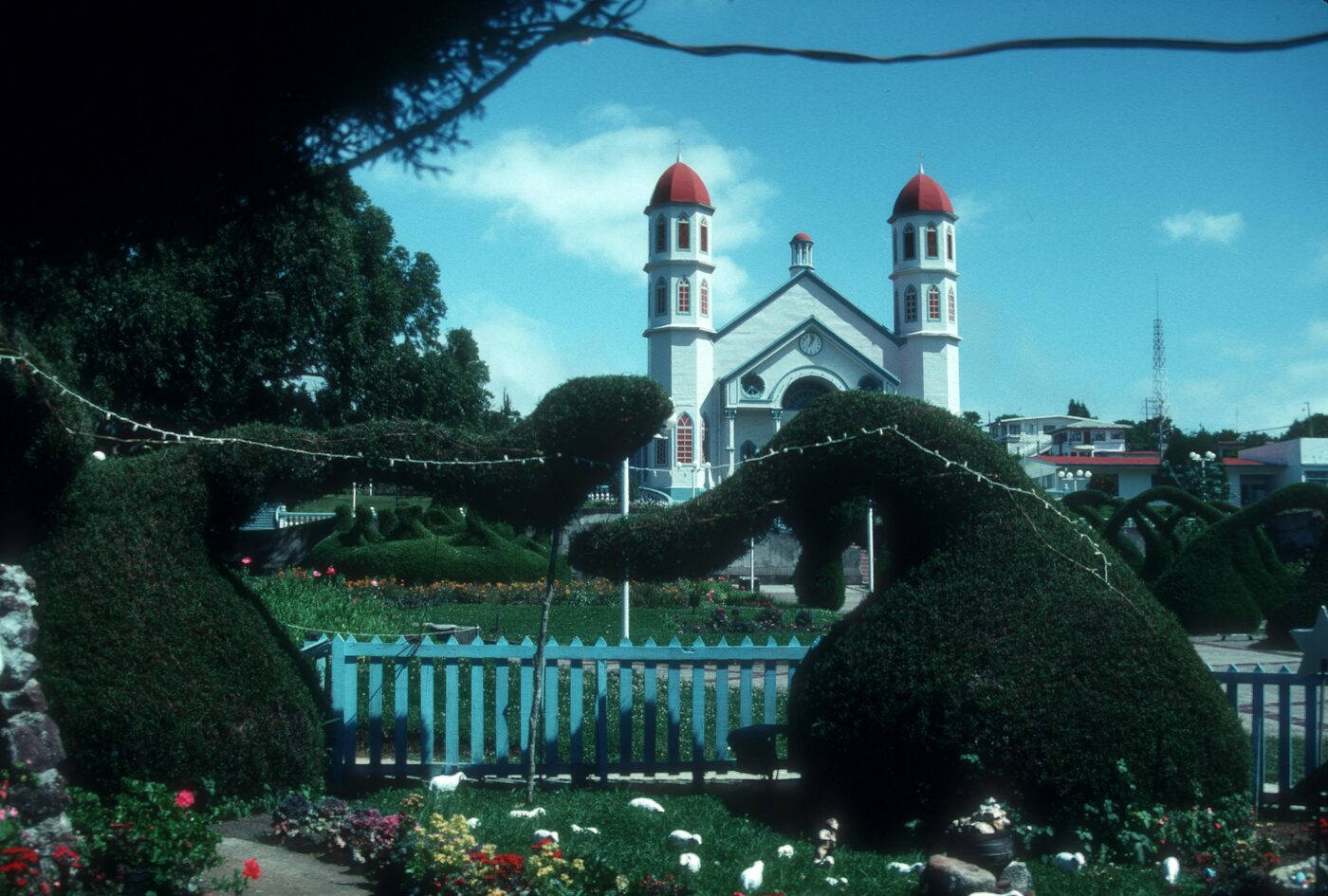
Zarcero today is famous for its topiary gardens, where cypress bushes are sculpted into fantastic shapes by local gardener Evangelisto Blanco since 1964. But in Smith's time, the surrounding highlands were cloaked in primary cloud forest. These forests still persist in fragments, harboring O. austinii alongside oaks, other laurels, and the rich community of birds that depend on them.

In Costa Rica, the tree goes by the common names Sigua and Siguatón, names applied broadly to various Ocotea species. Like other Lauraceae common names (ira, quizarrá, aguacatillo), these terms reflect the long familiarity that human communities have had with these aromatic forest trees, which have been used traditionally for treating ulcers, dermatitis, and liver disorders.
Identification
Ocotea austinii is a medium-sized tree that typically reaches 15 meters in height, with trunk diameters recorded up to one meter at the base in mature specimens. The bark is light brown and roughened, with a distinctive rufous-brown cambium layer visible when cut and cream-colored sapwood beneath. Like many Lauraceae, the bark and leaves are aromatic when crushed, releasing scents that hint at the family's kinship with cinnamon, camphor, and avocado.
Leaves
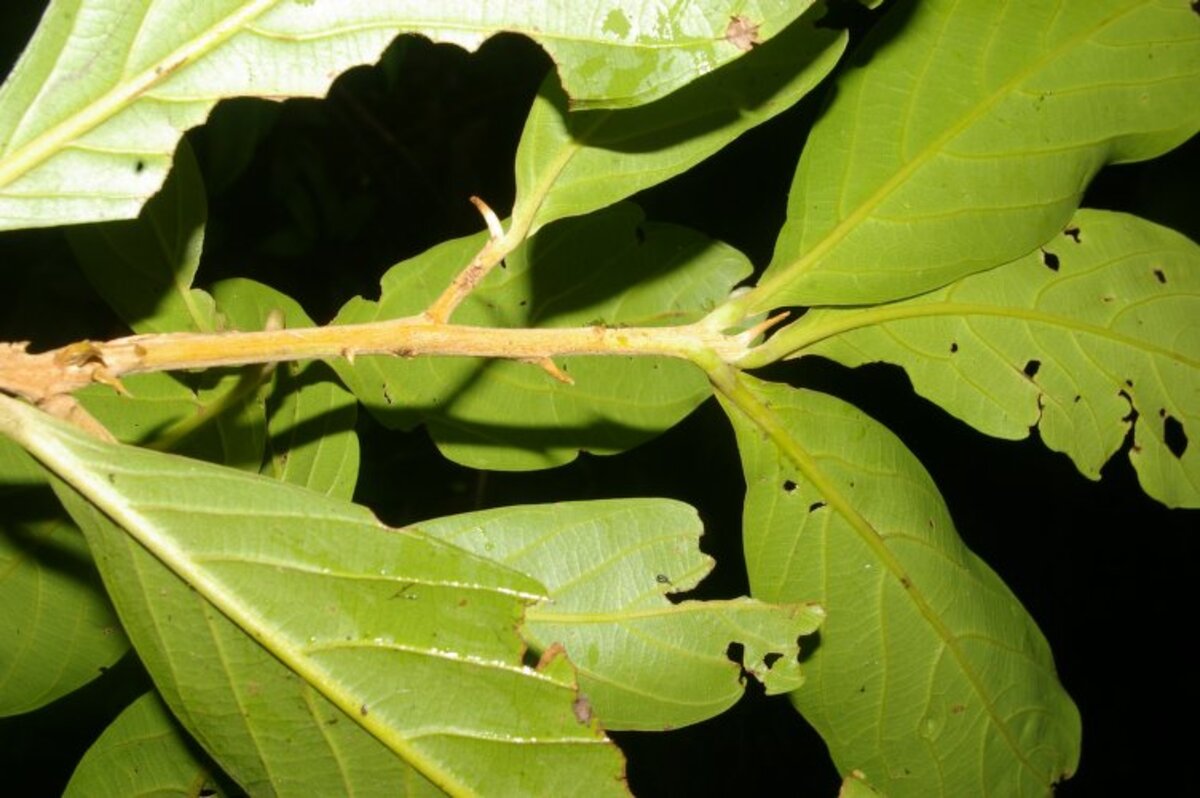
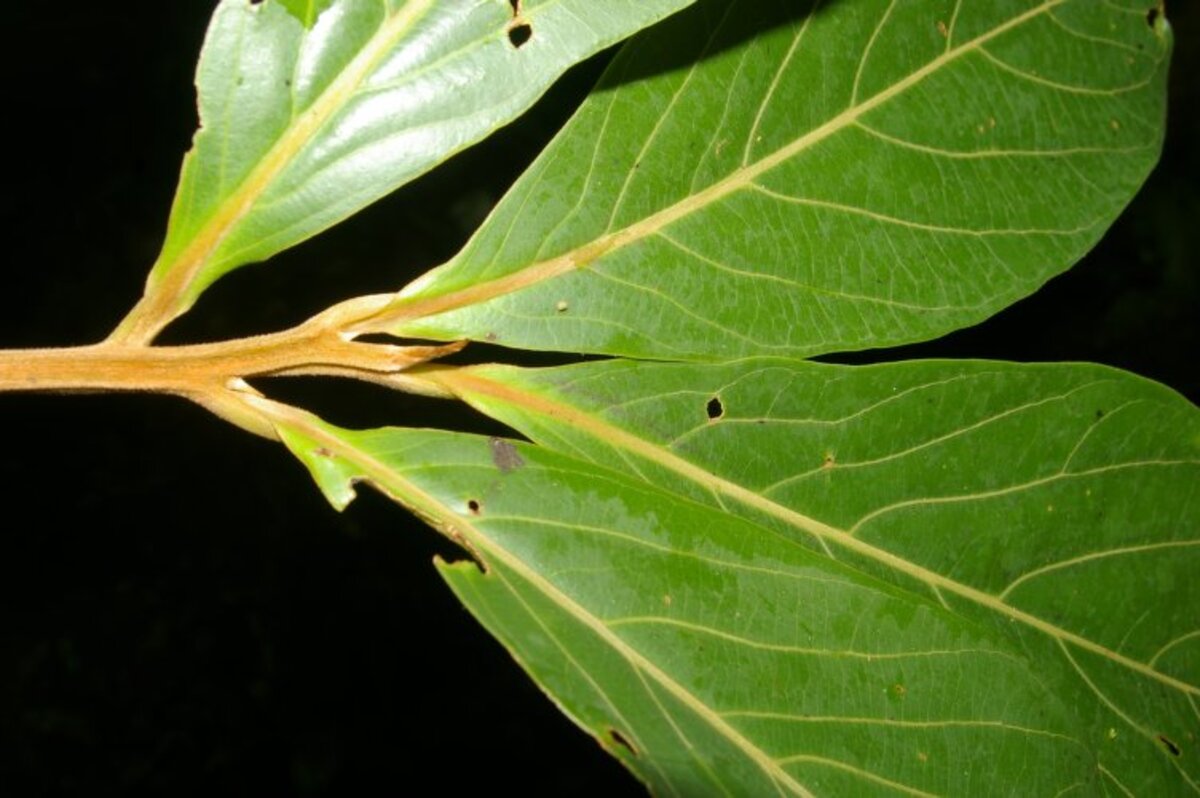
The leaves are coriaceous, meaning thick and leathery, an adaptation common in cloud forest trees that helps reduce water loss in the cool, misty environment. The upper surface is polished to a subtle sheen, while the underside is lighter green. This two-toned appearance is characteristic of many Ocotea species and helps distinguish them in the field.
Flowers
The flowers are one of the most distinctive features of this species. They are sulphur-yellow in color, a warm golden hue that stands out against the dark green foliage. Each flower measures approximately 4 mm across and has an urceolate-bell shape, meaning urn-shaped with a flared opening. The stigma and anthers are initially green, maturing to dark brown as the flower ages. This color progression, from pale yellow petals to darkening reproductive structures, creates subtle variations in appearance across a flowering tree.
Fruits
Like other Ocotea species, O. austinii produces drupes, single-seeded fruits with a fleshy outer layer. These fruits are the currency of the cloud forest's bird economy. Rich in lipids, they provide the high-energy nutrition that frugivorous birds need, especially during the breeding season when males must maintain their spectacular plumage and both parents must feed growing chicks.
Habitat and Distribution
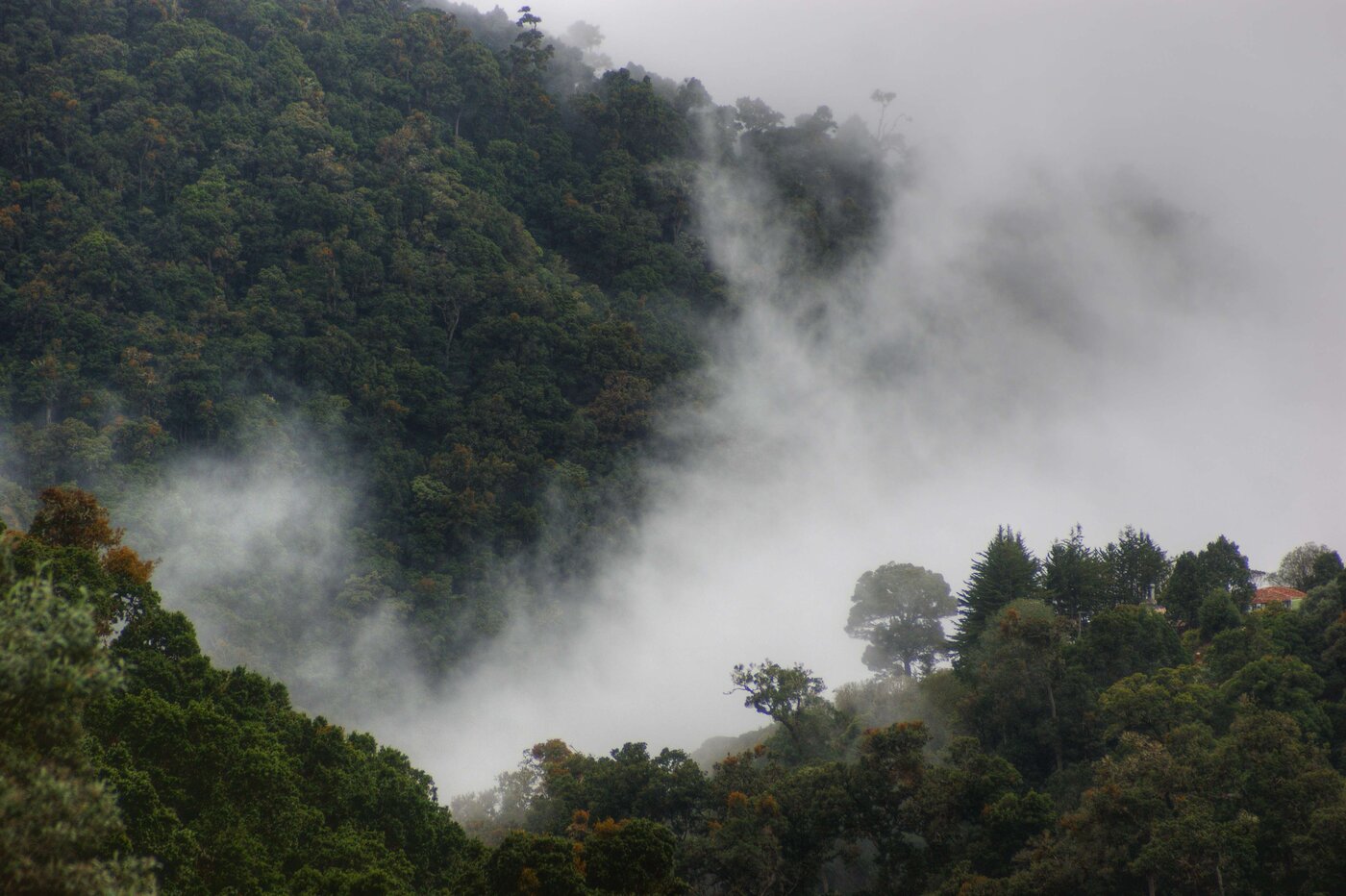
Ocotea austinii inhabits the cloud forests and oak forests of Costa Rica's central highlands, typically at elevations between 1,500 and 1,800 meters. The type specimen was collected at 1,765 meters near Zarcero, and the species has also been documented from Camp Empalme in oak cloud-forest along the western slope of the Continental Divide, about 29 kilometers south of Cartago.
The species prefers rich clay-loam soils and semi-shade conditions, growing in the understory or mid-canopy of primary forest. It is often found in association with oaks (Quercus species), which dominate many Costa Rican cloud forests at these elevations. The distribution extends into Panama, where the species occurs in Chiriquí Province in similar montane forest habitats.
Ecology
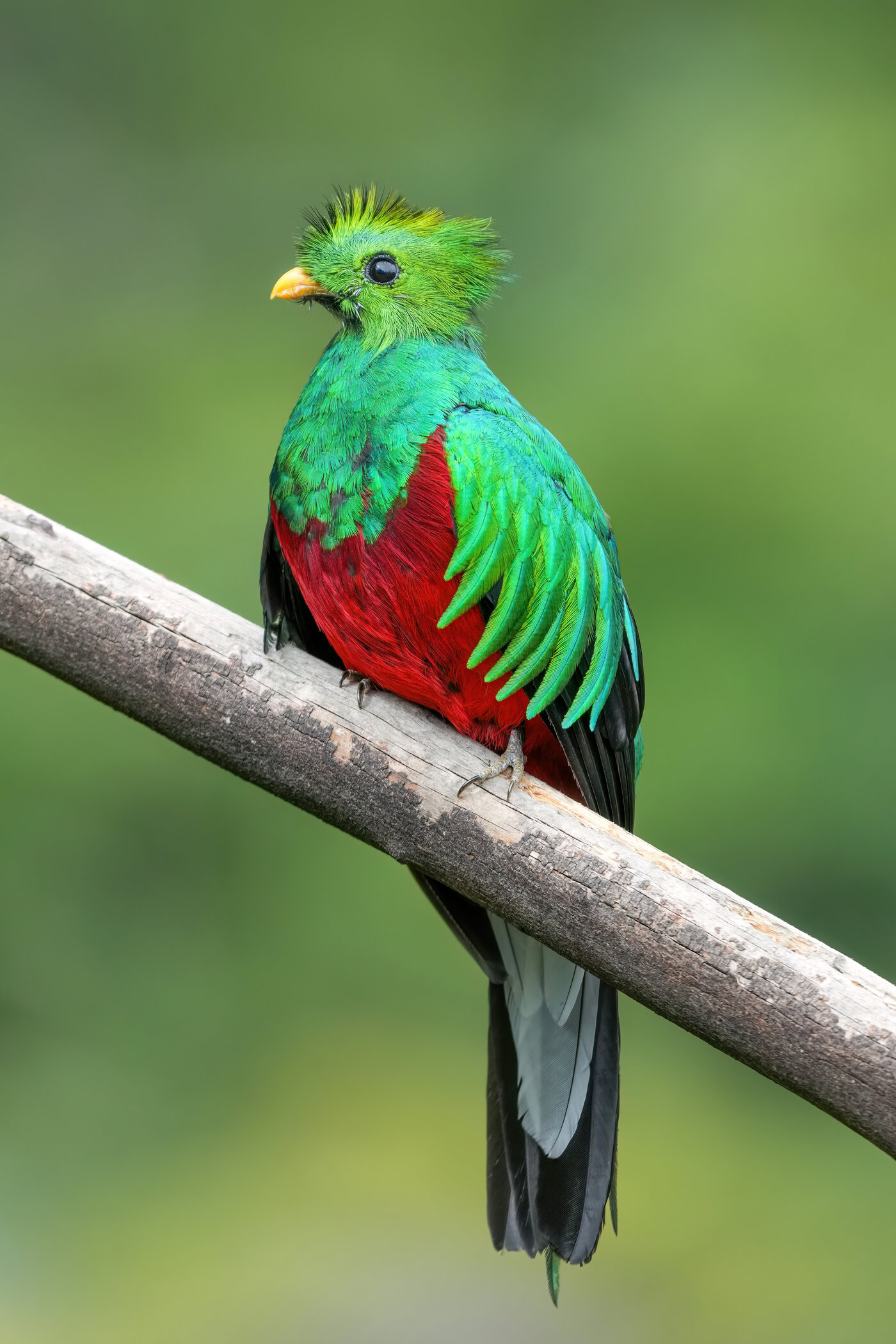
The Lauraceae family, which includes avocados, cinnamon, and bay laurel, is central to the ecology of Neotropical cloud forests. In Costa Rica, roughly 100 species of Ocotea, Nectandra, Persea, and related genera provide fruit for a diverse community of birds and mammals. The resplendent quetzal is the most famous of these frugivores, but toucans, bellbirds, and numerous other species also depend on Lauraceae fruits.
The quetzal breeding season, from February through June, coincides with peak fruiting periods for many Lauraceae species. Pairs typically produce one or two blue eggs and share incubation responsibilities. The lipid-rich fruits provide essential nutrition during this demanding period. Because different Lauraceae species fruit at different times, the diversity of the family ensures year-round food availability. This makes preserving the full complement of Lauraceae species critical for quetzal conservation.
Directed Dispersal by Bellbirds

Research in Monteverde has revealed a remarkable relationship between Ocotea trees and the three-wattled bellbird. In a landmark 1998 study published in the Proceedings of the National Academy of Sciences, researchers Daniel Wenny and Douglas Levey demonstrated that bellbirds are not just passive fruit consumers but active agents of tree regeneration. While most frugivorous birds deposit seeds within 20 meters of parent trees in closed canopy, bellbirds dispersed 59% of seeds over 40 meters away, with 52% landing in canopy gaps where light levels favor germination and growth.
The statistical results were striking: bellbird-dispersed seedlings were significantly more likely to survive to one year and grew significantly taller than those deposited by other birds. Fungal pathogen mortality was also significantly lower in gap locations compared to understory sites. This "directed dispersal" represents the clearest documented link between a disperser species and the reproductive success of a tropical forest tree. The bellbird's behavior creates a bimodal pattern of seedling recruitment, with one peak near parent trees and a second peak corresponding to the birds' favored perch sites.
Cloud Forest Restoration
Ocotea austinii has been the subject of restoration research in Costa Rica's cloud forests. In San Gerardo de Dota, researchers tracked the growth of O. austinii seedlings planted into an early successional cloud forest hillside over a nine-year period. The study examined how different soil treatments affected seedling survival and growth, with seedlings collected from beneath nearby mother trees and transplanted into various conditions.
The results were illuminating. Soils amended with either horse manure or compost produced significantly larger seedlings than unamended indigenous soils. This finding has practical implications for cloud forest restoration: rather than simply planting seedlings and hoping for the best, adding organic matter to degraded soils can substantially improve tree establishment. The researchers strongly recommended long-term monitoring, extending over multiple years, when assessing restoration projects.
Chemistry
Like many Lauraceae, Ocotea austinii produces aromatic essential oils that have attracted scientific interest. Researchers analyzing leaf and twig wood oils from wild Costa Rican specimens identified 76 and 77 compounds respectively, accounting for nearly all of each oil's composition. The leaves contain aromatic terpenes with compounds like α-pinene, β-pinene, β-caryophyllene, and germacrene-D, common across the genus.
 α-pinene
 β-pinene
 β-caryophyllene
 germacrene-D
The leaf oil is dominated by β-pinene (33.2%) and α-pinene (13.0%), monoterpenes with characteristic pine-like aromas. The presence of high pinene concentrations distinguishes O. austinii from some other Ocotea species and places it within a chemically coherent group that also includes O. floribunda, O. tonduzii, and O. holdridgeana. The wood oil has a different profile, with higher concentrations of sesquiterpene alcohols like α-eudesmol and β-eudesmol, which contribute to its woody, earthy aroma.
Conservation
Ocotea austinii is currently classified as Least Concern on the IUCN Red List, with a stable population trend. The species occurs within several protected areas across its range, including the forests surrounding San Gerardo de Dota, Los Quetzales National Park, and the Savegre Biosphere Reserve. San Gerardo de Dota alone hosts 20% of Costa Rica's total flora, 54% of its mammals, and 59% of its birds, making it one of the most biodiverse valleys in the country.
However, cloud forests face mounting threats from climate change. Cloud forests, which represented an estimated 11% of tropical forests in the 1970s, have declined dramatically and now constitute approximately 1% of global woodlands. As temperatures rise, the cloud base that delivers moisture to these forests is shifting upward, and research in Costa Rica has documented alarming compositional shifts. A study analyzing ten one-hectare plots across an elevation gradient from 70 to 2,800 meters found that observed changes were driven primarily by mortality events, with highland species dying disproportionately. This suggests that many tropical tree species cannot tolerate future warming and may face heightened extinction risks as land area inevitably decreases at higher elevations.
Species like O. austinii that prefer specific elevation bands may find their suitable habitat shrinking. Active restoration efforts, informed by research like the San Gerardo de Dota seedling studies, will be essential for maintaining healthy populations of cloud forest trees. The Quetzal Education Research Center, established in San Gerardo de Dota in 1982, has conducted numerous Lauraceae studies examining phenology, fruit production, and the relationship between these trees and their avian dispersers. Such research provides the scientific foundation for conservation strategies that protect both the trees and the iconic birds that depend on them.
Resources & Further Reading
Species Information
Taxonomic information including type locality, original publication, and nomenclatural history.
Costa Rican botanical database entry with synonymy and distribution information.
Records from Panama, where the species also occurs in Chiriquí Province.
Scientific Research
Chemical analysis of leaf and wood essential oils, documenting terpene composition.
Long-term restoration study from San Gerardo de Dota examining soil amendments and seedling growth.
Comparative chemical analysis of Monteverde Ocotea species including O. austinii.
Quetzal Ecology
Landmark study demonstrating that bellbird-dispersed Ocotea seeds have significantly higher survival rates in canopy gaps.
Accessible overview of Ocotea importance for quetzals and other Costa Rican birds.
Conservation efforts for related Ocotea species in Monteverde, demonstrating restoration approaches.
Biographical & Historical
Biography of the American botanist who described over 275 Lauraceae species, including O. austinii.
Archival collection including correspondence, botanical sketches, and reprints from Allen's Lauraceae research.
Research programs at San Gerardo de Dota, including Lauraceae phenology and quetzal habitat studies.
Climate & Conservation
Research documenting mortality-driven elevation shifts in Costa Rican cloud forest trees.
Comprehensive review of Ocotea chemistry and pharmacological potential, including antimicrobial and cytotoxic activities.