Vaco
Magnolia sororum — A towering magnolia of Central American cloud forests, producing fragrant white flowers and distinctive aggregate fruits. This near-threatened species reaches the upper limits of the montane forest zone.
In the cool, misty cloud forests of the Talamanca highlands, the vaco rises as one of the largest magnolias in Central America. Growing to 40 meters tall, this ancient tree belongs to one of the oldest flowering plant lineages on Earth, its ancestors predating the rise of bees. The genus Magnolia has persisted for over 95 million years, and Magnolia sororum marks the southern limit of the Central American highland magnolias.
First described in 1938 by Robert Woodson and Russell Seibert from specimens collected in Panama's Chiriquí highlands, the species name sororum means "of sisters" in Latin, though the reason for this choice remains unclear. Woodson, who worked at the Missouri Botanical Garden, and Seibert, who served as plant collector in Panama from 1935 to 1938, were part of a botanical expedition that operated a tropical research station in Balboa. Their description was published in the Annals of the Missouri Botanical Garden as part of their "Contributions Toward a Flora of Panama." In Costa Rica, the tree is known as "vaco," a name shared with several other magnolias in the region.

Identification
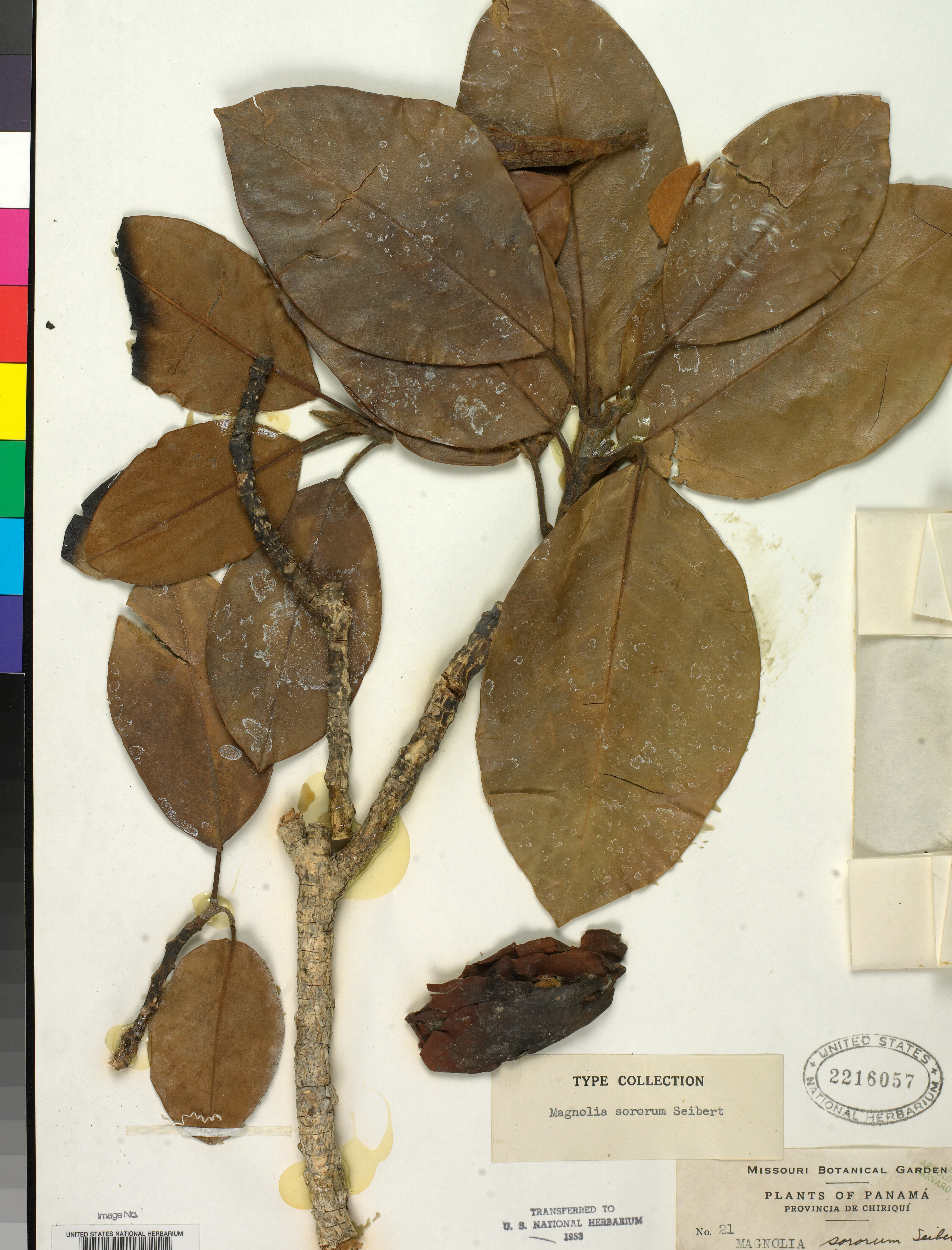
The Magnoliaceae is an ancient family that originated before the evolution of bees, which explains why magnolias are pollinated primarily by beetles. Their flowers produce no nectar but offer abundant pollen and have tough, leathery tepals (the term for petals and sepals that look alike) that can withstand the chewing and crawling of beetle visitors.
Physical Characteristics
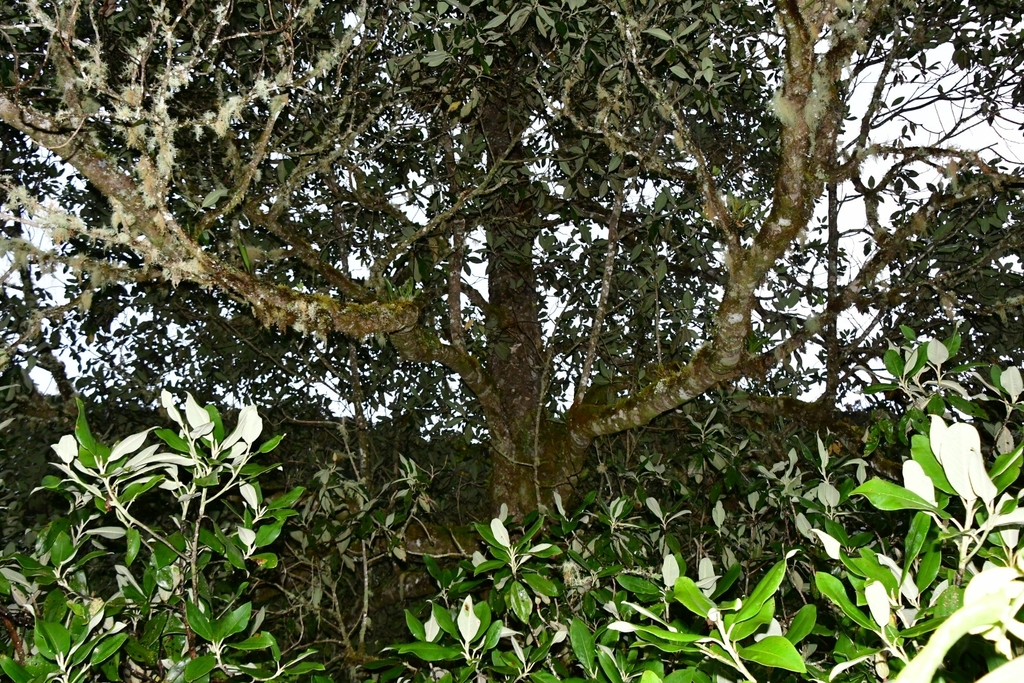
Form: A large canopy tree reaching 30-40 meters in height, with a straight trunk and a broadly spreading crown. Young trees often grow in the understory before reaching the canopy.
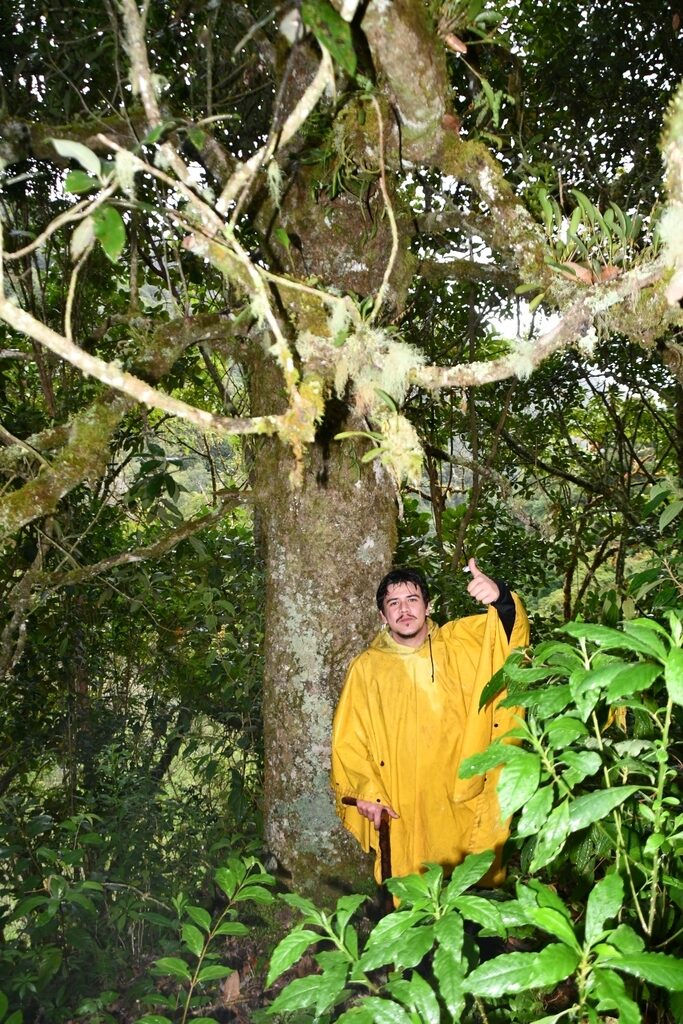
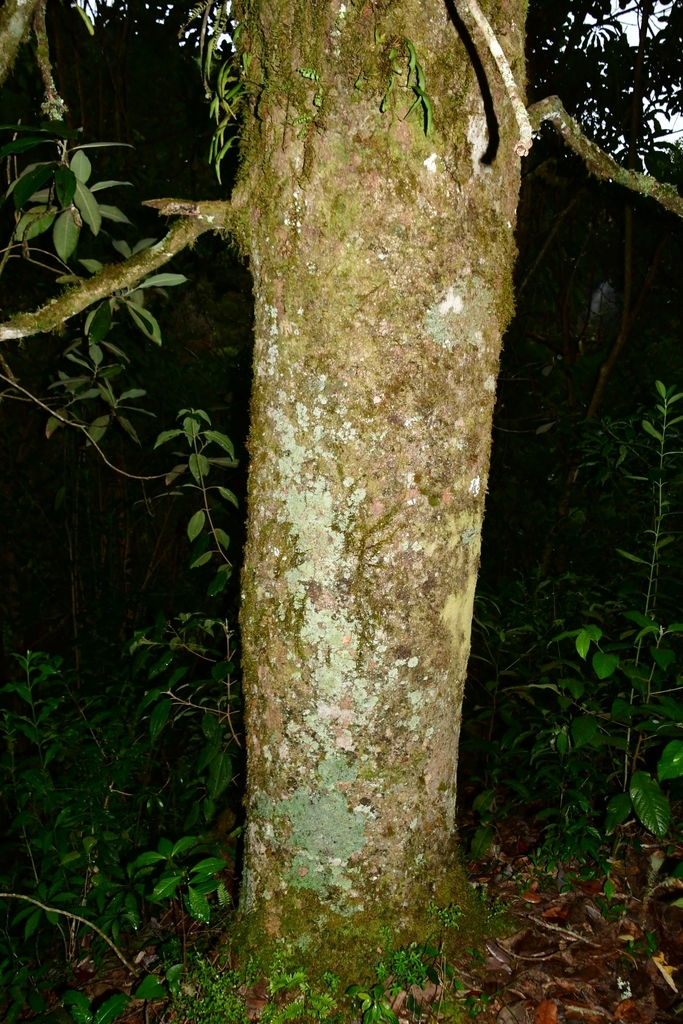
Bark: Gray to brownish, becoming fissured with age. The inner bark and wood have a distinctive olive-green color that has made the timber valuable for furniture and construction.
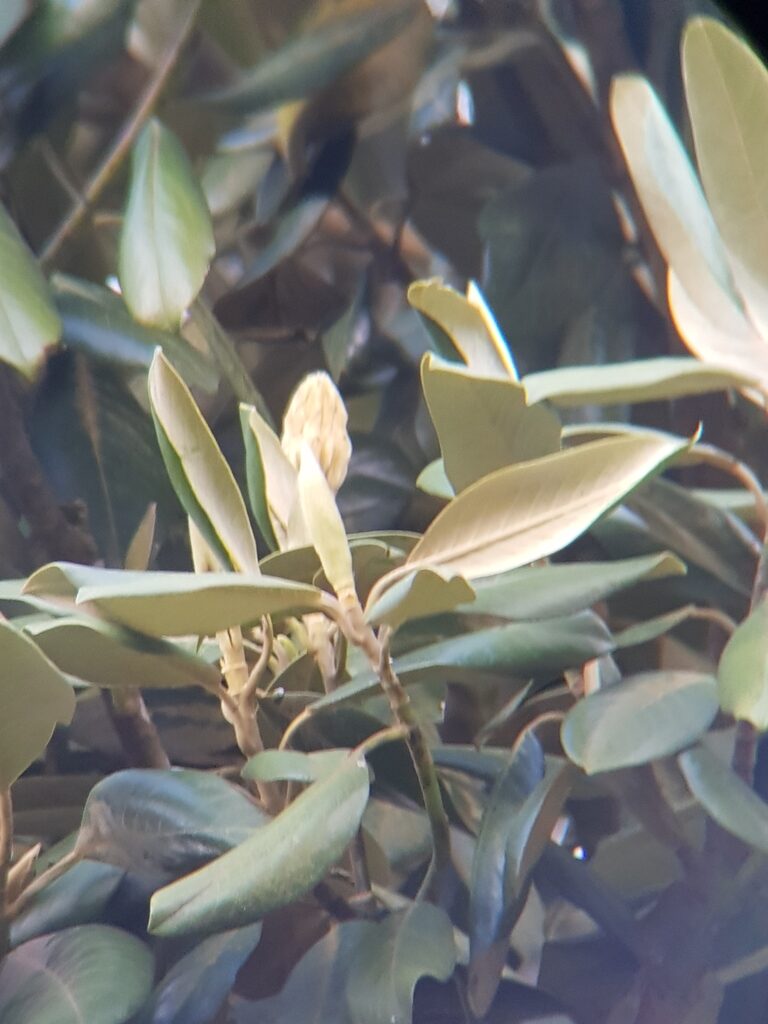
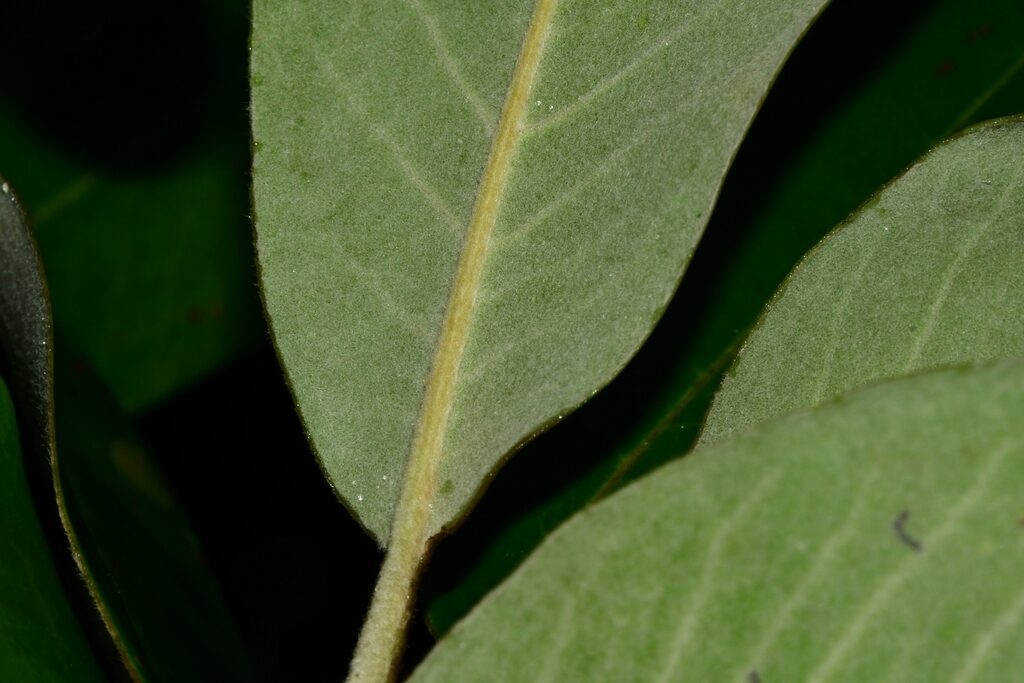
Leaves: Large, simple, and alternate, with a leathery texture. The leaves are elliptic to oblong, typically 15-30 cm long, with entire margins. The upper surface is glossy dark green, while the lower surface is paler and may have a slight pubescence.
Flowers: Large, solitary, and highly fragrant, appearing at the branch tips. The flowers are typically white to cream-colored, though the Costa Rican subspecies (M. sororum subsp. lutea) may have yellowish tones. Each flower has 9-12 tepals arranged in whorls of three. The flowers open over several days, with the female parts becoming receptive before the male parts shed pollen, promoting cross-pollination.
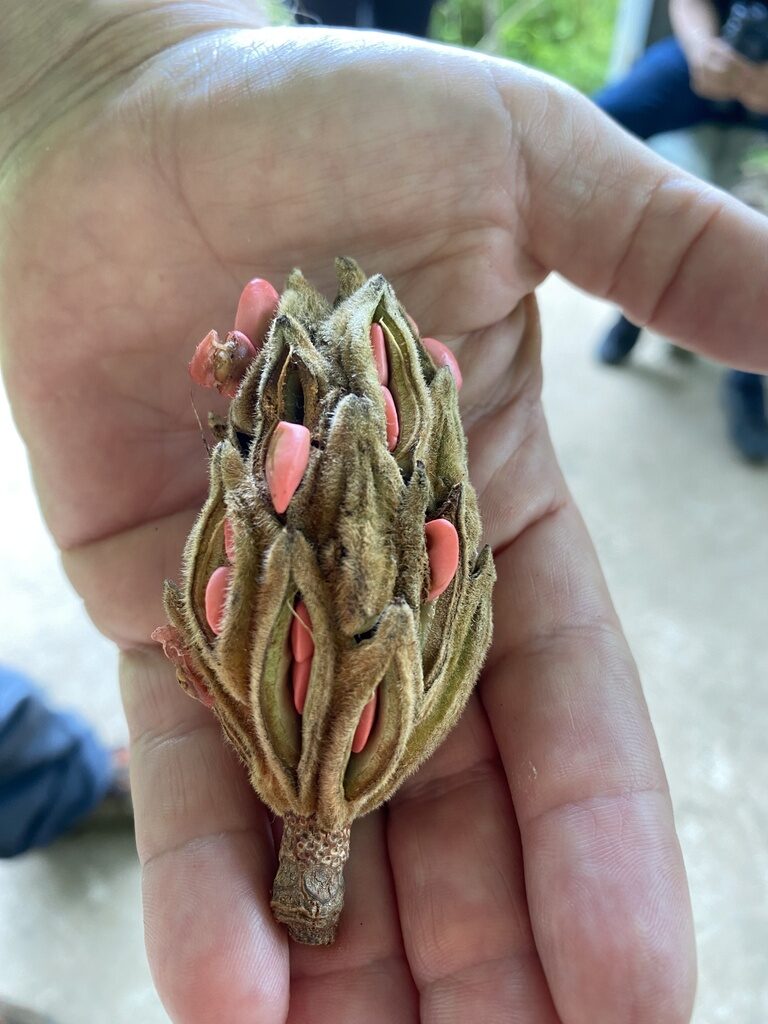
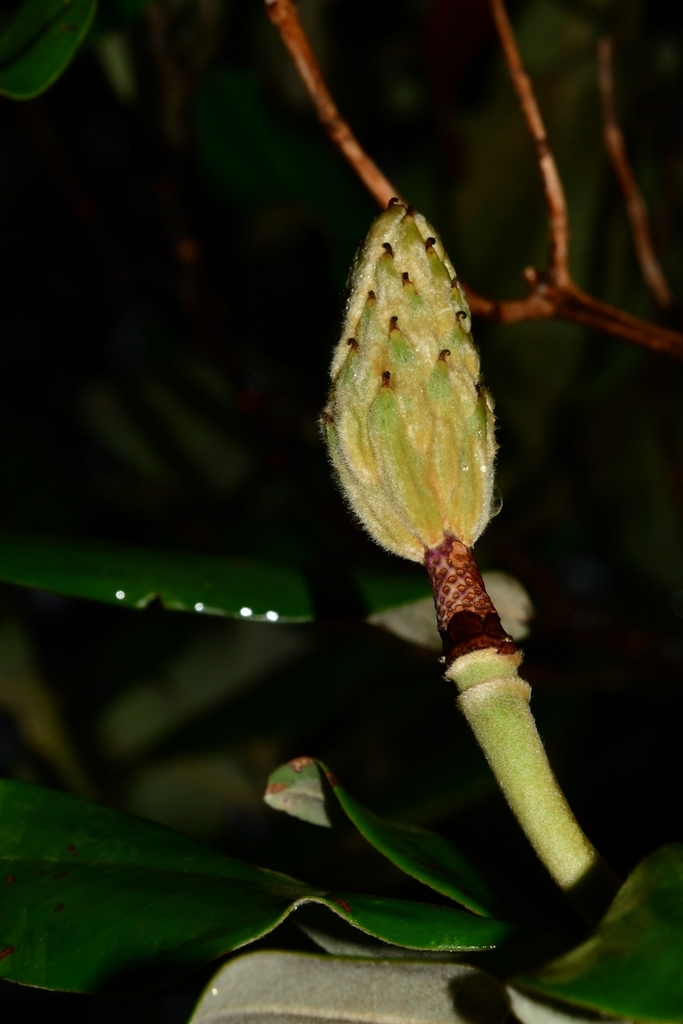
Fruit: An aggregate of follicles, cone-like in shape, typically 8-15 cm long. The fruit is pubescent (covered with fine hairs) and dark greenish-brown when mature. Each follicle opens to release one or two seeds covered in a bright red or orange fleshy aril that attracts birds.
Taxonomy & Classification
Magnolia sororum belongs to section Magnolia (formerly placed in section Theorhodon by some authors), which includes approximately 19 species ranging from Mexico to Panama. Recent phylogenomic studies have revealed that M. sororum forms a species complex with two closely related Central American taxa: M. panamensis from Panama and M. poasana from Costa Rica. The three species show close genetic relationships and similar morphology, and their exact boundaries are still being refined by researchers.
Two subspecies are recognized, distinguished primarily by flower color and geographic distribution:
- Magnolia sororum subsp. sororum — The nominate subspecies, originally described from Panama but now also recorded from Olancho, Honduras. Flowers are typically white to cream-colored. This subspecies represents a significant range extension northward from the original type locality.
- Magnolia sororum subsp. lutea — Described by J. Antonio Vázquez-García in 1994 and found in Costa Rica and Panama. The name "lutea" (Latin for yellow) refers to the yellowish tinge sometimes present in the flowers.
The genus Magnolia has undergone significant taxonomic revision in recent decades. Species formerly placed in the genus Talauma have been merged into Magnolia based on molecular phylogenetic evidence, though some botanists continue to recognize smaller genera. The Neotropical magnolias represent at least two separate colonization events from Asia, with section Talauma arriving approximately 38 million years ago and section Magnolia arriving around 20 million years ago.
Ecology & Distribution
Magnolia sororum grows in upper montane wet forest and cloud forest, typically between 1,000 and 3,200 meters elevation. In Costa Rica, it reaches its highest abundance in the Cordillera de Talamanca, particularly in the upper reaches of cloud forest above 2,300 meters. The species also occurs in Panama's Chiriquí highlands, where it was first collected, and has been recorded from Olancho, Honduras.
There are unconfirmed reports of M. sororum in the Bosawas Biosphere Reserve of northern Nicaragua. If confirmed, this population would extend the species' extent of occurrence to approximately 60,000 square kilometers, making it one of the more widely distributed magnolias in Central America.
Co-occurring Species
Research by ecologist Maarten Kappelle has characterized the upper montane oak forests where M. sororum occurs. According to Kappelle's 1996 study, these forests are "exclusively dominated by 30 to 35 meter tall Quercus copeyensis and Q. costaricensis canopy trees, in association with Magnolia sororum, Schefflera rodriguesiana, and Weinmannia pinnata." Oaks make up approximately 80% of the canopy trees at 2,650 meters elevation in the Cordillera de Talamanca.
Other important canopy associates include Podocarpus oleifolius (a southern hemisphere conifer), Drymis granadensis (Winter's bark), Styrax argenteus, and species of Persea and Ocotea from the laurel family. The diverse understory contains Weinmannia species (with seven species recorded in the region), along with Clethra, Cleyera, Viburnum, and Clusia. Many of these genera have tropical Asian-American distributions, reflecting ancient biogeographic connections across the Pacific.
The Cordillera de Talamanca harbors extraordinary endemism: over 30% of the ecoregion's plant species and more than 50% of the high mountain flora are found nowhere else on Earth. Within the oak forests, Quercus copeyensis, Q. costaricensis, Prumnopitys standleyi, Ilex tristis, and Magnolia poasana are all endemic to the Talamanca range. Kappelle and colleagues documented 477 native woody species in 220 genera and 89 families for elevations above 2,000 meters.
Pollination
Like all magnolias, M. sororum is pollinated primarily by beetles, an ancient pollination syndrome that predates the evolution of bees. Fossil records show that beetles were abundant flower visitors during the Mesozoic era, approximately 200 million years ago. Magnolia flowers are recognized as having "typical" beetle flower characteristics: bowl-shaped structures that provide a cave-like shelter, tough leathery tepals that can withstand chewing and crawling, abundant pollen (rather than nectar) as a food reward, and often a warming effect through floral thermogenesis.
Research on related species such as Magnolia tamaulipana has documented that beetles are attracted to magnolia flowers not only by their fragrance and pollen rewards but also by the warmth generated within the flower chamber. This thermal reward may be particularly valuable for cold-blooded insects in cool cloud forest environments. Studies in Costa Rica have found that beetles serve as active pollinators for approximately 40% of cloud forest herbs and understory plants.
Seed Dispersal
The brightly colored arils surrounding magnolia seeds are designed to attract birds, which serve as the primary seed dispersers. Research on the closely related Mexican species Magnolia vovidesii has shown that birds and ants play essential roles in seed germination: seeds whose sarcotesta (fleshy seed coat) was removed by these animals had significantly higher germination rates than untreated seeds. In fact, without removal of the sarcotesta, magnolia seeds typically do not germinate at all. The clay-colored thrush (Turdus grayi) was identified as an important consumer that regurgitates magnolia seeds after digesting the aril.
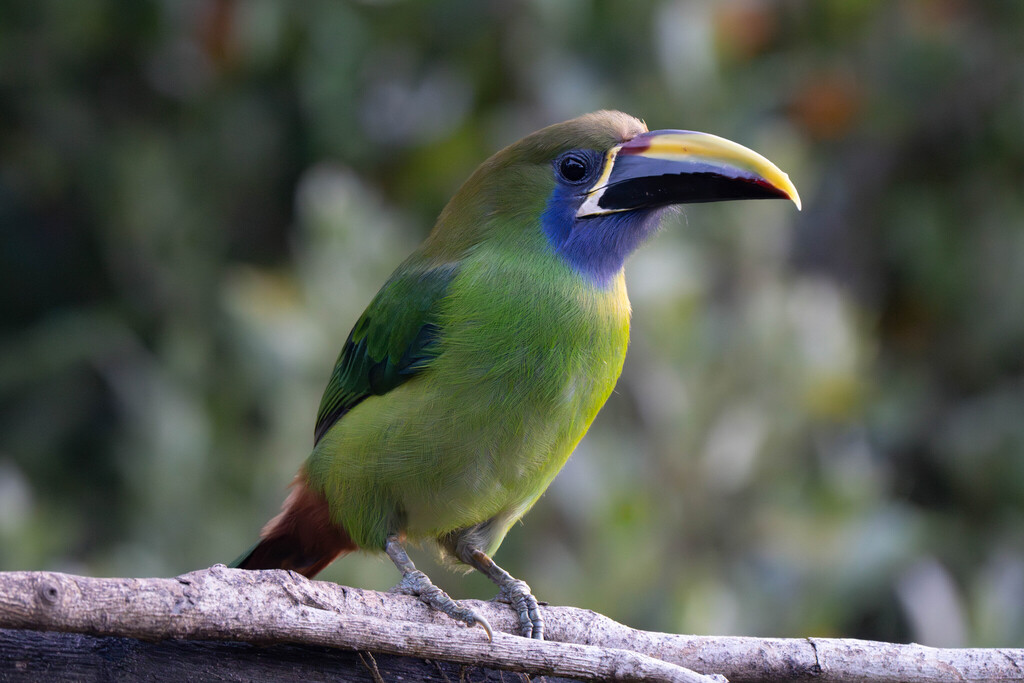
In the Talamanca cloud forests, potential seed dispersers for M. sororum include the black guan (Chamaepetes unicolor), a frugivorous bird endemic to Costa Rica and Panama that feeds on at least 35 different fruit species; the Blue-throated Toucanet (Aulacorhynchus caeruleogularis), which encounters fruits from up to 47 tree species across its large feeding territory; and the resplendent quetzal (Pharomachrus mocinno), though quetzals specialize primarily on Lauraceae fruits. Toucans are particularly effective dispersers because they often swallow large-seeded fruits whole, repeatedly regurgitating and reswallowing until the seed separates from the pulp.
Uses
The wood of Magnolia sororum is prized for its distinctive heartwood, which is olive-green when freshly cut, gradually aging to light yellowish-brown or greenish-brown, sometimes with purple or dark streaks. The timber is durable against fungal decay and has been used for furniture, cabinetry, windows, flooring, luxury interior trim, veneer, plywood, boat planking, and turnery. According to the IUCN assessment, harvesting pressure for the timber trade is one of the primary threats to the species.
Like many magnolias, the bark has been used in traditional medicine, though specific uses for this species are not well documented. Trunks and branches also serve as fuelwood, charcoal, and construction materials in rural areas. The tree is occasionally cultivated as an ornamental in highland gardens within its native range, where its fragrant flowers and attractive form are valued.
Conservation
The IUCN Red List classifies Magnolia sororum as Near Threatened, based on a 2013 assessment. The primary threats are habitat loss from agricultural expansion (particularly cattle ranching and coffee cultivation) and selective logging for its valuable timber. Climate change poses an additional long-term threat, as the species is restricted to high-elevation cloud forests that may shift upward and shrink as temperatures rise.
Magnolia sororum faces challenges common to many Neotropical magnolias. Globally, 48% of the 304 assessed Magnolia species are considered threatened (Critically Endangered, Endangered, or Vulnerable), with the number of threatened species nearly doubling since 2007. Research has shown that narrow-ranged species with continental (as opposed to coastal) distributions face higher extinction risks due to lower genetic diversity, greater habitat fragmentation, and increased water stress. Studies suggest that some currently Near Threatened species may become more vulnerable as climate change progresses.
In Costa Rica, the species occurs within several protected areas in the Talamanca range, including Chirripó National Park and La Amistad International Park. La Amistad, a UNESCO World Heritage site shared between Costa Rica and Panama, contains approximately 10,000 vascular plant species and harbors about 20% of Central America's species diversity. The park contains 73 species endemic to its core area or buffer zone. However, even nominally protected areas face ongoing threats from illegal logging, poaching, and unsustainable tourism.
Conservation efforts for Neotropical magnolias increasingly emphasize three pillars: diffusion of knowledge to local communities, protection of existing populations from further exploitation, and propagation programs to increase genetic diversity and population sizes. For species like M. sororum that depend on bird dispersal, maintaining connectivity between forest fragments is essential to ensure that seeds can move across the landscape and colonize suitable habitat.
Resources & Further Reading
Species Information
Overview of the species including taxonomy, distribution, and subspecies.
Detailed information on morphology, wood properties, uses, and cultivation.
Conservation status assessment including threats and population trends.
Taxonomy & Phylogeny
Kew's authoritative taxonomic database entry for the species.
Global occurrence records and distribution data.
Vázquez-García's alpha-taxonomic revision describing M. sororum subsp. lutea and related taxa.
Recent molecular study revealing M. sororum forms a species complex with M. panamensis and M. poasana.
Ecology & Habitat
Kappelle's research documenting M. sororum association with Quercus copeyensis and Q. costaricensis.
Overview of the ecoregion where M. sororum occurs, including co-occurring species and endemism.
Comprehensive floristic inventory of the protected area containing M. sororum populations.
Pollination & Seed Dispersal
Research on beetle pollination mechanisms in a related Magnolia species.
Study on M. vovidesii showing the essential role of seed dispersers in magnolia germination.
Conservation
Conservation strategies for Neotropical magnolias, including propagation and population reinforcement.
Research on how climate change may affect Near Threatened species like M. sororum.