Escampa Gallina Psychotria
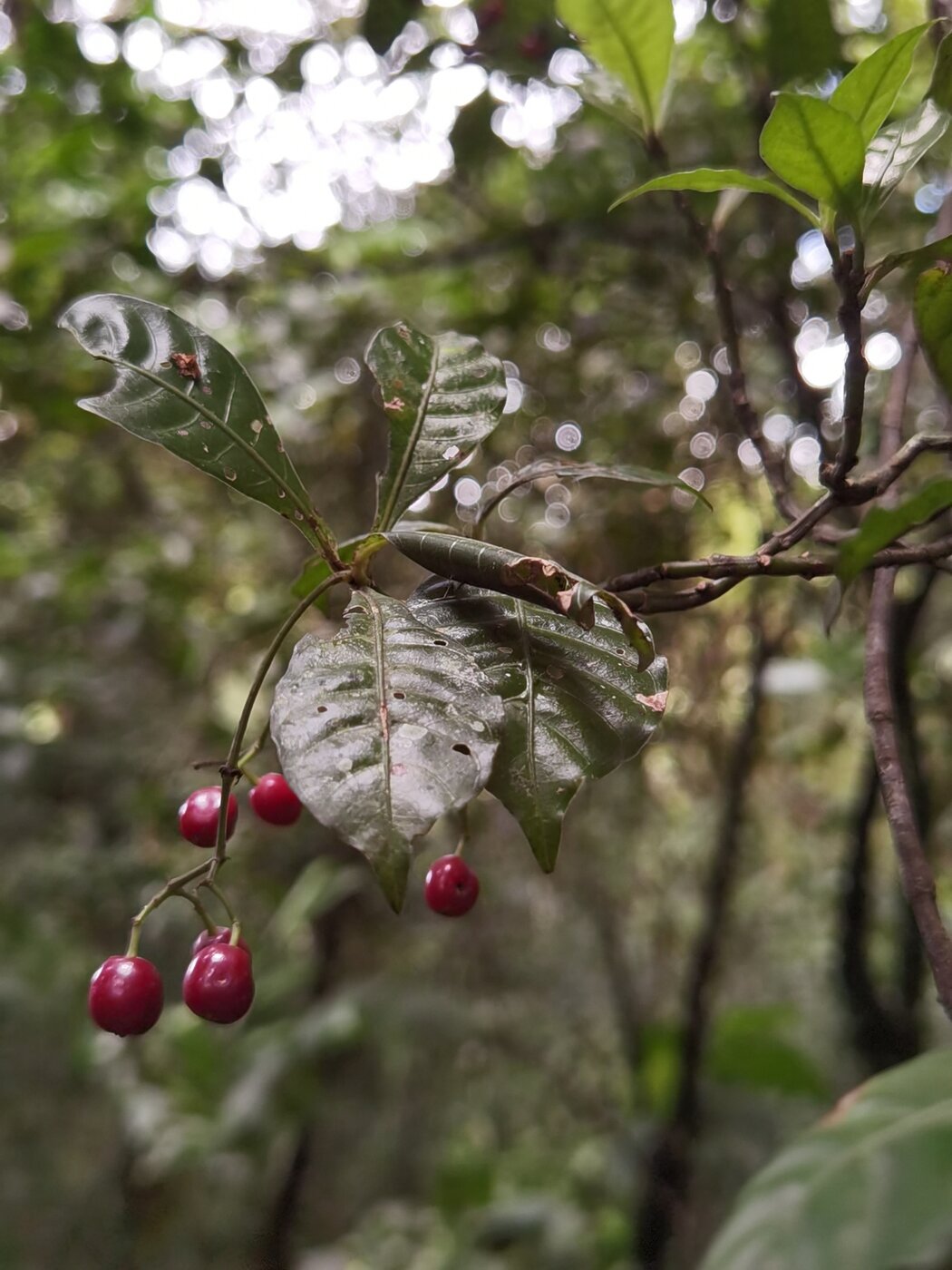
Psychotria biaristata (syn. P. graciliflora) builds layered tiers of tiny leaves beneath the rainforest canopy, flashing red drupes that light up the understory from southern Mexico through Costa Rica and the Chocó.
Known locally as escampa gallina, this shrub or small tree keeps its branches in horizontal ranks so uniform that each tier looks like a hand of cards. Field botanists at Ecos del Bosque describe plants between half a meter and four meters tall with glossy, opposite leaves tightly clustered near the twig tips, an architecture that allows the plant to harvest the little light that filters into the understory.
In Costa Rica's Brunca region it is one of the most frequently encountered Psychotria species along streams, swampy flats, and shaded secondary thickets, where it feeds insects and birds and is even recommended for native gardens by the ProNativas network because of its year-round foliage and wildlife value.
Identification
Habit & Architecture
The La Selva Florula Digital calls the species a 2-meter shrub that is "locally common in flat primary forest," noting the distinctive stratified branching that gives each plant a pagoda-like silhouette. Older individuals develop multiple stems from the base but rarely exceed 5 meters, keeping them firmly in the shaded understory.

Leaves & Stipules
Leaves are opposite, thin, and modest—only 2.5–5 by 1–1.5 cm, usually elliptic to obovate with five to seven pairs of secondary veins and 3–10 mm petioles. Interpetiolar stipules form triangular sheaths topped by two narrow, pubescent awns that persist briefly before falling, another character flagged by the La Selva guide.

Flowers
Inflorescences are small corymbs only 1–1.5 cm across, carried on 1–2 cm peduncles and lined with 0.5–1 mm triangular bracts. The sessile flowers are heterodistylous—two floral morphs with different style lengths—which enforces cross-pollination. Corollas are white, funnel-shaped, glabrous outside but hairy in the throat, with a 3 mm tube and 1 mm lobes, and they typically open in May at La Selva.
Fruits & Seeds
Drupes ripen from August through December, turning bright red, subglobose, and about 4 mm in diameter with ribbed pyrenes. The La Selva account places the species in the subgenus Heteropsychotria, whose fleshy bird-dispersed drupes match observations from the ProNativas collective, which notes frequent visits by birds and insects and recommends propagating the plant from seed.
Distribution
The Kew-curated Plants of the World Online database maps P. biaristata from Veracruz and Oaxaca south through Guatemala, Belize, Honduras, Nicaragua, Costa Rica, and Panama into Colombia and Peru, highlighting its preference for the wet tropics.
Within Costa Rica it spans both slopes from sea level up to at least 1,800–2,500 meters, occupying wet, pluvial, and cloud forests, swampy ground, secondary woods, pastures, and ravines according to Ecos del Bosque and the La Selva Florula. Their field notes cite specific Brunca localities such as Eco Senderos, Bosques Río Toro, and Cascadas del Toro.
A December 2025 query of the GBIF database returned 178 georeferenced records inside the Brunca bounding box, with dense clusters around the Golfo Dulce lowlands, Piedras Blancas, and Cerro de la Muerte piedmont, confirming how ubiquitous the species is in humid reserves.
Historical collections trace the same pattern. Biologia Centrali-Americana (1881) recorded P. biaristata from the forests of Chinantla, Oaxaca at 3,000 feet (Galeotti 7180) and later noted P. graciliflora from Naranjo, Costa Rica at 4,500 feet (Ørsted 11611), documenting the north–south bridge this taxon has occupied for nearly two centuries.
Ecology
Psychotria biaristata thrives where humidity stays high—swamps, shaded stream banks, tall primary forest, and even fog-drenched pastures, as reported by Ecos del Bosque and La Selva. The plant’s layered crown funnels diffuse light onto small leaves, letting it photosynthesize in the dimmest corners of Golfo Dulce and Talamanca ravines.
Heterostylous flowers indicate an insect-driven pollination system. The Florula notes the corolla throats are hairy and likely reward bees or small flies that can maneuver into the 3 mm tubes, ensuring pollen moves between the two floral morphs.
The glossy red fruits are favored by understory birds and insects. The species is evergreen and moderately drought-sensitive but better suited to humid shade. Seeds germinate readily when sown fresh, making it a candidate for enrichment plantings.
Its layered architecture also makes a natural privacy screen or wildlife hedge, which is why restoration projects and native plant advocates recommend escampa gallina for shade gardens in San Vito, Sarapiquí, and Osa.
Taxonomic History
De Candolle published Psychotria biaristata in 1830 (Prodr. 4:513) from material gathered by Friedrich Bartling, anchoring the name to Mexico’s Sierra Madre forests. Later workers split Central American material into segregates—Bentham’s P. graciliflora (1852), Standley’s P. oaxacana, and Dwyer’s P. vallensis—but the modern consensus compiled in POWO treats them all as the same species.
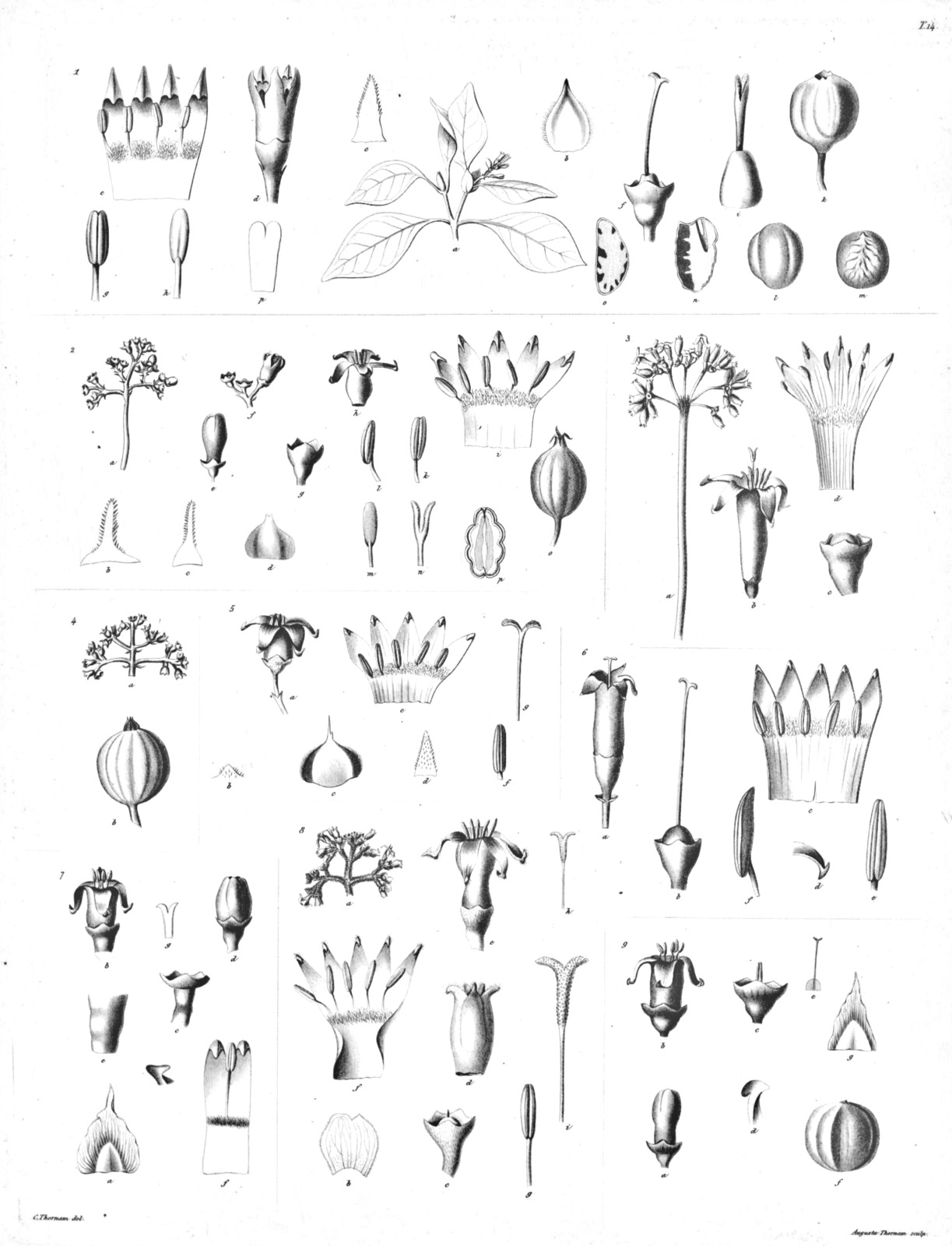
Ørsted’s Costa Rican expedition produced the detailed plate reproduced above, while he and Galeotti sent specimens from Naranjo and Chinantla that anchored the species in both Mesoamerican cordilleras, as cited in Biologia Centrali-Americana.
Conservation Outlook
The World Flora Online profile lists escampa gallina as Least Concern under the IUCN Red List (2021), reflecting its wide distribution and abundance.
Even so, the species depends on consistently humid shade. Ecos del Bosque and ProNativas note it handles only moderate drought and prefers intact canopy, so deforestation, roadcuts, and pasture expansion in Brunca still threaten local colonies.
GBIF data show most Brunca records clustering inside protected areas such as Corcovado, Piedras Blancas, La Amistad, and the upper Térraba valley. Maintaining riparian buffers between these reserves will keep dispersal corridors intact for fruit-eating birds that shuttle seeds between forest fragments.
Landowners who leave escampa gallina thickets along creeks also stabilize soils and create pollinator corridors—small interventions that keep this understated coffee-family shrub common across its historic range.
Resources & Further Reading
Species Information
Detailed field description, habitat notes, and phenology from the Organization for Tropical Studies.
Photographs, elevation range, and locality records from cloud-forest reserves in Costa Rica.
Gardening guidance, wildlife interactions, and phenology for the species in native plantings.
Taxonomy & Nomenclature
Accepted name, synonymy, and distribution per the World Checklist of Vascular Plants.
Global checklist entry with map, synonym list, and data links.
Conservation
Assessment notes and criteria supporting the Least Concern status.
Interactive occurrence data useful for monitoring Brunca populations and habitat connectivity.
Related Reading
Original 19th-century treatment listing P. biaristata and P. graciliflora records from Mexico and Costa Rica.
Public-domain illustration showing multiple Central American Psychotria, including P. biaristata.