Chilamate
Ficus insipida — A keystone species of the rainforest, the chilamate sustains more wildlife than almost any other tree. Its survival depends on a wasp so small you could fit a dozen on your fingernail.
A spider monkey reaches through the canopy, plucks a ripe fig, and stuffs it into her mouth. Seeds pass through her gut and fall to the forest floor kilometers away. A keel-billed toucan swallows figs whole, dispersing seeds across ridgelines. At dusk, fruit bats arrive by the hundreds, gorging on figs through the night. Below, in the river, a machaca fish waits for fallen figs to splash into the water, swallowing them and carrying seeds downstream. All of these animals depend on a single tree: the chilamate.
But none of them can pollinate it. For that, the chilamate relies on a wasp smaller than a grain of rice. This partnership between fig and wasp is one of evolution's most intricate achievements, a relationship so ancient and so perfectly calibrated that neither partner can survive without the other. It has persisted for at least 75 million years.
The Keystone Species
Ecologists call figs "keystone species" because, like the central stone in an arch, they hold entire ecosystems together. Remove them, and the structure collapses. In Costa Rican rainforests, fig trees produce fruit year-round, with individual trees fruiting asynchronously. When other fruits are scarce during seasonal transitions, figs keep frugivores alive. Studies have documented over 1,200 vertebrate species that eat figs across the tropics.
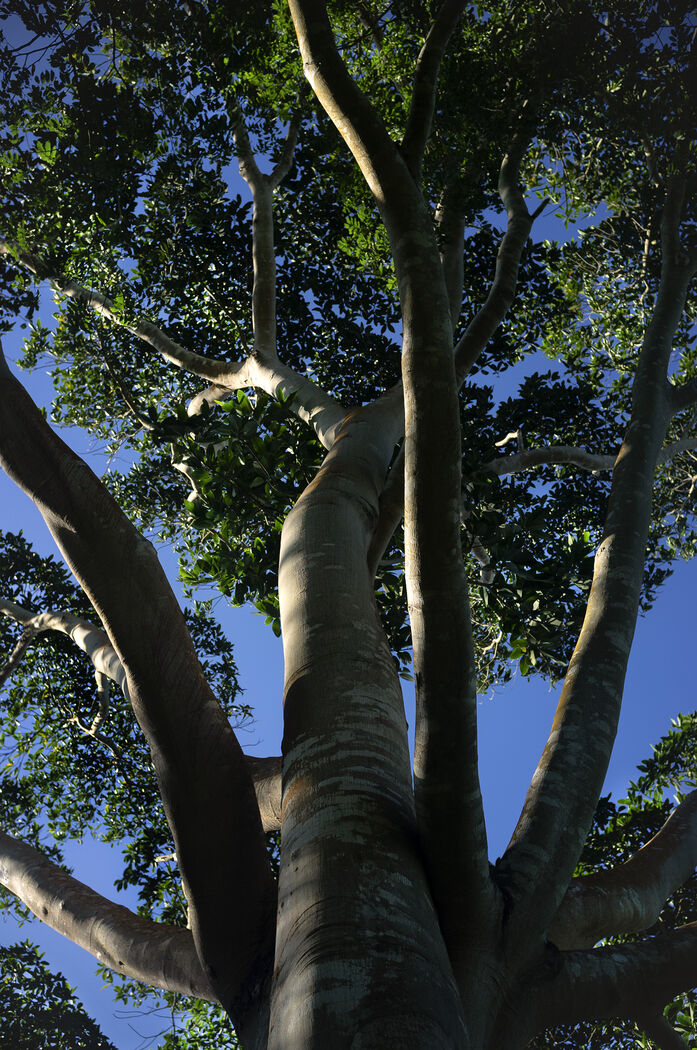
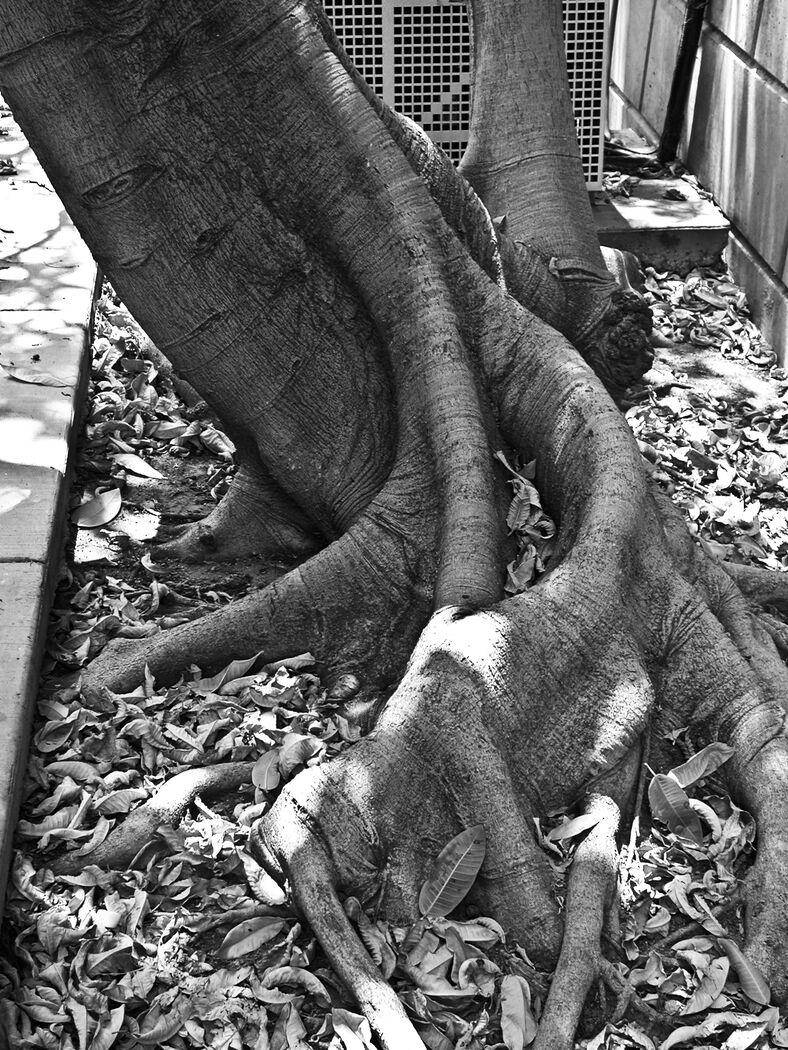
The chilamate stands out even among figs. Unlike its strangler fig relatives, which begin life as epiphytes in the crowns of other trees and eventually kill their hosts, Ficus insipida grows as a free-standing tree from the start. It reaches the canopy on its own terms, often becoming one of the largest trees in the forest. Specimens can exceed 40 meters in height with trunk diameters over a meter. The massive buttress roots that spread from its base can extend 3-4 meters up the trunk.
Identification
The chilamate belongs to the Moraceae, the fig family, which includes about 850 species in the genus Ficus alone. In Costa Rica, it grows abundantly on both the Pacific and Caribbean slopes, from sea level to about 1,100 meters elevation. You will often find it along rivers and streams, where fallen figs can be dispersed by water and fish.
Physical Characteristics
Trunk: Smooth, light gray bark that develops a slightly rough texture with age. Large buttress roots spread from the base, sometimes extending several meters up the trunk. All parts of the tree contain copious white latex that flows freely when cut.
Leaves: Large, simple, oval-shaped leaves measuring 10-25 cm long. Leathery texture with prominent veins. Unlike many figs, the chilamate is evergreen, maintaining its foliage year-round in humid climates.
Figs (Syconia): The "fruit" is actually a syconium, an inside-out flower structure unique to figs. Each green, spherical fig measures 15-40 mm in diameter and contains hundreds of tiny flowers on its inner surface. When ripe, figs turn yellowish and become soft and juicy. Despite the scientific name insipida (meaning "tasteless"), ripe figs are actually quite sweet.
The Wasp That Makes It All Possible
Every fig species has its own pollinator wasp. For Ficus insipida, that partner is a tiny wasp in the genus Tetrapus. The relationship is obligate: the wasp cannot reproduce without the fig, and the fig cannot produce seeds without the wasp. This mutual dependence has shaped both partners for tens of millions of years.
The story begins when a female wasp, loaded with pollen and fertilized eggs, locates a fig at exactly the right stage of development. She squeezes through a tiny opening called the ostiole, a passage so tight that her wings and antennae are ripped off in the process. She will never leave the fig alive.
Inside, she walks across a platform of interlocked stigmas called the synstigma, inadvertently depositing pollen as she searches for places to lay her eggs. The fig contains two types of female flowers: long-styled flowers, where her ovipositor cannot reach to lay eggs, and short-styled gall flowers, where she can. In the long-styled flowers, pollen germinates and produces seeds. In the short-styled flowers, her eggs develop into the next generation of wasps.
Male wasps emerge first. They are blind, wingless, and live only a few hours. Their sole purpose is to mate with females still trapped in their galls, then chew tunnels through the fig's wall. The males die inside the fig. Females, now fertilized and dusted with pollen from male flowers that have just matured, crawl through the escape tunnels and fly off to find another fig, continuing the cycle.
Wind carries these wasps remarkable distances. Genetic studies have shown that Ficus insipida populations exchange genes across more than 300 kilometers, suggesting that wasps routinely travel enormous distances to find receptive figs. To make this possible, populations of chilamate trees must fruit asynchronously, ensuring that somewhere, at any given moment, a fig is ready to receive a wasp.
Habitat & Distribution
The chilamate ranges from southern Mexico through Central America to Brazil and Bolivia. In Costa Rica, it thrives on both slopes, from the humid lowlands of the Osa Peninsula to the drier forests of Guanacaste. It is particularly associated with riparian habitats, growing along rivers, streams, and in seasonally flooded areas.
Ecosystem: Wet evergreen forest, semi-deciduous forest, riparian corridors, and secondary forest. Tolerates diverse conditions from 1,500-5,000 mm annual rainfall.
Elevation: Sea level to 1,100 meters. Most common below 500 meters.
Succession stage: Pioneer to mid-successional. Fast-growing and shade-intolerant, the chilamate colonizes gaps and disturbed areas. It often becomes the largest tree in young secondary forests, where it may dominate for a century before slower-growing species overtop it.
Fish as Seed Dispersers
The chilamate's preference for riverbanks is no accident. When ripe figs fall into the water, fish are waiting. In Costa Rica, the machaca (Brycon guatemalensis), a large characin related to piranhas, feeds heavily on fallen figs. Adults position themselves beneath overhanging chilamate branches, gulping down figs as they splash into the river.
Seeds survive passage through the fish's gut. While germination rates are reduced compared to seeds dispersed by mammals, fish transport seeds to new locations along riverbanks, potentially kilometers downstream. This makes machacas important dispersal agents for a tree that thrives in riparian habitat. The relationship represents a fascinating example of how tropical trees exploit multiple dispersal strategies.
Wildlife Relationships
The chilamate's ecological importance extends far beyond fish. Its figs feed an astonishing diversity of animals.
Bats: Fruit bats are primary nocturnal dispersers. In Panama, studies found that 13 of 16 fig species ripen green fruits that are mostly consumed at night, suggesting bats are the dominant seed dispersers for many figs including F. insipida.
Primates: Spider monkeys, howler monkeys, and capuchins feast on chilamate figs. The figs provide critical nutrition during periods when preferred fruits are scarce. Spider monkeys in particular are important dispersers, carrying seeds far from parent trees.
Birds: Toucans, parrots, trogons, and dozens of other species consume figs. Many swallow figs whole and regurgitate or defecate seeds intact. The asynchronous fruiting of fig populations ensures that birds can find ripe figs throughout the year.
Traditional Uses
Indigenous peoples throughout the chilamate's range have long recognized its medicinal properties. The white latex that flows from cut bark contains ficin, a proteolytic enzyme with documented antiparasitic effects. Traditional healers use the latex to treat intestinal worms, particularly hookworms. The treatment is effective but potent; dosage must be carefully controlled.
The latex also has culinary applications. Like papain from papaya, ficin breaks down proteins, making it useful as a meat tenderizer. In some regions, the latex is used in cheese-making to curdle milk. The wood, though soft and not durable outdoors, is easily worked and used for furniture, panels, and doors.
A Forest's Foundation
In the rainforests along Costa Rica's Pacific coast, the chilamate stands as a living reminder of evolution's capacity for intricate partnership. Its relationship with pollinator wasps is among the most specialized on Earth. Its fruits sustain dozens of vertebrate species. Its roots stabilize riverbanks. Its canopy shelters epiphytes, insects, and nesting birds.
When you encounter a chilamate along a forest river, pause to consider what you are seeing. That single tree is a node in a web of relationships stretching back 75 million years. Wasps too small to see are completing their brief lives inside its figs. Somewhere downstream, a fish is waiting for a fig to fall. Somewhere in the canopy, a spider monkey is reaching for a ripe one. And somewhere, carried on the wind, a female wasp is searching for a tree exactly like this one, ready to continue a partnership older than the Andes.
Key Sources & Resources
Species Information
Detailed species account from the Osa Peninsula region, including ecology and local distribution.
Comprehensive information on uses, cultivation, and ecology of the species.
General overview of the species with information on distribution and characteristics.
Fig-Wasp Mutualism
Overview of fig wasp biology, life cycle, and the coevolutionary relationship with figs.
Detailed explanation of the intricate reproductive relationship between figs and their pollinator wasps.
Research on gene flow and pollinator dispersal distances in Ficus insipida populations across Central and South America.
Ecology & Seed Dispersal
Popular article on the ecological importance of fig trees in Costa Rican ecosystems.
Scientific study documenting tree species distribution in the Osa Peninsula, including Ficus species.